Key Takeaway
Learn how ipamorelin may enhance muscle recovery through growth hormone improvement. Explore the science behind GH, protein synthesis, tissue repair, and exercise recovery.
Quick Answer: Ipamorelin may support muscle recovery by improving growth hormone levels, which play central roles in protein synthesis, tissue repair, and cellular regeneration. GH promotes muscle repair through IGF-1 signaling, supports collagen synthesis in connective tissues, and enhances the quality of restorative sleep needed for recovery .
What Is Ipamorelin?
Ipamorelin is a selective growth hormone-releasing peptide (GHRP) that stimulates the pituitary gland to release growth hormone in a controlled, pulsatile pattern. It binds to the ghrelin receptor (GHS-R1a) and is distinguished from older GHRPs by its selectivity: it doesn't significantly raise cortisol, prolactin, or appetite hormones at therapeutic doses .
Muscle recovery is one of the most commonly cited reasons for interest in ipamorelin among athletes, fitness enthusiasts, and active adults. Growth hormone is integral to the repair processes that follow exercise-induced muscle damage, and declining GH levels with age are associated with slower recovery and reduced adaptive capacity.
Ipamorelin isn't FDA-approved for any medical condition. The information in this guide is based on published research on ipamorelin, growth hormone physiology, and exercise science.
How Growth Hormone Drives Muscle Recovery
The Recovery Process
Muscle recovery after exercise involves a coordinated sequence of events:
View data table
| Category | Clinical Interest Score | Detail |
|---|---|---|
| BPC-157 | 88 | Tissue repair and gut healing |
| TB-500 | 82 | Injury recovery |
| Sermorelin | 78 | Growth hormone support |
| Ipamorelin | 75 | Anti-aging and recovery |
| GHK-Cu | 70 | Skin and tissue repair |
- Damage and inflammation: Exercise (particularly resistance training and eccentric movements) causes microscopic damage to muscle fibers, triggering an inflammatory response.
- Satellite cell activation: Muscle-specific stem cells called satellite cells are activated to repair and regenerate damaged fibers.
- Protein synthesis: New contractile proteins are synthesized to repair and strengthen the muscle tissue.
- Connective tissue remodeling: The tendons, fascia, and extracellular matrix surrounding muscle fibers are also repaired and reinforced.
- Adaptation: The muscle emerges stronger and more resilient than before (the principle of supercompensation).
Growth hormone participates in nearly every stage of this process.
GH and Protein Synthesis
GH stimulates protein synthesis both directly and through IGF-1, its primary downstream mediator. IGF-1 activates the mTOR pathway, a master regulator of muscle protein synthesis that drives the construction of new contractile proteins .
Research has shown that GH-deficient individuals have impaired muscle protein synthesis rates, which improve with GH replacement . By restoring healthy GH pulsatility, ipamorelin supports the biochemical machinery that rebuilds muscle after training.
GH and Satellite Cell Function
Satellite cells are important for muscle repair and hypertrophy. GH and IGF-1 stimulate satellite cell proliferation and differentiation, increasing the pool of cells available to repair damaged muscle fibers .
This effect becomes increasingly important with age, as both satellite cell number and function decline alongside GH production. Supporting GH levels with ipamorelin may help maintain the regenerative capacity of muscle tissue.
GH and Connective Tissue
Recovery isn't just about muscle fibers. The tendons, ligaments, and fascial networks that support and transmit muscular force must also repair and adapt. GH is one of the most potent stimulators of collagen synthesis, the primary structural protein in connective tissue .
Research has demonstrated that GH can increase collagen synthesis rates in tendon tissue significantly, supporting the structural integrity of the musculotendinous unit . For athletes whose training places heavy demands on connective structures, this is a meaningful benefit. See also our Ipamorelin for joint pain guide.
GH and Sleep Quality
Sleep is arguably the most critical recovery variable, and GH is intimately linked to sleep quality. The largest natural GH pulse occurs during the first 90 minutes of deep (slow-wave) sleep. GH secretagogues like ipamorelin, when dosed before bed, can amplify this pulse and enhance slow-wave sleep duration .
Better sleep quality translates directly to better recovery. During deep sleep, the body increases blood flow to muscles, releases repair hormones, and consolidates the neural adaptations from training.
GH and Anti-Catabolic Effects
GH has anti-catabolic properties, meaning it helps prevent the breakdown of existing muscle tissue. It promotes fat oxidation as a fuel source, sparing muscle glycogen and amino acids from being used for energy . This nutrient-partitioning effect is particularly valuable during periods of caloric restriction or intense training when the body is at risk of cannibalizing muscle for energy.
What the Research Shows
Ipamorelin-Specific Evidence
While large-scale clinical trials studying ipamorelin specifically for exercise recovery haven't been published, key findings support its application:
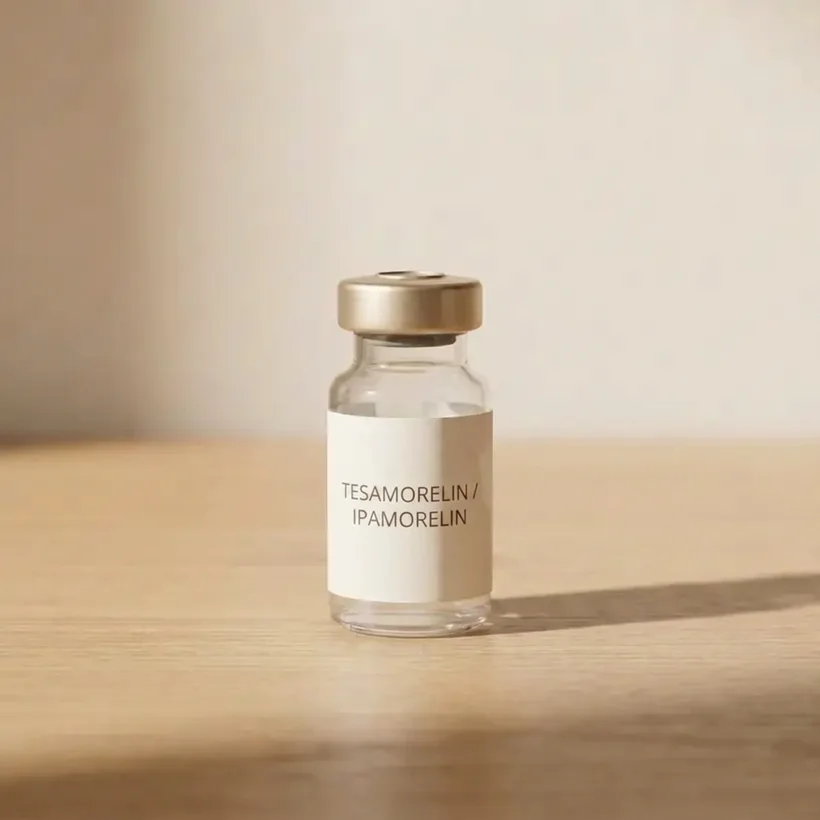
From the FormBlends catalog
Tesamorelin / Ipamorelin Blend
Growth-hormone pathway support in one blend · From $299/mo · compounded by a licensed 503A pharmacy, dispensed only after provider review.
View Tesamorelin / Ipamorelin Blend →- Human studies confirm dose-dependent GH release with ipamorelin administration .
- A clinical trial showed ipamorelin accelerated recovery of bowel function after abdominal surgery, demonstrating practical recovery benefits in a clinical setting .
- Animal studies demonstrated that ipamorelin increased lean body mass and improved body composition markers .
GH and Exercise Recovery Research
Broader research on GH and exercise recovery provides strong mechanistic support:
- GH administration has been shown to improve nitrogen balance (an indicator of net protein synthesis) during recovery from exercise .
- GH-deficient adults treated with GH replacement show improved exercise capacity, reduced fatigue, and faster recovery .
- Studies on GH and tendon collagen synthesis show significant increases in collagen production, supporting the connective tissue component of recovery.
- GH plays a demonstrated role in muscle glycogen replenishment after exercise .
Practical Applications for Recovery
Dosing and Timing for Recovery
For recovery-focused protocols, timing is particularly important:
- Before bed: The most important injection window for recovery. Evening dosing amplifies the nocturnal GH pulse that drives overnight tissue repair.
- Post-workout: Some protocols include a post-training injection to support the acute recovery window. Ensure at least 30 minutes have passed since any post-workout nutrition containing carbohydrates.
- Morning (fasted): A morning dose can extend the overnight fasted state's fat-burning benefits while supporting recovery throughout the day.
For detailed dosing information, see our Ipamorelin dosage guide.
Combining with Training
Ipamorelin isn't a substitute for proper training programming, nutrition, or rest. It works best as part of a thorough recovery strategy:
- Progressive training: Smart training periodization prevents overtraining, and ipamorelin supports recovery within a well-designed program.
- Adequate protein: GH-mediated protein synthesis requires amino acid availability. Consuming sufficient protein (typically 1.6 to 2.2 g/kg/day for active individuals) is important .
- Sleep priority: Since ipamorelin works in part through sleep enhancement, prioritizing 7 to 9 hours of quality sleep maximizes its recovery benefits.
- Hydration: Adequate hydration supports nutrient delivery and waste removal from recovering tissues.
Combination Peptide Protocols
Some clinicians design multi-peptide protocols for enhanced recovery:
- Ipamorelin + CJC-1295: combined GH release through complementary receptor pathways.
- Ipamorelin + BPC-157: BPC-157 provides direct tissue-healing support while ipamorelin optimizes systemic GH levels.
- Ipamorelin + TB-500: TB-500 may support tissue repair and inflammation modulation alongside GH improvement.
All combination protocols should be designed and monitored by a qualified physician.
Safety and Side Effects
Ipamorelin is considered one of the most well-tolerated growth hormone secretagogues. Common side effects are generally mild and may include headache, transient flushing, mild water retention, and injection site reactions. These typically resolve during the first 1 to 2 weeks of use.
Athletes should note that some athletic governing bodies prohibit the use of growth hormone secretagogues. Verify the rules of your sport before considering ipamorelin.
For thorough safety information, read our Ipamorelin side effects guide.
How FormBlends Can Help
At FormBlends, we believe that peptide therapy should be guided by science and supervised by physicians. Our telehealth platform connects you with licensed medical providers who can evaluate whether ipamorelin is appropriate for your recovery and performance goals.
When you work with us, you receive:
- A personalized consultation with a licensed physician
- Pharmaceutical-grade peptides from licensed pharmacies
- Ongoing medical supervision and dosage guidance
- Clear, science-backed information to support your decisions
We don't believe in one-size-fits-all protocols. Your physician will consider your training program, recovery needs, medical history, and wellness goals before recommending any peptide therapy.
Frequently Asked Questions
How quickly does ipamorelin improve recovery?
Many users report noticeable improvements in post-workout soreness and recovery times within 2 to 4 weeks of consistent use. Sleep quality improvements, which contribute to recovery, often appear even earlier. Full recovery improvement typically develops over 2 to 3 months. See our Ipamorelin before and after guide for a detailed timeline.
Will ipamorelin help me build muscle?
Ipamorelin isn't an anabolic steroid and won't produce the dramatic muscle gains associated with those compounds. But by improving GH levels, it supports protein synthesis, recovery, and lean mass maintenance. Combined with proper resistance training and nutrition, it may contribute to improved body composition over time.
Should I inject ipamorelin before or after my workout?
Both timings have rationale. Post-workout dosing supports the acute recovery window, while pre-bed dosing amplifies the overnight repair process. Many recovery-focused protocols use an evening pre-bed injection as the primary dose. Your physician can recommend the best timing for your goals.
Can I take ipamorelin with protein supplements?
Ipamorelin should be injected on an empty stomach, as improved insulin from food (including protein) can blunt the GH response. Wait at least 30 minutes after injection before consuming any protein supplement or meal. Protein nutrition is important for recovery, but should be timed separately from the injection.
Is ipamorelin FDA-approved?
No. Ipamorelin isn't FDA-approved for the treatment, cure, or prevention of any disease. It's available through compounding pharmacies under physician supervision for individual patient use.
Ready to Learn More?
If you're interested in exploring whether ipamorelin may support your recovery and performance goals, FormBlends can connect you with a licensed physician for a personalized consultation. Our team is here to help you make informed decisions backed by science and guided by medical expertise.
Disclaimer: This article is for informational purposes only and doesn't constitute medical advice. Ipamorelin isn't FDA-approved for any medical condition. The information presented here is based on available research and shouldn't be used as a substitute for professional medical guidance. Always consult with a licensed healthcare provider before beginning any peptide therapy. Individual results may vary. FormBlends doesn't claim that ipamorelin cures, treats, or prevents any disease.
Ready when you are
Tesamorelin / Ipamorelin Blend
Growth-hormone pathway support in one blend · From $299/mo · compounded by a licensed 503A pharmacy, dispensed only after provider review.
View Tesamorelin / Ipamorelin Blend →