Key Takeaway
Your body has its own arsenal of natural antibiotics. One of the most powerful is LL-37, an antimicrobial peptide produced by your immune cells, skin, and mucosal surfaces. LL-37 antimicrobial peptide research has revealed a molecule that does far more than kill bacteria.
Your body has its own arsenal of natural antibiotics. One of the most powerful is LL-37, an antimicrobial peptide produced by your immune cells, skin, and mucosal surfaces. LL-37 antimicrobial peptide research has revealed a molecule that does far more than kill bacteria. It modulates immune responses, promotes wound healing, and may even have anti-biofilm properties.
Key Takeaways: - Learn how ll-37 fights infections - Wound Healing and Tissue Repair - Research Applications and Immune Modulation - Dosing, Safety, and Practical Considerations
LL-37 is the only cathelicidin-derived antimicrobial peptide found in humans. It was named for its 37-amino acid sequence starting with two leucine residues. As interest in antibiotic alternatives grows, LL-37 has attracted significant research attention.
How LL-37 Fights Infections
LL-37 kills pathogens through a physical mechanism. It punches holes in bacterial cell membranes. The peptide carries a positive charge that attracts it to the negatively charged membranes of bacteria, viruses, and fungi. Once attached, it inserts into the membrane and creates pores that destroy the pathogen.
This physical killing mechanism is harder for bacteria to develop resistance against compared to traditional antibiotics. Bacteria can mutate to evade chemical antibiotics, but changing their fundamental membrane structure is much more difficult. This makes LL-37 interesting in the era of antibiotic resistance.
"The key to successful GLP-1 therapy is setting realistic expectations and supporting patients through the titration phase. The side effects are manageable for most people, but they need to know what to expect.") Dr. Caroline Apovian, MD, Harvard Medical School
Beyond direct killing, LL-37 acts as a chemokine. It recruits immune cells to infection sites, calling in reinforcements from neutrophils, monocytes, and T cells. This amplifies the immune response at exactly the location where it's needed.
LL-37 also disrupts biofilms. Biofilms are protective shields that bacteria build around themselves, making them resistant to antibiotics. By breaking down these biofilms, LL-37 may help antibiotics work more effectively against persistent infections.
Wound Healing and Tissue Repair
Beyond infection defense, LL-37 plays an active role in wound healing. It promotes the migration and proliferation of keratinocytes, the primary cells involved in skin repair. It also stimulates angiogenesis, the growth of new blood vessels that bring nutrients to healing tissue.
Free Download: Protocol Planner Track your LL-37 protocol with our free planner. Includes dosing schedules, wound healing logs, and immune health tracking. Get yours free (we'll email it to you instantly. [Email Input] [Download Button]
Research has shown that LL-37 levels increase naturally at wound sites. People with chronic non-healing wounds often have lower LL-37 levels in their wound bed. This suggests that supplementing LL-37 at wound sites could support healing.
The wound healing properties of LL-37 may complement other healing peptides like . While BPC-157 supports healing through growth factor modulation and blood vessel formation, LL-37 adds antimicrobial protection and direct keratinocyte stimulation. Some providers use them together for challenging healing situations.
LL-37 also modulates the inflammatory response during wound healing. It promotes the transition from the inflammatory phase to the proliferative phase of healing. Getting stuck in inflammation is a common reason wounds fail to heal properly.
Research Applications and Immune Modulation
Current LL-37 research extends beyond simple infection fighting. Scientists are exploring its role in immune modulation, cancer immunity, and chronic inflammatory conditions.
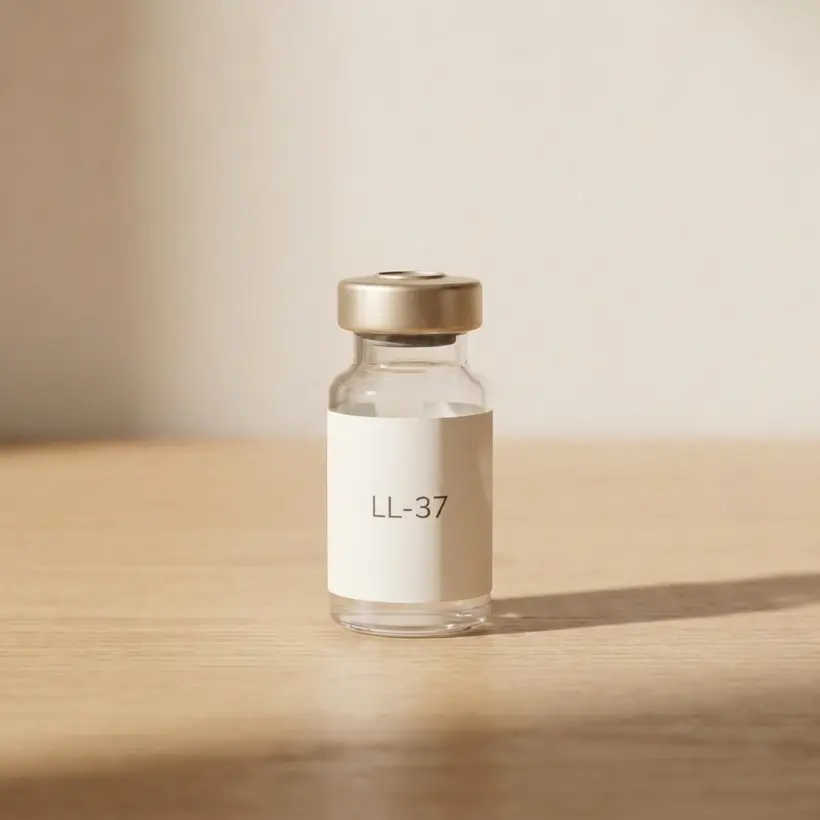
From the FormBlends catalog
LL-37
The body's natural antimicrobial defense peptide · From $199/mo · compounded by a licensed 503A pharmacy, dispensed only after provider review.
View LL-37 →LL-37 can activate toll-like receptors (TLRs), which are pattern recognition receptors on immune cells. This activation helps your immune system identify and respond to threats more effectively. It's importantly training your immune system to be more vigilant.
In cancer research, LL-37 has shown both tumor-promoting and tumor-suppressing effects depending on the cancer type. This complex relationship is still being studied. It highlights that LL-37 isn't a simple molecule and requires careful clinical application.
Some providers are exploring LL-37 for patients with chronic infections, particularly Lyme disease and chronic biofilm-associated infections. These applications are investigational and should only be pursued under careful medical supervision with your .
Dosing, Safety, and Practical Considerations
LL-37 is typically administered via subcutaneous injection. Dosing protocols vary significantly based on the clinical application. Your provider will determine the appropriate dose, frequency, and duration based on your specific needs.
Proper is important for LL-37 stability. The peptide is sensitive to temperature and should be stored according to your pharmacy's specific guidelines.
Safety data for LL-37 is primarily derived from research studies rather than large clinical trials. The peptide is naturally occurring in your body, which generally supports tolerability. But at high concentrations, LL-37 can potentially damage healthy cells along with pathogens.
Side effects may include injection site reactions and mild immune-related symptoms like low-grade fever or fatigue. These reflect the immune-activating properties of the peptide and typically resolve quickly.
People with autoimmune conditions should use LL-37 cautiously. Its immune-stimulating effects could potentially exacerbate autoimmune activity. Full medical history disclosure to your provider is important before starting any immune-modulating peptide.
Frequently Asked Questions
Can LL-37 replace antibiotics?
LL-37 isn't a replacement for antibiotics when antibiotics are indicated. It may be used alongside conventional treatment or for situations where traditional antibiotics are limited. Your provider can determine the appropriate role for LL-37 in your care.
Is LL-37 effective against viruses?
Research suggests LL-37 has antiviral properties against certain viruses, including influenza and some respiratory viruses. The antiviral mechanism involves both direct viral membrane disruption and immune response enhancement. Clinical applications for viral infections are still investigational.
How is LL-37 different from BPC-157?
Is primarily a healing and anti-inflammatory peptide derived from gastric juice. LL-37 is an antimicrobial and immune-modulating peptide from the cathelicidin family. They complement each other but serve different primary functions.
Does my body already make LL-37?
Yes. Your body produces LL-37 naturally through immune cells, skin cells, and mucosal surfaces. Production can be influenced by vitamin D levels, infection status, and overall health. Vitamin D supplementation may help support natural LL-37 production.
Is LL-37 FDA approved?
LL-37 isn't FDA approved as a therapeutic drug. It's available through licensed compounding pharmacies when prescribed by a licensed provider for specific clinical indications.
What's Your Next Move?
You have the information. Now let a licensed provider help you put it into action. FormBlends makes it simple) answer a few questions and get a personalized recommendation.
Sources &. References
- Pickart L, Vasquez-Soltero JM, Margolina A. GHK Peptide as a Natural Modulator of Multiple Cellular Pathways in Skin Regeneration. BioMed Res Int. 2015;2015:648108. Doi:10.1155/2015/648108
- Pickart L, Vasquez-Soltero JM, Margolina A. GHK and DNA: Resetting the Human Genome to Health. BioMed Res Int. 2014;2014:151479. Doi:10.1155/2014/151479
- Sikiric P, Hahm KB, Blagaic AB, et al. Stable Gastric Pentadecapeptide BPC 157, Robert's Cytoprotection, Adaptive Cytoprotection, and Therapeutic Effects. Curr Pharm Des. 2018;24(18):1990-2001. Doi:10.2174/1381612824666180515125918
- Chang CH, Tsai WC, Lin MS, et al. The promoting effect of pentadecapeptide BPC 157 on tendon healing involves tendon outgrowth, cell survival, and cell migration. J Appl Physiol. 2011;110(3):774-780. Doi:10.1152/japplphysiol.00945.2010
- Seiwerth S, Brcic L, Vuletic LB, et al. BPC 157 and blood vessels. Curr Pharm Des. 2014;20(7):1121-1125. Doi:10.2174/13816128113199990421
- Bock-Marquette I, Saxena A, White MD, et al. Thymosin beta4 activates integrin-linked kinase and promotes cardiac cell migration, survival and cardiac repair. Nature. 2004;432(7016):466-472. Doi:10.1038/nature03000
- Malinda KM, Sidhu GS, Mani H, et al. Thymosin beta4 accelerates wound healing. J Invest Dermatol. 1999;113(3):364-368. Doi:10.1046/j.1523-1747.1999.00708.x
This article is for educational purposes only and doesn't constitute medical advice. Always consult with a licensed healthcare provider before starting, changing, or stopping any medication or supplement. FormBlends connects you with licensed providers who can evaluate your individual health needs.
Last updated: 2026-03-24
Ready when you are
LL-37
The body's natural antimicrobial defense peptide · From $199/mo · compounded by a licensed 503A pharmacy, dispensed only after provider review.
View LL-37 →