Key Takeaway
Joint pain can limit everything from your workouts to your daily activities. When standard approaches fall short, Pentosan polysulfate joint therapy offers a different strategy.
Joint pain can limit everything from your workouts to your daily activities. When standard approaches fall short, Pentosan polysulfate joint therapy offers a different strategy. Originally approved for interstitial cystitis (a bladder condition), Pentosan Polysulfate Sodium (PPS) has shown promising off-label applications for osteoarthritis and cartilage support.
Key Takeaways: - Learn how pentosan polysulfate supports joints - Clinical Evidence for Osteoarthritis - Dosing and Approved Uses - Safety Considerations
PPS isn't technically a peptide. It's a semi-synthetic polysaccharide derived from beechwood hemicellulose. But it fits into the regenerative medicine toolkit alongside peptides like and TB-500 for its tissue-supportive properties. Here is what the research says.
How Pentosan Polysulfate Supports Joints
PPS works through multiple mechanisms that benefit joint health. It inhibits enzymes that break down cartilage, including matrix metalloproteinases (MMPs) and aggrecanases. These enzymes are overactive in osteoarthritic joints and progressively destroy cartilage.
The compound also stimulates the production of hyaluronic acid by synovial cells. Hyaluronic acid is the natural lubricant in your joints. More hyaluronic acid means better joint cushioning and smoother movement. Think of it as restoring the oil in a creaky hinge.
"GLP-1 receptor agonists represent the most significant advance in obesity pharmacotherapy in decades. For the first time, we have medications that produce weight loss approaching what was previously only achievable through bariatric surgery.") Dr. Robert Kushner, MD, Northwestern University, speaking at ObesityWeek 2023
PPS has anti-inflammatory properties that may reduce joint swelling and pain. It can decrease inflammatory cytokines in joint tissue, which helps break the cycle of inflammation and cartilage destruction that characterizes osteoarthritis.
PPS may improve blood flow to subchondral bone, the bone layer just beneath joint cartilage. Poor blood flow to this area contributes to bone marrow lesions, which are associated with osteoarthritis pain. By improving circulation, PPS may address pain at its source.
Clinical Evidence for Osteoarthritis
Research on PPS for osteoarthritis has been conducted primarily in Australia, where it's used in veterinary medicine for joint disease in horses and dogs. Human studies have been smaller but encouraging.
View data table
| Category | Clinical Interest Score | Detail |
|---|---|---|
| BPC-157 | 88 | Tissue repair and gut healing |
| TB-500 | 82 | Injury recovery |
| Sermorelin | 78 | Growth hormone support |
| Ipamorelin | 75 | Anti-aging and recovery |
| GHK-Cu | 70 | Skin and tissue repair |
Free Download: Protocol Planner Track your joint health protocol with our free planner. Includes dosing logs, pain tracking, and mobility assessments. Get yours free (we'll email it to you instantly. [Email Input] [Download Button]
A clinical trial in knee osteoarthritis patients showed improvements in pain scores, joint stiffness, and physical function after PPS treatment. Participants received subcutaneous or intramuscular injections twice weekly for several weeks.
MRI studies have shown that PPS may reduce bone marrow lesions in osteoarthritic joints. This is significant because bone marrow lesions are a source of pain and a marker of disease progression. Reducing them could slow the worsening of osteoarthritis.
The evidence is promising but not yet sufficient for widespread guidelines. PPS for osteoarthritis remains an off-label application. Larger clinical trials are needed to establish definitive protocols and confirm long-term benefits.
If you're exploring joint health options, combining PPS with other regenerative approaches may offer combined benefits. Some providers pair PPS with for full joint support. All combinations should be supervised by a licensed provider.
Dosing and Approved Uses
For its FDA-approved indication of interstitial cystitis, PPS (brand name Elmiron) is taken orally at 100 mg three times daily. This oral form has been available for decades.
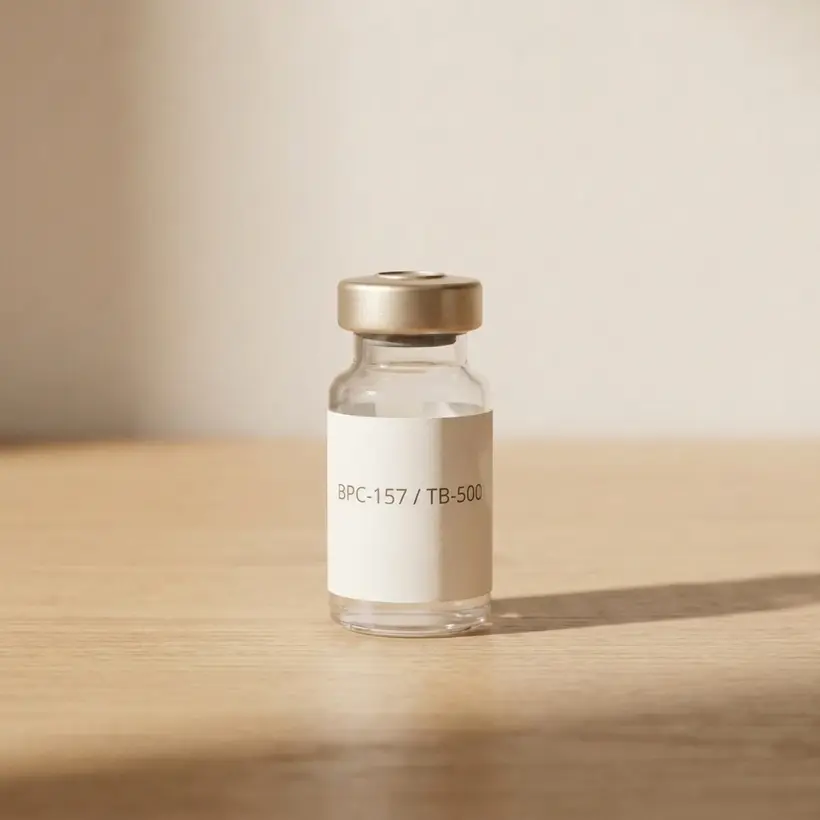
From the FormBlends catalog
BPC-157 / TB-500 Blend
The ultimate recovery stack in one vial · From $249/mo · compounded by a licensed 503A pharmacy, dispensed only after provider review.
View BPC-157 / TB-500 Blend →For off-label joint health applications, PPS is more commonly administered via subcutaneous or intramuscular injection. Injection dosing varies but typically ranges from 2 mg/kg twice weekly. Treatment courses usually last 4 to 6 weeks.
Some providers recommend periodic treatment courses rather than continuous use. For example, a 6-week course every 6 to 12 months may help maintain joint health benefits without prolonged exposure.
Your can evaluate your joint health and determine whether PPS is appropriate. They will consider your arthritis severity, other treatments you're using, and your overall health profile.
Safety Considerations
PPS has a well-documented safety profile from decades of oral use for interstitial cystitis. Common side effects of oral PPS include gastrointestinal symptoms like diarrhea and nausea.
An important safety concern emerged in 2018 regarding long-term oral PPS use and a potential retinal toxicity called pigmentary maculopathy. This condition affects vision and has been linked to prolonged oral PPS use, typically years of daily dosing.
For injectable PPS used in shorter courses for joint health, the retinal risk appears lower due to shorter exposure duration and different pharmacokinetics. But baseline eye exams and periodic monitoring are recommended.
Injectable PPS may cause injection site reactions and mild bruising. Because PPS has anticoagulant properties, people taking blood thinners should use it cautiously under close medical supervision.
If you're considering PPS for joint health, discuss the benefit-risk profile thoroughly with your provider. For many people with significant osteoarthritis, the potential joint benefits of short-course injectable PPS may outweigh the risks when properly monitored.
Frequently Asked Questions
Is Pentosan Polysulfate the same as Elmiron?
Elmiron is the brand name for oral Pentosan Polysulfate Sodium, FDA approved for interstitial cystitis. The injectable form used for joint health is the same active compound but delivered differently and used off-label.
How long does it take for PPS to help joint pain?
Some people notice improvement within 2 to 4 weeks of starting injectable PPS. Maximum benefit may take 6 to 8 weeks. Results vary depending on the severity of joint damage.
Can PPS regrow cartilage?
PPS may slow cartilage breakdown and support cartilage maintenance, but it isn't proven to regrow lost cartilage. It works primarily by protecting existing cartilage and improving joint lubrication.
Is PPS safe for long-term use?
Short courses of injectable PPS for joint health have a favorable safety profile. Long-term daily oral use carries a potential risk of retinal changes. Eye monitoring is recommended regardless of route and duration. Discuss the optimal approach with your .
Ready to Take the Next Step?
Your treatment plan is personal) and you deserve a plan that fits. FormBlends connects you with licensed providers who can evaluate your needs and create a personalized protocol.
Sources &. References
- Pickart L, Vasquez-Soltero JM, Margolina A. GHK Peptide as a Natural Modulator of Multiple Cellular Pathways in Skin Regeneration. BioMed Res Int. 2015;2015:648108. Doi:10.1155/2015/648108
- Pickart L, Vasquez-Soltero JM, Margolina A. GHK and DNA: Resetting the Human Genome to Health. BioMed Res Int. 2014;2014:151479. Doi:10.1155/2014/151479
- Sikiric P, Hahm KB, Blagaic AB, et al. Stable Gastric Pentadecapeptide BPC 157, Robert's Cytoprotection, Adaptive Cytoprotection, and Therapeutic Effects. Curr Pharm Des. 2018;24(18):1990-2001. Doi:10.2174/1381612824666180515125918
- Chang CH, Tsai WC, Lin MS, et al. The promoting effect of pentadecapeptide BPC 157 on tendon healing involves tendon outgrowth, cell survival, and cell migration. J Appl Physiol. 2011;110(3):774-780. Doi:10.1152/japplphysiol.00945.2010
- Seiwerth S, Brcic L, Vuletic LB, et al. BPC 157 and blood vessels. Curr Pharm Des. 2014;20(7):1121-1125. Doi:10.2174/13816128113199990421
- Bock-Marquette I, Saxena A, White MD, et al. Thymosin beta4 activates integrin-linked kinase and promotes cardiac cell migration, survival and cardiac repair. Nature. 2004;432(7016):466-472. Doi:10.1038/nature03000
- Malinda KM, Sidhu GS, Mani H, et al. Thymosin beta4 accelerates wound healing. J Invest Dermatol. 1999;113(3):364-368. Doi:10.1046/j.1523-1747.1999.00708.x
This content is provided for informational and educational purposes only. It isn't a substitute for professional medical advice, diagnosis, or treatment. Always seek the advice of a licensed healthcare provider with any questions about a medical condition or treatment plan.
Last updated: 2026-03-24
Ready when you are
BPC-157 / TB-500 Blend
The ultimate recovery stack in one vial · From $249/mo · compounded by a licensed 503A pharmacy, dispensed only after provider review.
View BPC-157 / TB-500 Blend →