Key Takeaway
How Pentosan Polysulfate treats joint pain through cartilage protection, enzyme inhibition, and GAG layer restoration. Evidence-based protocols.
Quick Answer: Pentosan Polysulfate for joint pain is one of its strongest and most evidence-based applications. PPS is classified as a disease-modifying osteoarthritis drug (DMOAD) that goes beyond symptom relief to protect and restore joint structures. It inhibits cartilage-degrading enzymes (MMPs, aggrecanases), stimulates hyaluronic acid and proteoglycan production in joint fluid, improves subchondral bone blood flow, and reduces synovial inflammation. Clinical and veterinary studies show measurable improvements in joint function and pain scores within 4 to 6 weeks .
How PPS Treats Joint Pain
- Stops cartilage breakdown: PPS inhibits MMPs and aggrecanases, the enzymes that degrade the cartilage matrix. This is the most important mechanism, as it addresses the progressive destruction driving osteoarthritis pain
- Restores joint lubrication: PPS stimulates synoviocytes to produce more hyaluronic acid and proteoglycans, improving synovial fluid viscosity and cushioning
- Improves bone blood flow: Subchondral bone beneath cartilage relies on blood flow for cartilage nutrition. PPS's fibrinolytic properties improve microcirculation in this critical area
- Reduces inflammation: PPS reduces complement activation and inflammatory mediator production in joint tissues
Joint Conditions That Respond to PPS
| Condition | Response | Evidence |
|---|---|---|
| Knee osteoarthritis | Excellent (primary indication) | Clinical + veterinary studies |
| Hip osteoarthritis | Good | Clinical + veterinary |
| Hand osteoarthritis | Good | Clinical evidence |
| Spinal facet joint arthritis | Moderate | Limited clinical data |
| Post-traumatic arthritis | Good (early intervention) | Veterinary evidence |
PPS vs Other Joint Pain Treatments
| Treatment | Symptom Relief | Cartilage Protection | Disease Modification |
|---|---|---|---|
| PPS | Moderate (delayed onset) | Strong | Yes (DMOAD) |
| NSAIDs | Strong (immediate) | None (may worsen) | No |
| Cortisone injection | Strong (immediate) | None (degrades cartilage) | No |
| Hyaluronic acid injection | Moderate | Minimal | No |
| BPC-157 | Moderate | Indirect | Possible |
PPS stands out as one of the few treatments that addresses the underlying disease process rather than just masking symptoms.
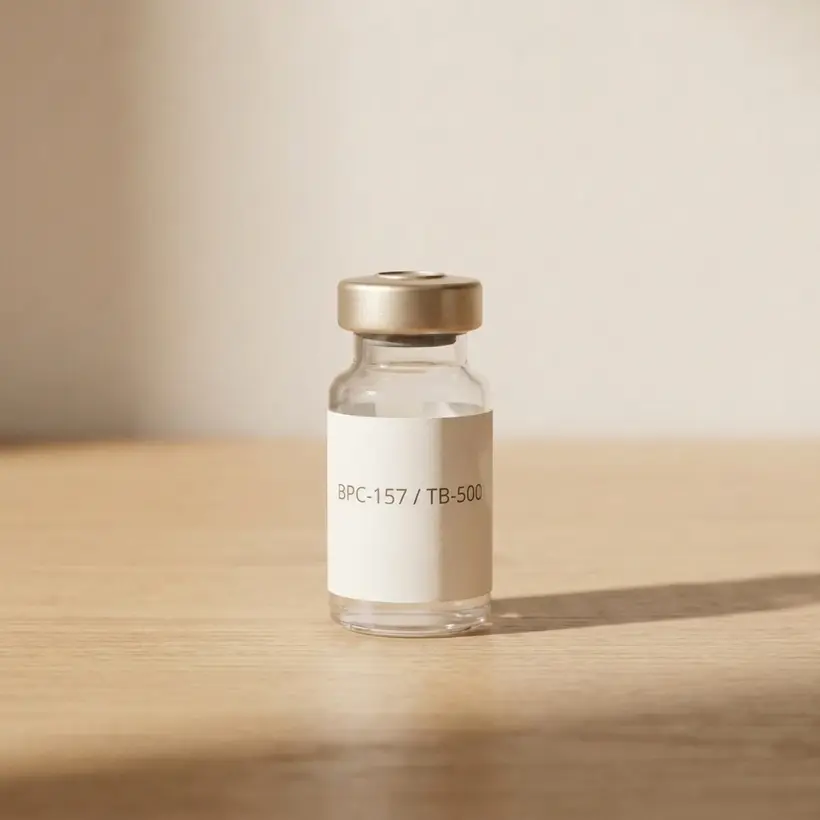
From the FormBlends catalog
BPC-157 / TB-500 Blend
The ultimate recovery stack in one vial · From $249/mo · compounded by a licensed 503A pharmacy, dispensed only after provider review.
View BPC-157 / TB-500 Blend →View data table
| Category | Clinical Interest Score | Detail |
|---|---|---|
| BPC-157 | 88 | Tissue repair and gut healing |
| TB-500 | 82 | Injury recovery |
| Sermorelin | 78 | Growth hormone support |
| Ipamorelin | 75 | Anti-aging and recovery |
| GHK-Cu | 70 | Skin and tissue repair |
Frequently Asked Questions
How long until my joint pain improves?
Most patients notice meaningful improvement in 3 to 6 weeks. Full benefit develops over 2 to 3 months. PPS works gradually by protecting and restoring joint structures.
Can PPS replace my NSAID?
Many patients reduce or eliminate NSAID use after a PPS treatment course. But this should be done gradually under physician guidance. PPS takes weeks to work, so NSAIDs may be needed for bridge pain management initially.
Can I combine PPS with BPC-157 or TB-4?
Yes. PPS provides cartilage-specific protection while BPC-157 and TB-4 offer broader tissue repair. The combination addresses joint health from complementary angles.
Protect and Restore Your Joints
At FormBlends, our physicians design thorough joint health protocols with disease-modifying potential.
Disclaimer: This article is for informational purposes only and doesn't constitute medical advice. Always consult with a licensed healthcare provider. Individual results may vary.
Ready when you are
BPC-157 / TB-500 Blend
The ultimate recovery stack in one vial · From $249/mo · compounded by a licensed 503A pharmacy, dispensed only after provider review.
View BPC-157 / TB-500 Blend →