Key Takeaway
When your provider prescribes a peptide protocol, one of the first things you'll notice is that peptide vial sizes vary. This peptide vial sizes 5mg 10mg resource covers the important information you need to make informed decisions.
When your provider prescribes a peptide protocol, one of the first things you'll notice is that peptide vial sizes vary. This peptide vial sizes 5mg 10mg resource covers the important information you need to make informed decisions. A vial might contain 5mg, 10mg, 15mg, or even 30mg of the same peptide. The size you receive depends on your dose, your protocol length, and what your compounding pharmacy stocks. Understanding these differences helps you plan your protocol, calculate your cost per dose, and avoid unnecessary waste.
Key Takeaways: - Common Peptide Vial Sizes and What They Mean - Cost Per Dose: How Vial Size Affects Your Budget - Learn how to choose the right vial size - Vial Size Quick Reference by Peptide
Common Peptide Vial Sizes and What They Mean
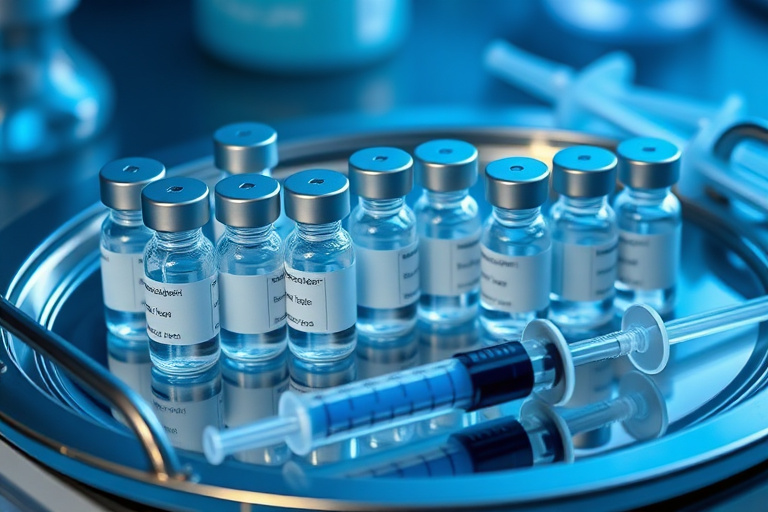
The number on your peptide vial label (5mg, 10mg, 15mg, or 30mg) tells you the total amount of lyophilized (freeze-dried) peptide inside before reconstitution calculator. This is the raw material you're working with.
5mg vials are the most common for peptides like BPC-157, TB-500, and Ipamorelin. They're a good size for shorter protocols or lower daily doses. If your prescribed dose is 250mcg per day, a 5mg vial holds 20 doses.
10mg vials are popular for peptides used at higher doses or for longer protocols. They offer better cost efficiency per milligram in most cases. A 10mg vial at 250mcg per day lasts 40 days.
15mg and 30mg vials are available for peptides like GHK-Cu, certain growth hormone releasing peptides, and compounded semaglutide. These larger vials make sense for protocols with higher daily doses or for patients who want to minimize the number of reconstitutions per month.
The vial size doesn't change the peptide quality or potency. A 5mg vial and a 10mg vial of the same peptide from the same pharmacy contain the same compound. The only difference is how much is in the vial.
"The key to successful GLP-1 therapy is setting realistic expectations and supporting patients through the titration phase. The side effects are manageable for most people, but they need to know what to expect.", Dr. Caroline Apovian, MD, Harvard Medical School
Use the FormBlends to see exactly how many doses you get from any vial size at your prescribed dose.
Cost Per Dose: How Vial Size Affects Your Budget
Larger vials almost always offer a lower cost per milligram. This is because the pharmacy's overhead (labeling, quality testing, filling, and shipping) is similar whether they fill a 5mg vial or a 10mg vial.
Free Download: Dose Conversion Table See cost-per-dose breakdowns for every common vial size. Our printable table makes it easy to compare options and plan your budget. Get yours free (we'll email it to you instantly. [Download Now]
Here is how the math works with example pricing. These are illustrative numbers, not actual FormBlends pricing.
BPC-157 at 250mcg per day: - 5mg vial at $50 = 20 doses = $2.50 per dose - 10mg vial at $80 = 40 doses = $2.00 per dose - 30mg vial at $180 = 120 doses = $1.50 per dose
The larger vial saves you $1.00 per dose in this example. Over a 90-day protocol, that adds up to $90 in savings.
But bigger isn't always better. You need to factor in shelf life. Once you reconstitute a vial, the clock starts ticking. Most reconstituted peptides should be used within 28 days. If a 30mg vial gives you 120 doses but you only inject once per day, that vial lasts 120 days) far beyond the 28-day window for a single reconstitution.
The solution is to reconstitute only a portion at a time. Some patients split large vials across multiple reconstitutions, but this requires careful aseptic technique. Ask your whether a larger vial makes sense for your protocol.
For current FormBlends pricing on peptide vials, visit our .
How to Choose the Right Vial Size
Your ideal vial size depends on three things: your daily dose, your protocol duration, and how often you want to reconstitute.
Check your GLP-1 eligibility
Use our free BMI Calculator to see if you may qualify for provider-reviewed GLP-1 therapy.
Try the BMI Calculator →Daily dose: Higher doses use up vials faster. If you're taking 500mcg twice per day (1mg total), a 5mg vial only lasts 5 days. A 10mg vial lasts 10 days. You would be reconstituting a new vial every week with the 5mg option.
Protocol duration: Short protocols (2 to 4 weeks) may only need one or two small vials. Long protocols (8 to 12 weeks or ongoing) benefit from larger vials to reduce cost and hassle.
Reconstitution frequency: Each reconstitution is a chance for contamination if your technique isn't perfect. Fewer reconstitutions mean fewer opportunities for error. If you're less confident in your reconstitution skills, larger vials that last longer between setups can be a practical choice.
A simple rule of thumb: choose a vial size that lasts approximately 28 days at your prescribed dose. This lines up with the recommended shelf life of reconstituted peptides and minimizes waste.
Vial Size Quick Reference by Peptide
Here is a general guide to which vial sizes are commonly available for popular prescribed peptides.
BPC-157: 5mg and 10mg are standard. Some compounding pharmacies offer 15mg vials for extended protocols.
TB-500: 5mg is the most common. 10mg vials are available for loading-phase protocols that use higher doses in the first few weeks.
CJC-1295 / Ipamorelin: 2mg, 5mg, and 10mg vials are common. These peptides are often dosed at 100 to 300mcg, so even a 2mg vial lasts a while.
GHK-Cu: 5mg and 10mg vials. Dosing varies widely depending on the application, so check with your provider.
Semaglutide (compounded): Available in various concentrations and vial sizes from 503A pharmacies. Your pharmacy label shows the exact concentration per mL.
For a complete breakdown of how these peptides work and when they're prescribed, explore the or the .
Frequently Asked Questions
Is a 10mg vial just two 5mg vials combined?
Yes. A 10mg vial contains the same peptide at the same purity level. It's just more of it in one container. The advantage is cost savings and fewer reconstitutions.
Can I use half a lyophilized vial and save the rest?
No. Lyophilized peptide is a dry powder cake in the vial. You can't split it in half. Once you add BAC water, the entire contents dissolve into solution. You can, however, draw from the reconstituted vial over multiple days (up to 28 days refrigerated).
What if my pharmacy only has one vial size?
That's fine. Any vial size works as long as you adjust your BAC water volume and draw amount accordingly. Use the FormBlends reconstitution calculator to get the right numbers for whatever vial size you have.
Do larger vials expire faster after reconstitution?
No. The 28-day refrigerated shelf life applies to all reconstituted peptide vials regardless of size. The difference is that a larger vial may have solution left over after 28 days, which would need to be discarded.
Should I buy the biggest vial available to save money?
Only if you can use all of it within the shelf life window. Calculate how many days the vial will last at your dose. If it exceeds 28 days per reconstitution, you may end up wasting peptide, which erases the cost savings.
Let's Make This Happen
The research is clear. The options are available. The only question is whether it's right for you. A FormBlends provider can help you decide (no pressure, no commitment.
Sources &. References
- Sikiric P, Hahm KB, Blagaic AB, et al. Stable Gastric Pentadecapeptide BPC 157, Robert's Cytoprotection, Adaptive Cytoprotection, and Therapeutic Effects. Curr Pharm Des. 2018;24(18):1990-2001. Doi:10.2174/1381612824666180515125918
- Chang CH, Tsai WC, Lin MS, et al. The promoting effect of pentadecapeptide BPC 157 on tendon healing involves tendon outgrowth, cell survival, and cell migration. J Appl Physiol. 2011;110(3):774-780. Doi:10.1152/japplphysiol.00945.2010
- Seiwerth S, Brcic L, Vuletic LB, et al. BPC 157 and blood vessels. Curr Pharm Des. 2014;20(7):1121-1125. Doi:10.2174/13816128113199990421
- Bock-Marquette I, Saxena A, White MD, et al. Thymosin beta4 activates integrin-linked kinase and promotes cardiac cell migration, survival and cardiac repair. Nature. 2004;432(7016):466-472. Doi:10.1038/nature03000
- Malinda KM, Sidhu GS, Mani H, et al. Thymosin beta4 accelerates wound healing. J Invest Dermatol. 1999;113(3):364-368. Doi:10.1046/j.1523-1747.1999.00708.x
- Ionescu M, Frohman LA. Pulsatile secretion of growth hormone (GH) persists during continuous stimulation by CJC-1295, a long-acting GH-releasing hormone analog. J Clin Endocrinol Metab. 2006;91(12):4792-4797. Doi:10.1210/jc.2006-1702
This content is provided for informational and educational purposes only. It isn't a substitute for professional medical advice, diagnosis, or treatment. Always seek the advice of a licensed healthcare provider with any questions about a medical condition or treatment plan.
Last updated: 2026-03-24
See your options in about 2 minutes
Take the free quiz and see what fits you. Quick, private, and no commitment to continue.
See my options →