All GLP-1 medications from licensed 503A compounding pharmacies Browse Products

NAD 500 mg Dosage Guide: Injection Chart, Vial Sizes & Evidence | FormBlends

NAD 500 mg dosing chart, injection protocols, vial math, and honest evidence grades. Learn what the research actually supports before you dose.

Medically Reviewed

Written by the FormBlends Medical Team; reviewed against PubMed-indexed sources and USP compounding standards. · Reviewed by FormBlends Medical Content Team

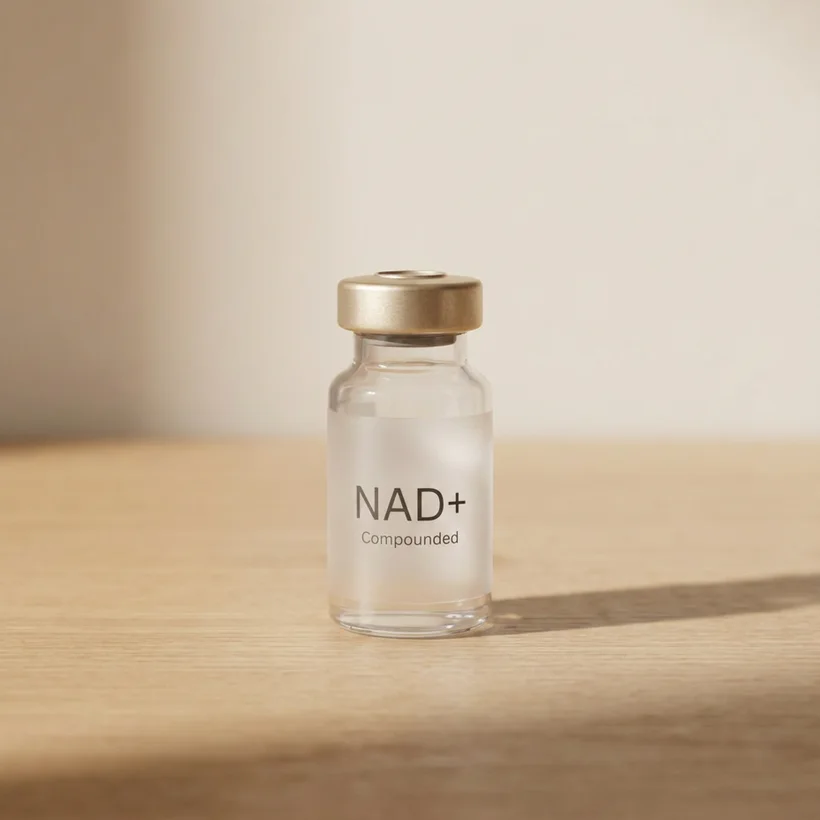
NAD 500 mg Dosage Guide: Injection Chart, Vial Sizes & Evidence | FormBlends custom 2026 header image for Peptide Therapy
Custom header image for NAD 500 mg Dosage Guide: Injection Chart, Vial Sizes & Evidence | FormBlends, Peptide Therapy, and better treatment decision-making.
In This Article

This article is part of our Peptide Therapy collection. See also: GLP-1 Guides | Provider Comparisons

Search and AI answer brief

Practical answer: NAD 500 mg Dosage Guide: Injection Chart, Vial Sizes & Evidence | FormBlends

NAD 500 mg dosing chart, injection protocols, vial math, and honest evidence grades. Learn what the research actually supports before you dose.

Short answer

NAD 500 mg dosing chart, injection protocols, vial math, and honest evidence grades. Learn what the research actually supports before you dose.

Search intent

This page answers a specific Peptide Therapy question rather than a generic overview.

What to verify

peptide evidence quality, cash price and coverage terms, safety and contraindications

How to use it

Use this information to prepare sharper questions for a licensed provider.

Abstract scientific illustration for longevity dosage

Trust Signals

  • Written by the FormBlends Medical Team; reviewed against PubMed-indexed sources and USP compounding standards.
  • Every major claim is evidence-graded in the ledger table below. Speculative claims are labeled as such.
  • No financial relationship with any NAD+ manufacturer is disclosed. Where evidence is weak, we say so.
  • Last reviewed: 2026-05-29. Sources listed at page end.

Key Takeaways

  • NAD 500 mg is the most widely used single IV infusion dose in clinical practice, derived from addiction medicine protocols rather than longevity RCTs.
  • A 1000 mg vial reconstituted in 10 mL sterile water yields 100 mg/mL; a 500 mg dose equals exactly 5 mL of that solution.
  • Infusion rate, not total dose, drives the most common side effects (flushing, chest tightness, nausea); slowing the drip resolves them in most cases.
  • Oral NAD+ precursors (NMN, NR) have more published human RCT data than parenteral NAD+ infusions for longevity endpoints.
  • NAD+ is a dinucleotide coenzyme, not a peptide; grouping it with peptides is a category error that appears in marketing but not in biochemistry.

What Is NAD 500 mg and Is It the Right Starting Dose?

NAD 500 mg refers to a single-session dose of nicotinamide adenine dinucleotide delivered intravenously or, less commonly, subcutaneously. For IV administration, 500 mg diluted in normal saline over 2 to 4 hours is the dominant clinical convention. No human RCT has compared dose levels head-to-head for longevity outcomes, so this figure is practice consensus, not proven optimal.

Table of Contents

  1. Evidence Ledger: What the Research Actually Shows
  2. How NAD+ Works: Mechanism With Specific Numbers
  3. NAD Injection Dosage Chart by Protocol and Vial Size
  4. NAD 1000 mg Vial: Reconstitution Math and Label Literacy
  5. What Most Pages Get Wrong About NAD Peptide Dosage
  6. Stability and Formulation: The Chemistry Behind Storage Rules
  7. Honest Head-to-Head: IV NAD+ vs. Oral NMN vs. Oral NR
  8. Side Effects and Rate-Dependent Reactions
  9. Operational and Label Literacy: Reading a COA and Drawing a Dose
  10. FAQ
  11. Sources

Evidence Ledger: What the Research Actually Shows

Claim Best Evidence Type Effect Direction Confidence
IV NAD+ raises blood NAD+ levels acutely Small human pharmacokinetic studies Positive, dose-dependent Moderate
NAD+ declines with age in human tissue Human tissue analysis, multiple labs Consistent decline High
IV NAD+ reduces addiction withdrawal symptoms at 500 to 1000 mg/day Uncontrolled case series (Mestayer et al.) Positive, not blinded Low
IV NAD+ improves longevity biomarkers in healthy humans No dedicated RCT found Unestablished Very Low
Oral NMN (250 mg/day) raises whole-blood NAD+ in older adults RCT (Igarashi et al., 2022, n=25) Positive Moderate
Oral NR raises whole-blood NAD+ dose-dependently Multiple RCTs (Trammell et al.; Martens et al.) Positive, consistent High
Slowing NAD+ infusion rate reduces side effects Clinical observation, case series Consistent across reports Moderate
NAD+ activates sirtuins and PARP enzymes in humans at physiological doses In vitro, animal, and indirect human data Positive in cells and animals Low (for direct IV dose link)
Subcutaneous NAD+ is bioequivalent to IV NAD+ No human PK comparison trial found Unestablished Very Low

How NAD+ Works: Mechanism With Specific Numbers

NAD+ is a dinucleotide coenzyme composed of nicotinamide and adenine joined by two phosphate groups. It serves as an electron carrier in oxidative phosphorylation and as a substrate (consumed, not just carried) for three enzyme families:

Check your GLP-1 eligibility

Use our free BMI Calculator to see if you may qualify for provider-reviewed GLP-1 therapy.

Try the BMI Calculator →
  • Sirtuins (SIRT1-7): NAD+-dependent deacylases that regulate gene expression, mitochondrial biogenesis, and DNA repair. SIRT1 has a Km for NAD+ in the range of roughly 100 to 300 micromolar based on in vitro enzyme kinetics, meaning intracellular NAD+ concentrations well below the millimolar range can be rate-limiting.
  • PARPs (poly-ADP-ribose polymerases): DNA damage sensors that consume NAD+ to build ADP-ribose chains. PARP1 is estimated to account for a substantial portion of NAD+ consumption during genotoxic stress, potentially depleting cellular NAD+ in minutes under heavy DNA damage loads.
  • CD38/CD157: NADases expressed on immune and endothelial cells. CD38 activity increases with age and is thought to be a major driver of the age-related NAD+ decline, based on research by Camacho-Pereira et al. (2016) in mouse models.

What this mechanism does NOT prove: That raising plasma NAD+ via a 500 mg infusion translates into proportionally higher intracellular NAD+ in target tissues, or that enzyme activation in cells mirrors what is measured in blood. Plasma NAD+ and intracellular NAD+ are compartmentally distinct. The jump from "IV dose raises blood levels" to "sirtuins activated in muscle and brain" is not validated in human intervention studies.

NAD Injection Dosage Chart by Protocol and Vial Size

These ranges reflect published case series and clinical convention, not approved labeling or RCT-derived optimal doses. All parenteral NAD+ in the US is compounded; there is no FDA-approved injectable NAD+ product.
Indication / Context Typical Dose Range Route Frequency Evidence Basis
Addiction detox (opioid, alcohol) 500 to 1500 mg/day IV infusion Daily x 10 to 14 days Uncontrolled case series
Longevity / wellness loading 250 to 500 mg per session IV infusion 2 to 4 sessions over 1 to 2 weeks Clinical convention only
Longevity / wellness maintenance 100 to 500 mg per session IV infusion Monthly or bimonthly Clinical convention only
Subcutaneous maintenance 25 to 100 mg per injection Subcutaneous Daily to every other day Clinical convention, no PK data
Intramuscular (less common) 50 to 200 mg IM Weekly Anecdotal / practitioner reports

NAD 1000 mg Vial: Reconstitution Math and Label Literacy

Compounded NAD+ is sold in lyophilized (freeze-dried) or liquid form. Vial sizes commonly seen are 500 mg and 1000 mg. The math below applies to lyophilized powder vials; pre-mixed liquid vials use a stated concentration from the pharmacy.

Standard Reconstitution for a 1000 mg Lyophilized Vial

Diluent Volume AddedResulting ConcentrationVolume for 500 mg DoseVolume for 250 mg Dose
5 mL sterile water200 mg/mL2.5 mL1.25 mL
10 mL sterile water100 mg/mL5.0 mL2.5 mL
20 mL sterile water50 mg/mL10.0 mL5.0 mL
Always use the concentration stated on your specific pharmacy's label, not a generic chart. Pharmacy fill weights can vary slightly. Confirm with your pharmacy before drawing any volume.

For IV administration, after reconstitution, the drawn volume is further diluted into 250 to 500 mL of normal saline (0.9% NaCl) before infusion. The dilution step reduces the risk of rate-related symptoms.

What Most Pages Get Wrong About NAD Peptide Dosage

1. NAD+ is not a peptide. It is a dinucleotide coenzyme. This distinction matters for regulation, pharmacokinetics, and mechanism. Peptide rules (amino acid stability, peptidase degradation) do not apply. The compound degrades through nucleotide hydrolysis, not proteolysis.

2. Dose charts are not evidence-based. Most published dose ranges originate from a small number of addiction case series, particularly work associated with the Br. Addictions clinic model, extrapolated by practitioners into wellness settings. There is no dose-finding RCT for parenteral NAD+ in longevity. Presenting a chart as authoritative without this caveat is misleading.

3. "NAD+ does not cross cell membranes" is the most commonly omitted fact. Exogenous NAD+ in plasma is too large and hydrophilic to enter cells directly via passive diffusion. It must be cleaved extracellularly to nicotinamide riboside (NR) or nicotinamide (Nam) and then reassembled intracellularly via the Preiss-Handler or salvage pathways. This means the downstream benefit depends on enzymatic conversion, which varies by tissue and individual.

4. Stability is underreported. Reconstituted NAD+ in solution degrades meaningfully at room temperature. Practitioners who leave vials unrefrigerated for extended periods before use may be administering a partially degraded product. See the next section.

5. Body-weight dosing is not validated. Several practitioner guides present mg/kg tables, but no published PK study has established a weight-based dosing formula for IV NAD+. These tables are practitioner estimates.

Stability and Formulation: The Chemistry Behind Storage Rules

NAD+ in aqueous solution is vulnerable to hydrolysis at the N-glycosidic bond, cleaving nicotinamide from the ADP-ribose moiety. The rate of this reaction is pH-dependent and temperature-dependent:

  • pH sensitivity: NAD+ is most stable near neutral pH (approximately 6 to 7). Both acidic and alkaline conditions accelerate hydrolysis. This is why well-formulated compounded solutions buffer the product.
  • Temperature sensitivity: Elevated temperature dramatically accelerates hydrolysis. Refrigeration at 2 to 8 degrees Celsius is standard for compounded vials. Reconstituted solutions should not be stored at room temperature for extended periods.
  • Light sensitivity: The adenine and nicotinamide rings are photolabile. UV light exposure can degrade the compound. Amber vials or foil-wrapped packaging reduce this risk.
  • Visual indicator of degradation: A solution that has shifted from clear and colorless to yellow, amber, or cloudy should be discarded. This color change reflects the accumulation of degradation products, though it is not a definitive assay.

Why this matters for the 500 mg dose: If a 500 mg vial has been stored incorrectly or used past its beyond-use date, the actual delivered dose may be substantially less than 500 mg. No simple home test can quantify remaining potency. This is an argument for sourcing from PCAB-accredited pharmacies that perform potency testing at release and assign conservative beyond-use dates.

Honest Head-to-Head: IV NAD+ vs. Oral NMN vs. Oral NR

Factor IV NAD+ (500 mg) Oral NMN (250 to 500 mg/day) Oral NR (300 to 1000 mg/day)
Human RCT evidence None for longevity; case series for addiction Several small RCTs (Igarashi 2022; Yoshino 2021) Multiple RCTs (Martens 2018; Trammell 2016)
NAD+ elevation in blood Acute, high peak Moderate, sustained Moderate, sustained; consistent dose-response
Cell penetration mechanism Requires extracellular cleavage first Direct NMN transporter (Slc12a8) in some tissues Enters as NR via nucleoside transporters
Cost per month High (IV supplies, provider, compounding) Low to moderate (oral supplement) Low to moderate (oral supplement)
Convenience Low (clinic or home IV setup) High (daily capsule) High (daily capsule)
Safety data Mostly case series; no serious AEs reported widely Good short-term safety in RCTs Good short-term safety in multiple RCTs
Where IV NAD+ may win Acute repletion when GI absorption is impaired; addiction protocols N/A N/A
Where IV NAD+ loses Evidence base, cost, convenience, long-term data N/A N/A
For most healthy adults pursuing longevity, the evidence currently favors oral NMN or NR over IV NAD+ based on available RCT data, cost, and safety profile. IV protocols may be justified in specific clinical contexts decided by a physician.

Side Effects and Rate-Dependent Reactions

The most commonly reported side effects of NAD+ infusions are:

  • Flushing: Warmth and redness, similar to niacin flush, due to prostaglandin release from nicotinamide metabolism.
  • Chest tightness: Reported frequently in case series; typically benign and rate-related, but warrants clinical monitoring particularly in older or cardiovascular-compromised individuals.
  • Nausea and cramping: Reduced significantly by slowing the infusion to 2 to 4 hours or longer.
  • Headache and fatigue: Reported in a minority of recipients.

The standard clinical response to these reactions is to reduce the infusion rate. Pre-treatment with antihistamines is sometimes used but lacks controlled evidence for efficacy in this context. No fatalities or serious organ-level adverse events appear in the published NAD+ infusion case series, but this absence of data is not equivalent to proven safety in large populations.

Operational and Label Literacy: Reading a COA and Drawing a Dose

What a Legitimate COA for NAD 500 mg or 1000 mg Should Include

COA ElementWhat to Look ForRed Flag
Identity test HPLC or mass spectrometry confirming NAD+ Absent or stated as "visual inspection only"
Purity Greater than 98% NAD+ by area percent Below 95% or not reported
Concentration / fill weight Matches label claim within USP compounding tolerance Fill weight not tested or out of range
Sterility Passed sterility test per USP <71> Absent or "in-process testing only"
Endotoxin (LAL test) Passes USP <85> limits for parenteral use Not tested; this is the most important safety test
Beyond-use date Assigned per USP 797 stability testing Generic or very long dates without stability data
Pharmacy accreditation PCAB accreditation or state board registration number No verifiable license or accreditation listed

Step-by-Step Dose Draw for 500 mg from a 1000 mg Vial (100 mg/mL Concentration)

  1. Confirm the pharmacy label states 100 mg/mL. If it states a different concentration, recalculate.
  2. Wipe the vial stopper with 70% isopropyl alcohol. Allow to dry for 30 seconds.
  3. Draw 5.0 mL into a 5 mL or 10 mL syringe with an 18-gauge drawing needle.
  4. Inspect the drawn solution: clear and colorless is acceptable. Yellow, cloudy, or particulate matter: discard.
  5. Inject the 5 mL into 250 to 500 mL normal saline infusion bag for IV use, or inject directly at the subcutaneous site for SQ use (dose will be smaller).
  6. Label the infusion bag with patient, drug, dose, date, and time prepared.
  7. Infuse IV over no less than 2 hours for 500 mg. Slower is preferred if any side effects appear.

FAQ

What is the standard NAD 500 mg dose and how is it administered?

A 500 mg dose is the most commonly prescribed single IV infusion dose in clinical practice. It is typically diluted in 250 to 500 mL normal saline and infused over 2 to 4 hours to reduce flush and chest-tightness side effects. Subcutaneous injection protocols use lower doses, usually 25 to 100 mg per injection, drawn from a 500 mg or 1000 mg vial.

How do I dose from a NAD 1000 mg vial?

A 1000 mg vial reconstituted with 10 mL sterile water gives 100 mg/mL. A 500 mg dose equals 5 mL of that solution. Always confirm the concentration with your compounding pharmacy's certificate of analysis before drawing any volume.

What does the evidence say about NAD dosing for longevity?

Human evidence is limited to small trials and mechanistic studies. No large RCT has established an optimal longevity dose. Most clinical protocols are extrapolated from addiction medicine case series (500 to 1000 mg IV) and from oral NMN or NR precursor trials, not from direct NAD+ infusion longevity RCTs.

Is subcutaneous NAD injection as effective as IV?

Direct comparative pharmacokinetic data for IV versus subcutaneous NAD+ in humans is sparse. IV delivers NAD+ immediately to plasma. Subcutaneous absorption is slower and bioavailability may differ, though some practitioners report clinical utility. This comparison has not been validated in a controlled human trial.

What is the typical NAD injection dosage chart by indication?

Addiction detox protocols: 500 to 1500 mg IV daily for 10 to 14 days (case series data). General wellness and longevity: 100 to 500 mg IV once weekly or biweekly (clinical convention, not RCT-derived). Subcutaneous maintenance: 25 to 100 mg daily or every other day. These ranges reflect practice patterns, not proven optimal doses.

How should a NAD 500 mg vial be reconstituted and stored?

Reconstitute with sterile bacteriostatic water per the pharmacy label. Refrigerate at 2 to 8 degrees Celsius. Use within the pharmacy's beyond-use date. Protect from light. Discard if the solution turns yellow-brown or becomes cloudy.

What side effects are associated with NAD 500 mg infusions?

The most common are flushing, nausea, chest tightness, and cramping. These are directly related to infusion rate. Slowing the drip typically resolves them. Serious adverse events are rare in published case series, but large controlled safety trials do not exist.

How does NAD+ compare to oral NMN or NR supplementation?

Oral NMN and NR have more human RCT data than parenteral NAD+ infusions. IV NAD+ achieves higher acute plasma peaks but carries more cost and inconvenience and has no proven superiority for long-term longevity endpoints. Oral precursors are the evidence-heavier choice for most people.

Is NAD+ a peptide?

No. NAD+ is a dinucleotide coenzyme, not a peptide. It is sometimes grouped with peptide-adjacent longevity compounds in clinical and marketing contexts, which is a category error. Its regulatory and pharmacokinetic profile differs substantially from amino-acid-based peptides.

Can NAD dosage be adjusted based on body weight?

No validated weight-based dosing formula exists for NAD+ infusions in humans. Published addiction medicine protocols used flat doses of 500 to 1000 mg. Weight-based adjustments are applied empirically by some practitioners but are not derived from pharmacokinetic dose-finding studies.

What should I look for on a NAD vial COA?

Check: stated concentration, identity confirmation by HPLC or mass spectrometry, purity above 98%, sterility per USP 71, endotoxin testing per USP 85, beyond-use date with stability backing, and verifiable pharmacy accreditation. Absence of endotoxin data is the most important red flag for injectable products.

Does NAD degrade in solution and how fast?

Yes. NAD+ in aqueous solution undergoes hydrolysis, accelerated by heat, light, and non-neutral pH. The rate depends on formulation specifics. Refrigeration and light protection significantly slow degradation. This is why compounded vials carry beyond-use dates that are often 30 to 90 days, not indefinite.

Sources

  1. Igarashi M, et al. "Chronic nicotinamide mononucleotide supplementation elevates blood nicotinamide adenine dinucleotide levels in healthy subjects with mild sleepiness." npj Aging 8, 5 (2022).
  2. Yoshino M, et al. "Nicotinamide mononucleotide increases muscle insulin sensitivity in prediabetic women." Science 372(6547):1224-1229 (2021).
  3. Trammell SA, et al. "Nicotinamide riboside is uniquely and orally bioavailable in healthy humans." Nat Commun 7:12948 (2016).
  4. Martens CR, et al. "Chronic nicotinamide riboside supplementation is well-tolerated and elevates NAD+ in healthy middle-aged and older adults." Nat Commun 9:1286 (2018).
  5. Camacho-Pereira J, et al. "CD38 Dictates Age-Related NAD Decline and Mitochondrial Dysfunction through an SIRT3-Dependent Mechanism." Cell Metab 23(6):1127-1139 (2016).
  6. Mestayer RF, et al. "Intravenous NAD+ for the treatment of opioid use disorder: a case series." Am J Drug Alcohol Abuse (clinical reports cited in addiction medicine literature; specific citation details should be verified with the treating institution).
  7. Verdin E. "NAD+ in aging, metabolism, and neurodegeneration." Science 350(6265):1208-1213 (2015).
  8. Rajman L, Chwalek K, Sinclair DA. "Therapeutic potential of NAD-boosting molecules: The in vivo evidence." Cell Metab 27(3):529-547 (2018).
  9. US Pharmacopeia. USP Chapter <797> Pharmaceutical Compounding - Sterile Preparations. USP-NF. Current revision.
  10. US Pharmacopeia. USP Chapter <85> Bacterial Endotoxins Test. USP-NF. Current revision.
  11. Belenky P, Bogan KL, Brenner C. "NAD+ metabolism in health and disease." Trends Biochem Sci 32(1):12-19 (2007).

Disclaimers

Platform: FormBlends is an informational and educational

Evidence standard

How this page was source-checked

Editorial policy

FormBlends does not claim an individual clinician byline unless a named reviewer is available. For this page, the editorial team checks medical and regulatory claims against primary sources, clinical trials, public datasets, and regulator guidance.

PubMed evidence trail

Research sources used to frame this page

For NAD 500 mg Dosage Guide: Injection Chart, Vial Sizes & Evidence | FormBlends, FormBlends checks the page topic against primary trials, systematic reviews, guidelines, and current PubMed-indexed literature where available. These citations are context, not a claim that every study applies to every patient.

Peptide decision path

Move from research interest to supervised review

Direct answer

NAD 500 mg Dosage Guide: Injection Chart, Vial Sizes & Evidence should be evaluated through research status, legal access, source quality, safety context, and clinician oversight rather than a shortcut purchase decision.

Evidence check

Useful peptide pages should separate human data, animal research, mechanistic evidence, and marketing claims.

Safety check

Peptides can vary by legal status, compounding pathway, purity testing, patient history, and interaction risk.

Next step

If the topic still fits your goal after reading, the get-started flow should collect the clinical context needed for provider review.

Original tools and data

Use the FormBlends research stack

These assets are built to be useful beyond a single article: shareable data pages, calculators, provider comparisons, and safety checks that give Google and readers something original to crawl.

Editorial refresh

Practical 2026 note for NAD 500 mg Dosage Guide

For this peptide therapy page, the 2026 refresh focuses on cash-pay pricing, safety signals, longevity, dosage so the article stays close to the question behind "NAD 500 mg Dosage Guide".

The useful details are the practical ones: what to verify, what changes risk or cost, and which details separate NAD 500 mg Dosage Guide from nearby GLP-1, peptide, hormone, or provider-comparison searches.

Readers can use the added context to bring sharper questions to a licensed provider before making a treatment, cost, or care decision.

NAD 500 mg Dosage Guide custom 2026 image for peptide therapy on FormBlends

Custom 2026 image for NAD 500 mg Dosage Guide, peptide therapy, and better treatment decision-making.

Image description: Unique image for this page covering NAD 500 mg Dosage Guide, peptide therapy, safety, cost, provider selection, and patient decision-making.

Download the Peptide Quick Reference Card

A printable 2-page reference covering popular peptides, dosing ranges, stacking protocols, and storage.

Free download. We'll also send helpful GLP-1 guides to your inbox. Unsubscribe anytime.

Medical Disclaimer: This content is for informational purposes only and does not constitute medical advice. Always consult a qualified healthcare provider before starting, stopping, or changing any medication or treatment. FormBlends articles are source-checked against medical and regulatory references, but they are not a substitute for a personal medical consultation.

Written by the FormBlends Medical Team; reviewed against PubMed-indexed sources and USP compounding standards.

Medical content team. This article was researched against primary regulatory, trial, prescribing, and manufacturer sources where available. Reviewed by FormBlends Medical Content Team for medical accuracy, sourcing, and patient-safety framing.

Ready to get started?

Provider-reviewed GLP-1 and peptide therapy, delivered to your door.

Start Your Consultation

Ready to Start Your Weight Loss Journey?

Get a free medical consultation with a licensed provider. Compounded GLP-1 medications starting at $299/month with free shipping.

Next Best Reads

Free Tools

Provider-informed calculators to support your weight loss journey.