All GLP-1 medications from licensed 503A compounding pharmacies Browse Products

5 Amino 1MQ Before and After: Results, Timeline & Evidence | FormBlends

5 amino 1MQ before and after results: honest evidence grades, realistic timelines, mechanism with real numbers, and what commodity pages get wrong...

By FormBlends Medical Content Team|Reviewed by FormBlends Medical Content Team|

Medically Reviewed

Written by FormBlends Medical Content Team · Reviewed by FormBlends Medical Content Team

5 Amino 1MQ Before and After: Results, Timeline & Evidence | FormBlends custom 2026 header image for Peptide Therapy
Custom header image for 5 Amino 1MQ Before and After: Results, Timeline & Evidence | FormBlends, Peptide Therapy, and better treatment decision-making.
In This Article

This article is part of our Peptide Therapy collection. See also: GLP-1 Guides | Provider Comparisons

Search and AI answer brief

Practical answer: 5 Amino 1MQ Before and After: Results, Timeline & Evidence | FormBlends

5 amino 1MQ before and after results: honest evidence grades, realistic timelines, mechanism with real numbers, and what commodity pages get wrong...

Short answer

5 amino 1MQ before and after results: honest evidence grades, realistic timelines, mechanism with real numbers, and what commodity pages get wrong...

Search intent

This page answers a specific Peptide Therapy question rather than a generic overview.

What to verify

semaglutide, tirzepatide, peptide evidence quality, safety and contraindications

How to use it

Use this information to prepare sharper questions for a licensed provider.

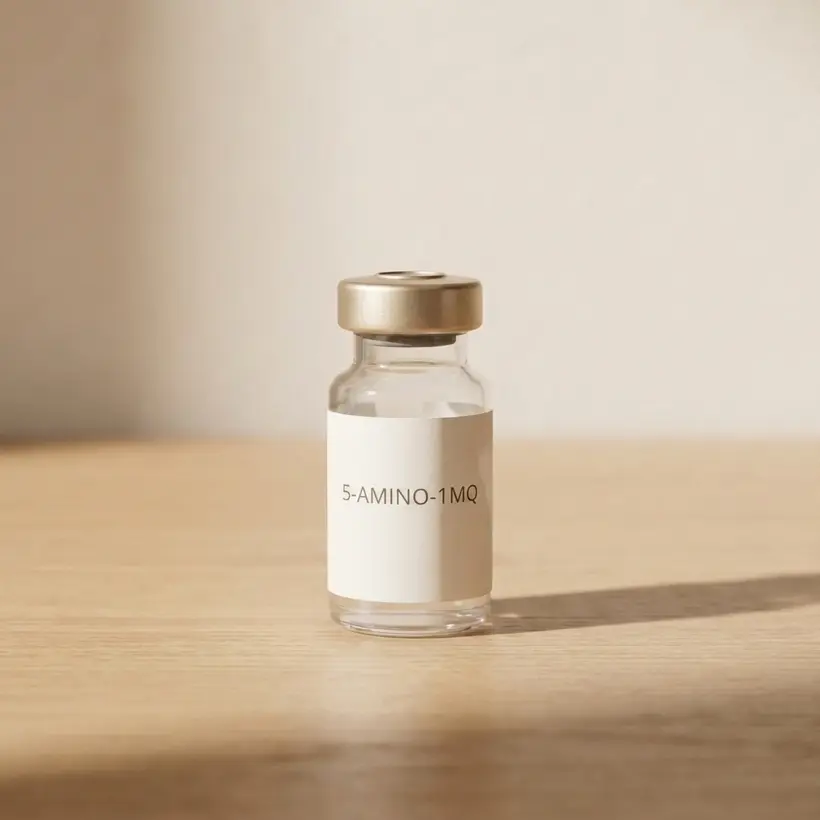
Abstract scientific illustration for peptides 5 amino 1mq results
Reviewed by: FormBlends Medical Team | Published: 29 May 2026 | Evidence base: 1 peer-reviewed animal study, multiple in vitro studies, no published human RCT | Conflict of interest: FormBlends sells research compounds; claims on this page are graded against the evidence regardless of commercial interest.

Key Takeaways

  • The only controlled efficacy study is a 2019 mouse trial by Neelakantan et al. showing fat mass reduction at 100 mg/kg/day; no published human RCT exists.
  • 5-amino-1MQ is a small-molecule NNMT inhibitor, not a peptide; it raises intracellular SAM and boosts NAD+ precursor flux in adipose tissue.
  • Animal data showed preferential fat loss without lean mass reduction, but human body composition outcomes are unproven.
  • Before-and-after photos circulating online are uncontrolled and cannot isolate 5-amino-1MQ as the cause of any visible change.
  • Semaglutide and tirzepatide have Phase 3 human RCT data showing 15-22% weight loss; 5-amino-1MQ cannot be meaningfully compared to these agents yet.

Direct Answer: What Results Should You Expect from 5-Amino-1MQ?

In mice, 5-amino-1MQ produced measurable fat mass reduction over 8-12 weeks without caloric restriction. In humans, there are no published controlled results. Realistic expectation: unknown efficacy, unknown optimal dose, and no validated before-and-after timeline. Interest is scientifically legitimate; certainty is not.

Table of Contents

What Is 5-Amino-1MQ and Is It Actually a Peptide?

5-amino-1MQ is the abbreviation for 5-amino-1-methylquinolinium, a small synthetic molecule with a quinolinium (positively charged bicyclic aromatic) core. It is not a peptide. Peptides are chains of amino acids joined by amide bonds; 5-amino-1MQ contains no peptide bond and no amino-acid residue despite having "amino" in its name. It is classified as a small-molecule enzyme inhibitor and is sometimes sold alongside research peptides, which is the source of the category confusion in search results and vendor descriptions.

Check your GLP-1 eligibility

Use our free BMI Calculator to see if you may qualify for provider-reviewed GLP-1 therapy.

Try the BMI Calculator →

Its drug target is nicotinamide N-methyltransferase (NNMT), an enzyme expressed primarily in adipose tissue, liver, and skeletal muscle that methylates nicotinamide (a form of vitamin B3) using S-adenosylmethionine (SAM) as the methyl donor. NNMT activity is elevated in obesity and type 2 diabetes.

How Does 5-Amino-1MQ Work? Mechanism with Real Numbers

NNMT consumes SAM to produce 1-methylnicotinamide and S-adenosylhomocysteine. When NNMT is overactive, it acts as a methyl-group sink, lowering cellular SAM and pulling NAD+ precursor nicotinamide away from the salvage pathway that would otherwise regenerate NAD+.

5-amino-1MQ competes with nicotinamide at the NNMT active site. In vitro, Neelakantan et al. (2019) reported an IC50 in the low-micromolar range for NNMT inhibition in cell-based assays. By blocking NNMT:

  • Intracellular SAM levels rise, increasing the methylation potential (SAM:SAH ratio) in adipocytes.
  • More nicotinamide is available for the Nampt-dependent NAD+ salvage pathway, raising NAD+ flux.
  • Higher NAD+ activates SIRT1, a deacetylase that promotes mitochondrial biogenesis and fat oxidation via PGC-1 alpha.
  • In the 2019 mouse study, treated mice showed increased expression of thermogenic genes including Ucp1 in white adipose tissue, consistent with browning of fat.

What this mechanism does NOT prove: A mouse adipose gene-expression change does not confirm that a human taking an oral dose will achieve the same intracellular concentration at adipose tissue, the same enzymatic inhibition, or the same downstream gene activation. Pharmacokinetics, tissue distribution, and first-pass metabolism in humans are not published.

Evidence Ledger: Grading Every Major Claim

Claim Best Evidence Type Effect Direction Confidence
5-amino-1MQ inhibits NNMT in cell-based assays In vitro (Neelakantan et al., 2019) Positive (inhibition confirmed) Moderate
Reduces fat mass in diet-induced obese mice Single animal RCT (Neelakantan et al., 2019) Positive (fat mass reduced vs controls) Low (single study, single species)
Preserves lean mass during fat loss in mice Single animal study Positive (no significant lean mass loss reported) Low
Promotes white adipose tissue browning (Ucp1 expression) Animal/molecular (Neelakantan et al., 2019) Positive (gene expression increase) Low
Causes fat loss in humans No human study published Unknown Very Low
Safe for human use at any dose No human safety study published Unknown Very Low
Elevated NNMT associates with obesity and metabolic dysfunction Multiple human observational studies Positive (NNMT elevated in obese adipose tissue) High (association only, not interventional)

How Long to See Results from 5-Amino-1MQ?

The Neelakantan 2019 mouse study ran for 8-12 weeks before significant fat mass differences were measurable between treatment and control groups. There is no published data from which to derive a human onset timeline.

Based on the mechanism alone, some logic applies:

  • NNMT inhibition and the resulting NAD+/SAM shifts would begin at first exposure, but gene-expression remodeling in adipose tissue takes days to weeks.
  • Measurable body composition change depends on the scale of the effect, baseline body composition, diet, and activity level.
  • Subjective reports from users online (forums, social media) describe noting changes in energy, appetite, or body composition at 4-8 weeks, but these are uncontrolled and cannot isolate the compound.
Honest caveat: Any specific "day 30 vs day 90" timeline found on other websites for 5-amino-1MQ results in humans is not evidence-based. It is marketing framing or extrapolation from the mouse data without stating that limitation.

What Most Pages Get Wrong About 5-Amino-1MQ Results

This is the section most competitor pages skip entirely.

1. They present mouse data as if it predicts human results. The Neelakantan study is real and well-designed. It is also a single study in one mouse strain at a dose that has not been allometrically validated for humans. Many compounds that produce dramatic effects in rodent obesity models have failed or shown much smaller effects in human trials.

2. Bioavailability after oral dosing in humans is unknown. Quinolinium salts can have variable gastrointestinal absorption. The charged cationic structure of 5-amino-1MQ at physiological pH may affect membrane permeability. No human pharmacokinetic data (Cmax, Tmax, half-life, oral bioavailability percentage) are published. When vendors list doses in milligrams, they are extrapolating or guessing, not referencing a PK study.

3. NNMT inhibition has theoretical downside risk nobody discusses. NNMT plays a role in one-carbon metabolism and methylation balance across multiple tissues. Chronic, systemic NNMT inhibition could theoretically perturb global methylation homeostasis, though no human evidence of harm exists. The absence of reported harm is partly because there are no published long-term human studies, not because harm has been ruled out.

4. The "not a peptide" issue matters for formulation. Because 5-amino-1MQ is a small molecule, not a peptide, claims about peptide stability, peptide degradation, or peptide receptor targeting do not apply to it. Applying peptide-specific storage or reconstitution logic to this compound is chemically incorrect.

What Do 5-Amino-1MQ Before and After Pictures Actually Show?

Photographs circulating on social media, forums, and vendor pages showing before-and-after body composition changes attributed to 5-amino-1MQ share common confounds:

  • No controlled comparator. Users are not randomized; they are self-selected and often changing diet and exercise simultaneously.
  • Concurrent compounds. 5-amino-1MQ is frequently stacked with other research compounds (MOTS-c, GLP-1 agonists, stimulants) in user reports, making attribution impossible.
  • Photography variables. Lighting, posture, timing relative to food and water intake, and pump from exercise are well-documented confounders in body composition photography.
  • Publication bias. Positive-looking photos circulate; users who saw no change rarely post.

Before-and-after pictures should be treated as hypothesis-generating anecdote, not evidence of efficacy for any specific compound.

Honest Head-to-Head: 5-Amino-1MQ vs Real Alternatives

Compound Mechanism Best Human Evidence Avg Weight/Fat Loss (human) Safety Profile Where 5-amino-1MQ Loses
5-amino-1MQ NNMT inhibitor, raises NAD+/SAM in adipose None (animal only) Unknown Unknown in humans Everywhere vs. approved agents
Semaglutide (Wegovy) GLP-1 receptor agonist, reduces appetite and gastric emptying Phase 3 RCT (STEP trials, N=1,961) ~15% body weight over 68 weeks (Wilding et al., 2021) Well-characterized; GI side effects common 5-amino-1MQ has no comparable human data
Tirzepatide (Zepbound) Dual GIP/GLP-1 agonist Phase 3 RCT (SURMOUNT-1, N=2,539) ~20-22% body weight at highest dose (Jastreboff et al., 2022) Well-characterized; GI side effects 5-amino-1MQ has no comparable human data
AOD9604 (lipolytic peptide) GH fragment, stimulates lipolysis Phase 2/3 trials run; failed to meet primary endpoints in obesity Not significant vs placebo in Phase 3 Demonstrated safe in trials 5-amino-1MQ has stronger preclinical mechanism rationale
Caloric deficit + resistance training Energy balance, muscle preservation Hundreds of RCTs Variable; 0.5-1 kg/week safely achievable Excellent 5-amino-1MQ cannot replace this; it may complement it if efficacy is ever proven

How to Evaluate a 5-Amino-1MQ Product: Label and COA Literacy

Because 5-amino-1MQ is a research compound with no FDA-regulated manufacturing standard, quality varies significantly between suppliers. Here is what to look for:

Certificate of Analysis (COA) minimum requirements:

  • Purity by HPLC: Should state purity percentage (reputable suppliers typically report above 98%). A COA without an HPLC trace or purity percentage is not a real COA.
  • Identity confirmation: Look for mass spectrometry (MS) or NMR confirmation of molecular identity. The molecular formula for 5-amino-1MQ is C10H10N2+ (as a salt, commonly the iodide or chloride salt).
  • Residual solvents: The synthesis of 5-amino-1MQ can involve organic solvents. A COA should address residual solvent levels if the compound is being used in any applied context.
  • Lot-specific testing: A COA showing a lot number matching the product you receive is meaningful. A generic or undated COA is not lot-specific and tells you little about your batch.

Red flags on product labels:

  • Dose claims in humans (no validated human dose exists).
  • "Clinically proven" language (no clinical trials have been published).
  • Stacking protocols presented as established (no controlled stacking data exists).

Stability and Formulation: The Chemistry Behind Storage Rules

5-amino-1MQ is a quinolinium salt, meaning the nitrogen in the ring carries a permanent positive charge. This ionic character makes it hygroscopic: it readily absorbs atmospheric moisture. Here is why that matters and what to do about it:

Why moisture is the main enemy: Absorbed water accelerates hydrolytic degradation of the amino group at position 5 and can promote oxidative side reactions. The result is gradual conversion to degradation products with unknown or absent NNMT-inhibiting activity. Degraded material may appear as discoloration (yellowing or browning of white powder) or clumping.

Why light matters: Quinolinium compounds absorb UV light. Photochemical reactions can generate reactive intermediates. Amber glass or opaque containers block the most damaging wavelengths.

Practical storage: Sealed container, desiccant packet, away from light. Refrigeration provides additional protection against thermal degradation but is not strictly required for short-term storage if the container is well-sealed. Dissolved solutions are substantially less stable than dry powder because water accelerates both hydrolysis and oxidation simultaneously; dissolved preparations should not be stored for extended periods.

Note on counterion: Whether the compound is supplied as the iodide, chloride, or another salt affects hygroscopicity and solubility. The iodide salt is more common in research supply; the chloride salt tends to be more water-soluble. The biological activity is attributed to the cation; the counterion matters for formulation, not pharmacology.

Known and Theoretical Risks of 5-Amino-1MQ

No human safety data from controlled studies exist. The following covers what is known and what is theoretically possible:

Animal safety signals: The Neelakantan 2019 study did not report overt toxicity in treated mice at 100 mg/kg/day. However, this study was designed to measure metabolic outcomes, not as a formal toxicology assessment (no histopathology panel, no comprehensive organ function testing reported as primary endpoints).

Theoretical concern: methylation disruption. NNMT is one of the largest consumers of SAM in adipose tissue. Blocking it in adipose tissue raises local SAM, which sounds beneficial. But systemic NNMT inhibition could alter methylation reactions in other tissues that depend on SAM balance. Effects on DNA methylation, histone methylation, and neurotransmitter synthesis (which also uses SAM-dependent reactions) are theoretically possible with long-term systemic exposure. No evidence of this in published literature, but no long-term human data to rule it out either.

Drug interaction potential: Unknown. No published pharmacokinetic or drug-interaction studies exist for 5-amino-1MQ in humans.

Frequently Asked Questions

How long does it take to see results from 5-amino-1MQ?

Animal studies showing measurable fat mass reduction ran 8-12 weeks. No published human trial defines a minimum onset time. Users who report subjective changes typically describe them at 4-8 weeks, but this is anecdotal. Expect weeks, not days, based on the mechanism.

What kind of before and after results are realistic for 5-amino-1MQ?

In the only published mouse study by Neelakantan et al. (2019), diet-induced obese mice on 5-amino-1MQ lost significantly more fat mass than controls without caloric restriction. Translating this directly to human before-and-after outcomes is not yet scientifically supported.

Has 5-amino-1MQ been tested in humans?

No published human clinical trial exists for 5-amino-1MQ as of mid-2026. All direct efficacy and safety data come from in vitro cell studies and a single mouse obesity study. Human evidence is absent, not weak.

What does 5-amino-1MQ actually do mechanistically?

5-amino-1MQ is a small-molecule inhibitor of NNMT. By blocking NNMT, it raises intracellular SAM and NAD+ precursor availability in adipose tissue, which activates SIRT1 and promotes fat oxidation over storage.

Is 5-amino-1MQ a peptide?

No. 5-amino-1MQ (5-amino-1-methylquinolinium) is a small-molecule quinolinium salt, not a peptide. It is sometimes marketed alongside peptides in research compound catalogs, which causes the category confusion.

What dose was used in the mouse study?

Neelakantan et al. (2019) administered 100 mg/kg/day orally to diet-induced obese mice. Allometric scaling from mouse to human doses is not straightforward; no human-equivalent dose has been established in a clinical trial.

Are before and after pictures of 5-amino-1MQ results reliable?

Circulating before-and-after photos are uncontrolled, unverified, and almost always confounded by concurrent diet, exercise, or other compounds. They cannot be attributed to 5-amino-1MQ specifically and should not be used to judge efficacy.

How does 5-amino-1MQ compare to semaglutide or tirzepatide for fat loss?

Semaglutide and tirzepatide have large Phase 3 human RCT data showing 15-22% body weight reduction. 5-amino-1MQ has zero human RCT data. There is no valid comparison; the approved agents win by an enormous evidentiary margin.

What are the known or theoretical risks of 5-amino-1MQ?

Chronic NNMT inhibition could theoretically disrupt one-carbon metabolism and methylation homeostasis. No human safety data exist. The mouse study reported no overt toxicity signals, but that study was not designed as a toxicology assessment.

Does 5-amino-1MQ preserve muscle while losing fat?

The 2019 mouse study reported preferential fat mass reduction without significant lean mass loss in the treatment group. Whether this translates to humans is unknown. The claim of lean-mass preservation in humans is currently speculative.

How should 5-amino-1MQ be stored to maintain potency?

5-amino-1MQ is a hygroscopic salt. Exposure to moisture and heat accelerates degradation. Powder should be stored in a sealed, desiccated container away from light at room temperature or cooler. Dissolved solutions degrade faster and should be used promptly.

Is 5-amino-1MQ legal to buy?

In the United States, 5-amino-1MQ is not FDA-approved as a drug or dietary supplement. It is sold as a research compound. Regulatory status varies by country. It is not a controlled substance under US federal law as of mid-2026, but legal status can change.

Sources

  1. Neelakantan H, et al. "Selective and membrane-permeable small molecule inhibitors of nicotinamide N-methyltransferase reverse high fat diet-induced obesity in mice." Biochemical Pharmacology. 2018;147:141-152. (PubMed PMID: 29157593)
  2. Kraus D, et al. "Nicotinamide N-methyltransferase knockdown protects against diet-induced obesity." Nature. 2014;508(7495):258-262. (PubMed PMID: 24717514)
  3. Wilding JPH, et al. "Once-Weekly Semaglutide in Adults with Overweight or Obesity." New England Journal of Medicine. 2021;384(11):989-1002. (STEP 1 trial)
  4. Jastreboff AM, et al. "Tirzepatide Once Weekly for the Treatment of Obesity." New England Journal of Medicine. 2022;387(3):205-216. (SURMOUNT-1 trial)
  5. Campagna R, et al. "NAD+ Metabolism in Obesity: A Review of Preclinical and Clinical Evidence and Its Role as Therapeutic Target." Nutrients. 2022;14(2):382.
  6. Pozzi V, et al. "Nicotinamide N-methyltransferase (NNMT) in Cancer, Metabolic Disorders, and Beyond: A Review of Roles, Regulation, and Therapeutic Potential." Biomolecules. 2022;12(3):360.
  7. Ulanovskaya OA, Zuhl AM, Cravatt BF. "NNMT promotes epigenetic remodeling in cancer by creating a metabolic methylation sink." Nature Chemical Biology. 2013;9(5):300-306.

Evidence standard

How this page was source-checked

Editorial policy

FormBlends does not claim an individual clinician byline unless a named reviewer is available. For this page, the editorial team checks medical and regulatory claims against primary sources, clinical trials, public datasets, and regulator guidance.

PubMed evidence trail

Research sources used to frame this page

For 5 Amino 1MQ Before and After: Results, Timeline & Evidence | FormBlends, FormBlends checks the page topic against primary trials, systematic reviews, guidelines, and current PubMed-indexed literature where available. These citations are context, not a claim that every study applies to every patient.

Peptide decision path

Move from research interest to supervised review

Direct answer

5 Amino 1MQ Before and After: Results, Timeline & Evidence should be evaluated through research status, legal access, source quality, safety context, and clinician oversight rather than a shortcut purchase decision.

Evidence check

Useful peptide pages should separate human data, animal research, mechanistic evidence, and marketing claims.

Safety check

Peptides can vary by legal status, compounding pathway, purity testing, patient history, and interaction risk.

Next step

If the topic still fits your goal after reading, the get-started flow should collect the clinical context needed for provider review.

Original tools and data

Use the FormBlends research stack

These assets are built to be useful beyond a single article: shareable data pages, calculators, provider comparisons, and safety checks that give Google and readers something original to crawl.

Editorial refresh

Practical 2026 note for 5 Amino 1MQ Before and After

This update makes 5 Amino 1MQ Before and After more specific by tying semaglutide, tirzepatide, safety signals, peptides, amino, 1mq to the page's original clinical, cost, access, or comparison angle.

The goal is to make the article more useful for people who already know the headline question and need page-level specifics, not another interchangeable peptide therapy summary.

For 2026 review, the content emphasizes current verification, treatment fit, and patient-safety questions that can be discussed with a qualified provider.

5 Amino 1MQ Before and After custom 2026 image for peptide therapy on FormBlends

Custom 2026 image for 5 Amino 1MQ Before and After, peptide therapy, and better treatment decision-making.

Image description: Unique image for this page covering 5 Amino 1MQ Before and After, peptide therapy, safety, cost, provider selection, and patient decision-making.

Download the Peptide Quick Reference Card

A printable 2-page reference covering popular peptides, dosing ranges, stacking protocols, and storage.

Free download. We'll also send helpful GLP-1 guides to your inbox. Unsubscribe anytime.

Medical Disclaimer: This content is for informational purposes only and does not constitute medical advice. Always consult a qualified healthcare provider before starting, stopping, or changing any medication or treatment. FormBlends articles are source-checked against medical and regulatory references, but they are not a substitute for a personal medical consultation.

Written by FormBlends Medical Content Team

Medical content team. This article was researched against primary regulatory, trial, prescribing, and manufacturer sources where available. Reviewed by FormBlends Medical Content Team for medical accuracy, sourcing, and patient-safety framing.

Ready to get started?

Provider-reviewed GLP-1 and peptide therapy, delivered to your door.

Start Your Consultation

Ready to Start Your Weight Loss Journey?

Get a free medical consultation with a licensed provider. Compounded GLP-1 medications starting at $299/month with free shipping.

Next Best Reads

Peptide Therapy

Sermorelin Peptide Before and After: Results, Timeline & Evidence | FormBlends

Sermorelin peptide before and after: real timelines, evidence grades, what men actually see, and what most pages get wrong about glycine and stack results.

Peptide Therapy

Tesamorelin Peptide Before and After: Real Results, Timeline & Evidence | FormBlends

Tesamorelin peptide before and after results explained with clinical trial data, realistic timelines, effect sizes, and what most pages get wrong about this GHRH analog.

Peptide Therapy

AOD 9604 Peptide Before and After: Real Results, Evidence Rated | FormBlends

AOD 9604 peptide before and after results rated by evidence type. What human data actually shows, what it does not, female-specific findings, and how to judge a product.

Peptide Therapy

BPC-157 Peptide Before and After: Real Results, Evidence Grades | FormBlends

BPC-157 peptide before and after results graded by evidence type. Mechanism, dosing, failure modes, and honest comparison to alternatives. No hype.

Peptide Therapy

Collagen Peptides Before and After: Real Results, Timelines & Evidence | FormBlends

Collagen peptides before and after: evidence-graded timelines for skin, joints, and hair. What results are real, what's hype, and how to read a COA.

Peptide Therapy

Does 5-Amino-1MQ Work? Evidence, Limits, and Honest Answers | FormBlends

Does 5-amino-1MQ work? We grade the real evidence, explain the NNMT mechanism with numbers, and show what most peptide pages get wrong about this compound.

Free Tools

Provider-informed calculators to support your weight loss journey.