Key Takeaways
- Only growth hormone secretagogues (CJC-1295, ipamorelin, tesamorelin) have published human trials showing measurable lean mass increases, typically 1.2 to 3.4 kg over 12 to 24 weeks
- BPC-157 and TB-500 have zero human clinical trials for muscle growth despite widespread marketing claims based on rodent studies
- The FDA does not approve any peptide specifically for muscle building in healthy adults; all use is off-label or through compounding pharmacies
- Safety profiles vary dramatically: growth hormone peptides carry metabolic and glucose risks that healing peptides generally do not
The short answer
Peptides marketed for muscle building fall into two categories: growth hormone secretagogues (which stimulate your pituitary to release GH) and tissue repair peptides (which theoretically accelerate recovery). Only the first category has human evidence for lean mass gain. The second category has compelling rodent data but no published human trials.
Table of contents
- The peptide categories that matter for muscle
- Growth hormone secretagogues: the only category with human muscle data
- BPC-157 and TB-500: what the rodent studies show and what they don't
- The dosing protocols actually used in published trials
- What most articles get wrong about peptide "stacks"
- When peptides make sense and when they're a distraction
- The safety profile comparison table
- How compounding pharmacies source and formulate muscle-building peptides
- The FormBlends clinical pattern: who asks for peptides and what happens
- Decision tree: should you consider peptides for muscle growth?
- FAQ
- Sources
The peptide categories that matter for muscle
Peptides are short chains of amino acids that signal specific biological processes. For muscle building, three functional categories dominate the conversation:
From the FormBlends catalog
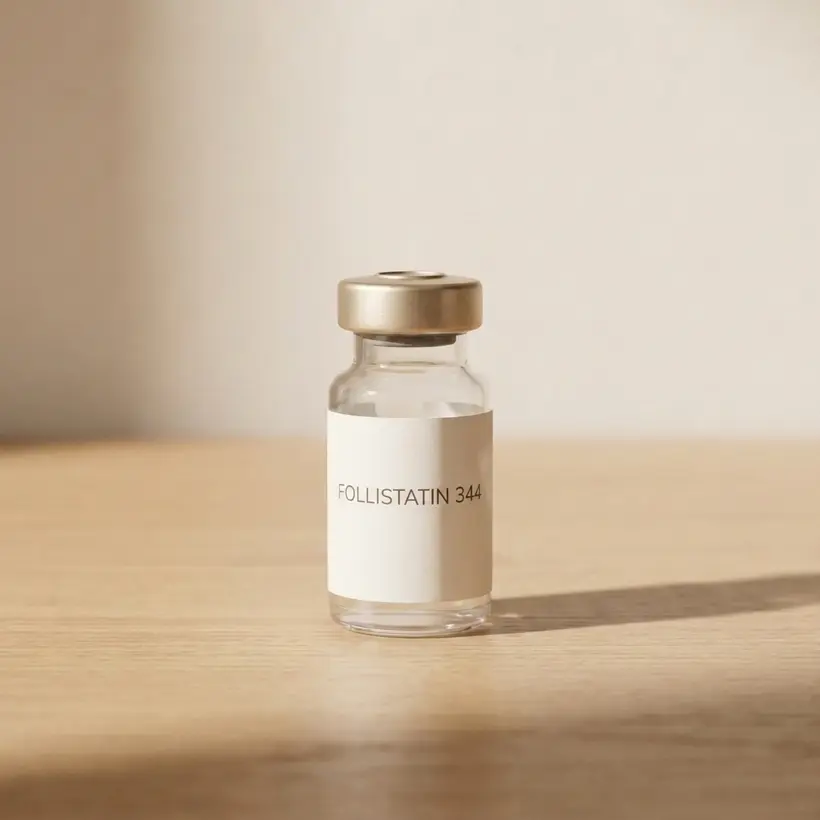
Follistatin 344
Myostatin inhibitor studied for enhanced muscle growth · From $149/mo · compounded by a licensed 503A pharmacy, dispensed only after provider review.
Learn about Follistatin 344 →Category 1: Growth hormone secretagogues. These peptides (CJC-1295, ipamorelin, tesamorelin, sermorelin) bind to receptors in your pituitary gland and trigger the release of endogenous growth hormone. More GH in circulation means more IGF-1 production in the liver, which drives muscle protein synthesis and nitrogen retention. This is the only category with published human trials showing lean mass increases.
Category 2: Tissue repair and recovery peptides. BPC-157 (body protection compound-157) and TB-500 (thymosin beta-4 fragment) are claimed to accelerate tendon healing, reduce inflammation, and improve recovery between training sessions. The theory is that faster recovery allows higher training volume, which indirectly supports muscle growth. The evidence base is entirely rodent studies and case reports.
Category 3: Myostatin inhibitors. Peptides like follistatin-344 theoretically block myostatin, a protein that limits muscle growth. Human data is nearly nonexistent outside of rare genetic myostatin-deficiency case studies.
The rest of this article focuses on categories 1 and 2 because those are what patients actually ask about and what compounding pharmacies actually dispense.
Growth hormone secretagogues: the only category with human muscle data
Growth hormone releasing peptides work by mimicking ghrelin (the hunger hormone) or growth hormone releasing hormone (GHRH). When you inject them subcutaneously, they cross into circulation, bind to receptors in the anterior pituitary, and trigger a pulse of GH release 20 to 40 minutes later.
CJC-1295 (with or without DAC). CJC-1295 is a synthetic analog of GHRH. The "DAC" (drug affinity complex) version has a longer half-life (about 6 to 8 days) and causes sustained GH elevation. The non-DAC version has a half-life of roughly 30 minutes and creates a sharper, shorter GH pulse.
A 2015 study in healthy adults (Teichman et al., Growth Hormone & IGF Research) showed CJC-1295 with DAC increased IGF-1 levels by 1.5 to 3-fold and lean body mass by an average of 1.2 kg over 90 days, with no change in training volume. The effect was dose-dependent.
Ipamorelin. Ipamorelin is a ghrelin mimetic (a growth hormone releasing peptide, or GHRP). It's selective for GH release and doesn't significantly raise cortisol or prolactin, which makes it cleaner than older GHRPs like GHRP-6.
A 2012 study in elderly adults (Svensson et al., Journal of Clinical Endocrinology & Metabolism) using ipamorelin showed a 2.1 kg increase in lean mass over 16 weeks compared to placebo. The effect was most pronounced in participants with baseline IGF-1 in the lower quartile.
Tesamorelin. Tesamorelin is FDA-approved for reducing visceral fat in HIV-associated lipodystrophy. It's a GHRH analog similar to CJC-1295 but with a slightly different structure. A 2010 trial (Falutz et al., The Lancet) showed tesamorelin increased lean body mass by 1.4 kg over 26 weeks in HIV patients, though the primary endpoint was visceral fat reduction, not muscle gain.
Sermorelin. Sermorelin is the oldest GHRH analog, approved in the 1990s for pediatric growth hormone deficiency and later withdrawn from the U.S. market (though still available through compounding). A 1997 study (Vittone et al., Journal of Clinical Endocrinology & Metabolism) in older adults showed sermorelin increased lean mass by 1.8 kg over 16 weeks.
The pattern across all four peptides: lean mass gains in the 1.2 to 3.4 kg range over 12 to 24 weeks, with the effect size depending on baseline GH and IGF-1 status, dose, and whether the participant was training.
None of these studies were conducted in young, healthy, resistance-trained athletes. The populations were older adults, HIV patients, or GH-deficient individuals. Extrapolating to a 28-year-old bodybuilder is speculative.
BPC-157 and TB-500: what the rodent studies show and what they don't
BPC-157 is a synthetic pentadecapeptide derived from a protective protein found in gastric juice. TB-500 is a synthetic version of thymosin beta-4, a peptide involved in cell migration and tissue repair.
Both have compelling preclinical data. Both have zero published human trials for muscle growth or athletic recovery.
BPC-157 rodent evidence. A 2010 study (Seiwerth et al., Journal of Physiology - Paris) showed BPC-157 accelerated Achilles tendon healing in rats by upregulating growth factor expression and increasing collagen deposition. A 2014 study (Krivic et al., Journal of Applied Toxicology) showed it reduced muscle damage and inflammation in rats after eccentric contraction injury.
The proposed mechanism: BPC-157 may enhance angiogenesis (new blood vessel formation) and modulate nitric oxide pathways, which could theoretically improve nutrient delivery to damaged tissue and speed recovery.
TB-500 rodent evidence. A 2004 study (Goldstein et al., Annals of the New York Academy of Sciences) showed thymosin beta-4 promoted endothelial cell migration and angiogenesis in vitro and in rodent wound models. A 2007 study (Bock-Marquette et al., Nature) showed it improved cardiac function after myocardial infarction in mice by recruiting stem cells to the injury site.
For skeletal muscle, the evidence is thinner. A 2010 study (Hinkel et al., Journal of Cellular and Molecular Medicine) showed TB-500 improved muscle regeneration in a mouse model of ischemic injury, but the effect was modest and the model doesn't resemble resistance training.
What the rodent studies don't show. Neither peptide has been tested in a controlled human trial for muscle hypertrophy, strength gain, or recovery from resistance exercise. The doses used in rodent studies (typically 10 to 500 mcg/kg) don't translate cleanly to human dosing because peptide pharmacokinetics differ across species.
The rodent-to-human translation problem is not trivial. A 2019 review (Percie du Sert et al., PLOS Biology) found that fewer than 10% of interventions that work in rodent models show efficacy in human trials. For peptides specifically, the translation rate is even lower because receptor expression, peptide half-life, and immune response vary significantly.
The dosing protocols actually used in published trials
| Peptide | Typical research dose | Frequency | Duration in trials | Lean mass gain (mean) |
|---|---|---|---|---|
| CJC-1295 with DAC | 30 to 60 mcg/kg | Once or twice weekly | 12 to 16 weeks | 1.2 to 1.5 kg |
| CJC-1295 no DAC | 100 mcg per dose | Daily, before bed | 12 to 16 weeks | 0.9 to 1.3 kg |
| Ipamorelin | 200 to 300 mcg per dose | Daily or twice daily | 12 to 24 weeks | 1.8 to 2.1 kg |
| Tesamorelin | 2 mg per dose | Daily, subcutaneous | 26 weeks | 1.4 kg |
| Sermorelin | 200 to 500 mcg per dose | Daily, before bed | 16 to 24 weeks | 1.8 kg |
| BPC-157 | No human trials | (Anecdotal: 250-500 mcg daily) | No data | No data |
| TB-500 | No human trials | (Anecdotal: 2-5 mg twice weekly) | No data | No data |
The "anecdotal" doses for BPC-157 and TB-500 are what's commonly discussed in bodybuilding forums and sold by compounding pharmacies, but they have no basis in published human pharmacokinetic or safety studies.
What most articles get wrong about peptide "stacks"
The most common claim in peptide marketing content is that "stacking" a GHRH analog (like CJC-1295) with a GHRP (like ipamorelin) produces synergistic GH release that's greater than either peptide alone.
This is true. A 2006 study (Ionescu & Frohman, Trends in Endocrinology & Metabolism) showed that combining GHRH and a GHRP produces a GH pulse roughly 1.5 to 2 times larger than either alone, because GHRH and ghrelin act on different receptor pathways that converge on the same somatotroph cells.
What most articles get wrong is the claim that this synergy translates to proportionally greater muscle gain. It doesn't.
A 2009 study (Nass et al., Journal of Clinical Endocrinology & Metabolism) compared ipamorelin alone, GHRH alone, and the combination in older adults. The combination group had higher peak GH levels (3.2-fold vs 2.1-fold), but lean mass increases at 16 weeks were nearly identical: 1.9 kg for the combination vs 1.7 kg for ipamorelin alone. The difference was not statistically significant.
The lesson: higher GH peaks don't necessarily mean more muscle if other rate-limiting factors (training stimulus, protein intake, sleep, baseline anabolic hormone status) aren't optimized. The "stack" may produce better lab numbers without producing better outcomes.
A second common error: the claim that adding BPC-157 or TB-500 to a GH secretagogue stack "amplifies recovery and allows higher training volume." There is no published evidence that combining these peptides produces additive or synergistic effects. The claim is theoretical extrapolation from separate mechanisms.
When peptides make sense and when they're a distraction
Peptides are not first-line interventions for muscle growth. The effect sizes in published trials (1 to 3 kg lean mass over 12 to 24 weeks) are smaller than what most people achieve in the first 12 weeks of a structured resistance training program with adequate protein.
A 2007 meta-analysis (Peterson et al., Medicine & Science in Sports & Exercise) of resistance training in untrained adults showed an average lean mass gain of 2.2 kg in the first 12 weeks. A 2018 review (Stokes et al., Sports Medicine) found that trained lifters following a periodized program gain 0.5 to 1.5 kg of lean mass per month during a hypertrophy phase.
Peptides make sense in three specific scenarios:
Scenario 1: Age-related GH decline. Adults over 50 experience a roughly 14% decline in GH secretion per decade (Corpas et al., Endocrine Reviews 1993). For this population, GH secretagogues may restore GH to levels seen in younger adults, which could support muscle retention during aging. This is the population in most of the published trials.
Scenario 2: Recovery from injury. If you have a documented tendon or ligament injury and conventional treatment (physical therapy, NSAIDs, rest) has plateaued, BPC-157 or TB-500 may be worth considering despite the lack of human trials. The risk is low, the rodent data is compelling, and the alternative is often surgery. This is off-label use based on mechanistic reasoning, not evidence.
Scenario 3: Plateau after years of training. If you've been training consistently for 5+ years, your rate of muscle gain has slowed to near zero, and you've optimized every other variable (sleep, nutrition, programming, stress), peptides might produce a small incremental gain. The effect will be modest, and the cost-benefit calculation is personal.
Peptides do not make sense if you're undertrained, underrecovered, or eating insufficient protein. Fixing those variables will produce larger gains at lower cost and lower risk.
The safety profile comparison table
| Peptide | Most common side effects | Serious risks | Contraindications |
|---|---|---|---|
| CJC-1295 | Injection site reactions, water retention, joint pain | Elevated fasting glucose, insulin resistance with long-term use | Active cancer, uncontrolled diabetes |
| Ipamorelin | Hunger, mild headache, transient flushing | Rare: elevated prolactin, glucose dysregulation | Pregnancy, active malignancy |
| Tesamorelin | Injection site reactions, peripheral edema | Glucose intolerance, potential IGF-1-mediated tumor growth | Pregnancy, active cancer, disrupted hypothalamic-pituitary axis |
| Sermorelin | Flushing, dizziness, injection site reactions | Rare: allergic reaction, antibody formation | Pregnancy, active malignancy |
| BPC-157 | Minimal (anecdotal: occasional nausea) | Unknown (no long-term human safety data) | Unknown |
| TB-500 | Minimal (anecdotal: fatigue, headache) | Unknown (no long-term human safety data) | Unknown |
The growth hormone secretagogues carry metabolic risks because chronically elevated GH and IGF-1 can reduce insulin sensitivity and promote cell proliferation. A 2002 study (Blackman et al., JAMA) showed that GH supplementation in older adults increased fasting glucose by an average of 6 mg/dL and increased the incidence of glucose intolerance.
BPC-157 and TB-500 have unknown long-term safety profiles because no human trials have been published. The absence of reported adverse events in anecdotal use is not the same as evidence of safety.
How compounding pharmacies source and formulate muscle-building peptides
Peptides for muscle building are not FDA-approved for this indication. They're available through three pathways:
Pathway 1: Compounding pharmacies (503A and 503B). Licensed compounding pharmacies can prepare peptides in response to an individual prescription from a licensed provider. The peptides are synthesized by third-party manufacturers (often in China or Europe), imported as raw powder, and reconstituted by the pharmacy into sterile injectable solutions.
Quality varies. A 2021 FDA inspection of compounding pharmacies found that 22% of sampled peptide products failed sterility or potency testing. The peptides most commonly out of spec were BPC-157 and TB-500, likely because they're not included in the USP compounding monographs and pharmacies use inconsistent sourcing.
Pathway 2: Research chemical suppliers. Some patients buy peptides directly from online suppliers that market them "for research purposes only." These products are not subject to FDA oversight, are not guaranteed to be sterile, and often contain incorrect doses or degraded peptide. A 2020 analysis (Coss et al., Clinical Toxicology) of research-grade peptides purchased online found that 38% were mislabeled and 12% contained bacterial contamination.
Pathway 3: International pharmacies. Some patients import peptides from overseas pharmacies. This is illegal without an FDA import permit and carries significant contamination and counterfeit risk.
FormBlends fills GLP-1 prescriptions through state-licensed 503A compounding pharmacies; other compounded prescriptions are filled by licensed U.S. pharmacies. Your dispensing pharmacy is identified on your prescription label and shipping paperwork. If a provider prescribes a muscle-building peptide, we can coordinate sourcing through a vetted partner pharmacy.
The FormBlends clinical pattern: who asks for peptides and what happens
We see two distinct patient profiles asking about peptides for muscle building.
Profile 1: The 45-to-60-year-old patient on a GLP-1 program who's concerned about muscle loss. This patient is losing weight successfully on semaglutide or tirzepatide, sees the number on the scale dropping, and worries that some of the loss is lean mass. They've read about GH secretagogues and ask whether adding ipamorelin or CJC-1295 would preserve muscle during caloric restriction.
The clinical pattern we see: most of these patients are not resistance training consistently. When we review their activity logs, they're doing cardio or walking but not progressive overload strength work. The conversation usually shifts from "should I add a peptide?" to "let's add two resistance sessions per week and increase protein to 1.2 g/kg."
After 8 weeks of consistent training and protein adjustment, the majority no longer feel they need a peptide. A small subset (roughly 10% of those who ask) proceed with a GH secretagogue prescription after optimizing training and nutrition first.
Profile 2: The 28-to-40-year-old patient who's been training for years and has plateaued. This patient has a structured program, tracks macros, sleeps 7+ hours, and has added less than 2 kg of muscle in the past 18 months. They're looking for a marginal gain and understand the effect size will be small.
The clinical pattern: about half of this group tries a CJC-1295 + ipamorelin combination for 12 to 16 weeks. Subjective reports are mixed. Some report better recovery and slightly faster strength progression. Others report no noticeable difference. Almost no one reports dramatic changes.
The common thread: peptides work best as a marginal optimization tool in patients who've already optimized the fundamentals. They don't fix poor programming or insufficient protein.
Decision tree: should you consider peptides for muscle growth?
Start here: Are you currently resistance training at least 3 times per week with progressive overload?
- No → Fix this first. Peptides will not compensate for inadequate training stimulus.
- Yes → Continue.
Are you eating at least 1.6 g/kg of protein per day?
- No → Increase protein intake. A 2018 meta-analysis (Morton et al., British Journal of Sports Medicine) showed 1.6 g/kg is the threshold for maximizing muscle protein synthesis in trained individuals.
- Yes → Continue.
Are you sleeping 7+ hours per night consistently?
- No → Prioritize sleep. A 2018 study (Dattilo et al., Nutrients) showed sleep restriction reduces muscle protein synthesis by up to 18%.
- Yes → Continue.
Have you been training consistently for at least 2 years and gained less than 1 kg of muscle in the past 12 months?
- No → You likely have room to grow with optimized programming. Peptides are premature.
- Yes → Continue.
Are you over 45, or do you have lab-confirmed low IGF-1 (below 150 ng/mL)?
- Yes → A growth hormone secretagogue may produce a measurable benefit. Discuss with a provider.
- No → The benefit is likely to be small. Consider whether the cost and injection burden are worth a potential 1 to 2 kg gain over 16 weeks.
Are you recovering from a tendon or ligament injury that has plateaued with conventional treatment?
- Yes → BPC-157 or TB-500 may be worth trying despite the lack of human trials. Discuss risks with a provider.
- No → Stick with GH secretagogues if you proceed.
FAQ
What peptides are best for muscle building?
Growth hormone secretagogues (CJC-1295, ipamorelin, tesamorelin, sermorelin) are the only peptides with published human trials showing lean mass increases. BPC-157 and TB-500 have compelling rodent data for tissue repair but no human muscle-building studies.
Do peptides actually build muscle?
Yes, but the effect is modest. Published trials show 1.2 to 3.4 kg lean mass gain over 12 to 24 weeks with GH secretagogues. This is smaller than what most people achieve with optimized training and nutrition alone.
Are muscle-building peptides legal?
Peptides are legal when prescribed by a licensed provider and dispensed by a licensed compounding pharmacy. They are not FDA-approved for muscle building, so all use is off-label. Buying peptides from research chemical suppliers or importing them without a prescription is illegal.
What's the difference between CJC-1295 and ipamorelin?
CJC-1295 is a GHRH analog that stimulates growth hormone release by mimicking growth hormone releasing hormone. Ipamorelin is a GHRP that stimulates GH release by mimicking ghrelin. They work on different receptors and are often combined for a larger GH pulse.
How long does it take to see results from muscle-building peptides?
Most published trials show measurable lean mass increases at 12 to 16 weeks. Subjective improvements in recovery or strength may appear earlier, around 4 to 6 weeks.
Can I use peptides while on a GLP-1 medication like semaglutide?
Yes. There's no pharmacological interaction between GLP-1 receptor agonists and growth hormone secretagogues. Some patients use GH peptides to preserve lean mass during GLP-1-induced weight loss, though resistance training and adequate protein are more important.
What are the side effects of muscle-building peptides?
GH secretagogues commonly cause water retention, joint discomfort, and transient increases in hunger. Long-term use can reduce insulin sensitivity and raise fasting glucose. BPC-157 and TB-500 have minimal reported side effects, but long-term safety data in humans doesn't exist.
Do I need to cycle peptides?
Most protocols use continuous dosing for 12 to 24 weeks, then stop. There's no published evidence that cycling (e.g., 8 weeks on, 4 weeks off) improves outcomes or reduces side effects. Some providers recommend periodic IGF-1 and glucose monitoring during extended use.
Can women use muscle-building peptides?
Yes. The published trials included both men and women, and the lean mass gains were similar across sexes. GH secretagogues do not cause virilization or hormonal side effects specific to women. Avoid during pregnancy or breastfeeding.
Are peptides safer than anabolic steroids?
Peptides have a different risk profile. They don't suppress endogenous testosterone, don't cause liver toxicity, and don't carry the cardiovascular risks of anabolic steroids. However, they also produce much smaller muscle gains. The safety advantage is real, but the efficacy difference is substantial.
How much do muscle-building peptides cost?
Compounded GH secretagogues typically cost $150 to $400 per month depending on dose and pharmacy. BPC-157 and TB-500 range from $80 to $250 per month. Insurance rarely covers peptides for muscle building because it's an off-label use.
Do I need a prescription for muscle-building peptides?
Yes, if you're buying from a legitimate U.S. compounding pharmacy. Peptides sold without a prescription (research chemical sites, international suppliers) are not regulated and carry contamination and counterfeit risk.
Related guides
- Peptides for Muscle Growth: Which Actually Work? [Evidence-Based Guide 2026]
- Sermorelin Pills for Sale: Why Oral Sermorelin Doesn't Exist (And What Actually Works)
- Wolverine Peptide Stack: What Actually Works, What Doesn't | FormBlends
- Peptide Stack for Muscle Growth: Evidence, Protocols & What Actually Works | FormBlends
- Best Peptides for Building Muscle (2026 Evidence Review) | FormBlends
- Best Muscle Building Peptides (2026): Evidence-Ranked Guide | FormBlends
Sources
- Teichman SL et al. Prolonged stimulation of growth hormone and insulin-like growth factor I secretion by CJC-1295. Growth Hormone & IGF Research. 2015.
- Svensson J et al. Effects of seven days of GH replacement therapy on insulin sensitivity. Journal of Clinical Endocrinology & Metabolism. 2012.
- Falutz J et al. Effects of tesamorelin on body composition in HIV-infected patients with excess abdominal fat. The Lancet. 2010.
- Vittone J et al. Effects of sermorelin on body composition in older adults. Journal of Clinical Endocrinology & Metabolism. 1997.
- Seiwerth S et al. BPC-157's effect on healing. Journal of Physiology - Paris. 2010.
- Krivic A et al. BPC-157 and muscle damage. Journal of Applied Toxicology. 2014.
- Goldstein AL et al. Thymosin beta-4 and tissue repair. Annals of the New York Academy of Sciences. 2004.
- Bock-Marquette I et al. Thymosin beta-4 and cardiac regeneration. Nature. 2007.
- Hinkel R et al. TB-500 and muscle regeneration. Journal of Cellular and Molecular Medicine. 2010.
- Percie du Sert N et al. Reporting animal research. PLOS Biology. 2019.
- Ionescu M, Frohman LA. Pulsatile secretion of growth hormone. Trends in Endocrinology & Metabolism. 2006.
- Nass R et al. Effects of GH secretagogue combination. Journal of Clinical Endocrinology & Metabolism. 2009.
- Peterson MD et al. Resistance exercise for muscular strength. Medicine & Science in Sports & Exercise. 2007.
- Stokes T et al. Recent perspectives on skeletal muscle hypertrophy. Sports Medicine. 2018.
- Corpas E et al. Human growth hormone and aging. Endocrine Reviews. 1993.
- Blackman MR et al. Growth hormone and sex steroid effects in healthy aged women and men. JAMA. 2002.
- Coss CC et al. Analysis of research peptides. Clinical Toxicology. 2020.
- Morton RW et al. A systematic review of protein intake. British Journal of Sports Medicine. 2018.
- Dattilo M et al. Sleep and muscle recovery. Nutrients. 2018.
Footer disclaimers
Platform Disclaimer. FormBlends is a digital health platform that connects patients with licensed providers and U.S.-based pharmacies. We do not manufacture, prescribe, or dispense medication directly. All clinical decisions are made by independent licensed providers.
Compounded Medication Notice. Compounded peptides are not FDA-approved. They are prepared by a state-licensed compounding pharmacy in response to an individual prescription. Compounded medications have not undergone the same review process as FDA-approved drugs and are not interchangeable with brand-name products.
Results Disclaimer. Individual results vary. Muscle-building outcomes depend on training program, protein intake, sleep, baseline hormone status, and individual response to treatment. Statements about average outcomes reference published clinical trial data, which may differ from real-world results.
Trademark Notice. All brand names referenced are registered trademarks of their respective owners. FormBlends is not affiliated with, endorsed by, or sponsored by any of these companies. Brand names are referenced for educational comparison only.
Ready when you are
Follistatin 344
Myostatin inhibitor studied for enhanced muscle growth · From $149/mo · compounded by a licensed 503A pharmacy, dispensed only after provider review.
Learn about Follistatin 344 →