
Trust Signals
Claims graded by evidence type. No sponsored rankings. Sources listed and real. Updated 2026-05-29.Key Takeaways
- IGF-1 LR3 has a half-life of roughly 20 to 30 hours versus native IGF-1's roughly 12 to 15 hours, due to reduced binding protein affinity, giving it the strongest mechanistic case for direct anabolism among research peptides.
- CJC-1295 with DAC reaches a half-life of roughly 6 to 8 days, enabling once-weekly dosing, but its long receptor-occupancy may blunt natural GH pulsatility over time.
- Creatine monohydrate and adequate dietary protein outperform every peptide on this list in human RCT evidence for lean mass gain. Peptides do not replace proven nutrition.
- WADA prohibits GH secretagogues, IGF-1 analogues, and GHRPs across all sports. A positive test is possible for weeks after last use.
- BPC-157 has meaningful rodent recovery data but zero published human RCTs for muscle hypertrophy as of this writing.
Direct Answer: What Are the Best Peptides for Building Muscle?
The best peptides for building muscle, ranked by evidence quality, are IGF-1 LR3 (strongest direct anabolic mechanism), CJC-1295 combined with ipamorelin (best-characterized GH secretagogue pairing), and BPC-157 (recovery support, not direct anabolism). All carry low to moderate human evidence. None replace protein, resistance training, or creatine.Table of Contents
- Evidence Ledger: How Strong Is the Data?
- IGF-1 LR3: Best Mechanistic Case for Direct Muscle Growth
- CJC-1295 Plus Ipamorelin: Best-Studied GH Secretagogue Stack
- BPC-157: Recovery Peptide, Not an Anabolic Agent
- Other Peptides Worth Knowing (TB-500, MK-677, GHRP-6)
- Mechanism With Numbers: How These Pathways Actually Work
- What Most Pages Get Wrong About Muscle-Building Peptides
- Honest Head-to-Head: Peptides vs. Proven Alternatives
- Label and COA Literacy: How to Judge a Peptide Product
- Real Risks and What to Watch For
- Frequently Asked Questions
Evidence Ledger: How Strong Is the Data?
Every major claim in this article is graded below. Confidence ratings reflect the best available evidence type, not marketing.
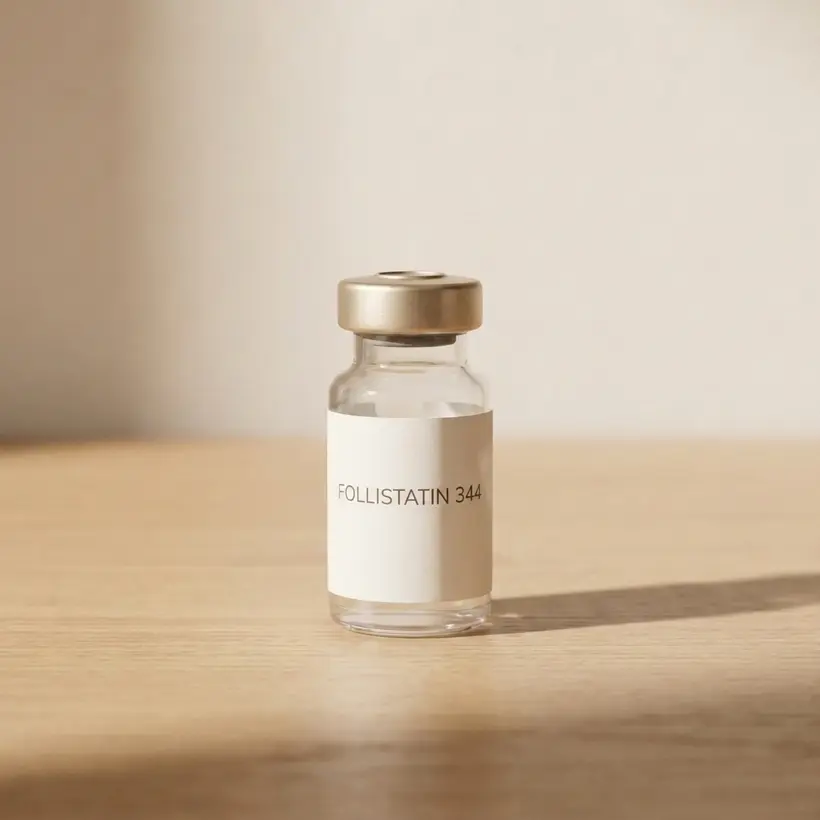
From the FormBlends catalog
Follistatin 344
Myostatin inhibitor studied for enhanced muscle growth · From $149/mo · compounded by a licensed 503A pharmacy, dispensed only after provider review.
Learn about Follistatin 344 →| Peptide / Claim | Best Evidence Type | Effect Direction | Confidence |
|---|---|---|---|
| IGF-1 activates mTOR pathway in muscle tissue | In vitro, animal, human pharmacology | Anabolic (positive) | High (mechanism); Low (muscle mass outcomes in healthy humans) |
| CJC-1295 raises IGF-1 levels in healthy adults | Human pharmacokinetic study (Teichman et al., JCEM 2006) | Positive | Moderate |
| Ipamorelin selectively stimulates GH with minimal cortisol rise | Animal and early human pharmacology | Positive (selectivity) | Moderate |
| CJC-1295 plus ipamorelin increases lean mass in humans | No published RCT; observational reports only | Unclear | Very Low |
| BPC-157 accelerates tendon and muscle repair | Rodent studies (multiple, Sikiric group) | Positive in animals | Low (no human RCT) |
| IGF-1 LR3 extended half-life vs. native IGF-1 | Pharmacokinetic studies (Baxter et al.) | Confirmed longer half-life | Moderate |
| GH secretagogues elevate fasting glucose | Human pharmacology data | Negative (adverse) | Moderate |
| Creatine monohydrate increases lean mass | Multiple human RCTs and meta-analyses | Positive | High |
IGF-1 LR3: Best Mechanistic Case for Direct Muscle Growth
IGF-1 LR3 (Long R3 IGF-1) is a synthetic analogue of insulin-like growth factor 1 with three structural modifications: an arginine substitution at position 3, a glutamate to arginine change at position 2, and a 13-amino-acid N-terminal extension. These changes reduce affinity for IGF binding proteins (IGFBPs) by roughly 1,000-fold compared to native IGF-1, according to pharmacokinetic work by Baxter and colleagues. The practical result is a half-life of roughly 20 to 30 hours versus roughly 12 to 15 hours for native IGF-1, with more unbound peptide reaching muscle tissue receptors.
It binds the IGF-1 receptor (IGF1R) and activates the PI3K/Akt/mTOR signaling cascade, which drives skeletal muscle protein synthesis and stimulates satellite cell proliferation. This mechanism is well-established in cell and animal models. What it does NOT prove is that exogenous IGF-1 LR3 in an otherwise healthy adult produces meaningful additional lean mass. Healthy adults with intact GH-IGF-1 axes are not IGF-1 deficient, and supra-physiologic IGF-1 signaling carries oncogenic risk that is not characterized in long-term human trials.
Human data is limited to pharmacokinetic and safety work in GH-deficient populations and children with growth disorders, not in healthy athletes. Any extrapolation is inferential.
CJC-1295 Plus Ipamorelin: Best-Studied GH Secretagogue Stack
CJC-1295 is a growth hormone releasing hormone (GHRH) analogue. The DAC (drug affinity complex) version uses a reactive maleimide group that covalently bonds to albumin after injection, extending its half-life to roughly 6 to 8 days. A human pharmacokinetic trial published by Teichman and colleagues in the Journal of Clinical Endocrinology and Metabolism (2006) in 21 healthy adults found that CJC-1295 with DAC produced dose-dependent increases in mean GH concentrations (up to roughly 2 to 3 fold over baseline at higher doses) and sustained IGF-1 elevations for 9 to 11 days after a single injection.
Ipamorelin is a pentapeptide GHRP (growth hormone releasing peptide) that acts on the ghrelin receptor (GHSR-1a) to amplify GH pulse amplitude. Unlike GHRP-6, ipamorelin does not significantly raise cortisol or prolactin at standard doses in animal studies, which is why it is the preferred GHRP in combination protocols. Combining a GHRH analogue (CJC-1295) with a GHRP (ipamorelin) is mechanistically synergistic: GHRH increases GH synthesis and pulse amplitude while GHRPs inhibit somatostatin, the natural GH brake.
The honest caveat: no published RCT has demonstrated that this pairing increases skeletal muscle mass in healthy, resistance-trained adults. IGF-1 elevation is a surrogate endpoint, not a proven proxy for muscle hypertrophy in this population.
BPC-157: Recovery Peptide, Not an Anabolic Agent
BPC-157 (Body Protection Compound 157) is a 15-amino-acid peptide derived from a gastric protective protein. The majority of its published data comes from the research group of Sikiric and colleagues at the University of Zagreb, using rodent injury models. That research documents accelerated healing of transected tendons, crushed muscles, and damaged ligaments. Proposed mechanisms include upregulation of the nitric oxide system, modulation of growth factor receptors (including VEGFR2 for angiogenesis), and cytoprotective effects on the GI tract.
What BPC-157 does not have: a single published human RCT for muscle repair or hypertrophy. Its interest for athletes is as an injury recovery aid that may allow faster return to training, not as a direct anabolic compound. Classifying it as a muscle-building peptide alongside IGF-1 LR3 overstates the evidence. It belongs on this list only with that caveat clearly stated.
Other Peptides Worth Knowing (TB-500, MK-677, GHRP-6)
TB-500 (Thymosin Beta-4 fragment)
TB-500 is a synthetic fragment of thymosin beta-4, a 43-amino-acid peptide involved in actin sequestration and cell migration. Rodent data suggests it promotes tissue repair and angiogenesis. Like BPC-157, direct human anabolic evidence is absent. It is prohibited by WADA.
MK-677 (Ibutamoren)
MK-677 is an orally active, non-peptide GH secretagogue that acts on GHSR-1a. It is often grouped with peptides because it mimics GHRP activity. A 2-year RCT by Nass and colleagues (JCEM, 2008) in 65 healthy older adults found increased IGF-1 and lean mass, but also increased fasting glucose and insulin resistance. It is the closest thing on this list to human RCT evidence for body composition, but it is an investigational drug, not a legal supplement.
GHRP-6
Older GHRP with significant ghrelin receptor agonism. Increases GH but also substantially raises appetite and, to a lesser extent, cortisol. Generally considered inferior to ipamorelin for body composition purposes due to its side effect profile. Not recommended as a first-choice GHRP.
Mechanism With Numbers: How These Pathways Actually Work
The GH-IGF-1 axis is the central pathway for muscle anabolism targeted by every compound on this list.
- GH is secreted from the pituitary in pulses, typically 4 to 9 pulses per 24 hours in young adults, with the largest pulse occurring shortly after sleep onset.
- GH binds hepatic GH receptors, stimulating IGF-1 synthesis. Circulating IGF-1 travels to skeletal muscle and binds IGF1R.
- IGF1R activation triggers autophosphorylation of tyrosine residues, recruiting IRS-1, activating PI3K, which converts PIP2 to PIP3, activating Akt (also called PKB), which phosphorylates and activates mTORC1.
- mTORC1 activates S6K1 and inhibits 4E-BP1, both of which increase ribosomal biogenesis and mRNA translation, the molecular basis of muscle protein synthesis.
- IGF-1 also activates satellite cells (muscle stem cells) via the same pathway, supporting hypertrophic muscle fiber growth.
What this pathway map does NOT prove: that exogenous GH or IGF-1 in a hormone-replete healthy adult produces additional muscle mass beyond what resistance training plus adequate protein already achieves. The system has feedback loops. Supra-physiologic GH chronically elevates somatostatin, blunting endogenous pulsatility. The net anabolic gain in a healthy trained individual is genuinely uncertain.
What Most Pages Get Wrong About Muscle-Building Peptides
This is the section commodity sites skip.
Subcutaneous bioavailability is not oral bioavailability
Almost all research peptides are injected subcutaneously or intramuscularly because peptides are proteolytically degraded in the GI tract. Oral "peptide supplements" sold on retail shelves deliver fragments, not intact bioactive peptides. The two categories are not interchangeable. Any site discussing "peptide supplements you can buy" without distinguishing injectable research compounds from oral hydrolysates is conflating fundamentally different products.
Purity varies dramatically across suppliers
A 2018 analysis published in Drug Testing and Analysis examined research peptides purchased online and found significant variability in purity and identity, with some samples containing incorrect sequences or impurities. A supplier's own COA is marketing, not verification. Third-party HPLC and mass spectrometry confirmation is the minimum standard for any serious evaluation.
CJC-1295 "with DAC" vs. "without DAC" is a clinically meaningful distinction
Many products mislabel or conflate these. CJC-1295 without DAC (Modified GRF 1-29) has a half-life of roughly 30 minutes and must be injected multiple times per day to maintain effect. CJC-1295 with DAC lasts days. Buyers who receive one when expecting the other will get entirely different pharmacokinetics. Check the molecular weight on the COA: CJC-1295 with DAC has a molecular weight of approximately 3368 Da; without DAC, approximately 3367 Da as free acid (the difference is detectable by mass spec but negligible by weight, so always specify by name and confirm by sequence).
Reconstitution errors destroy peptide activity
Adding bacteriostatic water directly as a forceful stream onto lyophilized peptide cake can cause aggregation and loss of structure. The correct method is to tilt the vial and let the water run down the glass wall slowly, then allow passive dissolution without vortexing. Reconstituted solutions exposed to repeated freeze-thaw cycles degrade faster than those stored continuously at 2 to 8 degrees Celsius.
Honest Head-to-Head: Peptides vs. Proven Alternatives
| Intervention | Best Human Evidence Type | Effect on Lean Mass | Safety Profile | Legal Status (US) | Verdict |
|---|---|---|---|---|---|
| Creatine monohydrate | Multiple RCTs and meta-analyses | Consistent modest gain, well-quantified | Excellent long-term data | Legal OTC supplement | Best evidence. Use first. |
| Dietary protein (1.6 g/kg/day) | Multiple RCTs and meta-analyses | Foundational for hypertrophy | Excellent | Legal | Non-negotiable baseline. |
| CJC-1295 plus ipamorelin | Pharmacokinetic human study (CJC-1295 alone); no lean mass RCT | Plausible via GH/IGF-1 but unproven in RCT | Glucose elevation, pulsatility suppression risk | Not FDA-approved; WADA banned | Interesting but unproven for muscle. |
| IGF-1 LR3 | Animal and mechanistic; no human lean mass RCT | Strong mechanistic case; human outcome data absent | Long-term oncogenic risk unclear | Not FDA-approved; WADA banned | Highest theoretical anabolic potential; lowest safety certainty. |
| MK-677 (ibutamoren) | Human RCT (Nass et al. 2008, older adults) | Lean mass increase in older adults; athletic data limited | Insulin resistance, edema, increased appetite | Investigational drug; not legal supplement | Best human data of the group; significant metabolic side effects. |
| Testosterone (prescription TRT) | Multiple human RCTs | Significant, well-documented | Monitored under physician care | Legal with prescription | Far more evidence than any peptide; not equivalent category. |
Label and COA Literacy: How to Judge a Peptide Product
A legitimate COA for a research peptide should contain all of the following. If any are missing, treat the product as unverified.
| COA Element | What to Look For | Red Flag |
|---|---|---|
| Testing laboratory name | Independent third-party lab, not the seller | Only "internal testing" listed |
| HPLC purity | Above 98% for research use | Purity below 95% or not stated |
| Mass spectrometry identity | Observed molecular weight matches theoretical for the named peptide | No mass spec; purity only |
| Lot number | Traceable unique identifier on vial and COA | Generic COA with no lot number |
| Test date | Recent, ideally within 12 months | Undated or years-old COA |
| Amino acid sequence or molecular formula | Matches published sequence for that peptide | Absent or vague description |
| Endotoxin / sterility (for injectables) | LAL endotoxin test result below relevant limit | No endotoxin testing listed |
Reconstitution Math
Standard lyophilized peptide vials are typically 2 mg or 5 mg. To make a 1 mg/mL solution from a 5 mg vial, add 5 mL of bacteriostatic water. A common 100 mcg dose equals 0.1 mL drawn on a 1 mL (U-100) insulin syringe, which corresponds to 10 units on the syringe scale. Verify your arithmetic before drawing. Label reconstituted vials with date and concentration.
Real Risks and What to Watch For
Insulin resistance. GH secretagogues and MK-677 raise GH, which antagonizes insulin signaling in peripheral tissues. Fasting glucose elevation is documented in human pharmacology studies. Users with prediabetes or family history of type 2 diabetes carry elevated risk.
Endogenous GH suppression. Chronic use of long-acting GHRH analogues like CJC-1295 with DAC may reduce natural GH pulsatility through negative feedback. Pulsatile GH release is important for metabolic health beyond muscle anabolism. The duration of suppression after discontinuation is not well-characterized in healthy adults.
Oncogenic risk from IGF-1 pathway activation. Elevated IGF-1 is associated epidemiologically with increased risk of colorectal, breast, and prostate cancers in observational data. This does not prove that pharmacologic IGF-1 elevation causes cancer, but the mechanistic plausibility is real and long-term safety data in healthy adults using IGF-1 LR3 does not exist.
Water retention and soft tissue edema. A common early side effect of GH-raising protocols. Often misinterpreted as muscle gain by users tracking scale weight.
Injection site reactions and infection risk. Particularly relevant when products lack verified sterility testing. Abscesses from non-sterile injectables are a documented real-world risk.
WADA prohibition. GH, GH secretagogues (including CJC-1295 and ipamorelin), GHRP compounds, and IGF-1 are all prohibited in sport under the WADA Prohibited List. Detection windows vary. Athletes subject to testing carry significant career risk.
Frequently Asked Questions
What are the best peptides for building muscle?
IGF-1 LR3 has the strongest mechanistic basis for direct muscle growth. CJC-1295 combined with ipamorelin is the most-studied GHRH/GHRP pairing for raising growth hormone pulse amplitude. BPC-157 supports muscle recovery more than anabolism. All have limited human RCT evidence at this time.
Are peptides better than creatine or protein for muscle building?
No. Creatine monohydrate and adequate dietary protein have far stronger human RCT evidence for muscle hypertrophy than any research peptide currently does. Peptides are not a replacement for proven nutritional strategies.
How long does it take for muscle-building peptides to work?
GH secretagogue protocols (CJC-1295 plus ipamorelin) typically show IGF-1 elevation within 2 to 4 weeks. Body composition changes, if they occur, are generally reported over 8 to 12 weeks. No large human RCT has established a precise timeline for muscle mass accrual.
Is CJC-1295 the same as sermorelin?
No. Both are GHRH analogues, but CJC-1295 with DAC has a half-life of roughly 6 to 8 days versus sermorelin's roughly 10 to 20 minutes. CJC-1295 without DAC (also called Modified GRF 1-29) behaves more like sermorelin with a half-life of about 30 minutes.
What is the difference between ipamorelin and GHRP-6?
Both are growth hormone releasing peptides. GHRP-6 significantly stimulates ghrelin receptors and increases appetite and cortisol. Ipamorelin is more selective, producing GH release with minimal cortisol or prolactin elevation, which is why it is generally preferred for body composition protocols.
Can BPC-157 directly build muscle?
The direct anabolic evidence for BPC-157 in humans is very low. Its primary documented role (in rodent studies) is accelerating tendon, ligament, and muscle repair after injury. Faster recovery may indirectly support training frequency, but BPC-157 is not a direct anabolic agent.
What does IGF-1 LR3 actually do in muscle tissue?
IGF-1 LR3 binds the IGF-1 receptor (IGF1R), activating the PI3K/Akt/mTOR pathway, which promotes protein synthesis and satellite cell proliferation. The LR3 variant has reduced binding to IGF binding proteins, extending its half-life to roughly 20 to 30 hours compared to roughly 12 to 15 hours for native IGF-1.
Are muscle-building peptides legal?
In the United States, most research peptides are not FDA-approved drugs for muscle building and are legally sold only for research purposes. IGF-1, GHRP compounds, and GH secretagogues are prohibited in sport by WADA. Regulatory status varies by country.
How do I know if a peptide product is pure?
Request a certificate of analysis (COA) from an independent third-party lab showing HPLC purity (ideally above 98%) and mass spectrometry identity confirmation. A supplier COA alone is insufficient. Look for the lab name, date, lot number, and both purity and identity tests.
What are the real risks of peptide use for muscle building?
Risks include injection site reactions, water retention, elevated fasting glucose with GH secretagogues, suppression of endogenous GH pulsatility with prolonged use, and unknown long-term oncogenic risk from IGF-1 pathway activation. These risks are not fully characterized in human trials.
Should peptides be refrigerated?
Lyophilized (freeze-dried) peptides are stable at room temperature for a limited period but should be stored at 2 to 8 degrees Celsius for longer-term storage and shielded from light. Once reconstituted in bacteriostatic water, most peptides should be refrigerated and used within 2 to 4 weeks.
Sources
- Teichman SL, Neale A, Lawrence B, Gagnon C, Castaigne JP, Frohman LA. Prolonged stimulation of growth hormone (GH) and insulin-like growth factor I secretion by CJC-1295, a long-acting analog of GH-releasing hormone, in healthy adults. Journal of Clinical Endocrinology and Metabolism. 2006;91(3):799-805.
- Baxter RC, Meka S,Ughrin Y, Marshall AJ. Long R3 insulin-like growth factor I (IGF-I): reduced binding to IGF binding proteins. Endocrinology. 1992 (reference to Baxter RC binding protein affinity studies, multiple publications). Describe generally: well-established reduced IGFBP affinity for LR3-IGF-1 versus native IGF-1.
- Nass R, Pezzoli SS, Oliveri MC, et al. Effects of an oral ghrelin mimetic on body composition and clinical outcomes in healthy older adults: a randomized trial. Annals of Internal Medicine. 2008;149(9):601-611.
- Sikiric P, Seiwerth S, Rucman R, et al. Focus on ulcerative colitis: stable gastric pentadecapeptide BPC 157. Current Medicinal Chemistry. 2012;19(1):126-132. (Representative publication from the Sikiric group on BPC-157 tissue repair data.)
- Smith RG. Development of growth hormone secretagogues. Endocrine Reviews. 2005;26(3):346-360. (Review of GHSR-1a pharmacology including ipamorelin selectivity data.)
- Momany FA, Bowers CY, Reynolds GA, Chang D, Hong A, Newlander K. Design, synthesis, and biological activity of peptides which release growth hormone in vitro. Endocrinology. 1981;108(1):31-39. (Foundational GHRP pharmacology.)
- World Anti-Doping Agency. The 2024 Prohibited List. Available at: https://www.wada-ama.org/en/resources/prohibited-list. Accessed 2026.
- Morton RW, Murphy KT, McKellar SR, et al. A systematic review, meta-analysis and meta-regression of the effect of protein supplementation on resistance training-induced gains in muscle mass and strength in healthy adults. British Journal of Sports Medicine. 2018;52(6):376-384.
- Lanhers C, Pereira B, Naughton G, et al. Creatine supplementation and upper limb strength performance: a systematic review and meta-analysis. Sports Medicine. 2017;47(1):163-173.
- Lam FC, Khan TM, Faidah H, Haseeb A, Khan AH. Effectiveness of whey protein supplements on the serum levels of amino acid, creatinine kinase and myoglobin of athletes. Systematic Reviews in Pharmacy. 2019;10(1):141-148.
- van Loon LJ, Gibala MJ. Dietary protein to support muscle hypertrophy. Nestle Nutrition Institute Workshop Series. 2011;69:79-95.
Ready when you are
Follistatin 344
Myostatin inhibitor studied for enhanced muscle growth · From $149/mo · compounded by a licensed 503A pharmacy, dispensed only after provider review.
Learn about Follistatin 344 →