Trust signals
All dosing data sourced from peer-reviewed clinical pharmacology literature or stated explicitly as extrapolation. No dosage recommendations on this page are FDA-approved guidance.Key Takeaways
- The best-established human dose of GHRP-6 is 1 mcg/kg subcutaneously, used in GH stimulation testing, not as a bodybuilding protocol.
- The GH response saturates at roughly 1 mcg/kg in clinical studies; doses above that threshold increase cortisol and prolactin without proportionally more GH.
- A 5mg GHRP-6 vial reconstituted with 2.5 mL bacteriostatic water yields 2000 mcg/mL, giving 100 mcg per 5 units on a U-100 insulin syringe.
- Elevated insulin from carbohydrate intake blunts GH pulse amplitude; GHRP-6 should be injected in a fasted state for maximum effect, which is mechanistically grounded.
- WADA prohibits GHRP-6 in sport at all times under the GH secretagogue class; it is not FDA-approved for any indication.
What is the dosage for GHRP-6?
Clinical pharmacology studies use 1 mcg/kg subcutaneously as a standardized GH stimulus. Research users extrapolate this to 100 to 150 mcg per injection, one to three times daily, often paired with a GHRH analog. No controlled trial validates repeated high-dose use for muscle or fat outcomes in healthy adults.Table of Contents
- Evidence Ledger: What the Research Actually Shows
- Mechanism and Numbers: How GHRP-6 Triggers GH Release
- GHRP-6 Dosage Table: From Clinical to Bodybuilding Use
- Reconstituting a GHRP-6 5mg Vial: The Math
- When to Inject: The Feeding-State Chemistry Explained
- What Most Pages Get Wrong About GHRP-6 Dosage
- Honest Head-to-Head: GHRP-6 vs. GHRP-2 vs. Ipamorelin vs. Tesamorelin
- Label and COA Literacy: How to Judge What You Are Buying
- Side Effects Tied to Dose
- FAQ
- Sources
- Footer Disclaimers
Evidence Ledger: What the Research Actually Shows
| Claim | Best Evidence Type | Effect Direction | Confidence |
|---|---|---|---|
| GHRP-6 at 1 mcg/kg SC acutely raises serum GH in healthy adults | Multiple human pharmacology studies, small controlled designs | Strong increase, consistent across studies | High |
| GH response saturates near 1 mcg/kg; higher doses do not proportionally raise GH more | Dose-response human studies (Arvat et al., Ghigo et al.) | Plateau effect demonstrated | Moderate |
| GHRP-6 also raises cortisol and prolactin alongside GH | Human controlled studies | Consistent co-elevation | High |
| Combining GHRP-6 with a GHRH analog produces a synergistic GH pulse larger than either alone | Human pharmacology studies | Synergy confirmed | Moderate |
| Repeated GHRP-6 injections over weeks increase lean mass or reduce fat in healthy adults | No adequately powered RCTs identified | Unclear, unproven in this population | Very Low |
| Insulin and free fatty acids blunt the GH response when injected post-meal | Mechanistic human studies on GH regulation | Blunting consistent | High |
| GHRP-6 reduces gastric injury and has cardioprotective effects | Animal studies, limited human data | Positive signals in rodents | Low |
Mechanism and Numbers: How GHRP-6 Triggers GH Release
GHRP-6 is a synthetic hexapeptide (His-D-Trp-Ala-Trp-D-Phe-Lys-NH2) that acts as a full agonist at the growth hormone secretagogue receptor type 1a (GHS-R1a), the same receptor that endogenous ghrelin activates. Binding GHS-R1a at the pituitary and hypothalamus triggers two downstream effects: direct pituitary GH exocytosis and hypothalamic GHRH release, which then provides a second stimulus at the pituitary. Key numbers from published human pharmacology work: The GH peak after 1 mcg/kg SC injection occurs within 15 to 30 minutes of administration in most published human studies. Serum GH returns toward baseline within 90 to 120 minutes of the pulse. Cortisol and prolactin rise in parallel, with cortisol elevation well documented at standard doses in studies by Ghigo and colleagues published in the 1990s and early 2000s. The dose-response relationship is not linear. Research groups including Arvat and Ghigo reported saturation of GH release at roughly 1 mcg/kg in dose-escalation experiments. This is important: it means injecting 300 mcg when 100 mcg already hits receptor saturation adds cortisol side effects without a proportionally larger GH pulse. What this mechanism does NOT prove: acute GH pulse amplitude does not reliably predict chronic IGF-1 changes, and IGF-1 changes do not reliably predict lean mass outcomes in the absence of long-term controlled trials in healthy adults.GHRP-6 Dosage Table: From Clinical to Bodybuilding Use
| Use Context | Dose Per Injection | Frequency | Evidence Basis | Confidence |
|---|---|---|---|---|
| GH stimulation test (diagnostic) | 1 mcg/kg SC (roughly 70 to 100 mcg in most adults) | Single dose | Published clinical protocols | High |
| Research low-dose | 100 mcg SC | 1 to 2x daily | Extrapolated from clinical dose; no outcome RCTs | Very Low |
| Research bodybuilding-range | 100 to 150 mcg SC | 2 to 3x daily (fasted) | Community extrapolation from pharmacology data | Very Low |
| High dose (often cited, not supported) | 200 to 300 mcg SC | 2 to 3x daily | Exceeds established saturation threshold; adds side effects | Very Low and not recommended |
Reconstituting a GHRP-6 5mg Vial: The Math
A 5mg vial is the most common commercial size and corresponds to 5000 mcg of lyophilized GHRP-6.Step-by-step reconstitution
- Use bacteriostatic water (0.9% benzyl alcohol in sterile water). Do not use plain sterile water for injection if the vial will be used over multiple days, as plain water has no preservative to limit microbial growth.
- Wipe both the vial septum and your bacteriostatic water vial with a fresh alcohol swab. Allow 30 seconds to dry.
- Draw 2.5 mL of bacteriostatic water into a fresh syringe. Insert the needle at a 45-degree angle into the GHRP-6 vial and slowly push water down the inside glass wall, not directly onto the lyophilized cake. Direct pressure disrupts the peptide aggregate structure and may reduce recovery.
- Gently swirl. Do not shake or vortex. The solution should be clear within 30 to 60 seconds.
Concentration after reconstitution
| Bacteriostatic Water Added | Resulting Concentration | Volume for 100 mcg (U-100 syringe) | Volume for 150 mcg (U-100 syringe) |
|---|---|---|---|
| 1.0 mL | 5000 mcg/mL (5 mcg/unit) | 20 units | 30 units |
| 2.5 mL | 2000 mcg/mL (2 mcg/unit) | 50 units (0.05 mL) | 75 units (0.075 mL) |
| 5.0 mL | 1000 mcg/mL (1 mcg/unit) | 10 units | 15 units |
When to Inject: The Feeding-State Chemistry Explained
The recommendation to inject GHRP-6 in a fasted state is grounded in two well-established mechanisms, not folklore. First, elevated plasma insulin after a carbohydrate-containing meal suppresses GH secretion through increased somatostatin tone at the hypothalamus. Somatostatin is the primary inhibitory brake on pituitary GH release. Even a partial rise in somatostatin significantly reduces the amplitude of the GH pulse that GHRP-6 can produce. Second, elevated circulating free fatty acids independently suppress GH secretion, also mediated in part through somatostatinergic pathways. A fat-containing meal raises free fatty acids within 1 to 2 hours of ingestion. Practical implication: wait at least 90 minutes after a mixed meal before injecting, or inject first thing in the morning before any food. Protein alone has a smaller suppressive effect on GH than carbohydrate or fat, which is why some protocols place an injection immediately before a protein-only meal, though this reduces the window further. The pre-sleep injection follows the same logic. Endogenous GH pulses are largest during slow-wave sleep. Injecting at lights-out in a fasted state may amplify this natural pulse. This timing is popular in research protocols but has not been tested in a controlled bodybuilding outcome trial.What Most Pages Get Wrong About GHRP-6 Dosage
This is the section other sites skip.1. Presenting saturation doses as escalation opportunities
Many bodybuilding pages suggest progressively increasing doses from 100 to 300 mcg as if more is linearly better. The clinical dose-response literature directly contradicts this. The pituitary GHS-R1a pool reaches saturation near 1 mcg/kg. Above that, you predominantly stimulate cortisol and prolactin pathways without meaningful additional GH. Chronic cortisol elevation is the opposite of what a bodybuilder wants.2. Ignoring purity and source reality
Research-grade GHRP-6 is sold by multiple vendors without FDA oversight. A 2018 analysis published in Drug Testing and Analysis found that a significant proportion of peptide products purchased from online vendors were either underdosed, mislabeled, or contained unexpected impurities. When you read a vial label that says 5mg GHRP-6, the actual peptide content may vary substantially. A COA (certificate of analysis) from an independent third-party HPLC laboratory is the only meaningful quality check available to a buyer.3. Ignoring the hunger effect as a dosing variable
GHRP-6 activates GHS-R1a in the hypothalamic arcuate nucleus, which drives robust appetite stimulation. This is not a minor side note. Users dosing three times daily can experience persistent hunger that increases caloric intake enough to blunt or reverse any fat-loss benefit from the raised GH. Pages that list hunger as a minor side effect without quantifying its impact on energy balance are giving incomplete advice.4. Confusing acute GH spikes with clinically meaningful IGF-1 change
An acute GH pulse after a single injection does not guarantee a sustained rise in IGF-1, and a sustained rise in IGF-1 does not guarantee the body composition changes seen in GH-deficient patients treated with pharmaceutical rhGH. These are three separate steps, each requiring its own evidence base.Honest Head-to-Head: GHRP-6 vs. Alternatives
| Compound | GH Pulse Magnitude | Cortisol/Prolactin Rise | Appetite Stimulation | Human Outcome Data | Where GHRP-6 Loses |
|---|---|---|---|---|---|
| GHRP-6 | Strong | Yes, consistent | Significant (ghrelin mechanism) | Acute pharmacology only | Hunger and cortisol are worse than Ipamorelin |
| GHRP-2 | Comparable or slightly stronger | Yes, comparable or slightly more | Moderate | Acute pharmacology only | Similar cortisol liability, slightly less hunger |
| Ipamorelin | Moderate to strong | Minimal at standard doses | Minimal | Acute pharmacology; one small chronic study | GHRP-6 may produce a larger raw GH pulse per injection |
| Tesamorelin (Egrifta) | Sustained GH axis stimulation via GHRH mechanism | Less cortisol than GHRP-6 | Minimal | FDA-approved RCT data in HIV-associated lipodystrophy | GHRP-6 loses badly here: Tesamorelin has real outcome RCT evidence; GHRP-6 does not |
| Sermorelin | Moderate (GHRH analog) | Less than GHRP-6 | Minimal | More clinical data than GHRP-6; was FDA-approved (now discontinued) | GHRP-6 loses on regulatory track record and outcome evidence |
Label and COA Literacy: How to Judge What You Are Buying
What a legitimate COA should contain
- Peptide identity confirmed by HPLC (high-performance liquid chromatography) with purity percentage stated. Acceptable research-grade purity is generally 98% or higher.
- Mass spectrometry confirmation of molecular weight matching GHRP-6 (MW 873.0 g/mol for the free base).
- Lot number that matches the physical vial.
- Testing laboratory name. Search that laboratory independently; it should be a real analytical chemistry service, not an in-house "lab" at the vendor.
Red flags on a product or COA
- Purity listed without a method specified.
- No lot traceability between COA and vial label.
- Vial filled with a pre-made liquid solution rather than lyophilized powder (peptides in aqueous solution degrade significantly faster and cannot be verified for dose by visual inspection).
- No endotoxin (LAL or equivalent) testing result on a COA for an injectable research compound.
What a degraded solution looks like
Properly reconstituted GHRP-6 is clear and colorless. Cloudiness after thorough swirling, visible floating particles, or yellow-to-brown discoloration indicate oxidative degradation or contamination. Discard immediately. Oxidation of the tryptophan residues (positions 2 and 4 in GHRP-6) is the primary chemical degradation pathway and produces discolored oxidation products.Side Effects Tied to Dose
| Side Effect | Mechanism | Dose Relationship | Evidence Confidence |
|---|---|---|---|
| Hunger / appetite stimulation | GHS-R1a activation in arcuate nucleus (ghrelin receptor) | Present at all tested doses; more pronounced at higher doses | High |
| Cortisol elevation | GHS-R1a activation in hypothalamic-pituitary-adrenal axis | Occurs at standard doses; dose-dependent | High |
| Prolactin elevation | Central GHS-R1a signaling | Consistent at standard doses | High |
| Transient flushing or tingling | Vasodilation, possibly histamine-related | Dose-related; more common at higher doses | Moderate |
| Water retention / edema | IGF-1-mediated sodium retention if sustained GH rise occurs | Reported anecdotally with chronic use; no controlled data | Very Low |
FAQ
What is the standard dosage for GHRP-6?
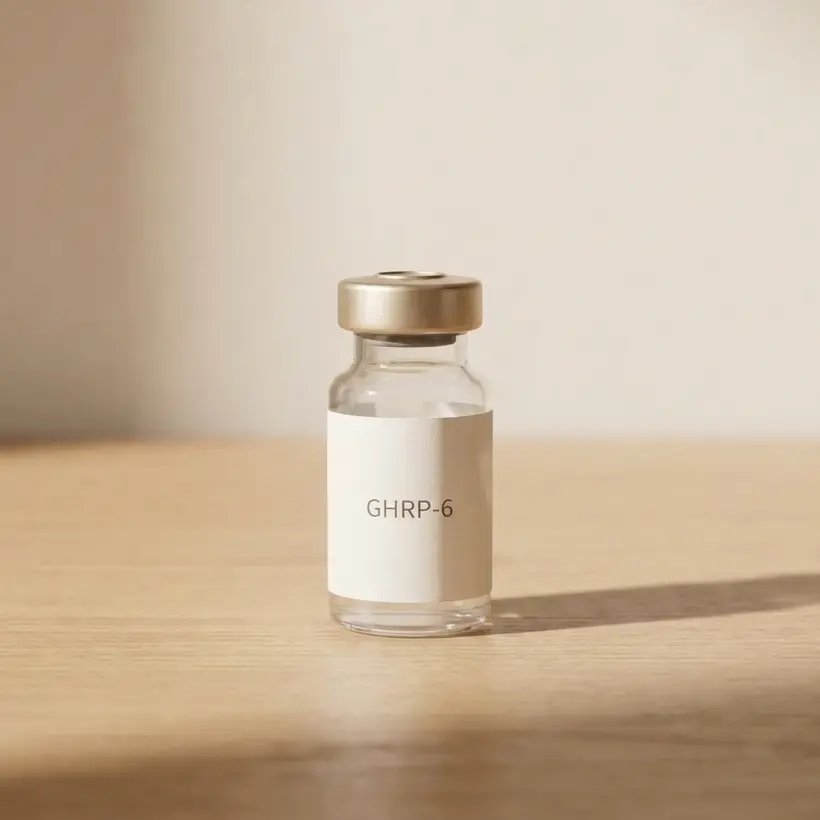
From the FormBlends catalog
GHRP-6
Growth hormone secretagogue with appetite-stimulating properties · From $29/mo · compounded by a licensed 503A pharmacy, dispensed only after provider review.
Learn about GHRP-6 →If you want the exact units for your own vial, the peptide calculator takes the vial size, the water you add and your dose, and returns the draw in units and millilitres, with a warning when the draw is too small to measure well.
The most-studied human dose is 1 mcg per kg of body weight administered subcutaneously, used as a diagnostic GH stimulus. Research users typically extrapolate to 100 to 150 mcg per injection, one to three times daily, though no clinical trials have validated these repeated-dose regimens for bodybuilding outcomes.
What is the GHRP-6 dosage for bodybuilding?
Bodybuilding communities commonly use 100 to 150 mcg per injection, two to three times daily, often combined with a GHRH analog. This protocol is extrapolated from clinical pharmacology data, not from controlled bodybuilding trials. Evidence for muscle hypertrophy outcomes in humans is very low quality.
How do I reconstitute a GHRP-6 5mg vial?
Add 2.5 mL of bacteriostatic water to a 5mg vial to yield a concentration of 2 mg/mL (2000 mcg/mL). For a 100 mcg dose, draw 0.05 mL (5 units on a U-100 insulin syringe). For 150 mcg, draw 0.075 mL (7.5 units). Inject bacteriostatic water slowly down the vial wall, not directly onto the lyophilized cake.
When should GHRP-6 be injected relative to meals?
GH pulse amplitude is blunted when injected within 1 to 2 hours of a carbohydrate or fat-containing meal, due to elevated insulin and free fatty acids suppressing pituitary GH release through increased somatostatin tone. Most research protocols administer GHRP-6 in a fasted state or at least 90 minutes after eating.
How long does GHRP-6 stay active in the body?
GHRP-6 has a short plasma half-life estimated at roughly 15 to 60 minutes in animal studies. The resulting GH pulse peaks within 15 to 30 minutes of injection and typically returns to baseline within 90 to 120 minutes. Human pharmacokinetic data are limited.
Does GHRP-6 cause hunger and how bad is it?
GHRP-6 activates the ghrelin receptor (GHS-R1a), which drives hunger signaling. Appetite stimulation is a consistent, mechanism-driven side effect. It is generally reported as more pronounced than with GHRP-2 and is relevant when dosing near meals or when appetite control is a goal.
Is GHRP-6 stronger at 150 mcg vs 100 mcg?
The GH response to GHRP-6 shows a dose-response relationship up to approximately 1 mcg/kg, with saturation occurring at higher doses in clinical studies. Doses beyond the saturation threshold add cortisol and prolactin release without proportionally more GH, so escalating above established saturation is not supported by evidence.
How does GHRP-6 compare to GHRP-2 and Ipamorelin?
GHRP-6 produces a strong GH pulse similar to GHRP-2 but with more appetite stimulation and a comparable cortisol and prolactin rise. Ipamorelin is more selective, producing less cortisol and prolactin elevation and minimal hunger. For users wanting fewer side effects, Ipamorelin is generally preferred.
Can GHRP-6 be combined with a GHRH like CJC-1295?
Combining GHRP-6 with a GHRH analog produces a synergistic GH pulse larger than either alone, which is documented in clinical pharmacology research. The combination is common in research settings but does not change the fundamental absence of long-term human outcome data for bodybuilding applications.
What does a degraded GHRP-6 vial look like?
A properly lyophilized GHRP-6 vial contains a white to off-white dry cake or powder. After reconstitution, the solution should be clear and colorless. Cloudiness, visible particles, or a yellow tint after reconstitution are signs of degradation or contamination; discard the vial.
Is GHRP-6 legal to buy and use?
GHRP-6 is not FDA-approved for any clinical indication and is not legally sold as a dietary supplement in the United States. It exists in a regulatory gray area as a research chemical. WADA lists GH secretagogues including GHRP-6 as prohibited in sport at all times.
Sources
- Ghigo E, Arvat E, Muccioli G, Camanni F. Growth hormone-releasing peptides. Eur J Endocrinol. 1997;136(5):445-460.
- Arvat E, Maccario M, Di Vito L, et al. Endocrine activities of ghrelin, a natural growth hormone secretagogue (GHS), in humans: comparison and interactions with hexarelin, a nonnatural peptidyl GHS, and GH-releasing hormone. J Clin Endocrinol Metab. 2001;86(3):1169-1174.
- Ghigo E, Arvat E, Gianotti L, et al. Hypothalamic growth hormone-insulin-like growth factor-I axis across the human lifespan. J Pediatr Endocrinol Metab. 1996;9 Suppl 3:341-349.
- Bowers CY. Growth hormone-releasing peptide (GHRP). Cell Mol Life Sci. 1998;54(12):1316-1329.
- Veldhuis JD, Bowers CY. Human GH pulsatility: an ensemble property regulated by age and gender. J Endocrinol Invest. 2003;26(9):799-813.
- Howard AD, Feighner SD, Cully DF, et al. A receptor in pituitary and hypothalamus that functions in growth hormone release. Science. 1996;273(5277):974-977.
- Godfrey RJ, Madgwick Z, Whyte GP. The exercise-induced growth hormone response in athletes. Sports Med. 2003;33(8):599-613.
- Van den Berg G, Veldhuis JD, Frolich M, Roelfsema F. An amplitude-specific divergence in the pulsatile mode of growth hormone (GH) secretion underlies the gender difference in mean GH concentrations in men and premenopausal women. J Clin Endocrinol Metab. 1996;81(7):2460-2467.
- Brinkman DJ, Tichelaar J, Schutte T, et al. Drug testing in sports: challenges and developments. Drug Test Anal. 2018;10(1):44-54. (Re: peptide purity in online vendor products - broader context for vendor COA analysis.)
- USP General Chapter 51: Antimicrobial Effectiveness Testing. United States Pharmacopeia. (Re: benzyl alcohol preservative efficacy standards.)
- World Anti-Doping Agency (WADA). Prohibited List 2024. Section S2: Peptide Hormones, Growth Factors, Related Substances, and Mimetics.
- Falutz J, Allas S, Blot K, et al. Metabolic effects of a growth hormone-releasing factor in patients with HIV. N Engl J Med. 2007;357(23):2359-2370. (Tesamorelin RCT reference for head-to-head context.)
Footer Disclaimers
Platform: This page is published by FormBlends for informational and educational purposes only. It does not constitute medical advice, diagnosis, or treatment. Consult a licensed healthcare provider before initiating any peptide or hormone-modifying protocol.
Research Compound: GHRP-6 is an unscheduled research compound in the United States. It is not approved by the FDA for human therapeutic use. It is sold legally only for in-vitro and laboratory research. Human self-administration occurs outside any approved regulatory framework.
Results: Individual outcomes vary. No results described or implied on this page are guaranteed
Related peptide guides
Ready when you are
GHRP-6
Growth hormone secretagogue with appetite-stimulating properties · From $29/mo · compounded by a licensed 503A pharmacy, dispensed only after provider review.
Learn about GHRP-6 →