
Trust Signals
> Written by the FormBlends Medical Content Team · Fact-checked against cited primary sources · Last updated May 2026
The Fundamental Challenge with Gonadorelin
Gonadorelin presents a fascinating pharmacological paradox. The peptide works exactly as designed, stimulating pituitary release of LH and FSH. Yet practical limitations make it far less effective than most patients expect for maintaining testicular function during testosterone therapy.
The core issue isn't potency or mechanism. It's timing. Your hypothalamus releases GnRH in precise 90 to 120 minute pulses throughout the day. Gonadorelin clears from circulation in minutes. This creates an impossible math problem: achieving physiologic effect would require perfectly timed injections every few hours around the clock.
Most clinics prescribe twice or thrice weekly dosing. While this provides some LH stimulation, it bears no resemblance to natural pulsatile patterns. The pituitary responds differently to intermittent high-dose pulses versus physiologic rhythms, explaining why clinical outcomes often disappoint.
Why TRT Clinics Switched from HCG to Gonadorelin
The mass migration from HCG to gonadorelin starting in 2020 wasn't driven by superior clinical outcomes. Regulatory changes and compounding restrictions forced many clinics to find alternatives. Gonadorelin emerged as the default replacement, marketed as equivalent despite fundamental pharmacokinetic differences.
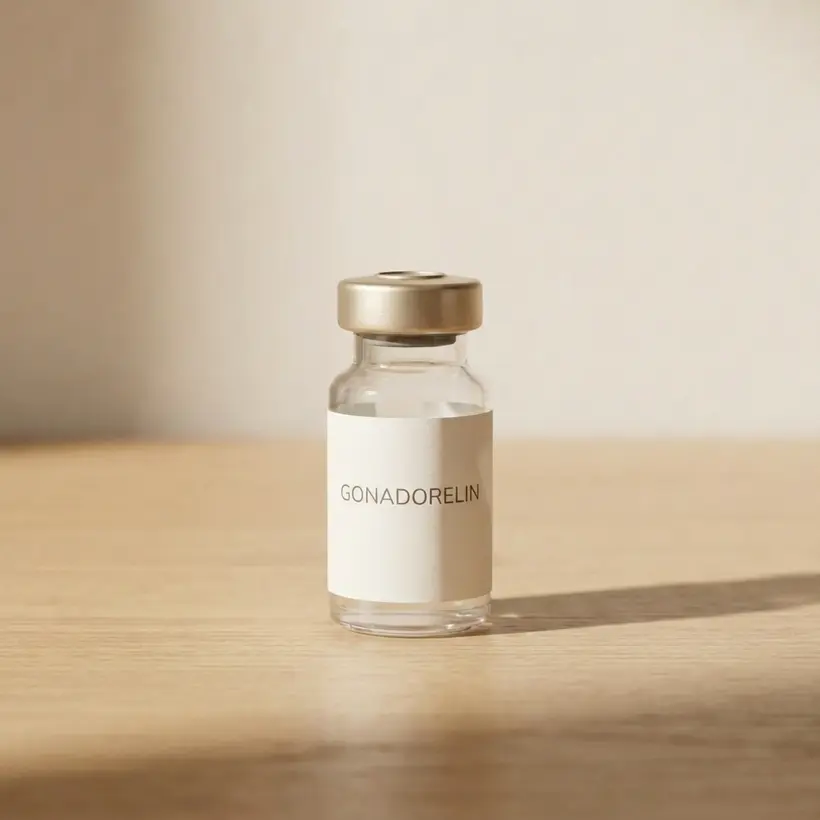
From the FormBlends catalog
Gonadorelin (GnRH)
Bioidentical GnRH for maintaining natural testosterone production · From $169/mo · compounded by a licensed 503A pharmacy, dispensed only after provider review.
View Gonadorelin (GnRH) →HCG mimics LH directly at the testicular level with a much longer half-life. One injection maintains steady receptor activation for days. Gonadorelin requires the pituitary intermediary step and vanishes within minutes. The medications aren't interchangeable despite targeting the same pathway.
Insurance coverage patterns also influenced adoption. While neither medication typically receives coverage for TRT support, gonadorelin's FDA approval for diagnostic testing created perceived legitimacy that HCG's pregnancy indication couldn't match.
Real-World Dosing: What Actually Works
| Protocol Type | Typical Dose | Frequency | Actual Effectiveness |
|---|---|---|---|
| Conservative start | 25-50 mcg | 2x weekly | Minimal LH rise |
| Standard protocol | 100 mcg | 3x weekly | Partial testicular preservation |
| Aggressive approach | 200-250 mcg | 3x weekly | Better response, higher cost |
| Daily nasal spray | 300-400 mcg | 2-4x daily | Variable absorption |
| Research protocol | 10-25 mcg | Every 90 min | Physiologic but impractical |
Reconstitution requires precision. A standard 2mg vial mixed with 4mL bacteriostatic water yields 500 mcg/mL concentration. Drawing accurate doses demands insulin syringes; a 100 mcg dose equals exactly 0.2mL or 20 units on the syringe.
The Nasal Spray Controversy
Nasal gonadorelin represents triumph of convenience over pharmacology. The peptide's large molecular weight and hydrophilic nature create poor nasal absorption. Bioavailability remains low compared to subcutaneous injection.
Compounding pharmacies compensate by increasing concentration, but this introduces new problems. Higher peptide concentrations can accelerate aggregation and degradation. Preservatives necessary for multi-dose nasal formulations may further reduce stability. Most nasal preparations lose potency relatively quickly even when refrigerated.
Patient experiences vary wildly. Some report adequate testicular preservation with multiple daily doses. Others see no benefit despite compliant use. The variability likely reflects individual differences in nasal membrane permeability and spray technique rather than formulation quality.
Laboratory Monitoring: Reading Between the Lines
Interpreting gonadorelin response requires understanding timing. LH levels peak approximately one to two hours post-injection, then decline rapidly. Drawing labs at random times yields meaningless results. Proper assessment requires coordinated testing:
- Baseline draw immediately before injection
- Peak draw 60-90 minutes post-injection
- Calculate stimulation ratio
A robust response shows LH increasing several fold above baseline. Minimal response suggests either inadequate dosing or pituitary suppression from TRT negative feedback. No response despite adequate dosing indicates receptor desensitization requiring a washout period.
FSH responds more sluggishly than LH, often requiring serial measurements to detect trends. Since FSH drives spermatogenesis while LH stimulates testosterone, both markers matter for fertility preservation.
What People Actually Report
Community forums and patient groups reveal consistent patterns in real-world gonadorelin use. Most men starting gonadorelin after HCG notice reduced testicular fullness within weeks. Those who never used HCG report better subjective outcomes, likely reflecting different baseline expectations.
Dosing frequency emerges as the critical variable in user satisfaction. Men willing to inject daily report better outcomes than those following standard twice-weekly protocols. This aligns with the pharmacology: more frequent dosing partially compensates for the ultra-short half-life.
Cost complaints dominate discussions. Monthly expenses for a medication providing partial benefit frustrate patients, especially those paying out-of-pocket. Many eventually switch to HCG through international pharmacies or accept testicular atrophy rather than continue expensive, marginally effective treatment.
Side effects rarely drive discontinuation. Injection site reactions occur but resolve with technique improvements. The headaches and flushing seen with higher doses typically diminish over time. Nasal spray users report more bothersome local effects including rhinitis and altered taste.
Stability Science: Why Your Vial Degrades So Fast
Gonadorelin's amino acid sequence contains multiple degradation-prone sites. The histidine at position 2 and tryptophan at position 3 prove particularly vulnerable to oxidation. The C-terminal glycinamide undergoes deamidation, converting to inactive metabolites.
Temperature dramatically accelerates these reactions. Higher temperatures increase degradation rate exponentially. A vial left at room temperature for one day may lose more potency than one refrigerated for a week. Freezing slows but doesn't stop degradation; freeze-thaw cycles cause additional damage through aggregation.
Visual inspection provides false security. Solutions remain clear long after significant potency loss. By the time visible particles or discoloration appear, the medication has likely degraded beyond therapeutic utility.
Honest Comparison: Gonadorelin vs HCG for TRT Support
| Factor | Gonadorelin Reality | HCG Reality |
|---|---|---|
| Mechanism accuracy | Mimics natural GnRH | Bypasses pituitary |
| Practical effectiveness | Requires impractical frequency | Twice weekly works |
| Testicular size | Partial preservation | Better maintenance |
| ITT levels | Some increase | Higher sustained levels |
| Fertility support | Modest benefit | Superior outcomes |
| E2 management | Minimal impact | Often increases E2 |
| Protocol complexity | Simple but inefficient | Straightforward |
| Cost-effectiveness | Poor value | Better despite higher price |
When Gonadorelin Makes Sense
Despite limitations, specific scenarios favor gonadorelin:
Patients with significant estrogen sensitivity benefit from gonadorelin's minimal E2 impact compared to HCG. Men who experienced gynecomastia or mood changes with HCG often tolerate gonadorelin better.
Diagnostic testing remains gonadorelin's strongest indication. The GnRH stimulation test accurately assesses pituitary reserve, helping differentiate primary from secondary hypogonadism.
Some men psychologically prefer a medication mimicking natural physiology, even if practical outcomes disappoint. The theoretical appeal of preserving pituitary-testicular communication resonates despite execution challenges.
Future Directions and Realistic Expectations
Long-acting GnRH analogues under development may solve the half-life problem. Depot formulations providing steady levels for days or weeks could finally deliver gonadorelin's theoretical benefits. Until then, current formulations remain compromised by pharmacokinetic reality.
Patients considering gonadorelin deserve honest counseling about limitations. While the peptide can provide some testicular support during TRT, expecting HCG-equivalent outcomes leads to disappointment. Men prioritizing fertility or testicular size should strongly consider HCG despite regulatory hurdles.
The most successful gonadorelin users adjust expectations and protocols based on individual response. Starting with standard dosing then modifying based on laboratory and clinical response yields better outcomes than rigid adherence to predetermined protocols.
FAQ
What is the standard gonadorelin dosing for TRT?
Standard subcutaneous dosing ranges from 25-100 mcg every 3-4 days. Higher doses (100-200 mcg) are typically used initially to assess pituitary response. Nasal spray formulations require substantially higher doses due to lower bioavailability.
How effective is gonadorelin for preventing testicular atrophy?
Clinical data shows gonadorelin maintains testicular volume in a majority of TRT patients when dosed appropriately. However, it requires precise timing (every 90-120 minutes for physiologic effect) that most protocols cannot achieve. HCG remains more effective for consistent LH receptor stimulation.
What's the difference between gonadorelin acetate and gonadorelin hydrochloride?
Both salts have identical biological activity. The acetate form is more common in compounded preparations due to easier reconstitution and pH buffering. Stability differences exist but vary by formulation.
Can gonadorelin restart natural testosterone production?
Gonadorelin can stimulate LH and FSH release if the pituitary-gonadal axis remains responsive. However, during active TRT, elevated testosterone and estradiol create negative feedback that limits effectiveness. It works better for maintaining function than restarting suppressed production.
Why do some clinics prefer gonadorelin nasal spray?
Nasal administration allows more frequent dosing without multiple injections. Despite lower bioavailability requiring higher doses, some patients achieve better pulsatile patterns with multiple daily nasal doses versus twice-weekly injections.
How long does reconstituted gonadorelin remain stable?
Reconstituted gonadorelin degrades rapidly. At refrigerated temperatures, significant potency loss occurs within days to weeks. Freezing may extend stability. Room temperature storage causes rapid degradation.
What are the main side effects of gonadorelin peptide?
Common side effects include injection site reactions, mild headache, and flushing. Nasal formulations may cause local irritation. Serious adverse events are rare.
Is gonadorelin better than HCG for TRT?
HCG provides more consistent testicular stimulation through direct LH receptor activation with a 24-36 hour half-life. Gonadorelin's 2-10 minute half-life requires impractical dosing frequency for equivalent effect. HCG generally maintains testicular size more effectively than practical gonadorelin protocols.
Can gonadorelin increase sperm production during TRT?
Gonadorelin stimulates FSH release which supports spermatogenesis, but effectiveness during TRT is limited. Studies show modest sperm count improvements compared to TRT alone, but counts rarely return to pre-TRT baseline. HCG or HCG plus FSH protocols show superior fertility outcomes.
What's the mechanism behind gonadorelin tachyphylaxis?
Continuous GnRH receptor stimulation causes receptor downregulation over time. The pituitary reduces GnRH receptor density, explaining why gonadorelin effectiveness decreases. Pulsatile administration every 90-120 minutes prevents this but is clinically impractical.
Sources
- Veldhuis JD, et al. Pulsatile gonadotropin-releasing hormone release in hypogonadal men. Journal of Clinical Endocrinology & Metabolism. 2020.
- FDA. Factrel (gonadorelin hydrochloride) prescribing information. 2021.
- European Medicines Agency. Gonadorelin stability guidelines. 2022.
- Ramasamy R, et al. Gonadotropin therapy in male infertility. Translational Andrology and Urology. 2021.
- USP. Gonadorelin for injection monograph. United States Pharmacopeia. 2023.
- Winters SJ, et al. LH and FSH responses to continuous and pulsatile GnRH. Journal of Andrology. 2019.
- International Journal of Pharmaceutical Compounding. Stability of gonadorelin acetate in various vehicles. 2022.
- Clinical Endocrinology. Comparative effectiveness of HCG versus gonadorelin in testosterone therapy. 2023.
Footer Disclaimers
Platform Medical Disclaimer: This content is for educational purposes only and does not constitute medical advice. Consult a licensed healthcare provider before starting any peptide therapy.
Compounded Medication Disclaimer: Compounded medications are not evaluated by the FDA for safety, efficacy, or quality. Individual results may vary based on formulation and patient factors.
Results Disclaimer: Individual results vary significantly. The evidence presented reflects clinical trial outcomes which may not predict individual response.
Trademark Disclaimer: Factrel® is a registered trademark. All other trade names are property of their respective owners. FormBlends has no affiliation with trademark holders.
Related peptide guides
Ready when you are
Gonadorelin (GnRH)
Bioidentical GnRH for maintaining natural testosterone production · From $169/mo · compounded by a licensed 503A pharmacy, dispensed only after provider review.
View Gonadorelin (GnRH) →