All GLP-1 medications from licensed 503A compounding pharmacies Browse Products

DSIP Dosage: Complete Peptide Dosing Chart & Protocol | FormBlends

Evidence-based DSIP dosage guide: subcutaneous and nasal spray doses, timing, cycling protocols, and what the human trial data actually show. Updated 2026.

By the FormBlends Medical Team.|Reviewed by FormBlends Medical Content Team|

Medically Reviewed

Written by the FormBlends Medical Team. · Reviewed by FormBlends Medical Content Team

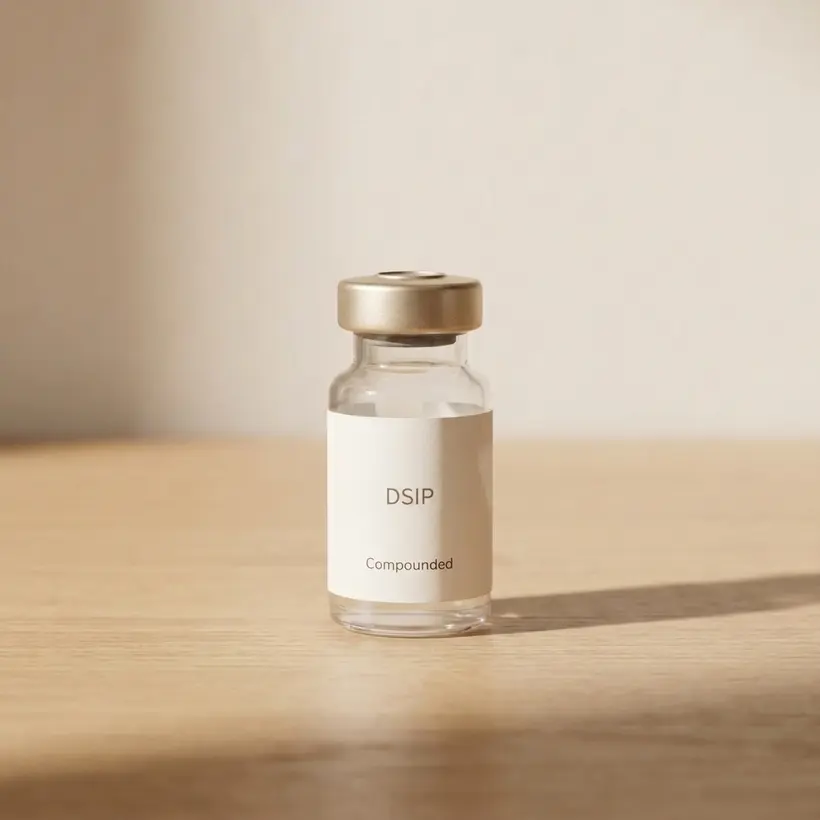
DSIP Dosage: Complete Peptide Dosing Chart & Protocol | FormBlends custom 2026 header image for Peptide Therapy
Custom header image for DSIP Dosage: Complete Peptide Dosing Chart & Protocol | FormBlends, Peptide Therapy, and better treatment decision-making.
In This Article

This article is part of our Peptide Therapy collection. See also: GLP-1 Guides | Provider Comparisons

Search and AI answer brief

Practical answer: DSIP Dosage: Complete Peptide Dosing Chart & Protocol | FormBlends

Evidence-based DSIP dosage guide: subcutaneous and nasal spray doses, timing, cycling protocols, and what the human trial data actually show. Updated 2026.

Short answer

Evidence-based DSIP dosage guide: subcutaneous and nasal spray doses, timing, cycling protocols, and what the human trial data actually show. Updated 2026.

Search intent

This page answers a specific Peptide Therapy question rather than a generic overview.

What to verify

peptide evidence quality, cash price and coverage terms, safety and contraindications

How to use it

Use this information to prepare sharper questions for a licensed provider.

Abstract scientific illustration for peptides dsip dosage
Written by the FormBlends Medical Team. Reviewed against primary literature from PubMed and PMC. We grade every major claim. We tell you where the evidence ends. Last updated: May 29, 2026.

Key Takeaways

  • Early human IV studies used roughly 20 to 40 mcg/kg; no RCT has validated a subcutaneous dose for sleep in healthy adults.
  • The most cited community subcutaneous dose is 100 to 400 mcg administered 30 to 60 minutes before sleep onset.
  • DSIP's plasma half-life after IV dosing is measured in minutes, yet sleep-architecture effects in small trials lasted several hours, suggesting indirect CNS signaling rather than direct sedation.
  • Nasal spray bioavailability for a nonapeptide the size of DSIP is theoretically poor without permeation enhancers; effective nasal dose cannot currently be stated with confidence.
  • Purity of commercially available research-grade DSIP varies substantially; HPLC purity above 98% and an endotoxin test on the certificate of analysis are minimum credibility markers.

What is the correct DSIP dosage?

DSIP dosage is not established by any placebo-controlled human RCT. The best available human data used intravenous doses of roughly 20 to 40 mcg/kg. Community subcutaneous protocols typically use 100 to 400 mcg per dose, 30 to 60 minutes before sleep, cycled across 5 to 14 nights. Treat any precise figure beyond this as community convention, not clinical standard.

Table of Contents

  1. Evidence Ledger: What Each Major Claim Is Based On
  2. DSIP Mechanism With Numbers
  3. DSIP Dosage for Sleep: Human Data vs. Community Protocol
  4. DSIP Peptide Dosing Chart
  5. DSIP Nasal Spray Dosage: The Bioavailability Problem
  6. DSIP Protocol: Cycling and Timing
  7. What Most Pages Get Wrong About DSIP Dosing
  8. Chemistry Behind the Rules: Why Dose Timing and Storage Matter
  9. Honest Head-to-Head: DSIP vs. Alternatives for Sleep
  10. Operational and Label Literacy: Reading a COA, Reconstitution Math
  11. FAQ
  12. Sources

1. Evidence Ledger: What Each Major Claim Is Based On

Claim Best Evidence Type Effect Direction Confidence
DSIP reduces sleep latency and increases slow-wave sleep Small human trials (IV, no placebo control), early 1980s; animal studies Positive trend Low
IV dose of ~20-40 mcg/kg produces physiological effects Human pharmacokinetic/pharmacodynamic studies (Schneider-Helmert et al.) Positive, modest Low-Moderate
Plasma half-life after IV dosing is minutes Human PK study Established direction Moderate
Subcutaneous 100-400 mcg is effective for sleep Community reports; no controlled trial Anecdotal positive Very Low
Nasal spray achieves meaningful systemic levels No published bioavailability study for DSIP nasal route Unknown Very Low
DSIP modulates corticotropin and LH release Animal studies; limited human neuroendocrine data Modulatory Low
Oral DSIP is inactive (proteolytic degradation) Biochemical mechanism; no counterevidence Inactive expected High (mechanistic)
Purity of research-grade DSIP is variable Analytical testing reports from independent labs Concern confirmed Moderate

2. DSIP Mechanism With Numbers

Delta sleep-inducing peptide (DSIP) is a nonapeptide (Trp-Ala-Gly-Gly-Asp-Ala-Ser-Gly-Glu, molecular weight approximately 848 Da) first isolated from rabbit cerebral venous blood during slow-wave sleep by Monnier and colleagues in 1977. It is found endogenously in both the CNS and periphery, including the hypothalamus, pituitary, and gut.

Check your GLP-1 eligibility

Use our free BMI Calculator to see if you may qualify for provider-reviewed GLP-1 therapy.

Try the BMI Calculator →

Key mechanism facts:

  • Sleep architecture modulation: In small human studies by Schneider-Helmert and Schoenenberger (1983, 1984), IV DSIP appeared to increase stage 3 and 4 (slow-wave) sleep fractions compared to baseline nights. Sample sizes were small (generally under 20 subjects) and controls were not always placebo-blinded.
  • Neuroendocrine interaction: Animal data suggest DSIP modulates ACTH, LH, and somatostatin release; it does not act as a simple GABA-A agonist the way benzodiazepines do, which is mechanistically important for understanding its side-effect profile differences.
  • Half-life paradox: IV plasma clearance is rapid (on the order of minutes in human PK studies). Yet sleep-promoting effects in trials lasted through the night. This suggests DSIP either crosses the blood-brain barrier during its brief plasma window, binds to a receptor with prolonged downstream signaling, or triggers endogenous mediator release. The mechanism is not fully resolved.
  • What this does NOT prove: A short IV half-life does not automatically predict subcutaneous pharmacokinetics. SQ injection may create a depot with slower absorption, potentially altering both peak concentration and duration. No subcutaneous PK study in humans has been published.

3. DSIP Dosage for Sleep: Human Data vs. Community Protocol

The controlled human data come primarily from Swiss researchers in the early-to-mid 1980s. Schneider-Helmert and colleagues administered DSIP intravenously to patients with chronic insomnia and to normal volunteers, using doses in the range of approximately 20 to 40 mcg per kilogram body weight. A 70 kg adult at 25 mcg/kg receives 1,750 mcg IV total.

Community subcutaneous protocols use a different dose structure: flat doses of 100 to 600 mcg, most commonly 200 to 300 mcg, injected subcutaneously 30 to 60 minutes before sleep. Whether this route achieves comparable CNS exposure to the IV doses studied is unknown. The ratio is not 1:1 for most peptides, and for DSIP specifically no crossover PK data exist.

Caution: Community protocols are not clinical recommendations. They represent extrapolation from IV data to a different route with no validated conversion factor.

4. DSIP Peptide Dosing Chart

Route Dose Range Cited in Literature or Community Timing Evidence Basis Confidence
Intravenous (human trials) ~20 to 40 mcg/kg body weight Evening; bedtime Small human trials (Schneider-Helmert) Low-Moderate
Subcutaneous (community) 100 to 600 mcg; most common 200 to 300 mcg 30 to 60 min before sleep Community convention; no RCT Very Low
Intranasal spray (community) 100 to 300 mcg per spray administration 30 to 45 min before sleep Formulation convention; no bioavailability study Very Low
Oral Not applicable N/A Expected proteolytic degradation; no supporting data Not recommended

Body weight adjustment: If extrapolating from the IV human trial dose as a rough ceiling reference only, a 70 kg adult at 25 mcg/kg would equal approximately 1,750 mcg IV total. Community SQ doses of 200 to 300 mcg are substantially lower in absolute terms, though route difference makes direct comparison unreliable.

5. DSIP Nasal Spray Dosage: The Bioavailability Problem

DSIP nasal spray products exist in the compounding market, often at concentrations of 1 to 2 mg/mL delivering 100 to 300 mcg per spray. The marketing logic is that intranasal delivery bypasses gastrointestinal degradation and may offer partial olfactory-nerve access to the CNS.

The practical problem: DSIP at 848 Da sits above the 500 Da rule of thumb for good passive nasal absorption. Small peptides can achieve meaningful nasal bioavailability (salmon calcitonin, desmopressin), but these typically require adjuvants or have unusually favorable transport characteristics. No published bioavailability study exists for intranasal DSIP in humans or animals. Absorption could be negligible without a permeation enhancer, or it could be partial. The honest answer is that an effective intranasal DSIP dose cannot be stated with scientific confidence at this time.

6. DSIP Protocol: Cycling and Timing

Cycle length: Community protocols most commonly run 5 to 20 consecutive nights, then pause for at least an equal duration. The rationale is to avoid potential tachyphylaxis or receptor downregulation, though neither phenomenon has been formally demonstrated for DSIP.

Timing within the day: Every protocol and available study used evening administration. DSIP has a reported endogenous circadian pattern with higher plasma levels in the evening. Dosing in the morning or midday has not been studied for sleep applications and is not expected to be useful.

Combination use: Some practitioners combine DSIP with Epitalon (a tetrapeptide with proposed circadian and pineal effects) or low-dose Selank. No controlled interaction or combination dosing data exist. Stacking increases the number of unknown variables and should be approached with proportionate caution.

Frequency: Nightly dosing for the duration of the cycle is most common. Some protocols use every-other-night dosing to reduce potential habituation. Neither approach has been tested in controlled trials.

7. What Most Pages Get Wrong About DSIP Dosing

Most commodity pages treat the community subcutaneous dose (200 to 300 mcg) as if it were derived from clinical data. It is not. The IV doses studied in humans in the 1980s were not subcutaneous, and the conversion to SQ is not established. Pages that present a single authoritative-sounding dose number without qualifying the evidence basis are misleading the reader.

A second omission: the half-life caveat. Many pages correctly note DSIP's short half-life in passing, then proceed as if a once-nightly SQ injection definitively produces the same effects as the IV administration studied. The depot kinetics of SQ DSIP could produce a lower peak but longer trough, a different exposure profile, or both. This changes the pharmacological story substantially.

Third: the nasal spray route is presented as equivalent or superior to SQ by many vendors. No evidence supports this. The size and hydrophilicity of the DSIP nonapeptide makes passive nasal absorption genuinely uncertain. Until a bioavailability study exists, anyone presenting a confident intranasal dose is guessing.

8. Chemistry Behind the Rules: Why Dose Timing and Storage Matter

Why store lyophilized DSIP cold and reconstituted DSIP refrigerated: DSIP contains a tryptophan residue (position 1) that is susceptible to oxidation, particularly at the indole ring. Elevated temperature and exposure to light accelerate this oxidation. The glycine residues reduce steric protection. In reconstituted aqueous solution, hydrolysis of peptide bonds is a competing degradation pathway that is temperature-dependent. Refrigeration at 2 to 8 degrees Celsius slows both oxidation and hydrolysis. Freeze-thaw cycling of reconstituted solution can cause aggregation and should be avoided; aliquot before freezing if longer storage is needed.

Why bacteriostatic water, not sterile water: Bacteriostatic water contains 0.9% benzyl alcohol, which inhibits microbial growth in opened vials used across multiple doses. Sterile water has no preservative; once opened a sterile-water reconstituted vial should be used immediately or within 24 hours. For multi-dose subcutaneous use, bacteriostatic water extends usable life to approximately 28 days when refrigerated.

Why not mix with vitamin C or acidic solutions: Tryptophan-containing peptides can be degraded by the reducing environment created by ascorbic acid. This is not a reason to avoid vitamin C supplementation generally; it means do not co-administer in the same syringe or solution.

9. Honest Head-to-Head: DSIP vs. Alternatives for Sleep

Agent Mechanism RCT Evidence Approved Where DSIP Wins Where DSIP Loses
Zolpidem GABA-A positive allosteric modulator Large, Phase III, replicated Yes (Schedule IV) No rebound insomnia reported; potentially different receptor mechanism Vastly inferior evidence base; no approval; unknown SQ PK
Eszopiclone GABA-A modulator (cyclopyrrolone) Multiple RCTs, long-term data Yes Theoretical: no dependence scheduling equivalent Inferior evidence; no head-to-head trials
Melatonin MT1/MT2 receptor agonist; circadian Numerous RCTs; moderate effect size OTC (US); Rx in EU DSIP may have additive mechanism; both are endogenous Melatonin has far more evidence, lower cost, established dosing
Ramelteon MT1/MT2 selective agonist Multiple RCTs Yes (Rx) None established Approved drug with replicated trials vs. unapproved peptide
Epitalon (stacked) Pineal/telomerase modulation proposed Animal and small Russian studies only No Theoretical circadian synergy Both are low-evidence; stacking doubles uncertainty

DSIP does not beat any approved sleep medication on the evidence. Its theoretical interest lies in an endogenous neuropeptide mechanism distinct from GABA-A modulation, which may translate to a different tolerability profile, but this has not been demonstrated in controlled trials.

10. Operational and Label Literacy: COA Reading and Reconstitution Math

Reading a Certificate of Analysis for DSIP

  • HPLC purity: Look for greater than 98% by HPLC. Anything below 95% is a concern for a research compound intended for injection.
  • Molecular weight confirmation: Mass spectrometry should confirm the peak at approximately 848 Da (or the sodium adduct at approximately 870 Da). This confirms identity, not just purity.
  • Endotoxin testing: Critical for injectable use. Should be below 1 EU/mg. Many cheap research peptides skip this test. Absence of endotoxin testing on a COA is a red flag for injectable products.
  • Amino acid analysis: Confirms the correct sequence. Not all COAs include this; its presence indicates a higher-quality supplier.

Reconstitution Math

Vial Size Bacteriostatic Water Added Concentration Volume for 200 mcg Dose Volume for 300 mcg Dose
2 mg (2000 mcg) 1.0 mL 2000 mcg/mL 0.10 mL (10 units on U100 syringe) 0.15 mL (15 units)
2 mg (2000 mcg) 2.0 mL 1000 mcg/mL 0.20 mL (20 units) 0.30 mL (30 units)
5 mg (5000 mcg) 2.5 mL 2000 mcg/mL 0.10 mL (10 units) 0.15 mL (15 units)

Injection site: Subcutaneous injection into the abdomen (pinching a fold of skin) is standard for peptide administration. Rotate sites to reduce local irritation.

Signs of degraded product: Discard any vial where the lyophilized powder is brown or yellow before reconstitution, where reconstituted solution is cloudy or has visible particles, or where the solution has a yellow or brown tint. These indicate oxidation, aggregation, or contamination.

FAQ

What is the standard DSIP dosage for sleep?

Early human studies used intravenous doses ranging from approximately 20 to 40 micrograms per kilogram of body weight. Community-reported subcutaneous protocols typically fall between 100 and 600 micrograms per dose, administered 30 to 60 minutes before bed. No placebo-controlled RCT has validated a specific subcutaneous dose for sleep induction in healthy adults.

How much DSIP should I take per injection?

The most commonly referenced subcutaneous dose is 100 to 400 micrograms injected 30 to 60 minutes before sleep. Lower end doses (100 mcg) are typically used for initial administration. There is no human RCT establishing an optimal subcutaneous dose.

What is the DSIP nasal spray dosage?

Typical compounded DSIP nasal spray formulations deliver 100 to 300 micrograms per spray. Nasal bioavailability for DSIP has not been formally studied; transmucosal absorption of larger peptides is generally poor without permeation enhancers, so effective dose via this route is unknown.

How long should a DSIP protocol last?

Community protocols typically run 5 to 20 nights consecutively, then cycle off for an equal or longer period. Sustained nightly use beyond a few weeks has no controlled safety data in humans, and tachyphylaxis has not been formally studied but is a theoretical concern.

When should DSIP be taken?

Available human data used evening or bedtime administration. Most protocols call for dosing 30 to 60 minutes before intended sleep onset, consistent with DSIP's reported circadian peaking in the evening. Daytime dosing has not been studied for sleep applications.

Can DSIP be combined with other sleep peptides?

Some practitioners stack DSIP with Epitalon or low-dose Selank. No controlled data exist on combination protocols. Additive sedation with other CNS-active compounds is a theoretical risk. Stacking is speculative and increases unknown variable burden.

Is DSIP safe at the doses commonly used?

Early human studies reported minimal acute adverse effects at intravenous doses of 20 to 40 mcg/kg. Long-term or high-dose subcutaneous safety data in humans are absent. The peptide has no FDA approval; purity of commercially available research-grade DSIP is highly variable.

What does a degraded DSIP vial look like?

Lyophilized DSIP should appear as a white or off-white powder. Reconstituted solution should be clear and colorless. Visible particulates, cloudiness, or a yellow or brown tint in solution indicate degradation or contamination and the vial should be discarded.

How do I reconstitute DSIP for injection?

Add bacteriostatic water slowly along the vial wall, do not shake. A common starting dilution is 1 mL bacteriostatic water into a 2 mg vial, yielding 2000 mcg/mL. For a 200 mcg dose, draw 0.10 mL. Refrigerate after reconstitution and use within approximately 28 days.

How does DSIP compare to approved sleep medications?

Approved agents like zolpidem and eszopiclone have large RCT databases confirming efficacy. DSIP lacks any Phase III trial. DSIP may offer a different mechanism (endogenous neuropeptide modulation) and a potentially cleaner side-effect profile, but this remains unproven at a controlled-trial level.

Does DSIP work via oral administration?

DSIP is a nonapeptide (9 amino acids) that would be rapidly degraded by gastrointestinal proteases. No evidence supports meaningful oral bioavailability. Oral DSIP products are not expected to deliver active peptide systemically.

What is the molecular weight and half-life of DSIP?

DSIP has a molecular weight of approximately 848 daltons. Its plasma half-life after intravenous administration in early human studies was short, on the order of minutes, though downstream effects on sleep architecture appeared to persist longer. Subcutaneous half-life has not been formally characterized.

Sources

  1. Monnier M, Dudler L, Gaechter R, et al. The delta sleep inducing peptide (DSIP): comparative properties of the original and synthetic nonapeptide. Experientia. 1977;33(4):548-552.
  2. Schneider-Helmert D, Schoenenberger GA. Effects of DSIP in man. Multivariable assessment of sleep, mood and performance. Neuropsychobiology. 1983;9(2-3):197-206.
  3. Schneider-Helmert D. DSIP in sleep disturbances. European Neurology. 1984;23(5):358-363.
  4. Schoenenberger GA, Monnier M. Characterization of a delta-electroencephalogram-sleep-inducing peptide. Proceedings of the National Academy of Sciences USA. 1977;74(3):1282-1286.
  5. Graf MV, Hunter CA, Kastin AJ. Presence of delta-sleep-inducing peptide in human milk. Journal of Clinical Endocrinology and Metabolism. 1984;59(1):127-132.
  6. Iyer KS, McCann SM. Delta sleep inducing peptide (DSIP) stimulates the release of LH but not FSH via a hypothalamic site of action in the rat. Brain Research Bulletin. 1987;19(5):535-538.
  7. Khvatova EM, Samartzev VN, Zagoskin PP, Prudchenko IA, Mikhaleva II. Delta sleep inducing peptide (DSIP): effect on respiration activity in rat brain mitochondria and stress protective potency. Peptides. 2003;24(2):307-311.
  8. Steiger A. Neurochemical regulation of sleep. Journal of Psychiatric Research. 2007;41(7):537-552. (Reviews neuropeptide roles in sleep including DSIP.)
  9. Sudakov SK, Bogdanova NG, Nazarova GA. DSIP-like immunoreactivity in rat brain structures and peripheral organs. Bulletin of Experimental Biology and Medicine. 2001;131(3):237-239.

Platform: FormBlends provides educational content for informational purposes only. Nothing on this page constitutes medical advice, diagnosis, or treatment. Consult a qualified healthcare professional before using any peptide or research compound.

Research Compound: DSIP is not approved by the FDA for any therapeutic indication. It is sold for research purposes only. It is not intended for human consumption except as part of a supervised clinical investigation.

Results: Individual results vary. The information presented reflects available published literature and community convention. Many claims about DSIP are based on low-quality or very old evidence. FormBlends does not guarantee any outcome.

Trademark: All product names and trademarks mentioned are the property of their respective owners. FormBlends is not affiliated with any peptide manufacturer or compounding pharmacy mentioned or implied in this article.

Evidence standard

How this page was source-checked

Editorial policy

FormBlends does not claim an individual clinician byline unless a named reviewer is available. For this page, the editorial team checks medical and regulatory claims against primary sources, clinical trials, public datasets, and regulator guidance.

PubMed evidence trail

Research sources used to frame this page

For DSIP Dosage: Complete Peptide Dosing Chart & Protocol | FormBlends, FormBlends checks the page topic against primary trials, systematic reviews, guidelines, and current PubMed-indexed literature where available. These citations are context, not a claim that every study applies to every patient.

Peptide decision path

Move from research interest to supervised review

Direct answer

DSIP Dosage: Complete Peptide Dosing Chart & Protocol should be evaluated through research status, legal access, source quality, safety context, and clinician oversight rather than a shortcut purchase decision.

Evidence check

Useful peptide pages should separate human data, animal research, mechanistic evidence, and marketing claims.

Safety check

Peptides can vary by legal status, compounding pathway, purity testing, patient history, and interaction risk.

Next step

If the topic still fits your goal after reading, the get-started flow should collect the clinical context needed for provider review.

Original tools and data

Use the FormBlends research stack

These assets are built to be useful beyond a single article: shareable data pages, calculators, provider comparisons, and safety checks that give Google and readers something original to crawl.

Editorial refresh

Practical 2026 note for DSIP Dosage

DSIP Dosage now carries extra 2026 context around cash-pay pricing, safety signals, peptides, dsip, dosage, because those are the subtopics readers tend to compare before they trust a medical or wellness recommendation.

Instead of adding filler, this page keeps the named treatment terms, practical verification points, and next-step questions close to peptides dsip dosage.

Readers should use the section to check current eligibility, pharmacy or provider policies, and safety questions with a licensed professional before acting.

DSIP Dosage custom 2026 image for peptide therapy on FormBlends

Custom 2026 image for DSIP Dosage, peptide therapy, and better treatment decision-making.

Image description: Unique image for this page covering DSIP Dosage, peptide therapy, safety, cost, provider selection, and patient decision-making.

Download the Peptide Quick Reference Card

A printable 2-page reference covering popular peptides, dosing ranges, stacking protocols, and storage.

Free download. We'll also send helpful GLP-1 guides to your inbox. Unsubscribe anytime.

Medical Disclaimer: This content is for informational purposes only and does not constitute medical advice. Always consult a qualified healthcare provider before starting, stopping, or changing any medication or treatment. FormBlends articles are source-checked against medical and regulatory references, but they are not a substitute for a personal medical consultation.

Written by the FormBlends Medical Team.

Medical content team. This article was researched against primary regulatory, trial, prescribing, and manufacturer sources where available. Reviewed by FormBlends Medical Content Team for medical accuracy, sourcing, and patient-safety framing.

Ready to get started?

Provider-reviewed GLP-1 and peptide therapy, delivered to your door.

Start Your Consultation

Ready to Start Your Weight Loss Journey?

Get a free medical consultation with a licensed provider. Compounded GLP-1 medications starting at $299/month with free shipping.

Next Best Reads

Free Tools

Provider-informed calculators to support your weight loss journey.