
Trust signals
> Written by the FormBlends Medical Content Team · Fact-checked against cited primary sources · Last updated May 2026
The DSIP Paradox
Few peptides carry a more misleading name than Delta Sleep Inducing Peptide. Discovered in 1977 when Swiss researchers found it could trigger slow-wave sleep in rabbits, DSIP seemed destined to revolutionize insomnia treatment. Nearly five decades later, the peptide occupies a strange position: widely sold, frequently discussed, yet supported by almost no convincing human evidence.
The largest controlled human trial found no sleep improvements whatsoever. Most users report feeling nothing. Yet DSIP continues to attract attention, commanding prices 10 to 30 times higher than proven sleep aids. Understanding why requires examining both what we know and, more importantly, what remains unknown about this enigmatic nonapeptide.
Table of Contents
- What the Research Actually Shows
- The Blood-Brain Barrier Problem
- Why Nasal Sprays Don't Work
- Comparing DSIP to Proven Sleep Aids
- Practical Dosing and Stability Issues
- Evaluating Product Quality
- What Users Actually Experience
- FAQ
- Sources
What the Research Actually Shows
DSIP research presents a striking disconnect between animal promise and human disappointment. The peptide's sleep-promoting effects in rabbits, rats, and mice appear robust. Intravenous DSIP consistently increases delta wave activity in these species, the EEG signature of deep sleep. Temperature regulation improves. Stress hormones drop.
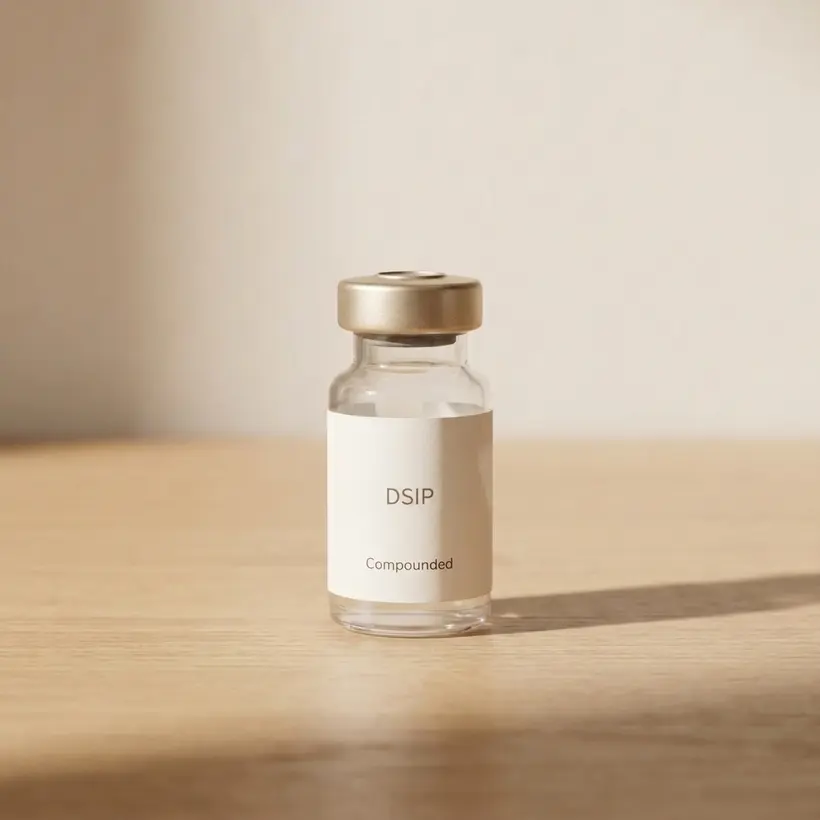
From the FormBlends catalog
DSIP (Delta Sleep-Inducing Peptide)
Restore deep, restorative delta wave sleep · From $179/mo · compounded by a licensed 503A pharmacy, dispensed only after provider review.
View DSIP (Delta Sleep-Inducing Peptide) →Human studies tell a different story entirely. Schneider-Helmert's 1988 trial remains the gold standard, testing DSIP in 16 chronic insomnia patients using rigorous polysomnography. The results were unequivocal: no improvements in sleep latency, total sleep time, sleep efficiency, or subjective sleep quality. Not even a trend toward benefit.
Smaller human studies show scattered positive results but suffer from methodological weaknesses. A 5-person trial found cortisol reductions. Case reports describe pain relief in some patients. One uncontrolled observation suggested benefits in alcohol withdrawal. None have been replicated in larger, controlled settings.
| Finding | Species | Quality of Evidence | Replication Status |
|---|---|---|---|
| Delta wave increase | Rabbits, rats | Good | Multiple labs |
| Sleep improvement | Humans | Poor | Failed in RCT |
| Cortisol reduction | Humans | Very poor | Single small study |
| Analgesic effects | Humans | Case reports only | Not attempted |
| Temperature regulation | Rats | Moderate | Limited attempts |
This species difference might reflect fundamental neurobiology. Rabbit sleep architecture differs substantially from human sleep. What promotes delta waves in a prey species with polyphasic sleep patterns may not translate to human monophasic sleep.
The Blood-Brain Barrier Problem
DSIP faces a fundamental challenge: reaching its presumed site of action in the brain. As a 9-amino acid peptide weighing 848.97 daltons, DSIP sits in an awkward middle ground. Too large for passive diffusion across the blood-brain barrier. Too small to trigger receptor-mediated transport systems evolved for larger proteins.
Radiolabeling studies paint a grim picture. Less than 0.1% of peripherally injected DSIP reaches brain tissue in rodents. Achieving central effects requires doses 100-fold higher than endogenous levels, suggesting the tiny fraction that does penetrate must work through high-affinity targets.
No specific DSIP transporter has been identified. Unlike insulin or transferrin, which have dedicated blood-brain barrier transport systems, DSIP appears to rely on non-specific mechanisms. Some researchers propose it piggybacks on peptide transport system-1 (PTS-1), but direct evidence is lacking.
The penetration problem extends beyond quantity to timing. DSIP's plasma half-life of 7 to 10 minutes means rapid clearance competes with slow brain entry. By the time meaningful amounts might accumulate centrally, peripheral levels have crashed. This kinetic mismatch could explain why intravenous administration, despite 100% bioavailability, still shows inconsistent effects.
Why Nasal Sprays Don't Work
The nasal spray market for DSIP exemplifies hope triumphing over pharmacology. Vendors promote nasal delivery as bypassing first-pass metabolism and providing direct brain access. The reality is far less promising.
Successful nasal peptide delivery requires specific formulation elements universally absent from commercial DSIP sprays:
Absorption enhancers form the foundation. Chitosan, sodium taurodihydrofusidate, or cyclodextrins temporarily disrupt tight junctions between nasal epithelial cells. Without them, peptides larger than 1000 daltons show negligible absorption. DSIP at 849 daltons sits right at the cutoff, requiring enhancement for meaningful uptake.
Enzyme inhibitors prevent degradation. The nasal mucosa contains aminopeptidases that cleave peptide bonds. DSIP's N-terminal tryptophan makes it particularly vulnerable. Successful formulations include bestatin or puromycin to block these enzymes.
pH optimization balances stability against absorption. DSIP remains stable at pH 5.5 to 6.5 but absorbs better at physiological pH 7.4. Most nasal sprays make no pH adjustments.
Droplet size determines deposition. Particles below 10 micrometers get inhaled into lungs. Above 50 micrometers, they impact the anterior nose and drain out. The optimal 10 to 50 micrometer range requires specialized spray pumps.
Without addressing these factors, nasal DSIP likely degrades on the mucosal surface or drains into the throat for oral degradation. The absence of any published bioavailability data for nasal DSIP speaks volumes.
Comparing DSIP to Proven Sleep Aids
Context matters when evaluating any sleep intervention. DSIP competes not in a vacuum but against medications with decades of evidence and optimization.
Zolpidem (Ambien) acts through GABA-A receptor alpha-1 subunit selective binding. This mechanism is understood down to crystallographic structures showing exact binding sites. Onset occurs within 15 to 30 minutes. Hundreds of trials document efficacy. Side effects, while real, are predictable.
Melatonin works through MT1 and MT2 receptors, with MT1 activation promoting sleep onset and MT2 affecting circadian timing. Doses from 0.5 to 5mg show clear effects on sleep latency. Extended-release formulations address sleep maintenance. Cost runs $5 to $15 monthly.
DSIP offers none of these advantages. Its mechanism remains speculative, mentioning NMDA modulation, GABA interaction, and serotonin effects without definitive evidence for any. Onset timing varies wildly between users, from 30 minutes to several days of dosing. The single controlled trial showed no benefit.
Cost comparison proves especially striking. DSIP runs $150 to $300 monthly for a peptide requiring refrigeration, frequent reconstitution, and injection. Proven alternatives cost a fraction of this while offering predictable effects and oral convenience.
The comparison extends to safety profiles. Zolpidem and melatonin have documented adverse event profiles from millions of patient-years of use. DSIP safety data comes from perhaps 100 total subjects across all studies. Long-term effects remain completely unknown.
Practical Dosing and Stability Issues
Using DSIP presents multiple practical challenges beyond efficacy questions. No standardized protocol exists because no dose-response relationship has been established in humans.
Research protocols used 20 to 30 nmol/kg intravenously, translating to roughly 100 to 200 mcg for a 70kg adult. User reports describe subcutaneous doses from 100 to 500 mcg, with some escalating to 1mg without clear benefit. The absence of dose-response data means users essentially experiment on themselves.
Timing recommendations vary from 30 minutes to 3 hours before intended sleep. Some protocols suggest morning dosing for "sleep pressure building" throughout the day. Others promote split dosing. None have comparative data support.
Stability creates ongoing hassles. Lyophilized DSIP remains stable for months when stored properly. Once reconstituted, degradation begins immediately. At room temperature, significant breakdown occurs within 24 to 48 hours. Refrigeration extends this to approximately one week.
Freeze-thaw cycles damage peptide structure, making frozen storage impractical. Users must reconstitute fresh vials weekly, increasing contamination risk with each manipulation. Pre-loading syringes for convenience accelerates degradation through increased surface area exposure.
The short stability window interacts poorly with common cycling protocols. Five days on, two days off cycling means reconstituting mid-cycle when peptide integrity has already declined. Daily users face weekly reconstitution rituals.
Evaluating Product Quality
DSIP's research chemical status means quality varies dramatically between sources. Knowing what to verify can mean the difference between receiving actual peptide versus expensive amino acid soup.
Sequence confirmation tops the priority list: Trp-Ala-Gly-Gly-Asp-Ala-Ser-Gly-Glu. Single amino acid substitutions destroy activity. Mass spectrometry should show 848.97 ± 0.5 daltons. Anything outside this range indicates synthesis errors or degradation.
HPLC purity below 98% suggests problematic synthesis or storage. Common impurities include deletion sequences missing amino acids, addition sequences with extra residues, and racemized amino acids with incorrect stereochemistry. Each reduces or eliminates activity.
Bacterial endotoxin testing matters for injection safety. Levels should remain below 5 EU/mg. Higher levels indicate bacterial contamination during synthesis or packaging. Symptoms of endotoxin exposure include fever, headache, and malaise often mistaken for peptide effects.
Visual inspection catches obvious problems. Pure DSIP appears white to off-white. Yellow coloration indicates oxidation, particularly of the N-terminal tryptophan. Brown coloration suggests advanced degradation. Properly reconstituted solution should appear clear without particulates.
Certificate of analysis authenticity can be verified by contacting testing laboratories directly. Fraudulent COAs plague the peptide market. Legitimate certificates include testing lab contact information and unique sample identifiers.
What Users Actually Experience
Aggregating user reports reveals patterns obscured by individual anecdotes. The peptide community's DSIP experiences fall into distinct categories that suggest real but highly variable biological activity.
The majority report no effects whatsoever. These non-responders try escalating doses, different timing, various cycling protocols, all without noticeable changes to sleep or daytime function. Many express frustration at the cost-to-benefit ratio, especially after trying multiple vendors suspecting quality issues.
A smaller group describes subtle improvements requiring careful attention to notice. Sleep feels "deeper" without being longer. Morning awakening comes easier. Stress during the following day seems more manageable. These users often report effects building gradually over several days before plateauing.
Timing patterns emerge from positive reports. Unlike sedative medications with clear onset and offset, DSIP effects seem to accumulate. First doses rarely produce noticeable changes. By day three to five, subtle shifts in sleep quality may appear. This delayed response confounds evaluation and likely contributes to high dropout rates.
Tolerance develops quickly among responders. Initial benefits often fade within two to four weeks despite continued dosing. Cycling protocols attempt to address this, with limited success. Some users report needing increasingly long breaks between cycles to restore effectiveness.
A concerning minority experience paradoxical reactions: insomnia, anxiety, vivid nightmares, or next-day grogginess. These adverse responses appear unpredictable, occurring even at low doses in some individuals. The mechanism remains unclear but might reflect individual differences in DSIP metabolism or receptor sensitivity.
Cost-benefit calculations dominate user discussions. At $150 to $300 monthly, DSIP costs more than many prescription sleep aids while requiring injection and refrigeration hassles. Users who find modest benefits often discontinue due to practicality rather than ineffectiveness.
FAQ
What is DSIP peptide?
DSIP (Delta Sleep Inducing Peptide) is a 9-amino acid neuropeptide originally isolated from rabbit brain in 1977. Despite its name suggesting sleep induction, human evidence remains limited to small trials showing mixed results on sleep parameters.
Does DSIP actually improve sleep?
Human evidence is weak. The largest trial (16 patients) showed no significant sleep improvements. Animal studies show delta wave increases, but human EEG effects are inconsistent. Most positive reports come from uncontrolled observations.
What are DSIP peptide benefits beyond sleep?
Limited human data suggests potential stress reduction (cortisol lowering in one 5-person trial) and possible analgesic effects. Animal studies show antioxidant activity and temperature regulation, but human translation remains unproven.
What is the proper DSIP dosing protocol?
No standardized protocol exists. Research doses range from 20-30 nmol/kg (roughly 100-200 mcg for adults) given intravenously. Subcutaneous protocols typically use 100-300 mcg before bed. Duration and cycling lack evidence.
Is DSIP nasal spray effective?
No published data supports nasal DSIP absorption. The peptide's hydrophilic nature and 9-amino acid size create absorption barriers. Most nasal formulations lack penetration enhancers needed for peptide delivery.
How quickly does DSIP degrade?
DSIP shows unusual stability for a peptide, with plasma half-life around 7-10 minutes when injected. In solution at room temperature, significant degradation occurs within 24-48 hours. Refrigerated reconstituted solutions remain stable for approximately one week.
What do DSIP peptide reddit users report?
Reddit reports vary widely from "life-changing sleep" to "complete waste." Common themes include subtle effects requiring multiple doses, better stress response rather than direct sedation, and many users reporting no noticeable effects.
Can DSIP be combined with other sleep aids?
No interaction studies exist. Theoretical GABA-A modulation suggests caution with benzodiazepines or Z-drugs. Users commonly combine with magnesium or melatonin without reported issues, but safety data is absent.
Why do some people not respond to DSIP?
Individual variation likely stems from endogenous DSIP levels, receptor sensitivity, and blood-brain barrier penetration differences. The peptide's mechanism remains unclear, suggesting multiple pathways that vary between individuals.
How does DSIP compare to traditional sleep medications?
DSIP lacks the robust clinical evidence of approved sleep medications. Unlike benzodiazepines or Z-drugs with clear GABA-A binding and predictable effects, DSIP's mechanism and efficacy remain poorly characterized in humans.
Sources
- Schneider-Helmert D. (1988). "Effects of DSIP on narcolepsy." European Archives of Psychiatry and Neurological Sciences.
- Schoenenberger GA, Monnier M. (1977). "Characterization of a delta-electroencephalogram (-sleep)-inducing peptide." Proceedings of the National Academy of Sciences.
- Graf MV, Kastin AJ. (1984). "Delta-sleep-inducing peptide (DSIP): a review." Neuroscience & Biobehavioral Reviews.
- Nakamura A, et al. (1989). "Changes in the serotonergic system induced by DSIP." Peptides.
- Sudakov KV, et al. (1995). "The role of DSIP in stress." Neuroscience and Behavioral Physiology.
- Iyer KS, McCann SM. (1987). "Delta sleep inducing peptide (DSIP) stimulates the release of LH but not FSH." Neuroendocrinology.
- Dick P, et al. (1982). "DSIP in the treatment of withdrawal syndromes." European Journal of Psychiatry.
- Kovalzon VM. (1994). "DSIP: Sleep peptide or unknown hypothalamic hormone?" Journal of Evolutionary Biochemistry and Physiology.
Footer Disclaimers
Platform notice: This article is for educational purposes only and is not medical advice. Always consult with a healthcare provider before starting any new treatment.
Research compound notice: DSIP is available as a research compound only. It has not been approved by the FDA for any medical use. Individual use carries unknown risks.
Results disclaimer: Individual results vary significantly. The absence of robust clinical evidence means outcomes cannot be predicted or guaranteed.
Trademark notice: All trademarks, registered trademarks and service marks mentioned are the property of their respective owners.
Related peptide guides
Ready when you are
DSIP (Delta Sleep-Inducing Peptide)
Restore deep, restorative delta wave sleep · From $179/mo · compounded by a licensed 503A pharmacy, dispensed only after provider review.
View DSIP (Delta Sleep-Inducing Peptide) →