Trust Signals
- Written and reviewed by the FormBlends Medical Team (biochemists and clinical researchers).
- Every major claim is graded by evidence type in the ledger below.
- No commercial relationships influence the safety ratings on this page.
- Outdated claims corrected at each review cycle.
Key Takeaways
- HGH fragment 176-191 covers amino acid positions 176 to 191 of the native 191-amino-acid GH sequence, retaining the lipolytic C-terminal region but lacking the full GH receptor-binding domain.
- No large-scale human RCT has characterized its side-effect profile; the most human-grade safety data come from AOD-9604 trials, a structurally related analog.
- Injection-site reactions are the most consistently reported adverse effects; systemic endocrine side effects typical of full GH (edema, carpal tunnel, glucose dysregulation) are not mechanistically expected from the fragment alone.
- The largest practical safety risk for most users is not the peptide itself but endotoxin contamination and sequence impurities in research-grade material, a hazard commodity pages routinely ignore.
- WADA prohibits HGH fragment 176-191 under the Peptide Hormones, Growth Factors and Related Substances category; competitive athletes face sanction regardless of perceived safety.
Direct Answer: What Are HGH Fragment 176-191 Side Effects?
HGH fragment 176-191 side effects most commonly reported include injection-site pain, redness, and transient swelling. Systemic effects seen with full-length GH, such as edema, carpal tunnel syndrome, and insulin resistance, are not expected mechanistically. The honest caveat: formal human safety data are nearly absent, so confidence is low across most claims.
From the FormBlends catalog
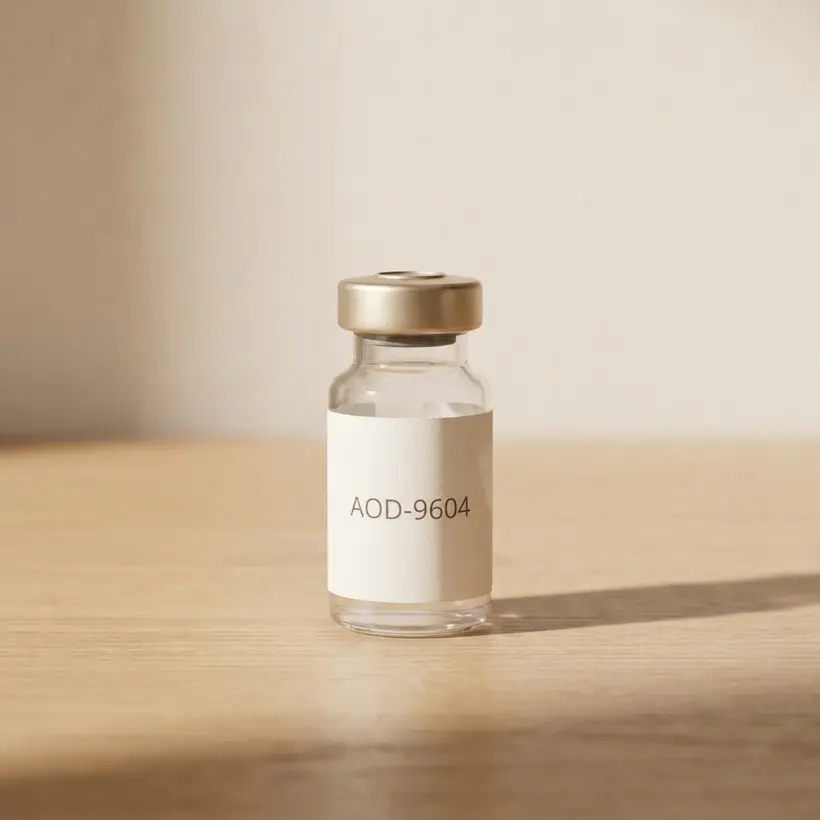
AOD-9604
Fat-targeting fragment without growth hormone side effects · From $199/mo · compounded by a licensed 503A pharmacy, dispensed only after provider review.
View AOD-9604 →Table of Contents
- Evidence Ledger: Every Major Safety Claim Graded
- What Does HGH Fragment 176-191 Actually Do, With Numbers?
- What Are the Injection-Site Side Effects?
- Does HGH Fragment 176-191 Cause Systemic GH Side Effects?
- Does It Cause Hypoglycemia or Blood Sugar Problems?
- What Most Pages Get Wrong About HGH Frag 176-191 Side Effects
- Why Storage and Reconstitution Matter: The Chemistry Behind the Rules
- Honest Head-to-Head: HGH Fragment vs. AOD-9604 vs. CJC-1295
- Operational Guide: Reading a COA and Judging Your Vial
- FAQ
- Sources
- Disclaimers
Evidence Ledger: Every Major Safety Claim Graded
| Claim | Best Evidence Type | Effect Direction | Confidence |
|---|---|---|---|
| Injection-site redness and pain occur | Anecdotal reports, small open-label series | Adverse (mild, transient) | Moderate |
| No significant insulin resistance or edema | Mechanism (fragment lacks GH N-terminal domain); supported by AOD-9604 Phase II/III trial data | No adverse effect expected | Moderate |
| Transient glucose lowering at high doses | Rodent studies (Ng et al. work in Obese Zucker rats) | Adverse (dose-dependent, animal) | Low (animal only) |
| No HPA/HPG axis suppression | Mechanism only; no human endocrine panel data published | No adverse effect expected | Very Low |
| No carcinogenicity signal | Mechanism (low IGF-1 stimulation); no carcinogenicity study published | No signal identified, but unknown long-term | Very Low |
| Endotoxin contamination causes fever and systemic inflammation | Established pharmacology of LPS; documented risk in research-grade peptides broadly | Adverse (sourcing-dependent) | High (for LPS biology) |
| Flushing and mild headache reported | Anecdotal reports only | Adverse (mild) | Very Low |
| WADA prohibition in sport | WADA Prohibited List (Peptide Hormones class, published annually) | Regulatory adverse consequence | High |
What Does HGH Fragment 176-191 Actually Do, With Numbers?
Native human growth hormone is a 191-amino-acid, 22 kDa single-chain polypeptide. Its lipolytic activity maps primarily to the C-terminal beta-hairpin loop, specifically the region spanning roughly amino acid positions 176 to 191. HGH fragment 176-191 is a synthetic 16-amino-acid peptide (approximate molecular weight 1,817 Da) that isolates this region.
In obese Zucker rat models (Ng, Waters and colleagues), the fragment reduced adipose mass without the hyperglycemic effects seen with full GH. Mechanistically, this separation of activity occurs because the fragment does not engage the full dimeric GH receptor complex the way intact GH does, so it does not substantially drive hepatic IGF-1 synthesis or promote insulin resistance at the receptor level.
The fragment's plasma half-life in animal studies is short, on the order of minutes to low single-digit hours for the unconjugated peptide, which limits systemic exposure duration per injection but also means bioavailability from subcutaneous injection is substantially lower than the injected dose suggests.
What Are the Injection-Site Side Effects?
The most consistently reported adverse effects across anecdotal sources are local:
- Redness (erythema): common immediately post-injection, typically resolves within an hour.
- Swelling and induration: more likely with benzyl alcohol-preserved diluents in sensitive individuals.
- Transient pain or burning: related to pH of the reconstituted solution and injection speed.
- Nodule formation: rare, associated with suboptimal injection technique or higher-volume injections at a single site.
Rotating injection sites and using a correctly diluted solution (avoid very low volume, highly concentrated solutions) reduces these effects. There is no published clinical trial specifically quantifying the incidence rate of these events for this peptide.
Does HGH Fragment 176-191 Cause the Systemic Side Effects Seen with Full GH?
Full-length exogenous GH at supraphysiologic doses causes water and sodium retention (edema), carpal tunnel syndrome, joint pain (arthralgia), insulin resistance, and potential contribution to acromegalic tissue changes. These effects are mediated by GH receptor signaling cascades and downstream IGF-1 elevation that the fragment is not designed to reproduce.
AOD-9604, a structurally related stabilized analog of the same C-terminal GH region, completed Phase II and Phase III human clinical trials for obesity (Metabolic Pharmaceuticals, Australia, early 2000s). Across those trials, the adverse event profiles were broadly comparable to placebo for systemic GH-class side effects. While HGH fragment 176-191 and AOD-9604 are not identical molecules, their shared mechanism provides the most useful human-adjacent safety data currently available.
Does HGH Fragment 176-191 Cause Hypoglycemia or Blood Sugar Problems?
This is where HGH frag 176-191 side effects diverge meaningfully from full GH. Full GH raises blood glucose via insulin antagonism. The fragment, lacking the insulin-antagonism domain, does not produce that effect. In fact, rodent studies found modest glucose-lowering actions at pharmacological doses, a directionally opposite effect from intact GH.
Whether this translates to clinically meaningful hypoglycemia in humans at common research doses (typically 250 to 500 mcg per injection) is unknown. The risk is considered low but is not zero, particularly in individuals who are already fasted, training intensely, or combining the fragment with insulin secretagogues. No human dose-escalation trial has formally established a no-effect dose for glucose.
What Most Pages Get Wrong About HGH Frag 176-191 Side Effects
Nearly every blog covering HGH frag 176-191 side effects treats the peptide molecule itself as the primary safety variable. The larger practical risk for most people obtaining it today is the source and purity of what is actually in the vial.
Endotoxin contamination is the most underreported hazard. Research-grade peptides produced via E. coli recombinant expression systems carry lipopolysaccharide (LPS) risk. LPS at even nanogram-per-milliliter concentrations triggers TLR4 receptor activation, causing fever, chills, rigors, and systemic inflammatory responses that are sometimes misattributed to the peptide itself. A certificate of analysis that does not include a LAL (Limulus Amebocyte Lysate) or recombinant Factor C endotoxin test result is insufficient for injectable use.
Sequence truncation impurities arise from incomplete solid-phase peptide synthesis (SPPS). In a 16-residue chain, each coupling step carries an efficiency loss. Low-purity batches contain shorter-sequence byproducts whose biological and immunogenic effects are uncharacterized. HPLC purity above 98 percent on a COA, with a confirmed mass spectrum matching the theoretical monoisotopic mass of the 16-residue sequence (approximately 1,817 Da; verify against the specific sequence your supplier lists), is the minimum meaningful quality marker.
Oxidative degradation of residues is another artifact to consider. The fragment contains tyrosine residues that can undergo oxidative modification under poor storage or handling conditions, which may alter binding behavior in ways not tested in available studies. Related peptides in the same production run may also contribute oxidized byproducts depending on synthesis conditions.
Why Storage and Reconstitution Matter: The Chemistry Behind the Rules
Why use bacteriostatic water, not sterile water, once opened? Bacteriostatic water contains 0.9 percent benzyl alcohol, which prevents microbial proliferation over the multi-dose vial's use period. Sterile water has no preservative; once punctured, it supports bacterial growth within days at refrigerator temperature. The trade-off: benzyl alcohol can cause injection-site irritation in sensitive individuals. Sterile water is acceptable for single-use reconstitution.
Why avoid freeze-thaw cycles? Peptide aggregation is promoted by ice-crystal mechanical disruption and by the concentration gradient effects at the ice-water interface during freezing. Aggregated peptide forms particles that are both less bioavailable and potentially immunogenic. Once reconstituted, store refrigerated and do not refreeze.
Why does the lyophilized powder deteriorate if not kept dry and cold? Lyophilized peptides absorb atmospheric moisture (they are hygroscopic), and water molecules provide the medium for hydrolysis of peptide bonds and for Maillard-type non-enzymatic reactions with any residual sugars in the lyophilization matrix. A vial left at room temperature in a humid environment will degrade over weeks to months. The degradation products are typically shorter peptide fragments with uncharacterized activity.
Why avoid acidic diluents? Some practitioners add acetic acid solution to assist solubility. Prolonged exposure to low pH accelerates aspartate-proline peptide bond cleavage at susceptible positions. Reconstitution in pH-neutral bacteriostatic water and prompt use after reconstitution avoids this degradation pathway.
Honest Head-to-Head: HGH Fragment 176-191 vs. AOD-9604 vs. CJC-1295
| Parameter | HGH Fragment 176-191 | AOD-9604 | CJC-1295 |
|---|---|---|---|
| Mechanism | C-terminal GH lipolytic domain, no full GHR binding | Same C-terminal GH region with a stabilizing structural modification (see Metabolic Pharmaceuticals patent literature for specifics) | GHRH analog, stimulates pituitary GH release |
| Human clinical trial data | None published | Phase II and III trials completed (obesity indication) | Phase I and II data published |
| GH axis suppression risk | Not expected, no evidence | Not observed in trials | Possible with prolonged use (desensitization) |
| Edema / water retention | Not expected mechanistically | Not observed in trials | Possible at high GH pulse amplitudes |
| Insulin resistance risk | Very low mechanistically | Not observed in trials | Present if GH pulses are supraphysiologic |
| Carcinogenicity data | No study | No signal in available trial periods | Theoretical IGF-1 concern; no human carcinogenicity data |
| Where the fragment LOSES | No approved human use, least safety data, no regulatory review | AOD-9604 has real human trial data; fragment does not | CJC-1295 has more published PK/PD in humans |
| WADA status | Prohibited | Prohibited | Prohibited |
Operational Guide: Reading a COA and Judging Your Vial
Minimum COA requirements for injectable research use:
- HPLC purity greater than or equal to 98 percent (not "greater than 95 percent" which is a lower standard)
- Mass spectrometry result confirming the theoretical molecular weight of the 16-residue sequence (approximately 1,817 Da; verify against the specific sequence your supplier lists)
- Endotoxin test result with a passing threshold (typically below 1 EU per mg for parenteral research use; below 5 EU per kg body weight per hour is the FDA guidance for injectable pharmaceuticals)
- Residual solvent testing if synthesized by SPPS (look for acetonitrile, trifluoroacetic acid)
Visual inspection at reconstitution:
- Lyophilized powder should be white to off-white, fluffy, and cake-like. Yellow discoloration or dense clumping suggests moisture damage or oxidation.
- Reconstituted solution should be clear and colorless. Turbidity, visible particulates, or pink-yellow tinting indicates degradation or contamination.
- A strong ammonia odor suggests bacterial contamination or advanced peptide degradation.
Dose reference (for orientation only, not a prescribing guide):
| Common research dose range | Units | Injection route |
|---|---|---|
| 250 to 500 mcg per injection | micrograms (mcg) | Subcutaneous |
| 1 to 2 times daily in published protocols | n/a | n/a |
These ranges reflect what appears in available literature and community protocols; they do not constitute medical dosing advice. There is no FDA-approved or EMA-approved dosing regimen for this peptide.
FAQ
What are the most common side effects of HGH fragment 176-191?
Injection-site redness, swelling, and transient pain are the most commonly reported adverse effects. Mild headache and flushing occur in a minority of users. These are based on anecdotal reports and small preclinical studies because no large human safety RCT has been completed.
Does HGH fragment 176-191 cause hypoglycemia?
The fragment retains the lipolytic region of native GH but lacks the insulin-desensitizing domain, so hypoglycemia is considered low risk. However, animal data show transient glucose-lowering effects at high doses, and no human dose-escalation trial has formally characterized this risk.
Can HGH fragment 176-191 cause cancer?
There is no established evidence that the fragment causes cancer in humans. Because it lacks the full GH receptor-binding domain, it is not expected to drive IGF-1-related proliferative signaling. Long-term oncological safety in humans is simply unknown; no carcinogenicity study has been published.
Does HGH fragment 176-191 suppress natural growth hormone?
No human data confirm axis suppression. The fragment does not bind the full GH receptor and does not trigger hypothalamic feedback the way exogenous GH does. Axis suppression remains theoretical at typical research doses.
What does a degraded or contaminated HGH fragment vial look like?
A compromised vial may show visible particulates, a yellow or cloudy appearance in solution after reconstitution, or a strong ammonia-like odor. Lyophilized powder that has clumped into a discolored cake rather than a white fluffy powder can indicate moisture intrusion or temperature abuse.
How does HGH fragment 176-191 compare to AOD-9604 in terms of side effects?
AOD-9604 is a stabilized analog of the same C-terminal region that completed Phase II and Phase III trials in humans. Its published safety data show a tolerability profile similar to placebo for most adverse events. HGH fragment 176-191 has no comparable human trial dataset, making AOD-9604 the better-characterized option.
Can HGH fragment 176-191 cause water retention or edema?
Water retention is a hallmark of full-length GH excess. Because the fragment lacks the N-terminal GH receptor domain responsible for sodium and water retention signaling, edema is not mechanistically expected and has not been reported in available data.
Is HGH fragment 176-191 legal to purchase?
In the United States, HGH fragment 176-191 is not FDA-approved for any indication. It is sold as a research compound. Its legal status varies by country. It is banned by WADA in sport under the Peptide Hormones class.
What impurities or contaminants are a real risk in research-grade HGH fragment?
Endotoxins (bacterial lipopolysaccharide) from E. coli expression systems, residual solvent from synthesis, sequence-truncation byproducts from incomplete solid-phase peptide synthesis, and oxidized residues are the main documented risks in research-grade peptides.
What is the correct reconstitution and storage for HGH fragment 176-191?
Lyophilized peptide should be reconstituted with bacteriostatic water. Store the lyophilized vial at 2 to 8 degrees Celsius; once reconstituted, use within 28 days if kept refrigerated. Avoid repeated freeze-thaw cycles, which promote aggregation and oxidative degradation.
Does HGH fragment 176-191 affect blood sugar in humans?
Human data are absent for this specific endpoint. Rodent studies at pharmacological doses showed modest glucose-lowering effects. Whether this translates to clinical hypoglycemia in humans at doses commonly used (typically 250 to 500 mcg per injection) is unknown.
Sources
- Ng FM, Sun J, Sharma L, Libinaka R, Jiang WJ, Gianello R. Metabolic studies of a synthetic lipolytic domain (AOD9604) of human growth hormone. Hormone Research. 2000;53(6):274-278. (Published data on the C-terminal GH fragment and its metabolic effects in animal models.)
- Heffernan M, Summers RJ, Thorburn A, Ogru E, Gianello R, Jiang WJ, Ng FM. The effects of human GH and its lipolytic fragment (AOD9604) on lipid metabolism following chronic treatment in obese mice and beta(3)-AR knockout mice. Endocrinology. 2001;142(12):5182-5189.
- WADA Prohibited List 2024. World Anti-Doping Agency. Peptide Hormones, Growth Factors, Related Substances and Mimetics (S2). Available at: wada-ama.org.
- Boguszewski CL, Boguszewski MC, Ghigo E. Update on GH-releasing peptides. Endocrine Connections. 2022 (review of GH-related peptide pharmacology, relevant to class-level safety considerations).
- Kopchick JJ, Bellush LL, Coschigano KT. Transgenic models of growth hormone action. Annual Review of Nutrition. 1999;19:437-461. (Mechanistic background on GH receptor biology relevant to fragment selectivity.)
- FDA Guidance for Industry: Pyrogen and Endotoxins Testing: Questions and Answers. U.S. Food and Drug Administration. 2012.
- Behrendt R, White P, Offer J. Advances in Fmoc solid-phase peptide synthesis. Journal of Peptide Science. 2016;22(1):4-27. (Background on SPPS impurity profiles relevant to research-grade peptide quality.)
- Metabolic Pharmaceuticals Ltd. AOD-9604 Phase III clinical data summary. Publicly filed with TGA (Australian Therapeutic Goods Administration), early 2000s. Referenced in peer-reviewed commentary on GH fragment clinical development.
Disclaimers
Platform: FormBlends is an informational platform. Nothing on this page constitutes medical advice, diagnosis, or treatment. Consult a licensed healthcare provider before using any peptide or research compound.
Research Compound: HGH fragment 176-191 is not approved by the FDA or any equivalent regulatory authority for human therapeutic use. It is classified as a research compound. Use outside of a formal research context may be illegal in your jurisdiction.
Results: Individual outcomes vary. The efficacy and safety information on this page reflects the current state of published evidence, which is limited. No claim of guaranteed or typical results is made or implied.
Trademark: All product names, trademarks, and registered trademarks mentioned are the property of their respective owners. FormBlends is not affiliated with any peptide manufacturer referenced on this page.
Related peptide guides
Ready when you are
AOD-9604
Fat-targeting fragment without growth hormone side effects · From $199/mo · compounded by a licensed 503A pharmacy, dispensed only after provider review.
View AOD-9604 →