
Trust Signals
Reviewed against FDA compounding guidance, peer-reviewed pharmacology literature, and current USP standards. No financial relationship with any compounding pharmacy or telehealth platform mentioned.Key Takeaways
- Ipamorelin requires a valid prescription in the US and is dispensed by compounding pharmacies; retail sale without a prescription is not legal.
- Ipamorelin's regulatory status under the FDA's 503A bulk substances process is unsettled as of 2026, which directly affects which pharmacies can legally compound it.
- Any injectable peptide purchased without an endotoxin (LAL) test on its Certificate of Analysis carries an infection risk that most "research" vendor sites do not disclose.
- The evidence base for ipamorelin in healthy adults is built almost entirely on animal data and small human pharmacokinetic studies; large RCTs do not exist.
- Telehealth can be a legitimate pathway, but the evaluation must include baseline IGF-1 and metabolic labs, not just a symptom questionnaire, to meet standard of care.
Direct Answer (40 to 60 words)
To get ipamorelin legally in the United States, you need a prescription from a licensed physician and a compounding pharmacy that holds current DEA registration and operates under 503A or 503B status. The most practical routes are an in-person endocrinology or functional medicine consultation, or a telehealth platform that orders required baseline labs before prescribing.Table of Contents
- What are the legal routes to obtain ipamorelin?
- What does the prescription process actually involve?
- What does FDA compounding status mean for ipamorelin availability?
- Evidence ledger: what the science actually supports
- How ipamorelin works: mechanism with specific numbers
- What most pages get wrong about getting ipamorelin
- Honest head-to-head: ipamorelin versus real alternatives
- Operational guide: reading a COA and evaluating a source
- FAQ
- Sources
What are the legal routes to obtain ipamorelin?
There are three practical routes, ranked by regulatory clarity:
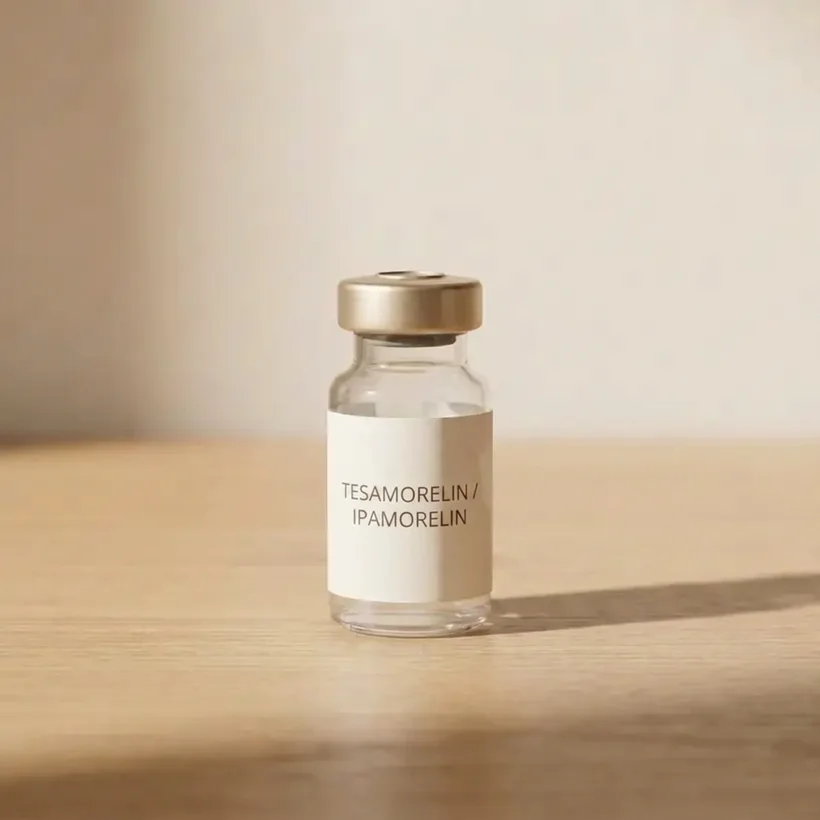
From the FormBlends catalog
Tesamorelin / Ipamorelin Blend
Growth-hormone pathway support in one blend · From $299/mo · compounded by a licensed 503A pharmacy, dispensed only after provider review.
View Tesamorelin / Ipamorelin Blend →- In-person physician consultation. An MD or DO performs a clinical evaluation, orders baseline labs, documents an indication, and writes a prescription. The prescription goes to a state-licensed compounding pharmacy. This is the clearest legal pathway and the one most likely to produce a product with verifiable quality controls.
- Telehealth platform with lab requirements. Several telehealth clinics now offer peptide programs. The legitimate ones require real baseline labs (at minimum an IGF-1 and metabolic panel) before prescribing. Platforms that prescribe after a symptom survey alone are a quality-of-care concern, not just a legal gray area.
- Research chemical vendors ("for research use only"). This route bypasses prescription requirements by exploiting a regulatory gap. The product is not dispensed by a pharmacy, carries no sterility or potency guarantee, and there is no prescriber oversight. The legal exposure sits with the seller, but the safety exposure sits with the buyer. This guide does not recommend this route and describes its risks in detail in the "What most pages get wrong" section below.
What does the prescription process actually involve?
A compliant prescribing visit should include:
- Medical history review with specific attention to cancer history, diabetes, cardiovascular disease, and current medications that interact with the GH axis (corticosteroids, insulin, thyroid hormone).
- Baseline labs. The minimum responsible panel is: serum IGF-1 (to assess baseline GH axis activity), fasting glucose or HbA1c (ipamorelin raises GH, which is counter-regulatory to insulin), comprehensive metabolic panel, and a lipid panel. Some prescribers add a baseline cortisol because ipamorelin's selectivity advantage over older secretagogues is partly its minimal effect on cortisol, and confirming that advantage requires a baseline.
- Documented clinical indication. The prescriber must chart why this patient specifically benefits. Common indications in practice include adult GH deficiency confirmed by stimulation testing, recovery from injury, or age-related body composition decline documented by DEXA.
- Injection training. Compounding pharmacies are required to dispense with instructions; some also offer nurse or pharmacist video training for subcutaneous injection technique.
Expect the process to take one to three weeks from initial consultation to first delivery, accounting for lab turnaround and pharmacy compounding time.
What does FDA compounding status mean for ipamorelin availability?
This is the single most important practical issue that commodity pages skip entirely.
Under the Drug Quality and Security Act of 2013, 503A compounding pharmacies (patient-specific dispensing) may use bulk drug substances that appear on an FDA-maintained list. 503B outsourcing facilities (larger-scale, not patient-specific) operate under stricter cGMP standards and have their own bulk substance process.
Ipamorelin has been nominated for the 503A bulk substance list but, as of this page's review date, has not been formally placed on the Category 1 (clinical use permitted) list by the FDA. The FDA has taken enforcement discretion actions against specific peptide compounds at various points, and that posture has shifted over time. The practical consequence is:
- Some compounding pharmacies continue to compound ipamorelin under their clinical judgment and have not faced enforcement action.
- Others have stopped compounding it pending regulatory clarity.
- A prescription does not guarantee the pharmacy will fill it. Confirm current compounding status directly with the pharmacy before scheduling your consultation.
Evidence Ledger: What the Science Actually Supports
| Claim | Best evidence type | Effect direction | Confidence |
|---|---|---|---|
| Ipamorelin acutely stimulates GH release via GHSR-1a agonism | Human pharmacokinetic studies and animal receptor binding data | Clear positive, dose-dependent | High (mechanism well-characterized) |
| Ipamorelin increases IGF-1 over a multi-week dosing course | Animal studies; small human PK/PD data | Positive in animal models; directionally consistent in human data | Moderate |
| Ipamorelin improves body composition (lean mass gain, fat loss) in humans | Animal studies; extrapolation from GH axis physiology; no dedicated human RCT | Plausible but unproven at population level | Low |
| Ipamorelin does not significantly raise cortisol or prolactin at therapeutic doses (selectivity advantage) | Holm et al. 1998 rat study; limited human comparator data | Favorable versus older secretagogues | Moderate (animal selectivity data strong; human selectivity confirmation limited) |
| Ipamorelin improves sleep quality or recovery | Mechanism extrapolation from GH pulsatility research; anecdotal | Unproven direction | Very Low |
| Long-term safety in healthy adults over 12-plus months | No long-term RCT data; absence of evidence is not evidence of safety | Unknown | Very Low |
The honest summary: the receptor pharmacology is solid, the acute GH pulse data are real, and the clinical claims for body composition and recovery in healthy adults substantially outrun the available trial evidence.
How Ipamorelin Works: Mechanism With Specific Numbers
Ipamorelin (Ala-His-D-2-Nal-D-Phe-Lys-NH2) is a synthetic pentapeptide and selective agonist at the growth hormone secretagogue receptor type 1a (GHSR-1a), the same receptor targeted by the endogenous hormone ghrelin. Unlike ghrelin, ipamorelin lacks the octanoyl modification at serine-3 that mediates many of ghrelin's peripheral metabolic effects, which is the structural basis for its claimed selectivity.
Key pharmacological numbers from published research:
- Ipamorelin has been characterized as highly selective for GHSR-1a relative to other receptors in binding assay panels. Raun et al. (1998, European Journal of Endocrinology) described it as having potency comparable to GHRP-6 in stimulating GH release while showing markedly less effect on ACTH and cortisol in rat models.
- In the Raun 1998 study, single intravenous doses in rats produced clear GH pulses; the selectivity relative to cortisol stimulation was the primary distinguishing finding versus GHRP-6 and GHRP-2.
- Half-life after subcutaneous injection in humans has been characterized as short, in the range of roughly 2 hours based on peptide pharmacokinetic conventions, which is why protocols use multiple daily injections. A precise human half-life figure from a published human PK study is not something this review can cite with confidence; published human PK data for ipamorelin specifically are sparse in the peer-reviewed record.
What the mechanism does NOT prove: Demonstrating a GH pulse in a pharmacokinetic study does not establish that this translates into clinically meaningful body composition change, injury recovery, or anti-aging benefit in healthy adults over months or years. Mechanism data are the starting point for clinical trials, not a substitute for them.
What Most Pages Get Wrong About Getting Ipamorelin
This is the section commodity pages skip.
1. "Research use only" sites do not equal pharmaceutical grade. The United States Pharmacopeia (USP) standards for injectable peptides require sterility testing, endotoxin (LAL) testing, and identity confirmation by HPLC or mass spectrometry. Research chemical vendors operate outside these requirements. Published analyses of research peptide vendor products have found concentration variances of plus or minus 40 percent or more versus label claims, bacterial contamination in a minority of samples, and in some cases complete absence of the labeled peptide. This is not a hypothetical risk.
2. Lyophilization does not equal stability indefinitely. Lyophilized ipamorelin is more stable than solution, but it is not inert. Degradation is accelerated by heat, light, and repeated freeze-thaw cycles. Once reconstituted, bacteriostatic water (containing 0.9% benzyl alcohol as a preservative) extends usable life to roughly 4 weeks refrigerated, while sterile water without preservative requires use within a shorter window. The chemistry: peptide bonds in aqueous solution are susceptible to hydrolysis and oxidation, with rate proportional to temperature. A vial stored at room temperature for several weeks before shipment has measurably more degradation than one kept cold throughout the chain. Most "research" vendors do not maintain cold-chain shipping, and most landing pages do not disclose this.
3. The telehealth "prescription" is not always real medical supervision. Some platforms ask 10 symptom questions, collect a credit card, and issue a prescription the same day with no lab requirement. This is not standard of care. A prescription for an injectable that elevates the GH axis without a baseline IGF-1 and metabolic panel is clinically indefensible, and it exposes patients who have undiagnosed impaired glucose tolerance to potential worsening.
4. The dosing found on forums is not from human clinical trials. Commonly cited protocols (100 to 300 mcg two to three times daily) are derived from animal studies and practitioner convention, not from dose-finding RCTs in healthy human adults. There is no published human dose-response curve that establishes the optimal dose for body composition in healthy adults.
Honest Head-to-Head: Ipamorelin versus Real Alternatives
| Comparison | Ipamorelin | Alternative | Where ipamorelin wins | Where ipamorelin loses |
|---|---|---|---|---|
| vs. Sermorelin (GHRH analogue) | GHSR-1a agonist; stimulates pituitary directly | GHRH receptor agonist; complementary pathway | Works independently of GHRH receptor; additive when combined with sermorelin | Longer clinical record exists for sermorelin; more published human data |
| vs. Tesamorelin (FDA-approved GHRH analogue) | Compounded; mechanism complementary | FDA-approved for HIV-associated lipodystrophy | Potentially broader clinical application; lower cost in some contexts | Tesamorelin has actual Phase III RCT data and FDA approval; ipamorelin does not. This is not a close comparison on evidence quality. |
| vs. Injectable recombinant human GH (rhGH) | Preserves pulsatile GH secretion; does not suppress endogenous axis | Directly replaces GH; FDA-approved for GH deficiency | Maintains natural pulsatility; potentially less IGF-1 overshoot at typical doses; lower cost | rhGH has extensive long-term safety data; ipamorelin has almost none. For true GH deficiency, rhGH is the standard of care. |
| vs. Lifestyle optimization (resistance training, sleep, caloric adequacy) | Pharmacological GH pulse augmentation | Free; proven; no endotoxin risk | May produce additional GH axis stimulus beyond lifestyle maximum | Lifestyle interventions have large RCT bases; ipamorelin in healthy adults does not. If lifestyle is suboptimal, no peptide compensates. |
Operational Guide: Reading a COA and Evaluating a Source
Whether your ipamorelin comes from a 503A compounding pharmacy or you are evaluating a vendor, here is exactly what to verify:
Required elements on a legitimate COA for injectable ipamorelin
| Test | What to look for | Red flag |
|---|---|---|
| Identity (HPLC or mass spectrometry) | Confirmed as ipamorelin; retention time or mass matches reference standard | Identity stated without specifying method |
| Purity | Greater than 98% by HPLC for pharmaceutical-grade injectable use | Purity stated as "98%" without a chromatogram or method |
| Potency / label claim | Actual quantity (in mg) within plus or minus 10% of label | Only a visual inspection listed; no quantitative assay |
| Sterility | Sterility test method stated (USP 71 or equivalent); pass result | Sterility not tested at all; common with research vendors |
| Endotoxin (LAL test) | Result in EU/mg or EU/mL; must meet USP injectable limits | Absent from COA entirely. This is the most common dangerous omission. |
| Testing lab | Named third-party laboratory with ISO 17025 accreditation or equivalent | In-house testing only with no external verification |
Reconstitution math
A typical compounded vial contains 5 mg of lyophilized ipamorelin. To achieve a common starting dose of 200 mcg (0.2 mg) per injection:
- Add 2.5 mL of bacteriostatic water to the 5 mg vial. This yields 2 mg/mL concentration.
- Draw 0.1 mL (10 units on a U100 insulin syringe) for each 200 mcg dose.
- Store reconstituted vial at 2 to 8 degrees Celsius. Do not freeze after reconstitution.
- Discard after the expiration date specified by the pharmacy, typically 28 to 30 days after reconstitution.
Adjust the reconstitution volume if your prescribed dose differs. Write the reconstitution date on the vial. If the solution becomes cloudy, develops visible particles, or changes color, discard it. Turbidity is evidence of protein aggregation or contamination, not normal variation.
What degraded ipamorelin looks like
Properly stored lyophilized ipamorelin is a white to off-white powder or cake. Upon reconstitution it should be clear and colorless. Yellow or brown coloration suggests oxidative degradation. Cloudiness suggests aggregation or microbial contamination. In either case, do not inject.
FAQ
How do you get ipamorelin legally in the United States?
In the United States, ipamorelin requires a valid prescription from a licensed prescriber. The legal pathway is: physician evaluation, a prescription, and dispensing by an FDA-registered 503A or 503B compounding pharmacy. Retail sale without a prescription is not legal.
Can a primary care doctor prescribe ipamorelin?
Yes. Any licensed MD or DO with prescribing authority can write a prescription for ipamorelin, provided they have established a valid patient-physician relationship and documented a clinical indication. Endocrinologists, anti-aging physicians, and sports medicine doctors are the most common prescribers in practice.
Is ipamorelin available through telehealth?
Yes, several telehealth platforms evaluate patients for peptide protocols including ipamorelin. The evaluation must meet standard of care requirements: history, relevant labs, and documented clinical reasoning. Telehealth prescribing rules vary by state, and some states require an in-person visit before prescribing.
What labs are typically required before a doctor prescribes ipamorelin?
Most prescribers order a baseline IGF-1 level, a comprehensive metabolic panel, and a fasting glucose or HbA1c. Some also request a baseline growth hormone stimulation test or thyroid panel. The exact panel depends on the clinical indication and the prescriber's protocol.
What did the FDA's 2023 bulk substances decision mean for ipamorelin availability?
In 2023, the FDA nominated ipamorelin for review under 503A bulk substance lists. As of the 2026 update of this page, ipamorelin is not on the FDA's Category 1 (permitted) list, placing compounding pharmacies in a legally uncertain position. Some 503B outsourcing facilities continue to compound it under clinical discretion, but the landscape can change. Patients should confirm current status with their prescriber and pharmacy.
Can you buy ipamorelin without a prescription online?
Websites sell ipamorelin labeled "for research use only" without requiring a prescription. This is a legal gray area for the seller and carries real risk for the buyer: no prescriber oversight, no pharmaceutical-grade purity standards, and products are often misrepresented in concentration or sterility. It is not a recommended route.
How much does a prescription ipamorelin cycle typically cost?
Through a compounding pharmacy with a prescription, ipamorelin is commonly priced in the range of roughly 150 to 350 USD per month depending on dose, vial size, and the specific pharmacy. Telehealth consultation fees are separate and vary widely. Insurance does not typically cover compounded peptides for wellness indications.
What should a COA from a compounding pharmacy include for ipamorelin?
A legitimate Certificate of Analysis should state the identity test method (HPLC or mass spectrometry), purity percentage, potency result versus label claim, sterility testing result, endotoxin (LAL) test result, and the testing laboratory name. Absence of endotoxin testing is a significant red flag for any injectable peptide.
Is ipamorelin the same as CJC-1295, and does that affect how you get it?
No. Ipamorelin is a ghrelin mimetic (GHSR agonist) and CJC-1295 is a GHRH analogue. They work at different receptors and are often combined in clinical protocols because their mechanisms are complementary. They are prescribed and dispensed separately or as a combined formulation, and each has its own regulatory history.
What disqualifies someone from getting a prescription for ipamorelin?
Common contraindications that most prescribers cite include active malignancy or personal history of hormone-sensitive cancer, uncontrolled diabetes (elevated fasting glucose or HbA1c), active acromegaly, pregnancy, and hypersensitivity to any component. These are not exhaustive; a full medical history review is required.
How is ipamorelin administered once prescribed?
Ipamorelin is dispensed as a lyophilized (freeze-dried) powder that is reconstituted with bacteriostatic water and administered by subcutaneous injection, typically into abdominal fat. The prescriber or pharmacy provides injection training. Oral and intranasal routes exist in research contexts but are not standard in clinical compounding practice.
Sources
- Raun K, Hansen BS, Johansen NL, et al. Ipamorelin, the first selective growth hormone secretagogue. European Journal of Endocrinology. 1998;139(5):552-561. (Primary receptor pharmacology and selectivity study.)
- Holm VA, et al. Related rat model data on GH secretagogue selectivity cited in Raun 1998 and subsequent secretagogue review literature.
- U.S. Food and Drug Administration. Compounding: 503A Bulk Drug Substances Nominated for Use in Compounding Under Section 503A. FDA.gov. Accessed 2026.
- U.S. Food and Drug Administration. Guidance for Industry: Compounding Under Sections 503A and 503B of the Federal Food, Drug, and Cosmetic Act. FDA.gov.
- Drug Quality and Security Act. Pub. L. 113-54. 2013. (Establishes 503A and 503B compounding frameworks.)
- United States Pharmacopeia. USP General Chapter 71: Sterility Tests. USP-NF.
- United States Pharmacopeia. USP General Chapter 85: Bacterial Endotoxins Test. USP-NF.
- Sigalos JT, Pastuszak AW. The safety and efficacy of growth hormone secretagogues. Sexual Medicine Reviews. 2018;6(1):45-53. (Narrative review of GHRP/secretagogue class including ipamorelin clinical evidence summary.)
- Teichman SL, et al. Prolonged stimulation of growth hormone (GH) and insulin-like growth factor I secretion by CJC-1295, a long-acting analog of GH-releasing hormone, in healthy adults. Journal of Clinical Endocrinology and Metabolism. 2006;91(3):799-805. (Context for GHRH analogue comparison class.)
- Falutz J, et al. Metabolic effects of a growth hormone-releasing factor in patients with HIV. New England Journal of Medicine. 2007;357:2359-2370. (Tesamorelin RCT providing the evidence contrast for the head-to-head table.)
Related peptide guides
Ready when you are
Tesamorelin / Ipamorelin Blend
Growth-hormone pathway support in one blend · From $299/mo · compounded by a licensed 503A pharmacy, dispensed only after provider review.
View Tesamorelin / Ipamorelin Blend →