
Trust Signals
FormBlends Medical Team authors are required to cite real, traceable sources. No statistics are invented. Evidence confidence is rated explicitly (High, Moderate, Low, Very Low) in the evidence table below. Regulatory statements are drawn from FDA guidance documents and the WADA Prohibited List. We do not accept sponsorship from compounding pharmacies or telehealth platforms discussed here.
Key Takeaways
- Sermorelin requires a valid prescription in the US; it is not legally available over the counter, and anything sold without one is a research chemical or counterfeit.
- The FDA approved sermorelin (Geref) for pediatric growth hormone deficiency in the 1990s then the brand was withdrawn in 2008 for commercial reasons unrelated to safety; adult use is entirely off-label and compounded.
- A legitimate compounding pharmacy COA must confirm purity by HPLC or mass spectrometry, sterility, and endotoxin levels, not just raw API identity.
- WADA classifies sermorelin as a prohibited substance (S2) both in-competition and out-of-competition for athletes under the WADA code.
- Evidence for body composition benefit in healthy adults with normal GH is rated Low to Very Low by current standards; sleep and well-being reports are largely anecdotal or from small uncontrolled studies.
How Do You Get Sermorelin Peptide? (Direct Answer)
Table of Contents
- What is sermorelin's regulatory status right now?
- What are the legal access pathways?
- What doctors prescribe sermorelin, and what do they check?
- How does sermorelin work, with specific numbers?
- Evidence ledger: what does the data actually support?
- What most pages get wrong about sermorelin sourcing
- Sermorelin vs. alternatives: honest head-to-head
- What does sermorelin cost, and what drives the price?
- How to read a sermorelin COA and product label
- What are the real side effects and contraindications?
- FAQ
What Is Sermorelin's Regulatory Status Right Now?
Sermorelin acetate (the 29-amino-acid N-terminal fragment of endogenous GHRH) was FDA-approved as Geref Diagnostic and Geref for subcutaneous injection in the 1990s for pediatric growth hormone deficiency diagnosis and treatment. Serono voluntarily withdrew the brand product in 2008 for commercial reasons; the FDA explicitly stated the withdrawal was not due to safety or efficacy concerns.
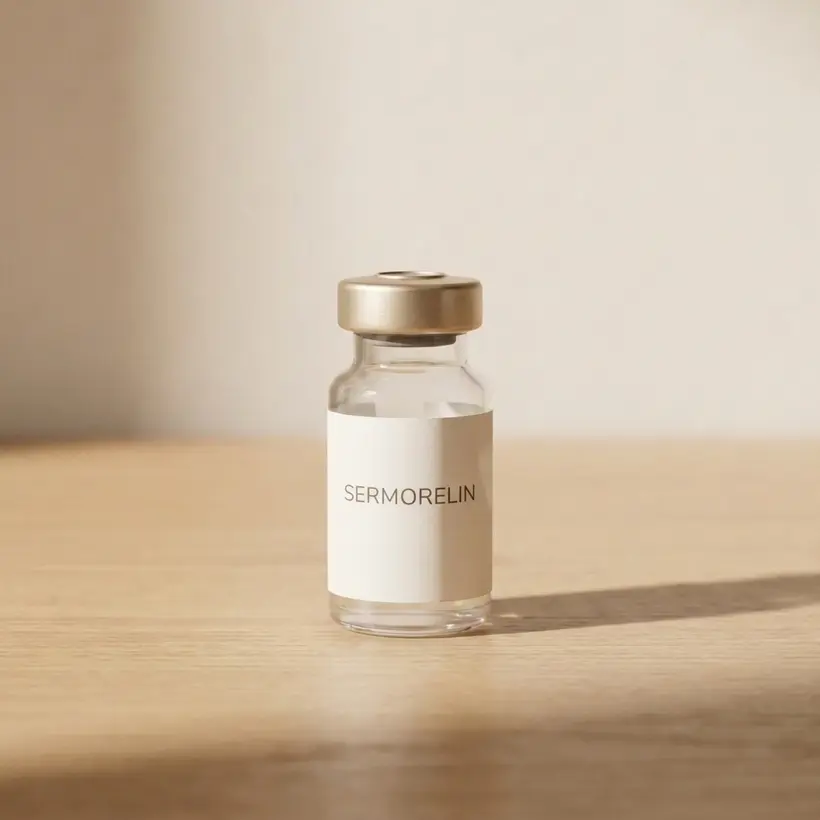
From the FormBlends catalog
Sermorelin
Bioidentical GHRH analog for natural growth hormone pulsatility · From $175/mo · compounded by a licensed 503A pharmacy, dispensed only after provider review.
View Sermorelin →After withdrawal, sermorelin entered a regulatory gray zone. It is not on the FDA's list of bulk drug substances that may not be used in compounding. 503A pharmacies (patient-specific compounding) and 503B outsourcing facilities can legally compound it under a valid prescription. This makes the prescription-compounding route the only lawful human-use pathway in the US.
What Are the Legal Access Pathways?
There are three realistic routes to a legitimate sermorelin prescription:
| Pathway | How it works | Typical turnaround | Caveats |
|---|---|---|---|
| In-person hormone/longevity clinic | Physical exam, labs ordered, prescription written, dispensed via clinic's pharmacy partner | 1 to 3 weeks including lab results | Geographic limitation; higher consultation fees common |
| Telehealth hormone platform | Async or synchronous video visit, labs at local draw site, prescription sent to partner compounding pharmacy | 5 to 14 days | Varies widely in clinical rigor; confirm prescriber license in your state |
| Primary care / endocrinologist referral | Standard outpatient visit; less common because most PCPs do not prescribe off-label peptides routinely | Weeks to months depending on specialist waitlists | Many endocrinologists will not prescribe for healthy-adult off-label use |
Any vendor claiming to sell sermorelin for human injection without requiring a prescriber visit and a pharmacy in the chain is not operating within US law, regardless of how the product is labeled.
What Doctors Prescribe Sermorelin, and What Do They Check?
Prescribers who regularly write sermorelin are concentrated in functional medicine, anti-aging medicine (including A4M-affiliated physicians), sports medicine, and men's and women's health telehealth platforms. Standard pre-prescription workup in careful practice includes baseline IGF-1, a fasting glucose or HbA1c, a lipid panel, and a review of personal and family cancer history (particularly pituitary tumors and active malignancy, which are contraindications). Thyroid function is commonly checked because hypothyroidism blunts GH-axis response. A prescriber who skips labs entirely before starting a GH-axis stimulant is a red flag.
How Does Sermorelin Work, With Specific Numbers?
Sermorelin binds the GHRH receptor (GHRHR) on somatotroph cells of the anterior pituitary. This is a G-protein-coupled receptor; binding activates adenylyl cyclase, raises intracellular cAMP, and triggers GH secretion in a pulsatile pattern that mirrors physiologic nocturnal GH release. The original Geref prescribing information documented that a single 1 mcg/kg IV dose produces a measurable GH peak within 15 to 30 minutes in normal subjects.
Subcutaneous absorption is slower, with peak plasma sermorelin concentrations occurring roughly 10 to 20 minutes post-injection in pharmacokinetic work done with the brand product. The half-life of sermorelin in plasma is under 12 minutes due to rapid enzymatic cleavage by serum dipeptidylpeptidase IV (DPP-IV) and other peptidases. This short half-life is precisely why nightly bedtime dosing (timed to the physiologic GH pulse) is the standard protocol rather than morning or split dosing.
What this mechanism does NOT prove: That stimulating pulsatile GH in a healthy adult with age-related GH decline produces clinically meaningful improvements in body composition, bone density, or longevity. The physiologic plausibility is real; the clinical outcomes evidence in healthy adults is not. Those are separate questions and require separate evidence.
Evidence Ledger: What Does the Data Actually Support?
| Claim | Best evidence type | Effect direction | Confidence |
|---|---|---|---|
| Sermorelin raises GH and IGF-1 acutely in GH-deficient children | RCT (Geref clinical program, 1990s, FDA basis for approval) | Positive, dose-dependent | High |
| Subcutaneous sermorelin raises IGF-1 in adults with documented GH deficiency | Small controlled trials in adults with GH deficiency, including work published in the early 1990s in peer-reviewed endocrinology journals (e.g., Corpas et al., J Clin Endocrinol Metab, 1992) | Positive | Moderate |
| Sermorelin improves sleep architecture (slow-wave sleep) | Small crossover studies examining GHRH and sleep in older adults (e.g., Kerkhofs et al. and related literature on GHRH-sleep interactions) | Positive, modest | Low |
| Sermorelin improves body composition in healthy adults with normal GH | Anecdotal and small uncontrolled clinic series; no powered RCT in this population | Unclear | Very Low |
| Sermorelin is safe for long-term adult use (12+ months) | No long-term RCT; safety inference from GH-axis pharmacology and short clinical series | Not established | Very Low |
| Sermorelin does not suppress endogenous GH axis (preserves feedback) | Mechanism plus short-term clinical observation; no long-duration suppression study | Favorable vs. exogenous HGH | Moderate (short-term) |
What Most Pages Get Wrong About Sermorelin Sourcing
Almost every blog on this topic omits at least one of the following four points:
1. The 503A vs. 503B distinction matters for your safety. A 503A pharmacy compounds for individual patients under a specific prescription and is subject to state board oversight plus some FDA oversight. A 503B outsourcing facility must register with FDA, follow current Good Manufacturing Practice (cGMP), and can produce larger batches. 503B product typically has stricter sterility and potency documentation. Most telehealth-prescribed sermorelin comes from 503A pharmacies, which are adequate when operating properly but do not carry the same mandatory batch-release testing as 503B.
2. Peptide degradation in the vial is real and starts at reconstitution. Sermorelin is supplied lyophilized (freeze-dried) and reconstituted with bacteriostatic water. Once reconstituted, the peptide is stable for a limited period under refrigeration (typically 30 days per most compounding pharmacy guidance, though formal kinetic data for each specific formulation is rarely published). At room temperature, hydrolysis and oxidation accelerate meaningfully. A vial left on a counter for days is not equivalent to one kept at 2 to 8 degrees Celsius. Peptide bonds adjacent to methionine and the N-terminal region are particularly susceptible to oxidation.
3. Injection site contamination, not just chemical degradation, is the top real-world safety concern. Subcutaneous injection of a non-sterile product can cause abscess, cellulitis, or systemic infection. This is not theoretical; it is documented in case reports following self-injection of unregulated peptides. The sterility guarantee comes from the pharmacy process, not from the peptide molecule itself.
4. Research chemical sermorelin is not the same product as compounded pharmaceutical-grade sermorelin. Research chemical vendors typically source API from contract manufacturers with variable GMP compliance. Endotoxin testing, sterility, and accurate peptide concentration are not regulated. "Greater than 98 percent purity by HPLC" on a research COA describes the peptide content relative to other peptides; it says nothing about endotoxin load, residual solvents, or microbial contamination in the finished vial.
Sermorelin vs. Alternatives: Honest Head-to-Head
| Agent | Mechanism | Legal status (US) | Evidence in healthy adults | Where sermorelin wins | Where sermorelin loses |
|---|---|---|---|---|---|
| Sermorelin | GHRH receptor agonist; stimulates pituitary GH pulse | Prescription compounded | Very Low for wellness outcomes | Preserves feedback regulation; lower abuse potential than HGH | Indirect effect depends on functional pituitary reserve; weakens with age |
| Exogenous HGH (somatropin) | Direct GH receptor agonist | Schedule III controlled (US); FDA-approved for specific indications | Moderate for GH-deficient adults; Low for healthy adults | More predictable IGF-1 rise; FDA-approved formulations available | Suppresses endogenous axis; higher cost; more tightly controlled; higher risk of adverse effects at supraphysiologic doses |
| Ipamorelin (GHRP) | Ghrelin receptor agonist; synergistic with GHRH axis | Prescription compounded; FDA has restricted some GHRPs | Very Low; largely animal and in vitro | Often combined with sermorelin for additive GH release; minimal cortisol/prolactin spike vs. other GHRPs | Not as well-studied as sermorelin historically; FDA 503B restrictions tighter |
| Tesamorelin | Stabilized GHRH analogue (trans-3-hexenoic acid conjugate) | FDA-approved (Egrifta) for HIV-associated lipodystrophy | Moderate (RCT data in HIV lipodystrophy population) | Has actual RCT evidence; longer half-life than sermorelin due to DPP-IV resistance | Approved only for a specific population; compounded use is off-label and costly; FDA has placed it on restricted compounding lists at times |
| Lifestyle (sleep, resistance training, intermittent fasting) | Multiple pathways including endogenous GHRH and ghrelin | No prescription needed | High for GH pulse augmentation acutely; Moderate for body composition | Free, no injection risk, broadly beneficial | Requires behavioral adherence; smaller effect on IGF-1 than pharmacologic GH-axis stimulation in truly deficient patients |
What Does Sermorelin Cost, and What Drives the Price?
Compounded sermorelin for subcutaneous injection typically costs roughly $100 to $350 per month for the peptide itself, depending on dose, vial concentration, and pharmacy. This range reflects real-world clinic pricing as of early 2026 and does not include consultation fees (which range from roughly $100 to $300 for an initial telehealth visit) or required labs (IGF-1 assays commonly run $50 to $150 without insurance). Higher prices at certain telehealth platforms reflect bundled services rather than superior peptide quality.
Price is driven primarily by: the cost of pharmaceutical-grade API (typically sourced from US or European peptide manufacturers for reputable pharmacies), compounding labor and sterility testing, bacteriostatic water and vial/stopper costs, and pharmacy overhead. A dramatically lower price from an online vendor (under $40 for a labeled "5 mg research vial") reflects the absence of sterility testing, pharmacy licensure, and often the absence of a prescriber in the chain, which are the features that make pharmaceutical compounding safe.
How to Read a Sermorelin COA and Product Label
When your pharmacy ships sermorelin, you should receive or be able to request documentation that includes the following. If it is missing, ask before injecting.
| Document element | What it should say | Why it matters |
|---|---|---|
| Identity test | HPLC or mass spectrometry confirming sermorelin acetate sequence (29 amino acids, MW approximately 3357 Da) | Confirms you have the right molecule, not a fragment or substitute |
| Purity | Greater than 98 percent by HPLC area (for finished injectable) | Related peptide impurities can cause hypersensitivity or unpredictable activity |
| Concentration | Stated mcg/mL with acceptable range (typically plus or minus 10 percent of label claim) | Determines actual dose per injection unit |
| Endotoxin (LAL test) | Below 5 EU/kg/hr for injectable (USP standard) | Endotoxin causes fever, rigors, and can cause septic shock; not removed by standard filtration |
| Sterility | Pass (USP 71 or equivalent) | Confirms no microbial contamination in finished vial |
| Beyond-use date | Typically 30 to 60 days post-reconstitution under refrigeration | Peptide degrades; do not use expired reconstituted product |
A COA showing only "99 percent purity" for a raw powder with no endotoxin or sterility data is an API supplier certificate, not a finished pharmaceutical product certificate. These are different documents and should not be confused.
What Are the Real Side Effects and Contraindications?
From the original Geref prescribing information and post-market clinical experience, the most consistently reported adverse effects are injection-site reactions (erythema, pain, swelling), transient flushing, headache, and dizziness. These are generally mild and self-limited. Elevated IGF-1 above the age-adjusted normal range is a laboratory finding that should prompt dose reduction or temporary cessation because chronically supraphysiologic IGF-1 is associated in epidemiologic literature with increased risk of certain cancers (colorectal, prostate, breast), though causal direction is debated.
Absolute contraindications in standard prescribing practice include: active malignancy or history of pituitary tumor, active diabetic retinopathy, and known hypersensitivity to GHRH or sermorelin. Relative contraindications include poorly controlled diabetes (GH is insulin-antagonizing), untreated hypothyroidism, and pregnancy. WADA prohibition means competitive athletes subject to testing should not use it regardless of prescription status.
FAQ
How do you get sermorelin legally in the United States?
Sermorelin requires a valid prescription from a licensed physician or prescriber in the US. It is not FDA-approved for adult anti-aging use but can be legally compounded by 503A or 503B pharmacies under a patient-specific prescription. Telehealth platforms and hormone clinics are the most common access points today.
Can you get sermorelin without a prescription?
No. In the US, sermorelin is a prescription-only compound. Products sold as sermorelin without a prescription (powders, nasal sprays, or oral capsules sold online without a prescriber visit) are either mislabeled, unapproved research chemicals, or counterfeit. Purchasing these carries legal and safety risks.
What doctors prescribe sermorelin?
Endocrinologists, anti-aging and longevity physicians, sports medicine doctors, and hormone therapy clinics (in-person or telehealth) are the most common prescribers. Any licensed MD, DO, or NP or PA with prescribing authority can write the prescription in states where scope of practice allows.
Does insurance cover sermorelin?
Rarely. Compounded sermorelin for adult wellness or anti-aging is almost universally considered off-label and cosmetic by insurers. Some plans cover sermorelin for pediatric growth hormone deficiency (the original FDA-approved indication), but adult prescriptions are typically paid out of pocket.
How much does sermorelin cost per month?
Out-of-pocket costs typically range from roughly $100 to $350 per month for the compounded peptide itself, depending on dose and pharmacy. Telehealth consultation fees and follow-up labs add to the total. Research-chemical vendors charge less but are not legal prescription sources.
What is the typical sermorelin dose?
The most commonly prescribed adult dose in clinic practice is 200 to 500 mcg injected subcutaneously at bedtime, five to seven nights per week. The original FDA-approved pediatric dose for growth hormone deficiency was 30 mcg/kg/day. Adult dosing is off-label and not standardized by any regulatory body.
Is sermorelin the same as HGH?
No. Sermorelin is a 29-amino-acid fragment of growth hormone-releasing hormone (GHRH) that stimulates the pituitary to secrete its own GH. Exogenous HGH bypasses the pituitary entirely. Sermorelin preserves pituitary feedback regulation; HGH does not. Their risk profiles and legal status differ substantially.
What are the known side effects of sermorelin?
The most common side effects reported in clinical use are injection-site reactions (redness, swelling, pain), flushing, headache, and dizziness. Elevated IGF-1 is a dose-dependent lab finding. Rare concerns include fluid retention and potential stimulation of pre-existing neoplasms, consistent with any GH-axis stimulant.
How long does sermorelin take to show results?
Improved sleep quality is often reported within the first two to four weeks by users. Measurable changes in body composition or IGF-1 levels in clinical literature generally require three to six months of consistent use. Evidence for long-term body composition benefit in healthy adults is limited to small studies.
What should a sermorelin certificate of analysis (COA) show?
A legitimate compounding pharmacy COA should confirm identity by HPLC or mass spectrometry, purity (typically greater than 98 percent), absence of endotoxins (LAL test), sterility confirmation, and correct concentration (mcg/mL). A COA from the raw API supplier alone does not confirm the finished injectable product meets these standards.
Can you buy sermorelin from research chemical websites?
Research chemical vendors sell sermorelin labeled "not for human use." This is a legal disclaimer that does not make possession or self-injection legal for human therapeutic use without a prescription. Quality, purity, and sterility are unverified by any regulatory body, and purchasing carries meaningful safety and legal risk.
Is sermorelin banned in sport?
Yes. WADA classifies sermorelin under the Prohibited List in the category of peptide hormones, growth factors, and related substances (S2). It is prohibited both in-competition and out-of-competition for athletes subject to WADA code. Athletes should disclose any prescription use to their anti-doping organization before starting.
Sources
- FDA. Geref (sermorelin acetate) Prescribing Information. Serono Laboratories. Approved 1997; withdrawn 2008. FDA Drug Databases, NDA 020021.
- Corpas E, Harman SM, Pineyro MA, Roberson R, Blackman MR. "Growth hormone (GH)-releasing hormone-(1-29) twice daily reverses the decreased GH and insulin-like growth factor-I levels in old men." J Clin Endocrinol Metab. 1992;75(2):530-535.
- FDA. Guidance for Industry: Compounding Under Sections 503A and 503B of the Federal Food, Drug, and Cosmetic Act. April 2018.
- FDA. Bulk Drug Substances That May Be Used in Compounding Under Section 503A. Federal Register updates.
- WADA. World Anti-Doping Code International Standard: Prohibited List 2024. S2 Peptide Hormones, Growth Factors, Related Substances and Mimetics. World Anti-Doping Agency, Montreal.
- Sigalos JT, Pastuszak AW. "The Safety and Efficacy of Growth Hormone Secretagogues." Sex Med Rev. 2018;6(1):45-53.
- United States Pharmacopeia. USP General Chapter 71: Sterility Tests. USP-NF, current edition.
- United States Pharmacopeia. USP General Chapter 85: Bacterial Endotoxins Test. USP-NF, current edition.
- Ionescu M, Frohman LA. "Pulsatile secretion of growth hormone (GH) persists during continuous stimulation by CJC-1295, a long-acting GH-releasing hormone analog." J Clin Endocrinol Metab. 2006;91(12):4792-4797. (Context for GHRH pharmacology comparators.)
- Falutz J, Allas S, Blot K, et al. "Metabolic effects of a growth hormone-releasing factor in patients with HIV." N Engl J Med. 2007;357(23):2359-2370. (Tesamorelin RCT, cited for head-to-head context.)
Related peptide guides
Ready when you are
Sermorelin
Bioidentical GHRH analog for natural growth hormone pulsatility · From $175/mo · compounded by a licensed 503A pharmacy, dispensed only after provider review.
View Sermorelin →