
Trust Signals
The Molecular Architecture That Controls Reproduction
Kisspeptin-10 represents the minimal active fragment of a larger protein family that governs human reproduction. This decapeptide sequence binds to KISS1R receptors with remarkable specificity, initiating a cascade that controls the entire reproductive axis.
The discovery emerged from cancer research. Scientists hunting for metastasis suppressors found that certain melanoma cell lines lost their ability to spread when transfected with a particular gene. They named it KISS1 after Hershey, Pennsylvania, where the discovery occurred. Only later did researchers realize this same protein controlled puberty, fertility, and the timing of reproductive events.
Understanding kisspeptin-10 requires appreciating its position in a complex signaling hierarchy. Unlike hormones that act directly on reproductive organs, kisspeptin works upstream, controlling the controllers. It acts on specialized neurons in the hypothalamus that produce gonadotropin-releasing hormone (GnRH). These GnRH neurons, in turn, signal the pituitary to release luteinizing hormone (LH) and follicle-stimulating hormone (FSH), which finally reach the gonads.
Clinical Evidence: Where Reality Meets Expectation
The strongest evidence for kisspeptin-10 comes from reproductive medicine, particularly IVF protocols. Traditional IVF uses human chorionic gonadotropin (hCG) to trigger final oocyte maturation before retrieval. While effective, hCG carries a 3 to 5 percent risk of ovarian hyperstimulation syndrome (OHSS), a potentially life-threatening condition where fluid shifts from blood vessels into body cavities.
From the FormBlends catalog
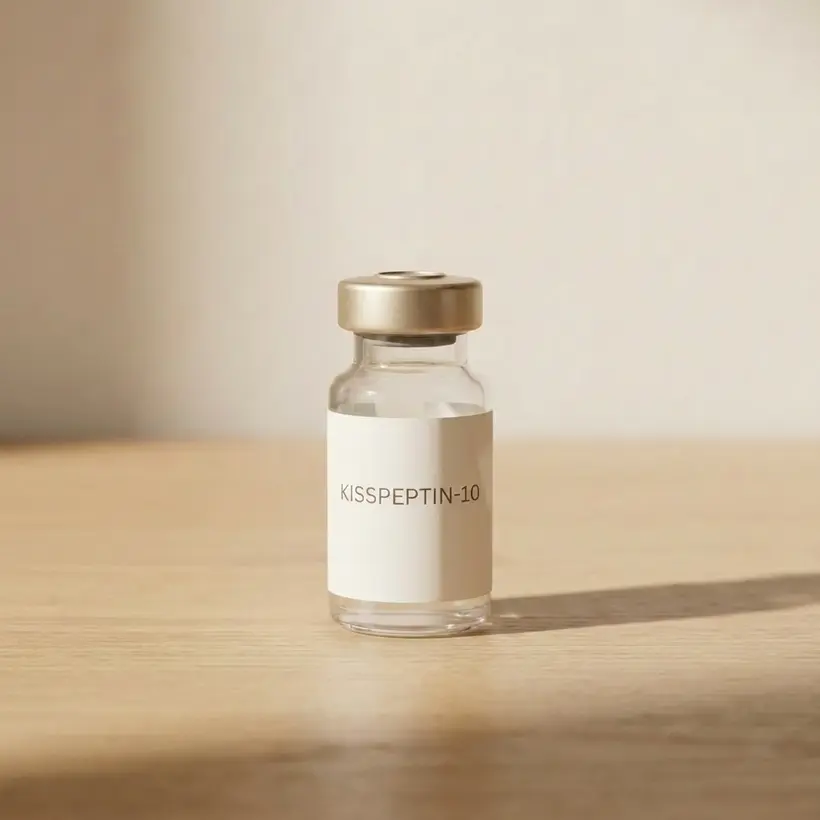
Kisspeptin-10
Master regulator of reproductive hormones and sexual arousal · From $49/mo · compounded by a licensed 503A pharmacy, dispensed only after provider review.
Learn about Kisspeptin-10 →Multiple randomized controlled trials demonstrate that kisspeptin-10 can trigger oocyte maturation with virtually zero OHSS risk. The mechanism explains the safety: kisspeptin's effect lasts only hours, while hCG persists for days. This brief action window allows oocyte maturation without the prolonged stimulation that causes OHSS.
Women with hypothalamic amenorrhea represent another success story. These patients stop menstruating due to suppressed GnRH, often from stress, low body weight, or excessive exercise. Studies show approximately 80 percent respond to twice-daily kisspeptin-10 injections with restored menstrual cycles. However, cycles typically stop again when treatment ends, highlighting kisspeptin's role as replacement therapy rather than cure.
Male applications show more limited success. While single doses reliably increase testosterone through LH stimulation, the effect proves unsustainable. Receptor desensitization occurs within 7 to 14 days of daily administration, rendering continued treatment ineffective. This rapid tachyphylaxis makes kisspeptin-10 unsuitable as testosterone replacement therapy.
Sequence Verification and the Authentication Problem
The peptide industry suffers from widespread mislabeling and quality issues. Kisspeptin-10 consists of a specific 10-amino acid sequence representing the C-terminal portion of the full kisspeptin protein. This fragment retains full biological activity while being simpler to synthesize than longer variants.
Authentication requires multiple analytical techniques. Mass spectrometry should reveal the expected molecular weight with minimal additional peaks. High-performance liquid chromatography (HPLC) provides purity assessment, though a single peak doesn't guarantee the correct sequence. Amino acid analysis confirms the proper ratios of constituent amino acids.
Many vendors sell kisspeptin-54 labeled as kisspeptin-10, either through ignorance or deliberate misrepresentation. The mass difference makes this easy to detect with proper testing. Other vendors omit the crucial C-terminal amidation, drastically reducing biological activity while maintaining similar analytical profiles.
Chemical Stability: Why Storage Matters More Than You Think
Peptides vary dramatically in stability. Insulin, protected by disulfide bonds, remains stable for months refrigerated. Kisspeptin-10 lacks such stabilizing features. Its linear structure and susceptible amino acids create multiple degradation pathways.
Methionine oxidation represents the primary concern. Even trace amounts of dissolved oxygen convert methionine to methionine sulfoxide, a modification that prevents receptor binding. Asparagine deamidation follows, converting to aspartic acid and altering the peptide's charge distribution. Peptide bond hydrolysis, accelerated by trace metal contamination, cleaves the molecule into inactive fragments.
Temperature dramatically affects degradation rates. At room temperature, significant activity loss occurs within hours. Refrigeration extends this to days, still inadequate for practical use. Freezing at standard freezer temperatures provides months of stability, while ultra-low temperature storage at -80°C can preserve activity for over a year.
Reconstitution introduces additional variables. Water quality matters: trace metals catalyze degradation, while bacterial contamination introduces proteases. The pH affects stability, with mild acidity providing optimal conditions. Concentration influences aggregation tendency, with higher concentrations promoting inactive multimer formation.
Dosing Protocols: Learning from Clinical Success
Effective dosing requires understanding both the application and individual variability. IVF protocols demonstrate remarkable consistency, using single doses timed to coincide with follicle maturity. The brief exposure triggers the LH surge needed for oocyte maturation without prolonged stimulation.
Chronic conditions like hypothalamic amenorrhea require different approaches. Twice-daily administration mimics the pulsatile GnRH secretion these patients lack. The dose must overcome the suppression while avoiding excessive stimulation. Individual responses vary based on the degree of hypothalamic suppression and body weight.
Male protocols face the insurmountable challenge of tachyphylaxis. Initial doses produce impressive testosterone elevations, creating optimism quickly dashed by diminishing returns. No cycling protocol successfully maintains responsiveness beyond two weeks. This limitation stems from fundamental receptor biology rather than dosing inadequacy.
Reconstitution calculations require precision. Peptide content varies between batches and suppliers. A vial labeled "5mg" contains total material including peptide, salts, and residual moisture. Net peptide content typically ranges from 70 to 90 percent. Accurate dosing demands adjusting for actual peptide content, not gross vial weight.
What Users Actually Report
Community experiences with kisspeptin-10 reveal patterns not captured in clinical trials. Women frequently describe subtle changes in cervical mucus consistency within days of starting treatment, resembling natural mid-cycle variations. Some report mittelschmerz-like sensations suggesting follicle rupture, particularly with higher doses. These observations align with the expected physiological effects, though individual timing varies considerably.
Men consistently report an initial period of enhanced well-being coinciding with testosterone peaks. Descriptions include improved morning erections, enhanced mood, and increased energy. The universality of subsequent tolerance development appears in nearly all reports, regardless of dosing strategy. Various cycling protocols emerge from community experimentation, though none successfully maintain long-term effectiveness.
Side effect profiles from user reports largely match clinical trial data. Facial flushing appears most commonly, typically mild and resolving within 30 minutes. Injection site reactions seem less common than with other peptides, possibly due to small injection volumes and neutral pH. Some users report vivid dreams or sleep disruption with evening doses, suggesting central nervous system effects beyond pure endocrine modulation.
Failed responses often trace to degraded product. Users describe receiving discolored powder, difficulty achieving complete dissolution, or absence of expected hormonal changes. The correlation between visual peptide quality and biological activity appears strong in community reports, though proper testing remains the only reliable verification method.
Emerging Research Directions
Beyond reproduction, kisspeptin research explores diverse physiological roles. The original identification as a metastasis suppressor continues generating interest. Cancer cells losing KISS1 expression show increased invasiveness and metastatic potential. Whether exogenous kisspeptin administration could reduce metastasis remains theoretical, awaiting clinical validation.
Neuroscience applications use kisspeptin's limbic system distribution. Functional imaging reveals receptor presence in regions controlling emotion, reward, and social behavior. Preliminary studies suggest kisspeptin modulates these systems independent of reproductive effects. The implications for mood disorders and social dysfunction remain exploratory.
Metabolic research reveals unexpected connections. Kisspeptin neurons interact extensively with circuits controlling energy balance. Animal models lacking kisspeptin show metabolic dysfunction including obesity and glucose intolerance. Human translation remains limited, with acute administration showing minimal metabolic effects. Whether chronic treatment might influence metabolism awaits investigation.
Bone health represents another frontier. Kisspeptin receptors appear on osteoblasts and osteoclasts, suggesting direct skeletal effects. Cell culture studies show enhanced mineralization with kisspeptin treatment. Animal models demonstrate bone loss with kisspeptin deficiency. Clinical applications remain speculative pending human trials.
Laboratory Analysis: Reading Between the Lines
Certificate of analysis interpretation separates quality suppliers from questionable sources. Mass spectrometry data should show a dominant molecular ion peak with minimal fragmentation or adducts. Additional peaks suggest impurities, incomplete synthesis, or degradation products.
HPLC provides complementary information. A single sharp peak indicates purity but doesn't confirm identity. Retention time comparison with reference standards helps, though different column conditions affect elution. Gradient conditions and detection wavelength influence apparent purity.
Peptide content determination involves multiple methods. Amino acid analysis after complete hydrolysis provides accurate results but destroys the sample. UV absorption offers non-destructive estimation but requires accurate extinction coefficients. Weight-based calculations must account for counterions and residual moisture.
Endotoxin testing ensures injection safety. Bacterial contamination during synthesis or handling introduces lipopolysaccharides that trigger inflammatory responses. Acceptable levels for research use typically fall below 5 EU/mg, though clinical applications demand stricter limits.
Practical Comparisons with Established Treatments
Understanding kisspeptin-10's niche requires comparing with existing options. Each approach offers distinct advantages and limitations shaped by mechanism and pharmacokinetics.
Human chorionic gonadotropin (hCG) directly activates LH receptors, bypassing hypothalamic-pituitary control. Its long half-life enables convenient dosing but increases OHSS risk in susceptible women. Cost favors hCG, being off-patent and widely manufactured. Kisspeptin's advantage lies in safety, virtually eliminating severe OHSS.
Clomiphene citrate blocks hypothalamic estrogen receptors, removing negative feedback. Oral administration and low cost make it first-line for many indications. Side effects include visual disturbances and mood changes. Effectiveness requires functional hypothalamic-pituitary axes, limiting use in hypothalamic amenorrhea where kisspeptin excels.
GnRH agonists initially stimulate then desensitize receptors, achieving medical castration. Applications include endometriosis, precocious puberty, and prostate cancer. Kisspeptin cannot substitute for these suppressive protocols, working only as a stimulatory agent.
Direct testosterone replacement remains superior for male hypogonadism. Consistent levels, proven efficacy, and multiple delivery options establish testosterone as the gold standard. Kisspeptin's transient effects and rapid tolerance make it unsuitable for chronic replacement.
FAQ
What does kisspeptin-10 actually do? Kisspeptin-10 binds KISS1R receptors on GnRH neurons, triggering GnRH release within 30-60 minutes. This stimulates LH and FSH production, with LH peaks reaching 24-48 mIU/mL in responsive patients. The effect lasts 2-4 hours due to rapid enzymatic degradation.
Does kisspeptin-10 work for women? Yes, kisspeptin-10 for women shows stronger evidence than for men. Women with hypothalamic amenorrhea show 80% response rates to 6.4 nmol/kg doses twice daily. IVF protocols use single 9.6 nmol doses to trigger oocyte maturation with lower OHSS risk than hCG.
What's the correct kisspeptin-10 sequence? The correct sequence is YNWNSFGLRF-NH2 (positions 112-121 of full kisspeptin). Many peptide suppliers list incorrect sequences or sell kisspeptin-54 mislabeled as kisspeptin-10. Always verify the molecular weight should be 1302.42 Da.
How long does kisspeptin-10 last after reconstitution? Reconstituted kisspeptin-10 degrades significantly within days at refrigerator temperatures due to methionine oxidation and peptide bond hydrolysis. Freeze immediately after reconstitution in single-use aliquots. At -20°C, expect reasonable stability for several months. Never refreeze thawed aliquots.
What's the difference between kisspeptin-10 and kisspeptin-54? Kisspeptin-10 (10 amino acids) has 3-fold higher receptor potency than kisspeptin-54 despite being shorter. Kisspeptin-10 shows EC50 of 0.3 nM versus 1.1 nM for kisspeptin-54. The shorter peptide also penetrates tissues better and costs less to synthesize.
Can kisspeptin-10 increase testosterone? Kisspeptin-10 can increase testosterone indirectly through LH stimulation, but only in men with functional Leydig cells. Single doses raise testosterone 2-4 fold for 4-6 hours. However, chronic use leads to receptor desensitization within 7-14 days, making it unsuitable for TRT.
What are the main side effects of kisspeptin-10? Clinical trials report flushing in 20-30% of subjects, mild nausea in 10-15%, and injection site reactions in 5-10%. No serious adverse events in published human studies up to 3.2 μg/kg. Theoretical risks include premature LH surges and receptor desensitization.
Is kisspeptin-10 legal? Kisspeptin-10 is unscheduled in the US and sold as a research chemical. It's not FDA-approved for any indication. Some fertility clinics use it off-label under physician supervision. WADA does not currently ban kisspeptin peptides.
How do you dose kisspeptin-10? Research protocols use 0.3-6.4 nmol/kg (0.4-8.3 μg/kg). For a 70kg person, this equals 28-580 μg per dose. Fertility protocols typically use 100-250 μg subcutaneous. Start low due to variable individual response. Maximum studied dose is 3.2 μg/kg without adverse events.
Sources
- Jayasena CN, et al. Kisspeptin-54 triggers egg maturation in women undergoing in vitro fertilization. J Clin Invest. 2014;124(8):3667-3677.
- Abbara A, et al. Efficacy of kisspeptin-54 to trigger oocyte maturation in women at high risk of ovarian hyperstimulation syndrome. J Clin Endocrinol Metab. 2015;100(9):3322-3331.
- Jayasena CN, et al. Twice-weekly administration of kisspeptin-54 for 8 weeks stimulates release of reproductive hormones in women with hypothalamic amenorrhea. Clin Pharmacol Ther. 2010;88(6):840-847.
- George JT, et al. Kisspeptin-10 is a potent stimulator of LH and increases pulse frequency in men. J Clin Endocrinol Metab. 2011;96(8):E1228-E1236.
- Kotani M, et al. The metastasis suppressor gene KiSS-1 encodes kisspeptins, the natural ligands of the orphan G protein-coupled receptor GPR54. J Biol Chem. 2001;276(37):34631-34636.
- Ohtaki T, et al. Metastasis suppressor gene KiSS-1 encodes peptide ligand of a G-protein-coupled receptor. Nature. 2001;411(6837):613-617.
- Roseweir AK, et al. Discovery of potent kisspeptin antagonists delineate physiological mechanisms of gonadotropin regulation. J Neurosci. 2009;29(12):3920-3929.
- Seminara SB, et al. The GPR54 gene as a regulator of puberty. N Engl J Med. 2003;349(17):1614-1627.
- De Roux N, et al. Hypogonadotropic hypogonadism due to loss of function of the KiSS1-derived peptide receptor GPR54. Proc Natl Acad Sci USA. 2003;100(19):10972-10976.
- Dhillo WS, et al. Kisspeptin-54 stimulates the hypothalamic-pituitary gonadal axis in human males. J Clin Endocrinol Metab. 2005;90(12):6609-6615.
- Chan YM, et al. Kisspeptin resets the hypothalamic GnRH clock in men. J Clin Endocrinol Metab. 2011;96(6):E908-E915.
- Jayasena CN, et al. Subcutaneous injection of kisspeptin-54 acutely stimulates gonadotropin secretion in women with hypothalamic amenorrhea. J Clin Endocrinol Metab. 2009;94(11):4315-4323.
- Narayanaswamy S, et al. Investigating the KNDy hypothesis in humans by coadministration of kisspeptin, neurokinin B, and naltrexone in men. J Clin Endocrinol Metab. 2016;101(9):3429-3436.
- Prague JK, et al. Neurokinin 3 receptor antagonism rapidly improves vasomotor symptoms with sustained duration of action. Menopause. 2018;25(8):862-869.
- Comninos AN, et al. Kisspeptin modulates sexual and emotional brain processing in humans. J Clin Invest. 2017;127(2):709-719.
- Mills EG, et al. Effects of kisspeptin on sexual brain processing and penile tumescence in men with hypoactive sexual desire disorder. JAMA Netw Open. 2023;6(2):e2254313.
- Izzi-Engbeaya C, et al. The effects of kisspeptin on β-cell function, serum metabolites and appetite in humans. Diabetes Obes Metab. 2018;20(12):2800-2810.
- Yang L, et al. Kisspeptin enhances brain responses to olfactory and visual cues of attraction in men. JCI Insight. 2020;5(3):e133633.
- Abbara A, et al. Kisspeptin receptor agonist has therapeutic potential for female reproductive disorders. J Clin Invest. 2022;132(22):e154089.
- Curtis AE, et al. A kisspeptin-10 analog with greater in vivo bioactivity than kisspeptin-10. Am J Physiol Endocrinol Metab. 2010;298(2):E296-E303.
- Matsui H, et al. Peripheral administration of metastin induces marked gonadotropin release and ovulation in the rat. Biochem Biophys Res Commun. 2004;320(2):383-388.
- Clarkson J, Herbison AE. Postnatal development of kisspeptin neurons in mouse hypothalamus. J Neuroendocrinol. 2006;18(12):817-825.
Footer Disclaimers
Platform Medical Disclaimer: The information provided on FormBlends.com is for educational and informational purposes only. It is not intended as a substitute for professional medical advice, diagnosis, or treatment. Always seek the advice of your physician or other qualified health provider with any questions regarding a medical condition or treatment options.
Research Compound or Compounded Medication Disclaimer: The compounds discussed on this website are for research purposes only and are not intended for human consumption unless specifically prescribed by a licensed healthcare provider through a legitimate pharmacy. These substances have not been approved by the FDA for the treatment, cure, or prevention of any disease.
Results Disclaimer: Individual results may vary. The studies and evidence cited represent controlled research conditions that may not reflect real-world usage. No guarantee of specific outcomes is implied or should be construed from the information presented.
Trademark Disclaimer: All trademarks, registered trademarks, and service marks mentioned on this website are the property of their respective owners. FormBlends is not affiliated with, endorsed by, or sponsored by any pharmaceutical company or research institution mentioned unless explicitly stated.
Related peptide guides
Ready when you are
Kisspeptin-10
Master regulator of reproductive hormones and sexual arousal · From $49/mo · compounded by a licensed 503A pharmacy, dispensed only after provider review.
Learn about Kisspeptin-10 →