
Trust signals
> Written by the FormBlends Medical Content Team · Fact-checked against cited primary sources · Last updated May 2026
Key Takeaways
- MOTS-C is a 16-amino-acid mitochondrial-derived peptide encoded in the 12S rRNA region of mitochondrial DNA; it is not a synthetic hormone.
- Published human safety trial data is essentially absent; the strongest human evidence is an observational study of endogenous MOTS-C plasma levels (Lee et al., 2019, Cell Metabolism).
- Weight gain is not a documented or mechanistically plausible side effect; all published data points toward fat reduction via AMPK activation and increased fatty acid oxidation.
- The most credible safety concerns are: injection-site reactions, additive hypoglycemia risk when combined with glucose-lowering agents, and unknown long-term effects from synthetic administration.
- MOTS-C has been on the WADA Prohibited List since 2023, making it a banned substance in competitive sport.
What are the side effects of MOTS-C peptide?
MOTS-C side effects documented in published research are limited to animal and in-vitro studies, with no controlled human safety trial on record. The most plausible risks based on current data are injection-site reactions, transient fatigue from acute metabolic shifts, and additive hypoglycemia when co-administered with glucose-lowering drugs. Weight gain is not among them.
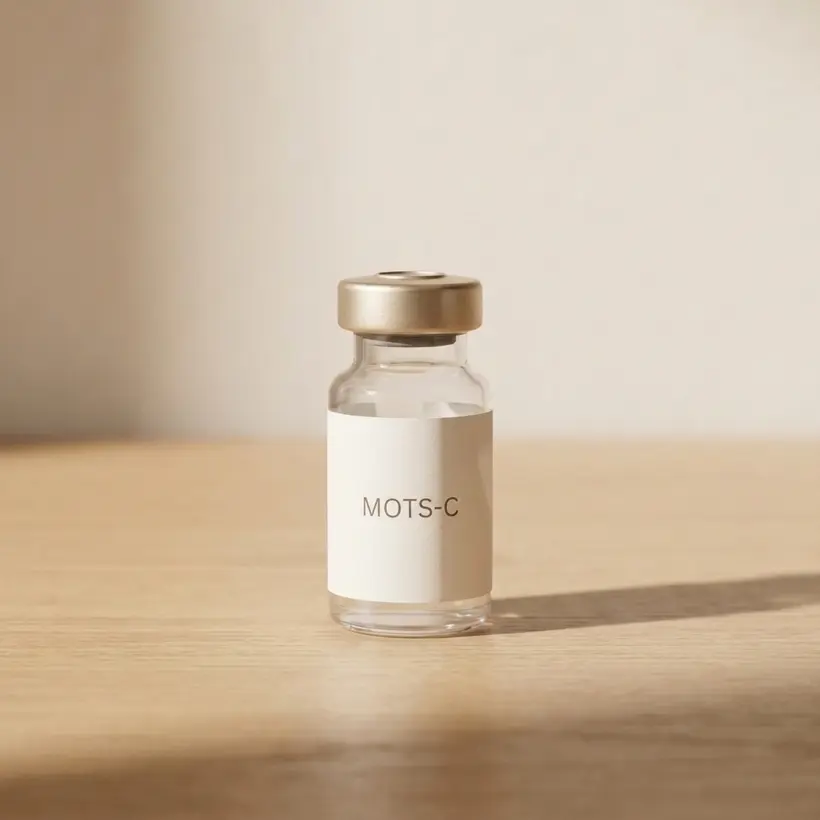
From the FormBlends catalog
MOTS-c
Mitochondrial-derived exercise mimetic that regulates metabolic homeostasis · From $249/mo · compounded by a licensed 503A pharmacy, dispensed only after provider review.
View MOTS-c →Table of Contents
Evidence Ledger: Every Major Claim Graded
| Claim | Best Evidence Type | Effect Direction | Confidence |
|---|---|---|---|
| MOTS-C reduces diet-induced obesity in mice | Animal (multiple labs) | Reduced fat mass, improved metabolic markers | Moderate (animal only) |
| MOTS-C activates AMPK in skeletal muscle | Cell culture + animal | AMPK phosphorylation confirmed | Moderate (mechanism established, human relevance unproven) |
| MOTS-C improves insulin sensitivity | Animal (Lee et al., 2015, Cell Metabolism) | Improved glucose tolerance | Moderate (mouse; no human RCT) |
| Injection-site reactions are common with peptide injections | Class effect; peptide pharmacology | Local redness, swelling, mild pain | Moderate (class extrapolation) |
| MOTS-C causes hypoglycemia in humans | Mechanism only; no clinical report | Theoretically plausible, unconfirmed | Very Low |
| MOTS-C causes weight gain | No supporting evidence of any type | Opposite direction in all animal data | Very Low (claim unsupported) |
| MOTS-C improves exercise capacity in aged mice | Animal (Reynolds et al., 2021, Nature Communications) | Improved endurance, reduced frailty markers | Moderate (animal; human extrapolation speculative) |
| MOTS-C has no long-term toxicity in humans | Absence of evidence only | Unknown | Very Low (not studied) |
| Endogenous MOTS-C declines with age in humans | Observational human study (Lee et al., 2019, Cell Metabolism) | Confirmed age-related decline | High (for the observational claim) |
How MOTS-C Works: The Mechanism With Specific Numbers
MOTS-C (Mitochondrial ORF of the 12S rRNA Type-C) is a 16-amino-acid peptide with the sequence MRWQEMGYIFYPRKLR. It is encoded by a small open reading frame within the mitochondrial 12S ribosomal RNA gene, which is why it escaped genomic databases for years. The peptide is released from mitochondria into the cytoplasm and nucleus, and into circulation.
The primary molecular mechanism, established in cell culture and animal work, is activation of AMPK (AMP-activated protein kinase) in skeletal muscle. AMPK is a cellular energy sensor; its phosphorylation at Thr172 signals an energy-deficit state and upregulates fatty acid oxidation while suppressing lipogenesis. In the original Lee et al. 2015 Cell Metabolism paper, MOTS-C administration to mice fed a high-fat diet reduced body weight gain and improved insulin tolerance test results compared to controls.
At the metabolic pathway level, MOTS-C inhibits the folate cycle and de novo purine synthesis, leading to accumulation of AICAR (5-aminoimidazole-4-carboxamide ribonucleotide), an endogenous AMPK activator. This is the mechanistic chain: MOTS-C reduces purine synthesis, AICAR accumulates, AICAR activates AMPK, AMPK shifts cells toward oxidative metabolism. This same AICAR-AMPK axis is why metformin and the research compound AICAR itself have overlapping metabolic effects.
What Side Effects Are Actually Documented?
Separating documented from speculative is critical here because almost every side-effect list on the internet blends the two without labeling them.
Documented in published research (animal or cell):
- No hepatotoxicity signal in mouse studies; liver lipid markers improved.
- No reported neurotoxicity in published animal work.
- No reported cardiovascular adverse events in animal studies at doses used.
Plausible based on mechanism or peptide-class pharmacology (not confirmed in human trials):
- Injection-site reactions: redness, transient swelling, mild discomfort. This is a class effect of subcutaneous peptide injection, not specific to MOTS-C.
- Transient fatigue or mild headache shortly after injection, plausible from acute metabolic substrate shifts.
- Appetite suppression, reported anecdotally and biologically plausible given AMPK-mediated energy sensing.
- Additive hypoglycemia with co-administered glucose-lowering drugs (see below).
Not supported by any evidence:
- Weight gain.
- Hormonal disruption (MOTS-C is not a sex steroid or pituitary hormone).
- Organ toxicity at any described dose in published animal work.
Does MOTS-C Cause Weight Gain?
No. The question appears frequently in search data, but every directional signal in published literature points opposite. Lee et al. (2015) showed MOTS-C administration in high-fat-diet mice prevented obesity compared to vehicle controls. Reynolds et al. (2021) showed reduced frailty and improved body composition in aged mice receiving MOTS-C. The peptide's core mechanism (AMPK activation, increased fatty acid oxidation) is anti-lipogenic by definition.
The likely source of this search query is user concern about peptide-induced metabolic rebound or confusion with anabolic peptides like GHRP-6, which increases GH and can elevate appetite and fat redistribution. MOTS-C is not a growth hormone secretagogue and does not activate GH or IGF-1 axes. They are mechanistically unrelated.
Hypoglycemia Risk: The Most Serious Mechanistic Concern
This is the one risk that deserves genuine attention and that most content pages either ignore or dismiss.
MOTS-C improves insulin sensitivity and activates AMPK in skeletal muscle, both of which lower blood glucose by increasing glucose uptake. In Lee et al. (2015), MOTS-C-treated obese mice showed significantly improved insulin tolerance. In a non-insulin-resistant person, this sensitizing effect could theoretically lower fasting glucose further than intended.
To be precise about what the evidence does and does not show: no published human clinical report documents a hypoglycemic episode attributed to MOTS-C. The concern is mechanistic extrapolation, not observed clinical harm. That distinction matters, but it does not eliminate the concern.
What Most Pages Get Wrong About MOTS-C Safety
The single most important omission on commodity MOTS-C pages is the bioavailability and target-tissue delivery question. Most pages describe MOTS-C's metabolic effects as if injection guarantees those effects. They do not address:
- Plasma half-life after injection: MOTS-C is a 16-amino-acid peptide. Small peptides are typically subject to rapid proteolytic degradation in circulation (half-lives measured in minutes to low single-digit hours for unmodified peptides). No published pharmacokinetic study in humans or primates characterizes the plasma half-life of exogenously injected MOTS-C. Assuming that subcutaneous injection produces the tissue concentrations used in mouse studies is an assumption, not a fact.
- The distinction between endogenous decline and supplementation benefit: Lee et al. (2019) showed plasma MOTS-C declines with age in humans. This is an observational finding. It does not prove that restoring those levels via injection produces the effects seen when MOTS-C is administered to young mice.
- Immunogenicity: Any exogenous peptide carries a theoretical risk of antibody formation, particularly with repeated dosing. This has not been studied for MOTS-C in humans. For comparison, rare but documented anti-drug antibody formation has been reported with other therapeutic peptides.
- Source and purity of commercially available MOTS-C: Most purchasable MOTS-C is from research chemical suppliers with variable quality control. Purity specifications in published research use HPLC-verified material above 95 to 98% purity. Products sold without a certificate of analysis (COA) showing HPLC purity and mass spectrometry confirmation of the correct molecular weight (approximately 2174 Da for the intact 16-mer) may contain truncated sequences or synthesis byproducts with unknown biological activity.
Formulation and Stability: The Chemistry Behind the Rules
MOTS-C contains a methionine residue (Met-1 in the N-terminal position). Methionine is susceptible to oxidation, specifically conversion of the thioether side chain to methionine sulfoxide, under exposure to oxygen, elevated temperature, or light. This reaction is well characterized in peptide pharmaceutical chemistry. The oxidized product has a different mass (plus 16 Da) and may have altered receptor binding or bioactivity.
This is why the instruction to store MOTS-C lyophilized powder below -20 degrees Celsius and to use reconstituted solution within a limited window (commonly cited as 2 to 4 weeks refrigerated) is chemically grounded, not arbitrary. Reconstitution should use bacteriostatic water (0.9% benzyl alcohol) rather than plain sterile water if the solution will be stored beyond single use; benzyl alcohol inhibits bacterial growth but does not prevent oxidative degradation.
Acetic acid (0.1 to 1% aqueous) is sometimes recommended as a reconstitution vehicle for peptides with basic residues (MOTS-C has arginine and lysine at the C-terminus). Acidic conditions can slow hydrolysis of peptide bonds. However, acetic acid solutions are less comfortable for subcutaneous injection than neutral bacteriostatic water, and there is no published MOTS-C-specific stability kinetics study to guide this choice definitively.
What degraded MOTS-C looks like: Yellow or amber coloration in solution (oxidized methionine and other degradation products absorb in the visible range), cloudiness or particulates, or an off-smell. A properly reconstituted peptide solution should be colorless to very faintly clear.
Honest Head-to-Head: MOTS-C vs. Real Alternatives
| Parameter | MOTS-C | Metformin | GLP-1 Agonists (e.g., semaglutide) | Exercise (AMPK activator) |
|---|---|---|---|---|
| Human RCT safety data | None published | Extensive (decades) | Extensive (phase III) | Extensive |
| Mechanism overlap with MOTS-C | -- | High (AMPK activation) | Low (different axis) | High (AMPK activation) |
| Weight effect | Reduction (animal) | Modest reduction | Substantial reduction (human) | Variable, context-dependent |
| GI side effects | Not reported | Common (nausea, diarrhea) | Common (nausea, vomiting) | None |
| Hypoglycemia risk (monotherapy) | Low (theoretical) | Very low | Low | Very low |
| Regulatory status (US) | Not FDA-approved; research use only | FDA-approved Rx | FDA-approved Rx | N/A |
| WADA banned | Yes (2023) | No | No | No |
| Where MOTS-C loses | -- | Decades of human safety, cheap, proven | Magnitude of weight loss; human efficacy proven | Free, cardiovascular benefit, no regulatory risk |
The honest conclusion from this comparison: for anyone seeking metabolic improvement, metformin (if prescribed) and structured exercise activate the same AMPK pathway with dramatically better evidence bases and no regulatory or purity risk. MOTS-C may have a distinct biology as an endogenous mitochondrial signal, but that distinction has not been proven to translate to a clinical advantage in humans.
Operational and Label Literacy: How to Judge a Product
If you are evaluating a MOTS-C product as a researcher, here is what to verify:
- Certificate of Analysis (COA): Request or download the COA. It should include HPLC purity (look for greater than 95%, with greater than 98% preferred for research use), mass spectrometry confirming molecular weight approximately 2174.6 Da for the intact 16-amino-acid sequence, and ideally endotoxin testing (LAL assay, less than 1 EU/mg threshold is standard for research-grade peptides).
- Sequence confirmation: The correct sequence is MRWQEMGYIFYPRKLR. Some suppliers offer analogs or truncated forms; these are different compounds with different (and unstudied) biological activity.
- Vial labeling: Look for the mass in milligrams per vial (commonly 5 or 10 mg), not just units. Reconstituton math example: 5 mg lyophilized MOTS-C in 1 mL bacteriostatic water yields a 5 mg/mL solution; 0.1 mL (100 microliters) delivers 500 micrograms. Verify your insulin syringe calibration (U-100 syringes: 10 units = 0.1 mL).
- Storage on receipt: Lyophilized powder should be stored at -20 degrees Celsius or below. If the supplier has shipped without ice packs during warm months, degradation may have occurred before you open the vial.
- Red flags: No COA available, price dramatically below market rate (suggesting lower purity or filler), and vague labeling such as "proprietary blend" or "peptide complex" without sequence identification.
FAQ
What are the most common MOTS-C side effects?
In published human and animal studies, the most commonly noted effects are injection-site reactions (redness, mild swelling), transient fatigue shortly after dosing, and appetite suppression. Hypoglycemia is a mechanistically plausible risk given MOTS-C's AMPK activation and insulin-sensitizing effects, though it has not been formally documented as a clinical adverse event in peer-reviewed trials.
Does MOTS-C cause weight gain?
No. Every published study points in the opposite direction. Animal studies show MOTS-C reduces diet-induced obesity and fat accumulation. The peptide activates AMPK and promotes fatty acid oxidation, which is an anti-obesity, not pro-obesity, mechanism. Weight gain is not a documented or mechanistically predicted side effect of MOTS-C.
Can MOTS-C cause low blood sugar (hypoglycemia)?
This is a legitimate mechanistic concern. MOTS-C improves insulin sensitivity and activates AMPK in skeletal muscle, both of which lower blood glucose. Users combining MOTS-C with insulin, sulfonylureas, or extended fasting face a theoretically elevated hypoglycemia risk. No clinical trial has formally reported a hypoglycemic event, but caution is warranted in diabetic populations on glucose-lowering agents.
Is MOTS-C safe for humans?
Human safety data is very limited. One published human study (Lee et al., 2019, Cell Metabolism) examined MOTS-C plasma levels observationally; formal phase I/II safety trials establishing a safe dose range in humans do not yet exist in the peer-reviewed literature. Extrapolating safety from mouse studies carries real uncertainty.
What are the side effects of MOTS-C peptide on the liver?
Animal studies show MOTS-C reduces hepatic lipid accumulation and improves liver metabolic markers, suggesting a potentially protective rather than harmful hepatic effect. No liver toxicity signal has been reported in published research. However, the absence of formal human hepatotoxicity studies means this cannot be ruled out at higher or prolonged doses.
How does MOTS-C differ from other metabolic peptides in terms of side effects?
Compared to GLP-1 agonists, MOTS-C does not carry documented nausea, vomiting, or pancreatitis risk. Compared to insulin, it does not cause hypoglycemia through exogenous hormone replacement. Its mitochondrial origin makes it structurally distinct, but the very limited human trial data means its comparative safety profile cannot be definitively characterized.
What dose is used in MOTS-C studies and does dose affect side effects?
Mouse studies have used doses in the range of 0.5 to 15 mg/kg. Human self-administration protocols circulating online commonly cite 5 to 10 mg per injection, but these are not validated clinical doses. Higher doses in mice produced stronger metabolic effects without published toxicity, but dose-dependent side effect data in humans does not exist.
Does MOTS-C cause fatigue or energy crashes?
Some users report transient fatigue in the hours following injection, which is biologically plausible given acute AMPK activation redirecting energy substrate utilization. This is an anecdotal report pattern, not a finding from a controlled trial. Animal studies generally show improved exercise capacity and endurance, not fatigue, as the net effect.
Are there any known drug interactions with MOTS-C?
No formal drug interaction studies exist for MOTS-C. The mechanistic concern most worth flagging is additive glucose-lowering with antidiabetic agents (insulin, metformin, GLP-1 agonists, SGLT2 inhibitors). Metformin itself activates AMPK, meaning the overlap with MOTS-C's primary mechanism could theoretically amplify both metabolic and any off-target effects.
What does a degraded or impure MOTS-C product look like, and why does it matter for safety?
MOTS-C is a 16-amino-acid peptide that degrades via hydrolysis and oxidation of methionine residues. A degraded product may appear as a yellow or brown discoloration in solution, or as visible particulates. Impure peptide from unvalidated sources may contain synthesis byproducts (truncated sequences, acetylated analogs) that have unknown biological activity and immunogenicity risk.
Can women use MOTS-C, and are there sex-specific side effects?
The 2019 Lee et al. Cell Metabolism observational study found that circulating MOTS-C levels vary with age and sex in humans. Animal studies have included both sexes. No sex-specific adverse effect has been formally documented. However, MOTS-C's effect on insulin sensitivity could interact differently in women with PCOS or perimenopausal metabolic changes, and this has not been studied.
Is MOTS-C legal to buy and use?
In the United States, MOTS-C is not FDA-approved as a drug and is not available as a compounded medication under current FDA guidance. It is sold by research chemical suppliers for in-vitro and animal research use only. WADA added MOTS-C to its Prohibited List in 2023 under the category of peptide hormones and related substances, prohibiting its use in competitive sport.
Sources
- Lee C, Zeng J, Drew BG, et al. The mitochondrial-derived peptide MOTS-c promotes metabolic homeostasis and reduces obesity and insulin resistance. Cell Metabolism. 2015;21(3):443-454.
- Lee C, Kim KH, Cohen P. MOTS-c: A novel mitochondrial-derived peptide regulating muscle and fat metabolism. Free Radical Biology and Medicine. 2016;100:182-187.
- Reynolds JC, Lai RW, Woodhead JST, et al. MOTS-c is an exercise-induced mitochondrial-encoded regulator of age-dependent physical decline and muscle homeostasis. Nature Communications. 2021;12(1):470.
- Lee C, Wan J, Miyazaki B, et al. IGF-I regulates the age-dependent signaling peptide humanin. Aging Cell. 2014;13(5):958-961. [Context: mitochondrial peptide family background.]
- Zempo H, Kim SJ, Fuku N, et al. A pro-diabetogenic mtDNA polymorphism in the mitochondrial-derived peptide, MOTS-c. Aging (Albany NY). 2021;13(2):1692-1717.
- Kim SJ, Mehta HH, Wan J, et al. Mitochondrial peptides, MOTS-c and humanin as pleiotropic compounds with therapeutic potential. Aging (Albany NY). 2019;11(22):10135-10142.
- World Anti-Doping Agency. Prohibited List 2023: Section 2, Peptide Hormones, Growth Factors, Related Substances and Mimetics. WADA, 2023.
- US Food and Drug Administration. Compounding of Certain Bulk Drug Substances Under Section 503A of the Federal Food, Drug, and Cosmetic Act. FDA Guidance Documents, current edition.
- USP General Chapter on Peptide Purity and Identity Testing. United States Pharmacopeia, current edition. [Referenced for HPLC purity and endotoxin testing standards.]
Footer Disclaimers
Related peptide guides
Ready when you are
MOTS-c
Mitochondrial-derived exercise mimetic that regulates metabolic homeostasis · From $249/mo · compounded by a licensed 503A pharmacy, dispensed only after provider review.
View MOTS-c →