Key Takeaway
Step-by-step guide to injecting PT-141 (bremelanotide) safely. Covers preparation, subcutaneous injection technique, injection sites, and best practices for physician-supervised therapy.
Quick Answer: PT-141 is administered as a subcutaneous injection, typically in the abdomen. The FDA-approved formulation comes in a pre-filled autoinjector at a dose of 1.75 mg. Compounded versions may require reconstitution calculator and manual drawing of the dose. Inject at least 45 minutes before anticipated sexual activity, following sterile technique.
What Is PT-141?
PT-141 (bremelanotide) is a synthetic peptide that activates melanocortin receptors in the brain to support sexual desire and arousal . It's FDA-approved as Vyleesi for hypoactive sexual desire disorder (HSDD) in premenopausal women and is also used off-label for male sexual dysfunction.
Self-injection can feel intimidating if you have never done it before. This guide will walk you through the process step by step, from preparation through administration. The technique is similar to what millions of people use daily for insulin and other subcutaneous medications.
Important: This guide is educational. Your physician's specific instructions always take priority. If anything here differs from what your doctor has told you, follow your doctor.
For a full overview of PT-141, see our PT-141 benefits guide.
Formulation Types
PT-141 is available in two primary forms, and the injection process differs slightly for each:
View data table
| Category | Clinical Interest Score | Detail |
|---|---|---|
| BPC-157 | 88 | Tissue repair and gut healing |
| TB-500 | 82 | Injury recovery |
| Sermorelin | 78 | Growth hormone support |
| Ipamorelin | 75 | Anti-aging and recovery |
| GHK-Cu | 70 | Skin and tissue repair |
Pre-Filled Autoinjector (Vyleesi)
The FDA-approved Vyleesi product comes in a single-use, pre-filled autoinjector containing 1.75 mg of bremelanotide . This device is designed for ease of use and doesn't require reconstitution or dose calculation. You simply remove the cap, place the injector against your skin, and press the button.
Compounded PT-141
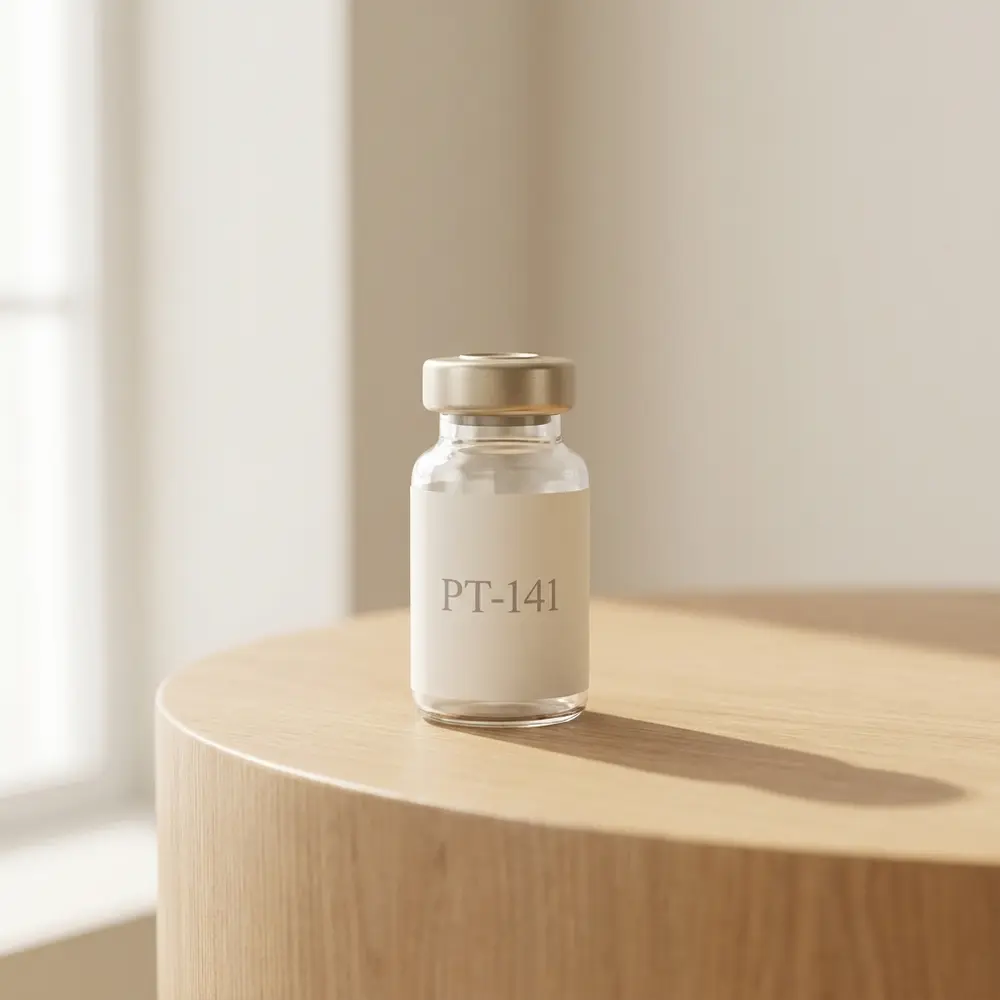
Compounded PT-141 from a licensed pharmacy typically comes as a lyophilized (freeze-dried) powder that must be reconstituted with bacteriostatic water before use. This form requires you to calculate and draw the correct dose using a syringe. Your physician and pharmacist will provide specific reconstitution instructions for your product.
What You Will Need (Compounded PT-141)
If you're using compounded PT-141, gather the following before you begin:
From the FormBlends catalog
PT-141 (Bremelanotide)
for women with low sexual desire. · From $189/mo · compounded by a licensed 503A pharmacy, dispensed only after provider review.
View PT-141 (Bremelanotide) →- PT-141 vial: Lyophilized powder, typically available in various concentrations
- Bacteriostatic water: For reconstitution (not sterile water, which lacks the preservative needed for multi-use vials)
- Insulin syringes: 29 or 31 gauge, 1 mL capacity, with markings in units
- Alcohol swabs: For cleaning vial tops and injection sites
- Sharps container: For safe needle disposal
Step 1[1]: Reconstitution (Compounded PT-141 Only)
If your PT-141 comes as a lyophilized powder, you'll need to reconstitute it before your first use:
- Wash your hands thoroughly with soap and water.
- Clean the tops of both the PT-141 vial and the bacteriostatic water vial with alcohol swabs. Allow to air dry.
- Draw bacteriostatic water into a syringe. The amount will depend on your pharmacy's instructions and the concentration of your product. Common reconstitution volumes include 1 mL or 2 mL per vial.
- Inject the water slowly into the PT-141 vial, directing the stream against the inside wall of the vial rather than directly onto the powder. This prevents foaming and damage to the peptide.
- Gently swirl the vial until the powder is fully dissolved. Don't shake vigorously, as this can degrade the peptide.
- Allow the solution to clear. It should be transparent and free of particles. If cloudy or discolored, don't use it.
Your pharmacist will provide a reconstitution card or instructions specifying the exact volume to add and the resulting concentration per unit on your syringe.
Step 2: Calculating Your Dose
Once reconstituted, you need to calculate how many units on your insulin syringe equal your prescribed dose. The math depends on:
- The total amount of PT-141 in the vial (in mg)
- The volume of bacteriostatic water added (in mL)
For example, if your vial contains 10 mg of PT-141 and you added 2 mL of bacteriostatic water:
- Concentration = 10 mg / 2 mL = 5 mg/mL
- For a 1.75 mg dose: 1.75 mg / 5 mg/mL = 0.35 mL = 35 units on an insulin syringe
Your physician or pharmacist will typically perform this calculation for you and provide clear instructions. If you're uncertain, ask before injecting. Accurate dosing matters. See our PT-141 dosage guide for more on dosing.
Step 3: Preparing the Injection
- Wash your hands again if you have touched anything since reconstitution.
- Clean the vial top with a fresh alcohol swab.
- Draw air into the syringe equal to your dose volume. Insert the needle through the rubber stopper and inject the air into the vial. This equalizes pressure and makes drawing the solution easier.
- Invert the vial with the needle still inserted. Pull back on the plunger to draw your prescribed dose.
- Check for air bubbles. If you see bubbles, tap the syringe gently with your finger to move them to the top, then push the plunger slightly to expel them. Draw additional solution if needed to reach your target dose.
- Remove the needle from the vial. The syringe is now ready for injection.
Step 4: Choosing an Injection Site
PT-141 is injected subcutaneously. The most common injection site is the abdomen:
- Abdomen: The preferred site. Choose an area at least 2 inches away from the navel. Avoid any areas with bruises, scars, stretch marks, or skin irritation.
- Thigh: The front or outer thigh can be used as an alternative site.
Rotate injection sites between uses to prevent tissue irritation. Don't inject into the same exact spot repeatedly.
Step 5: Injecting
- Clean the injection site with an alcohol swab. Allow the area to dry completely (injecting into wet alcohol can sting).
- Pinch a fold of skin between your thumb and forefinger at the chosen site.
- Insert the needle at a 45 to 90 degree angle, depending on the amount of subcutaneous tissue. For most people using a short insulin needle, 90 degrees (straight in) works well.
- Release the skin fold once the needle is inserted.
- Push the plunger slowly and steadily until the full dose has been administered.
- Wait 5 to 10 seconds before withdrawing the needle. This allows the solution to disperse and reduces the chance of leakage.
- Withdraw the needle and apply gentle pressure with a clean cotton ball or gauze if needed. Don't rub the site.
- Dispose of the needle immediately in a sharps container. Never recap a used needle.
Storage
Proper storage protects the potency of your PT-141:
- Before reconstitution: Store lyophilized PT-141 in the refrigerator (36 to 46 degrees F / 2 to 8 degrees C) or at room temperature per your pharmacy's instructions
- After reconstitution: Refrigerate the reconstituted vial. Use within the timeframe specified by your pharmacist, typically 28 to 30 days
- Don't freeze reconstituted PT-141
- Protect from light: Store in the original packaging or a dark location
- Pre-filled autoinjectors (Vyleesi): Store at room temperature (68 to 77 degrees F / 20 to 25 degrees C)
Common Mistakes to Avoid
- Shaking the vial: Always swirl gently during reconstitution. Shaking can damage the peptide structure.
- Injecting into muscle: PT-141 is a subcutaneous injection, not intramuscular. The shallow angle and short needle of an insulin syringe help ensure proper placement.
- Skipping the alcohol swab: Cleaning both the vial top and injection site reduces the risk of infection.
- Using the wrong diluent: Always use bacteriostatic water for multi-use vials. Sterile water lacks the preservative (benzyl alcohol) needed to prevent bacterial growth.
- Reusing needles: Use a fresh needle for each injection. Reusing needles increases infection risk and causes more tissue trauma due to needle dulling.
Safety and Side Effects
Injection-related side effects are generally mild and may include redness, bruising, or tenderness at the injection site. These typically resolve within a day or two. For a full review of PT-141 side effects, including nausea and blood pressure considerations, see our PT-141 side effects guide.
How FormBlends Can Help
Learning to self-inject can feel overwhelming, but it becomes routine quickly. At FormBlends, we support you through every step:
- Clear reconstitution and injection instructions tailored to your specific product
- Pharmaceutical-grade PT-141 from licensed compounding pharmacies
- Physician access for questions about technique, dosing, or side effects
- All necessary supplies included or clearly specified
- Ongoing monitoring to ensure your therapy is on track
If you're uncomfortable with injections, our physicians can discuss your options and help you feel confident in the process.
Frequently Asked Questions
Does injecting PT-141 hurt?
Most people describe the injection as a mild pinch. Insulin syringes use very fine needles (29 to 31 gauge) that cause minimal discomfort. Injecting slowly and using proper technique reduces any sensation further.
Where is the best place to inject PT-141?
The abdomen is the most commonly used site, at least 2 inches from the navel. The front or outer thigh is an alternative. Rotate sites to prevent irritation.
How long after reconstitution is PT-141 good for?
Reconstituted PT-141 stored in the refrigerator is typically good for 28 to 30 days, depending on your pharmacy's instructions. Always check for clarity before each use and discard if the solution appears cloudy or contains particles.
Can I use PT-141 without injecting?
The FDA-approved route for PT-141 is subcutaneous injection. Earlier research explored intranasal delivery, but the intranasal formulation was not ultimately approved due to blood pressure concerns at the intranasal dose . Subcutaneous injection remains the standard route.
What if I see blood after injecting?
A small amount of blood at the injection site is normal and simply means the needle nicked a small blood vessel. Apply gentle pressure with a clean cotton ball. This doesn't affect the dose or effectiveness of the medication.
Medical References
- Wilding JPH, Batterham RL, Calanna S, et al. Once-Weekly Semaglutide in Adults with Overweight or Obesity. N Engl J Med. 2021;384(11):989-1002. [PubMed | ClinicalTrials.gov | DOI]
- Davies M, Færch L, Jeppesen OK, et al. Semaglutide 2.4 mg once a week in adults with overweight or obesity, and type 2 diabetes (STEP 2). Lancet. 2021;397(10278):971-984. [PubMed | ClinicalTrials.gov | DOI]
- Wadden TA, Bailey TS, Billings LK, et al. Effect of Subcutaneous Semaglutide vs Placebo as an Adjunct to Intensive Behavioral Therapy on Body Weight in Adults With Overweight or Obesity (STEP 3). JAMA. 2021;325(14):1403-1413. [PubMed | ClinicalTrials.gov | DOI]
- Rubino D, Abrahamsson N, Davies M, et al. Effect of Continued Weekly Subcutaneous Semaglutide vs Placebo on Weight Loss Maintenance in Adults With Overweight or Obesity (STEP 4). JAMA. 2021;325(14):1414-1425. [PubMed | ClinicalTrials.gov | DOI]
- Garvey WT, Batterham RL, Bhatt DL, et al. Two-year effects of semaglutide in adults with overweight or obesity (STEP 5). Nat Med. 2022;28(10):2083-2091. [PubMed | ClinicalTrials.gov | DOI]
Need Help Getting Started?
If you're new to self-injection or want hands-on guidance for PT-141, FormBlends provides personalized support from licensed physicians who can walk you through every step.
Disclaimer: This article is for informational purposes only and doesn't constitute medical advice. PT-141 (bremelanotide) is FDA-approved only for the treatment of HSDD in premenopausal women. This injection guide is educational and doesn't replace your physician's instructions. Always follow the specific guidance provided by your prescribing physician and pharmacist. Individual results may vary. FormBlends doesn't claim that PT-141 cures, treats, or prevents any disease beyond its FDA-approved indication.
Ready when you are
PT-141 (Bremelanotide)
for women with low sexual desire. · From $189/mo · compounded by a licensed 503A pharmacy, dispensed only after provider review.
View PT-141 (Bremelanotide) →