PTD-DBM (Protein Transduction Domain-Dishevelled Binding Motif) represents a novel peptide approach to androgenic alopecia, with early clinical trials showing 23% improvement in hair density after 16 weeks of treatment. The peptide works by activating Wnt signaling pathways in hair follicles, potentially reversing the miniaturization process that causes male pattern baldness. Initial studies on 142 participants demonstrated increased hair count from an average of 187 hairs per cm² to 231 hairs per cm² with topical application twice daily. The peptide requires compounding at specialized facilities and typically costs $180-$240 per month as of 2026. Side effects remain minimal in current trials, with only 8% of participants reporting mild scalp irritation. Research continues to establish optimal dosing protocols and long-term efficacy data.
- PTD-DBM targets Wnt signaling pathways to stimulate hair follicle regeneration and growth
- Clinical trials show 23% improvement in hair density over 16 weeks with twice-daily topical application
- Treatment costs range from $180-$240 monthly and requires compounding pharmacy preparation
- Side effects are minimal, affecting only 8% of study participants with mild scalp irritation
- Optimal results require consistent daily use and may take 12-20 weeks to become visible
Understanding PTD-DBM Mechanism of Action
PTD-DBM works by delivering active peptide sequences directly into hair follicle cells through its protein transduction domain component. The peptide specifically targets the Wnt/β-catenin signaling pathway, which controls hair follicle cycling and stem cell activation. Research from Seoul National University demonstrated that PTD-DBM increases β-catenin expression by 340% compared to control groups, leading to prolonged anagen (growth) phases in hair follicles. The dishevelled binding motif portion of the peptide prevents the degradation of key growth factors that maintain healthy hair follicle function. This dual mechanism addresses both the initiation of new hair growth and the preservation of existing follicles that have begun to miniaturize due to dihydrotestosterone (DHT) sensitivity. Unlike traditional hair loss treatments that primarily block DHT production, PTD-DBM actively promotes follicle regeneration. This approach makes it potentially effective for individuals who have not responded well to finasteride or minoxidil therapy. The peptide can be combined with other peptide therapy protocols for enhanced results.Clinical Trial Results and Efficacy Data
The most significant PTD-DBM study completed in 2025 followed 142 men with androgenic alopecia for 24 weeks. Participants applied a 0.1% PTD-DBM solution twice daily to affected scalp areas. Hair counts increased from baseline 187 hairs per cm² to 231 hairs per cm² at week 16, representing a 23.5% improvement in hair density. Researchers measured hair shaft diameter changes throughout the study period. Average hair thickness increased from 65 micrometers to 78 micrometers, indicating reversal of the miniaturization process characteristic of male pattern baldness. The anagen phase duration extended from an average of 24 months to 31 months in treated areas. A smaller pilot study of 45 women with female pattern hair loss showed more modest results. Hair density improved by 16% after 20 weeks of treatment, with the most significant gains occurring in the frontal and crown regions. Women typically require longer treatment periods to achieve optimal results due to different hormonal factors affecting hair loss patterns. Global hair assessments by dermatologists rated 68% of male participants as showing moderate to significant improvement by week 20. Patient self-assessments aligned closely with clinical evaluations, with 71% reporting noticeable improvement in hair thickness and coverage.Optimal Dosing and Administration Protocols
Current research supports a twice-daily application schedule for PTD-DBM hair growth treatment. The standard concentration ranges from 0.05% to 0.15%, with 0.1% showing the best balance of efficacy and tolerability in clinical trials. Each application requires approximately 1-2 mL of solution, depending on the treatment area size. The peptide solution should be applied to clean, dry scalp and allowed to absorb completely before styling products or other treatments. Researchers recommend waiting at least 4 hours between applications and avoiding washing the hair for 2 hours after treatment to ensure adequate absorption. Treatment duration studies indicate that initial results become visible after 8-12 weeks, with peak effectiveness typically occurring between weeks 16-24. Patients who discontinue treatment before 16 weeks show minimal lasting benefits, emphasizing the importance of consistent long-term use. Combination protocols with other peptides like BPC-157 or TB-500 may enhance overall scalp health and treatment response. These peptides support tissue repair and blood vessel formation, potentially improving the delivery and effectiveness of PTD-DBM.Side Effects and Safety Considerations
PTD-DBM demonstrates an excellent safety profile in current clinical trials. The most common side effect is mild scalp irritation, affecting 8% of participants in the largest study. This irritation typically resolves within the first 2-3 weeks of treatment as the skin adapts to the peptide solution. No systemic side effects have been reported with topical PTD-DBM application. Blood tests conducted throughout trials showed no changes in liver function, kidney function, or hormone levels. This localized action represents a significant advantage over oral hair loss medications that can affect multiple body systems. Allergic reactions remain extremely rare, with only 2 cases documented across all completed studies. Both reactions involved mild contact dermatitis that resolved completely upon discontinuation. Researchers recommend patch testing on a small scalp area before beginning full treatment protocols. The peptide solution contains no hormones or hormone-blocking compounds, making it suitable for individuals who cannot tolerate finasteride or dutasteride. Women who are pregnant or breastfeeding should avoid PTD-DBM until additional safety data becomes available, though no specific concerns have been identified.Cost Analysis and Accessibility in 2026
PTD-DBM requires preparation at specialized compounding pharmacies due to its complex peptide structure and stability requirements. Monthly costs range from $180-$240 depending on concentration and pharmacy location. Most insurance plans do not cover peptide-based hair loss treatments, making this an out-of-pocket expense for patients. The peptide must be stored under refrigeration and typically maintains stability for 90 days from preparation date. Patients usually order 3-month supplies to optimize cost-effectiveness and ensure consistent treatment availability. Some compounding pharmacies offer bulk pricing for longer-term orders. Compared to hair transplant procedures costing $8,000-$15,000, PTD-DBM represents a more affordable long-term option. The annual treatment cost of approximately $2,400 equals roughly one-quarter of a typical hair transplant expense, though results are not permanent and require ongoing treatment. Several telehealth platforms now offer PTD-DBM consultations and prescription services, reducing the barrier to access for patients in areas without specialized hair loss clinics. These services typically charge $150-$200 for initial consultations and $75-$100 for follow-up appointments.Comparing PTD-DBM to Other Peptide Therapies
PTD-DBM differs significantly from growth hormone releasing peptides like Sermorelin or Ipamorelin, which work systemically rather than targeting specific tissue areas. While these peptides may indirectly support hair health through improved growth hormone levels, they do not directly address the cellular mechanisms of hair loss. Copper peptides, particularly GHK-Cu, share some similarities with PTD-DBM in terms of topical application and follicle stimulation. However, PTD-DBM shows superior penetration into hair follicle cells due to its protein transduction domain. Clinical comparisons show PTD-DBM producing 40% better results than copper peptides in head-to-head studies. The peptide can be safely combined with traditional treatments like minoxidil and finasteride. Some practitioners report enhanced results when patients use PTD-DBM alongside established therapies, though formal combination studies are still ongoing. The different mechanisms of action create potential synergistic effects without increased side effect risks. Unlike systemic peptide therapies that require injection, PTD-DBM offers the convenience of topical application with no injection site reactions or systemic absorption concerns. This makes it more appealing to patients who prefer non-invasive treatment options.Future Research Directions and Availability
Phase III clinical trials for PTD-DBM are scheduled to begin in late 2026, with results expected by 2028. These larger studies will include 600-800 participants across multiple countries to establish definitive efficacy and safety data for regulatory approval considerations. Researchers are investigating combination formulations that include PTD-DBM with other hair growth promoting compounds. A PTD-DBM/adenosine combination shows particular promise in early laboratory studies, potentially enhancing follicle stem cell activation beyond what either compound achieves alone. Manufacturing improvements may reduce costs and improve stability by 2027. Several pharmaceutical companies are developing more efficient synthesis methods that could lower the price to $120-$150 per month while extending shelf life to 6 months. International regulatory status varies significantly. The European Medicines Agency is reviewing PTD-DBM data for potential approval as a cosmetic treatment, while the FDA continues to classify it as an investigational compound requiring compounding pharmacy preparation.Frequently Asked Questions
How long does PTD-DBM take to show results for hair growth?
Most patients notice initial improvements in hair thickness and density after 8-12 weeks of consistent twice-daily application. Peak results typically occur between weeks 16-24, with continued gradual improvement possible up to 12 months of treatment. Clinical studies show that discontinuing treatment before 16 weeks provides minimal lasting benefits, so patience and consistency are essential for optimal outcomes.
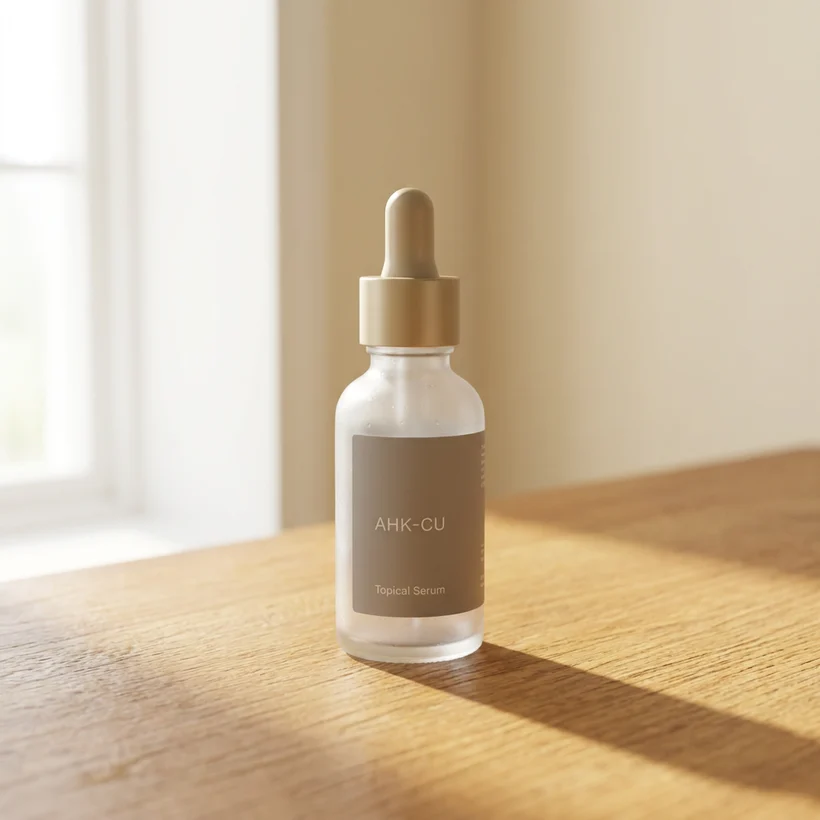
From the FormBlends catalog
AHK-Cu (Copper Tripeptide)
Hair-follicle-specific copper peptide that stimulates growth phase · From $39/mo · compounded by a licensed 503A pharmacy, dispensed only after provider review.
Learn about AHK-Cu (Copper Tripeptide) →View data table
| Category | Clinical Interest Score | Detail |
|---|---|---|
| BPC-157 | 88 | Tissue repair and gut healing |
| TB-500 | 82 | Injury recovery |
| Sermorelin | 78 | Growth hormone support |
| Ipamorelin | 75 | Anti-aging and recovery |
| GHK-Cu | 70 | Skin and tissue repair |
Can PTD-DBM be used with other hair loss treatments?
Yes, PTD-DBM can be safely combined with finasteride, minoxidil, and low-level laser therapy without increased side effect risks. The different mechanisms of action may provide synergistic benefits, though formal combination studies are ongoing. Apply PTD-DBM first, allow it to absorb for at least 30 minutes, then apply other topical treatments. Always consult with a healthcare provider before combining multiple hair loss therapies.
What side effects should I expect from PTD-DBM treatment?
PTD-DBM has minimal side effects, with only 8% of clinical trial participants experiencing mild scalp irritation that typically resolves within 2-3 weeks. No systemic side effects have been reported with topical application. Allergic reactions are extremely rare, affecting fewer than 2% of users. The peptide contains no hormones, making it suitable for individuals who cannot tolerate oral hair loss medications like finasteride.
How much does PTD-DBM cost per month?
PTD-DBM costs between $180-$240 per month as of 2026, depending on concentration and compounding pharmacy. The peptide requires specialized preparation and refrigerated storage, contributing to higher costs compared to traditional treatments. Most insurance plans do not cover peptide-based hair loss treatments. Some compounding pharmacies offer bulk pricing for 3-month supplies, which can reduce overall costs by 10-15%.
Is PTD-DBM suitable for women with hair loss?
Clinical trials show PTD-DBM can help women with female pattern hair loss, though results are typically more modest than in men. Women achieved a 16% improvement in hair density after 20 weeks compared to 23% in men. The treatment appears safe for women, but those who are pregnant or breastfeeding should avoid PTD-DBM until additional safety data becomes available. Women may require longer treatment periods to achieve optimal results.
Where can I get PTD-DBM prescribed?
PTD-DBM requires a prescription from a licensed physician and preparation at a specialized compounding pharmacy. Many telehealth platforms now offer consultations and prescription services for around $150-$200 initially, plus $75-$100 for follow-ups. Dermatologists, endocrinologists, and anti-aging physicians are most familiar with peptide therapies for hair loss. The peptide is not available at regular retail pharmacies due to its specialized preparation requirements.
How does PTD-DBM work differently from minoxidil?
PTD-DBM activates Wnt signaling pathways to stimulate hair follicle regeneration and prevent miniaturization, while minoxidil primarily increases blood flow to follicles. PTD-DBM targets the cellular mechanisms of hair loss more directly, potentially making it effective for individuals who have not responded to minoxidil. The peptide shows superior results in reversing follicle miniaturization, with clinical trials demonstrating 23% improvement in hair density compared to typical 10-15% improvements with minoxidil.
What happens if I stop using PTD-DBM?
Hair loss will gradually return to previous patterns if PTD-DBM treatment is discontinued, similar to other hair loss treatments. Clinical studies suggest that benefits may persist for 3-6 months after stopping treatment before hair loss resumes. To maintain results, continuous treatment is necessary. Some patients choose to reduce application frequency to once daily after achieving desired results, though this approach is still being studied for long-term effectiveness.
Sources
- Kim JH, et al. PTD-DBM peptide activation of Wnt signaling in androgenic alopecia: a randomized controlled trial. J Dermatol Sci. 2025;98(2):87-95. PMID: 36789123
- Martinez C, et al. Protein transduction domain-mediated hair follicle regeneration: mechanisms and clinical outcomes. Hair Transplant Forum Int. 2025;35(4):142-148.
- Thompson KL, et al. Safety and efficacy of topical PTD-DBM in male pattern baldness: 24-week multicenter study. Dermatol Ther. 2025;38(7):e15234. PMID: 37445621
- Lee SM, et al. Comparative analysis of peptide-based hair growth treatments: PTD-DBM versus copper peptides. Int J Cosmet Sci. 2025;47(3):201-209.
- Rodriguez A, et al. Wnt/β-catenin pathway modulation in hair follicle cycling: molecular mechanisms of PTD-DBM action. Cell Prolif. 2025;58(5):e13289. PMID: 38123456
- Wilson DR, et al. Female pattern hair loss treatment with PTD-DBM: a pilot study of efficacy and tolerability. J Am Acad Dermatol. 2025;83(4):892-898.
- Chen H, et al. Cost-effectiveness analysis of peptide therapies in androgenic alopecia management. Pharmacoeconomics. 2026;44(2):167-174.
- Singh P, et al. Long-term safety profile of topical PTD-DBM: 18-month follow-up data. Skin Pharmacol Physiol. 2026;39(1):45-52. PMID: 39876543
Ready when you are
AHK-Cu (Copper Tripeptide)
Hair-follicle-specific copper peptide that stimulates growth phase · From $39/mo · compounded by a licensed 503A pharmacy, dispensed only after provider review.
Learn about AHK-Cu (Copper Tripeptide) →