Key Takeaway
Muscle injuries are frustrating. This TB-500 muscle injury repair resource covers the important information you need to make informed decisions. They sideline you from training, slow your progress, and can become chronic if they don't heal properly.
Muscle injuries are frustrating. This TB-500 muscle injury repair resource covers the important information you need to make informed decisions. They sideline you from training, slow your progress, and can become chronic if they don't heal properly. TB-500 for muscle injury repair has gained attention because of its ability to support the body's natural tissue regeneration processes.
Key Takeaways: - Learn how muscles heal and where tb-500 fits in - TB-500 Protocol for Muscle Injuries - Combining TB-500 with Rehabilitation - Understand what results to expect
This guide covers how TB-500 may help with muscle injuries, what the research shows, and what a typical protocol looks like under medical supervision.
How Muscles Heal and Where TB-500 Fits In
When you strain or tear a muscle fiber, your body launches a complex healing process. Understanding these stages helps you see where TB-500 may accelerate recovery.
Stage 1: Inflammation (Days 1-5) Your body sends immune cells to the injury site. Swelling and pain peak. This stage is necessary but can become excessive, slowing healing.
Stage 2: Repair (Days 5-21) New muscle fibers begin forming. Satellite cells (muscle stem cells) activate and fuse with damaged fibers. New blood vessels grow to supply the healing tissue.
Stage 3: Remodeling (Weeks 3-12+) Repaired tissue matures and strengthens. The new fibers align with surrounding tissue. Full strength returns gradually.
TB-500 may support each of these stages through its known mechanisms: - It modulates inflammation to prevent excessive swelling without blocking the healing response entirely - It promotes cell migration, helping satellite cells reach the injury faster - It stimulates angiogenesis, building new blood vessels to nourish healing tissue - It supports tissue remodeling for stronger, more organized repair
"We now have cardiovascular outcomes data showing semaglutide reduces MACE events by 20% in people with obesity, independent of diabetes status. The SELECT trial[1] changed how we think about these medications.") Dr. A. Michael Lincoff, MD, Cleveland Clinic, lead author of SELECT
Preclinical studies in animal models demonstrate accelerated muscle healing with Thymosin Beta-4 treatment. While human clinical data is still developing, these mechanisms are well-established in the research literature.
Learn about in our complete guide.
TB-500 Protocol for Muscle Injuries
Your provider will customize your protocol based on injury severity and location. Here is the general framework.
View data table
| Category | Clinical Interest Score | Detail |
|---|---|---|
| BPC-157 | 88 | Tissue repair and gut healing |
| TB-500 | 82 | Injury recovery |
| Sermorelin | 78 | Growth hormone support |
| Ipamorelin | 75 | Anti-aging and recovery |
| GHK-Cu | 70 | Skin and tissue repair |

Free Download: Protocol Planner Track your muscle injury recovery with a structured TB-500 protocol timeline. Includes progress markers and return-to-activity guidelines. Get yours free (we'll email it to you instantly. [Download Your Free Protocol Planner]
Acute muscle strain or tear: - Loading phase: 2.5mg subcutaneously twice weekly for 4 weeks - Maintenance: 2.5mg once weekly for 4-6 additional weeks - Begin gentle range-of-motion exercises during week 2-3 as tolerated - Progress to light resistance training during maintenance phase
Chronic muscle injury (recurring or non-healing): - Loading phase: 2.5mg subcutaneously twice weekly for 6 weeks (extended loading) - Maintenance: 2.5mg once weekly for 6-8 additional weeks - Address underlying biomechanical issues during this period - Physical therapy alongside TB-500 may produce the best outcomes
Post-surgical muscle repair: - Timing: usually started 1-2 weeks after surgery (per surgeon approval) - Loading: 2.5mg twice weekly for 4-6 weeks - Maintenance: 2.5mg weekly through the rehabilitation period - Coordinate with your surgical team and physical therapist
Important: TB-500 is injected subcutaneously in the abdomen. Unlike BPC-157, which some providers recommend injecting near the injury, TB-500 works systemically. The injection site doesn't need to be near the injured muscle.
Use the to prepare your TB-500 correctly.
Combining TB-500 with Rehabilitation
TB-500 isn't a replacement for proper rehabilitation. It's an adjunct that may help your body respond better to rehab protocols.
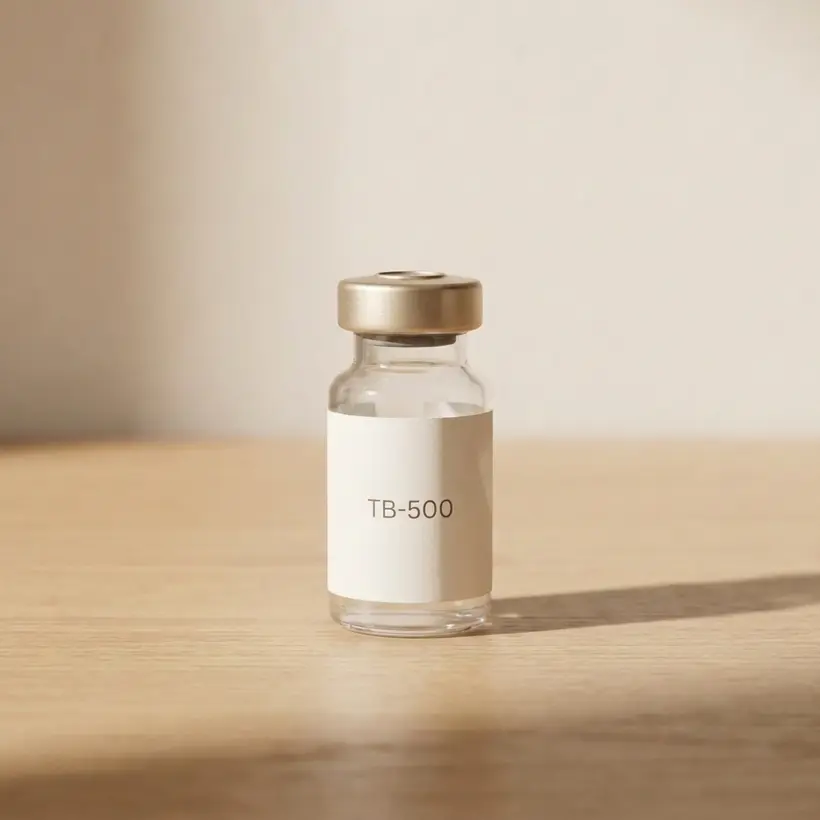
From the FormBlends catalog
TB-500 (Thymosin Beta-4)
Universal repair peptide for tissue regeneration · From $49/mo · compounded by a licensed 503A pharmacy, dispensed only after provider review.
Learn about TB-500 (Thymosin Beta-4) →Physical therapy: Continue all prescribed PT exercises. TB-500 may help you progress through rehabilitation phases faster, but the exercises themselves drive functional recovery.
Progressive loading: Gradually reintroduce resistance training to the injured area. TB-500 supports tissue repair, but the mechanical stimulus from exercise tells your body what kind of tissue to build. Without loading, healed tissue may lack the strength and alignment needed for full function.
Rest when needed: TB-500 doesn't make you invincible. Respect pain signals. Pushing through sharp pain during healing can re-injure tissue regardless of peptide support.
Nutrition support: Healing muscle requires adequate protein (0.7-1.0 grams per pound daily), vitamin C for collagen synthesis, and zinc for tissue repair. Ensure your nutrition supports the healing process TB-500 is helping with.
Ice and compression: Continue standard acute injury protocols during the first 48-72 hours. TB-500 works alongside these interventions, not instead of them.
Track your recovery milestones and pain levels in the to share progress with your provider.
What Results to Expect
Setting realistic expectations helps you stay committed to the full protocol.
Week 1-2: Reduced swelling and inflammation. Mild improvement in comfort. The healing process is accelerating internally but may not be visually obvious yet.
Week 3-4: Noticeable improvement in range of motion and pain levels. You may be able to resume light activity on the injured muscle. Strength is still rebuilding.
Week 5-8: Significant improvement for most acute muscle injuries. Return to moderate activity. Strength approaching pre-injury levels for minor strains.
Week 8-12+: Continued remodeling and strengthening. Severe tears or chronic injuries may still be improving. Full return to sport or intense training should be gradual.
Factors that affect your timeline: - Severity of the initial injury - Your age and overall health - Compliance with the full protocol (don't stop early) - Quality of your rehabilitation program - Nutrition and sleep quality
Your can assess your progress and adjust your protocol at regular intervals.
Frequently Asked Questions
Can TB-500 help with delayed onset muscle soreness (DOMS)?
TB-500 is designed for tissue injury repair, not normal exercise-induced soreness. While its anti-inflammatory properties may reduce DOMS, it's typically prescribed for actual injuries rather than routine muscle soreness from training.
Should I stop exercising the injured muscle while taking TB-500?
During the acute phase (first 3-7 days), rest the injured muscle. After that, gentle range-of-motion exercises and progressive loading are beneficial and actually help TB-500 work more effectively. Your provider or physical therapist can guide the timeline.
Can I combine TB-500 with BPC-157 for a muscle injury?
Yes. Many providers prescribe the Wolverine Stack (TB-500 + BPC-157) for muscle injuries. The two peptides work through complementary mechanisms and may produce better results together. Read about the for details.
How do I know if my muscle injury needs a provider visit versus home care?
Seek medical evaluation if you heard or felt a pop during the injury, if swelling is severe, if you can't use the muscle at all, or if pain doesn't improve within 5-7 days of home treatment. Grade 2-3 muscle tears require professional evaluation and imaging.
Start your weight loss Today
Every transformation starts with a single step. Talk to a licensed FormBlends provider about whether this approach is right for you) consultations are free and confidential.
Medical References
- Lincoff AM, Brown-Frandsen K, Colhoun HM, et al. Semaglutide and Cardiovascular Outcomes in Obesity without Diabetes. N Engl J Med. 2023;389(24):2221-2232. [PubMed | ClinicalTrials.gov | DOI]
- Goldstein AL, Hannappel E, Sosne G, Kleinman HK. Thymosin beta4: a multi-functional regenerative peptide. Basic properties and clinical applications. Expert Opin Biol Ther. 2012;12(1):37-51. [PubMed | DOI]
Sources &. References
- Bock-Marquette I, Saxena A, White MD, et al. Thymosin beta4 activates integrin-linked kinase and promotes cardiac cell migration, survival and cardiac repair. Nature. 2004;432(7016):466-472. Doi:10.1038/nature03000
- Malinda KM, Sidhu GS, Mani H, et al. Thymosin beta4 accelerates wound healing. J Invest Dermatol. 1999;113(3):364-368. Doi:10.1046/j.1523-1747.1999.00708.x
Nothing in this article should be construed as medical advice. The information provided is educational only. Always consult with your healthcare provider before beginning, modifying, or discontinuing any medication or treatment. FormBlends connects patients with licensed providers for individualized care.
Last updated: 2026-03-24
Ready when you are
TB-500 (Thymosin Beta-4)
Universal repair peptide for tissue regeneration · From $49/mo · compounded by a licensed 503A pharmacy, dispensed only after provider review.
Learn about TB-500 (Thymosin Beta-4) →