Last October, a compounding pharmacist named Steve in Austin, Texas, pulled up a certificate of analysis for a client who'd come in asking about "TB-500." The molecular weight listed was 842.9 Da. "That's the short heptapeptide fragment," Steve told the patient over the phone, "not the full 43-amino-acid protein. The studies your doctor sent over? Those used full-length thymosin beta-4. It's not the same molecule." The client paused. "So which one am I actually injecting?"
That confusion is extremely common. And honestly, the peptide industry has done a terrible job clearing it up.
The Two Molecules, Plainly
Thymosin beta-4 (Tβ4) is a 43-amino-acid protein present in nearly every mammalian cell. It's the most abundant intracellular G-actin-sequestering molecule we know of. Its biological resume includes regulating actin polymerization, promoting cell migration, stimulating angiogenesis, and modulating inflammatory signaling (Goldstein 2005). Full-length Tβ4 weighs approximately 4,921 Da, placing it in a size class that behaves differently from short peptides in terms of receptor interactions, stability, and systemic distribution. Recombinant Tβ4 has been tested in animal wound-healing and cardiac-repair models and in a handful of human clinical trials, most notably the ophthalmic drug candidate RGN-259, which targeted persistent corneal epithelial defects and dry eye disease.
TB-500 is a synthetic peptide modeled on Tβ4's active region. The core "active site" most often referenced is the LKKTETQ heptapeptide, residues 17 through 23. Some compounded TB-500 products contain precisely that short sequence. Others are longer constructs that approximate more of the full-length protein, sometimes incorporating flanking residues that extend the sequence to 17 or even 25 amino acids. The name itself is a marketing artifact, not a standardized biochemical designation, which is a big part of why the literature is so confusing.
Here's the thing: when you see "thymosin beta-4" in a PubMed abstract, the researchers almost certainly used full-length recombinant protein. When you hold a vial labeled "TB-500" from a compounding pharmacy, you're almost certainly holding a fragment. Treating these as synonyms is technically wrong, and the practical consequences aren't trivial.
A Closer Look at the Full-Length Protein's Roles
To understand what the fragment might miss, it helps to understand how broad Tβ4's biological activity really is. In addition to actin sequestration, full-length Tβ4 participates in chromatin remodeling, gene expression modulation during embryonic development, and extracellular signaling after cellular injury or lysis (Huff et al. 2001). It's released by platelets during clot formation and accumulates in wound fluid, where it serves as an early-stage repair signal.
In cardiac research, Smart et al. (2007) demonstrated that full-length Tβ4 could activate epicardial progenitor cells in adult mouse hearts, prompting them to differentiate into new cardiomyocytes after ischemic injury. That study specifically tested the complete 43-amino-acid sequence. Whether the LKKTETQ fragment alone could trigger the same progenitor cell activation cascade is an open question. The signaling involved, including Akt pathway activation and upregulation of specific transcription factors like Ets-2, likely depends on structural features of the full-length protein that a seven-residue fragment simply cannot replicate.
In neurological contexts, Xiong et al. (2012) showed Tβ4 improved functional recovery after traumatic brain injury in rats, with effects on neurovascular remodeling, axonal sprouting, and oligodendrogenesis. Again, those experiments used the complete protein. Extrapolating those results to compounded TB-500, a molecule roughly one-sixth the size, demands caution.
What the Fragment Keeps (and What It Probably Doesn't)
The LKKTETQ sequence is the central element identified for cell migration and wound-healing activity. Studies testing truncated Tβ4 constructs have found that this region drives much of the migration-related response (Sosne et al. 2010; Philp et al. 2003). So compounded TB-500 protocols are most defensibly applied to situations where wound healing, tissue migration, and angiogenic signaling are the main rationale.
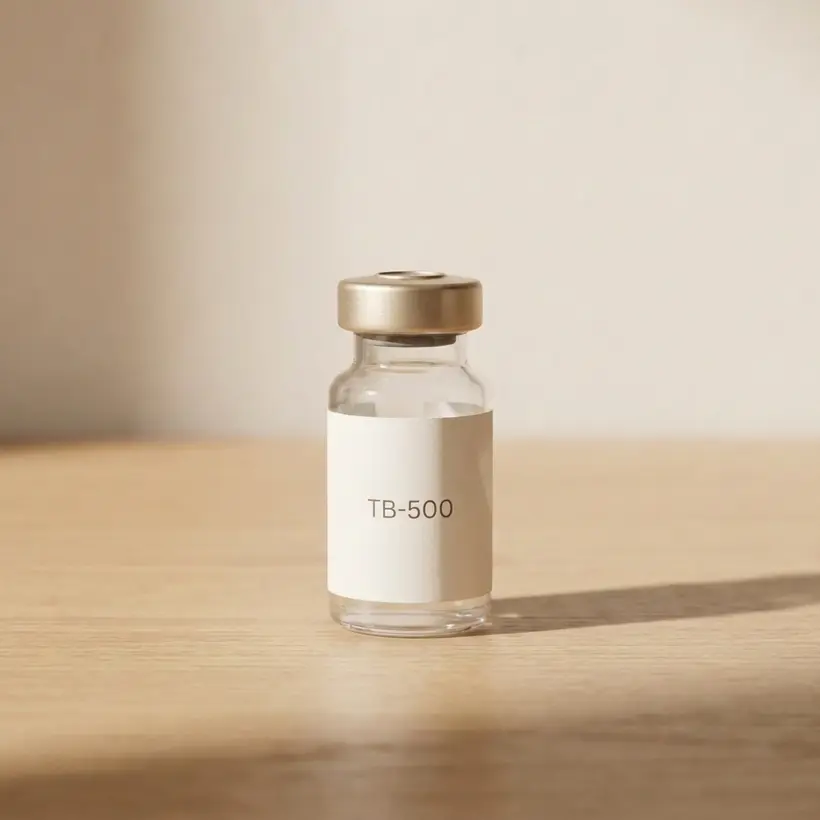
From the FormBlends catalog
TB-500 (Thymosin Beta-4)
Universal repair peptide for tissue regeneration · From $49/mo · compounded by a licensed 503A pharmacy, dispensed only after provider review.
Learn about TB-500 (Thymosin Beta-4) →Activities that appear to transfer from fragment research:
- Wound healing acceleration (Malinda 1999 used full-length, but fragment work has shown comparable effects in migration assays)
- Cell migration support, particularly in dermal fibroblasts and endothelial cells
- Anti-inflammatory cytokine modulation (Sosne 2010), including reduction of pro-inflammatory markers like TNF-alpha and IL-1beta in ocular surface models
- Angiogenic signaling, with evidence of increased capillary formation in chick chorioallantoic membrane assays
Activities less consistently demonstrated for the short fragment:
- Full actin-sequestering capacity. The actin-binding region overlaps with the active site, but complete G-actin sequestration may require additional residues beyond the heptapeptide. Specifically, the central actin-binding domain spans residues 17 through 23, but stable complex formation with monomeric actin involves contacts from the N-terminal and C-terminal portions of the protein as well (Safer et al. 1997).
- Certain cardiac progenitor cell effects observed only with full-length Tβ4, as described by Smart et al. (2007).
- Some neuroprotective signaling pathways that appear to depend on protein regions outside the LKKTETQ core, including those involved in oligodendrocyte differentiation and myelination.
- Regulation of matrix metalloproteinases (MMPs), which plays a role in tissue remodeling during repair. Full-length Tβ4 has been shown to influence MMP expression patterns in ways that haven't been replicated with the short fragment in isolation.
The boring truth is that TB-500 likely reproduces a meaningful subset of Tβ4's effects, but not all of them. Anyone claiming the fragment delivers every benefit reported in full-length Tβ4 literature is overstating the evidence.
Pharmacokinetics Are Different, Too
A seven-amino-acid peptide and a 43-amino-acid protein don't behave the same way in the body. Distribution, half-life, clearance, tissue penetration: all different. Smaller peptides are generally cleared faster by renal filtration and are more susceptible to enzymatic degradation by circulating peptidases. Full-length Tβ4, while still relatively small as proteins go, has enough tertiary structure and molecular weight to behave differently in the bloodstream and tissues.
Compounded TB-500 protocols typically call for twice-weekly to weekly subcutaneous dosing because the fragment is reported to have an extended biological effect window, but detailed human pharmacokinetic data remain limited. Some practitioners working with TB-500 report that subcutaneous administration creates a depot effect at the injection site, allowing slower release into surrounding tissue, but formal PK studies in humans measuring plasma concentration curves for the fragment have not been published in peer-reviewed literature.
Dosing numbers from full-length recombinant Tβ4 research studies (which used different scales and routes of administration) are not directly transferable to the fragment. For example, the RGN-259 ophthalmic trials used topical formulations at microgram-level concentrations applied directly to the corneal surface, a delivery context that has essentially nothing in common with subcutaneous injection of a milligram-scale peptide fragment.
Standard compounded TB-500 dosing, typically 2 to 2.5 mg subcutaneously twice weekly during a loading phase followed by a maintenance phase of once weekly or less, reflects expected potency of the fragment as supplied. Those numbers come from clinical experience and compounding pharmacy protocols, not from the same dose-finding work done on full-length Tβ4 in pharmaceutical trials. The loading and maintenance distinction itself is empirically derived, based on observed clinical response patterns rather than formal dose-response pharmacology.
Reading the Labels Without Getting Fooled
When evaluating a compounded TB-500 product, ask specific questions:
- What exact peptide sequence is in the vial? If the pharmacy can't tell you, that's a problem. A pharmacy should be able to specify whether the product contains the seven-residue LKKTETQ sequence, a longer fragment, or the full 43-amino-acid protein.
- What molecular weight does the certificate of analysis show? This tells you immediately whether you're looking at the short heptapeptide (approximately 842.9 Da), a mid-length fragment (varying by length), or something closer to full-length (approximately 4,921 Da). If the CoA doesn't list a molecular weight, you don't actually know what you're buying.
- Is purity confirmed by HPLC and mass spectrometry? These are standard analytical methods. HPLC should show a single dominant peak at a specified retention time, and mass spectrometry should confirm that the measured molecular weight matches the expected value for the stated sequence. If neither appears on the CoA, walk away.
- Does the label say "thymosin beta-4" without any sequence specification? That vague language is a flag. It could mean anything. A 503A or 503B compounding pharmacy should be precise about what molecule is in the formulation.
- What is the source of the raw peptide material? Reputable pharmacies source from domestic or inspected international suppliers with their own certificates of analysis and stability data. Asking about sourcing is not paranoid; it's basic due diligence.
A reputable compounding pharmacy working with licensed 503A/503B facilities will provide a certificate of analysis without hesitation. Think of it like asking a butcher what cut of beef you're buying. If they can't answer, you're in the wrong shop.
Why This Distinction Actually Matters for You
This isn't just academic hairsplitting. If you're working with a prescriber on a soft-tissue recovery protocol, the fragment's wound-healing and migration effects are well-supported. A practitioner using TB-500 for a patient with a chronic rotator cuff tendinopathy or a slow-healing post-surgical wound site is applying the fragment in a context that aligns well with the LKKTETQ-driven activity data. If someone is telling you TB-500 will replicate the cardiac progenitor activation seen in full-length Tβ4 mouse studies, they're extrapolating beyond what the fragment data support.
Consider a practical example. A 45-year-old recreational runner with a persistent Achilles tendon issue sees a prescriber who recommends compounded TB-500. The rationale here is tissue migration, fibroblast proliferation, and localized anti-inflammatory modulation, all effects attributed to the active fragment region. That's a defensible clinical application. Now consider the same patient reading online forums claiming TB-500 will "regenerate heart tissue." That claim traces back to full-length Tβ4 research in post-infarction mouse models, a completely different molecule, dosing paradigm, and clinical context.
Knowing which claims apply to which molecule protects you from making decisions based on misattributed data.
My honest take: for most people exploring TB-500 through a compounding pharmacy for tendon, ligament, or general tissue-recovery purposes, the fragment is a reasonable option and the one that's practically available. But intellectual honesty requires acknowledging you're working with a piece of the molecule, not the whole thing.
Citations
Goldstein AL et al. Thymosin beta4: actin-sequestering protein moonlights to repair injured tissues. Trends in Molecular Medicine. 2005.
Huff T et al. beta-Thymosins, small acidic peptides with multiple functions. International Journal of Biochemistry & Cell Biology. 2001.
Malinda KM et al. Thymosin beta 4 accelerates wound healing. Journal of Investigative Dermatology. 1999.
Safer D et al. Thymosin beta 4 and Fx, an actin-sequestering peptide, are indistinguishable. Journal of Biological Chemistry. 1997.
Smart N et al. Thymosin beta4 induces adult epicardial progenitor mobilization and neovascularization. Nature. 2007.
Sosne G et al. Thymosin beta 4 and the eye: I can see clearly now the pain is gone. Annals of the New York Academy of Sciences. 2010.
Philp D et al. Thymosin beta4 increases hair growth by activation of hair follicle stem cells. FASEB Journal. 2004.
Xiong Y et al. Thymosin beta4 treatment of traumatic brain injury in rats. Journal of Neurosurgery. 2012.
FAQ
Is TB-500 the same as thymosin beta-4?
No. TB-500 is a synthetic peptide based on the active region of Tβ4, typically shorter than the 43-amino-acid full-length protein. The names get used interchangeably online, but they refer to different molecules with different molecular weights, different structural properties, and potentially different ranges of biological activity.
Why is it called TB-500?
The naming is a research-vendor convention, not an official biochemical designation. It originated from early catalog listings by peptide suppliers and stuck as a shorthand. Different products sold under the TB-500 name may use slightly different fragment sequences, which is part of the confusion. There is no IUPAC or USP standard that defines "TB-500" as a specific compound.
Do published Tβ4 studies apply to TB-500?
Partially. Effects driven by the LKKTETQ active region (wound healing, cell migration, some angiogenesis) likely translate. Effects that require full-length protein functions, such as cardiac progenitor cell activation, complete actin sequestration, or certain neuroprotective pathways, may not. Always check which molecule the study actually tested before applying findings to your protocol.
Is full-length Tβ4 available as a compounded peptide?
Not commonly. Most clinical-stage development of full-length Tβ4 has occurred within pharmaceutical research programs and formal trials, not through compounding pharmacies. The manufacturing complexity and cost of producing high-purity, full-length 43-amino-acid proteins at compounding scale are significantly greater than for short peptide fragments, which is one practical reason the fragment dominates the compounding market.
Does fragment length matter for dosing?
Yes. Different molecular weights mean different mole-equivalent dosing. A milligram of a seven-amino-acid peptide contains far more molecules than a milligram of a 43-amino-acid protein. Most compounded TB-500 products are dosed by milligrams of peptide as supplied, calibrated to the specific fragment in the product. If you switch between products with different fragment lengths, the effective dose per milligram changes, and your prescriber needs to account for that.
How can I verify what's actually in my TB-500 vial?
Request the certificate of analysis from the compounding pharmacy. Look for the stated molecular weight, sequence, HPLC purity percentage (ideally above 98%), and mass spectrometry confirmation showing the observed mass matches the theoretical mass for the stated sequence. If any of these elements are missing, ask why. A complete CoA is standard practice, not a special request.
Should I be skeptical of claims that TB-500 does everything Tβ4 does?
Yes. The fragment retains important activity, particularly for wound healing and migration, but it is not functionally identical to the full-length protein. Claims of complete equivalence go beyond available evidence. This doesn't mean TB-500 is ineffective. It means its effects are a subset of what Tβ4 can do, and honest practitioners will frame their recommendations accordingly. If a vendor or forum post treats the two molecules as perfectly interchangeable, that's a signal they either don't understand the science or aren't being straight with you.
Internal Links
- Hub: TB-500 overview
- Pillar: Peptide therapy overview
- Product: TB-500 product page
- Sibling: TB-500 dosage protocols
- Sibling: TB-500 benefits research
- Sibling: TB-500 vs BPC-157
---
Disclaimer: TB-500 is not approved by the FDA for any indication. Compounded TB-500 is prepared for individual patients through licensed compounding pharmacies based on prescriber clinical judgment. This article is educational and is not medical advice. Research-stage peptides should only be used under qualified prescriber supervision. Individual results vary.
Ready when you are
TB-500 (Thymosin Beta-4)
Universal repair peptide for tissue regeneration · From $49/mo · compounded by a licensed 503A pharmacy, dispensed only after provider review.
Learn about TB-500 (Thymosin Beta-4) →