Key Takeaway
Step-by-step guide on how to reconstitute TB-500. Learn proper mixing technique, water volumes, dose calculations, and common mistakes to avoid when preparing TB-500.
Knowing how to reconstitute TB-500 correctly is the first practical skill you need before starting a protocol. We walk through every step, from supplies to dose calculations, so you can prepare your peptide safely and accurately.
What Reconstitution Means
TB-500 arrives as a lyophilized (freeze-dried) powder in a sealed vial. Lyophilization removes water from the peptide to preserve its stability during shipping and storage . Before you can inject it, you need to add a liquid (called a diluent) back to the powder to create a solution. This process is called reconstitution.
The process is straightforward, but doing it incorrectly can damage the peptide, introduce contamination, or create dosing errors. We will cover each step in detail so you get it right the first time.
What You Need
important Supplies
- TB-500 vial: Typically contains 2 mg, 5 mg, or 10 mg of lyophilized peptide. Check the label to confirm the amount.
- Bacteriostatic water (BAC water): This is sterile water with 0.9% benzyl alcohol added as a preservative. It's the preferred diluent for peptides that will be used over multiple days.
- Insulin syringes: 1 mL (100 unit) insulin syringes with 29 to 31 gauge needles for both reconstitution and injection.
- Alcohol swabs: For cleaning vial tops and injection sites.
Optional But Helpful
- A larger syringe (3 mL) with a blunt-tip needle for adding water to the vial (makes the process easier)
- A clean, flat workspace
- A peptide reconstitution calculator (available online or as a mobile app)
Step-by-Step Reconstitution Process
Step 1[1]: Gather and Inspect
Lay out all supplies on a clean surface. Inspect the TB-500 vial to confirm the powder is intact. It should appear as a white to off-white powder or puck at the bottom of the vial. If the powder appears discolored, wet, or clumped in an unusual way, don't use it.
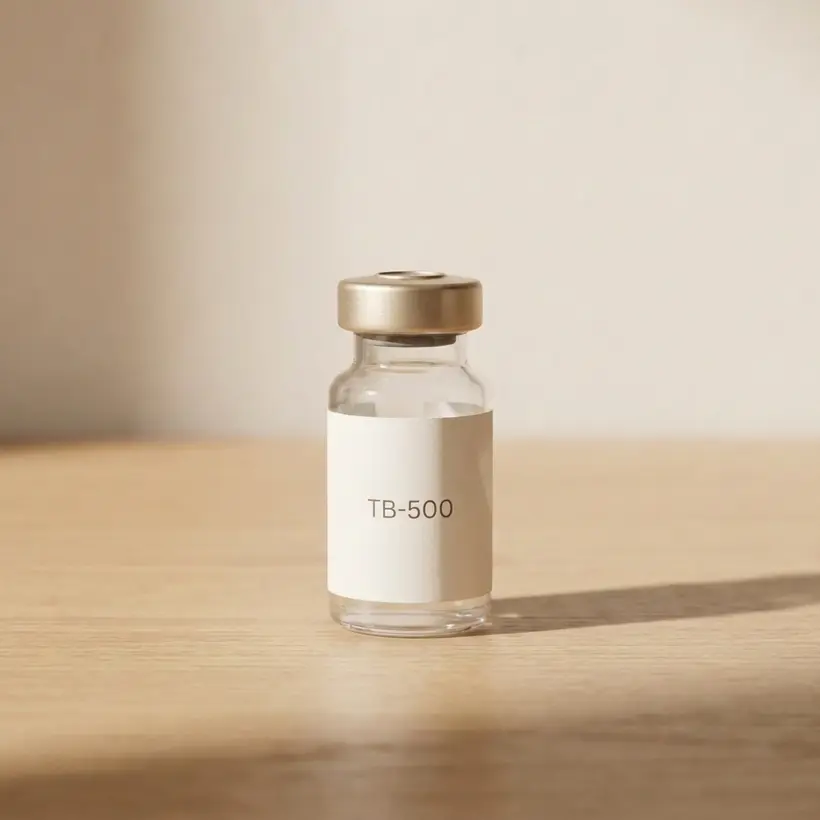
From the FormBlends catalog
TB-500 (Thymosin Beta-4)
Universal repair peptide for tissue regeneration · From $49/mo · compounded by a licensed 503A pharmacy, dispensed only after provider review.
Learn about TB-500 (Thymosin Beta-4) →
Step 2: Clean the Vial Tops
Use an alcohol swab to thoroughly clean the rubber stopper on both the TB-500 vial and the bacteriostatic water vial. Allow the alcohol to air dry for 10 to 15 seconds before proceeding. This step prevents bacteria from being introduced into the vials via the needle.
Step 3: Draw the Bacteriostatic Water
Decide how much water to add (see the dosing math section below). Draw the chosen volume of bacteriostatic water into your syringe. For a 5 mg vial, we commonly recommend adding 1 mL (100 units on an insulin syringe) of BAC water, which creates a concentration of 5 mg per mL.
Step 4: Add Water to the TB-500 Vial
This is the most critical step, and the technique matters:
- Insert the needle through the rubber stopper of the TB-500 vial.
- Angle the needle so it points toward the inside wall of the vial, not directly at the powder.
- Depress the plunger slowly and steadily, allowing the water to run down the side of the vial and gently contact the powder.
- Don't force the water directly onto the powder. Don't shake, agitate, or swirl the vial vigorously.
The reason for this gentle approach is that TB-500 is a delicate peptide structure. Aggressive mixing can denature the protein, breaking the bonds that give it biological activity . Denatured peptide is importantly useless.
Step 5: Allow It to Dissolve
After adding the water, set the vial on your workspace and allow the peptide to dissolve. You can gently roll the vial between your palms to encourage mixing, but don't shake it. TB-500 typically dissolves within 2 to 5 minutes. The resulting solution should be clear and colorless. If it remains cloudy after 10 minutes of gentle rolling, the peptide may be degraded.
Step 6: Store Properly
Once reconstituted, immediately store the vial in the refrigerator at 2 to 8 degrees Celsius (36 to 46 degrees Fahrenheit). See our TB-500 storage instructions guide for detailed storage protocols.
Dosing Math: Water Volume and Concentration
The amount of water you add determines the concentration of the solution, which in turn determines how much liquid you draw for each dose. Here are common configurations:
For a 5 mg Vial
| Water Added | Concentration | Volume for 2.0 mg Dose | Volume for 2.5 mg Dose |
|---|---|---|---|
| 0.5 mL (50 units) | 10 mg/mL | 0.20 mL (20 units) | 0.25 mL (25 units) |
| 1.0 mL (100 units) | 5 mg/mL | 0.40 mL (40 units) | 0.50 mL (50 units) |
| 2.0 mL (200 units) | 2.5 mg/mL | 0.80 mL (80 units) | 1.00 mL (100 units) |
For a 2 mg Vial
| Water Added | Concentration | Volume for 2.0 mg Dose |
|---|---|---|
| 0.5 mL (50 units) | 4 mg/mL | 0.50 mL (50 units) |
| 1.0 mL (100 units) | 2 mg/mL | 1.00 mL (100 units) - entire vial |
The Formula
For any configuration, use this formula:
Volume to inject (mL) = Desired dose (mg) / Concentration (mg/mL)
And concentration is calculated as:
Concentration (mg/mL) = Total peptide in vial (mg) / Total water added (mL)
Choosing the Right Water Volume
We recommend using 1.0 mL of bacteriostatic water for a 5 mg vial as the default. This produces round, easy-to-measure injection volumes. Here is our reasoning:
- Too little water (under 0.5 mL): The concentration is very high, and small measurement errors in the syringe translate to large dosing errors. A one-tick mark error on an insulin syringe at this concentration could mean a 0.5 mg dosing mistake.
- Too much water (over 2.0 mL): The concentration is very dilute, requiring large injection volumes that can be uncomfortable and may not fit in a standard insulin syringe.
- 1.0 mL is the sweet spot: Produces manageable volumes and reasonable measurement precision for typical TB-500 doses.
Common Reconstitution Mistakes
Mistake 1: Using Sterile Water Instead of Bacteriostatic Water
Plain sterile water doesn't contain a preservative. If you use sterile water, the reconstituted peptide must be used within 24 hours or discarded, as bacteria can grow in the solution. Bacteriostatic water allows the reconstituted peptide to remain usable for up to 28 days when refrigerated.
Mistake 2: Shooting Water Directly Onto the Powder
Forcing a stream of water directly onto the lyophilized powder can create foam, introduce air bubbles, and damage the peptide through shear stress. Always aim the stream at the vial wall and let it gently flow down to the powder.
Mistake 3: Shaking the Vial
Shaking creates bubbles and can denature the peptide. If the powder isn't dissolving, gentle rolling between your palms or letting it sit for a few additional minutes is the correct approach. Patience pays off here.
Mistake 4: Using the Wrong Syringe Markings
Insulin syringes are marked in "units" (where 100 units = 1.0 mL). Some people confuse units with milligrams. The units on the syringe measure volume, not the amount of peptide. Always calculate your dose based on the concentration you created during reconstitution.
Mistake 5: Not Cleaning Vial Tops
Skipping the alcohol swab step is a contamination risk. Every time a needle pierces the rubber stopper, there's a chance of introducing bacteria. Clean the stopper before every single access, not just the first one.
Reconstitution with Multiple Peptides
Some users run TB-500 alongside BPC-157 and wonder if they can reconstitute both in the same vial. We don't recommend this practice for several reasons:
- Peptide interactions in solution are unpredictable and could affect stability
- Independent dosing adjustments become impossible
- If one peptide degrades, you lose both
- Troubleshooting side effects becomes difficult when compounds are mixed
Keep each peptide in its own vial and draw them into separate syringes (or sequentially into the same syringe if you prefer a single injection).
Frequently Asked Questions
How long does reconstituted TB-500 last?
When mixed with bacteriostatic water and stored in the refrigerator at 2 to 8 degrees Celsius, reconstituted TB-500 remains stable for approximately 21 to 28 days. After this period, potency may decrease. If mixed with plain sterile water, use within 24 hours.
Can I freeze reconstituted TB-500?
Freezing reconstituted peptide solutions isn't recommended. The freeze-thaw cycle can damage the peptide structure and reduce potency. If you need long-term storage, keep the peptide in its original lyophilized (unreconstituted) form and store it in the freezer. Only reconstitute what you plan to use within the next 3 to 4 weeks.
What if I see particles floating in my reconstituted TB-500?
A properly reconstituted TB-500 solution should be clear and free of visible particles. Floating particles, cloudiness, or discoloration indicate possible contamination or degradation. Don't use a solution that doesn't appear clear and colorless.
Can I use saline instead of bacteriostatic water?
Bacteriostatic sodium chloride (0.9% saline with benzyl alcohol preservative) is an acceptable alternative to bacteriostatic water. Plain normal saline without a preservative should be treated like sterile water and used within 24 hours. Bacteriostatic water remains the most common and recommended diluent for TB-500.
How do I know if I added the right amount of water?
If using an insulin syringe, count the unit markings carefully. For 1.0 mL, draw to the 100-unit mark. For 0.5 mL, draw to the 50-unit mark. If using a larger syringe with mL markings, read at eye level and ensure the meniscus (the curved surface of the liquid) aligns with the desired volume mark. When in doubt, measure twice before adding water to the vial.
Medical References
- Wilding JPH, Batterham RL, Calanna S, et al. Once-Weekly Semaglutide in Adults with Overweight or Obesity. N Engl J Med. 2021;384(11):989-1002. [PubMed | ClinicalTrials.gov | DOI]
- Davies M, Færch L, Jeppesen OK, et al. Semaglutide 2.4 mg once a week in adults with overweight or obesity, and type 2 diabetes (STEP 2). Lancet. 2021;397(10278):971-984. [PubMed | ClinicalTrials.gov | DOI]
- Wadden TA, Bailey TS, Billings LK, et al. Effect of Subcutaneous Semaglutide vs Placebo as an Adjunct to Intensive Behavioral Therapy on Body Weight in Adults With Overweight or Obesity (STEP 3). JAMA. 2021;325(14):1403-1413. [PubMed | ClinicalTrials.gov | DOI]
- Rubino D, Abrahamsson N, Davies M, et al. Effect of Continued Weekly Subcutaneous Semaglutide vs Placebo on Weight Loss Maintenance in Adults With Overweight or Obesity (STEP 4). JAMA. 2021;325(14):1414-1425. [PubMed | ClinicalTrials.gov | DOI]
- Garvey WT, Batterham RL, Bhatt DL, et al. Two-year effects of semaglutide in adults with overweight or obesity (STEP 5). Nat Med. 2022;28(10):2083-2091. [PubMed | ClinicalTrials.gov | DOI]
Quick Reference Card
| Step | Action | Key Point |
|---|---|---|
| 1 | Clean vial tops | Use alcohol swab, let dry |
| 2 | Draw BAC water | Typically 1.0 mL for a 5 mg vial |
| 3 | Add water to vial | Aim at wall, not powder |
| 4 | Let dissolve | Gentle roll only, never shake |
| 5 | Verify clarity | Clear and colorless solution |
| 6 | Refrigerate | 2 to 8 degrees C, use within 28 days |
First time using TB-500? Read our complete TB-500 for beginners guide for the full picture, or contact our team if you have questions about getting started.
Ready when you are
TB-500 (Thymosin Beta-4)
Universal repair peptide for tissue regeneration · From $49/mo · compounded by a licensed 503A pharmacy, dispensed only after provider review.
Learn about TB-500 (Thymosin Beta-4) →