Key Takeaway
Step-by-step guide to injecting TB-500 safely, including reconstitution calculator, subcutaneous technique, site rotation, and sterile protocols under physician supervision.
Quick Answer: TB-500 is administered via subcutaneous injection, typically in the abdominal area, thigh, or upper arm. The peptide must first be reconstituted from lyophilized powder using bacteriostatic water. Proper sterile technique, site rotation, and physician-provided instructions are important for safe administration.
What Is TB-500?
TB-500 is a synthetic peptide modeled on the biologically active region of Thymosin Beta-4, a protein naturally present in human cells that plays a role in tissue repair, cell migration, and inflammation regulation. It's used in physician-supervised protocols for musculoskeletal recovery, wound healing support, and other applications.
TB-500 is supplied as a lyophilized (freeze-dried) powder and must be reconstituted before injection. It isn't available in oral form, as digestive enzymes would break down the peptide before it could be absorbed. Subcutaneous injection is the standard route of administration.
What You Will Need
Before preparing your injection, gather the following supplies. Your compounding pharmacy or FormBlends provider will supply or specify most of these items.

- TB-500 lyophilized powder (vial)
- Bacteriostatic water (BAC water) for reconstitution
- Insulin syringes (typically 29-gauge or 30-gauge, 0.5 mL or 1 mL)
- Alcohol swabs or pads
- A clean, flat surface
- Sharps disposal container
Don't use regular sterile water for reconstitution. Bacteriostatic water contains 0.9% benzyl alcohol, which inhibits bacterial growth and allows the reconstituted solution to be stored and used over multiple doses.
Step 1[2]: Reconstitution
Reconstitution is the process of dissolving the freeze-dried peptide powder into an injectable solution. Follow these steps carefully.
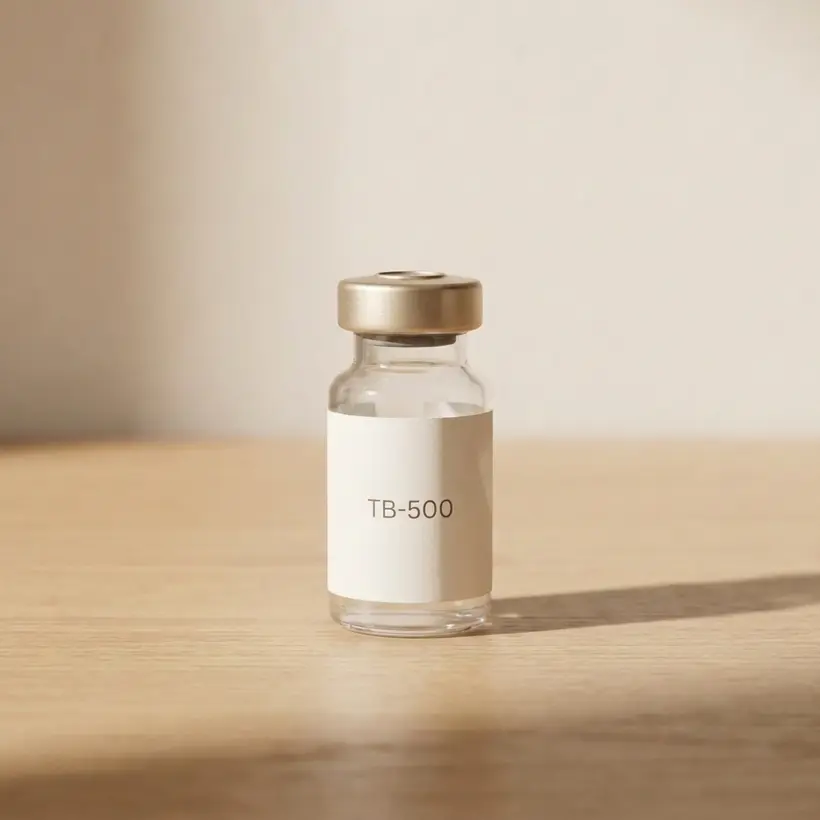
From the FormBlends catalog
TB-500 (Thymosin Beta-4)
Universal repair peptide for tissue regeneration · From $49/mo · compounded by a licensed 503A pharmacy, dispensed only after provider review.
Learn about TB-500 (Thymosin Beta-4) →- Wash your hands thoroughly with soap and water. Dry with a clean towel.
- Clean the tops of both vials (TB-500 and bacteriostatic water) with separate alcohol swabs. Allow them to air dry for a few seconds.
- Draw up the bacteriostatic water. Using an insulin syringe, draw the prescribed volume of BAC water. A common reconstitution volume is 1 mL per 5 mg vial, but follow your pharmacy's specific instructions.
- Inject the water into the TB-500 vial. Insert the needle through the rubber stopper and direct the stream of water along the inside wall of the vial, not directly onto the powder. This prevents foaming and preserves the peptide's structure.
- Gently swirl the vial. Don't shake. Shaking can denature the peptide and reduce its effectiveness. A gentle circular motion will dissolve the powder within 30 to 60 seconds. The solution should be clear and free of particles.
- Label the vial with the date of reconstitution and the concentration (for example, 5 mg/mL if you used 1 mL of BAC water for a 5 mg vial).
Step 2: Calculating Your Dose
Your physician will prescribe a specific dose in milligrams. You need to convert that to a volume (in mL or units on the syringe) based on your reconstitution concentration.
Example: If you reconstituted a 5 mg vial with 1 mL of bacteriostatic water, the concentration is 5 mg/mL.
- A 2.5 mg dose = 0.5 mL (or 50 units on a 100-unit insulin syringe)
- A 2.0 mg dose = 0.4 mL (or 40 units)
- A 1.0 mg dose = 0.2 mL (or 20 units)
Example with different reconstitution: If you reconstituted a 5 mg vial with 2 mL of BAC water, the concentration is 2.5 mg/mL.
- A 2.5 mg dose = 1.0 mL (or 100 units)
- A 2.0 mg dose = 0.8 mL (or 80 units)
If you're unsure about your dose calculation, contact your FormBlends provider before injecting.
Step 3: Drawing the Dose
- Clean the vial stopper with a fresh alcohol swab.
- Use a new, sterile syringe. Never reuse syringes.
- Draw air into the syringe equal to the volume of peptide you plan to withdraw. This makes drawing easier and prevents a vacuum in the vial.
- Insert the needle into the vial and push in the air.
- Invert the vial and slowly pull back on the plunger to draw the prescribed volume of solution.
- Check for air bubbles. Tap the syringe gently to move any bubbles to the top, then push them out by advancing the plunger slightly.
- Confirm the dose by checking the volume markings on the syringe.
Step 4: Selecting an Injection Site
Subcutaneous injections are administered into the layer of fat just beneath the skin. The most common sites for TB-500 include:
- Abdomen: The area around the navel, staying at least two inches away from the belly button. This is the most popular site due to ease of access and consistent fat layer.
- Thigh: The front or outer area of the upper thigh.
- Upper arm: The fatty area on the back of the upper arm (may require assistance).
Site Rotation
Rotate injection sites with each administration to prevent lipodystrophy (changes in the fat tissue) and reduce irritation. For example, alternate between left abdomen, right abdomen, left thigh, and right thigh.
Injecting Near an Injury
Some practitioners suggest injecting TB-500 subcutaneously near the site of an injury to increase local concentrations. While TB-500 is a systemic peptide that distributes throughout the body regardless of injection site, some clinical protocols do follow this approach. Discuss with your physician whether localized injection is appropriate for your situation.
Step 5: Performing the Injection
- Clean the injection site with an alcohol swab using a circular motion from the center outward. Allow the area to air dry completely. Injecting through wet alcohol can cause stinging.
- Pinch a fold of skin at the injection site between your thumb and forefinger. This lifts the subcutaneous tissue away from the muscle beneath.
- Insert the needle at a 45 to 90 degree angle. With a short insulin needle (6 mm or less), a 90-degree angle is appropriate. For longer needles, 45 degrees may be more suitable. Insert smoothly and steadily.
- Release the skin pinch once the needle is fully inserted.
- Depress the plunger slowly and steadily. A slow injection reduces discomfort and allows the solution to disperse evenly into the tissue.
- Wait 5 to 10 seconds before withdrawing the needle. This prevents the solution from leaking out of the injection site.
- Withdraw the needle at the same angle you inserted it. Apply gentle pressure with a clean alcohol swab or cotton ball if there's any bleeding. Don't rub the site.
- Dispose of the syringe immediately in an approved sharps container. Never recap needles.
After the Injection
Following your injection:
- Mild redness, a small bump, or slight soreness at the site is normal and typically resolves within hours.
- Avoid rubbing or massaging the injection site, as this can cause irritation or affect absorption.
- Some people experience mild fatigue after injection, particularly during the first few administrations. This is generally transient.
- If you notice significant swelling, spreading redness, warmth, or signs of infection at the site, contact your physician promptly.
Storage After Reconstitution
- Store the reconstituted vial upright in the refrigerator at 2 to 8 degrees Celsius (36 to 46 degrees Fahrenheit).
- Use the reconstituted solution within 3 to 4 weeks.
- Don't freeze reconstituted peptide solution.
- Keep the vial away from light.
- Inspect the solution before each use. If it appears cloudy, discolored, or contains particles, discard it.
Common Mistakes to Avoid
- Shaking the vial during reconstitution: This can damage the peptide structure. Always swirl gently.
- Using non-bacteriostatic water: Sterile water lacks the preservative needed for multi-dose use. Always use BAC water unless directed otherwise.
- Reusing syringes: This introduces contamination risk and dulls the needle, increasing discomfort.
- Injecting too quickly: Rapid injection increases pain and may cause the solution to pool rather than disperse.
- Failing to rotate sites: Repeated injection in the same spot can cause tissue changes and reduced absorption.
- Leaving reconstituted peptide at room temperature: Heat degrades peptides rapidly. Return the vial to the refrigerator immediately after drawing your dose.
Safety Considerations
Self-injection with any peptide carries inherent risks if performed without proper technique. Key safety practices include:
- Always wash hands before handling supplies.
- Use only sterile, single-use syringes and needles.
- Never share needles, vials, or syringes with others.
- Dispose of sharps properly in an FDA-cleared sharps container.
- Seek medical attention for any signs of infection: increasing redness, warmth, pus, fever, or red streaking from the injection site.
How FormBlends Can Help
Injecting a peptide for the first time can feel intimidating. FormBlends makes the process straightforward and safe through its physician-supervised telehealth model.
- Complete supply kits: Your peptide, bacteriostatic water, syringes, alcohol swabs, and sharps container are included or specified with your prescription.
- Detailed injection guidance: Your provider walks you through reconstitution, dose calculation, and technique before your first injection.
- Provider support: If you have questions about your technique, experience unexpected reactions, or need help with dose calculations, your medical team is accessible.
- Pharmacy-grade compounds: All peptides are sourced from licensed compounding pharmacies, ensuring accurate potency and purity.
When you have the right guidance and the right product, self-injection becomes a simple, routine part of your protocol.
Frequently Asked Questions
Does injecting TB-500 hurt?
Most people describe the sensation as a minor pinch. Using a 29-gauge or 30-gauge insulin needle, injecting slowly, and allowing the alcohol to dry before inserting the needle all minimize discomfort. The injection itself typically takes only a few seconds.
Can I inject TB-500 intramuscularly instead of subcutaneously?
Some practitioners do prescribe intramuscular injection, particularly when targeting a specific area of injury. But subcutaneous injection is the most common and generally preferred route for systemic distribution. Follow your physician's instructions on route of administration.
What if I see blood when I inject?
A small amount of blood at the injection site is common and harmless. It means a small capillary was nicked. Apply gentle pressure with a cotton ball or alcohol swab. If you draw blood into the syringe before injecting, withdraw the needle and try a different site.
Can I travel with reconstituted TB-500?
Reconstituted TB-500 must be kept refrigerated. For travel, use an insulated bag with ice packs. Keep the vial upright and avoid excessive shaking. Carry your prescription documentation for any questions from security or customs.
How long does it take to get comfortable with self-injection?
Most people report that the first one or two injections are the most anxiety-inducing. By the third or fourth injection, the process typically feels routine. Your FormBlends provider is available to support you through the learning curve.
Medical References
- Goldstein AL, Hannappel E, Sosne G, Kleinman HK. Thymosin beta4: a multi-functional regenerative peptide. Basic properties and clinical applications. Expert Opin Biol Ther. 2012;12(1):37-51. [PubMed | DOI]
- Wilding JPH, Batterham RL, Calanna S, et al. Once-Weekly Semaglutide in Adults with Overweight or Obesity. N Engl J Med. 2021;384(11):989-1002. [PubMed | ClinicalTrials.gov | DOI]
- Davies M, Færch L, Jeppesen OK, et al. Semaglutide 2.4 mg once a week in adults with overweight or obesity, and type 2 diabetes (STEP 2). Lancet. 2021;397(10278):971-984. [PubMed | ClinicalTrials.gov | DOI]
- Wadden TA, Bailey TS, Billings LK, et al. Effect of Subcutaneous Semaglutide vs Placebo as an Adjunct to Intensive Behavioral Therapy on Body Weight in Adults With Overweight or Obesity (STEP 3). JAMA. 2021;325(14):1403-1413. [PubMed | ClinicalTrials.gov | DOI]
- Rubino D, Abrahamsson N, Davies M, et al. Effect of Continued Weekly Subcutaneous Semaglutide vs Placebo on Weight Loss Maintenance in Adults With Overweight or Obesity (STEP 4). JAMA. 2021;325(14):1414-1425. [PubMed | ClinicalTrials.gov | DOI]
- Garvey WT, Batterham RL, Bhatt DL, et al. Two-year effects of semaglutide in adults with overweight or obesity (STEP 5). Nat Med. 2022;28(10):2083-2091. [PubMed | ClinicalTrials.gov | DOI]
Start Your TB-500 Protocol with Expert Support
From reconstitution to injection technique, FormBlends gives you everything you need for a confident start. Begin your physician-supervised peptide consultation at FormBlends.com.
Disclaimer: This article is for informational purposes only and doesn't constitute medical advice. TB-500 isn't FDA-approved for any medical condition. Injection instructions presented here are general guidance and shouldn't replace the specific instructions provided by your prescribing physician and compounding pharmacy. Always consult a qualified healthcare provider before starting any new therapy. FormBlends provides physician-supervised telehealth services. all treatment decisions are made by licensed medical providers.
Ready when you are
TB-500 (Thymosin Beta-4)
Universal repair peptide for tissue regeneration · From $49/mo · compounded by a licensed 503A pharmacy, dispensed only after provider review.
Learn about TB-500 (Thymosin Beta-4) →