Key Takeaway
If you're considering TB-500 peptide therapy, understanding the potential side effects is a smart move. Every medication carries some risk, and being informed helps you make better decisions with your provider. TB-500 side effects tend to be mild and temporary for most people.
If you're considering TB-500 peptide therapy, understanding the potential side effects is a smart move. Every medication carries some risk, and being informed helps you make better decisions with your provider. TB-500 side effects tend to be mild and temporary for most people. But you should still know what to look for.
Key Takeaways: - Common Side Effects Most People Experience - Less Common Side Effects to Be Aware Of - When to Contact Your Provider Immediately - Learn how to minimize side effects during your protocol
TB-500 is a synthetic version of Thymosin Beta-4, a protein your body produces naturally. Because it mirrors something already in your system, serious adverse reactions are uncommon in published literature. But individual responses vary, and your health history matters.
Here's an honest breakdown of what the evidence and clinical experience tell us.
Common Side Effects Most People Experience
The most frequently reported TB-500 side effects are mild and typically resolve on their own within a few hours or days.
Injection site reactions are the most common complaint. You might notice redness, mild swelling, itching, or a small bump at the injection site. This is a normal response to any subcutaneous injection, not unique to TB-500. Rotating injection sites between your abdomen and thigh can help minimize this. Using proper injection technique) clean hands, alcohol swab, correct needle angle (also reduces irritation.
Temporary head rush or lightheadedness has been reported by some users, especially during the first few injections. This typically lasts only a few minutes. If you're prone to lightheadedness, consider injecting while seated and staying put for a few minutes afterward.
"We now have cardiovascular outcomes data showing semaglutide reduces MACE events by 20% in people with obesity, independent of diabetes status. The SELECT trial[1] changed how we think about these medications.") Dr. A. Michael Lincoff, MD, Cleveland Clinic, lead author of SELECT
Mild fatigue in the hours following injection is occasionally reported. Some people feel slightly tired or notice a dip in energy. This is usually transient and resolves within a day. If fatigue persists or worsens, contact your provider.
Temporary flushing or warmth at the injection site or across the skin has been noted by some people. This is generally harmless and resolves quickly.
These common side effects are similar to what people experience with many injectable peptides and medications. They don't usually require treatment changes, but you should always report them to your provider so they can monitor your overall response.
Less Common Side Effects to Be Aware Of
While rare, some people experience side effects beyond the common ones listed above. Here's what to know.

Nausea has been reported occasionally, particularly when starting a new protocol. This may be related to the injection itself rather than the peptide specifically. If nausea persists, your provider may adjust your dosing schedule or recommend timing changes.
Free Download: Peptide Protocol Planner (12-Week) Track your side effects alongside your doses and recovery progress. Spot patterns early and share real data with your provider. Get yours free (we'll email it to you instantly. [Download Your Free Protocol Planner]
Mild headaches have been reported by a small number of people during the loading phase when doses are higher. These typically resolve as your body adjusts. Staying well-hydrated and ensuring you're eating adequately can help. If headaches are severe or persistent, contact your provider.
Changes in hair growth patterns have been anecdotally reported in online communities, though this isn't well-documented in clinical literature. Some people report changes in hair texture or growth rate. The clinical significance is unclear, and the connection to TB-500 specifically hasn't been established in peer-reviewed research.
Heart rate changes are occasionally mentioned in user reports, though again, this isn't well-documented in clinical studies. If you notice a racing heart, palpitations, or unusual heart rate patterns during your protocol, contact your provider promptly.
The important thing with less common side effects is documentation. Track what you experience, when it happens, and how long it lasts. This information helps your provider make informed decisions about your protocol.
When to Contact Your Provider Immediately
While serious reactions to TB-500 are rare, certain symptoms warrant immediate attention.
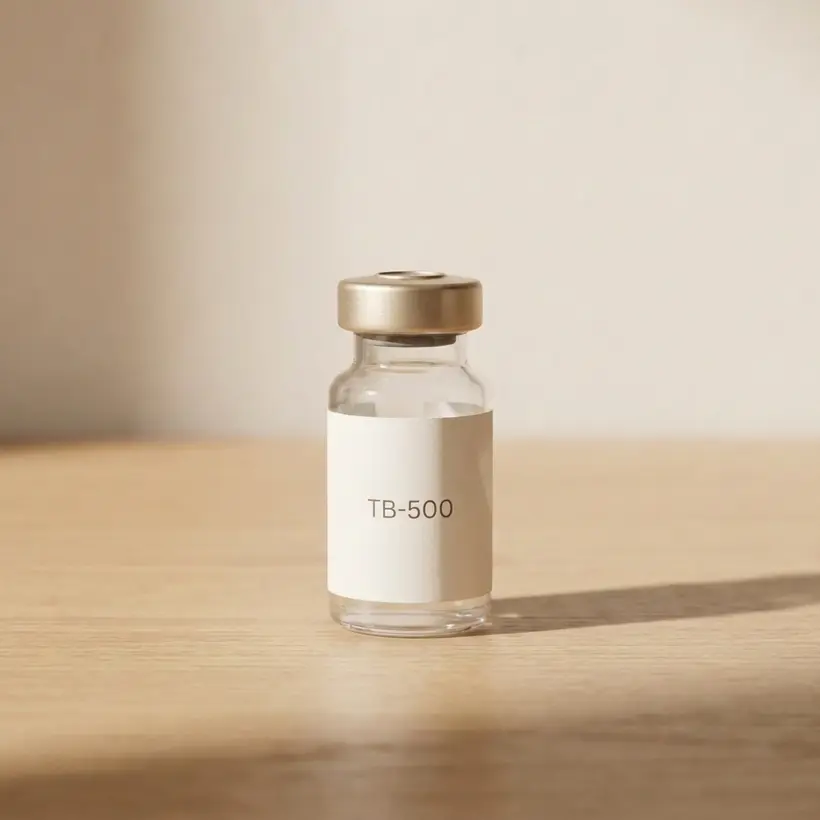
From the FormBlends catalog
TB-500 (Thymosin Beta-4)
Universal repair peptide for tissue regeneration · From $49/mo · compounded by a licensed 503A pharmacy, dispensed only after provider review.
Learn about TB-500 (Thymosin Beta-4) →Difficulty breathing or chest tightness after injection could indicate an allergic reaction. This is extremely rare but requires immediate medical attention. If you experience this, call emergency services.
Severe injection site reactions) such as significant swelling, spreading redness, warmth, or signs of infection (should be reported to your provider right away. While minor redness is normal, worsening symptoms could indicate a problem with injection technique or contamination.
Severe headache or neurological symptoms like vision changes, confusion, or dizziness that doesn't resolve within a few minutes should prompt a call to your provider. These aren't typical TB-500 responses and need evaluation.
Signs of allergic reaction including hives, facial swelling, or difficulty swallowing are emergency situations. These reactions can happen with any injectable medication. Having an action plan in place before you start your protocol is smart.
Your provider and the give you tools to stay connected and report concerns quickly. Don't wait and wonder) reach out when something doesn't feel right.
How to Minimize Side Effects During Your Protocol
Most TB-500 side effects can be managed or reduced with practical steps.
Follow your provider's protocol exactly. Don't increase your dose hoping for faster results. Higher doses don't always mean better outcomes, but they can increase side effect risk. Your provider calculated your dose for a reason.
Use proper injection technique. Clean your injection site with an alcohol swab. Use the correct needle gauge your pharmacy provides. Insert at the recommended angle. Don't rush. Most injection site reactions come from technique issues, not the peptide itself.
Rotate injection sites. Alternating between left and right abdomen and left and right thigh gives each area time to recover. Never inject into bruised, scarred, or irritated skin.
Stay hydrated. Adequate water intake supports your body through any peptide protocol. Dehydration can worsen headaches, fatigue, and lightheadedness (all of which overlap with potential TB-500 side effects.
Track everything. The lets you log each injection, note side effects, and rate their severity. When you meet with your provider for follow-up, this data makes the conversation more productive. You can also refer to our to make sure your preparation technique is dialed in.
Don't combine with other new supplements or medications without telling your provider. If you start TB-500 and three new supplements at the same time, you won't know what's causing any side effects you experience. Introduce one thing at a time when possible.
Frequently Asked Questions
Is TB-500 safe?
TB-500 is a synthetic version of a naturally occurring protein in your body. When prescribed by a licensed provider and prepared by a US-based 503A compounding pharmacy, it's used under medical supervision with appropriate quality controls. Side effects are generally mild and temporary, but your provider will evaluate your individual risk factors before prescribing.
What are the most common TB-500 side effects?
The most frequently reported side effects are mild injection site reactions (redness, swelling, itching), temporary lightheadedness, and mild fatigue. These typically resolve on their own within hours or a few days and don't usually require changes to your protocol.
Can TB-500 cause long-term side effects?
Long-term safety data on TB-500 is limited because large-scale, extended human clinical trials are still ongoing. Current evidence from published studies and clinical use suggests that serious long-term effects are uncommon. Your provider will monitor you throughout your protocol and can address any concerns.
Should I stop taking TB-500 if I get side effects?
Not necessarily. Mild, transient side effects like injection site reactions or temporary fatigue are expected and usually don't require stopping your protocol. But if you experience severe, persistent, or concerning symptoms, contact your provider before your next dose. They'll advise whether to continue, adjust, or pause your protocol.
Does TB-500 interact with other medications?
Drug interaction data for TB-500 is limited. Always tell your provider about every medication, supplement, and peptide you're currently using before starting TB-500. This includes over-the-counter medications, herbal supplements, and other peptides like . Your provider can evaluate potential interactions specific to your regimen.
Let's Make This Happen
The research is clear. The options are available. The only question is whether it's right for you. A FormBlends provider can help you decide) no pressure, no commitment.
Medical References
- Lincoff AM, Brown-Frandsen K, Colhoun HM, et al. Semaglutide and Cardiovascular Outcomes in Obesity without Diabetes. N Engl J Med. 2023;389(24):2221-2232. [PubMed | ClinicalTrials.gov | DOI]
Sources &. References
- Bock-Marquette I, Saxena A, White MD, et al. Thymosin beta4 activates integrin-linked kinase and promotes cardiac cell migration, survival and cardiac repair. Nature. 2004;432(7016):466-472. Doi:10.1038/nature03000
- Malinda KM, Sidhu GS, Mani H, et al. Thymosin beta4 accelerates wound healing. J Invest Dermatol. 1999;113(3):364-368. Doi:10.1046/j.1523-1747.1999.00708.x
Nothing in this article should be construed as medical advice. The information provided is educational only. Always consult with your healthcare provider before beginning, modifying, or discontinuing any medication or treatment. FormBlends connects patients with licensed providers for individualized care.
Last updated: 2026-03-24
Ready when you are
TB-500 (Thymosin Beta-4)
Universal repair peptide for tissue regeneration · From $49/mo · compounded by a licensed 503A pharmacy, dispensed only after provider review.
Learn about TB-500 (Thymosin Beta-4) →