Key Takeaway
Before starting any peptide therapy, you want to know what to expect. This TB-500 side effects safety resource covers the important information you need to make informed decisions. Understanding TB-500 side effects and safety data helps you make an informed decision and recognize any issues early.
Before starting any peptide therapy, you want to know what to expect. This TB-500 side effects safety resource covers the important information you need to make informed decisions. Understanding TB-500 side effects and safety data helps you make an informed decision and recognize any issues early. This guide covers what the research and clinical experience tell us about the safety profile of Thymosin Beta-4.
Key Takeaways: - Common Side Effects of TB-500 - Less Common Concerns - Who Should Not Take TB-500 - Learn how to minimize side effects
The overall picture is reassuring. TB-500 has a relatively mild side effect profile based on available data. But like any medication, it carries risks that deserve honest discussion.
Common Side Effects of TB-500
Most reported side effects of TB-500 are mild and temporary. They tend to occur most often during the first week or two of treatment as your body adjusts.
Injection site reactions. This is the most frequently reported side effect. You may notice redness, slight swelling, itching, or tenderness at the injection site. These reactions are typical of any subcutaneous injection and usually resolve within 24-48 hours. Proper site rotation and injection technique reduce the likelihood. If reactions persist or worsen, contact your provider.
Headache. Some people report headaches during the first few days of treatment. These are usually mild and respond to over-the-counter pain relief. If headaches are severe or persistent, your provider may adjust your protocol.
Fatigue or lethargy. A temporary feeling of tiredness may occur, particularly during the loading phase when doses are higher. This typically resolves as your body adjusts to the peptide.
Lightheadedness. Occasional dizziness or lightheadedness has been reported, usually shortly after injection. Staying hydrated and injecting while seated can help. If lightheadedness is persistent, inform your provider.
"The conversation about obesity needs to shift from willpower to biology. These medications work because obesity is a neuroendocrine disease, not a character flaw.") Dr. Fatima Cody Stanford, MD, MPH, Massachusetts General Hospital
Nausea. Mild nausea is occasionally reported but is uncommon. It's usually transient and resolves without intervention.
These side effects aren't experienced by everyone. Many people report no noticeable side effects at all. When they do occur, they tend to diminish with continued use as your body adapts.
Less Common Concerns
Beyond the common mild effects, there are a few topics worth understanding.

Fluid retention. Some people notice mild water retention during TB-500 treatment. This may manifest as slight puffiness or a small increase in scale weight. It's typically temporary and resolves after the loading phase or when treatment ends.
Free Download: Peptide Protocol Planner (12-Week) Track your TB-500 doses, injection sites, and any side effects with this structured planner. Having a clear log helps your provider improve your protocol. Get yours free (we'll email it to you instantly. [Email Input] [Download Button]
Hair growth changes. There are anecdotal reports of increased hair growth or changes in hair texture during TB-500 treatment. Thymosin Beta-4 is involved in hair follicle stem cell activation, so this observation has biological plausibility. Some people consider this a positive effect. others may not. The evidence is largely anecdotal.
Heart rate changes. Isolated reports of temporary changes in heart rate have been noted. If you have a pre-existing cardiac condition, disclose this to your provider before starting TB-500. Your provider may recommend cardiac monitoring during treatment.
Allergic reactions. As with any injectable medication, allergic reactions are theoretically possible. Signs include hives, difficulty breathing, or swelling of the face and throat. These are rare but require immediate medical attention. Your provider may recommend a test dose for patients with known medication sensitivities.
Who Should Not Take TB-500
TB-500 isn't appropriate for everyone. Your provider will screen for contraindications before prescribing. General categories of people who should exercise caution or avoid TB-500 include:
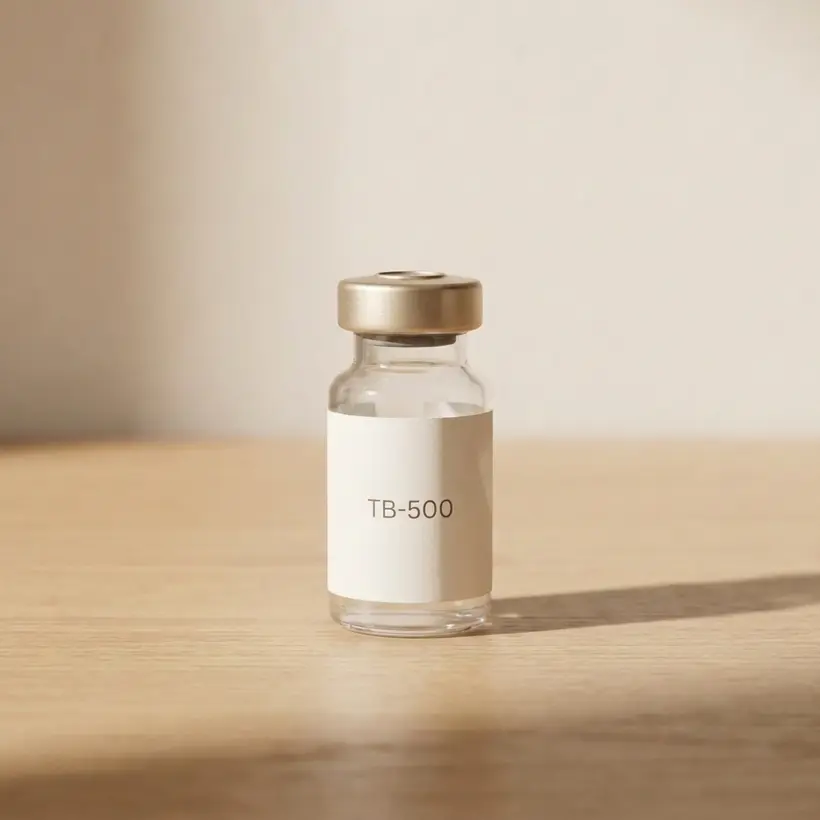
From the FormBlends catalog
TB-500 (Thymosin Beta-4)
Universal repair peptide for tissue regeneration · From $49/mo · compounded by a licensed 503A pharmacy, dispensed only after provider review.
Learn about TB-500 (Thymosin Beta-4) →Active cancer patients. Because TB-500 promotes cell migration and angiogenesis (new blood vessel formation), there's a theoretical concern that it could support tumor growth. No clinical evidence has established this link, but most providers consider active cancer a contraindication out of an abundance of caution.
Cancer survivors. The same theoretical concern applies, though the risk window is debated among providers. Discuss your cancer history thoroughly with your provider.
Pregnant or breastfeeding women. There's insufficient safety data for TB-500 use during pregnancy or breastfeeding. It should be avoided in these situations.
People with active infections. Some providers recommend against starting TB-500 during active infections. The immune-modulating effects of Thymosin Beta-4 could theoretically complicate infection management.
Known hypersensitivity. If you have had a previous allergic reaction to TB-500 or any Thymosin Beta-4 product, don't use it again.
This isn't an exhaustive list. Your will review your complete medical history, current medications, and health conditions before making a prescribing decision.
How to Minimize Side Effects
Several practical strategies can help reduce the likelihood and severity of side effects.
Start with proper medical supervision. Working with a licensed provider who understands peptide therapy is the single most important step. They will determine the right dose for your body and monitor your response. FormBlends connects you with .
Follow the prescribed protocol exactly. Don't increase your dose hoping for faster results. Higher doses increase side effect risk without necessarily improving outcomes. Stick to what your provider recommends.
Stay well hydrated. Adequate hydration supports kidney function and may reduce headaches and lightheadedness. Aim for at least 64-80 ounces of water daily during treatment.
Rotate injection sites. Use at least 3-4 different sites and don't return to the same spot within a week. This prevents injection site reactions and allows tissue recovery. Log your injection sites in the for easy tracking.
Report any concerns promptly. Don't wait for your next scheduled appointment if something feels wrong. Contact your provider if you experience unexpected symptoms, worsening side effects, or anything that concerns you.
Store your peptide properly. Improperly stored TB-500 can degrade, potentially leading to injection of inactive or contaminated product. Follow the storage instructions in our . Use reconstituted TB-500 within the timeframe your pharmacy recommends.
What Quality and Safety Mean for Peptide Sources
Where your TB-500 comes from matters enormously for safety.
FormBlends works with licensed US-based 503A compounding pharmacies. These pharmacies are regulated by state boards of pharmacy and must follow strict manufacturing standards. This means your TB-500 is prepared in controlled conditions with verified purity and potency.
Research-grade or unregulated peptides purchased online carry significant risks. These products may contain impurities, incorrect concentrations, or contaminants that can cause adverse reactions unrelated to TB-500 itself. Never use research-grade peptides for human injection.
When you work with FormBlends, your peptide is prescribed by a licensed provider and prepared by a licensed pharmacy. This chain of oversight is your best protection against quality-related safety issues.
Frequently Asked Questions
Are TB-500 side effects worse during the loading phase?
Side effects, when they occur, tend to be more noticeable during the loading phase because doses are higher. Most people find that side effects diminish during the maintenance phase. If loading phase effects are bothersome, your provider may adjust the protocol) for example, by extending the loading period at a lower dose.
Can TB-500 interact with other medications?
There are no well-documented drug interactions with TB-500. But you should always inform your provider about all medications, supplements, and other peptides you're taking. This includes GLP-1 medications, NSAIDs, blood thinners, and any supplements. Your provider can evaluate potential interactions based on your specific combination.
How do I know if my side effects are serious enough to contact my provider?
Contact your provider for any side effect that concerns you. Specifically, seek prompt medical attention for signs of allergic reaction (hives, difficulty breathing, facial swelling), persistent severe headache, chest pain, significant swelling or redness at injection sites, or any symptom that feels unusual or alarming.
Is long-term TB-500 use safe?
Long-term safety data for TB-500 is limited. Most clinical protocols run 8-16 weeks, with rest periods between cycles. Your provider will assess whether continued use is appropriate based on your response and evolving health status. Extended use without medical supervision isn't recommended.
Does TB-500 affect blood work or lab results?
TB-500 isn't known to significantly affect standard blood work parameters. But your provider may order baseline and follow-up labs to monitor your overall health during treatment. If you're getting blood work done for other reasons, mention that you're on TB-500 to your ordering provider.
Ready to Take the Next Step?
Your health goals is personal, and you deserve a plan that fits. FormBlends connects you with licensed providers who can evaluate your needs and create a personalized protocol.
Medical References
- Goldstein AL, Hannappel E, Sosne G, Kleinman HK. Thymosin beta4: a multi-functional regenerative peptide. Basic properties and clinical applications. Expert Opin Biol Ther. 2012;12(1):37-51. [PubMed | DOI]
Sources &. References
- Bock-Marquette I, Saxena A, White MD, et al. Thymosin beta4 activates integrin-linked kinase and promotes cardiac cell migration, survival and cardiac repair. Nature. 2004;432(7016):466-472. Doi:10.1038/nature03000
- Malinda KM, Sidhu GS, Mani H, et al. Thymosin beta4 accelerates wound healing. J Invest Dermatol. 1999;113(3):364-368. Doi:10.1046/j.1523-1747.1999.00708.x
This content is provided for informational and educational purposes only. It isn't a substitute for professional medical advice, diagnosis, or treatment. Always seek the advice of a licensed healthcare provider with any questions about a medical condition or treatment plan.
Last updated: 2026-03-24
Ready when you are
TB-500 (Thymosin Beta-4)
Universal repair peptide for tissue regeneration · From $49/mo · compounded by a licensed 503A pharmacy, dispensed only after provider review.
Learn about TB-500 (Thymosin Beta-4) →