Key Takeaway
Benefits of combining TB-500 with GLP-1 medications. Learn how tissue repair peptide therapy complements GLP-1 weight management for recovery, joint health, and inflammation.
Combining TB-500 with GLP-1 medications delivers benefits that neither compound provides alone: metabolic weight loss paired with active tissue repair, anti-inflammatory support, and musculoskeletal recovery. GLP-1 receptor agonists handle the appetite suppression and metabolic improvement side of the equation. TB-500 handles the structural side, supporting the tendons, joints, muscles, and connective tissues that are adapting to rapid body composition changes during weight loss.
How TB-500 and GLP-1 Medications
What TB-500 Does for Your Body
TB-500 is a synthetic peptide modeled on the active segment of thymosin beta-4, a naturally occurring protein central to your body's repair processes. When tissue is damaged anywhere in the body, thymosin beta-4 mobilizes repair cells by reorganizing their actin cytoskeleton, enabling them to migrate to the injury site. TB-500 replicates this activity.
TB-500's effects span multiple tissue types: tendons, ligaments, muscle fibers, joint structures, cardiac tissue, and skin. It also promotes new blood vessel formation to supply healing areas with oxygen and nutrients, and it reduces inflammation through modulation of pro-inflammatory signaling molecules.
What GLP-1 Medications Do for Your Body
GLP-1 receptor agonists (semaglutide, tirzepatide, liraglutide) produce weight loss and metabolic improvement by mimicking the incretin hormone GLP-1. They suppress appetite through brain signaling, slow gastric emptying to increase satiety, enhance insulin secretion, and reduce glucagon output. The result is reduced caloric intake, improved blood sugar control, and substantial weight loss.
Can You Combine Them?
Yes. TB-500 and GLP-1 medications are pharmacologically compatible. They use entirely different receptor systems, different signaling pathways, and different metabolic clearance routes. Neither is a CYP450 substrate. There's no mechanism for one to interfere with the other. Physician supervision is required for safe and effective use.

The Benefits of Combining TB-500 with GLP-1 Medications
Benefit 1: Accelerated Musculoskeletal Recovery
Weight loss programs work best when they include progressive exercise. But exercise creates micro-damage in muscles, tendons, and ligaments that the body needs to repair between sessions. For patients who have been relatively sedentary before starting a GLP-1 medication, the sudden increase in physical demand can outpace their body's natural repair capacity.
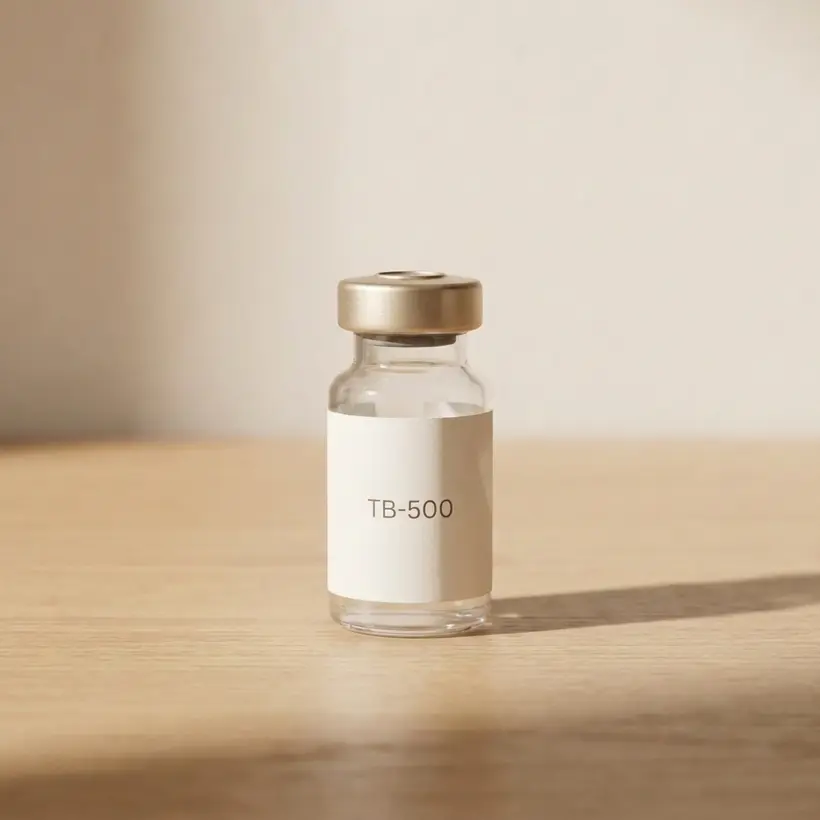
From the FormBlends catalog
TB-500 (Thymosin Beta-4)
Universal repair peptide for tissue regeneration · From $49/mo · compounded by a licensed 503A pharmacy, dispensed only after provider review.
Learn about TB-500 (Thymosin Beta-4) →TB-500 supports this repair process at a cellular level. By promoting cell migration to damaged tissue and stimulating angiogenesis to improve blood flow to healing areas, TB-500 helps the body keep up with the recovery demands of an active weight loss program. Patients often report reduced post-exercise soreness, faster return to full training capacity, and fewer overuse complaints when using TB-500 alongside their exercise regimen.
Benefit 2: Joint Protection During the Weight Loss Transition
Patients starting GLP-1 therapy often have a complicated relationship with their joints. Years of carrying excess weight has caused wear, inflammation, and potentially structural damage to load-bearing joints. The good news is that weight loss reduces mechanical joint stress significantly. The challenge is that increased activity during the weight loss process can temporarily increase joint demands before the full weight loss benefit is realized.
TB-500 bridges this gap. Its connective tissue repair properties and anti-inflammatory activity support joint health during the transition from higher weight and low activity to lower weight and higher activity. This is particularly valuable for patients with pre-existing knee, hip, or lower back issues who are becoming more active alongside their GLP-1 medication.
Benefit 3: Tissue Quality During Rapid Body Changes
Losing 15 to 22 percent of body weight changes the structural demands on virtually every tissue in the body. Skin needs to remodel. Connective tissue architecture shifts. Vascular networks reorganize. These are normal processes, but the speed of GLP-1-mediated weight loss can outpace the body's natural remodeling capacity.
TB-500's angiogenic properties ensure that healing and remodeling tissues receive adequate blood supply. Its cell migration promotion supports the movement of repair cells to areas undergoing the most significant structural change. While TB-500 isn't a cosmetic treatment, its tissue health properties may contribute to better overall structural adaptation during rapid weight loss.
Benefit 4: thorough Anti-Inflammatory Support
Obesity drives chronic low-grade inflammation through multiple mechanisms: excess visceral fat produces inflammatory cytokines, insulin resistance triggers inflammatory cascades, and mechanical stress on tissues generates localized inflammation. GLP-1 medications address the metabolic drivers by reducing visceral fat, improving insulin sensitivity, and normalizing metabolic markers.
TB-500 adds a direct tissue-level anti-inflammatory effect. It modulates pro-inflammatory cytokines and supports the resolution phase of inflammation at specific tissue sites. Combining metabolic anti-inflammatory therapy (GLP-1) with tissue-level anti-inflammatory therapy (TB-500) provides a more complete approach to managing the chronic inflammation common in this patient population.
Benefit 5: Support for Lean Mass During Caloric Restriction
One documented concern with GLP-1-mediated weight loss is the loss of lean mass alongside fat mass. Resistance training and adequate protein intake are the primary strategies for preserving muscle during weight loss. TB-500 isn't an anabolic agent, but its tissue repair and anti-inflammatory properties may provide additional support for muscle health during the metabolic stress of sustained caloric restriction. It helps ensure that the repair processes muscles rely on between training sessions function optimally even when the body is in a caloric deficit.
Benefit 6: Improved Physical Confidence and Consistency
This benefit is less about pharmacology and more about practical outcomes. When patients recover faster, experience less joint discomfort, and feel physically resilient, they're more likely to maintain consistent exercise habits. Consistency is the single most important factor in long-term weight management success. By supporting the physical foundation that makes consistent activity possible, TB-500 indirectly supports the behavioral changes that drive lasting results from GLP-1 therapy.
Protocol Considerations
GLP-1 medications follow their standard titration schedules. TB-500 is introduced after establishing the GLP-1 baseline (2 to 4 weeks), with a loading phase (5 to 10 mg weekly for 4 to 6 weeks) followed by maintenance (2.5 to 5 mg weekly). TB-500 is cycled with breaks between cycles. Both are subcutaneous injections administered at different sites. Contact provider for current pricing
Your physician determines all dosing, timing, and cycle parameters based on your individual health profile.
Who Should Consider This Combination
- GLP-1 patients building an exercise program who want recovery support for muscles, tendons, and joints.
- Patients with pre-existing joint concerns who are increasing activity alongside weight loss.
- Patients undergoing rapid weight loss who want to support tissue quality during body recomposition.
- Patients with chronic inflammation seeking both metabolic and tissue-level anti-inflammatory benefits.
- Patients focused on physical resilience and consistent exercise capacity during their weight management program.
Not appropriate for patients who are pregnant or nursing, under 18, have active cancer, or have contraindications to GLP-1 therapy.
Frequently Asked Questions
Are these benefits proven in clinical trials?
GLP-1 medications' benefits are extensively documented through FDA clinical trials. TB-500's tissue repair and anti-inflammatory properties are documented in preclinical research. The specific benefits of the combination haven't been studied in a randomized controlled trial. The rationale for combining them is based on their independent evidence bases, mechanistic compatibility, and clinical observation.
How soon will I notice benefits from adding TB-500?
Most patients begin noticing improved recovery and reduced joint discomfort within 2 to 4 weeks of starting the TB-500 loading phase. Benefits tend to build progressively over the full cycle. GLP-1 weight loss benefits are usually noticeable within the first month and continue to accumulate over months.
Do I need TB-500 if I am not very active?
TB-500's exercise recovery benefits are most relevant for active patients. But its anti-inflammatory properties, tissue remodeling support, and connective tissue repair effects can benefit less active patients as well, particularly during significant weight loss. Your physician can help assess whether TB-500 is warranted for your specific goals and activity level.
Medical References
- Goldstein AL, Hannappel E, Sosne G, Kleinman HK. Thymosin beta4: a multi-functional regenerative peptide. Basic properties and clinical applications. Expert Opin Biol Ther. 2012;12(1):37-51. [PubMed | DOI]
Experience These Benefits at FormBlends
Combining TB-500 with GLP-1 medications provides a more thorough approach to weight management that addresses both metabolic transformation and structural health. At FormBlends, our physicians evaluate whether this combination is right for you, build a personalized protocol, provide pharmaceutical-grade compounds, and monitor your progress throughout treatment.
Start your consultation at FormBlends.com
Ready when you are
TB-500 (Thymosin Beta-4)
Universal repair peptide for tissue regeneration · From $49/mo · compounded by a licensed 503A pharmacy, dispensed only after provider review.
Learn about TB-500 (Thymosin Beta-4) →