Key Takeaway
Explore the science-backed benefits of TB-500 (Thymosin Beta-4), including tissue repair, reduced inflammation, and improved recovery. Physician-supervised guidance from FormBlends.
Quick Answer: TB-500 is a synthetic fragment of Thymosin Beta-4, a naturally occurring peptide involved in tissue repair and cell migration. Research suggests potential benefits including accelerated wound healing, reduced inflammation, improved flexibility, and enhanced recovery from musculoskeletal injuries. Clinical applications remain under investigation.
What Is TB-500?
TB-500 is a synthetic version of the active region of Thymosin Beta-4 (TB4), a 43-amino-acid peptide found in virtually all human and animal cells. Thymosin Beta-4 was first isolated from the thymus gland in the 1960s and has since been identified as a key regulator of actin, one of the most abundant proteins in the body.
Actin is important for cell structure, movement, and division. By sequestering actin monomers and promoting their polymerization at the right time and place, Thymosin Beta-4 plays a central role in wound healing, tissue remodeling, and the formation of new blood vessels (angiogenesis). TB-500 replicates the most biologically active segment of this peptide, specifically the region responsible for actin binding and cell migration.
It's important to distinguish TB-500 from full-length Thymosin Beta-4. While they share overlapping mechanisms, most published clinical research has been conducted on TB4 rather than the TB-500 fragment specifically. But preclinical studies on TB-500 have shown comparable activity in several key areas.
How TB-500 Works in the Body
The biological activity of TB-500 centers on its interaction with actin and several downstream signaling pathways. When tissue is damaged, the body initiates a cascade of repair processes. TB-500 appears to support multiple stages of this cascade.
Cell Migration and Proliferation
TB-500 upregulates cell-building proteins such as actin, which allows cells to migrate more efficiently to sites of injury. Animal studies have demonstrated that Thymosin Beta-4 promotes the migration of endothelial cells, keratinocytes, and cardiac progenitor cells to damaged tissue (Malinda et al., 1999, Journal of Investigative Dermatology).
Angiogenesis
New blood vessel formation is critical for delivering oxygen and nutrients to healing tissues. In vitro and animal studies have shown that Thymosin Beta-4 stimulates angiogenesis through the upregulation of vascular endothelial growth factor (VEGF) and other pro-angiogenic factors (Grant et al., 1999, Journal of Cell Science).
Anti-Inflammatory Signaling
TB-500 has been observed to downregulate inflammatory cytokines in animal models. Research in rodents with induced inflammatory conditions showed reduced levels of interleukin-1 beta (IL-1B) and other pro-inflammatory markers following TB4 administration (Sosne et al., 2007, Expert Opinion on Biological Therapy).
Research-Backed Benefits of TB-500
1. Accelerated Wound Healing
One of the most extensively studied benefits of Thymosin Beta-4 is its effect on wound repair. A randomized, controlled trial in humans examined topical TB4 (marketed as RGN-259) for corneal wound healing and found statistically significant improvements in healing time compared to placebo (Dunn et al., 2010, Expert Opinion on Biological Therapy). In animal models, subcutaneous TB4 accelerated the closure of dermal wounds and reduced scar formation (Philp et al., 2004, FASEB Journal).
From the FormBlends catalog
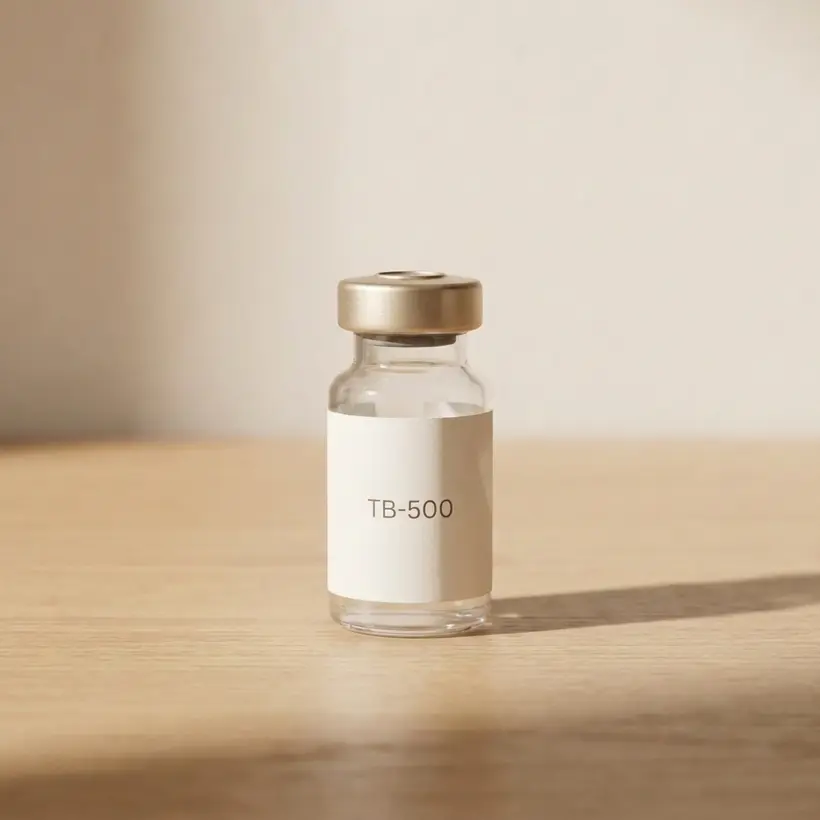
TB-500 (Thymosin Beta-4)
Universal repair peptide for tissue regeneration · From $49/mo · compounded by a licensed 503A pharmacy, dispensed only after provider review.
Learn about TB-500 (Thymosin Beta-4) →Evidence level: Human data exists for ocular applications. Dermal wound healing data comes primarily from animal studies.
2. Reduced Inflammation
Chronic inflammation contributes to many conditions, from joint degeneration to cardiovascular disease. In animal models of ocular inflammation, Thymosin Beta-4 significantly reduced inflammatory markers and improved tissue outcomes (Sosne et al., 2007). A study in rats with induced colitis also showed reduced intestinal inflammation following TB4 treatment (Sosne et al., 2013).
Evidence level: Primarily animal studies. Human clinical trials for inflammatory conditions are limited but ongoing.
3. Improved Flexibility and Reduced Fibrosis
TB-500's ability to regulate actin may contribute to improved tissue flexibility. In animal studies, TB4 treatment was associated with reduced fibrosis (scar tissue formation) in cardiac tissue following heart attacks. Bock-Marquette et al. (2004, Nature) demonstrated that TB4 promoted survival of cardiac muscle cells and reduced fibrotic scarring in mice after myocardial infarction.
Evidence level: Animal studies with strong mechanistic data. Human cardiac trials haven't yet replicated these findings at scale.
4. Enhanced Muscle and Tendon Recovery
Athletes and active individuals often seek faster recovery from strains and tendon injuries. Animal research has shown that TB4 can promote the differentiation of tendon stem cells and accelerate tendon healing. A 2016 study in rats with Achilles tendon injuries found improved biomechanical properties in the TB4-treated group compared to controls (Xu et al., 2016, Journal of Orthopaedic Research).
Evidence level: Animal studies. No large-scale human clinical trials on tendon recovery have been published to date.
5. Cardiovascular Support
The cardioprotective properties of TB4 are among the most compelling areas of research. Beyond the Nature study cited above, additional animal research has demonstrated that TB4 can activate cardiac progenitor cells, promote new blood vessel growth in ischemic heart tissue, and reduce the extent of damage after cardiac events (Smart et al., 2007, Nature).
Evidence level: Strong animal data. Early-phase human studies are underway.
6. Hair Growth
An unexpected finding in early TB4 research was the promotion of hair growth in animal models. Philp et al. (2004) observed that mice treated with TB4 showed accelerated hair growth, linked to the peptide's effects on hair follicle stem cells and keratinocyte migration. This benefit remains largely anecdotal in humans.
Evidence level: Animal studies. No controlled human trials on hair growth have been published.
7. Neuroprotective Potential
Emerging research suggests Thymosin Beta-4 may support nervous system repair. Animal studies in models of traumatic brain injury and stroke have shown improved neurological outcomes, reduced brain lesion size, and promoted oligodendrocyte differentiation following TB4 administration (Xiong et al., 2012, Journal of Neuroscience Research).
Evidence level: Animal studies only. Human neurological applications remain theoretical.
Safety Considerations
Thymosin Beta-4 and TB-500 have generally shown a favorable safety profile in the studies conducted to date. In clinical trials of topical TB4 (RGN-259) for dry eye disease, the most common adverse events were mild and included transient eye irritation.
But several important caveats apply:
- Limited long-term human data: Most safety data comes from short-duration studies. Long-term safety profiles in humans remain under investigation.
- Theoretical concern with angiogenesis: Because TB-500 promotes blood vessel growth, individuals with a history of cancer should exercise caution and consult a physician. There's no direct evidence that TB-500 promotes tumor growth, but the theoretical risk warrants discussion.
- Quality and sourcing matter: Peptides obtained from unregulated sources may contain impurities, incorrect dosages, or degraded compounds. Physician-supervised protocols with pharmacy-grade peptides mitigate this risk.
- Not FDA-approved: TB-500 isn't currently FDA-approved for any medical indication. Its use falls under clinical investigation and physician-directed protocols.
Common reported side effects in anecdotal use include temporary lethargy, mild headache, and localized irritation at the injection site. Serious adverse events have been rare in published literature.
How FormBlends Can Help
FormBlends is a physician-supervised telehealth platform specializing in peptide therapy, including TB-500. When you work with FormBlends, your protocol is designed and monitored by licensed medical providers who understand the current research space.
Here is what sets the FormBlends approach apart:
- Medical evaluation: Every patient receives a thorough health assessment before any peptide is prescribed.
- Pharmacy-grade compounds: Peptides are sourced from licensed compounding pharmacies that adhere to strict quality standards.
- Personalized protocols: Dosing and cycle length are tailored to your specific health goals and medical history.
- Ongoing monitoring: Your provider tracks your progress and adjusts your protocol as needed.
If you're considering TB-500 for tissue repair, recovery, or inflammation support, a consultation with FormBlends gives you access to evidence-based guidance in a supervised clinical setting.
Frequently Asked Questions
Is TB-500 the same as Thymosin Beta-4?
Not exactly. TB-500 is a synthetic peptide that replicates the most active region of full-length Thymosin Beta-4. They share overlapping mechanisms, but most published clinical research has been conducted on full-length TB4 rather than the TB-500 fragment.
How long does it take to notice benefits from TB-500?
Individual responses vary. In clinical and anecdotal reports, some users note improvements in recovery and comfort within two to four weeks. Full benefits may take six to twelve weeks depending on the condition being addressed and the protocol used.
Can TB-500 be stacked with other peptides?
Some practitioners combine TB-500 with BPC-157, another peptide studied for its tissue-repair properties. But any combination protocol should only be undertaken under direct physician supervision to manage potential interactions and ensure appropriate dosing.
Is TB-500 legal?
TB-500 is legal to prescribe in the United States when dispensed by a licensed compounding pharmacy under a physician's order. It isn't FDA-approved for any specific indication and is classified as a research peptide in many contexts. It's banned by the World Anti-Doping Agency (WADA) for competitive athletes.
Who should avoid TB-500?
Individuals with active cancer, a history of cancer, or who are pregnant or breastfeeding shouldn't use TB-500 without explicit guidance from an oncologist or specialist. The peptide's pro-angiogenic properties warrant extra caution in these populations.
Medical References
- Goldstein AL, Hannappel E, Sosne G, Kleinman HK. Thymosin beta4: a multi-functional regenerative peptide. Basic properties and clinical applications. Expert Opin Biol Ther. 2012;12(1):37-51. [PubMed | DOI]
Start Your Peptide Therapy Consultation
Ready to explore whether TB-500 may support your health goals? FormBlends connects you with licensed physicians who specialize in peptide therapy. Begin your consultation today at FormBlends.com.
Disclaimer: This article is for informational purposes only and doesn't constitute medical advice. TB-500 isn't FDA-approved for any medical condition. The information presented here is based on published research and shouldn't be used as a substitute for professional medical guidance. Always consult a qualified healthcare provider before starting any new therapy. FormBlends provides physician-supervised telehealth services. all treatment decisions are made by licensed medical providers.
Ready when you are
TB-500 (Thymosin Beta-4)
Universal repair peptide for tissue regeneration · From $49/mo · compounded by a licensed 503A pharmacy, dispensed only after provider review.
Learn about TB-500 (Thymosin Beta-4) →