Key Takeaway
How Thymosin Beta-4 helps joint pain through tissue repair, anti-inflammatory effects, and cartilage support. Evidence, protocols, and what to expect.
Quick Answer: Thymosin Beta-4 for joint pain addresses the underlying causes rather than just masking symptoms. TB-4 reduces inflammation in joint tissues, promotes repair of damaged cartilage and surrounding soft tissues, supports new blood vessel formation to improve nutrient delivery, and helps remodel scar tissue that restricts joint mobility. Most patients notice reduced joint pain and improved mobility within 2 to 4 weeks, with continued structural improvement over 8 to 12 weeks .
How TB-4 Addresses Joint Pain
- Inflammation reduction: TB-4 suppresses NF-kB and reduces pro-inflammatory cytokines (TNF-alpha, IL-1 beta, IL-6) that drive joint inflammation and pain. This addresses the root inflammatory process rather than blocking pain signals downstream
- Cartilage support: TB-4 promotes chondrocyte (cartilage cell) migration and function. While cartilage has limited regenerative capacity, TB-4 supports whatever repair potential exists
- Soft tissue repair: Joint pain often involves damaged tendons, ligaments, and synovial tissue surrounding the joint. TB-4 excels at repairing these soft tissue structures
- Angiogenesis: Improved blood supply to joint tissues supports healing and reduces the hypoxic environment that perpetuates inflammation
- Scar tissue remodeling: TB-4 helps break down fibrotic tissue that restricts joint movement, improving range of motion
Joint Conditions That Respond to TB-4
| Condition | How TB-4 Helps | Expected Response |
|---|---|---|
| Osteoarthritis | Reduces inflammation, supports remaining cartilage | Pain reduction, improved mobility (4-8 weeks) |
| Tendinitis/tendinopathy | Direct tendon repair, inflammation reduction | Significant improvement (4-8 weeks) |
| Ligament sprains | Tissue repair, cell migration to injury site | Accelerated healing (2-6 weeks) |
| Post-surgical joint recovery | Faster tissue healing, reduced scarring | Ahead-of-schedule recovery |
| Frozen shoulder (adhesive capsulitis) | Scar tissue remodeling, inflammation reduction | Gradual improvement (6-12 weeks) |
| Bursitis | Anti-inflammatory effects on bursal tissue | Pain relief (2-4 weeks) |
TB-4 vs Other Joint Pain Approaches
| Treatment | Mechanism | Duration of Relief | Side Effects |
|---|---|---|---|
| TB-4 | Tissue repair + anti-inflammatory | Long-lasting (repairs tissue) | Mild fatigue, injection site |
| BPC-157 | Growth factors, NO modulation | Long-lasting (repairs tissue) | Minimal |
| Cortisone injection | Potent anti-inflammatory | Weeks to months (no repair) | Cartilage degradation with repeated use |
| NSAIDs | COX inhibition | Hours (no repair) | GI issues, cardiovascular risk |
| PRP | Growth factors from platelets | Months (some repair) | Pain at injection site |
A key advantage of TB-4 over cortisone and NSAIDs is that it promotes actual tissue repair rather than just suppressing inflammation. Cortisone injections, while effective for short-term pain relief, can actually degrade cartilage with repeated use .
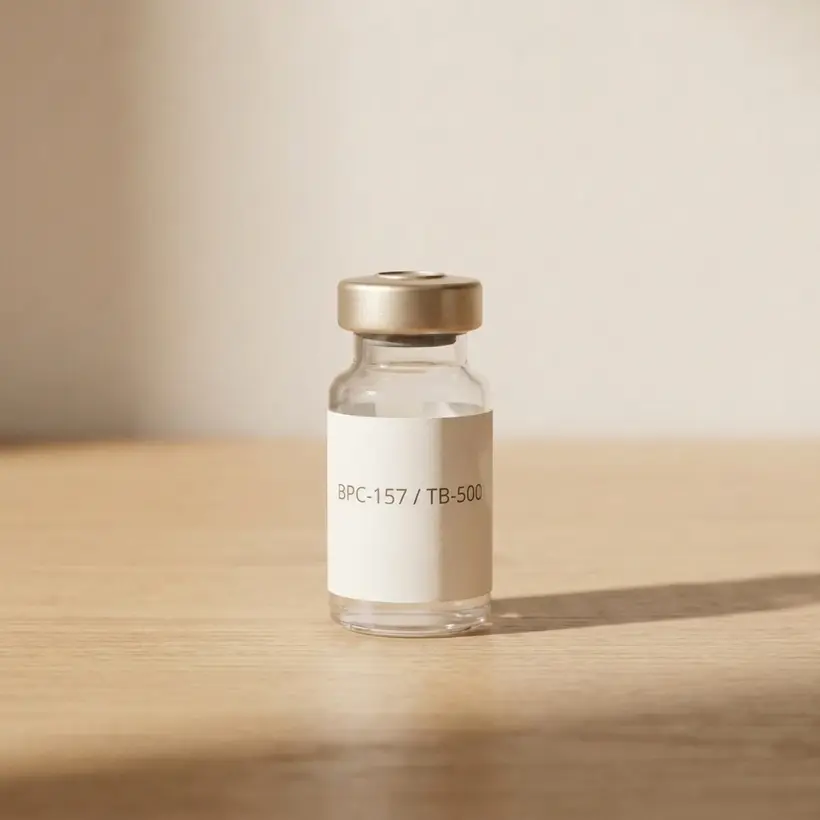
From the FormBlends catalog
BPC-157 / TB-500 Blend
The ultimate recovery stack in one vial · From $249/mo · compounded by a licensed 503A pharmacy, dispensed only after provider review.
View BPC-157 / TB-500 Blend →
Improving TB-4 for Joint Pain
- Combine with BPC-157: The TB-4 + BPC-157 combination is widely considered the gold standard for joint healing. They work through complementary mechanisms
- Physical therapy: Controlled movement and strengthening exercises help organize the new tissue TB-4 is building
- Collagen supplementation: Providing the building blocks (collagen peptides, vitamin C) supports the repair process
- Injection location: Some physicians inject TB-4 near the affected joint for higher local concentrations, though systemic injection (abdomen) is also effective
Frequently Asked Questions
Can TB-4 regrow cartilage?
Cartilage has very limited regenerative capacity. TB-4 can support the repair processes that exist and protect remaining cartilage from further damage. It's more accurate to say TB-4 helps preserve and improve cartilage health rather than fully regenerating lost cartilage.
How long until my joint pain improves?
Most patients notice reduced inflammation and pain within 2 to 4 weeks. Structural improvements in tendons, ligaments, and cartilage continue over 8 to 12 weeks. Some conditions (like frozen shoulder) may take longer.
Is TB-4 better than cortisone for joint pain?
They work differently. Cortisone provides faster pain relief (days) but doesn't repair tissue and can be harmful with repeated use. TB-4 takes longer to produce pain relief (weeks) but promotes actual healing. For acute severe pain, cortisone may be appropriate as a bridge while TB-4 works on repair.
Medical References
- Goldstein AL, Hannappel E, Sosne G, Kleinman HK. Thymosin beta4: a multi-functional regenerative peptide. Basic properties and clinical applications. Expert Opin Biol Ther. 2012;12(1):37-51. [PubMed | DOI]
Get Relief From Joint Pain
At FormBlends, our physicians evaluate your joint condition and design targeted peptide protocols for lasting relief.
Disclaimer: This article is for informational purposes only and doesn't constitute medical advice. Thymosin Beta-4 isn't FDA-approved for any medical condition. Always consult with a licensed healthcare provider. Individual results may vary.
Ready when you are
BPC-157 / TB-500 Blend
The ultimate recovery stack in one vial · From $249/mo · compounded by a licensed 503A pharmacy, dispensed only after provider review.
View BPC-157 / TB-500 Blend →