Key Takeaway
How Thymosin Beta-4 repairs tendons through tendon stem cell activation, collagen organization, and anti-inflammatory effects. Equine and preclinical evidence.
Quick Answer: Thymosin Beta-4 for tendon repair is one of the most promising applications of this peptide. TB-4 promotes tendon stem/progenitor cell migration to injury sites, stimulates organized collagen deposition, reduces inflammation in the tendon microenvironment, and improves the mechanical strength of repaired tissue. Equine studies have demonstrated significantly improved tendon healing quality with TB-4 treatment, and it's widely used in veterinary and human clinical practice for tendinopathy and tendon injuries .
Why Tendons Are Difficult to Heal
Tendons are among the slowest-healing tissues in the body due to several factors:
- Low blood supply: Tendons have limited vascularity, restricting nutrient and oxygen delivery to injured areas
- Low cellularity: Tendons contain relatively few cells (tenocytes) compared to other tissues, limiting repair capacity
- Mechanical demands: Tendons must bear high loads even during healing, which can disrupt repair
- Scar tissue default: Without proper intervention, tendons heal with disorganized scar tissue rather than functional tendon tissue, resulting in weaker repair that's prone to re-injury
TB-4 addresses each of these limitations by promoting cell migration, angiogenesis, and organized collagen formation.
How TB-4 Repairs Tendons
- Tendon stem cell recruitment: TB-4 promotes the migration and activation of tendon-specific stem/progenitor cells, increasing the number of cells available for repair
- Organized collagen deposition: Rather than random scar tissue, TB-4 promotes collagen fibers that align in parallel, mimicking normal tendon architecture. This results in stronger, more functional repair
- Angiogenesis: TB-4 stimulates new blood vessel formation in the healing tendon, overcoming the natural vascular limitation that slows tendon healing
- Inflammation modulation: Chronic tendon inflammation (tendinopathy) perpetuates a cycle of damage and failed repair. TB-4 breaks this cycle by reducing excess inflammation while supporting repair
- Matrix metalloproteinase regulation: TB-4 helps regulate the enzymes that remodel tendon tissue, balancing breakdown and rebuilding
Evidence Base
Equine Research
TB-4 has been extensively studied in horses, which experience tendon injuries similar to human athletes. Studies of superficial digital flexor tendon injuries in racehorses showed TB-4-treated tendons had improved fiber alignment, greater tensile strength, and reduced re-injury rates compared to controls .
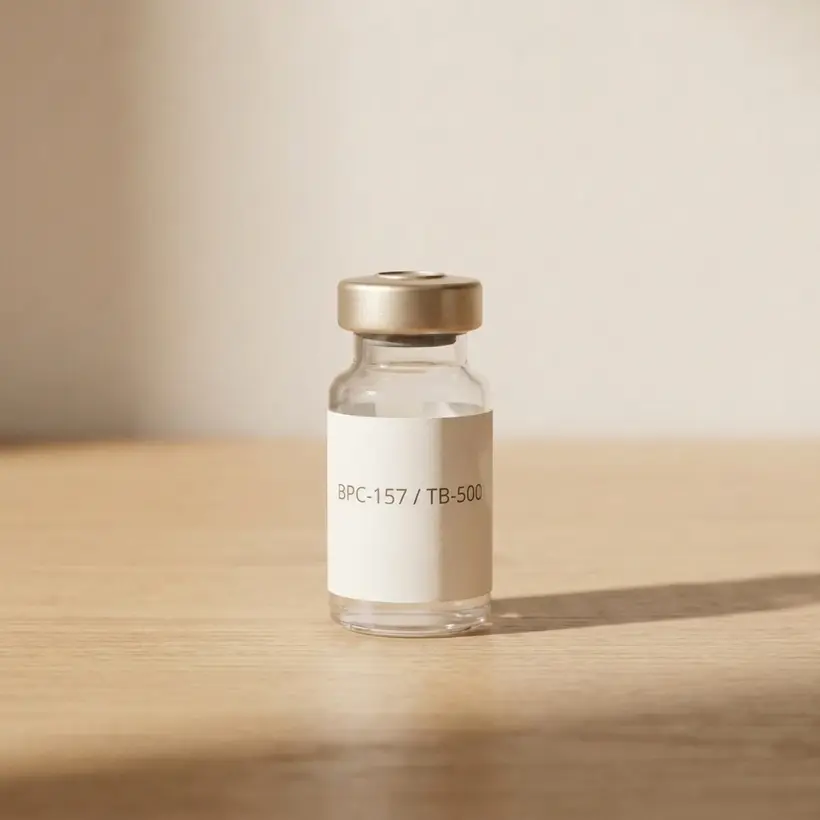
From the FormBlends catalog
BPC-157 / TB-500 Blend
The ultimate recovery stack in one vial · From $249/mo · compounded by a licensed 503A pharmacy, dispensed only after provider review.
View BPC-157 / TB-500 Blend →
Preclinical Models
Laboratory studies demonstrate that TB-4 increases tendon cell proliferation, collagen synthesis, and mechanical strength in healing tendons. When compared to untreated controls, TB-4-treated tendons consistently showed superior healing at 4, 8, and 12-week time points .
Common Tendon Conditions Treated with TB-4
| Condition | Location | Expected Response |
|---|---|---|
| Achilles tendinopathy | Ankle | 4-8 weeks for significant improvement |
| Patellar tendinitis (jumper's knee) | Knee | 4-8 weeks |
| Rotator cuff tendinopathy | Shoulder | 6-10 weeks |
| Tennis elbow (lateral epicondylitis) | Elbow | 4-6 weeks |
| Golfer's elbow (medial epicondylitis) | Elbow | 4-6 weeks |
| Partial tendon tears | Various | 6-12 weeks |
TB-4 + BPC-157 for Tendon Repair
The combination of TB-4 and BPC-157 for tendon repair is widely considered the most effective peptide approach for tendon healing:
- TB-4 contribution: Cell migration, collagen organization, angiogenesis
- BPC-157 contribution: Growth factor upregulation (VEGF, FGF), direct tendon healing
- Combined effect: Addresses tendon healing from multiple angles simultaneously
- No interactions: These peptides work through different pathways with no known conflicts
Frequently Asked Questions
Can TB-4 heal a complete tendon tear?
Complete tendon tears typically require surgical repair. TB-4 can support post-surgical healing by accelerating tissue repair and improving the quality of the healed tendon. For partial tears, TB-4 may promote healing sufficient to avoid surgery in some cases.
How long does tendon repair take with TB-4?
Most patients notice significant improvement within 4 to 8 weeks. Full structural repair continues for 8 to 12 weeks. Chronic tendinopathy may require longer treatment courses or repeated cycles.
Should I rest completely during TB-4 treatment?
No. Tendons require controlled mechanical loading to organize collagen fibers properly. Complete rest leads to weaker repair. Work with a physical therapist on appropriate loading progressions alongside your TB-4 protocol.
Medical References
- Goldstein AL, Hannappel E, Sosne G, Kleinman HK. Thymosin beta4: a multi-functional regenerative peptide. Basic properties and clinical applications. Expert Opin Biol Ther. 2012;12(1):37-51. [PubMed | DOI]
Repair Your Tendons
At FormBlends, our physicians design tendon repair protocols combining the most effective peptides with rehabilitation guidance.
Disclaimer: This article is for informational purposes only and doesn't constitute medical advice. Thymosin Beta-4 isn't FDA-approved for any medical condition. Always consult with a licensed healthcare provider. Individual results may vary.
Ready when you are
BPC-157 / TB-500 Blend
The ultimate recovery stack in one vial · From $249/mo · compounded by a licensed 503A pharmacy, dispensed only after provider review.
View BPC-157 / TB-500 Blend →