Executive Summary
Combining multiple peptides into a single protocol - commonly called "stacking" - can amplify research outcomes when done correctly. But poorly planned stacks waste money, cause receptor burnout, and may introduce genuine safety risks. This guide covers the science behind effective peptide combinations, goal-specific stack recommendations, timing and cycling frameworks, and the combinations you should never run together.
Key Takeaways
- Complementary mechanisms matter most. The best stacks pair peptides that work through different receptors and pathways, not peptides that do the same thing harder.
- Cycling prevents tolerance. Growth hormone secretagogues typically need 4-6 week breaks after 8-12 weeks of use. Healing peptides like BPC-157 generally don't require cycling.
- Never stack same-class GLP-1 agonists. Combining semaglutide with another GLP-1 receptor agonist increases adverse effects without proportional benefit.
- Timing separations are real. Some peptides need to be taken fasted, others with food, and some pairs should be injected at different times of day for best results.
- Blood work is non-negotiable. Any stack involving growth hormone secretagogues, metabolic peptides, or immune modulators requires baseline and follow-up labs. See our peptide blood work monitoring guide for details.
Peptide therapy has evolved considerably over the past decade. Where early adopters might have used a single compound like BPC-157 for tendon repair or ipamorelin for growth hormone optimization, today's protocols frequently involve two, three, or even four peptides running simultaneously. The logic is straightforward: different peptides act through different receptors and signaling pathways, so combining them can produce results that no single compound achieves alone.
But this logic has limits. Some combinations are redundant - two peptides fighting over the same receptor won't give you double the effect. Others are genuinely dangerous when paired with certain medications. And nearly all peptide stacks require careful attention to timing, cycling, and blood work monitoring to remain both effective and safe.
This guide draws on peer-reviewed research, clinical protocols, and practical experience to give you a complete framework for peptide stacking. Whether you're a first-time user considering a simple two-peptide healing stack or an experienced researcher designing a multi-compound longevity protocol, you'll find evidence-based guidance here.
KEY TAKEAWAYS
- Complementary mechanisms matter most. The best stacks pair peptides that work through different receptors and pathways, not peptides that do the same thing harder.
- Cycling prevents tolerance. Growth hormone secretagogues typically need 4-6 week breaks after 8-12 weeks of use. Healing peptides like BPC-157 generally don't require cycling.
- Never stack same-class GLP-1 agonists. Combining semaglutide with another GLP-1 receptor agonist increases adverse effects without proportional benefit.
- Timing separations are real. Some peptides need to be taken fasted, others with food, and some pairs should be injected at different times of day for best results.
- Blood work is non-negotiable. Any stack involving growth hormone secretagogues, metabolic peptides, or immune modulators requires baseline and follow-up labs. See our peptide blood work monitoring guide for details.
Throughout this guide, we'll reference specific products and blends available through FormBlends, including our popular BPC-157/TB-500 blend, individual compounds like CJC-1295/Ipamorelin, and research-grade peptides for various stacking applications. If you're brand new to peptide therapy, start with our beginner's guide to peptide therapy before diving into stacking protocols.
Principles of Peptide Stacking
Effective peptide stacking rests on a few core biological principles. Understanding receptor biology, signaling pathway overlap, and the difference between additive and complementary effects will help you design stacks that actually work - and avoid combinations that cancel each other out or cause problems.
Receptor Biology: Why It Matters for Stacking
Every peptide in your stack works by binding to specific receptors on cell surfaces. These receptors are proteins that trigger intracellular signaling cascades when activated. The critical concept for stacking is this: each receptor type exists in finite numbers on a given cell, and each receptor can only process so many activation signals before it needs to reset.
When you administer a single peptide, it binds to its target receptor, triggers a downstream response, and the receptor eventually recycles back to the cell surface ready for another round. This process works smoothly at normal dosing frequencies. But when you flood the same receptor with two different agonists simultaneously, you get diminishing returns and accelerated desensitization rather than doubled effects.
This is why the golden rule of peptide stacking is: combine peptides that act through different receptor systems. A GHRH analog (like CJC-1295) paired with a ghrelin receptor agonist (like ipamorelin) is the textbook example. They converge on the same outcome - increased growth hormone release - but through entirely separate receptor pathways on pituitary somatotroph cells.
G-Protein Coupled Receptor Dynamics
Most peptide receptors belong to the G-protein coupled receptor (GPCR) superfamily. When a peptide agonist binds to a GPCR, it triggers a conformational change that activates an intracellular G-protein. This G-protein then initiates a signaling cascade - typically involving cyclic AMP, calcium release, or phospholipase C activation - that produces the peptide's biological effects.
The desensitization process follows a predictable sequence. After repeated activation, G-protein coupled receptor kinases (GRKs) phosphorylate the receptor. This phosphorylation recruits beta-arrestin proteins, which physically block the receptor from coupling to its G-protein. The receptor is then internalized via endocytosis - pulled inside the cell into endosomes where it's either recycled back to the surface or degraded in lysosomes.
For stacking purposes, this means two things. First, peptides that share a receptor will accelerate each other's desensitization timeline. Second, spacing out doses and incorporating cycling breaks gives receptors time to recycle and return to the cell surface in an unphosphorylated, fully responsive state.
Receptor Density and Tissue Distribution
Different tissues express different densities of specific receptors, which influences how a peptide stack affects various organs and systems. The pituitary gland, for instance, is rich in both GHRH receptors and growth hormone secretagogue receptors (GHS-R1a, the ghrelin receptor). This dual receptor density is precisely what makes the CJC-1295/ipamorelin combination so effective - both pathways are well-represented in the target tissue.
By contrast, stacking two peptides that primarily affect peripheral tissues with low receptor density for one of the compounds won't produce meaningful combined effect. The peptide has nowhere productive to bind in sufficient quantities to enhance the other compound's effects.
Understanding tissue-specific receptor expression helps you predict which stacks will produce genuine combined effect versus which ones simply add cost without adding benefit. The table below summarizes key receptor distributions relevant to common peptide stacks.
| Receptor Type | Primary Tissue Expression | Key Peptide Agonists | Stacking Considerations |
|---|---|---|---|
| GHRH-R | Anterior pituitary somatotrophs | CJC-1295, sermorelin, tesamorelin | Don't stack two GHRH analogs - receptor competition |
| GHS-R1a (ghrelin receptor) | Pituitary, hypothalamus, GI tract | Ipamorelin, GHRP-2, GHRP-6, hexarelin | Can pair ONE with a GHRH analog for combined effect |
| GLP-1R | Pancreas, brain, GI tract, heart | Semaglutide, liraglutide, exenatide | Never stack multiple GLP-1 agonists together |
| GIP-R | Pancreas, adipose tissue, bone | Tirzepatide (dual GLP-1/GIP) | Tirzepatide already covers both; don't add a GLP-1 |
| Melanocortin receptors | Skin, brain, immune cells | PT-141, melanotan II | Avoid combining - shared MC receptor pathway |
| NO/eNOS pathway | Endothelial cells, GI mucosa | BPC-157 | Complementary with TB-500's actin/VEGF pathway |
Additive vs. Complementary Effects
Understanding the difference between additive and complementary effects is fundamental to designing effective stacks. These two concepts are often confused, but they have very different implications for protocol design.
Additive Effects
Additive effects occur when two peptides produce the same type of outcome through the same general mechanism, and their combined effect roughly equals the sum of their individual effects. For example, running two different GHRH analogs would theoretically be additive - both stimulate GH release through GHRH receptors. In practice, additive stacking is usually wasteful because you hit receptor saturation before you've used up both peptides' potential. You'd get nearly the same GH boost from a properly dosed single GHRH analog at a fraction of the cost.
Complementary Effects
Complementary effects occur when two peptides enhance the same end outcome through different mechanisms. The classic example is CJC-1295 (GHRH pathway) plus ipamorelin (ghrelin pathway). Each compound amplifies GH release through its own receptor system, and the combined pulse is significantly larger than either compound alone would produce. Research on pituitary physiology shows that simultaneous GHRH and GHRP stimulation produces GH pulses that are roughly 2-3 times larger than either stimulus alone - a true complementary effect that exceeds simple addition.[1]
The CJC-1295/Ipamorelin blend available from FormBlends is specifically designed to exploit this complementary mechanism. By combining both peptides at researched ratios, it delivers the complementary GH pulse without the complexity of sourcing and mixing two separate compounds.
Convergent vs. Divergent Stacking
Beyond additive and complementary, it helps to think about stacking strategies in terms of convergent and divergent approaches.
Convergent stacking means all peptides in the stack target the same primary outcome through different pathways. The CJC-1295/ipamorelin stack is convergent - everything points toward GH optimization. Adding MK-677 (an oral ghrelin mimetic) to this stack would be partially convergent (it targets GHS-R1a like ipamorelin) and partially redundant (competing for the same ghrelin receptors).
Divergent stacking means each peptide in the stack targets a different primary outcome. Running BPC-157 for gut healing, CJC-1295/ipamorelin for GH optimization, and thymosin alpha-1 for immune support simultaneously is a divergent stack. Each compound handles a different job, and the potential for receptor competition between them is minimal because they act on completely different cell types and tissues.
Most well-designed advanced protocols use a combination of both approaches: a convergent core (two peptides that synergize on the primary goal) surrounded by divergent additions (peptides that address secondary concerns without interfering with the core stack).
The Hierarchy of Stacking Decisions
When building a peptide stack from scratch, work through these decisions in order:
- Define the primary goal. Fat loss? Tissue healing? Anti-aging? Growth hormone optimization? Immune support? Cognitive enhancement? Your primary goal determines your core peptide(s).
- Select the core compound. Choose the single most effective peptide for your primary goal. This becomes the anchor of your stack.
- Add a complementary partner. If a second peptide can enhance the core compound's effects through a different mechanism, add it. This is where real combined effect lives.
- Consider support compounds. Are there peptides that address side effects of your core stack or support secondary goals without interfering? These are optional additions for experienced users.
- Check for contraindications. Review the contraindicated combinations section of this guide. Also check interactions with any medications you're currently taking.
- Design the timing protocol. Determine when each peptide should be administered relative to meals, sleep, exercise, and each other.
- Plan cycling. Determine on/off periods for each compound based on its receptor pharmacology and desensitization profile.
- Establish monitoring. Decide which blood markers to track and when to check them. Our blood work monitoring guide provides a complete framework.
PRACTICAL TIP
If you're new to peptides, resist the temptation to start with a complex stack. Begin with a single compound for 4-6 weeks to establish your individual response and tolerance. Then add one compound at a time, with at least 2-3 weeks between additions, so you can attribute any changes (positive or negative) to the specific compound you just introduced. Jumping straight into a four-peptide stack makes it nearly impossible to troubleshoot if something goes wrong. Visit our getting started page for first-time guidance.
Pharmacokinetic Considerations
Beyond receptor biology, the pharmacokinetic profiles of your stacked peptides matter enormously. Half-life, absorption rate, and bioavailability all influence how you should time your doses and whether certain peptides can be co-administered or need separation.
Half-Life Matching
Peptides with similar half-lives are generally easier to stack because they can be dosed on the same schedule. CJC-1295 without DAC (modified GRF 1-29) and ipamorelin both have half-lives in the 30-minute range, making them ideal co-injection candidates. By contrast, CJC-1295 with DAC has a half-life of roughly 8 days, meaning it only needs weekly dosing. Pairing it with daily ipamorelin injections requires two separate dosing schedules.
Absorption and Injection Site Considerations
When injecting multiple peptides, you have two options: mix them in the same syringe (if compatible) or inject them at separate sites. Mixing peptides in the same syringe is convenient but carries risks. Some peptides can interact chemically in solution, leading to aggregation, degradation, or reduced potency. As a general rule, don't mix peptides in the same syringe unless the combination has been specifically validated for co-formulation.
Pre-formulated blends like the BPC-157/TB-500 blend have been designed with compatible excipients and pH ranges to maintain both peptides' stability and bioactivity in a single vial. This removes the guesswork from co-administration.
Food and Fasting Interactions
Several peptide classes have specific food-timing requirements that affect stacking logistics:
- Growth hormone secretagogues (CJC-1295, ipamorelin, GHRP-2, GHRP-6): Should be administered on an empty stomach. Elevated blood glucose and insulin blunt the GH response. Wait at least 30-60 minutes after injection before eating, and inject at least 2 hours after your last meal.
- GLP-1 agonists (semaglutide, tirzepatide): Can be administered regardless of food timing, but many users prefer morning dosing to maximize the appetite-suppressive effects throughout the day.
- Healing peptides (BPC-157, TB-500): No strict food-timing requirements. Can be administered with or without food.
- Oral peptides (MK-677): Typically taken before bed. Food timing is less critical, though fasting may enhance absorption.
These differences mean that in a stack combining GH secretagogues with healing peptides, you have flexibility - the healing peptides can be injected at any convenient time while the GH secretagogues are locked into fasted-state administration.
Goal-Specific Stacks
The most effective peptide stacks are built around a specific goal. Rather than combining every promising compound you've read about, focus on one primary objective and select peptides that complement each other in pursuing it. Below are evidence-informed stacks for the six most common peptide therapy goals.
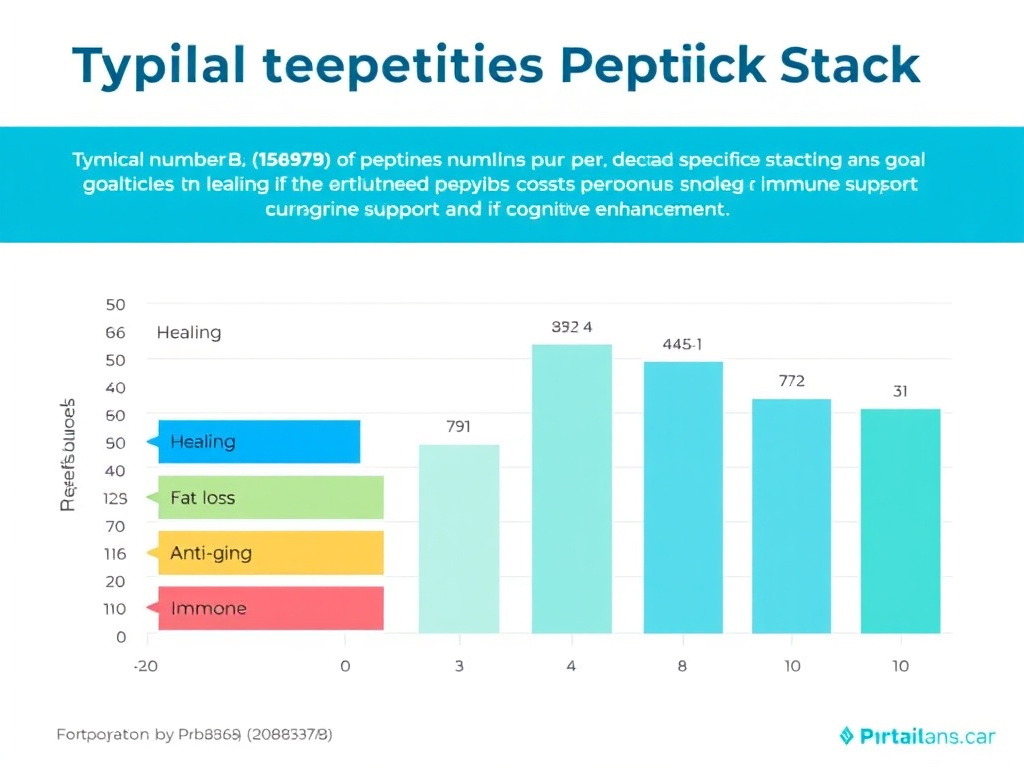
Typical Number of Peptides per Goal-Specific Stack
Stack #1: Growth Hormone Optimization
Growth hormone optimization is the most well-studied application of peptide stacking, and the science behind combining GHRH analogs with ghrelin receptor agonists is firmly established. The pituitary gland's somatotroph cells express both GHRH receptors and GHS-R1a (ghrelin) receptors. Activating both receptor systems simultaneously produces GH pulses substantially larger than either pathway can generate alone.[1]
Core Stack: CJC-1295 + Ipamorelin
This is the foundational GH optimization stack and the one most clinicians start with. CJC-1295 (modified GRF 1-29) is a GHRH analog that stimulates the GHRH receptor on pituitary somatotrophs, promoting GH synthesis and release. Ipamorelin is a selective ghrelin receptor agonist that triggers GH release through the GHS-R1a pathway. Together, they produce amplified GH pulses while maintaining the body's natural pulsatile release pattern.
The CJC-1295/Ipamorelin blend is one of our most popular products precisely because this combination has such strong mechanistic support. Learn more about the research behind this pairing in our CJC/Ipamorelin anti-aging stack research article.
| Component | Mechanism | Typical Research Dose | Timing |
|---|---|---|---|
| CJC-1295 (no DAC) | GHRH receptor agonist | 100-300 mcg/day | Before bed, fasted |
| Ipamorelin | Ghrelin receptor agonist (GHS-R1a) | 100-300 mcg/day | Before bed, fasted |
Why it works: GHRH primes the somatotroph cells to produce and package GH into secretory granules. The ghrelin receptor signal then triggers the actual release of those granules. Think of CJC-1295 as loading the gun and ipamorelin as pulling the trigger. The result is a coordinated, amplified GH pulse that more closely mimics the large nocturnal GH surges seen in younger individuals.
Cycling recommendation: 8-12 weeks on, 4-6 weeks off. Some protocols use a 5-days-on, 2-days-off micro-cycling approach to reduce desensitization risk during the active phase.
Enhanced Stack: CJC-1295 + Ipamorelin + MK-677
Adding MK-677 (ibutamoren) to the base CJC-1295/ipamorelin stack provides a third angle of GH support. MK-677 is an oral ghrelin mimetic with a much longer half-life than injectable ghrelin receptor agonists. While it does act through the same GHS-R1a receptor as ipamorelin, its oral bioavailability and extended duration of action provide a sustained baseline of ghrelin receptor stimulation that the short-acting ipamorelin pulses amplify.
However, there's an important caveat. Because MK-677 and ipamorelin share the ghrelin receptor, running both at full dose accelerates receptor desensitization. If you add MK-677 to a CJC-1295/ipamorelin stack, reduce the ipamorelin dose by roughly 30-50% and consider cycling MK-677 on a different schedule than the injectable pair.
| Component | Mechanism | Typical Research Dose | Timing |
|---|---|---|---|
| CJC-1295 (no DAC) | GHRH receptor agonist | 100-200 mcg/day | Before bed, fasted |
| Ipamorelin | Ghrelin receptor agonist | 100-150 mcg/day (reduced) | Before bed, fasted |
| MK-677 | Oral ghrelin mimetic (long-acting) | 10-25 mg/day | Before bed, oral |
CAUTION
MK-677 can elevate fasting blood glucose and insulin levels through its ghrelin-mimetic activity. If you add MK-677 to any stack, monitor fasting glucose regularly and be aware of increased appetite - an expected ghrelin pathway effect. Individuals with insulin resistance or pre-diabetes should approach MK-677 with extra caution and discuss it with their healthcare provider.
Stack #2: Healing and Recovery
The healing and recovery stack is arguably the best-supported peptide combination from a mechanistic standpoint. BPC-157 and TB-500 work through entirely separate pathways that converge on tissue repair outcomes, making them a textbook example of complementary stacking.
Core Stack: BPC-157 + TB-500 (The "Wolverine Stack")
BPC-157 is a pentadecapeptide derived from human gastric juice that promotes tissue repair through multiple mechanisms. It activates the Akt-eNOS pathway to increase nitric oxide production, upregulates VEGF for angiogenesis, stimulates growth factors including EGF and FGF, and modulates the nitric oxide system bidirectionally depending on tissue needs.[2]
TB-500 (thymosin beta-4) promotes healing through a different set of mechanisms. It sequesters G-actin monomers to regulate actin polymerization, which is critical for cell migration to injury sites. TB-500 also promotes angiogenesis through VEGF-dependent pathways and has anti-inflammatory properties through modulation of NF-kB signaling.[3]
The beauty of this combination is that BPC-157's NO-mediated vasodilation provides acute blood flow to injured tissue while TB-500's VEGF-driven angiogenesis builds new capillary networks for sustained vascular support. One handles the immediate response; the other builds the infrastructure for long-term repair.
| Component | Primary Mechanism | Typical Research Dose | Administration |
|---|---|---|---|
| BPC-157 | NO/eNOS pathway, VEGF, growth factor upregulation | 250-500 mcg/day | Subcutaneous near injury site, or systemic |
| TB-500 | Actin regulation, cell migration, VEGF angiogenesis | 2-5 mg twice weekly (loading), 2 mg weekly (maintenance) | Subcutaneous, any site (systemic distribution) |
FormBlends offers a convenient BPC-157/TB-500 blend that combines both peptides in a single vial at researched ratios. This eliminates the need for separate reconstitution and multiple injections while ensuring chemical compatibility between the two compounds.
Cycling recommendation: Healing peptides generally don't require strict cycling in the same way GH secretagogues do. BPC-157 and TB-500 don't act through GPCRs susceptible to beta-arrestin-mediated desensitization. Most protocols run 6-12 weeks depending on injury severity, with no mandatory off period. However, if running extended protocols beyond 12 weeks, a 2-4 week break allows you to reassess progress and determine whether continued use is warranted.
Enhanced Healing Stack: BPC-157 + TB-500 + GHK-Cu
For more comprehensive tissue repair - especially when skin, connective tissue, or surgical wound healing is involved - adding GHK-Cu to the BPC-157/TB-500 base provides a third complementary mechanism. GHK-Cu is a copper-binding tripeptide that stimulates collagen synthesis, attracts immune cells to repair sites, and has demonstrated anti-fibrotic properties that may help injuries heal with less scar tissue.[4]
The three-peptide healing stack covers vasodilation (BPC-157), vascular construction (TB-500), and matrix remodeling (GHK-Cu) - essentially addressing every major phase of tissue repair through independent pathways.
| Component | Healing Phase Addressed | Typical Research Dose | Timing |
|---|---|---|---|
| BPC-157 | Inflammation modulation, vasodilation | 250-500 mcg/day | Once or twice daily |
| TB-500 | Cell migration, new vessel formation | 2-5 mg twice weekly | 2-3x per week |
| GHK-Cu | Collagen synthesis, matrix remodeling | 1-3 mg/day (injection) or topical | Daily or every other day |
CLINICAL NOTE
GHK-Cu requires adequate copper levels to function properly. Individuals with copper metabolism disorders (such as Wilson's disease) should not use GHK-Cu. It's also worth noting that GHK-Cu has both injectable and topical formulations. For deep tissue injuries, injectable administration provides systemic distribution. For skin-level healing and cosmetic applications, topical GHK-Cu can be effective and less invasive.
Stack #3: Fat Loss and Body Composition
Fat loss peptide stacks require careful design because several of the most effective fat-loss peptides carry significant interactions with diabetes medications and each other. The key principle here is to combine appetite-regulating peptides with lipolysis-promoting peptides through non-overlapping receptor systems.
Core Stack: Semaglutide + Tesamorelin
Semaglutide is a GLP-1 receptor agonist that reduces appetite through central nervous system effects on satiety centers, slows gastric emptying to prolong feelings of fullness, and improves insulin sensitivity. It's the most clinically validated weight loss peptide available, with large-scale trials demonstrating 15-17% average body weight reduction over 68 weeks.[5]
Tesamorelin is a GHRH analog specifically studied for visceral fat reduction. Unlike general GH secretagogues, tesamorelin has direct FDA approval for reduction of excess abdominal fat in HIV-associated lipodystrophy, making it one of the few peptides with strong clinical evidence for a fat-loss application. Its mechanism differs completely from semaglutide - it works by stimulating GH release, which in turn promotes lipolysis (fat breakdown) in visceral adipose tissue.[6]
This combination works because semaglutide reduces caloric intake through appetite suppression while tesamorelin actively mobilizes stored visceral fat through GH-mediated lipolysis. They attack fat stores from two different angles without overlapping receptor systems.
| Component | Mechanism | Typical Research Dose | Administration |
|---|---|---|---|
| Semaglutide | GLP-1 receptor agonist (appetite, insulin sensitivity) | 0.25-2.4 mg/week (titrated) | Weekly subcutaneous injection |
| Tesamorelin | GHRH analog (visceral fat lipolysis via GH) | 1-2 mg/day | Daily subcutaneous, fasted |
Cycling recommendation: Semaglutide is typically run continuously under medical supervision, with dose titration as needed. Tesamorelin should be cycled using standard GH secretagogue protocols - 8-12 weeks on, 4-6 weeks off - to prevent GHRH receptor desensitization.
Alternative Fat Loss Stack: Tirzepatide Monotherapy
It's worth noting that tirzepatide represents a "stack in a molecule" - it's a dual GLP-1/GIP receptor agonist that covers two complementary metabolic pathways in a single injection. Clinical trials have shown weight loss of 20-25% of body weight, exceeding even semaglutide's results.[7] For many individuals, tirzepatide monotherapy may be more effective (and simpler) than a multi-peptide fat loss stack.
If using tirzepatide, do not add semaglutide or any other GLP-1 agonist. Tirzepatide already provides GLP-1 receptor stimulation. Adding more would increase GI side effects without meaningful additional benefit.
CRITICAL SAFETY NOTE
Never combine two GLP-1 receptor agonists (e.g., semaglutide + liraglutide, or semaglutide + tirzepatide). This increases the risk of severe nausea, vomiting, pancreatitis, and hypoglycemia without providing proportional additional weight loss. If you're taking insulin or sulfonylureas for diabetes, any GLP-1 agonist requires careful dose adjustment under physician supervision to avoid dangerous hypoglycemia.
Non-GLP-1 Fat Loss Stack: AOD-9604 + 5-Amino-1MQ
For individuals who can't tolerate GLP-1 agonists or prefer a non-appetite-suppressive approach, a combination of AOD-9604 (a fragment of human growth hormone that promotes lipolysis without the full hormonal effects of GH) and 5-Amino-1MQ (an NNMT inhibitor that boosts cellular energy metabolism and NAD+ levels) offers a different approach to fat loss. This stack targets fat metabolism directly rather than working through appetite suppression.
Stack #4: Anti-Aging and Longevity
Anti-aging peptide stacks aim to address multiple hallmarks of aging simultaneously: telomere shortening, mitochondrial decline, extracellular matrix degradation, and declining hormone levels. Because aging is a multi-system process, anti-aging stacks tend to be more divergent in design, with each peptide handling a different aspect of cellular and systemic aging.
Core Stack: Epithalon + GHK-Cu + NAD+
Epithalon (epitalon) is a tetrapeptide that activates telomerase, the enzyme responsible for maintaining telomere length on chromosomes. Telomere shortening is one of the primary drivers of cellular senescence, and epithalon's ability to reactivate telomerase in human somatic cells has been demonstrated in cell culture and animal studies.[8]
GHK-Cu addresses extracellular matrix aging by stimulating collagen and elastin production, promoting wound healing, and resetting gene expression patterns toward a younger profile. Gene array studies have shown that GHK-Cu can upregulate genes associated with tissue repair and stem cell function while downregulating genes associated with inflammation and tissue destruction.[4]
NAD+ supplementation addresses the mitochondrial decline that accompanies aging. NAD+ levels decrease by roughly 50% between ages 40 and 60 in many tissues. Since NAD+ is essential for mitochondrial electron transport chain function, sirtuin activity, and DNA repair enzyme activity, restoring NAD+ levels supports cellular energy production and genomic stability.[9]
| Component | Aging Hallmark Addressed | Typical Research Protocol | Cycling |
|---|---|---|---|
| Epithalon | Telomere shortening | 10 mg/day for 10 days, repeated every 4-6 months | 10-day bursts, 2-3x per year |
| GHK-Cu | ECM degradation, gene expression | 1-2 mg injection 3x/week | 8-12 weeks on, 4 weeks off |
| NAD+ | Mitochondrial decline, sirtuin activity | 250 mg 2x/week (loading), then weekly | Loading phase 4 weeks, then continuous maintenance |
This three-compound stack hits three of the nine recognized hallmarks of aging through completely independent mechanisms. Epithalon works at the chromosomal level (telomeres), GHK-Cu works at the tissue level (extracellular matrix), and NAD+ works at the cellular energy level (mitochondria). There's no receptor competition or pathway overlap between them.
Enhanced Anti-Aging Stack: Add CJC-1295/Ipamorelin
Growth hormone levels decline progressively with age - a phenomenon sometimes called somatopause. Adding a CJC-1295/Ipamorelin combination to the epithalon/GHK-Cu/NAD+ base addresses hormone-level aging alongside the cellular-level interventions. This brings the stack to four active compounds, which is about the practical upper limit for most individuals. Read our detailed analysis in the CJC/Ipamorelin anti-aging research article.
Stack #5: Immune Optimization
Immune-focused peptide stacks center on thymosin alpha-1 (TA-1), a naturally occurring thymic peptide that modulates both innate and adaptive immune responses. TA-1 has a long clinical history, including approved use in several countries for hepatitis B and C treatment and as an immune adjuvant.[10]
Core Stack: Thymosin Alpha-1 + BPC-157
Thymosin alpha-1 enhances T-cell maturation, promotes dendritic cell differentiation, and modulates cytokine production to balance immune responses. It's particularly useful for individuals with chronic infections, autoimmune conditions (under medical supervision), or age-related immune decline (immunosenescence). Our TA-1 immune optimization article covers the research in detail.
Adding BPC-157 to a TA-1 stack provides gut-immune support. Given that roughly 70% of the immune system resides in gut-associated lymphoid tissue, BPC-157's gastroprotective and gut-healing properties complement TA-1's direct immune modulation. BPC-157 helps maintain the integrity of the intestinal barrier, which is a critical first line of immune defense.
| Component | Immune Function | Typical Research Dose | Administration |
|---|---|---|---|
| Thymosin Alpha-1 | T-cell maturation, dendritic cell activation, cytokine modulation | 1.6 mg 2-3x/week | Subcutaneous |
| BPC-157 | Gut barrier integrity, anti-inflammatory | 250-500 mcg/day | Subcutaneous or oral |
Cycling recommendation: TA-1 is typically run in 8-12 week courses with 4-week breaks, though some clinical protocols use continuous low-dose administration for chronic conditions. BPC-157 doesn't require strict cycling as noted earlier.
Stack #6: Cognitive Enhancement
Cognitive peptide stacks primarily use Selank and Semax, two Russian-developed neuropeptides with distinct but complementary mechanisms of action.
Core Stack: Selank + Semax
Semax is a synthetic analog of ACTH(4-10) that enhances BDNF (brain-derived neurotrophic factor) expression, promotes neuroplasticity, and supports focus and cognitive processing. It works primarily through modulation of serotonergic and dopaminergic systems and has demonstrated neuroprotective properties in ischemia models.[11]
Selank is a synthetic analog of the endogenous tetrapeptide tuftsin that provides anxiolytic (anti-anxiety) effects, stabilizes mood, and supports immune function. It modulates GABAergic neurotransmission and has been shown to influence enkephalin metabolism.[12]
The combination addresses cognitive enhancement from two angles: Semax provides the activating, focus-enhancing component while Selank provides stress reduction and emotional stability. For many users, the calming effect of Selank removes anxiety-driven cognitive interference, allowing the focus-enhancing effects of Semax to be more fully expressed.
| Component | Cognitive Function | Typical Research Dose | Administration |
|---|---|---|---|
| Semax | BDNF upregulation, focus, neuroplasticity | 200-600 mcg/day | Intranasal spray |
| Selank | Anxiolytic, GABAergic modulation, mood stabilization | 200-400 mcg/day | Intranasal spray |
Both peptides are administered intranasally, which provides rapid absorption across the nasal mucosa and direct access to the central nervous system. This bypasses the blood-brain barrier, which would otherwise limit the entry of these peptides into brain tissue.
Cycling recommendation: Selank and Semax are typically run for 14-21 day courses with 1-2 week breaks. Some protocols alternate between the two rather than running them simultaneously - for example, 2 weeks of Semax followed by 2 weeks of Selank, repeated. This approach may reduce adaptation to either compound's neuromodulatory effects.
PRACTICAL TIP
If you're new to nootropic peptides, start with Selank alone for 2 weeks before adding Semax. Selank's anxiolytic effects are generally well-tolerated and provide a stable baseline from which to evaluate Semax's more activating cognitive effects. Some individuals find Semax overstimulating if they have underlying anxiety; starting with Selank addresses this potential issue first.
Combined effect vs Redundancy
One of the most expensive mistakes in peptide stacking is confusing redundancy with combined effect. Running two peptides that compete for the same receptor doesn't give you double the results - it gives you receptor saturation, accelerated desensitization, and wasted money. This section breaks down how to identify genuine combined effect and avoid the redundancy trap.
True Combined effect: When 1+1 > 2
Pharmacological combined effect occurs when two compounds produce a combined effect that exceeds the sum of their individual effects. In peptide stacking, this happens most reliably when two conditions are met simultaneously: the peptides bind to different receptor types on the same target cell, and those receptor pathways converge on a shared downstream effector.
The GHRH + GHRP combined effect at the pituitary somatotroph is the clearest documented example. When the GHRH receptor pathway (cAMP/PKA signaling) is activated at the same time as the GHS-R1a pathway (IP3/DAG/calcium signaling), the calcium flux that triggers GH granule exocytosis is dramatically amplified compared to either signal alone. Studies measuring GH release from pituitary cell cultures have shown that simultaneous GHRH and GHRP stimulation produces responses 2-3 times greater than the arithmetic sum of each stimulus applied separately.[1]
Other examples of genuine peptide combined effect include:
- BPC-157 + TB-500 for healing: BPC-157's nitric oxide-mediated vasodilation improves acute blood flow to injury sites while TB-500's actin-mediated cell migration brings repair cells to those same sites. The combined effect - more blood flow delivering more repair cells - produces faster healing than either peptide alone.
- Semaglutide + Tesamorelin for fat loss: Semaglutide reduces caloric intake through appetite suppression (GLP-1R pathway) while tesamorelin actively mobilizes visceral fat through GH-driven lipolysis (GHRH-R pathway). One reduces energy input; the other increases energy expenditure from fat stores.
- Epithalon + NAD+ for longevity: Epithalon maintains telomere length to prevent replicative senescence while NAD+ supports the sirtuin enzymes (SIRT1, SIRT3) that protect against metabolic and oxidative aging. These address different hallmarks of aging through independent molecular pathways.
Redundancy: When 1+1 = 1.2
Redundant stacking occurs when two peptides compete for the same receptor binding site. Because receptors have a finite number of binding sites, once the primary compound has occupied most available receptors, the second compound has few productive places to bind. The small additional effect you do get is far less than what the second compound would achieve if used alone against fresh, unoccupied receptors.
Common redundant combinations to avoid:
| Redundant Pair | Shared Receptor/Pathway | Why It's Wasteful | Better Alternative |
|---|---|---|---|
| Sermorelin + CJC-1295 | Both are GHRH receptor agonists | Compete for the same pituitary GHRH receptors; accelerated desensitization | Use one GHRH analog + ipamorelin instead |
| GHRP-2 + GHRP-6 + Ipamorelin | All target GHS-R1a (ghrelin receptor) | Triple-loading the same receptor; diminishing returns after the first compound | Pick one GHRP and pair with a GHRH analog |
| Semaglutide + Liraglutide | Both are GLP-1 receptor agonists | Increased GI side effects without proportional benefit; potential safety risk | Use one GLP-1 agonist, or switch to tirzepatide for dual action |
| Semaglutide + Tirzepatide | Tirzepatide already covers GLP-1R | Adding more GLP-1 stimulation to a dual agonist that already includes it | Use tirzepatide alone - it covers GLP-1R + GIP-R |
| MK-677 + Ipamorelin (full dose both) | Both target GHS-R1a | Partial redundancy; dose reduction needed for the injectable | Reduce ipamorelin dose by 30-50% when adding MK-677 |
| Melanotan II + PT-141 (full dose both) | Both are melanocortin receptor agonists | MT-II already provides MC receptor stimulation including MC3R/MC4R | Use one or the other based on primary goal (tanning vs. sexual function) |
Partial Redundancy: The Gray Zone
Some combinations fall into a gray zone where there is partial receptor overlap but also some unique contributions from each compound. The MK-677 + ipamorelin example above illustrates this: both bind GHS-R1a, but MK-677's oral bioavailability and 24-hour half-life provide sustained baseline stimulation that ipamorelin's short half-life can't match. The combination isn't entirely redundant, but it does require dose adjustment to account for the shared receptor pathway.
Another gray zone example is GHRP-2 paired with ipamorelin. Both bind GHS-R1a, but GHRP-2 has additional effects on cortisol and prolactin that ipamorelin lacks (due to ipamorelin's higher receptor selectivity). Some researchers use GHRP-2 specifically for its broader hormonal effects, in which case the combination with ipamorelin would be partially redundant at the GH-release level but additive for GHRP-2's secondary effects.
The general rule for partially redundant combinations: if you choose to run them together, reduce the dose of the compound with the narrower effect profile (usually ipamorelin in these examples) to avoid overwhelming the shared receptor system.
The Cost-Benefit Framework
Beyond the biology, redundancy has a financial dimension. Every peptide in your stack costs money - for the compound itself, for bacteriostatic water, for syringes, and for the blood work needed to monitor the stack's effects. A redundant compound adds cost at every level while delivering minimal incremental benefit.
Use this simple framework when evaluating whether to add another peptide to your stack:
- Does the new peptide use a different receptor/pathway than existing stack components? If yes, proceed. If no, reconsider.
- Does it address a gap in the current stack's coverage? If your healing stack covers vasodilation and cell migration but not collagen synthesis, GHK-Cu fills a genuine gap. If it just adds "more healing" through the same pathways, it's redundant.
- Is the expected marginal benefit worth the added cost and complexity? Sometimes a second peptide provides real but small additional benefit. Is that 10-15% improvement worth doubling your injection frequency and supply costs? For some goals, absolutely. For others, simplicity wins.
- Can you monitor the additional compound's effects? If you add a fourth peptide but have no blood markers or clinical endpoints to track its specific contribution, you can't determine whether it's actually helping. Any compound you can't monitor is a compound whose value you're guessing at.
Use our peptide calculator to estimate costs for various stack configurations and compare them against expected benefits based on the research literature.
KEY PRINCIPLE
The best stack isn't the one with the most peptides. It's the one where every compound earns its spot by contributing something unique that no other component provides. A well-designed two-peptide stack will outperform a sloppy five-peptide stack every time, both in results and cost-efficiency.
Timing and Scheduling
When you take each peptide in your stack matters almost as much as which peptides you choose. Food timing, circadian alignment, exercise proximity, and the temporal spacing between different injections can all significantly influence your results. This section provides detailed scheduling frameworks for every major stack type.
The Fasting Requirement for GH Secretagogues
Growth hormone secretagogues are the most timing-sensitive peptide class. Elevated blood glucose and insulin directly suppress GH release from the pituitary, even when GHRH and ghrelin receptors are being stimulated. This means that taking CJC-1295, ipamorelin, GHRP-2, GHRP-6, or any similar compound after a meal dramatically blunts the GH response you're paying for.
The practical requirements are straightforward:
- Pre-injection fast: Wait at least 2 hours after your last meal before injecting any GH secretagogue. Some protocols recommend 3 hours for optimal results. High-carbohydrate meals require longer fasting windows because they produce larger insulin spikes.
- Post-injection fast: Wait at least 30 minutes after injection before eating. Ideally, extend this to 60 minutes to allow the full GH pulse to develop unimpaired.
- Avoid high-glycemic foods around injection times: Even if you technically observe the 2-hour/30-minute windows, eating a high-sugar meal 2 hours before injection leaves residual insulin levels that may still blunt GH release. Protein and fat-based meals clear faster from a glycemic perspective.
For most people, the easiest way to meet these requirements is to inject GH secretagogues at bedtime. You've naturally been fasting for 2-3 hours since dinner (assuming a reasonable meal schedule), and you won't eat again until morning. This timing also aligns with the body's natural nocturnal GH release pattern, which peaks during the first few hours of deep sleep.
Circadian Alignment
The body's hormonal output follows circadian rhythms, and aligning peptide administration with these rhythms can enhance effectiveness.
Morning Peptides (AM Dosing)
- GLP-1 agonists (semaglutide, tirzepatide): While these can be injected at any time, morning dosing maximizes appetite suppression during waking hours when food temptation is highest. The weekly injection for semaglutide doesn't need to be precisely timed to a specific hour, but many users find a consistent day and time helps with adherence.
- Semax: The focus-enhancing effects of Semax are best suited to morning or early-afternoon use. Intranasal administration produces effects within 15-30 minutes that last 3-6 hours. Dosing in the morning provides cognitive support through the most demanding part of the workday.
- BPC-157 (first dose, if splitting): If using twice-daily BPC-157 dosing for healing, the morning dose provides daytime coverage during physical activity when injured tissues are under mechanical stress.
Evening/Bedtime Peptides (PM Dosing)
- CJC-1295 + Ipamorelin: Bedtime administration aligns with natural nocturnal GH secretion and the fasting state. This is the most evidence-supported timing for GH secretagogues.
- MK-677: Evening dosing reduces awareness of increased appetite (a common side effect) and aligns the GH-release peak with sleep. Some individuals report improved sleep quality with evening MK-677 dosing.
- Selank: The anxiolytic properties of Selank pair well with evening use if anxiety or stress interfere with sleep quality. However, Selank doesn't cause drowsiness, so morning use is also appropriate for daytime anxiety management.
- Epithalon: Often administered in the evening during its 10-day protocol cycles. Timing is less critical than consistency during the brief treatment period.
- BPC-157 (second dose, if splitting): Evening dose provides overnight healing coverage during the body's natural repair period.
Exercise-Dependent Timing
- Pre-workout (30-60 minutes before): Some protocols administer GH secretagogues pre-workout to enhance the exercise-induced GH pulse. This requires the pre-workout injection to be done in a fasted state, which limits it to morning fasted training. The peptide-driven GH pulse stacks on top of the exercise-induced pulse for a larger combined response.
- Post-workout: TB-500 and BPC-157 can be administered post-workout to support recovery from training-induced tissue damage. The post-exercise inflammatory response creates a signaling environment that may enhance these peptides' repair activities.
- Non-training days: GH secretagogues should still be administered on rest days. The recovery and growth processes they support continue 24/7, not just during training sessions.
Spacing Multiple Injections
When your stack requires multiple injections per day, spacing them out reduces injection-site irritation and potential for peptide interactions at the subcutaneous level. Some general guidelines:
| Scenario | Recommended Approach | Rationale |
|---|---|---|
| CJC-1295 + Ipamorelin (same timing) | Can be co-injected if using a validated blend; otherwise separate sites | Same timing requirement (fasted, bedtime); pre-mixed blends ensure compatibility |
| BPC-157 + TB-500 (same day) | Can use the pre-mixed blend, or separate sites | No specific timing conflicts; blend simplifies administration |
| GH secretagogue + healing peptide (same day) | Separate times: GH secretagogue at bedtime (fasted), healing peptide any time | Avoids interference with GH secretagogue's fasting requirement |
| Weekly semaglutide + daily peptides | Semaglutide on its own day/site; daily peptides continue normally | Semaglutide's weekly dosing doesn't interact with daily peptides |
| Intranasal peptides + injectable peptides | No spacing needed - different routes of administration | Intranasal and subcutaneous routes don't interact locally |
Sample Daily Schedules
Below are three sample daily schedules for common stack configurations. Adjust these based on your personal meal timing, work schedule, and training windows.
Schedule A: GH Optimization + Healing Stack
| Time | Action | Notes |
|---|---|---|
| 7:00 AM | BPC-157 250 mcg (subcutaneous) | Can be with or without food |
| 7:30 AM | Breakfast | Normal meal |
| 12:00 PM | Lunch | Normal meal |
| 3:00 PM | TB-500 2.5 mg (on dosing days, 2x/week) | Any convenient time |
| 6:30 PM | Dinner | Last meal of the day |
| 9:30 PM | BPC-157 250 mcg (subcutaneous) | Optional second daily dose |
| 10:00 PM | CJC-1295/Ipamorelin injection (fasted) | 3+ hours after dinner |
| 10:30 PM | Sleep | Don't eat after GH secretagogue injection |
Schedule B: Fat Loss + Anti-Aging Stack
| Time | Action | Notes |
|---|---|---|
| 7:00 AM | Tesamorelin 2 mg (fasted, on cycle days) | Must be fasted; GH secretagogue rules apply |
| 7:45 AM | Breakfast (30-60 min post-injection) | Wait for GH pulse to develop |
| 8:00 AM | NAD+ 250 mg (on dosing days, 2x/week) | Can coincide with breakfast |
| 12:00 PM | GHK-Cu 1.5 mg (on dosing days, 3x/week) | Midday injection; no food restrictions |
| Saturday AM | Semaglutide weekly injection | Consistent day each week; morning preferred |
| 10:00 PM | Epithalon 10 mg (during 10-day protocol) | Only during active epithalon cycles (2-3x/year) |
Schedule C: Cognitive + Immune Stack
| Time | Action | Notes |
|---|---|---|
| 7:30 AM | Semax 300 mcg (intranasal) | Morning for focus effects during the workday |
| 8:00 AM | BPC-157 500 mcg (oral or subcutaneous) | Gut-immune support |
| 12:00 PM | Semax 200 mcg (intranasal, optional booster) | If afternoon focus boost is needed |
| 3:00 PM | TA-1 1.6 mg (on dosing days, 2-3x/week) | Afternoon timing; no food restrictions |
| 8:00 PM | Selank 300 mcg (intranasal) | Evening for anxiety/stress reduction and sleep support |
CLINICAL NOTE
These schedules are frameworks, not rigid prescriptions. The most important timing factor is consistency - injecting at roughly the same times each day. Your body's receptor expression and hormonal rhythms adapt to consistent stimulus patterns, and erratic timing can produce unpredictable responses. If you can't follow the exact schedule on a particular day, maintaining the relative order (healing peptide morning, GH secretagogue bedtime) matters more than hitting the exact hour.
Cycling Protocols
Cycling - alternating between periods of active use and rest periods - is essential for peptides that act through G-protein coupled receptors susceptible to desensitization. This section covers the biological basis for cycling, specific on/off ratios for each peptide class, and strategies for maintaining effectiveness across multiple cycles.
Why Cycling Matters: The Desensitization Problem
When you continuously stimulate a GPCR with an agonist, the cell protects itself through a multi-step process. First, G-protein coupled receptor kinases (GRKs) phosphorylate the activated receptor at its intracellular tail. This phosphorylation creates a binding site for beta-arrestin proteins, which dock onto the receptor and physically block its interaction with its G-protein. The receptor-beta-arrestin complex is then internalized via clathrin-coated pits, pulling it off the cell surface and into endosomes.
Once internalized, the receptor faces one of two fates: recycling back to the cell surface (which takes hours to days) or lysosomal degradation (which removes the receptor permanently, requiring new protein synthesis to replace it). The more intensely and continuously a receptor is stimulated, the higher the proportion that gets degraded rather than recycled.
This is why you notice diminishing returns after 8-12 weeks of continuous GH secretagogue use. It's not that the peptide "stopped working" - it's that you've internalized and degraded enough receptors that there simply aren't enough remaining on the cell surface to produce a meaningful response. The off period gives cells time to synthesize new receptors and return them to the cell surface in their unphosphorylated, fully responsive state.
Cycling Recommendations by Peptide Class
Class 1: GH Secretagogues (High Cycling Need)
This class includes CJC-1295 (with and without DAC), sermorelin, tesamorelin, ipamorelin, GHRP-2, GHRP-6, hexarelin, and MK-677. All act through GPCRs (GHRH-R or GHS-R1a) with well-documented desensitization profiles.
| Cycling Approach | On Period | Off Period | Best For |
|---|---|---|---|
| Standard Block Cycling | 8-12 weeks | 4-6 weeks | Most users; proven receptor recovery time |
| Extended Block Cycling | 12-16 weeks | 6-8 weeks | Advanced users with blood work confirmation of GH/IGF-1 response |
| Micro-Cycling (within active phase) | 5 days on / 2 days off | Standard block off-period still applies | Reducing desensitization rate during active phase |
| Alternating Compound Rotation | 8 weeks compound A, then 8 weeks compound B | 4 weeks off between rotations | Long-term GH optimization across multiple cycles |
The micro-cycling strategy is worth special attention. Instead of running your GH secretagogues 7 days a week during the active phase, you dose for 5 consecutive days and take 2 days off (typically weekends). This regular brief break appears to slow the rate of receptor desensitization without significantly reducing cumulative GH exposure. Some researchers report that 5-on/2-off protocols can extend effective use from 8 weeks to 12-14 weeks before requiring a full off-cycle.
The rotation strategy uses different receptor subtypes across cycles. For example, you might run CJC-1295 + ipamorelin for 8-12 weeks, take 4 weeks off, then switch to a sermorelin + GHRP-2 combination for the next cycle. While both cycles target GH release, the different receptor binding characteristics and signaling dynamics of each compound pair provide a degree of receptor pathway variation that may reduce long-term adaptation.
WARNING: HEXARELIN DESENSITIZATION
Hexarelin deserves special mention because it produces the fastest and most severe desensitization of any common GH secretagogue. Its strong binding affinity for GHS-R1a drives rapid receptor internalization, and most users report significant response decline within 4-6 weeks - sometimes sooner. If including hexarelin in a GH stack, limit active use to 4-6 weeks maximum and consider an off period of at least 4-6 weeks before any GHRP-class compound.
Class 2: GLP-1 Receptor Agonists (Low Cycling Need)
Semaglutide, tirzepatide, liraglutide, and other GLP-1 agonists are typically run continuously under medical supervision. While the GLP-1 receptor is technically a GPCR susceptible to desensitization, clinical trial data spanning 2+ years of continuous use show sustained efficacy for weight management and glycemic control. The dose-titration approach used in clinical protocols may help mitigate receptor adaptation - by gradually increasing the dose over weeks, the receptor system has time to partially adapt without complete desensitization.
That said, some practitioners recommend periodic dose reductions ("step-down weeks") where the dose is reduced by 25-50% for 1-2 weeks before returning to the maintenance dose. This pulsatile dosing approach may help maintain receptor sensitivity during extended use. It's a theoretical framework rather than one validated by controlled trials, but the biological rationale is sound.
For detailed information on GLP-1 agonist protocols, see our comprehensive guides to semaglutide and tirzepatide.
Class 3: Healing Peptides (Minimal Cycling Need)
BPC-157 and TB-500 don't act primarily through GPCRs in the classical desensitization sense. BPC-157 modulates the nitric oxide system and growth factor expression through intracellular pathways (Akt, eNOS, Src-caveolin) that don't follow the same GRK/beta-arrestin internalization pattern. TB-500 works through actin sequestration and VEGF signaling, again outside the GPCR desensitization framework.
This means healing peptides generally don't require strict cycling. Most protocols run them for the duration needed to address the target injury (6-12 weeks for most musculoskeletal injuries, potentially longer for chronic conditions). If using these peptides continuously for more than 12 weeks, periodic breaks of 2-4 weeks are recommended - not so much for desensitization prevention as for clinical reassessment of whether continued treatment is still needed.
Class 4: Immune Peptides (Moderate Cycling Need)
Thymosin alpha-1 acts through toll-like receptors (TLR2, TLR9) and other innate immune receptors. While the desensitization profile is less dramatic than with GH secretagogues, there is some evidence that continuous immune stimulation can shift from beneficial immune modulation to either over-stimulation or tolerance. Clinical protocols typically use 8-12 week courses with 4-week breaks, mirroring the approach used in approved TA-1 treatment regimens for hepatitis.
Class 5: Nootropic Peptides (Moderate Cycling Need)
Semax and Selank modulate neurotransmitter systems that adapt to sustained stimulation. While these aren't classical GPCR desensitization situations, the serotonergic, dopaminergic, and GABAergic systems they influence can undergo receptor regulation with chronic exposure. The 14-21 day cycles with 7-14 day breaks used in Russian clinical protocols appear to balance sustained cognitive benefits against adaptation risk.
Class 6: Longevity Peptides (Unique Cycling Patterns)
Epithalon uses a distinctive pulsed protocol: 10 mg/day for 10 consecutive days, repeated 2-3 times per year. This "burst" approach reflects the peptide's mechanism - it activates telomerase, which then continues working for months after the peptide stimulus is removed. Continuous daily use isn't necessary (or supported by the research literature) because telomerase doesn't need constant exogenous activation to maintain its activity level once it's been upregulated.
GHK-Cu cycles on an 8-12 week on / 4 week off schedule, similar to GH secretagogues, though the biological rationale is different. GHK-Cu's copper delivery function can theoretically lead to copper accumulation in tissues with extended use, and cycling provides time for copper homeostasis to normalize.
Staggered Cycling for Complex Stacks
When running a multi-peptide stack where different compounds have different cycling requirements, you have two options: synchronized cycling (everything starts and stops together) or staggered cycling (compounds cycle independently).
Synchronized cycling is simpler to manage. You run all compounds for 8-12 weeks, then take everything off for 4-6 weeks, then restart together. The downside is that healing peptides and other low-cycling-need compounds are being cycled off unnecessarily, and the off period may interrupt benefits they don't need a break for.
Staggered cycling keeps each compound on its optimal schedule. GH secretagogues cycle 8 on/4 off while healing peptides run continuously. TA-1 follows its own 12 on/4 off schedule. Epithalon runs its 10-day bursts independently. The downside is tracking complexity - you need a spreadsheet or calendar to keep everything straight.
For most users, a hybrid approach works best: synchronize compounds that share similar cycling needs (e.g., CJC-1295 and ipamorelin always cycle together) while letting compounds with different needs run independently.
| Month | GH Secretagogues | Healing Peptides | Immune Peptides | Longevity Peptides |
|---|---|---|---|---|
| 1 | ON (weeks 1-4) | ON (continuous) | ON (weeks 1-4) | Epithalon burst (days 1-10) |
| 2 | ON (weeks 5-8) | ON (continuous) | ON (weeks 5-8) | GHK-Cu + NAD+ (continuous) |
| 3 | ON (weeks 9-12) | ON (continuous) | ON (weeks 9-12) | GHK-Cu + NAD+ (continuous) |
| 4 | OFF (weeks 13-16) | Assess; continue if needed | OFF (weeks 13-16) | GHK-Cu + NAD+ (continuous) |
| 5 | ON (new cycle) | As needed | ON (new cycle) | GHK-Cu OFF; NAD+ maintenance |
| 6 | ON | As needed | ON | Epithalon burst #2 (days 1-10) |
Signs That You Need to Cycle Off
Even with planned cycling, watch for these indicators that receptor desensitization may be occurring earlier than expected:
- Diminished subjective effects: Improved sleep quality, energy levels, and recovery that were present early in the cycle start to fade.
- Plateauing IGF-1 levels: If blood work shows IGF-1 rising in the first 4-6 weeks of a GH secretagogue cycle and then flattening or declining despite consistent dosing, desensitization is likely occurring.
- Increased side effects without increased benefit: Some users experience more injection-site irritation, water retention, or other side effects as the cycle progresses while the primary benefits plateau. This pattern suggests the dose is still reaching the body but the receptor response is weakening.
- Required dose escalation: If you feel compelled to increase the dose to maintain the same effect, that's a strong signal of desensitization. Increasing the dose will accelerate desensitization further - the correct response is to begin the off-cycle early.
Contraindicated Combinations
While most peptide stacking discussions focus on which combinations work well together, knowing which combinations to avoid is equally important - and sometimes more important from a safety perspective. This section covers absolute contraindications, relative contraindications, and critical drug-peptide interactions that every researcher should know.
Absolute Contraindications (Never Combine)
The following combinations carry genuine safety risks and should not be used together under any circumstances:
| Combination | Risk | Mechanism of Harm |
|---|---|---|
| Semaglutide + Liraglutide (or any two GLP-1 agonists) | Severe GI events, pancreatitis risk, severe nausea | Excessive GLP-1 receptor stimulation; additive GI slowing and pancreatic stress |
| Semaglutide + Tirzepatide | Same as above - tirzepatide already contains GLP-1R agonism | Double GLP-1R stimulation with no additional GIP benefit |
| Any GLP-1 agonist + Sulfonylureas (without medical supervision) | Severe hypoglycemia | GLP-1 agonists enhance insulin secretion; sulfonylureas independently force insulin release regardless of blood glucose |
| Any GLP-1 agonist + insulin (without dose adjustment) | Severe hypoglycemia | Additive blood glucose lowering; insulin dose must be reduced when starting a GLP-1 agonist |
| GH secretagogues in patients with active cancer | Potential tumor growth promotion | GH and IGF-1 promote cell proliferation; elevated GH/IGF-1 may accelerate growth of existing tumors |
| GLP-1 agonists in patients with MEN2 or medullary thyroid cancer history | Theoretical thyroid C-cell tumor risk | GLP-1R agonists cause thyroid C-cell tumors in rodents; human relevance uncertain but contraindicated as precaution |
Relative Contraindications (Use with Extreme Caution)
These combinations aren't absolutely prohibited but require careful medical oversight, dose adjustments, and frequent monitoring:
| Combination | Concern | Mitigation Strategy |
|---|---|---|
| GH secretagogues + diabetes medications | GH elevates blood glucose; may antagonize diabetes treatment | Monitor fasting glucose frequently; adjust diabetes medication dosing as needed with physician guidance |
| MK-677 + insulin or insulin secretagogues | MK-677 raises fasting glucose; combined with insulin increases hypoglycemia risk during peaks, hyperglycemia during troughs | Frequent glucose monitoring; consider avoiding MK-677 in diabetic patients |
| Thymosin alpha-1 + immunosuppressive drugs (post-transplant, autoimmune therapy) | TA-1 enhances immune function; may counteract immunosuppression | Only use under transplant physician or rheumatologist supervision; risk of rejection or autoimmune flare |
| BPC-157 + anticoagulants | BPC-157's effects on blood vessel formation and NO modulation may interact with anticoagulant mechanisms | Monitor coagulation parameters more frequently; discuss with prescribing physician |
| GHK-Cu + copper supplements | Additive copper loading; potential copper toxicity with extended use | Check serum copper/ceruloplasmin before starting; avoid copper supplements during GHK-Cu use |
| Multiple thyroid-active compounds simultaneously | GH secretagogues can affect T3/T4 conversion; adding thyroid-modulating peptides complicates thyroid management | Check thyroid panel (TSH, free T3, free T4) every 6-8 weeks during active use |
Physical Incompatibility in the Syringe
Beyond pharmacological interactions, some peptides are physically incompatible when mixed in the same syringe. Peptides are proteins, and mixing different proteins in solution can cause aggregation, precipitation, or pH-induced degradation. Aggregated peptides are not only ineffective - they may trigger immune reactions when injected.
General rules for syringe compatibility:
- Only mix peptides in the same syringe if using a pre-validated blend. Products like the FormBlends BPC-157/TB-500 blend are formulated with compatible buffers and pH conditions.
- Never mix GLP-1 agonists with other peptides in the same syringe. GLP-1 formulations contain specific stabilizers and pH conditions that may not be compatible with other peptide formulations.
- If you must mix, check for cloudiness or particulates. After drawing both peptides into the syringe, inspect the solution. Any cloudiness, flocculation, or visible particles indicates aggregation - discard the syringe and inject separately.
- Different reconstitution solvents may be incompatible. Some peptides are reconstituted in bacteriostatic water, others in saline, and some in mannitol-based solutions. Mixing peptides reconstituted in different solvents increases the risk of pH-driven instability.
Drug-Peptide Interactions: The Complete Reference
Beyond peptide-peptide interactions, interactions between peptides and conventional medications are a critical safety concern. This table covers the most clinically significant drug-peptide interactions:
| Drug Class | Interacting Peptide(s) | Nature of Interaction | Clinical Action |
|---|---|---|---|
| Insulin | GLP-1 agonists (semaglutide, tirzepatide) | Additive hypoglycemia risk | Reduce insulin dose by 20-30% when starting GLP-1; titrate based on glucose monitoring |
| Sulfonylureas (glipizide, glyburide) | GLP-1 agonists | Severe hypoglycemia risk | Reduce sulfonylurea dose; consider discontinuation under physician guidance |
| Metformin | GLP-1 agonists | Generally safe combination; used clinically | No specific dose adjustment typically needed; monitor as usual |
| Oral contraceptives | GLP-1 agonists (semaglutide specifically) | Delayed gastric emptying may affect oral contraceptive absorption timing | Consider non-oral contraceptive methods or take OCP at least 1 hour before or 4 hours after GLP-1 dose |
| Warfarin / DOACs | BPC-157, TB-500 | Theoretical interaction with vascular effects; clinical significance uncertain | Monitor INR more frequently if using BPC-157 with warfarin; report any unusual bruising or bleeding |
| Thyroid medications (levothyroxine) | GH secretagogues | GH can affect T4 to T3 conversion rates | Check thyroid panels every 6-8 weeks; dose adjustments may be needed |
| Corticosteroids (prednisone, dexamethasone) | GH secretagogues, thymosin alpha-1 | Corticosteroids suppress GH release and immune function; may counteract peptide effects | Peptide benefits may be diminished during active corticosteroid use; discuss timing with physician |
| Calcineurin inhibitors (tacrolimus, cyclosporine) | Thymosin alpha-1 | TA-1 enhances immune responses that calcineurin inhibitors are meant to suppress | Generally contraindicated without transplant specialist supervision |
| NSAIDs (ibuprofen, naproxen) | BPC-157 | NSAIDs inhibit prostaglandin synthesis; BPC-157 may work partly through prostaglandin-dependent mechanisms | May reduce BPC-157 effectiveness for GI healing; consider acetaminophen as alternative analgesic |
| SSRIs/SNRIs | Semax, Selank | Additive serotonergic effects with Semax; additive anxiolytic effects with Selank | Start nootropic peptides at lower doses; monitor for serotonergic side effects (agitation, tremor) |
IMPORTANT SAFETY GUIDANCE
This table is not exhaustive. Always disclose all peptide use to your healthcare provider, especially if you take any prescription medications. Drug-peptide interactions are an under-studied area, and new interactions may be identified as research progresses. The absence of a listed interaction does not guarantee safety - it may simply reflect a lack of research. Visit our peptide research hub for the latest safety updates and research findings.
Condition-Specific Contraindications
Certain medical conditions make specific peptide classes inappropriate regardless of what they're stacked with:
- Active malignancy or history of hormone-sensitive cancer: Avoid all GH secretagogues (elevated GH/IGF-1 may promote tumor growth). Some oncologists also advise caution with healing peptides during active cancer treatment, as pro-angiogenic effects could theoretically support tumor vascularization.
- Wilson's disease or copper metabolism disorders: GHK-Cu is contraindicated due to copper delivery mechanism. Check serum copper and ceruloplasmin before initiating GHK-Cu in any individual.
- Pancreatitis (active or history): GLP-1 agonists carry a labeled warning for pancreatitis risk. While the causal relationship remains debated in the literature, active pancreatitis is an absolute contraindication, and a history of pancreatitis is a relative contraindication requiring careful risk-benefit assessment.
- Pregnancy and lactation: Most peptides lack safety data in pregnancy. Avoid all peptide therapy during pregnancy and breastfeeding unless specifically advised by a maternal-fetal medicine specialist.
- Severe renal impairment: Some peptides require dose adjustment in renal failure. GLP-1 agonists have specific renal dosing guidelines. Discuss with a nephrologist before starting any peptide protocol.
- Diabetic retinopathy (proliferative): GH secretagogues and pro-angiogenic peptides (BPC-157, TB-500) may theoretically worsen proliferative retinopathy through their pro-angiogenic mechanisms. Ophthalmologic clearance is recommended.
Example Protocols
The following protocols translate the principles discussed above into concrete, actionable plans for different experience levels and goals. These are frameworks, not prescriptions - individual response varies, and blood work should guide dose adjustments. Always consult a qualified healthcare provider before implementing any peptide protocol.
Beginner Protocol: Simple GH + Healing Stack
This protocol is designed for first-time peptide users who want to experience GH optimization and injury recovery support with minimal complexity. It uses only two compounds (or compound combinations) with straightforward timing.
PROTOCOL OVERVIEW
Goal: Growth hormone optimization + tissue healing support
Duration: 8 weeks active, 4 weeks off
Compounds: CJC-1295/Ipamorelin blend + BPC-157
Injections per day: 1-2
Experience level: Beginner
Weeks 1-2: Introduction Phase
| Compound | Dose | Frequency | Timing |
|---|---|---|---|
| CJC-1295/Ipamorelin | 100 mcg each (low starting dose) | 5 nights/week | Bedtime, fasted 2+ hours |
| BPC-157 | 250 mcg | Once daily | Morning or near injury site |
Focus during weeks 1-2: Assess tolerance. Look for injection site reactions, sleep quality changes, appetite changes, and any GI effects. If well-tolerated after 2 weeks, proceed to the maintenance phase.
Weeks 3-8: Maintenance Phase
| Compound | Dose | Frequency | Timing |
|---|---|---|---|
| CJC-1295/Ipamorelin | 200-300 mcg each (titrated up) | 5 nights/week | Bedtime, fasted 2+ hours |
| BPC-157 | 500 mcg (or 250 mcg 2x/day) | Daily | Morning and/or evening |
Weeks 9-12: Off-Cycle
Discontinue CJC-1295/Ipamorelin completely. BPC-157 can be continued during the GH secretagogue off-period if healing is still in progress, or discontinued if the injury has resolved. Get follow-up blood work during week 10 (IGF-1, fasting glucose, HbA1c, complete metabolic panel) to assess the cycle's effects.
Blood Work Schedule for Beginner Protocol
| Timing | Markers to Check | Purpose |
|---|---|---|
| Pre-cycle (baseline) | IGF-1, fasting glucose, HbA1c, CBC, CMP, thyroid panel | Establish pre-treatment baseline |
| Week 4 (mid-cycle) | IGF-1, fasting glucose | Confirm GH secretagogue response; check glucose impact |
| Week 10 (off-cycle) | IGF-1, fasting glucose, HbA1c, CMP | Assess recovery; evaluate overall impact |
For a complete blood work framework, see our peptide blood work monitoring guide.
Intermediate Protocol: Multi-Goal Stack (Anti-Aging + Recovery)
This protocol is for users with at least one completed peptide cycle who want to address multiple goals simultaneously with a coordinated multi-compound stack.
PROTOCOL OVERVIEW
Goal: Anti-aging + injury recovery + sleep quality improvement
Duration: 12-week cycle with staggered compounds
Compounds: CJC-1295/Ipamorelin + BPC-157/TB-500 blend + GHK-Cu + Epithalon (burst)
Injections per day: 2-3
Experience level: Intermediate (1+ prior cycles completed)
12-Week Protocol Layout
| Compound | Weeks 1-10 | Weeks 11-12 | Post-Cycle (Weeks 13-16) |
|---|---|---|---|
| CJC-1295/Ipamorelin | 200-300 mcg each, 5x/week PM | Continue | OFF |
| BPC-157/TB-500 blend | Daily (BPC) + 2x/week (TB) | Continue | Optional continue if healing |
| GHK-Cu | 1.5 mg 3x/week (Mon/Wed/Fri) | Continue | OFF |
| Epithalon | 10 mg/day for days 1-10 only | N/A (already completed) | N/A (next burst in 4-6 months) |
Daily Schedule (Intermediate Protocol)
| Time | Compound | Notes |
|---|---|---|
| 7:00 AM | BPC-157/TB-500 blend | No food restrictions |
| 12:00 PM | GHK-Cu 1.5 mg (Mon/Wed/Fri) | Subcutaneous; any convenient site |
| 10:00 PM | CJC-1295/Ipamorelin (fasted) | 3+ hours post-dinner |
| Days 1-10 only: 10:15 PM | Epithalon 10 mg | After GH secretagogue injection; separate site |
Advanced Protocol: Comprehensive Optimization Stack
This protocol is reserved for experienced users who have completed multiple cycles, have established their individual response patterns through blood work, and have a specific clinical rationale for a comprehensive multi-system approach. It should only be undertaken with ongoing medical supervision.
ADVANCED USERS ONLY
This protocol involves 5-6 active compounds and requires meticulous tracking, frequent blood work, and physician oversight. It is not appropriate for beginners or intermediate users. The complexity of monitoring interactions across this many compounds demands experience and discipline. If you haven't completed at least 3 simpler cycles with documented blood work, this protocol is premature.
PROTOCOL OVERVIEW
Goal: Comprehensive optimization - GH, healing, longevity, immune, body composition
Duration: 16-week macro-cycle with internal staggering
Compounds: CJC-1295/Ipamorelin + BPC-157/TB-500 + Epithalon + GHK-Cu + NAD+ + Thymosin Alpha-1
Injections per day: 3-4 (varies by day)
Experience level: Advanced (3+ prior cycles with documented blood work)
16-Week Macro-Cycle Layout
| Compound | Weeks 1-4 | Weeks 5-8 | Weeks 9-12 | Weeks 13-16 (Recovery) |
|---|---|---|---|---|
| CJC-1295/Ipamorelin | ON (5/2 micro-cycle) | ON (5/2 micro-cycle) | ON (5/2 micro-cycle) | OFF |
| BPC-157/TB-500 | ON (daily/2x wk) | ON | ON | Assess; continue if needed |
| Epithalon | 10 mg/day, days 1-10 | OFF | OFF | OFF |
| GHK-Cu | 1.5 mg 3x/wk | 1.5 mg 3x/wk | OFF (copper break) | OFF |
| NAD+ | 250 mg 2x/wk (loading) | 250 mg 1x/wk (maintenance) | 250 mg 1x/wk | 250 mg 1x/wk (can continue) |
| Thymosin Alpha-1 | OFF (staggered start) | 1.6 mg 2x/wk | 1.6 mg 2x/wk | OFF |
Blood Work Schedule (Advanced Protocol)
| Timing | Panel |
|---|---|
| Pre-cycle baseline | Complete panel: IGF-1, GH, fasting glucose, HbA1c, insulin, CBC, CMP, lipid panel, thyroid (TSH, fT3, fT4), copper/ceruloplasmin, inflammatory markers (CRP, ESR), liver enzymes (ALT, AST, GGT) |
| Week 4 | IGF-1, fasting glucose, insulin, copper, liver enzymes |
| Week 8 | Full panel repeat |
| Week 12 | IGF-1, fasting glucose, HbA1c, thyroid, inflammatory markers |
| Week 16 (end of recovery) | Full panel to establish new baseline for next cycle |
Monitoring and Adjustment
Running a peptide stack without blood work monitoring is like driving with your eyes closed. You might get lucky, but you'll eventually hit something. Regular lab work, subjective tracking, and systematic dose adjustments are what separate a productive stack from an expensive guessing game.
Essential Blood Markers for Peptide Stacks
The specific markers you need to track depend on which peptides are in your stack. Here's a breakdown by compound class:
For GH Secretagogue Stacks (CJC-1295, Ipamorelin, MK-677, etc.)
| Marker | Why It Matters | Target Range | Check Frequency |
|---|---|---|---|
| IGF-1 | Best proxy for overall GH status; confirms the stack is actually raising GH | 200-350 ng/mL (varies by age/sex) | Baseline, week 4, week 8, off-cycle |
| Fasting glucose | GH is counter-regulatory to insulin; may elevate blood glucose | <100 mg/dL (ideally 80-95) | Every 4 weeks |
| Fasting insulin | GH-induced insulin resistance; important for metabolic safety | 2-8 uIU/mL optimal | Baseline and every 8 weeks |
| HbA1c | 3-month average of blood glucose; catches gradual glycemic drift | <5.7% (ideally <5.4%) | Baseline, mid-cycle, post-cycle |
| Thyroid panel (TSH, fT3, fT4) | GH can affect T4 to T3 conversion; thyroid function may shift | Standard reference ranges | Baseline and every 8-12 weeks |
For GLP-1 Agonist Stacks (Semaglutide, Tirzepatide)
| Marker | Why It Matters | Concern Threshold | Check Frequency |
|---|---|---|---|
| Lipase/Amylase | Pancreatitis screening; GLP-1 agonists carry pancreatic risk warnings | 3x upper limit = concern | Baseline, then if GI symptoms worsen |
| Kidney function (BUN, creatinine, eGFR) | Dehydration from nausea/vomiting can impair renal function | Rising creatinine or falling eGFR | Baseline, then every 3 months |
| Complete metabolic panel | Electrolyte disturbances from GI effects (vomiting, diarrhea) | Out-of-range potassium, sodium, bicarbonate | Every 3 months, or if severe GI symptoms |
| Calcitonin (for extended use) | Thyroid C-cell monitoring; precautionary given rodent thyroid tumor data | Any sustained elevation above baseline | Baseline, then annually |
For Healing Peptide Stacks (BPC-157, TB-500, GHK-Cu)
Healing peptides have a lighter monitoring burden since they don't dramatically alter hormonal axes. However, basic safety monitoring is still appropriate:
- Liver enzymes (ALT, AST, GGT): Check at baseline and every 8-12 weeks. Hepatic metabolism of injected peptides places mild demands on the liver.
- CBC with differential: Baseline and every 12 weeks. Monitors for any immune system effects.
- Copper and ceruloplasmin (if using GHK-Cu): Check baseline before starting. Repeat every 8 weeks during active use. Discontinue if copper levels rise above the normal range.
- Inflammatory markers (CRP, ESR): Helpful for tracking whether healing peptides are producing their intended anti-inflammatory effects.
For Immune Peptide Stacks (Thymosin Alpha-1)
- CBC with differential and lymphocyte subsets: TA-1 modulates T-cell populations. Tracking CD4/CD8 counts and ratios confirms immune modulation is occurring and remaining balanced.
- Inflammatory cytokines (IL-6, TNF-alpha): Optional but informative for tracking immune rebalancing effects.
- Immunoglobulin levels: If autoimmune concerns exist, tracking IgG, IgA, and IgM helps monitor for excessive immune activation.
Subjective Tracking
Not everything shows up on blood work. Maintaining a simple daily log of subjective measures helps you correlate timing and dose changes with real-world outcomes. Track these daily using a 1-10 scale or yes/no entries:
- Sleep quality: Time to fall asleep, number of awakenings, overall restfulness upon waking
- Energy levels: Morning energy, afternoon energy, evening energy
- Recovery: Muscle soreness after training, joint stiffness, injury site pain levels
- Appetite: Especially important if using GLP-1 agonists or MK-677
- Cognitive function: If using nootropic peptides - focus duration, verbal fluency, memory recall
- Mood: Overall mood stability, stress tolerance, motivation
- Side effects: Injection site reactions, nausea, headaches, water retention, numbness/tingling
When to Adjust Doses
Dose adjustments should be based on the combination of blood work results and subjective tracking, not either one alone. A few scenarios that warrant adjustment:
| Scenario | Adjustment | Rationale |
|---|---|---|
| IGF-1 above 400 ng/mL | Reduce GH secretagogue dose by 25-50% | Supraphysiological IGF-1 increases risk of adverse effects without proportional benefit |
| Fasting glucose consistently above 100 mg/dL | Consider removing MK-677 first; if persistent, reduce GH secretagogue dose | GH-induced insulin resistance may be clinically significant |
| Excellent subjective response but modest IGF-1 rise | Maintain current dose; don't chase numbers | Individual IGF-1 response varies; clinical improvements matter more than lab numbers |
| Significant water retention or joint stiffness | Reduce GH secretagogue dose; may also indicate dose is too high | Water retention is a dose-dependent GH effect; reducing dose typically resolves it |
| Severe nausea on GLP-1 agonist | Reduce dose to previous tolerated level; slower titration | GI side effects are typically dose-related and improve with slower titration |
| No subjective improvement after 4 weeks at full dose | Verify peptide quality/storage; check blood work; consider compound change | Lack of response may indicate degraded peptide, inadequate dose, or individual non-response |
GOLDEN RULE OF DOSE ADJUSTMENT
Change one variable at a time. If you adjust the dose of two different peptides simultaneously, you can't attribute any resulting changes to either compound specifically. Adjust one compound, wait 2-3 weeks, reassess, then adjust the next if needed. Patience in optimization pays off with clarity about what each compound is actually doing for you.
Cost Optimization
Peptide stacking can get expensive quickly. A four-compound stack with daily injections, reconstitution supplies, and quarterly blood work can easily run $300-600+ per month. Smart protocol design can significantly reduce costs without sacrificing effectiveness. Here's how to get the most value from your peptide investment.
Use Pre-Formulated Blends When Available
Pre-formulated blends offer two cost advantages: per-milligram pricing is often lower than buying compounds separately, and you save on bacteriostatic water, syringes, and preparation time. The BPC-157/TB-500 blend from FormBlends, for example, costs less than purchasing equivalent amounts of BPC-157 and TB-500 individually while ensuring optimal compound compatibility.
Similarly, the CJC-1295/Ipamorelin blend eliminates the need to buy, store, and reconstitute two separate compounds. The convenience factor also reduces the risk of preparation errors that could compromise peptide integrity.
Start Simple and Add Strategically
The most cost-effective approach is to start with the minimum effective stack and only add compounds when you have clear evidence (blood work or clinical outcomes) that the base stack isn't fully achieving your goals. A well-optimized two-compound stack beats a poorly monitored five-compound stack every time.
For most goals, the progression looks like:
- Single compound trial (4-6 weeks): Establish baseline response and tolerance at minimal cost.
- Core two-compound stack (8-12 weeks): Add the complementary partner to your primary compound. This is where most of the combined effect lives.
- Evaluate before expanding: Get blood work. Are you achieving 80% of your goal with two compounds? If so, the incremental benefit of adding a third may not justify the cost.
- Selective additions only: If specific gaps remain after a successful two-compound cycle, add targeted compounds to address those gaps in the next cycle.
Optimize Cycling for Cost Efficiency
Cycling isn't just about receptor health - it's also a cost management tool. Every week you spend in an off-cycle is a week where you're not purchasing peptides. A 12-on/4-off cycling pattern means you're only buying 12 weeks of supplies per 16-week block, effectively reducing annualized peptide costs by 25%.
For compounds with infrequent dosing protocols (like epithalon's 10-day bursts), the cost-per-year is quite low despite the per-milligram price. Factor in dosing frequency when comparing compound costs - a peptide that seems expensive per vial but only requires twice-yearly use may actually be cheaper annually than a less expensive compound used daily.
Don't Skimp on Quality
One area where cost-cutting backfires is peptide quality. Poorly synthesized, contaminated, or degraded peptides waste money because they don't produce the expected effects. You end up increasing doses to compensate (more expense) or abandoning the compound entirely (total waste). Sourcing from reputable suppliers like FormBlends, which provides third-party purity testing and proper storage handling, ensures that the peptides you receive are actually going to work at the expected doses.
Use the FormBlends peptide calculator to estimate costs for various stack configurations and compare different protocol options before committing.
Blood Work Cost Management
Frequent comprehensive blood panels can add $200-500+ per draw. To manage this cost:
- Batch your panels: Get a comprehensive baseline panel, then use targeted follow-ups that only check the markers most relevant to your current stack.
- Use direct-to-consumer lab services: Services like Quest Diagnostics, Labcorp, and Marek Health offer direct ordering at lower prices than physician-ordered panels in many cases.
- Don't over-test: If your mid-cycle panel shows everything in range, you may not need another full panel until the end of the cycle. Reserve the comprehensive panels for baseline and end-of-cycle assessments.
- Consolidate monitoring: If you're already getting annual physicals with blood work, coordinate your peptide monitoring panels to coincide with existing healthcare appointments where possible.
Common Mistakes
After reviewing thousands of peptide protocols and user reports, certain mistakes appear again and again. Avoiding these common pitfalls will save you money, protect your health, and produce better outcomes from your peptide stacks.
Mistake #1: Starting with Too Many Compounds
The most common beginner mistake is starting with a four or five-peptide stack on day one. This creates several problems. You can't identify which compound is producing which effect (positive or negative). If you experience side effects, you don't know which compound to reduce or remove. And if you need to stop one compound, you lose the ability to evaluate the remaining stack's performance because you never established what it did alone.
The fix: Start with one compound. After 4-6 weeks, add a second. Wait another 2-3 weeks before adding a third. This sequential introduction gives you clear cause-and-effect attribution for each compound's contributions.
Mistake #2: Ignoring Food Timing for GH Secretagogues
A surprising number of people inject their CJC-1295/ipamorelin stack right after dinner and wonder why their IGF-1 levels barely moved. Elevated insulin from a recent meal directly suppresses pituitary GH release, negating the effect of even perfectly dosed GH secretagogues.
The fix: Fast for at least 2-3 hours before injection. Don't eat for 30-60 minutes after. The easiest approach: inject at bedtime, 3+ hours after dinner.
Mistake #3: Never Cycling Off
Some users run GH secretagogues continuously for months or even years without breaks. By week 12-16, they've developed significant receptor desensitization and are getting minimal benefit from each injection while continuing to pay for supplies. They often respond by increasing the dose, which accelerates desensitization further.
The fix: Follow the cycling protocols outlined in this guide. An 8-12 week on / 4-6 week off pattern maintains receptor sensitivity across multiple cycles. If you feel the effects diminishing before your planned off-cycle, start the break early rather than chasing the effect with higher doses.
Mistake #4: Stacking Same-Receptor Compounds
Running sermorelin + CJC-1295 + tesamorelin simultaneously loads three agonists onto the same GHRH receptor. The first compound saturates most available receptors; the second and third have progressively fewer binding sites available and primarily contribute to accelerated desensitization rather than additional GH release.
The fix: Pick ONE compound per receptor pathway. One GHRH analog and one GHRP/ghrelin receptor agonist is the maximum for GH optimization. If you want to try different compounds within a class, rotate between them across cycles rather than stacking them simultaneously.
Mistake #5: Skipping Blood Work
Flying blind with peptide therapy means you have no idea whether your stack is actually doing what you expect, whether you're developing insulin resistance, thyroid changes, or other metabolic shifts, or whether you're using an effective dose for your individual physiology.
The fix: Get baseline blood work before starting any stack. Get follow-up panels at the midpoint and end of each cycle. The cost of blood work is a fraction of the cost of the peptides themselves, and the information it provides makes everything else more effective and safer. See our peptide blood work monitoring guide for specific marker recommendations.
Mistake #6: Poor Peptide Storage and Handling
Peptides are proteins. They degrade when exposed to heat, light, and contamination. Leaving reconstituted vials at room temperature, using non-sterile technique during reconstitution, or storing peptides in a freezer that cycles temperatures can all reduce potency dramatically.
The fix: Store lyophilized (unreconstituted) peptides in the freezer (-20C). Store reconstituted peptides in the refrigerator (2-8C). Use bacteriostatic water for reconstitution (not sterile water, which lacks the preservative). Swab vial tops with alcohol before each withdrawal. Never shake peptide solutions - swirl gently to mix.
Mistake #7: Mixing Incompatible Peptides in the Same Syringe
Drawing two different peptides from separate vials into one syringe is convenient but risky unless the combination has been specifically validated. Different pH levels, excipients, and protein characteristics can cause aggregation, denaturation, or precipitation. The resulting injection may contain degraded, inactive peptide fragments and aggregates that can trigger immune reactions.
The fix: Use pre-validated blends from trusted suppliers, or inject different peptides at separate sites. If you must combine in a syringe, visually inspect for any cloudiness or particles before injecting.
Mistake #8: Expecting Immediate Results
Peptides are not stimulants. Most peptide stacks require 4-8 weeks of consistent use before meaningful results become apparent. GH secretagogues need time to raise and stabilize IGF-1 levels. Healing peptides need time to build new tissue. Anti-aging peptides work on timescales measured in months, not days.
The fix: Set realistic timelines. Commit to a full cycle (8-12 weeks) before evaluating whether a stack is working. Use blood work at the midpoint to confirm the compounds are producing their expected biochemical effects, even if subjective changes aren't dramatic yet.
Mistake #9: Ignoring Lifestyle Factors
No peptide stack will overcome a foundation of poor sleep, chronic stress, inadequate protein intake, and no exercise. GH secretagogues are far less effective when you're chronically sleep-deprived (since GH release occurs primarily during deep sleep). Healing peptides can't repair tissue that's being re-injured daily by poor ergonomics or overtraining. Fat-loss peptides produce diminished results when caloric intake vastly exceeds expenditure.
The fix: Optimize sleep (7-9 hours in a dark, cool room), manage stress, consume adequate protein (1.6-2.2 g/kg body weight for active individuals), and train appropriately. Think of peptides as amplifiers of good health habits, not replacements for them.
Mistake #10: Self-Diagnosing and Self-Prescribing
Peptide therapy should be guided by a qualified healthcare provider who can evaluate your medical history, current medications, and lab results to determine whether peptide therapy is appropriate and safe for your specific situation. Self-diagnosing a hormone deficiency based on an online quiz and then designing a multi-compound stack based on forum posts is a recipe for wasted money at best and genuine harm at worst.
The fix: Work with a physician or clinic experienced in peptide therapy. They can help you select appropriate compounds, monitor your response, and adjust your protocol based on professional clinical judgment. Our getting started page can help you take the first step.
Safety Considerations
Peptide stacking introduces compounding safety variables that single-compound protocols don't have. Each additional peptide adds its own side effect profile, potential drug interactions, and monitoring requirements. This section provides a framework for managing stack-level safety.
The Additive Side Effect Problem
When you stack multiple peptides, side effects can be additive even when the compounds have different primary mechanisms. For example, GH secretagogues can cause water retention and joint stiffness. If you add MK-677 (which causes similar side effects through the same ghrelin receptor pathway), the water retention and stiffness may become more pronounced than either compound alone would produce.
Similarly, combining a GLP-1 agonist that causes nausea with a healing peptide that causes mild GI discomfort (like oral BPC-157) could produce cumulative GI effects that exceed what either compound would cause individually.
Mitigation strategies for additive side effects:
- Start each new compound at the lowest effective dose and titrate up slowly while monitoring for side effects.
- Add compounds sequentially, not simultaneously. This allows you to identify which compound is responsible for any new side effects.
- Be prepared to reduce doses of compounds that share side effect profiles when stacking them. Full-dose plus full-dose often produces above-threshold side effects even when each compound at full dose alone is well-tolerated.
- Track side effects systematically using a daily log. Note the time of day, severity (1-10), duration, and any potential triggers for each side effect episode.
Injection Site Management
Stacking means more injections. Multiple daily subcutaneous injections require careful site rotation to prevent lipodystrophy (changes in subcutaneous fat distribution), injection-site nodules, and localized skin reactions.
Site rotation guidelines for multi-injection stacks:
- Use at least 4-6 injection sites and rotate systematically. Common sites include: lower abdomen (left and right of navel), upper outer thighs (left and right), love handle area (left and right).
- Separate injections by at least 2 inches from each other on the same day.
- Don't inject into the same site more than once every 3-4 days.
- Record injection sites to ensure consistent rotation. A simple body diagram with dates works well.
- Inspect injection sites for redness, swelling, nodules, or skin changes. Report persistent skin changes to your healthcare provider.
Quality Assurance
As your stack grows in complexity, quality assurance becomes more critical. More compounds mean more opportunities for degraded, contaminated, or mislabeled products to enter your protocol.
- Source from reputable suppliers that provide third-party certificates of analysis (COAs) showing purity testing results. FormBlends provides COAs for all products.
- Verify that the peptide you received matches what you ordered. Mass spectrometry data on the COA should confirm the correct molecular weight.
- Check reconstituted solutions before each injection. Clear, colorless solutions are normal. Any cloudiness, discoloration, or particulate matter indicates degradation or contamination - discard the vial.
- Track vial dates. Reconstituted peptides stored in bacteriostatic water at refrigerator temperature are typically stable for 28-30 days. Don't use reconstituted peptides beyond this window.
When to Stop: Red Flags That Require Immediate Action
The following symptoms require immediate discontinuation of all peptides and medical evaluation:
- Severe abdominal pain: Could indicate pancreatitis (especially with GLP-1 agonists), bowel obstruction, or other acute abdominal conditions.
- Persistent severe nausea/vomiting: Beyond mild GLP-1 side effects; could indicate dehydration risk or pancreatitis.
- Signs of severe allergic reaction: Difficulty breathing, facial/throat swelling, widespread hives, rapid heartbeat.
- Significant vision changes: Could indicate diabetic retinopathy progression (with GH secretagogues) or other ophthalmologic issues.
- Unexplained swelling in neck/thyroid area: Warrants thyroid evaluation, especially with GLP-1 agonist use.
- Signs of infection at injection sites: Spreading redness, warmth, pus, fever. May indicate cellulitis requiring antibiotic treatment.
- New or worsening numbness/tingling in extremities: Could indicate carpal tunnel syndrome (GH-related) or peripheral neuropathy.
SAFETY FIRST
If in doubt about any symptom during a peptide stack, err on the side of stopping all compounds and seeking medical evaluation. You can always resume after medical clearance. You can't undo damage caused by continuing through a warning sign. Keep your healthcare provider informed about all peptides you're using - withholding this information from your doctor compromises your own care and safety.
Receptor Biology Detailed look for Stack Design
To truly master peptide stacking, you need a working understanding of the receptor systems involved. This section goes beyond the basics covered earlier and examines the molecular-level interactions that determine whether your stack will produce genuine combined effect, wasteful redundancy, or dangerous conflict.
The GHRH-GHS Dual Pathway: A Model for Complementary Stacking
The growth hormone axis remains the most thoroughly studied example of receptor-level combined effect in peptide therapy, and understanding it in detail provides a template for evaluating combined effect in other stacking contexts.
Pituitary somatotroph cells - the cells responsible for producing and releasing growth hormone - express two major receptor types on their surface. The GHRH receptor (GHRH-R) is a class B G-protein coupled receptor that, when activated by GHRH or its analogs (CJC-1295, sermorelin, tesamorelin), couples to the Gs alpha subunit. This triggers adenylate cyclase activation, increasing intracellular cyclic AMP (cAMP) levels. Elevated cAMP activates protein kinase A (PKA), which phosphorylates downstream targets that promote GH gene transcription, GH protein synthesis, and packaging of GH into secretory granules.[14]
The growth hormone secretagogue receptor type 1a (GHS-R1a) is a class A GPCR that, when activated by ghrelin or its mimetics (ipamorelin, GHRP-2, GHRP-6, hexarelin, MK-677), couples to the Gq/11 alpha subunit. This triggers phospholipase C (PLC) activation, which cleaves PIP2 into inositol triphosphate (IP3) and diacylglycerol (DAG). IP3 triggers calcium release from intracellular stores, while DAG activates protein kinase C (PKC). The resulting intracellular calcium surge triggers exocytosis of pre-formed GH secretory granules.[15]
Here's where the combined effect becomes clear at the molecular level. The GHRH pathway (via cAMP/PKA) primarily drives GH production and packaging into granules. The GHS-R1a pathway (via IP3/calcium/PKC) primarily drives release of those granules. When both pathways are activated simultaneously, somatotroph cells have an abundance of freshly packaged GH granules (from GHRH stimulation) AND a strong release signal (from GHS-R1a stimulation). The result is a coordinated, amplified GH pulse that exceeds what either pathway could produce alone - true pharmacological combined effect.
This is why a CJC-1295/ipamorelin combination produces GH pulses 2-3 times larger than either compound alone. They're not just adding their individual effects; they're creating a multiplicative interaction at the intracellular signaling level. The GHRH pathway loads the cellular "gun" (granule formation), and the GHRP pathway "fires" it (calcium-triggered exocytosis).
The GLP-1 Receptor System: Why Doubling Up Fails
Understanding why dual GLP-1 agonist stacking doesn't work requires examining the GLP-1 receptor's downstream signaling in pancreatic beta cells and central nervous system neurons.
The GLP-1 receptor is also a class B GPCR that couples to Gs alpha, activating adenylate cyclase and raising cAMP. In pancreatic beta cells, this cAMP signal potentiates glucose-stimulated insulin secretion through both PKA-dependent and Epac2-dependent pathways. In hypothalamic neurons, GLP-1R activation modulates appetite and satiety circuits.
When a single GLP-1 agonist (like semaglutide) is administered at appropriate doses, it activates a sufficient proportion of available GLP-1 receptors to produce therapeutic effects: appetite suppression, delayed gastric emptying, enhanced insulin secretion, and improved glycemic control. The dose-response curve for GLP-1R agonists follows a sigmoidal pattern, meaning there's a therapeutic window where increasing the dose produces proportionally increasing effects, followed by a plateau where additional receptor stimulation yields minimal extra benefit but continues to increase side effects.
Adding a second GLP-1 agonist (like liraglutide) on top of semaglutide doesn't provide a new pathway or a different receptor system. It simply adds more agonist to the same receptor population. If the first agonist has already achieved near-maximal receptor occupancy, the second agonist has minimal productive binding available. Meanwhile, the total GLP-1R stimulation now exceeds the therapeutic window, pushing side effects (nausea, vomiting, diarrhea, pancreatitis risk) beyond tolerable levels without meaningfully improving efficacy.
This is the textbook definition of a redundant stack: same receptor, no new pathway, diminishing returns, escalating side effects. It's also why tirzepatide (dual GLP-1/GIP agonist) outperforms higher-dose semaglutide - tirzepatide adds a genuinely new receptor pathway (GIP-R) rather than doubling down on GLP-1R alone.
The Nitric Oxide System: BPC-157's Unique Bidirectional Modulation
BPC-157 represents an unusual case in receptor pharmacology because it doesn't fit neatly into the agonist/antagonist framework. Instead, it appears to function as a bidirectional modulator of the nitric oxide system, capable of both increasing and decreasing NO production depending on the local tissue context.
In tissues with NO deficiency (as seen in ischemic injuries, some GI ulcers, and impaired wound healing), BPC-157 upregulates the Akt-eNOS pathway, increasing NO production to promote vasodilation and angiogenesis.[2] Conversely, in tissues with NO excess (as seen in some inflammatory conditions where excessive NO contributes to tissue damage), BPC-157 can downregulate NO production to protective levels.
This bidirectional modulation makes BPC-157 unusually versatile as a stacking component. It's unlikely to produce pathological NO excess or deficiency regardless of what other compounds are in the stack, because it tends to normalize rather than push NO in a single direction. This is one reason why BPC-157 is considered compatible with a wide range of other peptides - it adjusts its primary mechanism to complement rather than conflict with other compounds' effects on the vascular and inflammatory environment.
The BPC-157 also activates VEGF-independent NO pathways through Src-caveolin-1-eNOS coupling, which provides a redundancy in its healing mechanism that ensures efficacy even if one pathway is partially blocked by other factors in the tissue environment.[16]
Thymic Peptides and Toll-Like Receptors: A Different Kind of Signaling
Thymosin alpha-1 (TA-1) operates through a fundamentally different receptor system than the GPCRs discussed above. TA-1 primarily signals through toll-like receptors (TLR2 and TLR9), which are pattern recognition receptors on innate immune cells. TLRs are not GPCRs and don't follow the same desensitization kinetics driven by GRKs and beta-arrestins.
TLR signaling works through adapter proteins like MyD88 and TRIF, activating transcription factors (NF-kB, IRF3/7) that drive cytokine production and immune cell activation. While TLRs can undergo a form of tolerance with sustained stimulation (called "endotoxin tolerance" in the case of TLR4), the dynamics are different from GPCR desensitization and typically require longer periods of sustained stimulation before tolerance develops.
This means TA-1 can generally be used for longer periods before cycling is needed compared to GH secretagogues. However, cycling is still recommended because chronic immune stimulation - even through a balanced modulator like TA-1 - can eventually shift from beneficial modulation to either excessive immune activation or paradoxical tolerance.
From a stacking perspective, TA-1's TLR-based signaling means it doesn't compete with GPCRs used by GH secretagogues, GLP-1 agonists, or nootropic peptides. This makes TA-1 an ideal support compound in multi-goal stacks where immune optimization is a secondary objective alongside GH, healing, or metabolic goals.
Actin Dynamics: TB-500's Unique Mechanism
TB-500 (thymosin beta-4) operates through a mechanism that's almost entirely distinct from receptor-mediated signaling. Its primary function is as a G-actin sequestering protein - it binds to monomeric (G-actin) subunits and regulates the rate at which they polymerize into filamentous actin (F-actin). This function is critical for cell migration, which requires constant remodeling of the actin cytoskeleton at the cell's leading edge.[3]
Because TB-500's mechanism is intracellular and structural rather than receptor-mediated, it sidesteps the entire desensitization question. There's no receptor to desensitize. The limiting factor for TB-500 effectiveness is whether there's sufficient intracellular accumulation and whether the cells in the target tissue are actually in a migration-ready state (i.e., there's an injury or tissue remodeling signal present).
This unique mechanism makes TB-500 exceptionally compatible as a stacking partner. It doesn't compete with any other peptide for receptor access, it addresses a healing function (cell migration) that other peptides don't directly provide, and it doesn't require cycling for desensitization prevention. When paired with BPC-157 (which addresses vascularization and growth factor signaling through different mechanisms), the combination covers three distinct aspects of tissue repair - vascularization, cell migration, and growth factor stimulation - through three entirely independent pathways.
Peptide Quality, Storage, and Preparation for Stacks
A peptide stack is only as good as its weakest compound. Degraded, contaminated, or improperly prepared peptides don't just fail to work - they can introduce safety risks and make it impossible to evaluate your protocol's effectiveness. This section covers everything you need to know about maintaining peptide quality across a multi-compound stack.
Understanding Peptide Degradation
Peptides are chains of amino acids held together by peptide bonds. These bonds are susceptible to hydrolysis (breaking by water), oxidation (damage by oxygen or reactive oxygen species), and deamidation (loss of amino group from asparagine or glutamine residues). The rate of these degradation processes depends primarily on temperature, pH, light exposure, and the presence of contaminants.
In practical terms, a reconstituted peptide sitting on your bathroom counter at room temperature will lose potency measurably within days. The same peptide stored at 2-8C (refrigerator temperature) in bacteriostatic water may remain stable for 28-30 days. Lyophilized (freeze-dried, unreconstituted) peptides stored at -20C (freezer) can remain stable for months to years.
Temperature Effects on Stability
| Storage Condition | Lyophilized Stability | Reconstituted Stability | Notes |
|---|---|---|---|
| -20C (freezer) | 12-24+ months | Not recommended (freeze/thaw damages structure) | Ideal for long-term storage of unreconstituted peptides |
| 2-8C (refrigerator) | 3-6 months | 28-30 days (in bacteriostatic water) | Standard storage for reconstituted peptides in active use |
| Room temperature (20-25C) | 1-3 months (variable) | 3-7 days (significant degradation) | Avoid for any extended storage |
| Elevated temperature (30C+) | Weeks (rapid degradation) | Hours to days | Never ship or store peptides without cold chain |
Reconstitution Best Practices
Reconstitution - the process of dissolving lyophilized peptide powder into an injectable solution - is where many stacking errors occur. Each vial in your stack needs to be reconstituted properly and independently.
Step-by-Step Reconstitution Protocol
- Gather supplies: Bacteriostatic water (BAC water), alcohol swabs, appropriate syringes (1 mL insulin syringes for injection, larger syringes for reconstitution), and clean workspace.
- Clean hands thoroughly. Wash with soap and water, then use hand sanitizer.
- Swab the tops of both the peptide vial and bacteriostatic water vial with alcohol pads. Allow to air dry (15-30 seconds).
- Draw the appropriate volume of bacteriostatic water. Common reconstitution volumes are 1 mL or 2 mL depending on the peptide concentration you want.
- Inject the BAC water slowly against the side of the peptide vial, allowing it to run down the glass. Never squirt directly onto the lyophilized cake, as this can cause foaming and denaturation.
- Swirl gently to dissolve. Never shake. Vigorous agitation can denature the peptide through shear forces.
- Verify the solution is clear and free of particles. A properly reconstituted peptide should be completely transparent and colorless.
- Label the vial with the peptide name, reconstitution date, concentration (mcg per unit or per mL), and expiration date (28-30 days from reconstitution).
- Store immediately in the refrigerator at 2-8C.
Bacteriostatic Water vs. Sterile Water vs. Saline
Bacteriostatic water (BAC water) is the standard reconstitution solvent for most injectable peptides. It contains 0.9% benzyl alcohol as a preservative, which inhibits bacterial growth over the 28-30 day use period. This is essential for multi-dose vials that will be accessed multiple times.
Sterile water lacks the preservative. While it's suitable for immediate single-use reconstitution, it should not be used for peptides that will be stored and accessed over multiple days, as there's nothing to prevent bacterial growth once the vial is pierced.
Normal saline (0.9% NaCl) is used for some specific peptide formulations but is not the standard choice for most research peptides. Using the wrong reconstitution solvent can affect peptide stability and pH.
Managing Multiple Vials in a Stack
When running a three or four-peptide stack, you may have 3-6 reconstituted vials in your refrigerator at any given time. Organization prevents errors - and errors with injectable peptides can range from ineffective dosing to injection-site infections.
Practical management tips for multi-vial stacks:
- Color-coded labels or caps: Use different colored labels or tape on vial caps to quickly identify compounds. Grabbing the wrong vial in dim morning light is a surprisingly common mistake.
- Dedicated storage area: Keep all peptide vials in a single designated area of the refrigerator, away from food. A small plastic container or resealable bag keeps them organized and prevents vials from rolling around.
- Track reconstitution dates: A simple spreadsheet or even a sticky note listing each compound, reconstitution date, concentration, and expiration date prevents using degraded product.
- Stagger reconstitution: If possible, don't reconstitute all vials on the same day. Stagger them so that they don't all expire at the same time, which would require a simultaneous batch reconstitution.
- Never transfer between vials: Once a peptide is in its vial, use it from that vial until it's empty or expired. Transferring peptide solution between containers introduces contamination risk.
Sourcing Considerations for Multi-Compound Stacks
When sourcing peptides for a stack, consistency and quality assurance become more important as the number of compounds increases. A few principles:
- Source from as few suppliers as possible. This reduces variability in quality, formulation, and purity testing standards. FormBlends maintains consistent quality standards across all compounds, making it easier to trust every vial in your stack. Browse the full selection at the peptide research hub.
- Verify certificates of analysis (COA) for each compound. A COA should show HPLC purity (ideally >98%), mass spectrometry confirmation of molecular weight, and endotoxin/sterility testing for injectable products.
- Be skeptical of dramatically low prices. Quality peptide synthesis is expensive. If a compound is priced significantly below market norms, it may indicate shortcuts in synthesis, purification, or quality testing.
- Consider pre-formulated blends for validated combinations. Blends like BPC-157/TB-500 and CJC-1295/Ipamorelin have been specifically formulated for stability and compatibility, reducing the number of vials to manage and eliminating compatibility guesswork.
Peptide Stacking for Special Populations
Not everyone starts from the same baseline. Age, sex, metabolic status, and health conditions all influence how peptide stacks should be designed, dosed, and monitored. This section covers modifications and considerations for specific population groups.
Individuals Over 50
Age-related changes in receptor density, hormonal milieu, and organ function affect peptide stack design in several ways. After age 50, the natural decline in GH secretion (somatopause) means that GH secretagogue stacks may produce less dramatic absolute GH increases compared to younger individuals, though the relative improvement may be clinically significant.
Key considerations for the over-50 population:
- Start at lower doses. Age-related decreases in kidney and liver function can slow peptide clearance, effectively increasing exposure duration at any given dose. Starting at 50-75% of standard doses and titrating up based on response and blood work is prudent.
- Monitor glucose more carefully. Insulin sensitivity naturally declines with age, and GH secretagogues can exacerbate this trend. Fasting glucose, fasting insulin, and HbA1c should be checked at baseline and every 4-6 weeks during active use.
- Anti-aging stacks become more relevant. The Epithalon + GHK-Cu + NAD+ stack addresses hallmarks of aging that become more pronounced after 50: telomere shortening, mitochondrial decline, and extracellular matrix degradation.
- Cardiovascular screening before GH optimization. Individuals over 50 should have baseline cardiovascular screening (ECG, stress test if indicated) before starting any stack that will substantially raise GH/IGF-1 levels, as GH can increase cardiac workload.
- Healing peptide stacks may need longer durations. Age-related slowing of tissue repair means that BPC-157/TB-500 protocols may need to run for 8-12 weeks rather than the 6-8 weeks often sufficient in younger individuals.
Women-Specific Considerations
While the basic principles of peptide stacking apply regardless of sex, several hormonal and physiological differences affect protocol design for women:
- Menstrual cycle timing: GH secretion varies across the menstrual cycle, with peaks during the mid-luteal phase. Some practitioners recommend initiating GH secretagogue cycles during the early follicular phase for the most consistent baseline.
- Pregnancy and conception planning: All peptide stacks should be discontinued at least 4-6 weeks before planned conception. Most peptides lack reproductive safety data, and the precautionary principle applies.
- Oral contraceptive interactions: Semaglutide and other GLP-1 agonists delay gastric emptying, which can alter the absorption timing of oral medications, including birth control pills. Women using oral contraceptives alongside GLP-1 agonist stacks should discuss alternative contraceptive methods with their gynecologist.
- Body composition differences: Women naturally carry higher body fat percentages and lower lean mass than men. Fat loss stacks may show different absolute numbers but similar relative improvements. GH secretagogue stacks may produce more noticeable body composition changes in women because the relative GH deficit (especially post-menopause) is often more pronounced.
- Dosing adjustments: Some peptides show sex-based differences in pharmacokinetics. GH secretagogue doses for women are typically similar to men's doses, but individual titration based on IGF-1 response is especially important since baseline GH dynamics differ.
Individuals with Metabolic Conditions
Individuals with pre-diabetes, type 2 diabetes, metabolic syndrome, or insulin resistance face specific challenges with peptide stacks:
- GH secretagogues increase insulin resistance. GH is counter-regulatory to insulin, so stacks that raise GH levels may worsen glycemic control. MK-677 is particularly problematic for this population due to its strong glucose-elevating effects. If GH optimization is desired, CJC-1295/ipamorelin at lower doses with frequent glucose monitoring is a more cautious approach.
- GLP-1 agonists may be therapeutic. For individuals with metabolic conditions, semaglutide or tirzepatide aren't just fat-loss tools - they may provide genuine therapeutic benefit for glycemic control, cardiovascular risk reduction, and metabolic improvement. These should be used under physician supervision as medical therapy, not just optimization.
- Avoid stacking GH secretagogues with GLP-1 agonists without medical oversight. The opposing effects on glucose metabolism (GH raises glucose, GLP-1 agonists lower it) create unpredictable glycemic dynamics that require professional monitoring.
- Healing peptides are generally safe. BPC-157 and TB-500 don't significantly impact glucose or insulin and can be used by metabolically compromised individuals without specific metabolic concerns.
Athletes and High-Activity Individuals
Athletes and highly active individuals have unique considerations for peptide stacking:
- Regulatory compliance: Many competitive sports organizations prohibit GH secretagogues, selective androgen receptor modulators, and other peptides. Athletes subject to anti-doping testing should review their sport's prohibited substances list before using any peptide stack. WADA (World Anti-Doping Agency) prohibits most GH secretagogues, GH releasing hormones, and some metabolic peptides.
- Recovery-focused stacks: For non-tested athletes or recreational trainees, healing peptide stacks (BPC-157 + TB-500) provide recovery support that can improve training consistency. GH secretagogue stacks may support training adaptation through improved sleep, recovery, and body composition.
- Higher caloric demands affect timing: Athletes eating 4-6 meals per day have fewer opportunities for the fasted state required by GH secretagogues. Strategic meal timing around training and injection schedules becomes more important.
- Injury prevention stacks: Athletes with a history of tendon or ligament injuries may benefit from prophylactic use of healing peptide stacks during periods of high training volume, though research on prophylactic use is limited compared to treatment of existing injuries.
Individuals Taking Multiple Prescription Medications
Polypharmacy (taking multiple prescription medications) significantly complicates peptide stacking. Each additional prescription medication introduces potential interaction risks with each peptide in the stack, and the interaction matrix grows exponentially.
General guidance for polypharmacy situations:
- Full medication disclosure is mandatory. Your healthcare provider must know every peptide you're using alongside every prescription medication. Withholding this information puts you at risk.
- Start with simpler stacks. In polypharmacy situations, limiting your peptide stack to 1-2 compounds reduces the interaction surface area and makes monitoring simpler.
- Prioritize non-hormonal peptides. Healing peptides (BPC-157, TB-500) and nootropic peptides (Selank, Semax) generally have fewer drug interactions than hormonal peptides (GH secretagogues, GLP-1 agonists).
- More frequent monitoring. If running any peptide alongside prescription medications, increase blood work frequency to every 4-6 weeks during the first cycle to catch any unexpected interactions early.
Long-Term Peptide Stack Planning
Most peptide stacking discussions focus on a single cycle. But if peptide therapy is going to be part of your long-term health optimization strategy, you need a multi-cycle plan that manages receptor health, addresses evolving goals, and maintains effectiveness over months and years.
The Annual Peptide Calendar
Planning your peptide use across a full year helps coordinate cycling, manage costs, and align different compounds with seasonal or goal-based priorities. Here's a framework for structuring an annual peptide calendar:
Quarter 1 (January-March): Foundation Building
Focus on GH optimization and metabolic support. Many people set body composition goals at the start of the year, making this an ideal time for a GH secretagogue cycle combined with a fat-loss peptide if needed.
- Weeks 1-12: CJC-1295/Ipamorelin cycle (5/2 micro-cycling)
- Weeks 1-ongoing: Semaglutide or tirzepatide if fat loss is a goal (continuous)
- Weeks 1-10: Epithalon burst (days 1-10)
- Weeks 1-12: NAD+ loading (2x/week for 4 weeks, then weekly)
Quarter 2 (April-June): Recovery and Healing
After the GH secretagogue off-cycle, focus shifts to healing and immune support. This is also a good time for skin/cosmetic preparation before summer.
- Weeks 13-16: GH secretagogue OFF period
- Weeks 13-ongoing: BPC-157/TB-500 for any accumulated injuries
- Weeks 13-24: GHK-Cu for skin and connective tissue support
- Weeks 17-28: New GH secretagogue cycle begins
- Weeks 17-28: TA-1 for immune optimization (8-week course)
Quarter 3 (July-September): Maintenance and Cognitive
Mid-year maintenance period. GH secretagogue cycling continues on schedule. Consider nootropic peptides if cognitive performance is a goal.
- Weeks 29-32: GH secretagogue OFF period
- Weeks 29-32: Semax/Selank cognitive enhancement cycle (21 days)
- Weeks 33-44: New GH secretagogue cycle
- Week 30: Epithalon burst #2 (days 1-10)
- NAD+ weekly maintenance continues
Quarter 4 (October-December): Immune Preparation and Anti-Aging
Pre-winter immune support and continued anti-aging protocol.
- Weeks 45-48: GH secretagogue OFF period
- Weeks 45-52: TA-1 immune course (pre-cold/flu season)
- Weeks 45-52: GHK-Cu cycle
- Weeks 49-52: Begin next GH secretagogue cycle (carries into Q1)
- Week 48: Epithalon burst #3 (days 1-10)
Compound Rotation Across Cycles
Running the exact same compounds cycle after cycle for years may lead to reduced effectiveness even with proper cycling. Compound rotation - systematically varying which specific peptides you use within each class - provides a form of long-term receptor pathway variation.
Example rotation within the GH secretagogue class:
| Cycle | GHRH Component | GHRP Component | Rationale |
|---|---|---|---|
| Cycle 1 | CJC-1295 (no DAC) | Ipamorelin | Clean, selective starting combination |
| Cycle 2 | CJC-1295 (no DAC) | GHRP-2 | Different GHRP with broader hormonal profile |
| Cycle 3 | Sermorelin | Ipamorelin | Different GHRH analog provides pathway variation |
| Cycle 4 | Tesamorelin | Ipamorelin | Tesamorelin adds visceral fat focus |
This rotation ensures that while you're always targeting GH optimization, the specific receptor binding dynamics, signaling kinetics, and secondary effects vary across cycles, reducing the potential for long-term adaptation to any single compound profile.
Progressive Stack Complexity
For individuals pursuing long-term peptide therapy, a progressive approach to stack complexity works best:
- Year 1: Focus on 1-2 compound stacks. Establish individual response patterns for core compounds. Build blood work history. Learn injection technique and timing management.
- Year 2: Introduce 2-3 compound stacks. Begin compound rotation. Add anti-aging or immune components to the base GH/healing stack. Refine timing based on Year 1 experience.
- Year 3+: If warranted by goals and supervised by a physician, consider more complex protocols with staggered cycling, compound rotation, and multi-system coverage. Most individuals plateau at 3-4 active compounds as the practical limit for effective monitoring and management.
This progressive model prevents the common mistake of jumping into a five-peptide stack in month one, which leaves no room for troubleshooting, learning, or optimization.
Off-Ramp Planning
An often-overlooked aspect of long-term peptide planning is defining when and how you'll discontinue specific compounds. Not all peptides need to be lifelong commitments, and having clear criteria for stopping helps prevent indefinite use of compounds that have served their purpose.
- Healing peptides: Stop when the target injury has resolved. Clinical assessment, imaging (if applicable), and functional testing should guide discontinuation rather than arbitrary timelines.
- GH secretagogues: Evaluate after each cycle whether the benefits justify continued use. If IGF-1 levels are naturally adequate and body composition goals are met, a sustained break may be appropriate.
- GLP-1 agonists: Weight maintenance after GLP-1 discontinuation requires lifestyle changes that sustain the weight loss. Work with your physician on a taper plan if discontinuation is planned.
- Anti-aging peptides: These are typically the most long-term commitments. Epithalon bursts and NAD+ maintenance may be continued indefinitely as part of a longevity strategy, though the evidence base for truly long-term use (decades) is limited.
Stack Troubleshooting: Diagnosing and Fixing Common Problems
Even well-designed peptide stacks encounter problems. Whether it's a lack of expected results, unexpected side effects, or confusing blood work, systematic troubleshooting helps you identify root causes and make targeted corrections rather than blindly adjusting everything at once.
Problem: GH Secretagogue Stack Isn't Raising IGF-1
You've been running CJC-1295/ipamorelin for 4-6 weeks, and your mid-cycle blood work shows minimal IGF-1 increase from baseline. This is one of the most common troubleshooting scenarios, and there are several potential causes to investigate systematically.
Cause 1: Timing/Fasting Protocol Violations
The most frequent reason for poor GH secretagogue response is injecting in a non-fasted state. Even a small insulin elevation from a recent meal can blunt the pituitary's GH response to GHRH and GHRP stimulation. Review your injection timing honestly: are you truly waiting 2-3 hours after your last meal? Are you avoiding any snacks, caloric beverages, or supplements that contain sugar or amino acids (some BCAAs can trigger insulin release) within the fasting window?
Fix: Tighten your fasting protocol. Set an alarm for injection time that's at least 3 hours after dinner. Don't eat anything after injection until morning. If you've been using a pre-bed protein shake, move it to earlier in the evening.
Cause 2: Peptide Degradation
If your peptides have been improperly stored (room temperature, exposed to light), reconstituted with sterile water instead of bacteriostatic water and used beyond a few days, or reconstituted more than 30 days ago, the active compound may have significantly degraded. Degraded peptides look identical to fresh ones in solution - you can't tell by visual inspection unless aggregation has occurred (cloudiness).
Fix: Reconstitute a fresh vial with proper BAC water, store it correctly at 2-8C in the refrigerator, and run another 4-week trial. If IGF-1 responds this time, degradation was the issue. Consider purchasing from a more reliable supplier with verified cold-chain shipping.
Cause 3: Individual Non-Response
A small percentage of individuals have naturally low GHRH receptor density or GHS-R1a expression on their pituitary somatotrophs. These individuals may need higher doses to achieve meaningful receptor occupancy, or they may respond better to one compound class (GHRH analogs) than another (GHRPs). Genetic polymorphisms in the GHRH receptor gene have been documented and may affect individual responsiveness.
Fix: Try titrating the dose up by 50% for 4 weeks and recheck IGF-1. If still no response, consider switching to a different GHRP (e.g., GHRP-2 instead of ipamorelin) which has a different binding affinity and may activate the receptor more effectively in some individuals. If multiple compounds fail to raise IGF-1, discuss GH stimulation testing with an endocrinologist to evaluate pituitary reserve.
Cause 4: Elevated Somatostatin Tone
Chronic stress, poor sleep, and elevated cortisol can increase somatostatin tone - somatostatin being the primary inhibitory hormone for GH release. Even with adequate GHRH and GHRP stimulation, high somatostatin levels can override the release signal and suppress the GH pulse.
Fix: Address lifestyle factors. Prioritize 7-9 hours of quality sleep. Manage stress through evidence-based methods (exercise, meditation, social support). Consider cortisol testing if you suspect chronic stress is a significant factor. Some practitioners add a cortisol-managing supplement stack alongside peptides, but the primary intervention should be lifestyle-based.
Problem: Excessive Water Retention on GH Stack
Water retention - puffy face, swollen fingers, tight rings, weight gain without fat gain - is a common side effect of GH elevation and is dose-dependent. In a stack context, it can become more pronounced when multiple GH-elevating compounds are combined.
Contributing factors in stacks:
- MK-677 is the most common culprit due to its long half-life providing sustained GH elevation. Water retention often diminishes after the first 2-3 weeks but may persist in some individuals.
- CJC-1295 with DAC causes more sustained GH elevation than the no-DAC version, which can produce more water retention.
- Higher aggregate GH stimulation from multiple compounds produces more water retention than any single compound.
- High sodium intake exacerbates GH-related water retention.
Fix options (in order of priority):
- Reduce sodium intake to <2,300 mg/day.
- If using MK-677, try reducing the dose by 25-50% or moving it to every-other-day dosing.
- Increase water intake (paradoxically, adequate hydration helps the body regulate fluid retention).
- If water retention is severe and persistent, consider removing the compound with the most sustained GH-elevating profile from the stack (usually MK-677 or CJC-1295 with DAC).
- Do not use diuretics to manage peptide-related water retention unless prescribed by a physician for a specific medical indication.
Problem: Nausea on GLP-1 + Other Peptide Stack
GLP-1 agonists (semaglutide, tirzepatide) are well-known for GI side effects, particularly nausea. When stacked with other peptides that have their own GI profiles, the cumulative GI burden can become intolerable.
Common compounding factors:
- Oral BPC-157 taken alongside a GLP-1 agonist may add mild GI effects to an already-sensitive stomach.
- GHRP-6 causes hunger and sometimes nausea through its ghrelin-mimetic effects, which combined with GLP-1-induced nausea creates conflicting GI signals.
- MK-677's appetite-stimulating effects may partially offset GLP-1-induced appetite suppression, but the nausea from both sources may still be additive.
Fix options:
- Ensure GLP-1 agonist dose titration is slow enough. The standard semaglutide titration (0.25 mg for 4 weeks, then 0.5 mg for 4 weeks, etc.) can be extended if nausea is severe.
- Switch BPC-157 from oral to injectable administration if oral BPC-157 is contributing to GI symptoms.
- Avoid GHRP-6 in any stack that includes a GLP-1 agonist. Use ipamorelin instead (less GI effect).
- Time GLP-1 injections for evenings so the peak nausea period occurs during sleep.
- Eat small, frequent meals rather than large meals to reduce gastric distension (which GLP-1 agonists exacerbate through delayed gastric emptying).
Problem: Healing Plateau on BPC-157/TB-500 Stack
You've been running the healing stack for 6-8 weeks, saw initial improvement in pain and function, but progress has stalled over the past 2-3 weeks. This is common and doesn't necessarily mean the peptides have stopped working.
Possible explanations:
- The easy healing is done. Early improvements often reflect reduced inflammation and initial vascularization. Structural tissue remodeling (collagen maturation, tendon/ligament strength restoration) takes longer and proceeds at a slower rate. You may be in the structural phase where progress is real but less perceptible week-to-week.
- The injury requires complementary treatment. Peptides support biological healing processes, but they don't replace mechanical rehabilitation. If you're not doing appropriate physical therapy, strengthening, or mobility work, the healing peptides may bring tissue to a point where it needs mechanical stimulus to progress further.
- Dose may need adjustment. Some injuries respond to dose escalation during the structural phase. Increasing BPC-157 from 250 to 500 mcg/day, or adding a third dose, may provide additional healing stimulus.
- Consider adding GHK-Cu. If the initial BPC-157/TB-500 combination addressed vascularization and cell migration but collagen remodeling seems slow, adding GHK-Cu targets the matrix-building phase specifically.
Fix: Reassess the injury clinically (range of motion, pain scales, functional tests). If objective measures show continued improvement even if subjective perception has plateaued, continue the protocol. Add rehabilitation work if not already in place. Consider adding GHK-Cu for 8 weeks to support the structural remodeling phase. Extended imaging (ultrasound or MRI) can confirm tissue-level progress if available.
Problem: Sleep Disruption on Stack
Sleep disruption can occur from several stack components and presents a challenge because poor sleep directly undermines GH secretagogue effectiveness (nocturnal GH release depends on deep sleep).
Common stack-related sleep disruptors:
- Semax (intranasal): If taken too late in the day, its activating cognitive effects can interfere with sleep onset. Move Semax administration to morning only (before noon).
- GHRP-6: Intense hunger from ghrelin receptor activation can wake people at night. If this occurs, consider switching to ipamorelin (less hunger effect) or taking GHRP-6 earlier in the evening and allowing a small protein-rich snack before bed (balancing the fasting requirement carefully).
- MK-677: Some users report vivid dreams or improved sleep; others report increased nighttime appetite that disrupts sleep. The effect is highly individual. If sleep disruption occurs, try morning dosing instead of evening dosing (though this may reduce alignment with nocturnal GH release).
- Injection timing: Some individuals find that the act of injection itself (or mild injection-site discomfort) disrupts their ability to fall asleep. If this applies, inject 30-60 minutes before your planned sleep time rather than immediately before lying down.
Problem: Confusing or Contradictory Blood Work Results
Running multiple compounds simultaneously can produce blood work results that seem contradictory. For example, IGF-1 is elevated (confirming GH response) but fasting glucose is also elevated (suggesting insulin resistance). Or inflammatory markers improve (from TA-1) while liver enzymes rise slightly (potentially from peptide metabolism).
Interpretation guidance:
- IGF-1 up + glucose up: This is an expected pattern with GH secretagogues. GH is counter-regulatory to insulin, so moderate glucose elevation (100-110 mg/dL) with GH therapy is common and usually manageable. If glucose exceeds 115 mg/dL consistently, reduce GH secretagogue dose or remove MK-677.
- Improved inflammatory markers + mild liver enzyme elevation: Mild ALT/AST elevation (up to 1.5x upper limit) during multi-compound protocols often reflects hepatic processing of multiple injected peptides and is usually transient. If elevation exceeds 2x upper limit or progresses over time, discontinue all compounds and recheck in 4 weeks.
- IGF-1 higher than expected: If IGF-1 exceeds 350-400 ng/mL, you may be over-stimulating the GH axis. Reduce doses. Supraphysiological IGF-1 is associated with increased risk of certain cancers in epidemiological studies and doesn't provide proportionally increased benefit.
- Thyroid changes during GH stack: GH can increase peripheral T4-to-T3 conversion, which may lower TSH. A mildly low TSH with normal free T3/T4 is generally not concerning but should be tracked over time. If free T4 drops or symptoms of thyroid dysfunction appear, consult with an endocrinologist.
TROUBLESHOOTING PRINCIPLE
When faced with a problem in a multi-compound stack, apply this systematic approach: (1) Identify the most likely cause based on timing correlation (when did the problem start relative to compound additions or dose changes?), (2) Isolate the suspected compound by reducing or removing it while keeping everything else constant, (3) Wait 2-3 weeks to assess whether the problem resolves, (4) If resolved, decide whether to reintroduce at a lower dose or replace with an alternative compound. Never adjust more than one variable at a time.
The Economics of Peptide Stacking
Peptide therapy is an investment, and like any investment, the return depends on how wisely you allocate your resources. Understanding the true cost structure of different stacking strategies helps you make informed decisions about where your peptide budget delivers the most value.
Total Cost of Ownership
The "cost" of a peptide stack extends well beyond the price of the compounds themselves. A complete cost accounting includes:
| Cost Category | Components | Estimated Monthly Range |
|---|---|---|
| Peptide compounds | The peptides themselves; varies widely by compound and dose | $100-500+ |
| Reconstitution supplies | Bacteriostatic water, insulin syringes, alcohol swabs, sharps container | $15-30 |
| Blood work | Baseline panels, mid-cycle checks, post-cycle panels (amortized monthly) | $50-150 |
| Clinical consultation | Physician oversight, telehealth visits for protocol adjustments | $0-200 |
| Cold storage | Dedicated refrigerator space; travel cooler for transport if needed | $5-10 |
| Opportunity cost of time | Preparation, injection, tracking, blood draw appointments | Variable |
For a typical two-compound stack (CJC-1295/ipamorelin blend + BPC-157), total monthly cost including supplies and amortized blood work typically runs $150-350. A four-compound advanced stack with frequent monitoring can easily exceed $500-800 per month. These numbers help frame the cost-benefit question: is the marginal benefit of compound #4 worth the $150-200/month it adds to your total cost?
Cost-Effectiveness Ranking by Goal
Some peptide stacks deliver dramatically better value per dollar spent than others. Here's a rough cost-effectiveness ranking based on the ratio of clinical evidence to monthly cost:
| Stack | Monthly Cost (Estimated) | Evidence Strength | Value Rating |
|---|---|---|---|
| BPC-157/TB-500 for healing | $100-200 | Strong preclinical; limited human data | High - low cost, clear outcomes, defined endpoint |
| CJC-1295/Ipamorelin for GH | $150-250 | Strong mechanistic; moderate clinical | High - well-understood combined effect, measurable via IGF-1 |
| Semaglutide for weight loss | $200-400 | Very strong (large RCTs) | High - best-evidenced peptide for its indication |
| Epithalon/GHK-Cu/NAD+ for anti-aging | $250-450 | Moderate (preclinical strong; human limited) | Moderate - strong rationale but long-term outcomes hard to measure |
| Selank/Semax for cognition | $80-150 | Moderate (mostly Russian clinical data) | Moderate-High - low cost, but subjective outcomes harder to verify |
| 5+ compound advanced stacks | $500-800+ | Variable; interaction data limited | Lower - marginal benefit of each added compound decreases while cost scales linearly |
Strategic Cost Reduction Without Sacrificing Effectiveness
Several strategies can reduce costs without meaningfully reducing the effectiveness of your stack:
- Use blends instead of separate compounds when the combination you want is available pre-mixed. The BPC-157/TB-500 blend and CJC-1295/Ipamorelin blend both offer cost savings over purchasing compounds individually.
- Cycle intentionally. Every off-cycle week saves the cost of that week's peptides. A 12-on/4-off cycle saves 25% of annual peptide costs compared to continuous use.
- Right-size your doses. More isn't always better. Many individuals achieve excellent results at the lower end of recommended dose ranges. Start low, check blood work, and only increase if the response is suboptimal. You might find that 150 mcg of CJC-1295/ipamorelin produces 85% of the IGF-1 increase that 300 mcg produces - at half the cost.
- Prioritize compounds with clear endpoints. Healing peptides for a specific injury have a defined stopping point. Anti-aging compounds may not. Being disciplined about stopping compounds when they've served their purpose prevents indefinite spending on compounds that no longer have a clear indication.
- Batch blood work with existing medical visits. If you're already seeing a physician regularly, coordinate your peptide monitoring panels with those visits to avoid paying for redundant appointments.
- Track your results rigorously. The best way to reduce waste is to know exactly what each compound is doing for you. If blood work and subjective tracking don't show a meaningful contribution from a specific compound, drop it and reallocate that budget to compounds with demonstrated benefit for your physiology.
BOTTOM LINE
The most cost-effective peptide protocol is the simplest one that achieves your goals. Every added compound should earn its place through measurable (blood work) or clearly perceptible (subjective tracking) contribution. The diminishing marginal returns of adding compounds beyond a well-designed 2-3 peptide core stack make simplicity not just easier to manage, but better value for your money. Start with the FormBlends starter guide to identify your priority goals and match them with the most cost-effective initial stack.
Advanced Stacking Strategies
Once you've mastered the fundamentals of peptide stacking - receptor complementarity, proper timing, cycling discipline, and blood work monitoring - several advanced strategies can further refine your protocol design. These approaches are best suited for experienced users with established blood work histories and physician oversight.
Strategy 1: Phase-Based Stacking
Phase-based stacking structures your stack around distinct physiological phases rather than running all compounds simultaneously. Instead of layering everything together from day one, you sequence compounds to build on each other's effects over time.
Example: Phased Healing Protocol
Rather than running BPC-157, TB-500, and GHK-Cu simultaneously from the start, a phased approach might look like this:
| Phase | Duration | Compounds | Rationale |
|---|---|---|---|
| Phase 1: Vascularization | Weeks 1-3 | BPC-157 only | Establish vasodilation and initial blood flow to injury site via NO/eNOS pathway activation |
| Phase 2: Cell Migration | Weeks 2-8 | BPC-157 + TB-500 | Add TB-500 once vascular support is established; actin-mediated cell migration now has adequate blood supply to support new cell arrival |
| Phase 3: Matrix Remodeling | Weeks 5-12 | BPC-157 + TB-500 + GHK-Cu | Add GHK-Cu once sufficient new cells are present; collagen synthesis and matrix remodeling begin building structural tissue |
| Phase 4: Maturation | Weeks 9-12 | GHK-Cu only (BPC/TB discontinued) | Initial healing peptides have served their purpose; GHK-Cu continues matrix maturation and collagen cross-linking |
This phased approach mirrors the biological progression of tissue healing: inflammation resolution and vascularization first, then cell migration and proliferation, then matrix deposition and remodeling. By aligning compound introduction with the healing phase each one supports best, you maximize each compound's contribution rather than front-loading everything and potentially wasting compounds that aren't yet needed.
The downside of phased stacking is complexity. It requires a deeper understanding of the biological processes you're targeting and more precise timing decisions. For most users, running BPC-157 and TB-500 together from the start (especially using the convenient BPC-157/TB-500 blend) is simpler and still very effective. Phased stacking is an advanced optimization for individuals who want to squeeze maximum efficiency from their protocol.
Strategy 2: Pulsatile vs. Sustained Stacking
This strategy deliberately combines compounds with different pharmacokinetic profiles to create both acute pulses and sustained baseline effects for a given pathway.
Example: GH Optimization with Pulse + Baseline
CJC-1295 (no DAC) and ipamorelin have short half-lives (30-60 minutes), producing sharp, discrete GH pulses when injected together before bed. Adding MK-677 (half-life: 24+ hours) provides a sustained, low-level baseline of GHS-R1a stimulation throughout the day. The result is a two-tier GH support system: sustained baseline elevation from MK-677, punctuated by amplified nocturnal pulses from the CJC-1295/ipamorelin injection.
The theoretical advantage is more complete GH axis support - the pulses mimic youthful nocturnal GH secretion while the baseline prevents the deep GH troughs between pulses that occur with short-acting compounds alone. The practical challenge is managing the shared ghrelin receptor between MK-677 and ipamorelin to avoid accelerated desensitization (as discussed in the redundancy section).
To implement this strategy safely:
- Run MK-677 at a reduced dose (10-15 mg rather than the standard 25 mg)
- Reduce ipamorelin dose by 30-50% when co-administering with MK-677
- Use 5-on/2-off micro-cycling for all GH compounds
- Monitor IGF-1 and fasting glucose every 4 weeks to detect receptor fatigue early
- Consider alternating weeks: MK-677 on weekdays, full-dose ipamorelin on weekends (or vice versa)
Strategy 3: Seasonal Periodization
Seasonal periodization aligns peptide selection with seasonal goals, training phases, and environmental factors. This approach recognizes that health optimization priorities shift throughout the year and designs the peptide protocol to match.
Spring (March-May): Body Composition Phase
Emphasis on fat loss and body recomposition. Primary stack: semaglutide or tirzepatide for appetite management, plus CJC-1295/ipamorelin for GH support and lean mass preservation. This phase prepares body composition for summer while GH secretagogues support training adaptation.
Summer (June-August): Maintenance and Recovery Phase
Emphasis on maintaining composition, supporting active lifestyle recovery, and skin health. Primary stack: BPC-157/TB-500 for injury prevention during peak activity season, GHK-Cu for skin support with increased sun exposure, and continued GH secretagogues (on new cycle after spring off-period).
Fall (September-November): Building Phase
Emphasis on training adaptation, strength building, and preparing immune function for winter. Primary stack: CJC-1295/ipamorelin (new cycle), thymosin alpha-1 for immune system preparation, and MK-677 for appetite and recovery support during heavier training blocks.
Winter (December-February): Recovery and Longevity Phase
Emphasis on recovery, immune support, and anti-aging protocols. Primary stack: TA-1 continuation, epithalon burst (annual longevity protocol), NAD+ loading/maintenance, and healing peptides as needed. GH secretagogues may be in an off-cycle during part of this phase, providing the annual low point in exogenous GH stimulation that some practitioners believe promotes long-term receptor health.
Seasonal periodization works well for individuals who have specific seasonal patterns in their activity levels, goals, and health challenges. It's less relevant for those whose goals and lifestyles are relatively constant year-round.
Strategy 4: Pre-Loading and Priming
Some advanced protocols use one compound to "prime" a biological system before introducing the primary compound targeting that system. The idea is that priming creates a more receptive environment for the primary compound's effects.
Example: NAD+ Priming Before Epithalon
Starting NAD+ supplementation 2-4 weeks before an epithalon burst can pre-optimize mitochondrial function and sirtuin enzyme activity. When epithalon then activates telomerase, the cells undergoing telomere maintenance have better energy availability and DNA repair capacity from the already-elevated NAD+ levels. The result may be more efficient telomere maintenance during the brief epithalon exposure window.
Example: BPC-157 Priming Before TB-500
Running BPC-157 for 1-2 weeks before adding TB-500 establishes vascular dilation and growth factor expression at the injury site. When TB-500 is then introduced, the cell migration it promotes has better vascular infrastructure and growth factor signaling to support incoming repair cells. This is essentially the Phase 1-2 transition from the phased stacking strategy above, applied as a deliberate priming protocol.
Strategy 5: Response-Based Dosing
Rather than following fixed dosing protocols, response-based dosing adjusts peptide doses dynamically based on regular blood work and subjective assessment. This approach treats the protocol as an ongoing optimization process rather than a set-and-forget program.
Implementation requires more frequent monitoring but can produce better outcomes:
- Baseline blood work establishes starting values.
- Start at the lower end of recommended dose ranges.
- Check relevant markers at week 3-4.
- If response is below target (e.g., IGF-1 increase less than 30% from baseline), increase dose by 25-50%.
- If response is above target or side effects appear, reduce dose by 25-50%.
- Recheck at week 6-8 to confirm the adjusted dose is producing the desired response.
- Lock in the optimal dose and maintain through the rest of the cycle.
This approach is more labor-intensive and requires 3-4 blood draws per cycle instead of the standard 2-3, but it can identify the minimum effective dose for your individual physiology, reducing both cost and side effect burden.
Strategy 6: Targeted Combination for Specific Injuries
Different tissue types have different repair biology, and a one-size-fits-all healing stack isn't always optimal. Tailoring the combination to the specific tissue type can improve outcomes:
| Tissue Type | Optimal Combination | Rationale |
|---|---|---|
| Tendon | BPC-157 + TB-500 + GHK-Cu | Tendons need vascularization (BPC-157), cell migration (TB-500), and collagen type I synthesis (GHK-Cu) |
| Muscle | BPC-157 + TB-500 + CJC-1295/Ipamorelin | Muscle repair benefits from GH-mediated protein synthesis alongside healing peptides |
| Joint/Cartilage | BPC-157 + TB-500 (extended protocol) | Cartilage has limited vascularity; longer protocols needed for avascular tissue repair |
| Skin/Wound | GHK-Cu + BPC-157 (topical + injectable) | GHK-Cu excels at dermal remodeling; BPC-157 supports underlying vascularization |
| Gut/GI | BPC-157 (oral) + GHK-Cu (oral or injectable) | BPC-157 has specific gastric/intestinal data; oral route targets GI mucosa directly |
| Nerve | BPC-157 + Semax | BPC-157 has demonstrated neuroprotective effects; Semax supports BDNF and nerve regeneration |
This tissue-specific approach requires a clear diagnosis of the injured tissue type, which often means imaging (ultrasound, MRI) to confirm what structure is damaged. Self-diagnosing tissue injuries by feel alone is unreliable and may lead to inappropriate compound selection.
Current Research Landscape and Emerging Combinations
Peptide stacking remains an area where practical application has outpaced formal clinical research. While individual peptides have varying levels of clinical evidence, controlled trials examining specific multi-peptide combinations are rare. Understanding the current evidence landscape helps you set realistic expectations and make informed decisions about which combinations are well-supported versus those that rest on theoretical reasoning alone.
Evidence Tiers for Common Stacks
Not all peptide combinations carry the same level of scientific support. To help you calibrate your confidence in different stacking strategies, here's a tiered evidence framework:
Tier 1: Strong Mechanistic and Clinical Evidence
These combinations have strong pharmacological rationale AND supporting data from human studies (even if the specific combination itself hasn't been tested in a dedicated randomized controlled trial):
- GHRH analog + GHRP for GH optimization: The complementary interaction between GHRH and GHRP pathways is one of the best-documented phenomena in pituitary endocrinology. Numerous studies have confirmed that co-administration of GHRH and GH-releasing peptides produces complementary GH release in humans.[1] The specific compounds used (CJC-1295/ipamorelin vs. sermorelin/GHRP-6) may vary, but the underlying pharmacology is well-established.
- GLP-1 agonist monotherapy for weight loss: Semaglutide and tirzepatide have the strongest clinical evidence base of any peptides, with multiple large-scale Phase 3 randomized controlled trials.[5][7]
- Tirzepatide (dual GLP-1/GIP agonist): As a "built-in stack," tirzepatide demonstrates that complementary receptor pathway activation (GLP-1R + GIP-R) produces superior outcomes compared to single-pathway agonism.[7]
Tier 2: Strong Mechanistic Rationale with Strong Preclinical Data
These combinations have clear pharmacological logic and supporting animal/in vitro data, but limited or no controlled human combination studies:
- BPC-157 + TB-500 for tissue repair: Both compounds have extensive preclinical data demonstrating tissue repair through distinct mechanisms (NO/VEGF for BPC-157; actin/cell migration for TB-500).[2][3] The mechanistic complementarity is compelling, and the combination is widely used clinically, but no randomized controlled trial has formally tested the combination in humans against either compound alone.
- Semaglutide + tesamorelin for fat loss: Both compounds have individual clinical data for fat reduction through different mechanisms (appetite suppression vs. GH-mediated lipolysis). The combination addresses fat from two non-overlapping angles, but the specific combination hasn't been tested in a head-to-head trial against either monotherapy.
- Epithalon for telomere maintenance: Preclinical and early human data support epithalon's telomerase-activating properties.[8] However, large-scale clinical trials are absent, and the long-term impact of periodic telomerase activation on human health outcomes remains theoretical.
Tier 3: Theoretical Rationale Based on Individual Compound Properties
These combinations make pharmacological sense based on each compound's individual mechanism, but the interaction between them hasn't been specifically studied even in preclinical models:
- Epithalon + GHK-Cu + NAD+ anti-aging triple: Each compound addresses a different hallmark of aging through independent pathways, making the combination theoretically sound. However, no study has examined whether these three compounds interact in any way (positive or negative) when used concurrently.
- TA-1 + BPC-157 for immune-gut support: TA-1's immune modulation and BPC-157's gut-barrier support are pharmacologically non-overlapping, and the gut-immune connection provides biological rationale. But the specific combination hasn't been formally studied.
- Selank + Semax cognitive stack: Both are used clinically in Russia for neurological conditions, sometimes concurrently, but published combination studies are limited to case reports and small observational series rather than controlled trials.
Tier 4: Anecdotal/Community-Driven Combinations
These stacks are popular in online communities based on user reports but lack formal pharmacological rationale or have limited mechanistic basis for expecting combined effect:
- Complex five-or-more compound stacks where the interactions between all components are unknown
- Combinations where compounds share receptor systems but are stacked anyway based on the logic that "more is better"
- Stacks designed around marketing narratives rather than receptor pharmacology
When choosing a stack, aim for Tier 1 or Tier 2 combinations where possible. Tier 3 combinations can be reasonable with proper monitoring and physician oversight. Tier 4 combinations should be approached with significant skepticism and awareness that you're essentially running an uncontrolled experiment.
Emerging Research Areas
Several areas of peptide stacking research are actively evolving and may produce new evidence-based combination strategies in coming years:
Senolytic Peptide Combinations
Cellular senescence - the accumulation of damaged, non-dividing cells that secrete inflammatory signals - is increasingly recognized as a driver of aging and age-related disease. Peptides that clear senescent cells (senolytics) or prevent their accumulation are in early research stages. Combining senolytic peptides with anti-aging stacks (epithalon, NAD+, GHK-Cu) could potentially address a fourth hallmark of aging alongside telomere maintenance, mitochondrial support, and matrix remodeling.
Neuroprotective Peptide Stacks
Research into peptide combinations for neurodegenerative disease prevention is expanding. Combinations of Semax (BDNF upregulation), NAD+ (mitochondrial neuroprotection), and BPC-157 (neuroprotective effects demonstrated in several preclinical models) represent a potential neuroprotective stack that addresses multiple pathways of neural decline. Early-stage research is examining whether these compounds' neuroprotective effects are additive or complementary when combined.
Microbiome-Modulating Peptide Stacks
The gut microbiome's role in health is increasingly understood, and peptides that support gut barrier integrity (BPC-157), modulate immune responses in the gut (TA-1), and influence the gut-brain axis are being studied for their potential to optimize microbiome health as part of broader peptide protocols. This is a speculative area where mechanistic rationale exists but direct combination data is minimal.
Dual-Mechanism and Multi-Target Peptide Design
Following the success of tirzepatide as a dual GLP-1/GIP agonist, pharmaceutical research is increasingly focused on designing single peptides that engage multiple receptor systems simultaneously. These "multi-agonist" peptides are essentially pharmacologically engineered stacks in a single molecule. Retatrutide (a triple GLP-1/GIP/glucagon agonist) is a current example in clinical trials. If this trend continues, some stacking decisions may become simpler as multi-target molecules replace multi-compound stacks for specific applications.
Limitations of Current Evidence
It's important to acknowledge what we don't know about peptide stacking, even for well-studied combinations:
- Long-term safety data for most combinations is absent. Even individually well-studied peptides like semaglutide have clinical trial data spanning only 2-3 years. Multi-decade safety profiles don't exist for any peptide stack.
- Interaction studies between specific peptides are rare. Most stacking rationale is based on individual compound pharmacology rather than dedicated combination studies. Unexpected interactions - positive or negative - remain possible.
- Individual variation is poorly characterized. Genetic polymorphisms in receptor genes, metabolic enzyme activity, and immune function create significant inter-individual variation in peptide response. What works well for one person may not work for another, and we lack the pharmacogenomic tools to predict individual responses reliably.
- Optimal doses for combinations may differ from monotherapy doses. When two compounds converge on the same downstream outcome through different pathways, the optimal dose of each may be lower in combination than in isolation. Most dosing recommendations for stacks are extrapolated from monotherapy data rather than established through combination dose-finding studies.
- The role of lifestyle factors as confounders is often underappreciated. Sleep quality, nutrition, exercise, stress, and other lifestyle variables significantly affect peptide outcomes. What appears to be a stack-level interaction may actually reflect lifestyle factors that differ between individuals or across time.
RESEARCH PERSPECTIVE
Peptide stacking sits at the intersection of established pharmacology and evolving clinical practice. The receptor biology and signaling pathway science supporting complementary stacking is solid. The specific clinical evidence for most combinations is still developing. This means that well-designed stacks based on sound pharmacological principles, implemented with proper monitoring and medical oversight, represent a reasonable application of current knowledge - while acknowledging that our understanding will continue to evolve as more research is completed. Stay updated with the latest research through the FormBlends peptide research hub.
Frequently Asked Questions
Can you take multiple peptides at the same time?
Yes, but with important caveats. Multiple peptides can be administered on the same day, but they should target different receptor systems to avoid competition and accelerated desensitization. Peptides that share the same receptor (such as two GLP-1 agonists or two GHRH analogs) should not be combined. Peptides that target complementary pathways - like CJC-1295 (GHRH receptor) and ipamorelin (ghrelin receptor) - are ideal stacking partners because they enhance each other's effects through different mechanisms. Always introduce new compounds sequentially, not all at once, to monitor for individual tolerance and identify the source of any side effects.
What peptides work well together for healing injuries?
The most well-supported healing combination is BPC-157 and TB-500, often called the "Wolverine Stack." BPC-157 promotes healing through nitric oxide-mediated vasodilation, VEGF upregulation, and growth factor stimulation, while TB-500 drives healing through actin regulation, cell migration, and its own angiogenic pathways. These mechanisms are complementary rather than overlapping, making the combination more effective than either compound alone. For enhanced recovery involving skin or connective tissue, adding GHK-Cu provides a third complementary mechanism focused on collagen synthesis and matrix remodeling. FormBlends offers a convenient BPC-157/TB-500 blend that simplifies this popular combination.
How do you cycle peptides properly?
Cycling requirements vary by peptide class. GH secretagogues (CJC-1295, ipamorelin, MK-677, GHRP compounds) need strict cycling - typically 8-12 weeks on followed by 4-6 weeks off - because the GHRH and ghrelin receptors they target undergo desensitization with continuous stimulation. Within the active phase, a 5-days-on/2-days-off micro-cycling pattern can help extend effectiveness. Healing peptides like BPC-157 and TB-500 generally don't require cycling since they don't act through classical GPCR desensitization pathways. GLP-1 agonists are typically run continuously under medical supervision. Nootropic peptides like Semax and Selank use 14-21 day cycles with 7-14 day breaks. Always monitor blood work to confirm when a compound's effects are diminishing.
Which peptides should not be combined?
Several combinations are contraindicated. Never combine two GLP-1 receptor agonists (semaglutide + liraglutide, or semaglutide + tirzepatide) as this increases GI side effects and pancreatitis risk without proportional benefit. Don't stack multiple GHRH analogs (sermorelin + CJC-1295) since they compete for the same receptor. GLP-1 agonists combined with sulfonylureas or insulin require physician-supervised dose adjustment due to severe hypoglycemia risk. GH secretagogues are contraindicated in patients with active cancer due to the growth-promoting effects of elevated GH/IGF-1. GHK-Cu is contraindicated in individuals with Wilson's disease or copper metabolism disorders. Always disclose peptide use to your healthcare provider, especially if taking prescription medications.
Can I mix different peptides in the same syringe?
Mixing peptides in the same syringe is risky unless the combination has been specifically formulated and tested for compatibility. Different peptides may have incompatible pH requirements, excipients, or chemical properties that cause aggregation, precipitation, or degradation when mixed. Aggregated peptides can trigger immune reactions when injected. Pre-formulated blends like the BPC-157/TB-500 blend are designed with compatible buffers and conditions. If you're using separate compounds, inject them at different sites rather than combining in one syringe. If you do mix, always inspect the solution for cloudiness or particles before injecting - discard if anything looks off.
What's the best peptide stack for fat loss?
The most evidence-supported fat loss stack combines a GLP-1 receptor agonist (like semaglutide) with tesamorelin (a GHRH analog). Semaglutide reduces caloric intake through appetite suppression and delayed gastric emptying, while tesamorelin promotes visceral fat lipolysis through GH-mediated pathways. These attack fat from two different angles without receptor overlap. Alternatively, tirzepatide as monotherapy may be even more effective - it's a dual GLP-1/GIP agonist that covers two complementary metabolic pathways in a single injection, with clinical trials showing up to 20-25% body weight reduction. Do not combine tirzepatide with semaglutide or any other GLP-1 agonist.
How long does it take for a peptide stack to start working?
Most peptide stacks require 4-8 weeks of consistent use before significant results become apparent. GH secretagogue stacks typically show early subjective improvements in sleep quality and recovery within 2-3 weeks, with IGF-1 levels rising measurably by week 3-4. Full body composition changes usually take 8-12 weeks. Healing peptide stacks may show reduced pain and inflammation within 1-2 weeks, with structural tissue improvements progressing over 6-12 weeks depending on injury severity. GLP-1 agonists produce appetite changes within the first week, with meaningful weight loss accumulating over months. Anti-aging stacks operate on the longest timescales - measurable changes in skin quality, energy, and biomarkers typically require 3-6 months of consistent protocol adherence.
Do I need blood work when using peptide stacks?
Yes. Blood work is essential for any stack involving GH secretagogues (monitor IGF-1, fasting glucose, insulin, thyroid), GLP-1 agonists (monitor kidney function, lipase/amylase, electrolytes), or immune modulators (monitor CBC with differential, lymphocyte subsets). Even healing peptide stacks benefit from baseline and periodic liver function monitoring. At minimum, get a comprehensive baseline panel before starting, a targeted mid-cycle check at week 4-6, and a follow-up panel at the end of the cycle. Blood work confirms that your stack is producing the expected biochemical effects, catches potential safety issues early, and provides objective data for dose adjustments. Our blood work monitoring guide has specific marker recommendations for each peptide class.
What's the difference between CJC-1295 with DAC and without DAC?
CJC-1295 without DAC (also called modified GRF 1-29 or mod-GRF) has a half-life of approximately 30 minutes and produces discrete GH pulses when injected. It's typically dosed 1-3 times daily and is the preferred form for stacking with ipamorelin because both compounds have similar half-lives and can be co-injected to produce synchronized GH pulses. CJC-1295 with DAC (Drug Affinity Complex) has an extended half-life of approximately 8 days due to albumin binding, meaning it only needs weekly injection. However, the long half-life produces more sustained, less pulsatile GH elevation, which some researchers consider less physiological. The DAC version also can't be timed to produce specific GH pulses when paired with short-acting GHRPs. Most stacking protocols prefer the no-DAC version for tighter control over GH pulse timing.
Is MK-677 safe to combine with other GH secretagogues?
MK-677 (ibutamoren) can be combined with CJC-1295 but requires dose adjustments because it shares the ghrelin receptor (GHS-R1a) with injectable GHRPs like ipamorelin. When adding MK-677 to a CJC-1295/ipamorelin stack, reduce the ipamorelin dose by 30-50% to avoid overwhelming the shared receptor system. MK-677 also raises fasting blood glucose and increases appetite through its ghrelin-mimetic activity, so glucose monitoring is especially important when it's part of a stack. Individuals with insulin resistance, pre-diabetes, or type 2 diabetes should use MK-677 with extreme caution or avoid it entirely. The main advantage of MK-677 in a stack is its oral bioavailability and long half-life, providing sustained baseline GH support between injectable doses.
Can I use peptide stacks while on TRT (testosterone replacement therapy)?
Many peptide stacks are compatible with testosterone replacement therapy, and the combination is common in clinical practice. GH secretagogue stacks may complement TRT by addressing the GH axis alongside the androgen axis. Healing peptide stacks are generally compatible with TRT and may enhance recovery from training, which TRT also supports. GLP-1 agonist stacks can be used alongside TRT without significant interactions. However, some specific considerations apply: GH secretagogues combined with TRT may exacerbate water retention, lipid changes, or hematocrit elevation. More frequent blood work is recommended when running peptides alongside TRT. Always inform your prescribing physician about all peptide use so they can adjust your TRT protocol and monitoring accordingly.
What happens if I stop peptides suddenly instead of tapering?
Most peptides can be discontinued abruptly without withdrawal effects or rebound phenomena. GH secretagogues will simply stop augmenting your GH release, and your IGF-1 levels will return to pre-treatment baseline over 2-4 weeks. There's no physiological rebound below baseline because these peptides stimulate endogenous production rather than providing exogenous hormone. GLP-1 agonists are one notable exception - stopping semaglutide or tirzepatide abruptly often leads to appetite rebound and weight regain because the appetite-suppressive effect disappears. Many clinicians recommend gradual dose reduction rather than abrupt cessation for GLP-1 agonists. Healing peptides can be stopped at any time once the injury has resolved. Nootropic peptides may show a mild return to pre-treatment cognitive baseline over 1-2 weeks without any true withdrawal effects.
How do I know if my peptide stack is actually working?
Effectiveness should be evaluated through both objective lab markers and subjective tracking. For GH secretagogue stacks, an IGF-1 increase of 30-100% above baseline confirms the peptides are raising GH levels. For healing stacks, reduced pain scores, improved range of motion, and imaging improvements (if applicable) indicate progress. For fat loss stacks, body weight, waist circumference, and body composition measurements tracked over 8-12 weeks provide objective data. Subjective indicators include improved sleep quality, faster workout recovery, increased energy, and reduced joint stiffness. If you see no objective or subjective changes after 4-6 weeks at full dose, verify that your peptides were properly stored, reconstituted correctly, and are from a reputable source. Also confirm that your timing protocol (fasting status, time of day) is correct.
References
- Bowers CY, Granda R, Mohan S, Kuipers J, Baylink D, Veldhuis JD. Sustained elevation of pulsatile growth hormone (GH) secretion and insulin-like growth factor I (IGF-I), IGF-binding protein 3 (IGFBP-3), and IGFBP-5 concentrations during 30-day continuous subcutaneous infusion of GH-releasing peptide-2 in older men and women. J Clin Endocrinol Metab. 2004;89(5):2290-2300. doi:10.1210/jc.2003-031799
- Sikiric P, Rucman R, Turkovic B, et al. Novel cytoprotective mediator, stable gastric pentadecapeptide BPC 157. Vascular recruitment and gastrointestinal tract healing. Curr Pharm Des. 2018;24(18):1990-2001. doi:10.2174/1381612824666180608101119
- Crockford D, Turjman N, Allan C, Angel J. Thymosin beta4: structure, function, and biological properties supporting current and future clinical applications. Ann N Y Acad Sci. 2010;1194:179-189. doi:10.1111/j.1749-6632.2010.05492.x
- Pickart L, Vasquez-Soltero JM, Margolina A. GHK peptide as a natural modulator of multiple cellular pathways in skin regeneration. Biomed Res Int. 2015;2015:648108. doi:10.1155/2015/648108
- Wilding JPH, Batterham RL, Calanna S, et al. Once-weekly semaglutide in adults with overweight or obesity. N Engl J Med. 2021;384(11):989-1002. doi:10.1056/NEJMoa2032183
- Falutz J, Allas S, Blot K, et al. Metabolic effects of a growth hormone-releasing factor in patients with HIV. N Engl J Med. 2007;357(23):2359-2370. doi:10.1056/NEJMoa072375
- Jastreboff AM, Aronne LJ, Ahmad NN, et al. Tirzepatide once weekly for the treatment of obesity. N Engl J Med. 2022;387(4):327-340. doi:10.1056/NEJMoa2206038
- Khavinson VKh, Bondarev IE, Butyugov AA. Epithalon peptide induces telomerase activity and telomere elongation in human somatic cells. Bull Exp Biol Med. 2003;135(6):590-592. doi:10.1023/A:1025493705728
- Imai S, Guarente L. NAD+ and sirtuins in aging and disease. Trends Cell Biol. 2014;24(8):464-471. doi:10.1016/j.tcb.2014.04.002
- Romani L, Bistoni F, Montagnoli C, et al. Thymosin alpha 1: an endogenous regulator of inflammation, immunity, and tolerance. Ann N Y Acad Sci. 2007;1112:326-338. doi:10.1196/annals.1415.002
- Eremin O, Diar H, Grupta D. Semax, an analogue of ACTH(4-10), regulates expression of immune response genes. Bull Exp Biol Med. 2009;148(5):720-723. doi:10.1007/s10517-010-0803-0
- Zozulya AA, Gabaeva MV, Sokolov OY, Surkina ID, Kost NV. Personality, coping style, and constitutional neuroimmunology. J Immunotoxicol. 2008;5(2):221-225. doi:10.1080/15476910802131444
- Sikiric P, Drmic D, Sever M, et al. Stable gastric pentadecapeptide BPC 157 therapy for monocrotaline-induced pulmonary hypertension in rats leads to prevention and reversal. Biomedicines. 2021;9(7):822. doi:10.3390/biomedicines9070822
- Veldhuis JD, Iranmanesh A, Ho KKY, Waters MJ, Johnson ML, Lizarralde G. Dual defects in pulsatile growth hormone secretion and clearance subserve the hyposomatotropism of obesity in man. J Clin Endocrinol Metab. 1991;72(1):51-59. doi:10.1210/jcem-72-1-51
- Kojima M, Hosoda H, Date Y, Nakazato M, Matsuo H, Kangawa K. Ghrelin is a growth-hormone-releasing acylated peptide from stomach. Nature. 1999;402(6762):656-660. doi:10.1038/45230
- Hsieh MJ, Lee CH, Chuang YC, et al. BPC 157 therapy for monocrotaline-induced pulmonary hypertension: anti-angiogenic and anti-inflammatory effects. Front Pharmacol. 2022;13:873462. doi:10.3389/fphar.2022.873462
- Pickart L, Margolina A. Regenerative and protective actions of the GHK-Cu peptide in the light of the new gene data. Int J Mol Sci. 2018;19(7):1987. doi:10.3390/ijms19071987
- Garner TB, Hester JM, Carothers A, Diaz FJ. Role of sirtuin enzymes in aging and associated disease states. Am J Pathol. 2021;191(10):1680-1694. doi:10.1016/j.ajpath.2021.06.011
- Nair KS, Rizza RA, O'Brien P, et al. DHEA in elderly women and DHEA or testosterone in elderly men. N Engl J Med. 2006;355(16):1647-1659. doi:10.1056/NEJMoa054629
- Anisimov VN, Khavinson VKh. Peptide bioregulation of aging: results and prospects. Biogerontology. 2010;11(2):139-149. doi:10.1007/s10522-009-9249-8
- Levitskaia NG, Sebentsova EA, Andreeva LA, et al. The neuroprotective effects of semax in conditions simulating ischemia: behavioral, morphological, and biochemical evidence. Neurosci Behav Physiol. 2004;34(5):511-517. doi:10.1023/B:NEAB.0000028294.96246.21
- Sever M, Klicek R, Radic B, et al. Gastric pentadecapeptide BPC 157 and short bowel syndrome in rats. Dig Dis Sci. 2009;54(10):2070-2083. doi:10.1007/s10620-008-0598-y
- Garrels K, Koszucki M, Timmermann B. Thymosin alpha 1 in the treatment of chronic hepatitis B. Hepatogastroenterology. 2000;47(31):198-204. doi:10.5754/hge15887
- Sosne G, Qiu P, Ousler GW, Dunn SP, Crockford D. Thymosin beta 4: a potential novel therapy for neurotrophic keratopathy, dry eye, and ocular surface diseases. Vitam Horm. 2016;102:277-306. doi:10.1016/bs.vh.2016.04.012
- Muller TD, Nogueiras R, Andermann ML, et al. Ghrelin. Mol Metab. 2015;4(6):437-460. doi:10.1016/j.molmet.2015.03.005
- Josefsdottir KS, Baldridge MT, Kadmon CS, King KY. Antibiotics impair murine hematopoiesis by depleting intestinal microbiota. Blood. 2017;129(6):729-739. doi:10.1182/blood-2016-03-708594
- Csiszar A, Sosnowska D, Tuber A, et al. Circulating factors induced by caloric restriction in the non-human primate promote vascular cell growth and are associated with telomere maintenance. J Gerontol A Biol Sci Med Sci. 2013;68(3):235-249. doi:10.1093/gerona/gls142
- Sikiric P, Seiwerth S, Rucman R, et al. Stable gastric pentadecapeptide BPC 157: novel therapy in gastrointestinal tract. Curr Pharm Des. 2011;17(16):1612-1632. doi:10.2174/138161211796197205
- Coker RH, Hays NP, Williams RH, Wolfe RR, Evans WJ. Bed rest promotes reductions in walking speed, functional parameters, and aerobic fitness in older, healthy adults. J Gerontol A Biol Sci Med Sci. 2015;70(1):91-96. doi:10.1093/gerona/glu123
- Ghigo E, Arvat E, Gianotti L, et al. Growth hormone-releasing activity of hexarelin, a new synthetic hexapeptide, after intravenous, subcutaneous, intranasal, and oral administration in man. J Clin Endocrinol Metab. 1994;78(3):693-698. doi:10.1210/jcem.78.3.8126142
- Rudman D, Feller AG, Nagraj HS, et al. Effects of human growth hormone in men over 60 years old. N Engl J Med. 1990;323(1):1-6. doi:10.1056/NEJM199007053230101
- Hsu CY, Tsai TH, Li YQ, Chen WH, Huang YJ, Chang PJ. Wild bitter melon (Momordica charantia Linn. var. abbreviata Ser.) extract and its bioactive components suppress Propionibacterium acnes-induced inflammation. Food Chem. 2012;135(3):976-984. doi:10.1016/j.foodchem.2012.05.045
- Nass R, Pezzoli SS, Oliveri MC, et al. Effects of an oral ghrelin mimetic on body composition and clinical outcomes in healthy older adults: a randomized trial. Ann Intern Med. 2008;149(9):601-611. doi:10.7326/0003-4819-149-9-200811040-00003
- Tateno T, Izumiyama H, Doi M, et al. Differential gene expression in ACTH-secreting and non-functioning pituitary tumors. Eur J Endocrinol. 2007;157(6):717-724. doi:10.1530/EJE-07-0428
- Lopez-Lluch G, Irusta PM, Navas P, de Cabo R. Mitochondrial biogenesis and healthy aging. Exp Gerontol. 2008;43(9):813-819. doi:10.1016/j.exger.2008.06.014
- Sikiric P, Seiwerth S, Rucman R, et al. Brain-gut axis and pentadecapeptide BPC 157: theoretical and practical implications. Curr Neuropharmacol. 2016;14(8):857-865. doi:10.2174/1570159X13666160502153022
- Anisimov VN, Khavinson VK, Morozov VG. Twenty years of study on effect of pineal peptide preparation epithalamin in experimental gerontology and oncology. Ann N Y Acad Sci. 2004;1057:187-199. doi:10.1196/annals.1356.013
- Gauna C, van de Zande B, van Kerkwijk A, Themmen AP, van der Lely AJ, Delhanty PJ. Unacylated ghrelin is not a functional antagonist but a full agonist of the type 1a growth hormone secretagogue receptor (GHS-R). Mol Cell Endocrinol. 2007;274(1-2):30-34. doi:10.1016/j.mce.2007.05.010
- Miletta MC, Petkovic V, Eble A, Ammann RA, Fluck CE, Mullis PE. Butyrate increases intracellular calcium levels and enhances growth hormone release from rat anterior pituitary cells via the G-protein-coupled receptors GPR41 and 43. PLoS One. 2014;9(10):e107388. doi:10.1371/journal.pone.0107388
- Ceda GP, Davis RG, Rosenfeld RG, Hoffman AR. The growth hormone (GH)-releasing hormone (GHRH)-GH-somatomedin axis: evidence for rapid inhibition of GHRH-elicited GH release by insulin-like growth factors I and II. Endocrinology. 1987;120(4):1658-1662. doi:10.1210/endo-120-4-1658