The short answer
Most coffee shop chai lattes are not weight-loss friendly. A 16 oz Starbucks chai latte has 240 calories and 42 g of sugar (about 10 teaspoons). A homemade chai brewed from real spices, tea, and unsweetened almond milk runs 50 to 80 calories with under 2 g of sugar. The choice between them is everything.
Table of contents
- The 30-second answer
- What's actually in a coffee shop chai latte
- The sugar problem, in numbers
- Homemade vs commercial: the calorie gap
- Chai spices: real benefits behind the marketing
- How chai latte fits into a GLP-1 plan
- The sub-100-calorie homemade chai recipe
- Smarter modifications at coffee shops
- FAQ
- Footer disclaimers
What's actually in a coffee shop chai latte
A typical coffee shop chai latte is built from three ingredients:
Check your GLP-1 eligibility
Use our free BMI Calculator to see if you may qualify for provider-reviewed GLP-1 therapy.
Try the BMI Calculator →- Chai concentrate or syrup. Pre-mixed liquid with black tea extract, sugar (or corn syrup), and chai spice flavoring. Most commercial concentrates are 40 to 50% sugar by weight.
- Steamed milk. Whole, 2%, skim, or plant-based.
- Foam topping. Sometimes dusted with cinnamon.
The chai concentrate is where the calorie problem lives. A typical pump of chai syrup at Starbucks is around 20 calories and 5 g of sugar. A 16 oz drink uses 4 pumps, which is 80 calories and 20 g of sugar before you add milk. The dairy adds another 100 to 150 calories depending on milk choice.
A 16 oz Starbucks chai latte with 2% milk:
- 240 calories
- 42 g of sugar
- 4 g of fat
- 8 g of protein
A 16 oz Starbucks dirty chai (chai latte with espresso shots) usually clocks in slightly higher because of additional milk volume to fit the espresso.
For comparison, the American Heart Association recommends limiting added sugar to 25 g per day for women and 36 g per day for men. A single chai latte can exceed the daily limit by itself.
The sugar problem, in numbers
The 42 g of sugar in a 16 oz chai latte is the equivalent of about 10 teaspoons of table sugar. That's nearly identical to the sugar content of a 12 oz Coca-Cola (39 g).
The mechanism for weight gain from sugary drinks isn't mysterious:
- Liquid calories don't trigger satiety the way solid food does. You drink them and still eat your normal meals on top.
- Rapid sugar absorption spikes blood glucose, triggering insulin release.
- The insulin response promotes fat storage and is followed by a glucose crash that causes hunger and cravings 1 to 2 hours later.
- The cumulative pattern adds 200 to 300 calories per day on top of your meals without making you feel full.
A 2019 systematic review in the American Journal of Clinical Nutrition (Malik et al.) found that each daily serving of sugar-sweetened beverages was associated with about 0.25 to 0.5 lbs of weight gain per year. A daily chai latte habit is one of those servings.
For patients trying to lose weight, the 240-calorie daily chai latte represents a 1,680-calorie weekly deficit you'd otherwise have. Over a month, that's 7,200 calories, or about 2 lbs of fat that didn't get lost.
Homemade vs commercial: the calorie gap
| Drink | Volume | Calories | Sugar | Protein |
|---|---|---|---|---|
| Starbucks Chai Latte (2% milk) | 16 oz | 240 | 42 g | 8 g |
| Starbucks Chai Latte (oat milk) | 16 oz | 280 | 44 g | 4 g |
| Starbucks Chai Latte (almond milk) | 16 oz | 180 | 36 g | 3 g |
| Dunkin Chai Latte (whole milk) | 16 oz | 330 | 47 g | 8 g |
| Pumpkin Spice Chai Latte (whole milk) | 16 oz | 350 | 52 g | 7 g |
| Tazo bottled chai | 8 oz | 110 | 21 g | 4 g |
| Homemade chai (whole milk + 1 tsp honey) | 12 oz | 130 | 13 g | 6 g |
| Homemade chai (almond milk + stevia) | 12 oz | 50 | 1 g | 1 g |
| Black tea (plain) | 12 oz | 0 | 0 g | 0 g |
| Coffee (plain) | 12 oz | 5 | 0 g | 0 g |
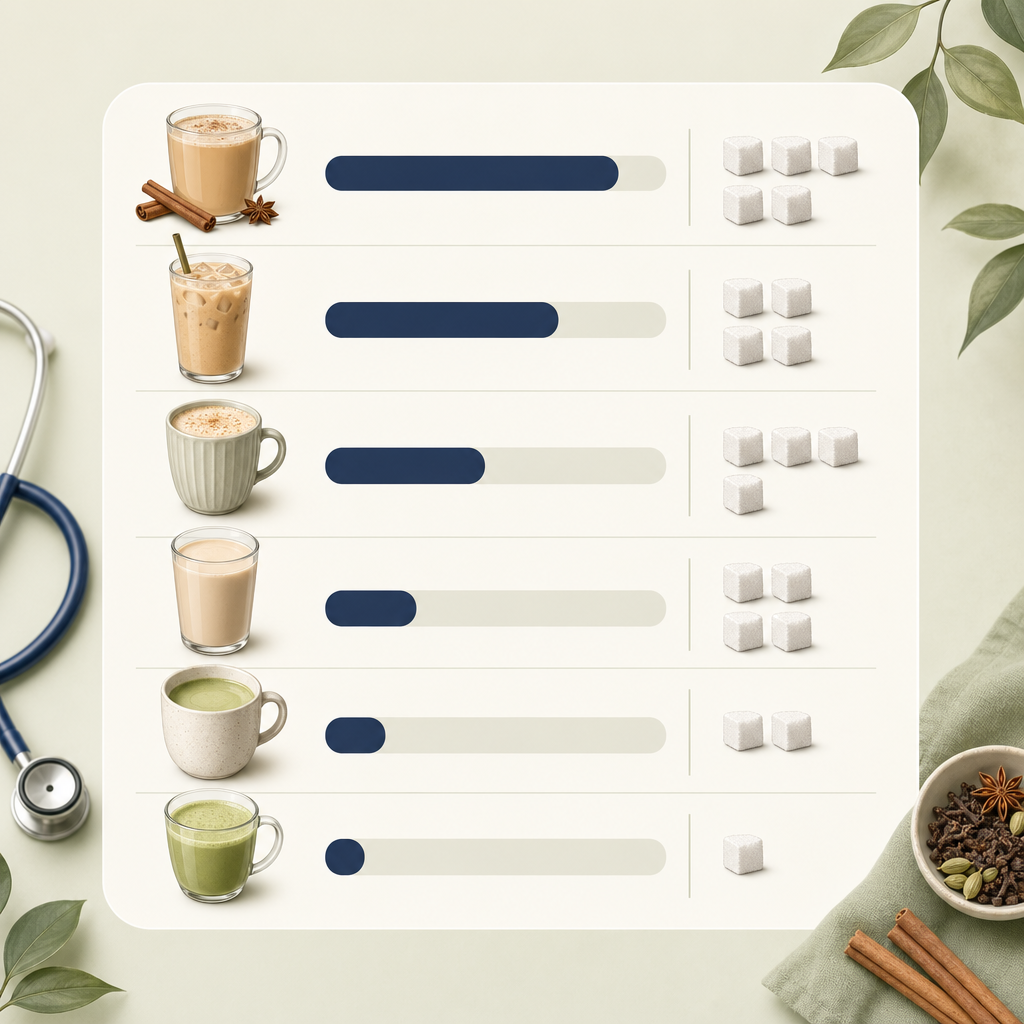
The gap between a coffee shop chai and a homemade version is often 4x to 5x in calories and 20x to 40x in sugar. That gap is driven almost entirely by the chai concentrate's added sugar.
Chai spices: real benefits behind the marketing
The chai spice blend (cinnamon, cardamom, ginger, black pepper, cloves) is genuinely interesting from a metabolic standpoint, even if the typical chai latte is mostly sugar.
Cinnamon: has small but real effects on insulin sensitivity in some studies (Khan et al., Diabetes Care, 2003, plus several follow-ups). Effect size is modest and varies by cinnamon type (Ceylon vs Cassia).
Ginger: mild anti-nausea effect (well-documented for motion sickness and pregnancy) and modest anti-inflammatory effects.
Cardamom: small studies suggest possible benefits for blood pressure and lipid profiles, though the effects are subtle.
Black pepper: contains piperine, which improves absorption of other compounds (notably curcumin from turmeric). Has some thermogenic effect, though at the doses found in a single drink it's negligible for weight loss.
Cloves: strong antioxidant content; minimal weight-loss effect.
The honest read: chai spices have genuine antioxidant and modest metabolic benefits, but those benefits are at most marginal next to the metabolic damage of 42 g of sugar. The marketing of chai as a "metabolism-boosting" or "weight-loss-friendly" drink relies on the spices while quietly ignoring the sugar profile of how chai is actually served.
If you want the spices' benefits, brew them in unsweetened tea. The sugar in a coffee shop chai is doing more harm than the spices are doing good.
How chai latte fits into a GLP-1 plan
If you're on Zepbound or compounded tirzepatide, the calculus on chai shifts in a few ways:
Reduced sugar tolerance. Many patients on GLP-1 medications report increased sensitivity to sugary foods and drinks. A coffee shop chai that previously felt fine may now cause nausea, reflux, or a noticeable energy crash.
Calorie sensitivity. With reduced overall intake, liquid calories take a bigger chunk of your daily budget. A 240-calorie chai latte is 16% of a 1,500-calorie target.
Reflux risk. Hot, sweet, dairy-heavy drinks can worsen GLP-1-induced acid reflux. (See our why GLP-1s can cause acid reflux for the mechanism.)
Caffeine on empty stomach. A typical chai latte has 70 to 100 mg of caffeine. With reduced food intake, caffeine on an empty stomach can cause more jitter, anxiety, and stomach upset than before.
The practical move: switch to homemade chai or to plain black tea with cinnamon. The flavor experience is similar; the calorie and sugar load drops by 200+ calories per drink. (For broader calorie-target context, see our how many calories on Zepbound guide.)
The sub-100-calorie homemade chai recipe
A real homemade chai built around whole spices and unsweetened milk runs under 100 calories with zero added sugar.
Ingredients (1 serving, 12 oz):
- 8 oz water
- 4 oz unsweetened almond milk (or any unsweetened plant milk, 12 to 30 cal per cup)
- 1 black tea bag (Assam or English Breakfast)
- 1 cinnamon stick (or 1/2 tsp ground)
- 4 to 5 green cardamom pods (lightly crushed)
- 1/4 inch fresh ginger, sliced (or 1/4 tsp ground)
- 2 to 3 cloves (whole)
- 1 small pinch black pepper
- Stevia, monk fruit, or erythritol to taste (optional, 0 cal)
Method:
- Combine water and whole spices in a small saucepan. Bring to a boil, then simmer for 5 minutes to extract spice flavors.
- Add the tea bag and steep for 3 to 4 minutes.
- Remove the tea bag and most of the whole spices.
- Add unsweetened almond milk. Heat for 1 to 2 minutes until warm but not boiling.
- Strain into a mug. Sweeten to taste with a non-caloric sweetener.
Total calories: about 30 to 60 depending on milk choice. Total sugar: under 2 g (lactose from milk only).
The flavor is closer to traditional masala chai than to coffee shop versions. It takes about 8 minutes total. You can also brew a larger batch (4x the recipe) in a saucepan, refrigerate the strained liquid for the week, and reheat 1 cup at a time.
Smarter modifications at coffee shops
If you can't make chai at home and a coffee shop is your only option, the modifications that drop the calorie load most:
At Starbucks:
- "Tall" (12 oz) instead of "Grande" (16 oz): saves 60 calories
- Sub-bag tea Chai (made with hot water and chai concentrate, 12 oz, no milk): around 100 calories vs 240
- Use 2 pumps of chai syrup instead of 4 (ask the barista; default is heavy)
- Skim milk or unsweetened almond milk instead of 2%
- "No classic syrup" eliminates the added sweetener separate from the chai concentrate
- Order a tea Chai (hot black tea steeped with chai spices) and add 1 to 2 pumps of sugar-free vanilla syrup
A "modified Chai" at Starbucks: tall, half-sweet (2 pumps of chai syrup), with unsweetened almond milk = about 80 calories and 16 g of sugar. Still not perfect, but a 70% reduction.
At Dunkin:
- Skim milk instead of whole
- Sugar substitute instead of added sweetener
- Smaller size
At independent cafes: ask whether they brew chai from real spices or use a pre-made concentrate. Many independents use real spices and let you control sweetness yourself. These tend to run 100 to 150 calories with much less added sugar.
FAQ
Is chai latte good for weight loss?
A coffee shop chai latte is generally bad for weight loss because it's high in added sugar (40+ g) and calories (240+ per 16 oz). A homemade chai brewed from real spices and unsweetened milk is fine for weight loss at 50 to 80 calories per serving.
How many calories are in a Starbucks chai latte?
A 16 oz (Grande) Starbucks chai latte with 2% milk has 240 calories and 42 g of sugar. With whole milk, 270 calories. With oat milk, 280 calories. With almond milk, 180 calories.
Why is the chai latte so high in sugar?
Coffee shops use pre-made chai concentrate, which is around 40 to 50% sugar by weight. The default 16 oz drink contains 4 pumps of this concentrate. The sugar comes from the syrup, not from the spices or the tea.
Is chai tea (without milk and sugar) good for weight loss?
Yes. Brewed black tea with chai spices and no added sugar is essentially zero calories and provides modest antioxidant benefits from the spices. It's a fine drink for weight loss.
Is chai better than coffee for weight loss?
Plain black tea (chai base) and plain coffee both have minimal calories. The drink form (latte, frappuccino, sweetened) is what determines weight-loss friendliness. A plain chai equals a plain coffee in calorie terms; a sweetened chai latte is far worse than a black coffee.
Does chai latte have caffeine?
Yes. A 16 oz chai latte typically has 70 to 100 mg of caffeine, which is about half of a similar-sized coffee. Decaf chai concentrates exist but are less common.
Is oat milk chai latte healthier than dairy?
Slightly. Oat milk has more carbs and similar calories to 2% milk, so it's not a calorie reduction. Almond milk chai latte is the lowest-calorie milk option at coffee shops.
Can I have a chai latte on a GLP-1 medication like compounded tirzepatide?
Occasionally, yes. The 240 calories and 40+ g of sugar may worsen reflux, nausea, or post-meal energy crashes that some patients experience on GLP-1s. A homemade or modified version is a safer regular choice.
Does chai spice actually boost metabolism?
Cinnamon, ginger, and black pepper have modest metabolic effects in published studies, but the effects are small. The marketing of chai as "metabolism-boosting" overstates the effect, especially when the drink is loaded with sugar that more than cancels any benefit.
How much sugar is in a chai tea bag (no syrup)?
Zero, if you don't add anything. Tea bags brewed in water or unsweetened milk have no sugar. Sweetness in chai latte comes from added syrup, not from the tea or spices themselves.
Is a homemade chai latte cheaper than a coffee shop one?
Yes. After the initial spice purchase (about $15 for spices that last 6+ months), each homemade chai costs around $0.50 vs $5 to $7 at a coffee shop. Daily homemade chai saves about $2,000 per year vs a daily coffee shop habit.
What's the best non-coffee morning drink for weight loss?
Plain black tea, plain coffee, plain green tea, and water are the lowest-calorie options. If you want flavor, homemade chai or a coffee with a splash of unsweetened almond milk and cinnamon are reasonable choices.
Can I drink decaf chai latte at night?
Decaf chai bagged at the coffee shop has the same sugar problem as regular chai latte. Homemade decaf chai (rooibos chai or decaf black tea base) brewed with whole spices and unsweetened milk is a solid evening option.
Does adding cinnamon to coffee replicate chai benefits?
Partially. Cinnamon and a pinch of cardamom in your morning coffee captures the modest blood-sugar benefits of those spices. It doesn't replicate the chai flavor profile fully, but it's a quick approximation.
Is matcha latte better than chai latte for weight loss?
A matcha latte at a coffee shop has similar calories and sugar issues if pre-sweetened. A plain matcha brewed at home with unsweetened milk is a reasonable substitute with slightly more catechins and less spice content. The calorie profile is similar.
Author / review note
Reviewed by the FormBlends Medical Team. References include Malik et al., American Journal of Clinical Nutrition, 2019 (sugar-sweetened beverages and weight gain), Khan et al., Diabetes Care, 2003 (cinnamon and insulin sensitivity), the American Heart Association added-sugar guidelines, and Starbucks and Dunkin published nutrition facts, accessed Q1 2026.
Footer disclaimers
Platform Disclaimer. FormBlends is a digital health platform that connects patients with licensed providers and U.S.-based pharmacies. We do not manufacture, prescribe, or dispense medication directly. All clinical decisions are made by independent licensed providers.
Compounded Medication Notice. Compounded semaglutide and tirzepatide are not FDA-approved. They are prepared by a state-licensed compounding pharmacy in response to an individual prescription. Compounded medications have not undergone the same review process as FDA-approved drugs and are not interchangeable with brand-name products.
Results Disclaimer. Individual results vary. Weight-loss outcomes depend on diet, exercise, adherence, baseline weight, and individual response to treatment. Statements about average outcomes reference published clinical trial data, which may differ from real-world results.
Trademark Notice. Starbucks, Dunkin, Tazo, and Coca-Cola are registered trademarks of their respective owners. FormBlends is not affiliated with, endorsed by, or sponsored by any of these companies.
Related guides
- Is Jasmine Rice Good for Weight Loss? The Honest Answer Backed by the Numbers
- Are Pork Chops Good for Weight Loss? An Honest Answer Backed by USDA Data
- Is Skinny Pop Healthy for Weight Loss? An Honest Answer Backed by the Nutrition Label
- Is Cream Cheese Healthy for Weight Loss? An Honest Answer Backed by the Nutrition Label
- Are Ritz Crackers Healthy for Weight Loss? An Honest Answer Backed by the Nutrition Label
- The Best Time to Eat Ice Cream for Weight Loss? An Honest Answer Backed by the Calorie Math
See your options in about 2 minutes
Take the free quiz and see what fits you. Quick, private, and no commitment to continue.
See my options →