The short answer
The best time to eat yogurt for weight loss is at breakfast or as a mid-afternoon snack, when its protein helps blunt hunger for the next meal. Plain Greek yogurt with 15 to 20 g of protein per serving has the strongest case. Timing matters less than protein density and total daily calories.
Table of contents
- The 30-second answer
- Why protein density beats timing
- The four time slots that have any data behind them
- Greek vs regular vs Icelandic vs Australian
- Brand comparison table
- Yogurt before bed (the casein argument)
- Yogurt on a GLP-1
- How to read a yogurt label without getting fooled
- Sample one-day plans
- FAQ
- Footer disclaimers
Why protein density beats timing
Most "best time to eat" articles treat the clock as the main lever. It is not. Total daily protein and total daily calories run the show. Timing is a small modifier on top of those two numbers.
Check your GLP-1 eligibility
Use our free BMI Calculator to see if you may qualify for provider-reviewed GLP-1 therapy.
Try the BMI Calculator →The clinical anchor for that statement is Schoenfeld and Aragon's work on protein distribution (Journal of the International Society of Sports Nutrition, 2018). Spreading 1.6 g of protein per kg of body weight across three to five meals beats stacking it all at one meal. Yogurt earns its place on a weight-loss plan because it is one of the easiest ways to get 15 to 20 g of protein into a snack-shaped slot in your day.
If you remember nothing else from this piece: the best time to eat yogurt is whenever it replaces a lower-protein, higher-calorie food you would otherwise eat. That window is usually breakfast, mid-afternoon, or late evening.
The four time slots that have any data behind them
Breakfast. Eating protein at breakfast (around 25 to 30 g total) lowers self-reported hunger and reduces evening snacking. Leidy et al., Obesity, 2013, showed this in adolescent girls and the finding has been replicated in adults. Yogurt with berries and a tablespoon of nut butter or chia hits the protein bar without much fuss.
Mid-morning snack. Useful if breakfast was light or carb-heavy. A 5 to 7 oz Greek yogurt cup with 15 g of protein keeps you on the rails until lunch and prevents the 11 am vending-machine crash.
Mid-afternoon (3 to 4 pm). This is the strongest yogurt slot for most adults. Most weight-loss plans fall apart between lunch and dinner. A protein-forward snack here lowers the odds of arriving home famished and crushing dinner plus seconds plus dessert.
Before bed. Has its own logic. Casein protein in yogurt digests slowly. Res et al. (Medicine & Science in Sports & Exercise, 2012) showed pre-sleep casein supports overnight muscle protein synthesis. For a non-athlete, the practical value is satiety: an evening yogurt cup beats a bowl of cereal and prevents the late-night snack spiral.
What about post-workout? Workable but not special. Any high-protein snack within the post-workout window does the job. Yogurt is fine; whey shake is fine; cottage cheese is fine. Pick what fits the rest of your day.
Greek vs regular vs Icelandic vs Australian
| Type | Typical protein per 5.3 oz | Texture | Sugar (plain) | Notes |
|---|---|---|---|---|
| Regular yogurt | 6 to 8 g | Soft, drinkable | 6 to 8 g | Lowest protein, often higher sugar |
| Greek yogurt | 15 to 18 g | Thick, strained | 4 to 6 g | Strained twice, removes whey |
| Icelandic skyr | 17 to 20 g | Very thick, dense | 4 g | Strained four times, lowest fat |
| Australian-style | 5 to 8 g | Creamy, unstrained | 8 to 12 g | Often whole-milk, more sugar |
| Kefir (drinkable) | 8 to 11 g | Thin, tangy | 8 to 12 g | More probiotic strains |
For weight loss, the order of priority is straightforward: skyr first, Greek second, kefir third, Australian and regular yogurt last (or only as flavored desserts in moderation).
A side note on flavors: a "fruit on the bottom" flavored Greek yogurt can carry 18 to 25 g of added sugar. That is more than a glazed donut hole's worth. The protein is still there, but the calorie math gets ugly. Plain yogurt with fresh fruit is almost always the better trade.
Brand comparison table (per typical container, plain unless noted)
| Brand | Container size | Calories | Protein | Total sugar | Added sugar | Best for |
|---|---|---|---|---|---|---|
| Fage 0% Greek, plain | 5.3 oz | 90 | 18 g | 5 g | 0 g | Highest protein per calorie |
| Chobani Zero Sugar | 5.3 oz | 60 | 11 g | 0 g | 0 g | Lowest calorie |
| Siggi's Vanilla Skyr | 5.3 oz | 110 | 14 g | 9 g | 5 g | Lower-sugar flavored |
| Two Good Vanilla | 5.3 oz | 80 | 12 g | 2 g | 1 g | Light dessert swap |
| Oikos Triple Zero Vanilla | 5.3 oz | 90 | 15 g | 6 g | 0 g | Sweetened with stevia |
| Stonyfield Whole Milk Plain | 5.3 oz | 130 | 7 g | 7 g | 0 g | Higher fat satiety |
| Activia Vanilla | 4 oz | 90 | 4 g | 12 g | 9 g | Probiotic marketing, weak macro profile |
| Yoplait Original Strawberry | 6 oz | 150 | 5 g | 18 g | 13 g | Avoid for weight loss |
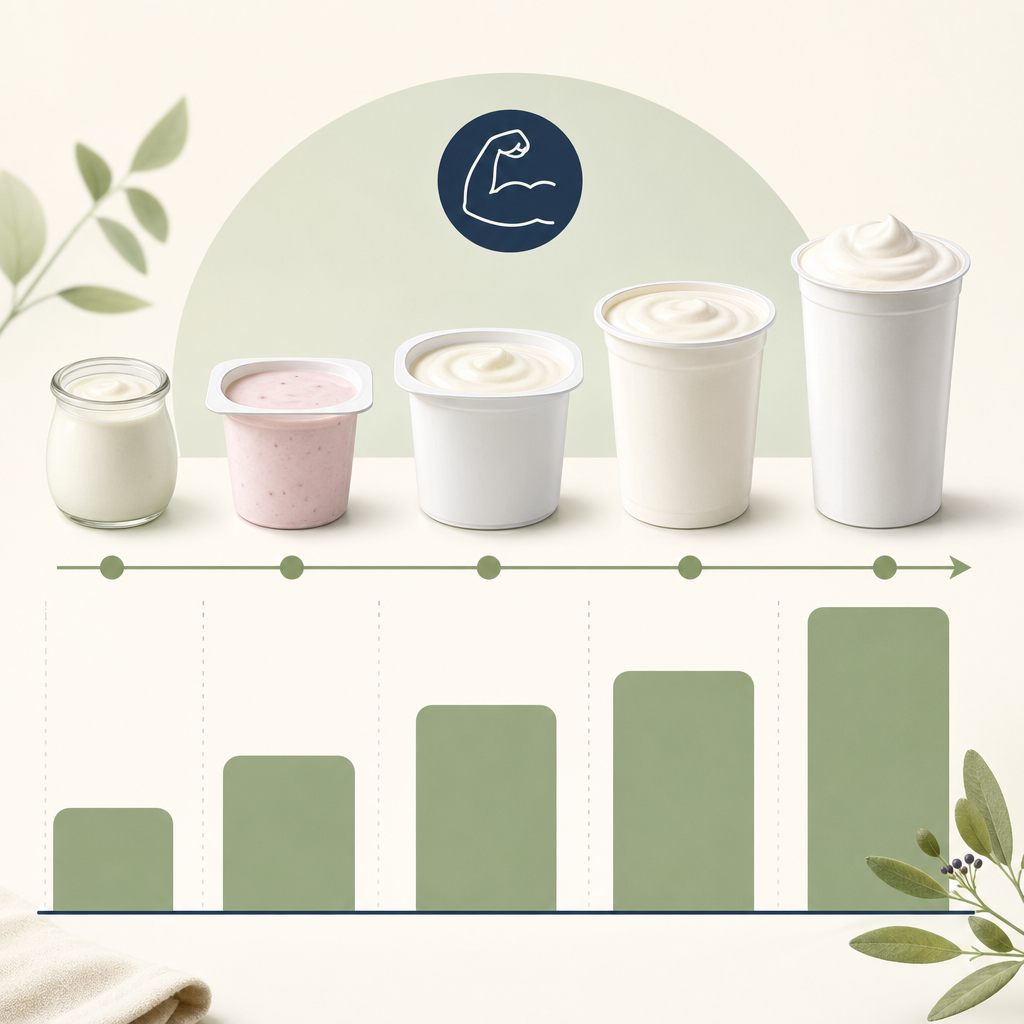
The cleanest pick for most weight-loss plans is plain Fage 0% or plain Chobani non-fat, with fresh fruit and a small drizzle of honey if you need sweetness. That single decision eliminates 80% of the sugar problem most yogurt-eaters do not realize they have.
Yogurt before bed (the casein argument)
Casein, the slow-digesting protein in dairy, releases amino acids over six to eight hours. That is why athletes use it before sleep. For a weight-loss audience, the practical question is: does a pre-bed yogurt help or hurt?
Two answers.
Helps if: you tend to snack on cereal, chips, or ice cream after dinner. Replacing those with a 5 oz cup of plain Greek yogurt swaps 300 to 500 calories for 90 to 120 calories, and the protein keeps you full for the night.
Hurts if: you eat yogurt on top of dinner just because you read about casein. That adds calories without solving any real hunger problem. You are not a bodybuilder optimizing nighttime muscle protein synthesis.
The honest summary: pre-bed yogurt is a great late-snack replacement. It is not a "bonus" food you should add for metabolic reasons.
Yogurt on a GLP-1
If you are on compounded semaglutide or tirzepatide, your relationship with food usually changes within four to eight weeks. Hunger drops. Volume tolerance drops. Protein becomes harder to hit, because you are not eating as much overall.
Yogurt fills this gap better than almost any other food. A 5.3 oz cup of skyr delivers 17 to 20 g of protein in a small volume, which matters when your stomach can only hold so much. The texture is soft, which helps if you have early fullness or mild reflux.
Practical pattern from real GLP-1 patients:
- 5 oz plain skyr or Greek yogurt at breakfast with berries
- A second 5 oz cup as a mid-afternoon protein anchor
- That alone gets you 30 to 40 g of protein with about 200 calories
Pair this with the protein from a fish or chicken dinner and you land on 80 to 100 g of protein per day, which is enough to protect lean mass during a calorie deficit. Lean-mass protection during weight loss is not optional. The SURMOUNT-1 and STEP 1 trials both showed about 25 to 40% of total weight lost was lean mass. Protein and resistance training are how you keep that number low.
For more on dairy choices that fit GLP-1 plans, see related guide. For the food-noise piece of GLP-1 therapy, see related guide.
How to read a yogurt label without getting fooled
Three checks, in order:
- Protein per container, not per 100 g. Brands list both. Total per container is what your body cares about.
- Total sugar minus dairy sugar (lactose). Lactose is around 4 to 5 g per 5 oz of plain yogurt. Anything above that is added or fruit sugar.
- Ingredient list. Should read: cultured pasteurized non-fat milk, live active cultures. Anything else (modified food starch, gelatin, fructose) is filler.
A 5.3 oz Greek yogurt with 4 g of sugar is essentially all lactose. A 5.3 oz "vanilla" Greek yogurt with 14 g of sugar has 9 to 10 g added. That is the difference between a weight-loss food and a dessert in disguise.
Sample one-day plans
Plan A, high-protein, moderate calorie (around 1,500 calories):
- 7 am: 5.3 oz plain Fage 0%, half cup blueberries, 1 tbsp chia (220 cal, 22 g protein)
- 12 pm: chicken salad with greens, olive oil, walnuts (480 cal, 35 g protein)
- 3 pm: 5.3 oz plain skyr with cinnamon (110 cal, 14 g protein)
- 7 pm: salmon, asparagus, half cup wild rice (520 cal, 32 g protein)
- 9 pm: small apple (90 cal)
- Total: about 1,420 cal, 103 g protein
Plan B, GLP-1 friendly, low volume (around 1,300 calories):
- 8 am: 5 oz plain skyr with strawberries (130 cal, 17 g protein)
- 12 pm: 4 oz grilled chicken, small sweet potato (360 cal, 28 g protein)
- 3 pm: 5 oz plain Fage with honey (115 cal, 18 g protein)
- 7 pm: 5 oz cod, broccoli, 1 tsp butter (260 cal, 30 g protein)
- 9 pm: 5 oz Two Good vanilla (80 cal, 12 g protein)
- Total: about 945 cal, 105 g protein. Add olive oil or avocado for the rest of calories if needed.
Both plans put yogurt in two slots: morning and afternoon. That alone gets you to 30+ g of protein from yogurt with minimal effort.
FAQ
1. What is the best time to eat yogurt for weight loss?
Breakfast and mid-afternoon are the strongest slots. Both use yogurt's protein to lower hunger before the next meal.
2. Is it OK to eat yogurt every day?
Yes. Daily yogurt consumption is associated with modestly lower long-term weight gain (Mozaffarian et al., NEJM 2011) and better gut microbiome diversity. Pick plain over flavored.
3. Should I eat yogurt before or after a workout?
After is more useful, because the protein supports recovery. Before is fine if it sits well in your stomach. Either way, the timing effect is small relative to total daily protein.
4. Is Greek yogurt better than regular for weight loss?
Yes. Greek yogurt has roughly 2 to 3 times the protein of regular yogurt at similar calories. Skyr is even higher.
5. Can yogurt cause weight gain?
Sweetened, fruit-on-the-bottom, full-fat yogurt can. A 6 oz container can carry 200 calories and 25 g of sugar. Eating two of those a day adds up. Plain Greek yogurt is hard to overdo.
6. Is yogurt good before bed?
It can be, if it replaces a higher-calorie evening snack. The slow-digesting casein protein keeps you full overnight. Adding it on top of an already-sufficient dinner is just extra calories.
7. What yogurt is best for someone on Ozempic or Wegovy?
Plain skyr or plain Greek yogurt. Small volume, high protein, soft texture. Both fit the early-fullness pattern most GLP-1 patients have.
8. Is non-fat yogurt better than full-fat?
For pure calorie math, yes. For satiety and palatability, full-fat can be a better choice for some people because the fat keeps you full and you eat less overall. The honest answer is: pick the version you will actually eat consistently.
9. Are probiotics in yogurt important?
Live and active cultures contribute to gut microbiome diversity. Whether they meaningfully affect weight is still unsettled in the literature. They are a reasonable bonus, not the main reason to eat yogurt.
10. How much yogurt is too much?
Two to three servings a day is fine for most adults. Beyond that, you start crowding out other useful foods (fish, eggs, vegetables, legumes) and over-relying on dairy.
11. Can I eat yogurt if I'm lactose intolerant?
Greek yogurt and skyr have less lactose than regular yogurt because the straining process removes much of the whey. Many lactose-intolerant adults tolerate them. Lactose-free yogurts (Green Valley, Lactaid, Two Good) exist for those who do not.
12. Is plant-based yogurt as good for weight loss?
Generally no. Most almond and coconut yogurts have 1 to 3 g of protein per cup. Soy yogurt is the exception, with 6 to 8 g per cup. If you are dairy-free, soy yogurt is the best swap; almond yogurt should be treated as a low-calorie dessert, not a protein source.
Author / review note
Reviewed by the FormBlends Medical Team. References include Leidy et al. (Obesity, 2013), Schoenfeld & Aragon (JISSN, 2018), Res et al. (Medicine & Science in Sports & Exercise, 2012), and Mozaffarian et al. (NEJM, 2011).
Footer disclaimers
Platform Disclaimer. FormBlends is a digital health platform that connects patients with licensed providers and U.S.-based pharmacies. We do not manufacture, prescribe, or dispense medication directly. All clinical decisions are made by independent licensed providers.
Compounded Medication Notice. Compounded semaglutide and tirzepatide are not FDA-approved. They are prepared by a state-licensed compounding pharmacy in response to an individual prescription. Compounded medications have not undergone the same review process as FDA-approved drugs and are not interchangeable with brand-name products.
Results Disclaimer. Individual results vary. Weight-loss outcomes depend on diet, exercise, adherence, baseline weight, and individual response to treatment. Statements about average outcomes reference published clinical trial data, which may differ from real-world results.
Trademark Notice. Ozempic, Wegovy, Mounjaro, and Zepbound are registered trademarks of their respective owners. Fage, Chobani, Siggi's, Oikos, Stonyfield, Two Good, Activia, and Yoplait are registered trademarks of their respective owners. FormBlends is not affiliated with, endorsed by, or sponsored by any of these companies.
Related guides
- When to Eat Blueberries for Weight Loss: Timing, Portions, and the Real Math
- Does Eating a Lot of Protein Help With Weight Loss? The Science of How Much, and From Where
- When to Drink Green Tea for Weight Loss: Timing, Doses, and What the Evidence Actually Shows
- Can You Take Zepbound Every Other Week? The Pharmacology and the Real-World Tradeoffs
- How Long Should You Stay on 5 mg Zepbound? The Label Answer, the Real-World Answer, and the Decision Framework
- Can You Eat Watermelon at Night for Weight Loss? An Honest Look at the Evidence
See your options in about 2 minutes
Take the free quiz and see what fits you. Quick, private, and no commitment to continue.
See my options →