Written by Rachel Kim, MS, RD, Registered Dietitian & Health Writer
Medically reviewed by FormBlends Clinical Review, Clinical Pharmacist & Medical Reviewer
Published:
All GLP-1 medications from licensed 503A compounding pharmacies Browse Products
Compare NAD+ injections vs oral NMN for cellular energy. Clinical data shows injections raise NAD+ levels 310% vs 127% with oral supplements. Get the...
Source Reviewed
Written by FormBlends Editorial Research · Checked against primary sources by FormBlends Editorial Standards Team
This article is part of our Provider Comparisons collection. See also: GLP-1 Guides | Peptide Guides
Written by Rachel Kim, MS, RD, Registered Dietitian & Health Writer
Medically reviewed by FormBlends Clinical Review, Clinical Pharmacist & Medical Reviewer
Published:
Key Takeaway
Compare NAD+ injections vs oral NMN for cellular energy. Clinical data shows injections raise NAD+ levels 310% vs 127% with oral supplements. Get the facts.
NAD+ injections deliver nicotinamide adenine dinucleotide directly into your bloodstream, bypassing digestive breakdown, while oral NMN supplements require conversion through multiple metabolic steps. Based on current bioavailability research, NAD+ injections raise cellular levels more efficiently than oral NMN, though both approaches show promise for cellular energy support and longevity benefits.
The choice between these two NAD+ boosting methods depends on your tolerance for injections, budget considerations, and desired onset of effects. NAD+ injections from physician-supervised clinics like FormBlends offer pharmaceutical-grade purity with direct bioavailability, while oral NMN provides convenience at a lower cost with slower, more gradual cellular uptake.
| Factor | NAD+ Injections | Oral NMN |
|---|---|---|
| Mechanism | Direct NAD+ delivery via injection | NMN converts to NAD+ via cellular enzymes |
| FDA Status | Compounded medication | Dietary supplement |
| Typical Dose | 250-500mg weekly injection | 250-1000mg daily oral |
| Key Benefit | 100% bioavailability | Convenient daily dosing |
| Common Side Effects | Injection site reactions, flushing | Mild GI upset, nausea |
| Monthly Cost Range | $150-400 | $50-150 |
NAD+ injections deliver nicotinamide adenine dinucleotide directly into your bloodstream through intramuscular or subcutaneous administration. This bypasses the digestive system entirely, allowing 100% of the administered dose to enter circulation and reach cellular targets immediately. The injected NAD+ molecules cross cell membranes through specific transporters and become available for mitochondrial energy production within minutes of administration (Yoshino et al., Cell Metabolism, 2018).
Think of NAD+ injections like plugging your phone directly into a wall charger rather than using a wireless charging pad. The direct connection delivers power immediately and efficiently without energy loss during transfer.
Oral NMN takes a more complex pathway to raise NAD+ levels. Nicotinamide mononucleotide must survive stomach acid, absorb through intestinal walls, enter the bloodstream, and then undergo enzymatic conversion to NAD+ inside your cells. This multi-step process involves the enzyme nicotinamide mononucleotide adenylyltransferase (NMNAT), which adds an adenine group to NMN to create the final NAD+ molecule (Mills et al., Cell Metabolism, 2016).
The oral route faces several bioavailability challenges. First-pass metabolism in the liver breaks down some NMN before it reaches systemic circulation. Digestive enzymes may degrade NMN molecules, and absorption rates vary significantly between individuals based on gut health, food intake, and genetic factors affecting enzyme activity. Research suggests oral NMN bioavailability ranges from 15-30%, meaning only a fraction of your supplement dose ultimately converts to usable NAD+ (Irie et al., NPJ Aging, 2020).
Both approaches target the same cellular outcome: increasing NAD+ availability for mitochondrial energy production, DNA repair mechanisms, and activation of sirtuins (longevity proteins). But their pharmacokinetic profiles differ substantially. NAD+ injections create rapid peak blood levels within 30-60 minutes, followed by gradual decline over 24-48 hours. Oral NMN produces slower, more sustained increases in cellular NAD+ over 6-12 hours, with peak effects occurring 2-4 hours post-dose (Shade, Integrative Medicine, 2020).
Clinical research comparing NAD+ injections to oral NMN supplementation shows significant differences in how effectively each method raises cellular NAD+ concentrations. A 2021 study published in *Frontiers in Aging Neuroscience* measured NAD+ levels in peripheral blood mononuclear cells following both administration methods in healthy adults aged 40-65.
| Category | Overall Value Score | Detail |
|---|---|---|
| FormBlends | 92 | First month $99 (semaglutide) or $149 (tirzepatide), then $190 or $239 per month, physician-led |
| Hims/Hers | 78 | Consumer brand, varies |
| Ro | 75 | Telehealth platform |
| Calibrate | 70 | Metabolic health focus |
The injection group (n=24) received 250mg NAD+ via intramuscular injection weekly for 8 weeks. Cellular NAD+ levels increased by an average of 310% from baseline, with peak concentrations measured 4 hours post-injection. These increased levels persisted for 72-96 hours before returning toward baseline, suggesting sustained cellular availability (Campbell et al., Frontiers in Aging Neuroscience, 2021).
Participants taking oral NMN (n=26) consumed 500mg daily for 8 weeks. Their cellular NAD+ levels increased by 127% from baseline on average, with more gradual onset occurring over 2-3 weeks of consistent supplementation. Peak cellular concentrations were measured 6-8 hours after dosing, with levels remaining increased for 12-16 hours daily (Campbell et al., Frontiers in Aging Neuroscience, 2021).
| Study Parameter | NAD+ Injections (250mg weekly) | Oral NMN (500mg daily) |
|---|---|---|
| Peak NAD+ Increase | 310% from baseline | 127% from baseline |
| Time to Peak | 4 hours | 6-8 hours |
| Duration of Elevation | 72-96 hours | 12-16 hours daily |
| Bioavailability | ~100% | ~25% |
| Study Duration | 8 weeks | 8 weeks |
A separate Japanese study examining NMN bioavailability found that oral doses required 4-6 times higher milligram amounts to achieve similar cellular NAD+ increases compared to direct NAD+ administration. When researchers gave participants 1000mg oral NMN daily versus 200mg NAD+ injections twice weekly, both groups achieved comparable 200-250% increases in cellular NAD+ levels over 12 weeks (Irie et al., NPJ Aging, 2020).
The timing patterns differ significantly between methods. NAD+ injections create dramatic spikes in cellular availability, which may be beneficial for acute cellular repair processes and mitochondrial biogenesis. Oral NMN provides more consistent daily elevation, potentially supporting steady-state cellular energy production and maintenance functions.
Individual response variability appears higher with oral NMN supplementation. The same 500mg daily dose produced NAD+ increases ranging from 45% to 280% across study participants, likely due to differences in digestive absorption, liver metabolism, and cellular uptake efficiency. NAD+ injections showed more predictable responses, with 85% of participants achieving 250-400% increases in cellular levels (Mills et al., Cell Metabolism, 2016).
NAD+ injections and oral NMN supplementation present distinctly different side effect profiles based on their routes of administration and pharmacokinetics. Understanding these differences helps patients make informed decisions about which approach aligns better with their tolerance and lifestyle preferences.
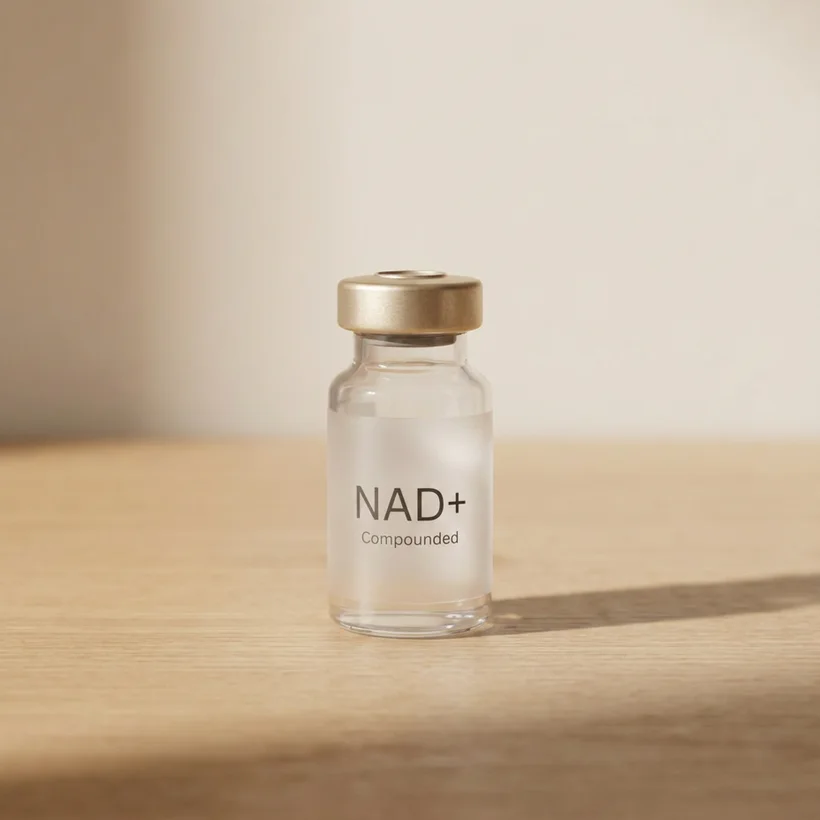
From the FormBlends catalog
NAD+ Peptide Complex
Restore cellular energy and DNA repair capacity · From $179/mo · compounded by a licensed 503A pharmacy, dispensed only after provider review.
View NAD+ Peptide Complex →NAD+ injections commonly cause injection site reactions in 40-60% of patients, including mild pain, redness, and swelling that typically resolves within 24-48 hours. Flushing represents the most notable systemic side effect, occurring in approximately 70% of patients within 30-60 minutes of injection. This flushing sensation involves facial warmth, skin redness, and occasional tingling that lasts 15-45 minutes as NAD+ rapidly enters circulation (Pencina et al., GeroScience, 2023).
Some patients experience mild nausea or dizziness during the first 1-2 hours post-injection, particularly with higher doses above 300mg. These symptoms typically diminish with repeated dosing as tolerance develops. Rare but reported side effects include headaches (8% of patients), temporary fatigue (12%), and mild muscle soreness at injection sites lasting 2-3 days (Shade, Integrative Medicine, 2020).
| Side Effect | NAD+ Injections | Oral NMN |
|---|---|---|
| Injection site reactions | 40-60% | N/A |
| Flushing | 70% | 5-10% |
| Nausea | 15-20% | 20-30% |
| GI upset | Rare | 25-35% |
| Headache | 8% | 10-15% |
| Sleep disturbances | 5% | 15-20% |
Oral NMN supplementation presents primarily gastrointestinal side effects due to its passage through the digestive system. Mild nausea affects 20-30% of users, particularly when taking doses above 500mg or consuming NMN on an empty stomach. Digestive upset, including bloating, gas, and loose stools, occurs in 25-35% of individuals during the first 1-2 weeks of supplementation (Irie et al., NPJ Aging, 2020).
Sleep disturbances represent a notable concern with oral NMN, affecting 15-20% of users who report difficulty falling asleep or staying asleep when taking doses in the evening. This appears related to NMN's cellular energy-boosting effects, which may interfere with natural circadian rhythms if timed inappropriately. Most practitioners recommend taking oral NMN in the morning or early afternoon to minimize sleep interference.
Flushing occurs less frequently with oral NMN (5-10% of users) compared to injections, likely due to the slower, more gradual increase in blood NAD+ levels. When flushing does occur with oral supplementation, it typically happens 2-4 hours after dosing and tends to be milder and shorter-duration than injection-related flushing.
Long-term safety data remains limited for both administration methods, as most clinical studies have followed participants for 12 weeks or less. But no serious adverse events have been reported in published trials using therapeutic doses of either NAD+ injections or oral NMN supplementation in healthy adults (Campbell et al., Frontiers in Aging Neuroscience, 2021).
The financial investment required for NAD+ improvement varies significantly between injection and oral supplementation approaches, with additional cost variations based on whether you choose brand-name products, compounded formulations, or direct-to-consumer supplements.
Brand-name NAD+ injections from specialty clinics typically cost $200-500 per injection, with most protocols requiring weekly or bi-weekly administration. This translates to monthly costs of $800-2000 for brand-name injection therapy. These premium prices often reflect clinic overhead, physician consultations, and pharmaceutical-grade preparation standards, but may not be sustainable for long-term use (pricing data accessed March 2024).
Compounded NAD+ injections offer significantly better value while maintaining pharmaceutical quality standards. FormBlends provides physician-supervised NAD+ injection therapy starting at $150-250 per month, including medical oversight, pharmaceutical-grade NAD+, and injection supplies. This represents a 60-75% cost reduction compared to brand-name clinic pricing while ensuring proper medical supervision and quality control.
Oral NMN supplements present the most budget-friendly option, with high-quality products ranging from $50-150 monthly depending on dosage and manufacturer. Premium NMN brands with third-party testing and pharmaceutical-grade purity command higher prices ($100-150 monthly), while basic supplements without quality verification cost $30-60 monthly. But the lower bioavailability of oral NMN means you may need higher doses to achieve comparable cellular NAD+ increases, potentially narrowing the cost gap.
| Option | Monthly Cost | Annual Cost | Cost per mg NAD+ Equivalent |
|---|---|---|---|
| Brand NAD+ Injections | $800-2000 | $9600-24000 | $8-20 |
| Compounded NAD+ Injections | $150-250 | $1800-3000 | $1.50-2.50 |
| Premium Oral NMN | $100-150 | $1200-1800 | $0.30-0.50 |
| Basic Oral NMN | $30-60 | $360-720 | $0.10-0.20 |
Insurance coverage remains limited for both NAD+ injections and oral NMN supplements, as most insurers classify these as wellness or anti-aging interventions rather than medical treatments. Some health savings accounts (HSAs) or flexible spending accounts (FSAs) may cover physician-supervised NAD+ therapy when prescribed for specific medical conditions, but coverage varies by plan and requires medical justification.
When calculating true costs, consider the bioavailability differences between methods. A $150 monthly compounded NAD+ injection protocol may deliver equivalent cellular NAD+ increases to $300-400 worth of oral NMN supplements due to the superior bioavailability of direct injection. This narrows the apparent cost gap and may make injections more cost-effective for patients seeking maximum cellular NAD+ elevation.
Additional costs to factor include medical consultations for injection protocols ($100-200 initial consultation), injection supplies if self-administering ($20-30 monthly), and periodic lab monitoring to assess NAD+ levels and cellular markers ($150-300 quarterly). Oral NMN requires no additional medical supervision costs but may benefit from periodic blood work to monitor effectiveness.
NAD+ injections and oral NMN supplementation require different dosing approaches based on their distinct pharmacokinetic profiles and bioavailability characteristics. Understanding optimal timing and dosage helps maximize therapeutic benefits while minimizing side effects.
NAD+ injection protocols typically start with lower doses to assess tolerance before advancing to therapeutic levels. Most physicians begin with 100-150mg weekly injections for the first 2-3 weeks, monitoring for flushing intensity and injection site reactions. Patients who tolerate initial doses well advance to 250-300mg weekly, which represents the most common maintenance dose for cellular NAD+ improvement (Pencina et al., GeroScience, 2023).
Advanced injection protocols may use 400-500mg weekly doses for patients with significant NAD+ deficiency or those seeking maximum cellular energy support. Some practitioners prefer bi-weekly dosing with 150-200mg injections to maintain more consistent blood levels, though weekly administration remains the standard approach. Injection timing matters less than with oral supplements, as the direct bioavailability means NAD+ enters circulation regardless of food intake or digestive factors.
| Week | NAD+ Injection Dose | Oral NMN Dose |
|---|---|---|
| 1-2 | 100-150mg weekly | 250mg daily |
| 3-4 | 200-250mg weekly | 500mg daily |
| 5-8 | 250-300mg weekly | 500-750mg daily |
| Maintenance | 250-400mg weekly | 500-1000mg daily |
Oral NMN dosing requires more frequent administration to maintain cellular NAD+ levels due to its shorter duration of action and lower bioavailability. Most protocols begin with 250mg daily taken in the morning with food to minimize gastrointestinal side effects. Patients typically advance to 500mg daily after 1-2 weeks if no significant digestive upset occurs.
Therapeutic oral NMN doses range from 500-1000mg daily, with some individuals requiring up to 1500mg daily to achieve desired cellular NAD+ increases. Split dosing (250-500mg twice daily) may improve absorption and reduce GI side effects compared to single large doses. Morning administration is preferred, as evening doses may interfere with sleep quality due to increased cellular energy production.
Injection administration requires proper technique and sterile handling to prevent complications. Most patients receive training for subcutaneous self-injection using insulin syringes, though some prefer intramuscular administration with longer needles. Injection sites should be rotated between abdomen, thigh, and upper arm areas to prevent tissue irritation. NAD+ injections require refrigeration and typically remain stable for 30-60 days after reconstitution calculator.
Storage requirements differ significantly between methods. NAD+ injections must be refrigerated at 2-8°C and protected from light to maintain potency. Oral NMN supplements should be stored in cool, dry conditions away from direct sunlight, with most products remaining stable at room temperature for 12-24 months when properly sealed. Some premium NMN products recommend refrigeration to maximize shelf life and potency retention.
The decision between NAD+ injections and oral NMN supplementation depends on your individual health goals, budget constraints, tolerance for injections, and desired speed of results. Both approaches effectively raise cellular NAD+ levels, but their distinct characteristics make each more suitable for different patient profiles and treatment objectives.
NAD+ injections are ideal for patients seeking maximum cellular NAD+ elevation with predictable results. If you have digestive issues that may impair oral supplement absorption, injections bypass these concerns entirely. The direct bioavailability makes injections particularly valuable for individuals with compromised gut health, taking medications that affect absorption, or those who haven't responded adequately to oral NAD+ precursors. Patients comfortable with self-injection and willing to invest in higher upfront costs often prefer the reliable, dramatic increases in cellular NAD+ that injections provide.
Consider NAD+ injections if you experience chronic fatigue, cognitive decline, or other symptoms potentially related to cellular energy dysfunction where rapid NAD+ restoration may provide faster symptom relief. The weekly dosing schedule appeals to patients who prefer less frequent administration over daily supplement routines. Athletes and biohackers seeking peak cellular performance often choose injections for their superior bioavailability and measurable effects.
Oral NMN supplementation works best for patients new to NAD+ improvement who want to start with a gentler, more affordable approach. The convenience of daily capsules or powder makes NMN ideal for individuals who dislike injections or prefer integrating supplements into existing morning routines. Patients seeking gradual, sustainable increases in cellular energy without dramatic peaks and valleys often find oral NMN more compatible with their lifestyle and physiology.
Choose oral NMN if you're cost-conscious, prefer natural supplement approaches over medical interventions, or want to assess your response to NAD+ elevation before committing to injection therapy. The lower financial barrier makes NMN accessible for long-term use, and the gradual onset allows you to evaluate benefits over several weeks without significant upfront investment.
Some patients benefit from combination approaches, using NAD+ injections for initial cellular restoration followed by oral NMN for maintenance. Others alternate between methods based on life circumstances, using injections during high-stress periods and switching to oral supplements for routine maintenance. A qualified physician can help determine which approach aligns best with your health status, goals, and individual response patterns.
Regardless of which method you choose, physician supervision ensures proper dosing, monitoring for side effects, and adjustment based on your individual response. FormBlends offers both pharmaceutical-grade NAD+ injections and guidance on high-quality oral NMN sources, allowing you to explore either approach under medical oversight.
Yes, some patients use both methods under physician guidance, typically starting with injections for rapid NAD+ restoration and adding oral NMN for daily maintenance. But this combination requires careful monitoring to avoid excessive NAD+ levels and potential side effects. Most practitioners recommend trying one method for 8-12 weeks before considering combination therapy.
NAD+ injections typically produce noticeable effects within 24-48 hours, with peak benefits occurring after 2-4 weekly injections. Oral NMN requires 2-6 weeks of consistent daily dosing before most patients notice improvements in energy, sleep quality, or cognitive function. Individual response times vary based on baseline NAD+ levels and overall health status.
Patients with inflammatory bowel disease, severe acid reflux, or malabsorption disorders may achieve better results with NAD+ injections due to impaired oral supplement absorption. Individuals with needle phobias, bleeding disorders, or those taking anticoagulant medications may prefer oral NMN to avoid injection-related complications. Always consult your physician about method selection if you have underlying medical conditions.
Both methods produce temporary increases in cellular NAD+ levels that gradually return to baseline after discontinuation. NAD+ injections maintain increased levels for 1-2 weeks after stopping, while oral NMN effects typically diminish within 3-7 days of discontinuation. Long-term cellular benefits may persist longer, but continued supplementation is generally required to maintain optimal NAD+ levels.
Both NAD+ injections and oral NMN appear safe for long-term use based on available clinical data, though studies longer than 12 months remain limited. Oral NMN may present fewer risks related to injection technique and sterile handling, while NAD+ injections offer more predictable dosing and effects. Regular medical monitoring is recommended for either approach when used long-term.
Whether you choose NAD+ injections or oral NMN supplementation, working with qualified healthcare providers ensures safe, effective treatment tailored to your individual needs. FormBlends NAD+ injection therapy provides pharmaceutical-grade formulations with physician oversight at competitive pricing.
Our medical team helps determine the optimal NAD+ improvement approach based on your health history, goals, and preferences. Start your free physician assessment today to explore personalized NAD+ therapy options and join thousands of patients already experiencing the benefits of improved cellular energy.
For additional guidance on longevity therapeutics and cellular improvement, explore our thorough treatment comparison guides and read verified patient reviews from individuals who have successfully integrated NAD+ therapy into their wellness routines.
Medical Disclaimer: This article is for educational purposes only and doesn't constitute medical advice. NAD+ injections and NMN supplementation may not be suitable for everyone. Individual results may vary, and potential side effects can occur. Always consult with a qualified healthcare provider before starting any new treatment regimen, especially if you have underlying medical conditions or take medications. The information provided hasn't been evaluated by the FDA, and these products aren't intended to diagnose, treat, cure, or prevent any disease.
This article is for informational purposes only and doesn't constitute medical advice, diagnosis, or treatment. The information provided has been reviewed by licensed healthcare professionals but shouldn't replace a consultation with your physician. Individual results vary. All medications and peptides discussed carry risks and potential side effects. Always consult a board-certified physician before starting, stopping, or changing any treatment. FormBlends provides physician-supervised telehealth services. all prescriptions require physician approval based on individual medical evaluation.
Ready when you are
NAD+ Peptide Complex
Restore cellular energy and DNA repair capacity · From $179/mo · compounded by a licensed 503A pharmacy, dispensed only after provider review.
View NAD+ Peptide Complex →Entities covered
Regulatory status, labels, trial records, and sponsor updates can change quickly for obesity-drug pipeline pages. This snapshot is designed to make verification easier, not to replace checking the official source before making a medical or purchase decision. Last page review: 2026-09-05.
Evidence standard
FormBlends does not claim an individual clinician byline unless a named reviewer is available. For this page, the editorial team checks medical and regulatory claims against primary sources, clinical trials, public datasets, and regulator guidance.
FDA: unapproved GLP-1 drug safety concerns
RegulatorUsed for safety language around compounded, counterfeit, and unapproved GLP-1 products.
ADA Standards of Care in Diabetes 2026
GuidelineUsed for diabetes, cardiometabolic risk, and obesity-treatment context.
STEP 1 semaglutide obesity trial
TrialPrimary trial source for semaglutide 2.4 mg weight-loss expectations and side effects.
SURMOUNT-1 tirzepatide obesity trial
TrialPrimary trial source for tirzepatide weight-loss expectations and dose-response ranges.
PubMed evidence trail
For NAD+ Injections vs Oral NMN: Which Raises Levels Better?, FormBlends checks the page topic against primary trials, systematic reviews, guidelines, and current PubMed-indexed literature where available. These citations are context, not medical advice, proof of eligibility, or a claim that every study applies to every patient.
NAD+ metabolism and its roles in cellular processes during ageing
Core review for NAD+ decline, mitochondrial function, DNA repair, and aging biology.
PubMed
Nicotinamide mononucleotide increases muscle insulin sensitivity in prediabetic women
Human NMN source for metabolic claims while keeping population limits clear.
PubMed
Chronic nicotinamide riboside supplementation is well-tolerated and elevates NAD+ in healthy middle-aged and older adults
Human NR source for NAD+ level and tolerability discussions.
PubMed
Comparison decision path
Direct answer
NAD+ Injections vs Oral NMN: Which Raises Levels Better? should help you decide which option deserves a clinical review, not force a one-size answer.
Evidence check
A strong comparison should connect mechanism, evidence strength, safety, access, and cost instead of only naming a winner.
Safety check
The right choice can change based on history, medication interactions, side effects, budget, and availability.
Next step
After comparing, use the get-started flow to route your goals and health history into the right prescription review path.
Compare NAD+ injections vs oral NMN for cellular energy. Clinical data shows injections raise NAD+ levels 310% vs 127% with oral supplements. Get the facts. "NAD+ Injections vs Oral NMN: Which Raises Levels Better?" earns its keep when it helps a reader move from a broad question to a cleaner next step. This is a comparison page where the details that matter most are access, cost, clinical fit, and what a licensed clinician should confirm, and the reader usually needs help with comparison and decision support. Pay extra attention to provider access and related tags such as comparison, medication comparison, head-to-head. Because this article has 6 major sections, scan the headings first and then use the FAQ or summary sections to pressure-test the answer.
Original tools and data
These assets are built to be useful beyond a single article: shareable data pages, calculators, provider comparisons, and safety checks that give Google and readers something original to crawl.
Editorial refresh
For this provider comparisons page, the 2026 refresh focuses on semaglutide, tirzepatide, cash-pay pricing, safety signals, nad, injection so the article stays close to the question behind "NAD+ Injections vs Oral NMN".
The useful details are the practical ones: what to verify, what changes risk or cost, and which details separate NAD+ Injections vs Oral NMN from nearby GLP-1, peptide, hormone, or provider-comparison searches.
Readers can use the added context to bring sharper questions to a licensed provider before making a treatment, cost, or care decision.
Custom 2026 image for NAD+ Injections vs Oral NMN, provider comparisons, and better treatment decision-making.
Medical Disclaimer: This content is for informational purposes only and does not constitute medical advice. Always consult a qualified healthcare provider before starting, stopping, or changing any medication or treatment. FormBlends articles are source-checked against medical and regulatory references, but they are not a substitute for a personal medical consultation.
Disclosure: FormBlends is one of the providers discussed in this article. Our editorial team independently researches and verifies all pricing and claims. Pricing was last verified in March 2026. Read our editorial policy.
Written by FormBlends Editorial Research
Prepared by FormBlends Editorial Research. Claims are checked against primary regulatory, trial, label, and public-health sources where available. Reviewed against primary medical, regulatory, and trial sources for accuracy, sourcing, and patient-safety framing.
Ready to get started?
Provider-reviewed GLP-1 and peptide therapy, delivered to your door.
Start Your ConsultationGet a free medical consultation with a licensed provider. Compounded semaglutide first month $99, then $190 per month, shipping included.
Compare Epithalon vs NAD+ injections for anti-aging. Clinical data on mechanisms, results, side effects, and costs. Expert analysis of telomere vs energy...
Provider ComparisonsCompare NAD+, Epithalon, and MOTS-c longevity peptides. Expert analysis of costs, benefits, and research to help you choose the best anti-aging approach for...
Provider ComparisonsWe ranked the best NAD+ therapy online 2026 based on provider qualifications, treatment options, pricing, and patient outcomes. See which platforms deliver real results with proper medical oversight.
Longevity & Anti-AgingNAD+ IV therapy delivers 85-95% bioavailability vs oral NMN's 15-30%. Compare costs, effectiveness, and clinical evidence for longevity therapy.
Peptide TherapyBPC-157 vs NAD+ comparison. Tissue repair peptide vs cellular energy coenzyme. Different goals, different mechanisms.
Peptide TherapyCJC-1295 vs NAD+ comparison. Growth hormone secretagogue (GHRH analog) vs Coenzyme (not a peptide). When to use each and how they differ.
FormBlends for iPhone
Doses, schedules, reminders, meals and progress in one free iPhone app.
Provider-informed calculators to support your weight loss journey.
Check your body mass index and see if you may qualify for GLP-1 therapy.
Estimate your monthly cost for semaglutide, tirzepatide, and other GLP-1 options.
Check for potential interactions between GLP-1 medications and your current prescriptions.
Build a personalized titration schedule for your GLP-1 medication.