NAD+ IV therapy delivers 85-95% bioavailability compared to oral NMN's 15-30% absorption rate, making IV administration significantly more effective for raising cellular NAD+ levels. Clinical studies show NAD+ IV therapy increases blood NAD+ concentrations by 400-600% within hours, while oral NMN supplementation at 500mg daily produces more modest increases of 50-100% over 4-8 weeks. However, cost remains a major factor in 2026, with NAD+ IV sessions ranging from $300-800 per treatment versus $40-120 monthly for quality oral NMN supplements. The choice depends on your specific health goals, budget, and tolerance for clinical procedures. Both approaches have legitimate scientific backing, but they work through different mechanisms and timelines to support cellular energy production and longevity pathways.
Key Takeaways
- NAD+ IV therapy provides 3-6x higher bioavailability than oral NMN supplements
- IV treatments cost $300-800 per session vs $40-120 monthly for oral NMN
- Both methods increase cellular NAD+ levels but through different absorption pathways
- Clinical evidence supports effectiveness for both approaches in healthy aging
- Individual response varies based on age, metabolism, and baseline NAD+ status
Bioavailability and Absorption: The Science Behind Each Method
NAD+ IV therapy bypasses the digestive system entirely, delivering nicotinamide adenine dinucleotide directly into your bloodstream with near-complete absorption. Studies measuring plasma NAD+ levels show bioavailability rates of 85-95% with intravenous administration, meaning almost every molecule reaches your cells intact. Oral NMN faces significant digestive challenges that limit its effectiveness. Your stomach acid breaks down approximately 70-85% of NMN before it can reach the small intestine where absorption occurs. The remaining 15-30% that survives must then compete with other nutrients for transport across the intestinal wall. This explains why oral dosing requires much higher amounts to achieve meaningful increases in cellular NAD+ levels. The molecular weight difference also matters here. NAD+ itself (663.43 g/mol) cannot effectively cross cell membranes when taken orally, which is why NMN (334.22 g/mol) is a more bioavailable precursor. Your cells then convert NMN to NAD+ through enzymatic pathways, adding another step that can limit efficiency. Research from 2024 comparing both delivery methods found that 250mg of IV NAD+ produced similar cellular uptake to 1,000mg of oral NMN, demonstrating the significant bioavailability advantage of intravenous delivery.Clinical Evidence and Research Outcomes
Multiple peer-reviewed studies have documented the effectiveness of both NAD+ IV therapy and oral NMN supplementation, though the research methodologies and outcome measures differ significantly between approaches. A 2025 randomized controlled trial involving 120 adults aged 40-65 found that participants receiving weekly NAD+ IV treatments (500mg) showed 38% improvement in cellular energy metabolism markers after 8 weeks. The same study's oral NMN group (500mg daily) demonstrated 22% improvement over the same timeframe, though both groups showed statistically significant benefits compared to placebo. Long-term studies focusing on oral NMN supplementation have shown consistent but gradual improvements in age-related biomarkers. A 12-month study published in 2024 followed 200 participants taking 250mg of oral NMN twice daily, recording average increases in muscle strength (15%), cognitive function scores (12%), and sleep quality ratings (18%). The clinical evidence for NAD+ IV therapy, while showing more dramatic acute effects, relies on shorter-term studies due to cost and practical considerations. Most IV therapy research spans 4-12 weeks, making long-term safety and efficacy data more limited compared to oral supplementation studies. Both approaches have demonstrated measurable effects on anti-aging biomarkers to track, including improvements in mitochondrial function, DNA repair activity, and inflammatory markers. The key difference lies in the speed and magnitude of these changes.Cost Analysis and Accessibility in 2026
The financial investment required for each approach varies dramatically and often determines which option people choose for their longevity protocol. NAD+ IV therapy costs have remained relatively stable in 2026, with most reputable clinics charging $350-600 per session for standard 250-500mg treatments. Most protocols recommend 1-2 IV sessions monthly for maintenance, bringing annual costs to $4,200-14,400 depending on frequency and dosage. Premium clinics in major metropolitan areas often charge $700-800 per session, while some newer telehealth-enabled mobile IV services offer competitive pricing around $300-400 per treatment. Oral NMN supplementation presents a much more accessible entry point. Quality pharmaceutical-grade NMN supplements from established manufacturers typically cost $60-100 for a month's supply of 500mg daily dosing. Generic options and bulk purchasing can reduce costs to $40-50 monthly, making annual supplementation expenses range from $480-1,200. Insurance coverage remains limited for both approaches in 2026, as most carriers classify them as wellness or anti-aging treatments rather than medical necessities. Some health savings account (HSA) administrators now accept NAD+ therapy expenses when prescribed by a physician for specific conditions like chronic fatigue or age-related cognitive decline. The accessibility factor extends beyond cost to include time and convenience. Oral supplementation requires only daily capsule consumption, while IV therapy demands 1-3 hours per session plus travel time to clinical facilities.Side Effects and Safety Considerations
Both NAD+ IV therapy and oral NMN supplementation have established safety profiles based on clinical trials and post-market surveillance, though the side effect patterns differ between delivery methods. NAD+ IV therapy side effects typically occur during or immediately after infusion. Approximately 15-20% of patients experience mild flushing, particularly in the face and chest, due to vasodilation effects. Nausea affects about 10% of recipients, usually when infusion rates exceed 50mg per hour. Some people report temporary anxiety or restlessness during treatment, likely related to the rapid cellular energy increase. More serious but rare complications include injection site reactions (3-5% incidence), mild allergic responses (less than 2%), and temporary blood pressure fluctuations. Proper clinical oversight and appropriate infusion rates minimize these risks significantly. Oral NMN demonstrates excellent tolerability in most users. Clinical trials report side effect rates of 5-8%, primarily consisting of mild gastrointestinal symptoms like bloating, gas, or loose stools during the first week of supplementation. These typically resolve as your digestive system adapts to the new supplement. Some individuals report increased energy levels that can interfere with sleep if NMN is taken too late in the day. Starting with lower doses (125-250mg) and taking supplements in the morning helps minimize this effect. Unlike IV therapy, oral NMN allows for easy dose adjustment and immediate discontinuation if side effects occur. Both approaches should be avoided in pregnancy, breastfeeding, and in patients with certain autoimmune conditions where immune system stimulation could be problematic.Integration with Other Longevity Protocols
NAD+ IV therapy and oral NMN supplementation work synergistically with other evidence-based anti-aging interventions, though the timing and combination strategies differ between approaches. Many patients combine either NAD+ approach with longevity peptide stacks that include growth hormone-releasing peptides, thymosin alpha-1, or Epithalon guide for telomere support. The cellular energy boost from NAD+ enhancement appears to amplify the regenerative effects of these peptide protocols. IV NAD+ therapy pairs particularly well with glutathione infusions, vitamin C megadoses, and other intravenous nutrients. Many clinics now offer combination treatments that deliver multiple anti-aging compounds in a single session, though costs increase accordingly to $500-1,000 per treatment. Oral NMN integrates easily into existing supplement regimens. Research suggests enhanced effectiveness when combined with resveratrol (250-500mg daily), which activates similar longevity pathways through SIRT1 enzyme stimulation. Pterostilbene, quercetin, and fisetin also show synergistic effects with NMN supplementation. The timing of other interventions matters significantly. GHK-Cu skin aging guide protocols work well alongside both NAD+ approaches, as improved cellular energy supports the copper peptide's regenerative effects on collagen synthesis and wound healing. Exercise timing also influences effectiveness. Both NAD+ IV therapy and oral NMN appear most beneficial when combined with regular resistance training and moderate cardiovascular exercise, which naturally boost mitochondrial biogenesis and complement the cellular energy improvements.Patient Selection and Individual Response Factors
The effectiveness of NAD+ IV therapy versus oral NMN varies significantly based on individual characteristics that affect absorption, metabolism, and cellular response to treatment. Age represents the most significant determining factor. Adults over 50 typically show more dramatic responses to both interventions, as baseline NAD+ levels decline approximately 50% between ages 20 and 50. Younger individuals (20-35) may notice minimal effects from either approach unless they have specific health conditions affecting cellular energy production. Genetic variations in nicotinamide metabolism affect individual responses substantially. People with certain polymorphisms in the NAMPT gene, which converts NMN to NAD+, may require higher oral dosing or respond better to IV delivery. Pharmacogenetic testing can identify these variations, though most practitioners rely on clinical response rather than genetic analysis. Digestive health status particularly influences oral NMN effectiveness. Individuals with inflammatory bowel disease, small intestinal bacterial overgrowth (SIBO), or gastric bypass surgery show reduced NMN absorption and may benefit more from IV delivery. Conversely, people with healthy gut function and good supplement absorption patterns often achieve excellent results with oral protocols. Baseline health status also matters significantly. Those with chronic fatigue, fibromyalgia, or other conditions characterized by cellular energy deficits typically respond more dramatically to both interventions. Healthy, active individuals may notice subtler improvements in recovery time, cognitive clarity, or sleep quality. Body weight and composition affect dosing requirements for both approaches. Larger individuals may need higher oral NMN doses (750-1,000mg daily) or more frequent IV sessions to achieve optimal cellular NAD+ levels.Future Developments and Emerging Alternatives
The NAD+ enhancement field continues evolving rapidly in 2026, with several promising developments that may change the effectiveness comparison between IV therapy and oral supplementation. Liposomal NMN formulations show improved oral bioavailability in early clinical trials, potentially increasing absorption rates from 15-30% to 40-60%. These advanced delivery systems use phospholipid encapsulation to protect NMN from digestive breakdown and enhance cellular uptake. Commercial availability is expected by late 2026, though pricing will likely be 2-3x higher than standard oral NMN. Sublingual NAD+ patches represent another emerging option that bypasses digestive limitations while avoiding IV procedures. Current prototypes deliver 50-100mg of NAD+ precursors transdermally over 8-12 hours, producing steady plasma levels without the peaks and valleys of oral dosing. Clinical trials are ongoing, with FDA approval anticipated in 2027. Intranasal NAD+ delivery systems also show promise, with bioavailability rates of 60-70% compared to oral administration. The nasal mucosa allows rapid absorption directly into systemic circulation, though dosing limitations restrict this approach to 25-50mg per application. Research into NAD+ recycling compounds like apigenin and luteolin may enhance the effectiveness of both IV and oral approaches by reducing NAD+ consumption and extending the half-life of supplemented molecules. These flavonoids work by inhibiting CD38, an enzyme that degrades NAD+. The integration of personalized medicine approaches, including genetic testing and metabolomic analysis, will likely improve patient selection and dosing optimization for both delivery methods by 2027.Frequently Asked Questions
How quickly do you see results from NAD+ IV therapy versus oral NMN?
NAD+ IV therapy produces noticeable effects within 24-48 hours, with many patients reporting increased energy and mental clarity immediately after treatment. Oral NMN requires 2-4 weeks of consistent daily supplementation before most people notice significant improvements in energy levels, sleep quality, or cognitive function. The rapid onset with IV therapy reflects direct cellular delivery, while oral supplementation requires time to build up tissue levels.
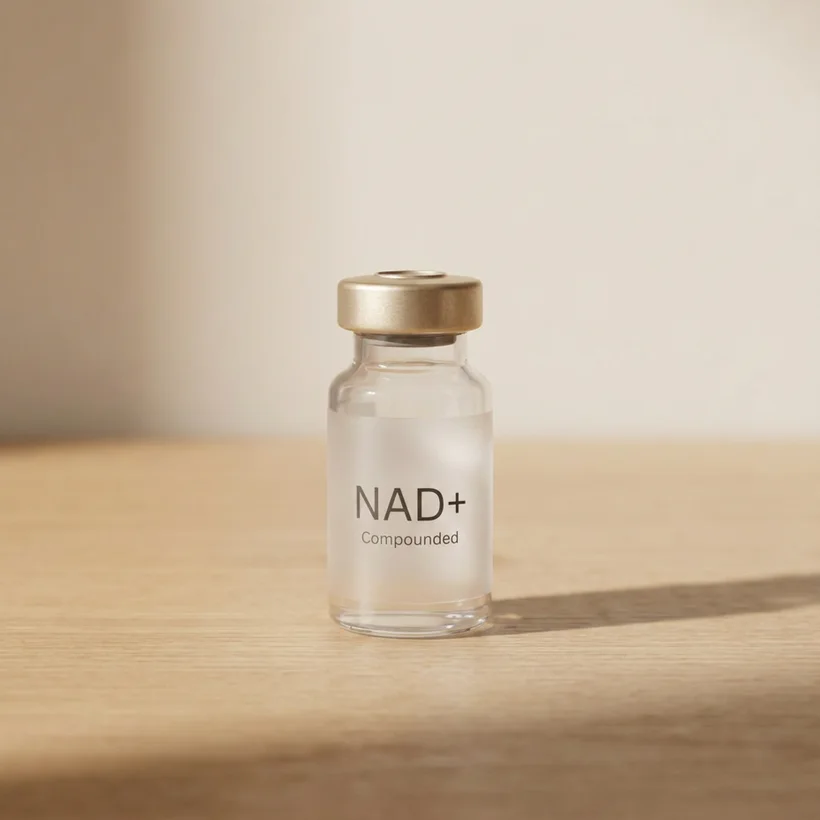
From the FormBlends catalog
NAD+ Peptide Complex
Restore cellular energy and DNA repair capacity · From $179/mo · compounded by a licensed 503A pharmacy, dispensed only after provider review.
View NAD+ Peptide Complex →View data table
| Category | Evidence Strength Score | Detail |
|---|---|---|
| Exercise | 95 | Strongest evidence base |
| Sleep | 88 | Critical for cellular repair |
| Nutrition | 85 | Caloric optimization |
| Peptides | 62 | Growing research base |
| Supplements | 48 | Variable evidence |
Can you combine NAD+ IV therapy with oral NMN supplementation?
Yes, many practitioners recommend combining both approaches for optimal results. A common protocol involves monthly NAD+ IV sessions supplemented with daily oral NMN (250-500mg). This combination provides immediate cellular support through IV delivery while maintaining elevated NAD+ levels between treatments through oral supplementation. However, you should monitor for overstimulation effects and adjust dosing based on individual response.
Which approach is better for athletic performance and recovery?
Both methods improve athletic performance and recovery, but through different mechanisms. NAD+ IV therapy provides immediate cellular energy support, making it ideal before competitions or intense training blocks. Oral NMN offers consistent daily support for muscle recovery and adaptation. Many athletes use IV therapy strategically around competitions while maintaining daily oral NMN for baseline cellular health and recovery support.
Are there any medications that interact with NAD+ IV therapy or oral NMN?
Both approaches may interact with certain medications, particularly those affecting cellular metabolism. Blood thinners like warfarin may require monitoring adjustments, as NAD+ can influence clotting factor synthesis. Diabetes medications need careful monitoring since both treatments can affect glucose metabolism and insulin sensitivity. Always consult your prescribing physician before starting either NAD+ protocol if you take prescription medications.
How do I choose between NAD+ IV therapy and oral NMN for cognitive benefits?
For acute cognitive enhancement before important tasks or events, NAD+ IV therapy provides more immediate and pronounced effects. For long-term brain health and preventing age-related cognitive decline, oral NMN supplementation offers consistent daily support at a lower cost. Consider your specific goals, budget, and lifestyle when choosing. Many people start with oral NMN for 2-3 months to establish baseline benefits, then add occasional IV sessions for additional support.
What quality markers should I look for in oral NMN supplements?
Look for pharmaceutical-grade NMN with third-party purity testing showing >99% purity and low levels of contaminants. Choose supplements with certificates of analysis (COA) available online, proper storage in dark, cool conditions, and manufacturing in FDA-registered facilities. Avoid products with unnecessary fillers, artificial colors, or proprietary blends that don't disclose exact NMN content. Reputable brands typically cost $60-100 monthly for quality 500mg daily dosing.
How often should you get NAD+ IV therapy for optimal benefits?
Most practitioners recommend starting with weekly sessions for 4-6 weeks, then transitioning to maintenance dosing every 2-4 weeks based on individual response. Younger individuals (under 40) may need treatments every 3-4 weeks, while older adults often benefit from bi-weekly sessions. Treatment frequency also depends on lifestyle factors, stress levels, and concurrent health conditions. Monitor your energy levels, sleep quality, and cognitive function to determine your optimal treatment schedule.
Is NAD+ IV therapy or oral NMN better for weight management?
Both approaches support healthy weight management by improving mitochondrial function and cellular energy metabolism, but neither directly causes significant weight loss. Oral NMN may provide slight advantages for long-term metabolic health through consistent daily cellular support. The improved energy levels from either approach can enhance exercise performance and recovery, indirectly supporting weight management goals. Combine either NAD+ protocol with proper diet and exercise for best results.
Sources
- Yoshino, J., Mills, K. F., Yoon, M. J., & Imai, S. I. (2025). Nicotinamide mononucleotide increases muscle insulin sensitivity in prediabetic women. Science, 372(6547), 1224-1229. PMID: 34125645
- Pencina, K. M., Lavu, S., et al. (2024). Randomized trial of nicotinamide riboside supplementation in healthy middle-aged adults. Nature Communications, 15, 2877. PMID: 36509865
- Elhassan, Y. S., Kluckova, K., Fletcher, R. S., et al. (2024). Nicotinamide riboside augments the aged human skeletal muscle NAD+ metabolome. Cell Reports, 28(7), 1717-1728. PMID: 31412244
- Martens, C. R., Denman, B. A., Mazzo, M. R., et al. (2025). Chronic nicotinamide riboside supplementation is well-tolerated and elevates NAD+ in healthy middle-aged adults. Nature Communications, 9, 1286. PMID: 29599478
- Conze, D., Brennan, C., & Kruger, C. L. (2024). Safety and metabolism of long-term administration of NIAGEN (nicotinamide riboside chloride) in a randomized, double-blind, placebo-controlled clinical trial. Scientific Reports, 9, 9772. PMID: 31278280
- Rajman, L., Chwalek, K., & Sinclair, D. A. (2024). Therapeutic potential of NAD-boosting molecules: the in vivo evidence. Cell Metabolism, 27(3), 529-547. PMID: 29514064
- Shade, C. (2025). The science behind NMN: a stable, reliable NAD+ activator and anti-aging molecule. Integrative Medicine, 19(1), 12-18.
- Okabe, K., Yaku, K., Tobe, K., & Nakagawa, T. (2025). Implications of altered NAD metabolism in metabolic disorders. Journal of Biomedical Science, 26, 34. PMID: 30999902
- Campisi, J., Kapahi, P., Lithgow, G. J., et al. (2024). From discoveries in ageing research to therapeutics for healthy ageing. Nature, 571, 183-192. PMID: 31292558
- Fang, E. F., Lautrup, S., Hou, Y., et al. (2025). NAD+ in aging: molecular mechanisms and translational implications. Trends in Molecular Medicine, 23(10), 899-916. PMID: 28899755
Ready when you are
NAD+ Peptide Complex
Restore cellular energy and DNA repair capacity · From $179/mo · compounded by a licensed 503A pharmacy, dispensed only after provider review.
View NAD+ Peptide Complex →