Key Takeaway
If you've been researching peptide therapy, you've probably seen both injectable and oral options. The peptide injections vs oral peptides question matters because the delivery method directly affects how much of the peptide actually reaches your system (and whether it works as intended.
If you've been researching peptide therapy, you've probably seen both injectable and oral options. The peptide injections vs oral peptides question matters because the delivery method directly affects how much of the peptide actually reaches your system (and whether it works as intended.
Key Takeaways: - Bioavailability: The Core Difference - When Injections Are the Better Choice - When Oral Peptides Make Sense - Practical Considerations: Comfort, Cost, and Compliance
This isn't a minor detail. The difference in bioavailability between injection and oral delivery can be massive. Let's break down what you need to know to understand why delivery method matters and which option makes sense for different peptides and goals.
Bioavailability: The Core Difference
| Feature | Peptide Injections | Oral Peptides |
|---|---|---|
| Bioavailability | 80-100% | Typically under 5% |
| Onset of action | Minutes to hours | Variable, slower |
| Dose precision | High (measured in mcg) | Lower (digestive loss) |
| Convenience | Requires injection | Swallow a capsule |
| Storage | Refrigeration often needed | Room temperature (usually) |
| Best for | Most therapeutic peptides | BPC-157 (oral), collagen |
Bioavailability is the percentage of a substance that reaches your bloodstream in active form. This is where injectable and oral peptides diverge dramatically.
"Compounding pharmacies serve a critical role in healthcare, but patients need to understand the difference between a properly regulated 503B facility and an unregulated operation. Ask about PCAB accreditation and third-party testing.") Dr. Scott Brunner, PharmD, Alliance for Pharmacy Compounding
Subcutaneous peptide injections bypass the digestive system entirely. The peptide goes directly into the tissue under your skin, absorbs into nearby blood vessels, and enters circulation. Bioavailability for subcutaneous injection is typically 80-100%. What you inject is importantly what your body gets.
Oral peptides face a gauntlet. First, stomach acid (pH 1.5-3.5) begins breaking down the peptide bonds. Then digestive enzymes (pepsin, trypsin, chymotrypsin) specifically target and cleave peptide chains. Finally, whatever survives the stomach must cross the intestinal wall, which is designed to be selective about what it absorbs. The result: most oral peptides have bioavailability well under 5%.
This is why oral semaglutide requires a 14 mg daily tablet to achieve effects similar to a 1 mg weekly injection. The vast majority of the oral dose is destroyed before it can work.
Some peptides simply can't be taken orally. BPC-157, growth hormone peptides, and most injectable peptides lose their biological activity when exposed to digestive enzymes. Oral formulations exist for some peptides, but they typically serve different purposes or use specialized delivery technologies.
If you're considering peptide therapy, about which delivery method matches your goals.
When Injections Are the Better Choice
For most therapeutic peptides, injection is the standard of care. Here's why.
View data table
| Category | Overall Value Score | Detail |
|---|---|---|
| FormBlends | 92 | First month $99 (semaglutide) or $149 (tirzepatide), then $190 or $239 per month, physician-led |
| Hims/Hers | 78 | Consumer brand, varies |
| Ro | 75 | Telehealth platform |
| Calibrate | 70 | Metabolic health focus |
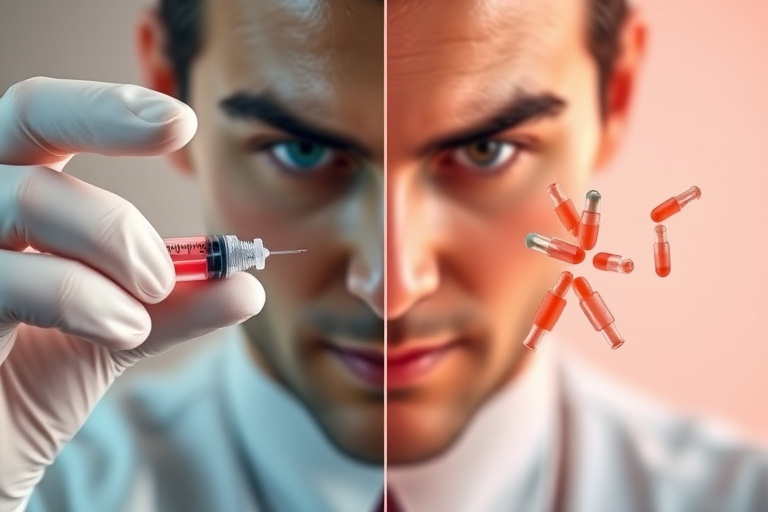
BPC-157 for tissue healing is almost exclusively used as an injection. While oral BPC-157 capsules exist and may have some effect on gut-related issues (since the peptide contacts the GI lining directly), systemic tissue repair (tendons, ligaments, muscles) requires the peptide to reach those tissues through the bloodstream. Injection ensures this happens.
Free Download: Reconstitution calculator Cheat Sheet Step-by-step peptide reconstitution guide with dose calculations, storage tips, and injection technique basics. Get yours free (we'll email it to you instantly. [Download Now]
Growth hormone peptides like CJC-1295 and ipamorelin must be injected. These peptides need to reach the pituitary gland intact to stimulate growth hormone release. Oral administration would destroy them before they could work.
TB-500 (thymosin beta-4) is another peptide that requires injection for systemic effects. Its role in tissue repair and inflammation modulation depends on intact delivery to target tissues.
The injection process itself is straightforward. Peptides arrive as lyophilized (freeze-dried) powder and are reconstituted with bacteriostatic water. Subcutaneous injection uses a small insulin-type needle in the abdomen, thigh, or upper arm. Most people find it painless after the first few times.
Our takes the guesswork out of mixing your peptides.
For a complete overview of BPC-157, see our .
When Oral Peptides Make Sense
Oral peptides aren't always inferior. There are specific situations where they're appropriate or even preferred.
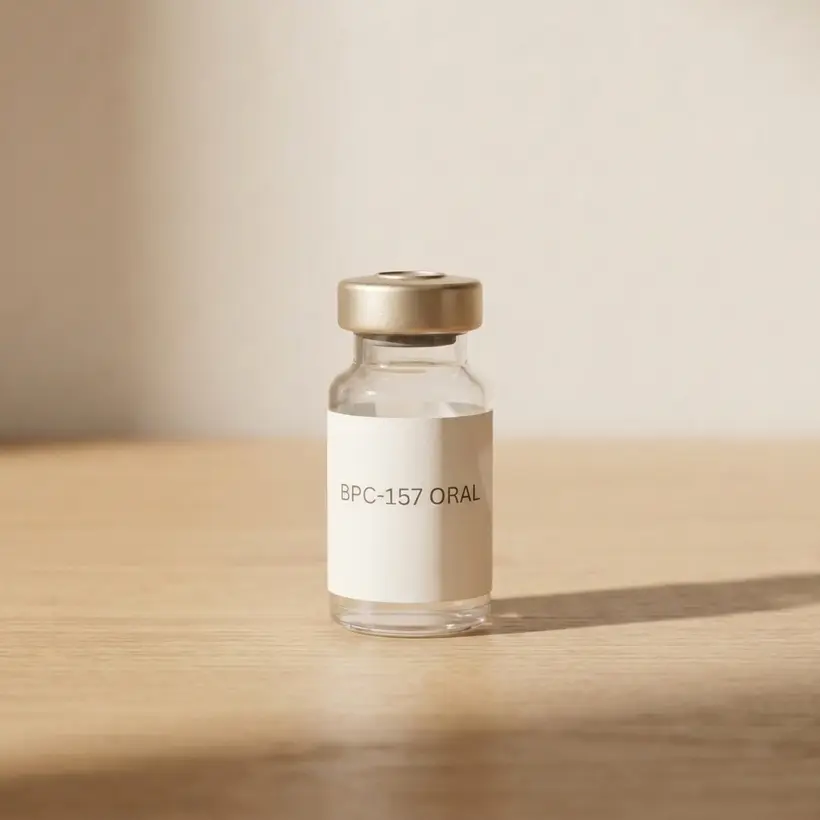
From the FormBlends catalog
BPC-157 Oral (Stable Arginate Salt)
Acid-stable oral form of BPC-157 for gut and systemic healing · From $69/mo · compounded by a licensed 503A pharmacy, dispensed only after provider review.
Learn about BPC-157 Oral (Stable Arginate Salt) →Gut-targeted therapy is one area where oral delivery has an advantage. If the goal is to affect the GI tract directly) such as using BPC-157 for gut lining support (an oral form puts the peptide exactly where it needs to be. The peptide doesn't need to survive digestion because its target is the digestive tract itself.
Collagen peptides are the most common oral peptide product. These are hydrolyzed (pre-digested) collagen fragments that are small enough to survive some digestion and absorb through the intestinal wall. Studies show oral collagen peptides can improve skin hydration, joint comfort, and nail strength. They're not the same category as therapeutic prescription peptides, but they work well for their intended purpose.
Oral semaglutide represents a technological breakthrough. The SNAC absorption enhancer protects the peptide from stomach acid and helps with absorption through the stomach wall. This technology is proprietary and specific to this formulation) it's not something that can easily be applied to other peptides.
Future developments may expand oral peptide options. Researchers are working on nanoparticle encapsulation, enteric coatings, permeation enhancers, and other technologies to improve oral peptide delivery. But for now, most therapeutic peptides are most effective via injection.
Practical Considerations: Comfort, Cost, and Compliance
Let's address the practical factors that influence which delivery method people actually prefer.
Comfort and needle anxiety are real barriers. Some people strongly prefer swallowing a pill over self-injecting. This preference is valid. If injection anxiety prevents someone from starting peptide therapy, an oral alternative (where one exists and is effective) may be the better choice simply because adherence matters more than theoretical bioavailability.
But most people who start injections report that the anxiety fades quickly. Modern insulin syringes are 30-31 gauge (extremely thin. Many describe the sensation as less than a mosquito bite.
Cost varies by peptide and formulation. Injectable peptides require the peptide itself plus bacteriostatic water, syringes, and alcohol swabs. Oral formulations may have a higher per-dose cost because the dose must be much larger to account for low bioavailability.
Storage requirements differ too. Most injectable peptides need refrigeration after reconstitution and have a limited shelf life (typically 4-8 weeks). Oral peptides in capsule or tablet form are generally stable at room temperature and have longer shelf lives. This makes oral forms more convenient for travel.
Compliance patterns differ between delivery methods. Some people find a daily oral routine easier to maintain. Others prefer the simplicity of a few weekly injections. The can help you track doses and set reminders regardless of your delivery method.
Frequently Asked Questions
Can I take BPC-157 orally instead of injecting it?
Oral BPC-157 capsules are available and may benefit gut-related issues since the peptide directly contacts the GI lining. For systemic healing of tendons, muscles, or joints, injection is the recommended route because it ensures the peptide reaches target tissues through the bloodstream. Discuss the best approach with your provider.
Why can't all peptides be made into pills?
Peptides are chains of amino acids held together by peptide bonds. Your digestive system is specifically designed to break these bonds) that's how you digest protein from food. Making a peptide survive digestion intact requires specialized technology (like the SNAC enhancer used in oral semaglutide) that isn't available for most peptides yet.
Are peptide injections painful?
Most people describe subcutaneous peptide injections as painless or mildly uncomfortable. The needles used are very thin (30-31 gauge) and short (typically 8mm). The most common sensation is a brief pinch. Injection site rotation prevents discomfort from building up in any one area.
How do I know if my peptide needs to be injected?
Your provider will prescribe the appropriate delivery method based on the peptide, your treatment goals, and your preferences. As a general rule, peptides intended for systemic effects (tissue healing, hormone stimulation, body composition) require injection. Peptides targeting the GI tract or skin may have effective topical or oral options.
Your Personalized Plan Is Waiting
No two patients are the same, and your protocol shouldn't be either. FormBlends providers create customized treatment plans based on your health profile, goals, and preferences.
Medical References
- Goldstein AL, Hannappel E, Sosne G, Kleinman HK. Thymosin beta4: a multi-functional regenerative peptide. Basic properties and clinical applications. Expert Opin Biol Ther. 2012;12(1):37-51. [PubMed | DOI]
- Davies M, Færch L, Jeppesen OK, et al. Semaglutide 2.4 mg once a week in adults with overweight or obesity, and type 2 diabetes (STEP 2). Lancet. 2021;397(10278):971-984. [PubMed | ClinicalTrials.gov | DOI]
- Wadden TA, Bailey TS, Billings LK, et al. Effect of Subcutaneous Semaglutide vs Placebo as an Adjunct to Intensive Behavioral Therapy on Body Weight in Adults With Overweight or Obesity (STEP 3). JAMA. 2021;325(14):1403-1413. [PubMed | ClinicalTrials.gov | DOI]
- Garvey WT, Batterham RL, Bhatt DL, et al. Two-year effects of semaglutide in adults with overweight or obesity (STEP 5). Nat Med. 2022;28(10):2083-2091. [PubMed | ClinicalTrials.gov | DOI]
- Garvey WT, Frias JP, Jastreboff AM, et al. Tirzepatide once weekly for the treatment of obesity in people with type 2 diabetes (SURMOUNT-2). Lancet. 2023;402(10402):613-626. [PubMed | ClinicalTrials.gov | DOI]
- Wadden TA, Chao AM, Engel S, et al. Tirzepatide with intensive lifestyle intervention in adults with overweight or obesity (SURMOUNT-3). Nat Med. 2024. [PubMed | ClinicalTrials.gov | DOI]
- Aronne LJ, Sattar N, Horn DB, et al. Continued Treatment With Tirzepatide for Maintenance of Weight Reduction in Adults With Obesity (SURMOUNT-4). JAMA. 2024;331(1):38-48. [PubMed | ClinicalTrials.gov | DOI]
Sources &. References
- Wilding JPH, Batterham RL, Calanna S, et al. Once-Weekly Semaglutide in Adults with Overweight or Obesity. N Engl J Med. 2021;384(11):989-1002. Doi:10.1056/NEJMoa2032183
- Davies M, Færch L, Jeppesen OK, et al. Semaglutide 2.4 mg once a week in adults with overweight or obesity, and type 2 diabetes (STEP 2 (Davies et al., Lancet, 2021)). Lancet. 2021;397(10278):971-984. Doi:10.1016/S0140-6736(21)00213-0
- Wadden TA, Bailey TS, Billings LK, et al. Effect of Subcutaneous Semaglutide vs Placebo as an Adjunct to Intensive Behavioral Therapy on Body Weight in Adults With Overweight or Obesity (STEP 3 (Wadden et al., JAMA, 2021)). JAMA. 2021;325(14):1403-1413. Doi:10.1001/jama.2021.1831
- Garvey WT, Batterham RL, Bhatt DL, et al. Two-Year Effects of Semaglutide in Adults with Overweight or Obesity (STEP 5 (Garvey et al., Nat Med, 2022)). Nat Med. 2022;28:2083-2091. Doi:10.1038/s41591-022-02026-4
- Lincoff AM, Brown-Frandsen K, Colhoun HM, et al. Semaglutide and Cardiovascular Outcomes in Obesity without Diabetes. N Engl J Med. 2023;389(24):2221-2232. Doi:10.1056/NEJMoa2307563
- Jastreboff AM, Aronne LJ, Ahmad NN, et al. Tirzepatide Once Weekly for the Treatment of Obesity. N Engl J Med. 2022;387(3):205-216. Doi:10.1056/NEJMoa2206038
- Garvey WT, Frias JP, Jastreboff AM, et al. Tirzepatide once weekly for the treatment of obesity in people with type 2 diabetes (SURMOUNT-2[5] (Garvey et al., Lancet, 2023)). Lancet. 2023;402(10402):613-626. Doi:10.1016/S0140-6736(23)01200-X
- Wadden TA, Chao AM, Engel S, et al. Tirzepatide after intensive lifestyle intervention in adults with overweight or obesity (SURMOUNT-3[6] (Wadden et al., Nat Med, 2023)). Nat Med. 2023. Doi:10.1038/s41591-023-02597-w
- Aronne LJ, Sattar N, Horn DB, et al. Continued Treatment With Tirzepatide for Maintenance of Weight Reduction in Adults With Obesity (SURMOUNT-4[7] (Aronne et al., JAMA, 2024)). JAMA. 2024;331(1):38-48. Doi:10.1001/jama.2023.24945
- Malhotra A, Grunstein RR, Fietze I, et al. Tirzepatide for the Treatment of Obstructive Sleep Apnea and Obesity. N Engl J Med. 2024;391:1193-1205. Doi:10.1056/NEJMoa2404881
- Pi-Sunyer X, Astrup A, Fujioka K, et al. A Randomized, Controlled Trial of 3.0 mg of Liraglutide in Weight Management. N Engl J Med. 2015;373(1):11-22. Doi:10.1056/NEJMoa1411892
- Marso SP, Daniels GH, Tanaka K, et al. Liraglutide and Cardiovascular Outcomes in Type 2 Diabetes. N Engl J Med. 2016;375(4):311-322. Doi:10.1056/NEJMoa1603827
This content is provided for informational and educational purposes only. It isn't a substitute for professional medical advice, diagnosis, or treatment. Always seek the advice of a licensed healthcare provider with any questions about a medical condition or treatment plan.
Last updated: 2026-03-24
Ready when you are
BPC-157 Oral (Stable Arginate Salt)
Acid-stable oral form of BPC-157 for gut and systemic healing · From $69/mo · compounded by a licensed 503A pharmacy, dispensed only after provider review.
Learn about BPC-157 Oral (Stable Arginate Salt) →