Key Takeaway
Energy and motivation are two things that change significantly during GLP-1 treatment. This GLP-1 motivation and energy resource covers the important information you need to make informed decisions.
Energy and motivation are two things that change significantly during GLP-1 treatment. This GLP-1 motivation and energy resource covers the important information you need to make informed decisions. Knowing how GLP-1 affects motivation and energy at different stages helps you plan ahead, set realistic expectations, and avoid discouragement when things shift. Some phases feel energizing. Others feel draining. Both are normal and temporary.
Key Takeaways: - The Energy Timeline on GLP-1 Medication - Discover why motivation fluctuates during treatment - Strategies to Maintain Energy on GLP-1 - Building Sustainable Motivation Systems
This guide walks you through the typical energy and motivation patterns during GLP-1 treatment and gives you practical strategies for each phase.
The Energy Timeline on GLP-1 Medication
Your energy levels follow a general pattern during treatment, though individual experiences vary. Here is what most people report.
Weeks 1 to 4 (adjustment phase). Energy often dips during this period. Your body is adjusting to reduced calorie intake, and side effects like nausea and fatigue are most common early on. Many people feel tired, foggy, or sluggish. This is temporary. Your body is recalibrating.
What to do: Rest more than usual. Don't push through extreme fatigue. Focus on gentle movement like walking rather than intense exercise. Eat enough protein and calories to fuel your body even if your appetite is low. Read our for more support.
Weeks 4 to 12 (adaptation phase). Most people start feeling better. Side effects often decrease as your body adjusts. You may notice that you sleep better, especially if weight loss is improving sleep apnea or reducing joint pain. Energy levels begin to stabilize or improve.
Months 3 to 6 (momentum phase). This is when many people feel their best. Visible weight loss boosts motivation. Physical activities become easier as you carry less weight. The positive feedback loop between losing weight, feeling better, and wanting to do more kicks in.
"We now have cardiovascular outcomes data showing semaglutide reduces MACE events by 20% in people with obesity, independent of diabetes status. The SELECT trial[1] changed how we think about these medications.") Dr. A. Michael Lincoff, MD, Cleveland Clinic, lead author of SELECT
Months 6 and beyond (maintenance phase). Energy typically stabilizes at a new baseline that's often higher than before treatment. Weight loss may slow, which can affect motivation. This is the phase where sustainable habits matter most.
Why Motivation Fluctuates During Treatment
Motivation isn't a constant resource. It rises and falls based on results, emotions, and circumstances. Understanding common motivation patterns helps you plan for the dips.
View data table
| Category | Impact on Treatment Outcomes (%) | Detail |
|---|---|---|
| Protein Intake | 90 | Preserves muscle mass |
| Exercise | 85 | Enhances weight loss |
| Sleep Quality | 78 | Supports metabolism |
| Hydration | 72 | Reduces side effects |
| Stress Mgmt | 65 | Cortisol reduction |
The honeymoon effect. Early motivation is often high. The medication is new. Weight drops quickly. Everything feels exciting. This initial surge doesn't last forever, and that's okay. It isn't supposed to carry you through the entire progress.
Plateau frustration. Weight loss slows naturally after the first few months. When the scale stops moving, motivation can plummet. This is one of the most common reasons people consider stopping treatment. But plateaus are normal. They don't mean the medication has stopped working. Your body may be , losing fat while maintaining muscle.
Dose increase disruption. Each time your dose increases, side effects may temporarily return. Nausea, fatigue, and digestive issues can sap motivation and energy. These effects usually resolve within 1 to 2 weeks on the new dose.
Patient Perspective: "The 'food noise' going quiet was the most unexpected benefit. I didn't realize how much mental energy I spent thinking about food until it stopped. It was like someone turned down the volume on a radio I'd been hearing my whole life.", Emily R., 36, FormBlends patient (name changed for privacy)
Life stress. Work pressure, family challenges, financial concerns, and health issues all compete for the energy and attention you need for your GLP-1 process. Motivation naturally decreases when you're managing competing demands.
Comparison traps. Seeing other people's dramatic results online can make your own progress feel insufficient. Everyone responds differently to GLP-1 medication. Your weight loss is valid at whatever pace it unfolds.
Ready to start your treatment? about what to expect at each stage.
Strategies to Maintain Energy on GLP-1
Low energy is manageable with the right approach. These strategies address the most common causes.
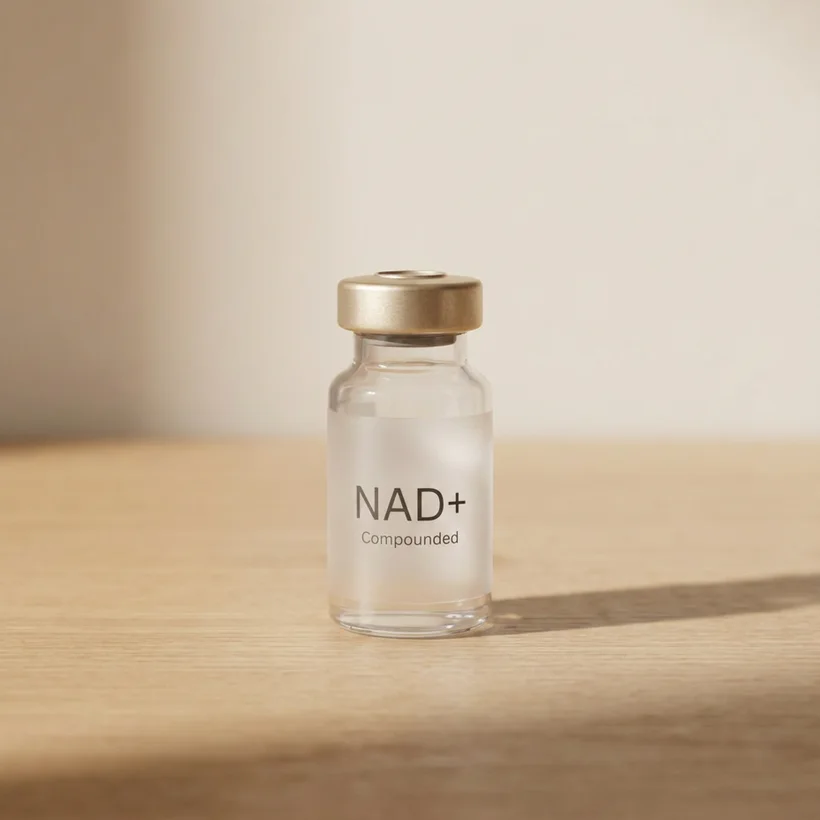
From the FormBlends catalog
NAD+ Peptide Complex
Restore cellular energy and DNA repair capacity · From $179/mo · compounded by a licensed 503A pharmacy, dispensed only after provider review.
View NAD+ Peptide Complex →Eat enough. This is the number one energy issue on GLP-1. With reduced appetite, many people accidentally under-eat. Consuming too few calories triggers fatigue, brain fog, and muscle loss. Track your intake with the and aim for at least your minimum calorie target daily.
Prioritize protein. Protein provides sustained energy without the blood sugar spikes and crashes of simple carbs. Aim for daily. Split evenly across meals.
Stay hydrated. Dehydration causes fatigue, headaches, and poor concentration. On GLP-1 with reduced food intake, you get less water from food. Drink intentionally throughout the day. Add electrolytes if needed.
Time your carbs. Complex carbohydrates before activity provide energy for exercise. Simple carbs can cause energy crashes. Choose whole grains, sweet potatoes, and fruits over refined sugars and white bread.
Manage caffeine wisely. Some caffeine can boost energy and focus. But too much, or having it on an empty stomach, can cause jitters, nausea, and anxiety on GLP-1. Keep caffeine moderate and pair it with food.
Move even when you don't feel like it. Paradoxically, gentle exercise increases energy. A 10-minute walk when you feel sluggish often produces 1 to 2 hours of improved alertness. You don't need motivation to start. Start, and motivation often follows.
Building Sustainable Motivation Systems
Relying on motivation alone is a losing strategy. Systems and habits are more reliable. Here is how to build them.
Set identity-based goals. Instead of "I want to lose 40 pounds," try "I am someone who takes care of their health." When your goal is about who you're rather than what the scale says, daily actions become easier to sustain.
Use habit stacking. Attach new habits to existing ones. Take your daily walk right after your morning coffee. Log your meals right after eating. Do your breathing exercises right before bed. Existing habits create natural triggers for new ones.
Track streaks. The helps you maintain consistency by showing your tracking history. Seeing an unbroken streak of logged doses or daily steps creates a powerful desire not to break the chain.
Reward progress, not just results. Celebrate sticking to your plan for a week, not just hitting a weight target. Buy yourself something small, enjoy a non-food treat, or acknowledge your consistency out loud. Process-based rewards reinforce the behaviors that create results.
Plan for low-motivation days. Have a minimum viable routine. On days when you can't do your full workout, walk for 10 minutes. On days when cooking feels overwhelming, have a pre-made protein shake. The goal is never zero.
Stay connected to your why. Write down why you started GLP-1 treatment. Keep it visible. Read it when motivation fades. Your deeper reasons, like playing with your kids, feeling comfortable in your body, or improving your health, are more durable motivators than scale numbers.
Frequently Asked Questions
Is it normal to feel tired when starting GLP-1 medication?
Yes. Fatigue during the first 2 to 4 weeks is one of the most common experiences. It's caused by reduced calorie intake, side effects like nausea, and your body adapting to new hormonal signals. This typically improves as your body adjusts to the medication.
How do I exercise when I have no energy on GLP-1?
Start with very low-intensity activities. A 10-minute walk, gentle yoga, or light stretching counts. As your energy improves, gradually increase intensity. Don't force intense workouts during the early adjustment period. Listen to your body and build up over time.
Will my energy levels improve as I lose weight?
For most people, yes. Carrying less weight reduces the physical effort required for daily activities. Improved sleep from reduced sleep apnea, better blood sugar control, and increased physical fitness all contribute to higher energy levels over time.
What if I lose all motivation during a weight loss plateau?
Plateaus are temporary. Review your tracking data to confirm you're still making non-scale progress like measurement changes or improved energy. Talk to your about whether a dose adjustment might help. Focus on maintaining your habits rather than forcing results. The scale will move again.
Can GLP-1 medication cause brain fog?
Some people report brain fog during the early weeks of treatment, often related to reduced calorie intake or blood sugar adjustments. Eating regular meals, staying hydrated, getting adequate sleep, and maintaining stable blood sugar levels usually resolve this symptom.
Your Personalized Plan Is Waiting
No two patients are the same, and your protocol shouldn't be either. FormBlends providers create customized treatment plans based on your health profile, goals, and preferences.
Medical References
- Lincoff AM, Brown-Frandsen K, Colhoun HM, et al. Semaglutide and Cardiovascular Outcomes in Obesity without Diabetes. N Engl J Med. 2023;389(24):2221-2232. [PubMed | ClinicalTrials.gov | DOI]
- Davies M, Færch L, Jeppesen OK, et al. Semaglutide 2.4 mg once a week in adults with overweight or obesity, and type 2 diabetes (STEP 2). Lancet. 2021;397(10278):971-984. [PubMed | ClinicalTrials.gov | DOI]
- Wadden TA, Bailey TS, Billings LK, et al. Effect of Subcutaneous Semaglutide vs Placebo as an Adjunct to Intensive Behavioral Therapy on Body Weight in Adults With Overweight or Obesity (STEP 3). JAMA. 2021;325(14):1403-1413. [PubMed | ClinicalTrials.gov | DOI]
- Garvey WT, Batterham RL, Bhatt DL, et al. Two-year effects of semaglutide in adults with overweight or obesity (STEP 5). Nat Med. 2022;28(10):2083-2091. [PubMed | ClinicalTrials.gov | DOI]
Sources &. References
- Wilding JPH, Batterham RL, Calanna S, et al. Once-Weekly Semaglutide in Adults with Overweight or Obesity. N Engl J Med. 2021;384(11):989-1002. Doi:10.1056/NEJMoa2032183
- Davies M, Færch L, Jeppesen OK, et al. Semaglutide 2.4 mg once a week in adults with overweight or obesity, and type 2 diabetes (STEP 2 (Davies et al., Lancet, 2021)). Lancet. 2021;397(10278):971-984. Doi:10.1016/S0140-6736(21)00213-0
- Wadden TA, Bailey TS, Billings LK, et al. Effect of Subcutaneous Semaglutide vs Placebo as an Adjunct to Intensive Behavioral Therapy on Body Weight in Adults With Overweight or Obesity (STEP 3 (Wadden et al., JAMA, 2021)). JAMA. 2021;325(14):1403-1413. Doi:10.1001/jama.2021.1831
- Garvey WT, Batterham RL, Bhatt DL, et al. Two-Year Effects of Semaglutide in Adults with Overweight or Obesity (STEP 5 (Garvey et al., Nat Med, 2022)). Nat Med. 2022;28:2083-2091. Doi:10.1038/s41591-022-02026-4
- Lincoff AM, Brown-Frandsen K, Colhoun HM, et al. Semaglutide and Cardiovascular Outcomes in Obesity without Diabetes. N Engl J Med. 2023;389(24):2221-2232. Doi:10.1056/NEJMoa2307563
- Stierman B, Afful J, Carroll MD, et al. National Health and Nutrition Examination Survey 2017-March 2020 Prepandemic Data Files. NCHS Data Brief. No. 492. CDC/NCHS. 2023.
- Sumithran P, Prendergast LA, Delbridge E, et al. Long-Term Persistence of Hormonal Adaptations to Weight Loss. N Engl J Med. 2011;365(17):1597-1604. Doi:10.1056/NEJMoa1105816
Nothing in this article should be construed as medical advice. The information provided is educational only. Always consult with your healthcare provider before beginning, modifying, or discontinuing any medication or treatment. FormBlends connects patients with licensed providers for individualized care.
Last updated: 2026-03-24
Ready when you are
NAD+ Peptide Complex
Restore cellular energy and DNA repair capacity · From $179/mo · compounded by a licensed 503A pharmacy, dispensed only after provider review.
View NAD+ Peptide Complex →