Key Takeaway
Losing weight is the goal. This tracking muscle mass GLP-1 resource covers the important information you need to make informed decisions. Losing muscle isn't. One of the most important and often overlooked aspects of GLP-1 treatment is tracking muscle mass throughout your goals.
Losing weight is the goal. This tracking muscle mass GLP-1 resource covers the important information you need to make informed decisions. Losing muscle isn't. One of the most important and often overlooked aspects of GLP-1 treatment is tracking muscle mass throughout your goals. When you lose weight through any method, some of that loss comes from muscle unless you take deliberate steps to prevent it. Monitoring your lean mass helps you and your provider ensure that the weight you're losing is primarily fat, not the muscle that keeps your metabolism running and your body functioning well.
Key Takeaways: - Discover why muscle mass matters during weight loss - Learn how to measure and track lean mass - Strategies to Preserve Muscle During GLP-1 Treatment - Warning Signs of Muscle Loss
Why Muscle Mass Matters During Weight Loss
Muscle isn't just about looking toned. It's metabolically active tissue that affects nearly every aspect of your health.
Metabolic rate. Every pound of muscle burns roughly 6-10 calories per day at rest. Lose 10 pounds of muscle during your results, and your daily calorie burn drops by 60-100 calories. This doesn't sound like much, but over a year, it adds up to thousands of calories of reduced daily expenditure. This is one major reason people regain weight after dieting.
Functional strength. Muscle powers every movement you make. Walking, climbing stairs, carrying groceries, picking up children, and maintaining balance all depend on adequate muscle mass. Losing muscle during weight loss can leave you lighter but weaker, which is the opposite of healthier.
Blood sugar management. Skeletal muscle is the largest site of glucose disposal in your body. More muscle means better insulin sensitivity and blood sugar control. Since many people on are also managing metabolic health, preserving muscle directly supports their treatment goals.
Long-term weight maintenance. People who maintain more muscle during weight loss have an easier time keeping the weight off afterward. Their higher metabolic rate gives them more dietary flexibility, and their strength supports the active lifestyle that prevents regain.
Clinical trials have shown that some weight loss on GLP-1 medications comes from lean mass. This makes active muscle preservation strategies important, not optional. Your tracking data is the early warning system that tells you whether your approach is working.
"The key to successful GLP-1 therapy is setting realistic expectations and supporting patients through the titration phase. The side effects are manageable for most people, but they need to know what to expect.") Dr. Caroline Apovian, MD, Harvard Medical School
Free Download: GLP-1 Progress Report Template Our progress template includes a dedicated muscle mass tracking section with strength benchmarks, limb measurements, and body composition estimates. Get yours free (we'll email it to you instantly.
[Download CTA Button]
How to Measure and Track Lean Mass
Several methods exist for tracking muscle mass, ranging from simple to sophisticated.
View data table
| Category | Impact on Treatment Outcomes (%) | Detail |
|---|---|---|
| Protein Intake | 90 | Preserves muscle mass |
| Exercise | 85 | Enhances weight loss |
| Sleep Quality | 78 | Supports metabolism |
| Hydration | 72 | Reduces side effects |
| Stress Mgmt | 65 | Cortisol reduction |

Limb circumference measurements. This is the simplest approach and requires only a tape measure. Track your upper arm, thigh, and calf circumference bi-weekly. If these measurements remain stable or increase while your waist circumference decreases, you're likely losing fat and preserving muscle. See our guide to for detailed instructions.
Strength benchmarks. Track your performance on key exercises. If you can still squat, bench press, deadlift, or row the same weight (or more) at 220 pounds as you could at 250 pounds, your muscle mass is intact. Choose 3-5 exercises and test them every 4 weeks under the same conditions.
Body composition scales. Bioelectrical impedance analysis (BIA) scales provide estimates of body fat percentage and lean mass. These aren't perfectly accurate on any single measurement, but they can track trends over time if you use the same scale under the same conditions (morning, fasted, after using the bathroom).
DEXA scan. Dual-energy X-ray absorptiometry is the gold standard for body composition measurement. It precisely measures fat mass, lean mass, and bone density. DEXA scans are available at some medical facilities and body composition clinics, typically for $50-$150 per scan. Getting a baseline scan when you start treatment and a follow-up every 3-6 months provides the most accurate tracking data.
Progress photos. Visual assessment is surprisingly useful. Photos from consistent angles show whether you're maintaining muscle shape and definition as you lose weight. Combine photos with measurements for the most complete picture.
Log all of your tracking data in the so you have a continuous record to share with your provider.
Strategies to Preserve Muscle During GLP-1 Treatment
Tracking identifies problems. These strategies prevent them.
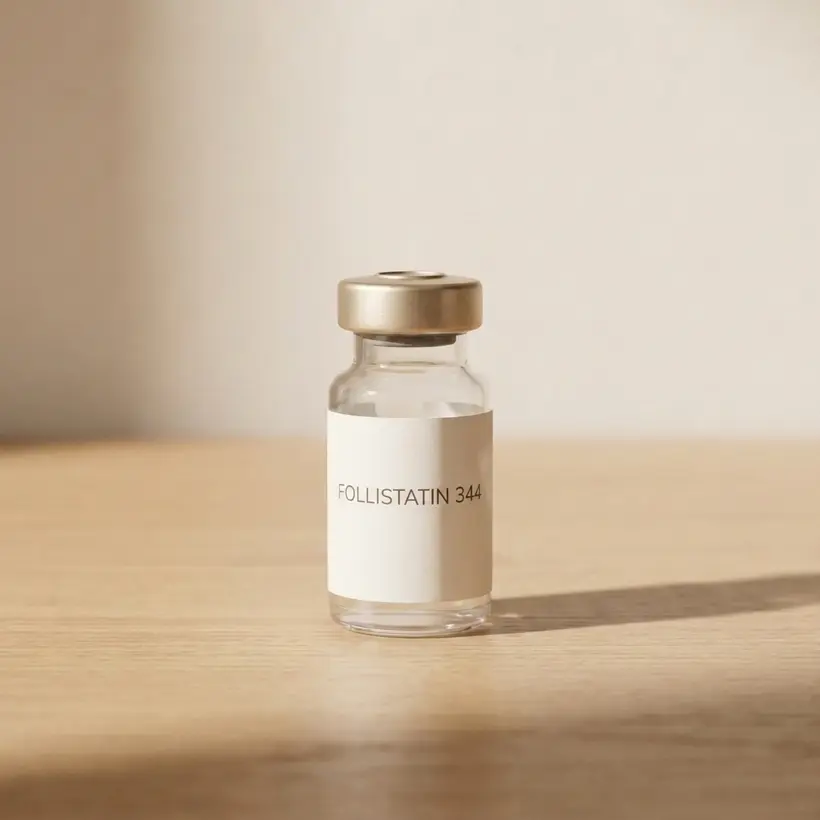
From the FormBlends catalog
Follistatin 344
Myostatin inhibitor studied for enhanced muscle growth · From $149/mo · compounded by a licensed 503A pharmacy, dispensed only after provider review.
Learn about Follistatin 344 →Strength training is non-negotiable. Resistance training is the single most powerful stimulus for muscle preservation during weight loss. Aim for 2-4 sessions per week targeting all major muscle groups. Progressive overload, gradually increasing weight or reps over time, tells your body that it needs to keep its muscle.
You don't need to be a bodybuilder. Simple compound movements like squats, deadlifts, presses, rows, and carries provide the stimulus your muscles need. Focus on maintaining your current strength levels rather than trying to build significant new muscle while in a calorie deficit.
Prioritize protein intake. Aim for 0.7-1 gram of protein per pound of your target body weight daily. During weight loss, your protein needs are actually higher than during weight maintenance because your body needs amino acids to preserve muscle while burning fat for energy. Our provides practical strategies for hitting your protein targets.
Distribute protein throughout the day. Current Available data suggest that spreading protein across 3-4 meals of 25-40 grams each is more effective for muscle preservation than eating most of your protein in one meal. Each protein-rich meal triggers muscle protein synthesis for several hours.
Don't drop calories too aggressively. GLP-1 medications naturally reduce your appetite, but if you're eating fewer than 1,000-1,200 calories daily, you may be losing muscle unnecessarily. Work with your provider to ensure your calorie intake supports fat loss while providing enough energy and nutrients for muscle maintenance.
Consider growth hormone peptide support. Some providers prescribe growth hormone peptides alongside GLP-1 medications specifically to support muscle preservation. Peptides like CJC-1295 and Ipamorelin may support lean tissue through growth hormone improvement. Discuss this option with your .
Warning Signs of Muscle Loss
Watch for these indicators that your lean mass may be declining.
Decreasing strength. If you're consistently getting weaker in the gym despite adequate rest and nutrition, muscle loss may be occurring. A decline in the weights you can lift or the reps you can perform is a red flag.
Rapid weight loss without strength training. Losing more than 1% of your body weight per week without resistance training almost guarantees significant muscle loss. The faster the weight loss, the higher the proportion that tends to come from muscle.
Shrinking limb measurements. If your arm and thigh circumference decrease alongside your waist, you're losing muscle along with fat. Stable limbs plus a shrinking waist is the pattern you want.
Increased fatigue and weakness. Feeling progressively weaker and more fatigued despite adequate sleep and medication compliance can indicate muscle loss and its metabolic consequences.
Loose, flat appearance despite weight loss. Losing fat while keeping muscle gives you a firm, toned appearance. Losing both fat and muscle can leave you looking soft or deflated even at a lower weight. reveal this pattern clearly.
If you spot any of these warning signs, contact your provider immediately. Adjustments to your training, nutrition, dose, or supplementation can address muscle loss before it becomes significant. Tracking alongside your muscle metrics helps your provider see the complete picture.
Frequently Asked Questions
How much muscle loss is normal during GLP-1 weight loss?
Some lean mass loss is expected during any weight loss program. In clinical trials, roughly 25-40% of total weight loss came from lean mass. With adequate protein intake and resistance training, you can reduce this significantly, potentially keeping lean mass loss below 15-20% of total weight lost.
Can I build muscle while losing weight on GLP-1 medication?
Building significant new muscle while in a calorie deficit is difficult but not impossible, especially for beginners to strength training. More realistically, the goal is to preserve the muscle you have while losing fat. Once you reach your target weight, you can shift to a muscle-building phase with more calories.
Is a DEXA scan worth the cost?
For most people on GLP-1 treatment, a baseline and one follow-up DEXA scan provides extremely valuable data. Knowing your exact body composition at the start and midpoint of treatment helps you and your provider evaluate whether your weight loss is primarily fat. At $50-150 per scan, it's a worthwhile investment in data-driven treatment.
What if I can't do strength training due to an injury?
If traditional resistance training isn't possible, work with a physical therapist to find safe alternatives. Isometric exercises, resistance bands, pool-based exercises, and machine-based movements can provide muscle-preserving stimulus with reduced injury risk. may also support your recovery alongside your GLP-1 protocol.
Should I take protein supplements while on GLP-1 medication?
If you struggle to meet your protein targets through whole foods due to reduced appetite, protein supplements like whey, casein, or plant-based protein powder can help fill the gap. Protein shakes are easy to consume even when appetite is low. Discuss supplementation with your provider to ensure it fits your overall nutrition plan.
Ready to Take the Next Step?
Your health goals is personal) and you deserve a plan that fits. FormBlends connects you with licensed providers who can evaluate your needs and create a personalized protocol.
Medical References
- Davies M, Færch L, Jeppesen OK, et al. Semaglutide 2.4 mg once a week in adults with overweight or obesity, and type 2 diabetes (STEP 2). Lancet. 2021;397(10278):971-984. [PubMed | ClinicalTrials.gov | DOI]
- Wadden TA, Bailey TS, Billings LK, et al. Effect of Subcutaneous Semaglutide vs Placebo as an Adjunct to Intensive Behavioral Therapy on Body Weight in Adults With Overweight or Obesity (STEP 3). JAMA. 2021;325(14):1403-1413. [PubMed | ClinicalTrials.gov | DOI]
- Garvey WT, Batterham RL, Bhatt DL, et al. Two-year effects of semaglutide in adults with overweight or obesity (STEP 5). Nat Med. 2022;28(10):2083-2091. [PubMed | ClinicalTrials.gov | DOI]
- Garvey WT, Frias JP, Jastreboff AM, et al. Tirzepatide once weekly for the treatment of obesity in people with type 2 diabetes (SURMOUNT-2). Lancet. 2023;402(10402):613-626. [PubMed | ClinicalTrials.gov | DOI]
- Wadden TA, Chao AM, Engel S, et al. Tirzepatide with intensive lifestyle intervention in adults with overweight or obesity (SURMOUNT-3). Nat Med. 2024. [PubMed | ClinicalTrials.gov | DOI]
- Aronne LJ, Sattar N, Horn DB, et al. Continued Treatment With Tirzepatide for Maintenance of Weight Reduction in Adults With Obesity (SURMOUNT-4). JAMA. 2024;331(1):38-48. [PubMed | ClinicalTrials.gov | DOI]
Sources &. References
- Wilding JPH, Batterham RL, Calanna S, et al. Once-Weekly Semaglutide in Adults with Overweight or Obesity. N Engl J Med. 2021;384(11):989-1002. Doi:10.1056/NEJMoa2032183
- Davies M, Færch L, Jeppesen OK, et al. Semaglutide 2.4 mg once a week in adults with overweight or obesity, and type 2 diabetes (STEP 2 (Davies et al., Lancet, 2021)). Lancet. 2021;397(10278):971-984. Doi:10.1016/S0140-6736(21)00213-0
- Wadden TA, Bailey TS, Billings LK, et al. Effect of Subcutaneous Semaglutide vs Placebo as an Adjunct to Intensive Behavioral Therapy on Body Weight in Adults With Overweight or Obesity (STEP 3 (Wadden et al., JAMA, 2021)). JAMA. 2021;325(14):1403-1413. Doi:10.1001/jama.2021.1831
- Garvey WT, Batterham RL, Bhatt DL, et al. Two-Year Effects of Semaglutide in Adults with Overweight or Obesity (STEP 5 (Garvey et al., Nat Med, 2022)). Nat Med. 2022;28:2083-2091. Doi:10.1038/s41591-022-02026-4
- Lincoff AM, Brown-Frandsen K, Colhoun HM, et al. Semaglutide and Cardiovascular Outcomes in Obesity without Diabetes. N Engl J Med. 2023;389(24):2221-2232. Doi:10.1056/NEJMoa2307563
- Jastreboff AM, Aronne LJ, Ahmad NN, et al. Tirzepatide Once Weekly for the Treatment of Obesity. N Engl J Med. 2022;387(3):205-216. Doi:10.1056/NEJMoa2206038
- Garvey WT, Frias JP, Jastreboff AM, et al. Tirzepatide once weekly for the treatment of obesity in people with type 2 diabetes (SURMOUNT-2[4] (Garvey et al., Lancet, 2023)). Lancet. 2023;402(10402):613-626. Doi:10.1016/S0140-6736(23)01200-X
- Wadden TA, Chao AM, Engel S, et al. Tirzepatide after intensive lifestyle intervention in adults with overweight or obesity (SURMOUNT-3[5] (Wadden et al., Nat Med, 2023)). Nat Med. 2023. Doi:10.1038/s41591-023-02597-w
- Aronne LJ, Sattar N, Horn DB, et al. Continued Treatment With Tirzepatide for Maintenance of Weight Reduction in Adults With Obesity (SURMOUNT-4[6] (Aronne et al., JAMA, 2024)). JAMA. 2024;331(1):38-48. Doi:10.1001/jama.2023.24945
- Malhotra A, Grunstein RR, Fietze I, et al. Tirzepatide for the Treatment of Obstructive Sleep Apnea and Obesity. N Engl J Med. 2024;391:1193-1205. Doi:10.1056/NEJMoa2404881
- Stierman B, Afful J, Carroll MD, et al. National Health and Nutrition Examination Survey 2017-March 2020 Prepandemic Data Files. NCHS Data Brief. No. 492. CDC/NCHS. 2023.
- Sumithran P, Prendergast LA, Delbridge E, et al. Long-Term Persistence of Hormonal Adaptations to Weight Loss. N Engl J Med. 2011;365(17):1597-1604. Doi:10.1056/NEJMoa1105816
Nothing in this article should be construed as medical advice. The information provided is educational only. Always consult with your healthcare provider before beginning, modifying, or discontinuing any medication or treatment. FormBlends connects patients with licensed providers for individualized care.
Last updated: 2026-03-24
Ready when you are
Follistatin 344
Myostatin inhibitor studied for enhanced muscle growth · From $149/mo · compounded by a licensed 503A pharmacy, dispensed only after provider review.
Learn about Follistatin 344 →