Key Takeaway
A full guide to TB-500 (thymosin beta-4 fragment), covering its benefits for wound healing, cardiac repair, hair regrowth, anti-inflammatory effects, and physician-supervised therapy.
TB-500 is one of the most sought-after peptides in the recovery and wellness space. Known for its role in tissue repair, inflammation reduction, and cellular migration, it has earned a strong reputation among athletes, biohackers, and anyone looking to support their body's natural healing processes. In this guide, we walk through the science behind TB-500, what the research actually shows, and how FormBlends can help you explore it under proper medical supervision.
What Is TB-500?
TB-500 is a synthetic peptide that replicates the active region of a naturally occurring protein called thymosin beta-4 (TB4). Thymosin beta-4 is one of the most abundant proteins inside human cells and is found in virtually every tissue in the body. It was originally identified in the thymus gland, which is how it got its name, but its presence extends far beyond that single organ.
The full thymosin beta-4 protein is 43 amino acids long. TB-500 is a synthetic fragment that contains the key active sequence responsible for the protein's most important biological effects. By isolating this fragment, researchers created a peptide that's easier to produce, more stable, and focused on the therapeutic properties that matter most.
Thymosin beta-4 plays a fundamental role in how cells move, grow, and differentiate. It's heavily involved in wound healing, tissue remodeling, and the inflammatory response. TB-500 carries forward these properties in a form that can be used therapeutically.
How TB-500 Works: The Actin Connection
To understand TB-500, you need to understand actin. Actin is one of the most important structural proteins in your cells. It forms the internal scaffolding (called the cytoskeleton) that gives cells their shape and enables them to move. When tissue is damaged and needs to heal, cells must migrate to the wound site, and that migration depends heavily on actin.
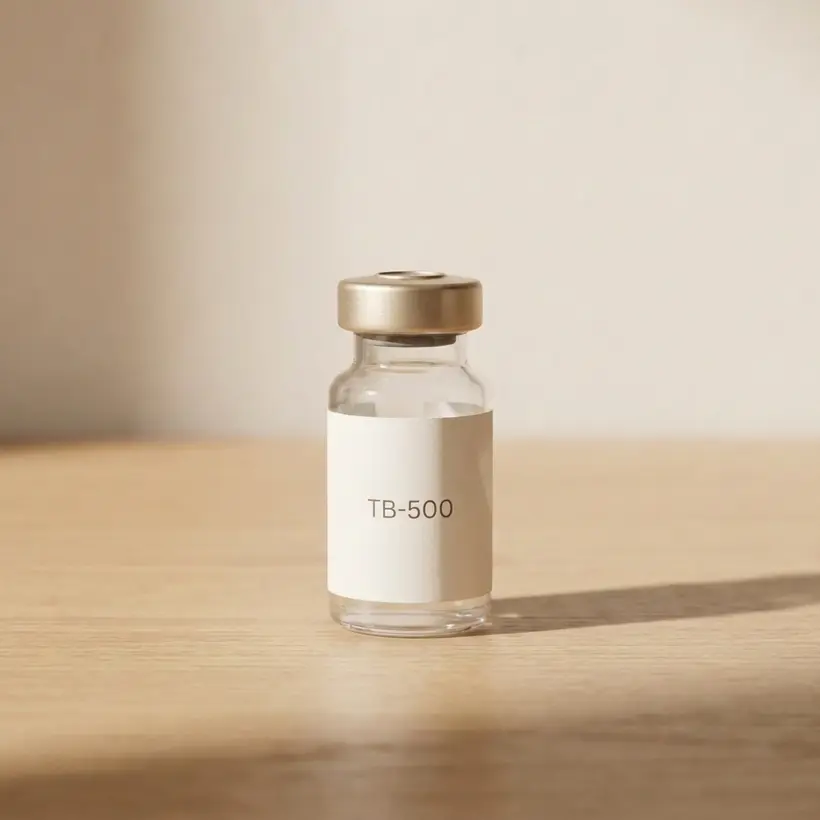
From the FormBlends catalog
TB-500 (Thymosin Beta-4)
Universal repair peptide for tissue regeneration · From $49/mo · compounded by a licensed 503A pharmacy, dispensed only after provider review.
Learn about TB-500 (Thymosin Beta-4) →Upregulation of Actin
TB-500's primary mechanism is the upregulation of actin. When TB-500 binds to actin, it promotes the formation of new actin filaments inside cells. This has a cascade of downstream effects. Cells become more mobile, more capable of reaching damaged tissue, and more effective at carrying out repair. This isn't a minor biochemical footnote. Cell migration is one of the rate-limiting steps in wound healing, and anything that enhances it can meaningfully accelerate recovery.
Cell Migration and Differentiation
Beyond just making cells more mobile, TB-500 promotes the differentiation of stem cells and progenitor cells into the specific cell types needed for repair. This means the peptide doesn't just get repair cells to the right place faster. It also helps ensure those cells develop into the right type of tissue.
Blood Vessel Formation
Like BPC-157, TB-500 promotes angiogenesis. New blood vessels bring oxygen and nutrients to healing tissue, and this vascular support is a key part of how TB-500 accelerates recovery. The angiogenic effects of TB-500 have been documented across multiple tissue types.
Anti-Inflammatory Signaling
TB-500 also modulates inflammatory signaling. It appears to downregulate certain pro-inflammatory cytokines while promoting a more controlled, productive inflammatory response. Inflammation is necessary for healing, but too much of it slows things down and causes collateral damage. TB-500 helps keep that balance in check.
Research on Wound Healing
Wound healing is the area where thymosin beta-4 and TB-500 research is most extensive.
Skin Wound Studies
In animal models, topical and systemic application of thymosin beta-4 has consistently accelerated skin wound closure. Studies in rats and mice have shown faster keratinocyte migration (the cells that form the outer layer of skin), improved collagen deposition, and reduced scar formation. Wounds treated with thymosin beta-4 closed faster and healed with better tissue quality than untreated wounds.
Corneal Wound Healing
One of the more interesting areas of TB-500 research involves the eye. Thymosin beta-4 has been studied extensively for corneal wound healing, and a topical formulation actually progressed to human clinical trials for dry eye and corneal injuries. These studies showed meaningful improvements in corneal healing, which is significant because it represents some of the limited human data available for this compound.
Surgical Wound Recovery
Animal studies have also examined TB-500's potential to improve recovery after surgical procedures. The results suggest faster incision healing, reduced inflammation at the surgical site, and improved overall tissue remodeling.
Research on Cardiac Repair
One of the most exciting and clinically significant areas of TB-500 research is cardiac tissue repair.
Post-Heart Attack Recovery
In animal models of myocardial infarction (heart attack), thymosin beta-4 treatment has shown remarkable results. Studies in mice demonstrated that TB4 could activate cardiac progenitor cells, promote the formation of new blood vessels in the damaged heart tissue, and reduce scar tissue formation. Some studies even showed improvements in cardiac function, meaning the heart pumped more effectively after treatment.
Cardiac Cell Survival
Thymosin beta-4 also appears to have cardioprotective effects, meaning it can help cardiac cells survive stressful conditions. Research has shown that pre-treatment with TB4 before a cardiac injury leads to reduced cell death and better preservation of heart function. This suggests a potential role in cardiac protection, not just repair.
Clinical Implications
While cardiac applications are still in the research phase and TB-500 isn't used clinically for heart conditions, this line of study highlights the peptide's powerful tissue-repair capabilities and its potential to address some of the most challenging healing scenarios in medicine.
Research on Hair Regrowth
Hair loss isn't typically the first thing people associate with peptide therapy, but the research here is genuinely interesting.
Thymosin beta-4 has been shown to promote hair growth in animal models. In a study published in the Proceedings of the National Academy of Sciences, researchers found that TB4 stimulated hair follicle stem cells, leading to new hair growth in mice. The mechanism appears to involve the activation of dormant hair follicle stem cells and the promotion of new blood vessel formation around hair follicles.
For people experiencing hair thinning or pattern hair loss, this research offers an intriguing possibility. While human studies specifically on TB-500 for hair regrowth are limited, the biological mechanism is well understood: better blood flow to follicles, activation of stem cells, and improved cellular migration all contribute to a healthier hair growth environment.
We want to be clear that TB-500 isn't a proven hair loss treatment, and results vary significantly from person to person. But it's an area where the science is pointing in a promising direction.
Anti-Inflammatory Effects
Chronic inflammation is a driver of nearly every degenerative condition, from arthritis to cardiovascular disease. TB-500's anti-inflammatory properties are well-documented in the research literature.
In animal models of inflammatory conditions, thymosin beta-4 has shown the ability to reduce levels of pro-inflammatory cytokines like IL-1 beta and TNF-alpha. These are the signaling molecules that drive pain, swelling, and tissue destruction in inflammatory conditions.
TB-500 doesn't simply shut down inflammation entirely. It modulates the inflammatory response, dialing it down when it's excessive while still allowing the productive aspects of inflammation (like clearing damaged tissue and signaling for repair) to proceed. This makes it fundamentally different from corticosteroids, which suppress inflammation broadly and come with significant side effects over time.
People dealing with joint pain, chronic tendinitis, or general inflammatory conditions often find this aspect of TB-500 particularly relevant to their needs.
Muscle Repair and Recovery
For athletes and physically active individuals, TB-500's effects on muscle tissue are a major draw.
Research has shown that thymosin beta-4 can accelerate the regeneration of damaged muscle fibers. In animal models of muscle injury, TB4 treatment led to faster recovery of muscle function, reduced fibrosis (scar tissue), and improved muscle fiber organization. The mechanism ties back to actin upregulation, cell migration, and the promotion of satellite cell (muscle stem cell) activation.
Beyond acute injury repair, some users report improved recovery between workouts and reduced muscle soreness. While these reports are anecdotal, they align with what we know about TB-500's effects on inflammation, blood flow, and tissue repair at the cellular level.
TB-500 is banned by the World Anti-Doping Agency (WADA) in competitive sports. This ban reflects the peptide's performance-enhancing potential, but it also means that competitive athletes should be aware of the regulatory implications before considering TB-500 therapy.
Quality of Evidence
We believe in honest communication about what the science does and doesn't tell us.
Strong Animal Data
The preclinical research on thymosin beta-4 is strong. There are hundreds of published studies across multiple tissue types and injury models, and the results are consistent. The biological mechanisms are well-characterized, and the effects are reproducible across different research groups.
Limited but Growing Human Data
Human clinical data for TB-500 specifically is limited. The most significant human studies involve the parent compound thymosin beta-4 (not the TB-500 fragment specifically) and have focused on corneal healing and cardiac applications. These studies have shown positive results and acceptable safety profiles.
A growing body of clinical observation from physicians who prescribe TB-500 in practice supports the preclinical findings, but this type of evidence is inherently less rigorous than controlled clinical trials.
What This Means Practically
TB-500 is a well-studied peptide with a strong biological rationale and extensive preclinical support. The human evidence is catching up but isn't yet at the level of established pharmaceuticals. This is why medical supervision is important, and it's why we at FormBlends are transparent about both the promise and the limitations of the current evidence.
Safety Profile
TB-500 has a favorable safety profile based on available research and clinical experience.
In animal studies, thymosin beta-4 has shown no significant toxicity even at high doses. The human studies that have been conducted have reported mild and transient side effects, with no serious adverse events attributed to the compound.
Commonly reported side effects include:
- Temporary lethargy or fatigue (especially in the first few days)
- Mild headache
- Injection site irritation (redness, minor swelling)
- Occasional nausea
- A "rush" sensation shortly after injection that resolves quickly
As with BPC-157, the angiogenic properties of TB-500 warrant caution in individuals with active malignancies. Because TB-500 promotes new blood vessel growth, there's a theoretical concern about supporting tumor vascularization. No direct link between TB-500 and cancer promotion has been established, but this is a standard precaution with any angiogenic compound.
Individuals who are pregnant, breastfeeding, or have active cancer shouldn't use TB-500. Our physicians screen for these and other contraindications during the consultation process.
TB-500 vs. BPC-157: How They Compare
Because TB-500 and BPC-157 are often discussed together, it's helpful to understand how they differ.
Origin
BPC-157 is derived from a protein found in gastric juice. TB-500 is a fragment of thymosin beta-4, a protein found throughout the body. Their origins are completely different, which partly explains why they work through different pathways.
Primary Mechanism
BPC-157's primary mechanisms involve nitric oxide modulation, growth factor expression, and direct tissue-protective effects. TB-500's primary mechanism is actin upregulation and the promotion of cell migration. While both promote angiogenesis and reduce inflammation, they achieve these effects through distinct biochemical routes.
Best Suited For
BPC-157 tends to be favored for gut healing, localized tendon and ligament injuries, and situations where anti-inflammatory protection is a primary goal. TB-500 tends to be preferred for systemic healing needs, muscle injuries, broader tissue repair, and situations where cell migration and tissue remodeling are the limiting factors.
Administration
BPC-157 can be taken orally (especially for gut issues) or by injection. TB-500 is typically administered by subcutaneous injection. BPC-157 is often injected near the site of injury for targeted effects, while TB-500 is thought to have more systemic distribution regardless of injection site.
Stacking TB-500 and BPC-157
One of the most popular peptide protocols involves combining TB-500 and BPC-157 in what is often called a "healing stack." The rationale is straightforward: because these two peptides work through different mechanisms, using them together may produce complementary effects that neither achieves alone.
Why the Combination Makes Sense
BPC-157 excels at local tissue protection, nitric oxide modulation, and growth factor activation. TB-500 excels at cell migration, actin-mediated tissue remodeling, and systemic healing support. Together, they address multiple phases and mechanisms of the healing process simultaneously.
Clinical Observations
Physicians who work with peptide therapy frequently report that the BPC-157/TB-500 combination produces better outcomes than either peptide alone, particularly for stubborn injuries, post-surgical recovery, and chronic tendon or joint conditions. While controlled studies comparing the stack to individual peptides are lacking, the clinical observation base is substantial.
Protocol Considerations
Stacking protocols vary based on the individual and the condition being treated. Dosing, timing, and cycle length all need to be tailored. This is precisely why physician supervision matters. At FormBlends, our doctors design stacking protocols based on your specific needs, health history, and goals.
The FormBlends Approach
Peptide therapy should never be guesswork. At FormBlends, we provide TB-500 through a fully physician-supervised telehealth program. Here is how it works.
You start with a medical consultation where one of our licensed physicians reviews your health history, current medications, and treatment goals. If TB-500 is appropriate for your situation, we design a personalized protocol with clear dosing guidelines and a defined treatment timeline.
Your peptides come from licensed compounding pharmacies that meet strict purity and potency standards. Throughout your protocol, our medical team is available for follow-up consultations, questions, and adjustments. We track your progress and modify your protocol as needed to improve your results.
We don't sell peptides without medical oversight, and we don't use one-size-fits-all protocols. Every patient gets a personalized plan built on their unique health profile.
Frequently Asked Questions About TB-500
How long does a typical TB-500 protocol last?
Most TB-500 protocols run 4 to 8 weeks for the initial loading phase, followed by a maintenance phase that may extend several additional weeks. The exact timeline depends on the condition being treated, the severity of the issue, and individual response. Your FormBlends physician will outline the full protocol during your consultation.
How quickly can I expect to see results?
Many people notice initial improvements within the first 2 to 3 weeks, particularly for reduced inflammation and improved comfort. More significant tissue repair and remodeling effects may take 4 to 8 weeks to become fully apparent. Healing is a biological process with its own timeline, and we always encourage patience.
Is TB-500 the same as thymosin beta-4?
Not exactly. TB-500 is a synthetic peptide fragment that contains the active region of the full thymosin beta-4 protein. It replicates the key biological effects of TB4 but isn't identical to the full 43-amino-acid protein. In practice, the terms are sometimes used interchangeably, but they're technically distinct.
Can I use TB-500 if I am an athlete?
TB-500 is on the WADA prohibited substances list. If you compete in a sport governed by WADA or any organization that follows WADA guidelines, you shouldn't use TB-500. For recreational athletes and non-competitive individuals, this restriction doesn't apply.
Where do I inject TB-500?
TB-500 is typically administered via subcutaneous injection, often in the abdominal area. Unlike BPC-157, which is sometimes injected near the injury site for targeted effects, TB-500 is believed to distribute systemically regardless of injection location. Your physician will provide specific injection instructions as part of your protocol.
Medical References
- Goldstein AL, Hannappel E, Sosne G, Kleinman HK. Thymosin beta4: a multi-functional regenerative peptide. Basic properties and clinical applications. Expert Opin Biol Ther. 2012;12(1):37-51. [PubMed | DOI]
Related guides
- BPC-157 Complete Guide: Benefits, Research, and What to Know
- Tb 500 Complete Guide Benefits Uses And What To Know
- TB-500 Side Effects in Men: What to Know Before Starting
- Cerebrolysin: Neuropeptide Benefits Research and Clinical Use
- KPV Peptide: Anti-Inflammatory Benefits, Dosing, and Research [2026]
- NAD+ Therapy Complete Guide: Benefits, Research, and Longevity
Ready when you are
TB-500 (Thymosin Beta-4)
Universal repair peptide for tissue regeneration · From $49/mo · compounded by a licensed 503A pharmacy, dispensed only after provider review.
Learn about TB-500 (Thymosin Beta-4) →