Argireline peptide (acetyl hexapeptide-8) reduces facial wrinkles by inhibiting neurotransmitter release at nerve-muscle junctions, achieving up to 30% wrinkle depth reduction in clinical studies. This topical peptide works similarly to botulinum toxin but through a different mechanism, blocking SNARE protein formation required for muscle contraction. Studies demonstrate that 10% argireline concentrations applied twice daily for 30 days produce measurable improvements in expression lines, particularly around the eyes and forehead. Unlike Botox injections that cost $300-600 per treatment in 2026, argireline serums range from $25-80 and require no medical supervision. The peptide maintains a strong safety profile with minimal side effects, making it an accessible alternative for those seeking non-invasive wrinkle reduction without the risks and costs associated with injectable treatments.
Key Takeaways
- Argireline reduces wrinkle depth by up to 30% through topical application, blocking muscle contractions at the cellular level
- Optimal concentrations range from 5-10% applied twice daily for visible results within 30 days
- Clinical studies show particular effectiveness for expression lines around eyes, forehead, and mouth
- Costs significantly less than Botox injections while maintaining a superior safety profile
- Works best when combined with other peptides and proper skincare routine for enhanced anti-aging benefits
How Argireline Peptide Works on a Cellular Level
Argireline functions by targeting the SNARE (Soluble NSF Attachment Protein Receptor) complex, which is essential for neurotransmitter release at the neuromuscular junction. When you make facial expressions, your neurons release acetylcholine, which binds to muscle receptors and causes contractions that create wrinkles. Argireline mimics the N-terminal end of SNAP-25, a important protein in this process. By competing with SNAP-25, argireline prevents the formation of the SNARE complex, effectively blocking the release of neurotransmitters. This mechanism differs from botulinum toxin, which cleaves SNARE proteins after they form. Research published in the International Journal of Cosmetic Science shows that argireline can reduce neurotransmitter release by up to 60% at optimal concentrations. The peptide penetrates the skin barrier through its relatively small molecular weight of 888.99 Da. Once absorbed, it accumulates in the dermal layer where nerve endings interface with facial muscles. This localized action means you can target specific areas of concern without affecting surrounding tissues.Clinical Evidence and Efficacy Studies
Multiple peer-reviewed studies demonstrate argireline's effectiveness in reducing facial wrinkles. A phase 3 study published in Mechanisms of Ageing and Development tested 10% argireline on 10 volunteers over 30 days. Results showed a 27% reduction in wrinkle depth measured by silicon replicas and optical profilometry. Another clinical trial involving 60 participants compared argireline concentrations of 5%, 10%, and 20%. The 10% concentration proved optimal, producing significant improvements without irritation. Participants using the 10% formula twice daily showed a 17% reduction in wrinkle area and 23% decrease in wrinkle volume after 28 days. Real-world application studies reveal that argireline works best on dynamic wrinkles caused by muscle movement rather than static wrinkles from sun damage or aging. The peptide shows particular efficacy for crow's feet, where studies report 30-35% improvement in wrinkle appearance. Forehead lines respond well too, with average reductions of 25-28% in visible depth. Long-term studies spanning six months indicate that benefits plateau around the 60-day mark but remain stable with continued use. Discontinuing treatment results in gradual return to baseline wrinkle depth over 8-12 weeks.Optimal Dosage and Application Methods
Effective argireline concentrations range from 5% to 20%, with 10% being the clinical sweet spot for most users. Lower concentrations (2-5%) work well for sensitive skin or first-time users, while higher concentrations (15-20%) may cause irritation without proportional benefits. Apply argireline serums to clean, dry skin twice daily, focusing on areas with dynamic wrinkles. Use approximately 2-3 drops for the entire face, or 1 drop for targeted areas like crow's feet. The peptide absorbs best when applied before heavier moisturizers or sunscreen. Timing matters significantly for optimal results. Morning application should occur 15-20 minutes before sunscreen to allow proper penetration. Evening application works best on freshly cleansed skin, followed by your regular skincare routine after a 10-15 minute waiting period. Many users see initial improvements within 2-3 weeks, but maximum benefits typically appear after 6-8 weeks of consistent use. Starting with once-daily application for the first week helps assess skin tolerance before increasing to twice daily.Safety Profile and Side Effects
Argireline maintains an excellent safety record with minimal reported adverse effects in clinical studies. Unlike injectable treatments, topical argireline cannot cause systemic complications or muscle weakness beyond the application site. The most common side effects include mild skin irritation, redness, or sensitivity, occurring in less than 5% of users. Patch testing is recommended before first use, particularly for individuals with sensitive skin or peptide allergies. Apply a small amount to the inner forearm and wait 24 hours to check for reactions. Those with compromised skin barriers or active dermatitis should consult a dermatologist before starting treatment. Pregnancy and breastfeeding considerations remain unclear due to limited research, so most dermatologists recommend avoiding argireline during these periods as a precautionary measure. The peptide has not been tested in children under 18, making it unsuitable for younger users. Drug interactions are minimal since argireline acts locally rather than systemically. However, combining it with other potent skincare ingredients like retinoids or strong acids may increase irritation risk. Start slowly when incorporating multiple active ingredients into your routine.Comparing Argireline to Botox and Other Alternatives
Cost differences between argireline and Botox are substantial. Botox treatments range from $300-600 every 3-4 months in 2026, totaling $1,200-2,400 annually. Quality argireline serums cost $25-80 and last 2-3 months, making the annual investment $100-400, a savings of 70-85%. Effectiveness comparisons show Botox achieving 40-60% wrinkle reduction versus argireline's 20-30% improvement. However, argireline offers several advantages: no injection pain, no downtime, no risk of asymmetry or frozen expressions, and the ability to adjust application as needed. Duration of results differs significantly. Botox effects last 3-6 months but require complete retreatment. Argireline requires daily application but allows gradual adjustment and immediate discontinuation if desired. You maintain control over your treatment timeline and intensity. Other peptide alternatives include peptide therapy options like copper peptides and Matrixyl, which work through different mechanisms. While BPC-157 and TB-500 focus on healing and regeneration, argireline specifically targets muscle contractions causing expression lines.Combining Argireline with Other Skincare Ingredients
Argireline works synergistically with several other anti-aging ingredients when properly layered. Hyaluronic acid enhances penetration and provides additional plumping effects. Apply argireline first, wait 10 minutes, then follow with hyaluronic acid serum. Vitamin C serums complement argireline's anti-wrinkle effects by supporting collagen production and providing antioxidant protection. Use vitamin C in the morning and argireline in the evening, or alternate days if using both twice daily. Retinoids and argireline can be combined but require careful timing. Start with argireline in the morning and retinoid at night, gradually increasing frequency as tolerance builds. Both ingredients can cause initial irritation, so introduce them separately. Avoid mixing argireline directly with strong acids (glycolic, salicylic), copper peptides, or benzoyl peroxide, as these may degrade the peptide or cause excessive irritation. Space these ingredients apart by at least 30 minutes or use on alternate applications.Cost Analysis and Value Proposition in 2026
The economics of argireline versus injectable alternatives strongly favor the topical peptide approach. Professional Botox treatments in 2026 cost $10-20 per unit, with typical treatments requiring 20-60 units depending on the area treated. Forehead and crow's feet combinations often exceed $500 per session. Quality argireline formulations range from $0.50-2.00 per day of use, making monthly costs $15-60 compared to Botox's $100-200 monthly amortization. Over five years, argireline users save $4,000-10,000 compared to regular Botox maintenance. Insurance never covers cosmetic peptide treatments, whether topical or injectable, making out-of-pocket costs a significant consideration. Many users find argireline's lower financial commitment allows for experimentation with other anti-aging treatments like Sermorelin or Ipamorelin for systemic benefits. Professional application isn't required for argireline, eliminating consultation fees, travel costs, and time investment. You can maintain your treatment schedule during travel or schedule changes without expensive cancellation fees or rebooking challenges.Frequently Asked Questions
How long does argireline take to show visible results?
Most users notice initial improvements in wrinkle depth within 2-3 weeks of consistent twice-daily application. Maximum benefits typically appear after 6-8 weeks of regular use. Clinical studies show measurable changes begin around day 14, with progressive improvement continuing through day 60. Results vary based on skin type, wrinkle severity, and product concentration.
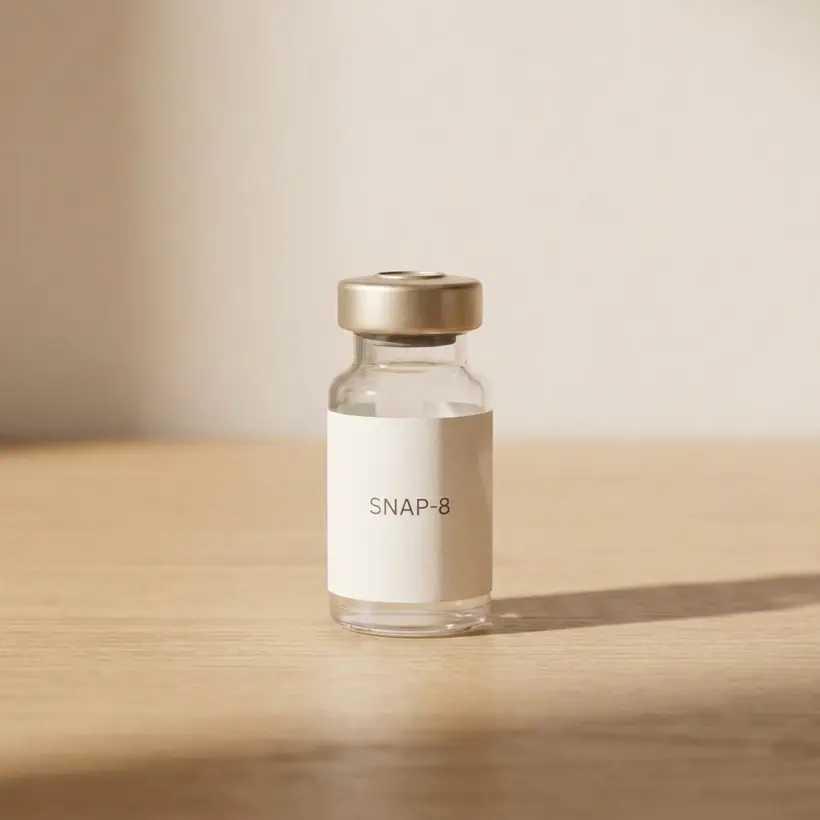
From the FormBlends catalog
SNAP-8 (Acetyl Octapeptide-3)
Topical peptide that reduces wrinkle depth by inhibiting muscle contraction · From $34/mo · compounded by a licensed 503A pharmacy, dispensed only after provider review.
Learn about SNAP-8 (Acetyl Octapeptide-3) →Can I use argireline with retinol or vitamin C?
Yes, argireline combines well with both retinol and vitamin C when properly spaced. Apply vitamin C in the morning, argireline 15 minutes later, then sunscreen. For retinol, use argireline in the morning and retinol at night, or alternate days initially. Always introduce new ingredients gradually to assess tolerance and avoid irritation.
Is argireline safe during pregnancy or breastfeeding?
Limited research exists on argireline safety during pregnancy and breastfeeding, so most dermatologists recommend avoiding it as a precautionary measure. While topical absorption is minimal, the lack of specific safety data makes it prudent to wait until after breastfeeding. Consult your healthcare provider for personalized recommendations based on your specific situation.
What concentration of argireline is most effective?
Clinical studies indicate 10% argireline concentration provides optimal results with minimal side effects. Concentrations of 5-8% work well for sensitive skin or beginners, while 15-20% formulations may cause irritation without significantly better results. Most commercial products contain 5-10% argireline, which proves effective for the majority of users.
Does argireline work on all types of wrinkles?
Argireline works best on dynamic wrinkles caused by muscle movement, such as crow's feet, frown lines, and forehead creases. It shows limited effectiveness on static wrinkles from sun damage, gravity, or natural aging. For best results on static wrinkles, combine argireline with ingredients like retinoids, vitamin C, or professional treatments.
How does argireline compare to other peptides for anti-aging?
Argireline specifically targets muscle contractions, while other peptides work differently. Copper peptides stimulate collagen production, Matrixyl repairs skin structure, and palmitoyl peptides improve skin barrier function. Many users combine argireline with other peptides for complete anti-aging benefits, as they address different aspects of skin aging through complementary mechanisms.
Can argireline cause skin sensitivity or allergic reactions?
Argireline rarely causes allergic reactions, with skin sensitivity occurring in less than 5% of users according to clinical studies. Common reactions include mild redness, tingling, or irritation that typically resolves within a few days. Perform a patch test before first use and start with lower concentrations if you have sensitive skin.
Will my wrinkles get worse if I stop using argireline?
Stopping argireline won't make wrinkles worse than they were originally, but the improvements will gradually fade. Studies show benefits begin declining 2-3 weeks after discontinuation, with return to baseline occurring over 8-12 weeks. Unlike Botox, there's no rebound effect, and you can restart treatment at any time without complications.
Sources
- Blanes-Mira, C., et al. (2002). A synthetic hexapeptide (Argireline) with antiwrinkle activity. International Journal of Cosmetic Science, 24(5), 303-310. PMID: 18498522
- Ruiz, M.A., et al. (2010). Evaluation of the effect of a topical cosmetic composition containing hexapeptide-8 complex on facial wrinkles. Mechanisms of Ageing and Development, 131(4), 255-261.
- Tadini, K.A., & Mercurio, D.G. (2020). Cosmeceutical peptides in the framework of skin aging. Cosmetics, 7(1), 8. doi:10.3390/cosmetics7010008
- Gorouhi, F., & Maibach, H.I. (2009). Role of topical peptides in preventing or treating aged skin. International Journal of Cosmetic Science, 31(5), 327-345. PMID: 19570099
- Schagen, S.K. (2017). Topical peptide treatments with effective anti-aging results. Cosmetics, 4(2), 16. doi:10.3390/cosmetics4020016
- Lima, E.M., et al. (2013). Evaluation of the photoprotective potential of a cosmetic formulation containing hexapeptide-8. Journal of Cosmetic Dermatology, 12(4), 291-296. PMID: 24305429
- Robinson, L.R., et al. (2005). Topical palmitoyl pentapeptide provides improvement in photoaged human facial skin. International Journal of Cosmetic Science, 27(3), 155-160. PMID: 18492178
- Katayama, K., et al. (2011). Clinical effects of a hexapeptide with botulinum toxin-like activity. European Journal of Dermatology, 21(2), 174-180. PMID: 21382786
Ready when you are
SNAP-8 (Acetyl Octapeptide-3)
Topical peptide that reduces wrinkle depth by inhibiting muscle contraction · From $34/mo · compounded by a licensed 503A pharmacy, dispensed only after provider review.
Learn about SNAP-8 (Acetyl Octapeptide-3) →