
Trust Signals
- Every major claim is graded in the evidence ledger below.
- No financial relationship with any specific peptide supplier is held by this page.
- Regulatory status is reported as of May 2026; FDA positions on compounded peptides evolve rapidly.
- This page does not constitute medical advice. Consult a licensed clinician before using any injectable compound.
Key Takeaways
- Sermorelin is the only injectable peptide on this list with an FDA-approved form and controlled human pharmacokinetic data showing pulsatile GH stimulation via GHRH receptor activation.
- Epithalon's most-cited human data comes from a single research group (Khavinson et al.) with limited independent replication; treat longevity claims with low confidence.
- BPC-157 was placed on the FDA's list of bulk substances that cannot be used in compounding as of 2022, making U.S. access legally complicated as of this writing.
- Peptide purity from unregulated suppliers varies widely; mass spectrometry and HPLC purity above 98% plus endotoxin testing are the minimum credible quality markers.
- No injectable peptide in this list has demonstrated biological age reversal in a powered, independent RCT. The best evidence is for partial biomarker restoration.
What Are the Best Anti Aging Peptide Injections?
The best anti aging peptide injections, ranked by the quality of human evidence, are sermorelin, CJC-1295, thymosin alpha-1, epithalon, BPC-157, and TB-500. Sermorelin leads because it has documented pharmacokinetics, a former FDA approval pathway, and multiple human studies. The others have promising mechanisms but limited or unconfirmed human outcome data. No peptide on this list has reversed biological age in a rigorous trial.
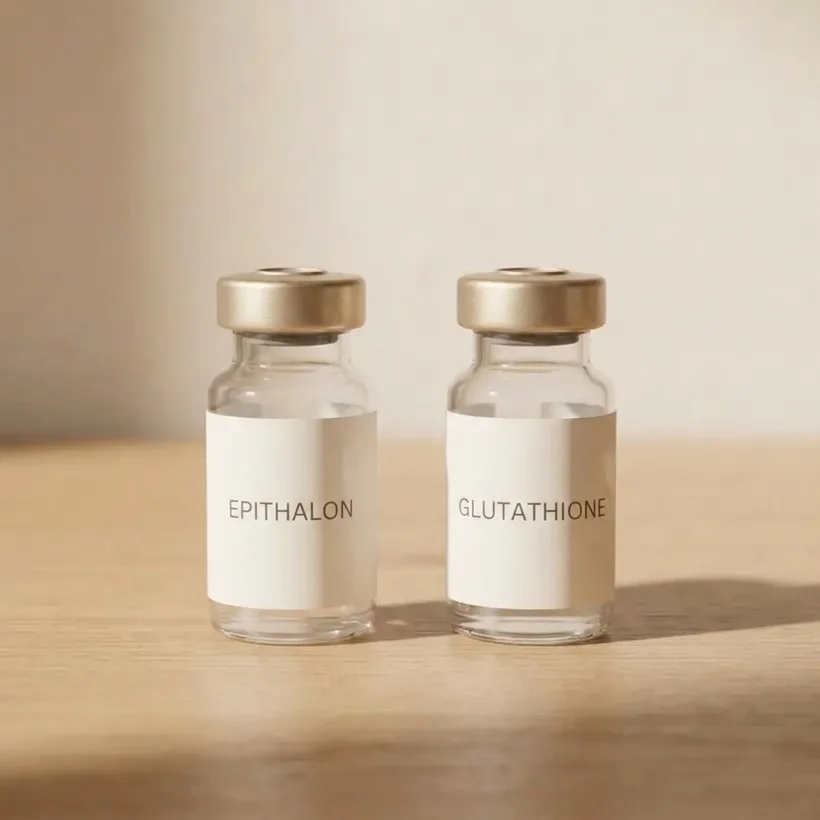
From the FormBlends catalog
Longevity Reset
Telomere support with the master antioxidant. · Bundle from $270 · provider-reviewed peptide bundle.
View Longevity Reset →Table of Contents
- Evidence Ledger: All Six Peptides Graded
- Mechanism With Numbers: How Each Peptide Works
- The Ranked List: Which Peptide Fits Which Goal
- What Most Pages Get Wrong About Peptide Injections
- Why the Storage and Stability Rules Exist
- Honest Head-to-Head: Peptides vs. Approved Alternatives
- Operational Guide: Reading a COA and Dosing Table
- FAQ
- Sources
Evidence Ledger: All Six Peptides Graded
Each row reflects the best available evidence for anti-aging or longevity-relevant endpoints specifically, not the peptide's full therapeutic literature.
| Peptide | Best Evidence Type | Key Endpoint | Effect Direction | Confidence |
|---|---|---|---|---|
| Sermorelin | Human RCT / PK studies | IGF-1 restoration, lean mass in GH-deficient adults | Positive, dose-dependent | Moderate |
| CJC-1295 | Small human study (Teichman et al., 2006) | Sustained GH and IGF-1 elevation | Positive | Low |
| Thymosin Alpha-1 | Human RCTs (immunological endpoints, COVID-19 severity) | T-cell function, innate immune signaling | Positive for immune outcomes | Moderate |
| Epithalon | Small human studies; cell culture; one research group | Melatonin secretion, telomere length in cell culture | Mixed/inconclusive | Very Low |
| BPC-157 | Animal models predominantly | Tissue repair, GI healing, tendon healing | Positive in rodents | Very Low (human) |
| TB-500 (Thymosin beta-4 fragment) | Animal models; in vitro | Wound healing, actin remodeling | Positive in animals | Very Low (human) |
Mechanism With Numbers: How Each Peptide Works
Sermorelin and CJC-1295: GHRH Receptor Agonism
Sermorelin is a 29-amino-acid analog of endogenous growth hormone-releasing hormone (GHRH), representing the biologically active N-terminal fragment. It binds the GHRH receptor (GHRHR) on anterior pituitary somatotrophs, triggering intracellular cAMP signaling that drives GH synthesis and pulsatile release. Plasma half-life is short, roughly 10 to 20 minutes, which is why nightly subcutaneous dosing is used to mimic the natural nocturnal GH pulse.
CJC-1295 without DAC (also called Mod GRF 1-29) shares this mechanism with amino acid substitutions at positions 2, 8, 15, and 27 that resist enzymatic cleavage, extending its half-life to roughly 30 minutes. CJC-1295 with DAC (Drug Affinity Complex) covalently binds albumin, extending half-life to several days. Teichman et al. (2006, J Clin Endocrinol Metab) reported dose-dependent IGF-1 increases in 65 healthy adults given CJC-1295 with DAC; this remains the most-cited human pharmacokinetic dataset for this compound.
What this mechanism does NOT prove: IGF-1 elevation is a surrogate. Higher IGF-1 in adults with normal GH axis may not translate to aging benefits, and sustained supraphysiologic IGF-1 is associated in epidemiological data with increased risk for certain cancers.
Thymosin Alpha-1: TLR and Dendritic Cell Signaling
Thymosin alpha-1 (thymalfasin, brand name Zadaxin) is a 28-amino-acid peptide derived from thymosin fraction 5. It acts on Toll-like receptors 2 and 9 and promotes dendritic cell maturation, increasing Th1 cytokine output and natural killer cell activity. An approved prescription drug in over 35 countries (though not FDA-approved in the U.S.), it has the broadest controlled human dataset of any peptide on this list for immune endpoints.
The anti-aging relevance: immune senescence, the progressive deterioration of innate and adaptive immunity with age, is a recognized driver of aging phenotypes. Thymosin alpha-1 targets this pathway directly, though whether improving immune parameters in older adults translates to meaningful longevity outcomes is unproven.
Epithalon: Telomerase and Pineal Gland Effects
Epithalon (Epitalon) is a synthetic tetrapeptide (Ala-Glu-Asp-Gly) developed by the St. Petersburg Institute of Bioregulation and Gerontology under Vladimir Khavinson. Its proposed mechanism involves activation of telomerase (hTERT), a reverse transcriptase that adds telomeric repeats to chromosome ends, theoretically slowing cellular senescence. Supporting cell-culture data exist, but translation to living tissues is unconfirmed. The same group published studies on melatonin secretion restoration in older subjects, a credible biological effect given the known age-related decline in pineal melatonin output, but independent replication of these results is limited.
BPC-157: Growth Factor and Nitric Oxide Pathways
BPC-157 (body protection compound 157) is a 15-amino-acid synthetic peptide derived from a sequence in human gastric juice. Its proposed mechanisms include upregulation of growth factor receptors (VEGFR2, FGFR), modulation of nitric oxide synthase activity, and promotion of angiogenesis. The tissue-repair effects in rodent models are robust and consistent across independent labs. The aging-specific claim, that systemic BPC-157 slows age-related tissue degradation in humans, is extrapolated from these repair models and has not been studied directly in humans in a controlled trial.
TB-500: Actin Sequestration and Cell Migration
TB-500 is a synthetic version of the actin-sequestering domain of thymosin beta-4 (amino acids 17 to 23 of the full 43-amino-acid protein). By binding G-actin and reducing its availability for polymerization, it modulates cytoskeletal dynamics in a way that promotes endothelial cell and keratinocyte migration during wound healing. Aging is associated with impaired tissue repair capacity, so the theoretical connection exists, but again, human data for longevity endpoints are absent.
The Ranked List: Which Peptide Fits Which Goal
| Rank | Peptide | Best Fit | Realistic Expectation | Regulatory Status (U.S.) |
|---|---|---|---|---|
| 1 | Sermorelin | Adults with documented low-normal GH / IGF-1 axis | Modest IGF-1 restoration, possible body composition benefit | Compounded; requires prescription |
| 2 | Thymosin Alpha-1 | Older adults with immune senescence or chronic viral susceptibility | Improved immune parameters; no longevity proof | Not FDA-approved; imported or compounded |
| 3 | CJC-1295 | Same as sermorelin; slightly extended half-life preferred | Similar to sermorelin with less frequent dosing (DAC version) | Compounded; requires prescription |
| 4 | BPC-157 | Connective tissue and gut repair adjacent to aging | Largely extrapolated from animal models | Not permitted in compounding per 2022 FDA guidance |
| 5 | Epithalon | Exploratory telomere/melatonin interest | Highly speculative; independent human data lacking | No approved status; legal gray zone |
| 6 | TB-500 | Tissue repair and recovery | Speculative for anti-aging; animal repair data only | Research chemical; no compounding approval |
What Most Pages Get Wrong About Peptide Injections
Bioavailability Is Not the Problem. Stability Is.
Most peptide coverage focuses on why injections beat oral routes, which is true but obvious. The real underreported issue is in-solution degradation after reconstitution. Peptides are held in lyophilized powder form precisely because water accelerates hydrolysis at peptide bonds, especially at asparagine-glycine sequences (common in many of these compounds). Once reconstituted, the peptide begins degrading at a rate that depends on pH, temperature, and the presence of oxidizing agents. Bacteriostatic water (0.9% benzyl alcohol) slows microbial growth but does not halt chemical hydrolysis. Most suppliers provide no validated data on in-solution half-life at refrigerator temperature. A user injecting a vial reconstituted two weeks ago at room temperature is likely injecting significantly degraded product, with no clinical signal that anything is wrong.
COA Fraud Is Underappreciated
The research peptide market contains a minority of suppliers who provide fabricated or stale certificates of analysis. Red flags include COAs without a named third-party testing laboratory, COAs without a lot number, and purity values reported only as percentages without accompanying chromatography traces. High-performance liquid chromatography (HPLC) should show a single dominant peak with area percent above 98%. Mass spectrometry should confirm the molecular weight within standard instrument error. Endotoxin results should be present because injectable-grade product must clear the pyrogenicity threshold; a contaminated vial can cause fever, rigors, and systemic inflammatory response independent of the peptide itself.
The "More Is More" Dosing Error with GH Secretagogues
Because sermorelin and CJC-1295 work by amplifying the body's own GH pulses, there is a ceiling effect. Excess GHRH signaling does not produce proportionally more GH; somatostatin feedback limits output. Stacking sermorelin with CJC-1295 does not double effect and likely just increases side effect exposure. Some protocols add ipamorelin (a GHSR agonist) as a complement because it acts on a different receptor, which has pharmacological rationale, but the combination has not been studied in powered human trials for anti-aging outcomes.
Why the Storage and Stability Rules Exist: The Chemistry
Lyophilized State vs. Reconstituted State
In the dry lyophilized state, water activity approaches zero. Hydrolysis, the dominant degradation pathway for peptide bonds, requires water. Oxidation of methionine or cysteine residues also slows dramatically at low moisture and low temperature. This is why intact lyophilized peptides stored at minus 20 degrees Celsius are stable for months to years, while reconstituted solutions degrade measurably within weeks.
Why Bacteriostatic Water, Not Sterile Water
Benzyl alcohol at 0.9% (the preservative in bacteriostatic water) inhibits microbial growth in multi-use vials between injections, preventing septic contamination. It does not protect against chemical degradation. For single-dose use, sterile water for injection is technically acceptable, but the vial must be used immediately or discarded. Mixing peptides with saline (which contains sodium chloride) can accelerate aggregation in some peptides, though this depends on the specific sequence and formulation.
Why Temperature Matters More After Reconstitution
The Arrhenius equation governs chemical reaction rates: roughly speaking, a 10 degree Celsius rise in temperature approximately doubles the rate of most chemical reactions. A reconstituted peptide left at room temperature (roughly 22 degrees Celsius) degrades approximately four times faster than the same vial kept at 4 degrees Celsius in a refrigerator. This is a directional estimate based on general peptide chemistry, not a validated figure for any specific compound on this list. The practical rule is: refrigerate immediately after reconstitution, never leave a reconstituted vial at room temperature longer than needed for drawing the dose, and discard if you observe cloudiness, particulates, or unexpected color change.
Honest Head-to-Head: Peptides vs. Approved Alternatives
| Goal | Best Peptide Option | Approved Alternative | Where Peptide Wins | Where Peptide Loses |
|---|---|---|---|---|
| GH axis restoration | Sermorelin / CJC-1295 | Recombinant HGH (Norditropin, Genotropin) | Preserves pulsatile rhythm; lower supraphysiologic risk; lower cost | Less predictable IGF-1 response; effect magnitude lower than direct HGH |
| Immune function in aging | Thymosin Alpha-1 | Approved vaccines; lifestyle interventions | Direct thymic pathway targeting; some controlled human data | Not FDA-approved; no proven longevity benefit; access requires import or compounding |
| Telomere health | Epithalon | None approved; lifestyle factors (sleep, exercise, stress reduction) | Targeted telomerase mechanism if confirmed | Evidence almost entirely from one research group; no independent large RCT |
| Tissue repair and recovery | BPC-157 / TB-500 | PRP (platelet-rich plasma); standard rehabilitation | Systemic administration possible; broader tissue access | No human RCTs; FDA compounding restriction; purity supply chain risk |
| Skin aging (collagen) | None injectable on this list directly | Tretinoin (topical); fractional laser; filler | Injectable peptides do not have proven direct dermal anti-aging effects via systemic injection | Approved topical and procedural options have far stronger evidence for visible skin aging |
Operational Guide: Reading a COA and Dosing Reference
How to Evaluate a Peptide COA Before Purchasing
- Purity: HPLC area percent should be 98% or above. Ask for the chromatogram trace, not just the number.
- Identity confirmation: ESI-MS or MALDI-TOF mass spectrometry result showing molecular weight within instrument error of the theoretical value. For sermorelin (MW approximately 3357 Da), confirmed identification should be within 1 to 2 Da.
- Endotoxin: Limulus amebocyte lysate (LAL) test result should be below 1 EU per mg for research use. Injectable-grade compounded products require the clinician-facing pharmacy to meet USP standards.
- Sterility: Compounding pharmacies operating under DQSA 503A or 503B must meet USP 797 sterility testing. Research peptide vendors are not held to this standard. This is a meaningful distinction.
- Lot number and date: COA without a lot number cannot be traced. A COA dated more than 12 months ago for a reconstituted product is not current.
Reconstitution Math Reference
| Vial Size | Bacteriostatic Water Added | Resulting Concentration | Volume per 100 mcg Dose |
|---|---|---|---|
| 2 mg (2000 mcg) | 2 mL | 1000 mcg per mL | 0.10 mL (10 units on U-100 insulin syringe) |
| 2 mg (2000 mcg) | 4 mL | 500 mcg per mL | 0.20 mL (20 units on U-100 insulin syringe) |
| 5 mg (5000 mcg) | 5 mL | 1000 mcg per mL | 0.10 mL (10 units on U-100 insulin syringe) |
These are math references only, not dosing recommendations. Any dose must be determined by a qualified prescribing clinician based on individual labs and history.
Signs a Reconstituted Vial Should Be Discarded
- Cloudiness or visible particulates (aggregation or contamination)
- Unexpected color change (most pure peptides are colorless to faintly white in solution)
- Unusual odor upon opening (indicates microbial growth)
- Any vial left unrefrigerated for more than a few hours
- Any vial beyond the supplier's stated in-use window even if stored correctly
FAQ
What are the best anti aging peptide injections available in 2026?
Based on available evidence, sermorelin, CJC-1295, BPC-157, epithalon, thymosin alpha-1, and TB-500 are the most frequently studied or clinically used injectable peptides for aging-related endpoints. Sermorelin has the strongest human data for GH restoration in adult-onset deficiency. Others are supported mostly by animal or small human studies.
Do peptide injections actually reverse aging?
No injectable peptide has demonstrated true aging reversal in a high-quality human RCT. The best evidence shows partial restoration of specific biomarkers, such as IGF-1 levels or immune parameters, not reversal of biological age. Claims of systemic age reversal are not supported by current evidence.
How does sermorelin compare to synthetic HGH for anti-aging?
Sermorelin stimulates natural pulsatile GH release via GHRH receptor activation, while exogenous HGH bypasses that regulatory axis entirely. Sermorelin carries lower risk of supraphysiologic GH levels and has a better safety profile for long-term use, but produces more modest and variable IGF-1 elevation compared to direct HGH administration.
What is epithalon and what does the evidence say?
Epithalon is a synthetic tetrapeptide (Ala-Glu-Asp-Gly) originally developed by Vladimir Khavinson's group in Russia. It has been shown in small human studies to influence melatonin secretion and in cell cultures to affect telomere length, but large independent RCTs confirming longevity or anti-aging outcomes in humans do not yet exist.
Is BPC-157 FDA approved?
No. BPC-157 is not FDA approved for any indication. It is classified as a research compound in the United States. In 2022, the FDA placed BPC-157 on a list of bulk drug substances that cannot be used in compounding, though this regulatory status is actively evolving.
What dosing is typically used for CJC-1295 injections?
In research settings, CJC-1295 without DAC has been studied at doses roughly in the 1 to 2 mcg per kg range subcutaneously. CJC-1295 with DAC extends the half-life significantly and is typically dosed less frequently. Neither formulation is FDA approved; all dosing references come from research or compounding pharmacy contexts.
What does TB-500 do and how is it different from BPC-157?
TB-500 is a synthetic fragment of thymosin beta-4. It promotes actin polymerization and tissue repair through different pathways than BPC-157, which acts more on growth factor signaling and nitric oxide pathways. They are sometimes used together in research protocols, but direct comparative human data is absent.
How do I verify peptide purity before injecting?
Request a certificate of analysis (COA) from the supplier showing HPLC purity above 98%, mass spectrometry confirmation of molecular weight, and endotoxin testing results. A legitimate COA will name the testing lab and provide a lot number you can cross-reference. Avoid suppliers who only provide generic or undated COAs.
Can peptide injections be combined safely?
Combining peptides is common in clinical and research settings but largely unstudied for safety interactions in humans. GH secretagogues like sermorelin and CJC-1295 should not be stacked because both act on the same GHRH receptor axis and the additive IGF-1 elevation may increase cancer promotion risk in susceptible individuals.
How should injectable peptides be stored?
Lyophilized (freeze-dried) peptides should be stored at or below minus 20 degrees Celsius before reconstitution. Once reconstituted, most peptides should be kept at 2 to 8 degrees Celsius and used within a defined window, typically days to a few weeks depending on the peptide and preservative used. Bacteriostatic water extends in-use stability compared to sterile water.
Are peptide injections legal to buy and use?
Legality varies by country and by individual peptide. In the United States, most research peptides cannot be legally sold for human use without a prescription or compounding pharmacy involvement. Some, like sermorelin, have an existing prescription pathway. Others like BPC-157 and epithalon have no approved status and exist in a legal gray zone.
What side effects are documented for GH secretagogue peptides?
Documented side effects from GH secretagogue peptides in human studies include transient water retention, increased hunger, flushing, and injection site reactions. More serious theoretical risks include insulin resistance with prolonged use and theoretical tumor promotion in individuals with undetected malignancy, though the latter has not been quantified in long-term human trials.
Sources
- Teichman SL, Neale A, Lawrence B, Gagnon C, Castaigne JP, Frohman LA. Prolonged stimulation of growth hormone (GH) and insulin-like growth factor I secretion by CJC-1295, a long-acting analog of GH-releasing hormone, in healthy adults. J Clin Endocrinol Metab. 2006 Mar;91(3):799-805.
- Khavinson VK, Bondarev IE, Butyugov AA. Epithalon peptide induces telomerase activity and telomere elongation in human somatic cells. Bull Exp Biol Med. 2003;135(6):590-2.
- Gannage-Yared MH, Fares F, Semaan M, Jambart S, Halaby G. Growth hormone secretagogues and the pituitary gland: a clinical update. Horm Res. 2000;54(5-6):237-44.
- Goldstein AL, Goldstein AL. From lab to bedside: emerging clinical applications of thymosin alpha 1. Expert Opin Biol Ther. 2009;9(5):593-608.
- Seiwerth S, Rucman R, Grabarevic Z, et al. BPC 157's effect on healing. J Physiol Paris. 1997;91(3-5):173-8.
- Huff T, Muller CS, Otto AM, Netzker R, Hannappel E. beta-Thymosins, small acidic peptides with multiple functions. Int J Biochem Cell Biol. 2001;33(3):205-20.
- U.S. Food and Drug Administration. Memorandum: Bulk Drug Substances That May Not Be Used in Compounding Under Section 503A or 503B of the Federal Food, Drug, and Cosmetic Act. 2022. (BPC-157 listing)
- Vance ML, Mauras N. Growth hormone therapy in adults and children. N Engl J Med. 1999;341(16):1206-16.
- United States Pharmacopeia. USP 797: Pharmaceutical Compounding, Sterile Preparations. Current edition.
- Bartke A. Growth hormone and aging: updated review. World J Mens Health. 2019;37(1):19-30.
Footer Disclaimers
Related peptide guides
See your options in about 2 minutes
Take the free quiz and see what fits you. Quick, private, and no commitment to continue.
See my options →