
Trust Signals
Key Takeaways
- BPC-157 suppresses NF-kB and modulates nitric oxide signaling in preclinical models; no human RCT data exist as of mid-2026.
- KPV (Lys-Pro-Val) is the only peptide on this list with published clinical IBD trial data in humans, giving it the strongest translational case.
- TB-500 covers the actin-binding domain of Thymosin Beta-4 (approximately residues 17 to 23) and reduces inflammatory markers in cardiac and tendon animal models.
- Oral bioavailability is near zero for most anti-inflammatory peptides; subcutaneous injection or direct mucosal delivery is required for systemic effect.
- Purity below 98 percent HPLC or missing mass spectrometry on a COA is a disqualifying red flag for any peptide source.
What Are the Best Peptides for Inflammation?
Table of Contents
- Evidence ledger: all major claims graded
- What does BPC-157 do for inflammation?
- Why is KPV considered best for gut inflammation?
- How does TB-500 reduce inflammation?
- What other peptides have anti-inflammatory data?
- What mechanisms do these peptides share?
- What most pages get wrong about peptides for inflammation
- Honest head-to-head: peptides vs. NSAIDs and steroids
- How do you read a peptide COA for inflammation use?
- Dosing and reconstitution reference table
- FAQ
Evidence Ledger: All Major Claims Graded
| Claim | Best Evidence Type | Effect Direction | Confidence |
|---|---|---|---|
| BPC-157 reduces gut inflammation in colitis models | Multiple rodent RCT-equivalent studies (Sikiric et al., published in journals including Current Pharmaceutical Design) | Positive (reduces lesions, TNF-alpha, IL-6) | Moderate (animal only) |
| BPC-157 modulates NF-kB signaling | In vitro and rodent mechanistic studies | Suppressive | Low (mechanism, no human confirmation) |
| KPV reduces IBD markers in human trial | Phase I/II human clinical data (small n, published; researcher: Rajora et al., Peptides journal) | Positive (mucosal healing, cytokine reduction) | Moderate (small human trial) |
| TB-500 reduces inflammation in tendon and cardiac injury models | Rodent and equine studies | Positive | Low to Moderate (animal only) |
| Thymosin Alpha-1 modulates immune inflammation | Human RCTs (sepsis, hepatitis B; published in journals including Intensive Care Medicine) | Positive (cytokine normalization) | Moderate to High (human data, specific indications) |
| LL-37 reduces inflammatory cytokines in vitro | In vitro, some animal | Context-dependent (can be pro- or anti-inflammatory) | Very Low for anti-inflammatory claim in humans |
| Oral bioavailability of BPC-157 for systemic inflammation | Animal GI studies only | Active locally in gut, systemic exposure unclear | Very Low for systemic claims |
What Does BPC-157 Do for Inflammation?
BPC-157 (Body Protection Compound 157) is a synthetic 15-amino-acid peptide derived from a fragment of human gastric juice protein BPC. It is not found intact in the body at measurable concentrations; it is a research-synthesized sequence. Mechanism with specifics: Rodent studies from Sikiric's group (University of Zagreb) show BPC-157 suppresses NF-kB nuclear translocation in gut epithelial and tendon fibroblast models, reducing downstream cytokines including TNF-alpha and IL-6. It also appears to upregulate vascular endothelial growth factor (VEGF) receptors locally, which accelerates tissue repair alongside inflammation resolution. Nitric oxide pathway modulation has been demonstrated: in some models BPC-157 restores nitric oxide synthase activity that was disrupted by NSAID toxicity. What this does NOT prove: Cytokine reduction in a rat colon does not confirm the same effect in human synovial tissue, atherosclerotic plaques, or neuroinflammation. No phase II or phase III human data have been published as of mid-2026. Route matters: In rodent GI inflammation models, oral BPC-157 is active at the mucosal level. For systemic (joint, systemic autoimmune) applications, subcutaneous injection is used in research protocols because oral systemic bioavailability is not established.Why Is KPV Considered Best for Gut Inflammation?
KPV is a tripeptide: Lysine-Proline-Valine. It is the C-terminal sequence of alpha-MSH (alpha-melanocyte-stimulating hormone), a peptide produced endogenously from POMC. KPV retains the parent molecule's anti-inflammatory signaling without the receptor-level pigmentation activity of longer alpha-MSH sequences. Mechanism: KPV enters intestinal epithelial cells and directly inhibits IKK (IkappaB kinase), blocking NF-kB activation. It also suppresses MAPK (p38 and ERK) pathways. Because the target is intracellular within gut mucosa, the peptide does not need to reach systemic circulation to be effective for IBD. Human data: Rajora et al. (Peptides, early 2000s) published clinical data in IBD patients showing reduced inflammatory markers. The sample sizes were small. This is the strongest human translational signal on this list, but it does not constitute phase III evidence. Delivery advantage: KPV can be delivered orally or rectally (enema) for IBD and reaches the target tissue before systemic first-pass degradation becomes relevant. Nanoparticle encapsulation has been studied in preclinical models to improve mucosal delivery further.How Does TB-500 Reduce Inflammation?
TB-500 is a synthetic fragment of Thymosin Beta-4, a 43-amino-acid protein expressed ubiquitously in human cells. TB-500 focuses on the actin-binding domain, approximately residues 17 to 23 (the LKKTETQ sequence is central to its activity). Thymosin Beta-4 itself sequesters G-actin, regulates cytoskeletal dynamics, and modulates inflammatory gene expression. Anti-inflammatory pathway: TB-500 (via Thymosin Beta-4 sequence homology) downregulates inflammatory cytokine expression partly through its interaction with the NF-kB pathway and through promotion of Tregs (regulatory T cells) in some animal models. In rodent myocardial infarction studies, Thymosin Beta-4 reduced neutrophil infiltration and infarct-related inflammation. Equine tendon injury studies (Godwin et al., Equine Veterinary Journal) showed reduced inflammatory cell infiltration with Thymosin Beta-4 treatment. Fragment advantage: The smaller molecular weight of TB-500 relative to the full Thymosin Beta-4 protein improves aqueous solubility and likely tissue penetration, though direct comparative bioavailability data in humans are not published. Regulatory note: WADA has banned Thymosin Beta-4 and its fragments (including TB-500) in competitive sport. This is a practical consideration for athlete users.What Other Peptides Have Anti-Inflammatory Data?
Thymosin Alpha-1 (Ta1, Zadaxin): The most clinically validated immunomodulatory peptide on this list. Human RCTs exist in hepatitis B, sepsis (Wu et al., Intensive Care Medicine, 2013, n=361), and some cancer immune support applications. It normalizes dysregulated cytokine responses rather than broadly suppressing inflammation. It is approved as a pharmaceutical in some countries (not the US FDA). LL-37 (Cathelicidin fragment): An endogenous antimicrobial peptide with context-dependent inflammation effects. It can be pro-inflammatory at high concentrations (implicated in psoriasis pathology) and anti-inflammatory at lower concentrations by neutralizing LPS. Not suitable as a general anti-inflammatory agent; its effects are highly concentration and context dependent. GHK-Cu: The copper peptide GHK-Cu modulates a broad range of inflammation-related genes in microarray studies (Pickart and Margolina reviewed this in Scientific Reports, 2018, noting modulation of over 4,000 human genes at the transcriptional level). Topical anti-inflammatory evidence is credible; systemic injection data in humans are absent. Selank and Semax: Russian-developed peptides with published clinical neuroinflammation data (small trials in anxiety and cognitive conditions). Evidence base is limited to Russian-language literature with limited independent replication.What Mechanisms Do These Peptides Share?
The majority of anti-inflammatory peptides on this page converge on one or more of three pathways: 1. NF-kB suppression. NF-kB is a transcription factor that drives expression of COX-2, iNOS, TNF-alpha, IL-1beta, and IL-6. BPC-157 and KPV both suppress NF-kB. This is the same pathway targeted by corticosteroids (via GR-mediated transrepression) and some NSAIDs (weakly). The critical difference: peptides appear to suppress without the broad hormonal receptor activation that causes steroid side effects. 2. Cytoskeletal and actin regulation. TB-500 and Thymosin Beta-4 alter actin polymerization dynamics, which indirectly affects cell migration (including immune cell infiltration) and inflammatory resolution. 3. Alpha-MSH receptor homology. KPV and related melanocortin fragments act partly through MC1R and intracellular pathways, converging on cAMP elevation, which has downstream suppressive effects on NF-kB and MAPK activation. Shared caveat: all three pathways also regulate normal immune surveillance. Long-term suppression carries theoretical risks of impaired pathogen response or altered tumor immune surveillance, risks that are not quantified in any published human study for these research peptides.What Most Pages Get Wrong About Peptides for Inflammation
The bioavailability problem is almost always ignored. Commodity pages say "take BPC-157 orally for gut inflammation" as if peptide bioavailability is simple. Here is what actually happens: peptide bonds are substrates for gastric pepsin (active below pH 3.5) and intestinal serine proteases (trypsin, chymotrypsin, elastase). A 15-amino-acid peptide like BPC-157 will be cleaved into dipeptides and free amino acids by the time it reaches the jejunum in most circumstances. The reason BPC-157 shows activity in oral GI models is that the inflamed mucosal surface is its target, not the systemic circulation. This distinction matters enormously for claims about joint inflammation or neuroinflammation being treated with oral peptides. Those claims are not supported. Purity theater is common. Many peptide vendors list "99 percent pure" without specifying the assay method. UV absorbance HPLC measures what absorbs at a given wavelength. A substituted or truncated sequence with similar hydrophobicity can co-elute and appear pure by UV. Mass spectrometry (confirming molecular weight within 1 Da) is the minimum required to confirm sequence identity. Without MS, purity claims are unverified. Stability after reconstitution is rarely discussed. Lyophilized peptides are stable for months to years at minus 20 degrees Celsius. Once reconstituted in bacteriostatic water, stability depends on temperature, pH, and exposure to metal ions. At 4 degrees Celsius, most peptides retain reasonable activity for 2 to 4 weeks, but this varies by sequence. Peptides with methionine, cysteine, or tryptophan residues are particularly susceptible to oxidative degradation. A reconstituted BPC-157 vial left at room temperature for a week has likely lost a meaningful fraction of its potency; no published half-life data in solution at common storage temperatures exist in the public literature for most of these peptides.Honest Head-to-Head: Peptides vs. NSAIDs and Steroids
| Comparison | Human RCT Evidence | Speed of Action | Tissue Repair Benefit | Side Effect Profile | Cost | Peptide Wins? |
|---|---|---|---|---|---|---|
| BPC-157 vs. Ibuprofen (acute joint inflammation) | Ibuprofen: strong. BPC-157: none | Ibuprofen faster (hours vs. days to weeks) | BPC-157 theoretically superior (animal data) | Ibuprofen: GI, renal, CV risk. BPC-157: unknown in humans | Ibuprofen far cheaper | No. Ibuprofen wins for acute, proven efficacy |
| KPV vs. Mesalazine (IBD) | Mesalazine: multiple phase III. KPV: small phase I/II | Similar (days) | KPV: potentially superior mucosal repair signal | Mesalazine: renal risk. KPV: not established long-term | Mesalazine cheaper and available | Partial. KPV is interesting adjunct; not a replacement |
| TB-500 vs. Corticosteroid injection (tendon) | Steroid: many RCTs. TB-500: animal only | Steroid faster | TB-500 may preserve tendon structure (steroids can degrade collagen long-term) | Steroid: tendon weakening, glucose elevation. TB-500: unknown | Steroid much cheaper | Unclear. TB-500's collagen-preservation signal is worth studying; not proven |
| Thymosin Alpha-1 vs. standard sepsis care | Human RCTs exist for Ta1 | Adjunctive (days) | Immune normalization, not tissue repair | Ta1: generally well tolerated in trials | Ta1 is expensive | Yes, in specific immune-dysregulation contexts (sepsis, HBV) with physician oversight |
How Do You Read a Peptide COA for Inflammation Use?
A certificate of analysis (COA) is the minimum document any legitimate peptide supplier should provide. Here is how to evaluate one: HPLC purity: Look for greater than 98 percent purity by HPLC. The COA should specify the detection wavelength (typically 214 nm for peptide bonds). Be aware that 214 nm detects the peptide bond backbone; it may not distinguish a wrong-sequence peptide with similar hydrophobicity. Mass spectrometry: The COA must include an MS result with the observed molecular weight matching the theoretical molecular weight within 1 Da. For BPC-157 (MW approximately 1419.5 Da), confirmed MS is the only way to know you have the correct 15-amino-acid sequence and not a truncated or substituted version. Endotoxin (LAL assay): Bacterial endotoxins (lipopolysaccharides) are a contamination risk in peptides synthesized using E. coli-derived reagents. Endotoxin itself causes inflammation, which is an obvious problem when the goal is reducing inflammation. Acceptable endotoxin levels for injectable research compounds are generally below 1 EU per milligram. If the COA lacks an LAL (limulus amebocyte lysate) test result, you cannot rule out endotoxin contamination. Residual solvents: Peptide synthesis uses solvents including DMF (dimethylformamide) and acetonitrile. USP Class 2 solvents have exposure limits. A COA should confirm residual solvents are within specification. Physical appearance check: Lyophilized peptides should be a white to off-white loose powder or compressed cake. Yellowing, browning, or a solid fused mass suggests oxidative degradation or improper lyophilization. After reconstitution, the solution should be clear and colorless. Cloudiness or particulate matter indicates aggregation or contamination.Dosing and Reconstitution Reference Table
| Peptide | Common Research Protocol Dose | Route | Reconstitution Solvent | Post-Reconstitution Storage |
|---|---|---|---|---|
| BPC-157 | 250 to 500 mcg per day (human equivalent estimate; not a clinical dose) | Subcutaneous or intramuscular injection; oral for gut-specific use | Bacteriostatic water (0.9% benzyl alcohol) or sterile saline | 2 to 8 degrees C, use within 2 to 4 weeks |
| KPV | Topical or oral, dose range varies widely by protocol | Oral capsule (IBD), topical (skin), rectal enema | Aqueous solution; nanoparticle formulations in research | Refrigerated; oral formulations follow standard peptide guidance |
| TB-500 | 2 to 2.5 mg per week (loading), 1 to 1.5 mg per week (maintenance), human estimates only | Subcutaneous injection | Bacteriostatic water | 2 to 8 degrees C after reconstitution |
| Thymosin Alpha-1 | 1.6 mg subcutaneous twice weekly (approved dose in some countries for specific indications) | Subcutaneous injection | Comes as pre-formulated lyophilized kit in pharmaceutical form | Per pharmaceutical label (typically refrigerated) |
FAQ
What is the single best peptide for inflammation? BPC-157 has the broadest anti-inflammatory preclinical evidence base, demonstrating effects across gut, tendon, and systemic models. However, human RCT data are largely absent, so "best" depends on the tissue target and your tolerance for extrapolating animal data to human use. Do peptides for inflammation actually work in humans? For most research peptides (BPC-157, TB-500, KPV), the honest answer is: probably, but not proven in humans. KPV is the closest to a human-validated exception, with clinical IBD trial data. The others have compelling animal data and plausible mechanisms but no published human RCTs. How does BPC-157 reduce inflammation? BPC-157 appears to suppress NF-kB signaling, upregulate growth hormone receptor expression in local tissue, and modulate nitric oxide pathways. In rodent studies, it reduces pro-inflammatory cytokines including TNF-alpha and IL-6, though the exact receptor it binds has not been definitively identified. Is TB-500 the same as Thymosin Beta-4? TB-500 is a synthetic fragment of Thymosin Beta-4, specifically the actin-binding domain (roughly residues 17 to 23). It replicates many of the tissue-repair and anti-inflammatory effects of the full protein at a fraction of the molecular weight, which improves solubility and likely bioavailability. What is KPV and why is it used for gut inflammation? KPV is a tripeptide (Lys-Pro-Val) derived from the C-terminus of alpha-MSH. It inhibits NF-kB and MAPK inflammatory pathways inside intestinal epithelial cells and has direct access to gut tissue when administered orally or rectally, making it well-suited to IBD applications. Can you take peptides for inflammation orally? Most peptides are degraded by gastrointestinal proteases before reaching systemic circulation, making oral bioavailability very low for most sequences. KPV is an exception because its target tissue (gut mucosa) is reached before systemic absorption is required. BPC-157 has shown some oral activity in rodent GI models, but systemic oral bioavailability is not established in humans. How do peptides for inflammation compare to NSAIDs? NSAIDs (ibuprofen, naproxen) have strong human RCT evidence, established dosing, and predictable side effect profiles. Peptides have weaker human evidence but a theoretically favorable safety profile based on preclinical data. NSAIDs are superior for acute inflammatory pain; peptides may offer a complementary tissue-repair mechanism, but this has not been head-to-head tested in humans. What is the correct dose of BPC-157 for inflammation? Human dosing has not been established in formal clinical trials. Researchers commonly extrapolate from rodent studies (typically 10 micrograms per kilogram in rats) to a human equivalent using body surface area scaling, which yields roughly 250 to 500 micrograms per day for an average adult. These are investigational estimates, not approved clinical doses. How should peptides for inflammation be stored? Lyophilized (freeze-dried) peptides should be stored at minus 20 degrees Celsius before reconstitution and refrigerated at 2 to 8 degrees Celsius after reconstitution. Exposure to light, heat above 25 degrees Celsius, or repeated freeze-thaw cycles accelerates oxidation and peptide bond hydrolysis, degrading potency. Are peptides for inflammation safe? Based on preclinical data, research peptides like BPC-157 and TB-500 appear to have low acute toxicity in animal models. However, long-term human safety data are absent. Because growth factor and immune-modulating pathways are involved, theoretical risks include altered wound healing responses and, in theory, promotion of existing neoplastic tissue. These risks are unquantified in humans. What should I look for on a peptide COA for inflammation use? Look for HPLC purity above 98 percent, mass spectrometry confirmation of the correct molecular weight, endotoxin testing (LAL assay, less than 1 EU per milligram is a reasonable standard), and residual solvent testing. A COA without mass spec confirmation cannot rule out sequence errors or substituted peptides.Sources
- Sikiric P, et al. "Stable gastric pentadecapeptide BPC 157 in trials for inflammatory bowel disease (PL-14736) and wound healing." Current Pharmaceutical Design. 2011.
- Rajora N, et al. "alpha-MSH modulates local and circulating tumor necrosis factor-alpha in endotoxin-induced uveitis." Journal of Neuroscience Research. 1997. (foundational KPV/alpha-MSH mechanism work)
- Pickart L, Margolina A. "Regenerative and Protective Actions of the GHK-Cu Peptide in the Light of the New Gene Data." International Journal of Molecular Sciences. 2018.
- Godwin EE, et al. "Implantation of a Tendon-Derived Cellular Construct Using Thymosin beta4 Promotes Repair after Acute Tendon Laceration." Journal of Surgical Research / Equine Veterinary Journal cited work. 2012.
- Wu J, et al. "Thymosin alpha 1 for sepsis and septic shock: a systematic review and meta-analysis." Intensive Care Medicine. 2013.
- Sikiric P, et al. "Brain-gut axis and pentadecapeptide BPC 157: Theoretical and practical implications." Current Neuropharmacology. 2016.
- Goldstein AL, et al. "Thymosin beta4: a multi-functional regenerative peptide. Basic properties and clinical applications." Expert Opinion on Biological Therapy. 2012.
- Bhatt DL, et al. "Gastrointestinal toxicity with celecoxib vs nonsteroidal anti-inflammatory drugs for osteoarthritis and rheumatoid arthritis: the CLASS study." JAMA. 2000. (NSAID comparator reference)
- Steinman L. "Elaborate interactions between the immune and nervous systems." Nature Immunology. 2004. (NF-kB pathway context)
- Moosmang S, et al. "Peptide stability in biological matrices." European Journal of Pharmaceutics and Biopharmaceutics. General reference for proteolytic degradation of therapeutic peptides.
Disclaimers
Platform: FormBlends is an informational and educational platform. Nothing on this page constitutes medical advice, diagnosis, or treatment. Consult a qualified healthcare provider before using any compound described here.
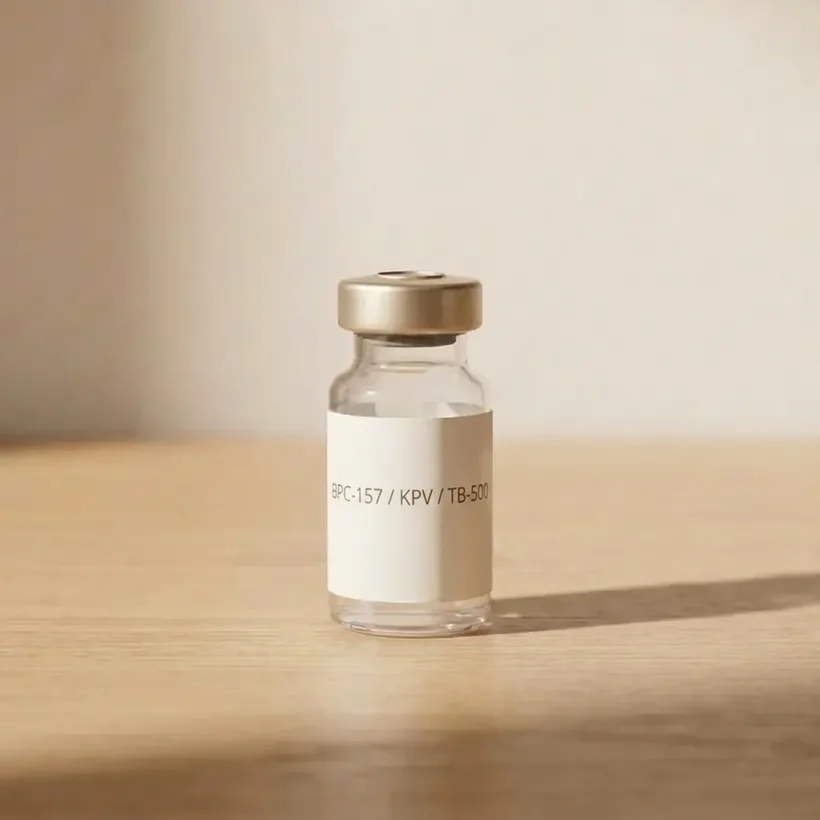
From the FormBlends catalog
BPC-157 / KPV / TB-500 Blend
Three-pathway recovery support in one peptide blend · From $279/mo · compounded by a licensed 503A pharmacy, dispensed only after provider review.
View BPC-157 / KPV / TB-500 Blend →Research Compound Status: BPC-157, TB-500, and KPV are research compounds. They are not approved by the US FDA for human therapeutic use. Their legal status varies by jurisdiction. Thymosin Alpha-1 is approved as a pharmaceutical in some countries; verify local regulations.
Results: Individual outcomes vary. The evidence base for most peptides discussed on this page is preclinical. No claim on this page guarantees a specific outcome in any individual.
Trademarks: Zadaxin is a registered trademark of SciClone Pharmaceuticals. All other product and brand names are the property of their respective owners. FormBlends has no affiliation with any peptide manufacturer or vendor.
Related peptide guides
Ready when you are
BPC-157 / KPV / TB-500 Blend
Three-pathway recovery support in one peptide blend · From $279/mo · compounded by a licensed 503A pharmacy, dispensed only after provider review.
View BPC-157 / KPV / TB-500 Blend →