
Trust Signals
Key Takeaways
- CJC-1295 with DAC demonstrated sustained IGF-1 elevation (roughly 2-fold over baseline in a 2006 human trial by Teichman et al., JCEM) across multiple doses, making it the best-documented GHRH analogue for GH axis stimulation in humans.
- Ipamorelin is the most selective GHRP available, not significantly raising cortisol or prolactin at research doses, unlike GHRP-2 and GHRP-6.
- IGF-1 LR3 has an estimated circulating half-life of 20 to 30 hours (versus roughly 12 to 15 hours for native IGF-1) due to reduced IGF binding protein affinity, which amplifies both anabolic and hypoglycemia risk.
- BPC-157 has zero completed human RCTs for muscle hypertrophy; its animal data on injury repair is real but does not transfer automatically to healthy-muscle building in people.
- No peptide secretagogue has demonstrated lean mass gains in healthy, resistance-trained adults that rival those seen in human RCTs of testosterone or GH itself at pharmacologic doses.
What Is the Best Peptide for Building Muscle?
The best peptide for building muscle is CJC-1295 (with or without DAC), typically combined with ipamorelin, based on the weight of human evidence for GH/IGF-1 axis stimulation. IGF-1 LR3 acts more directly on muscle but has a narrower safety window. BPC-157 is relevant for recovery, not primary hypertrophy. No single peptide matches pharmacologic GH or testosterone for raw anabolic effect in human trials.
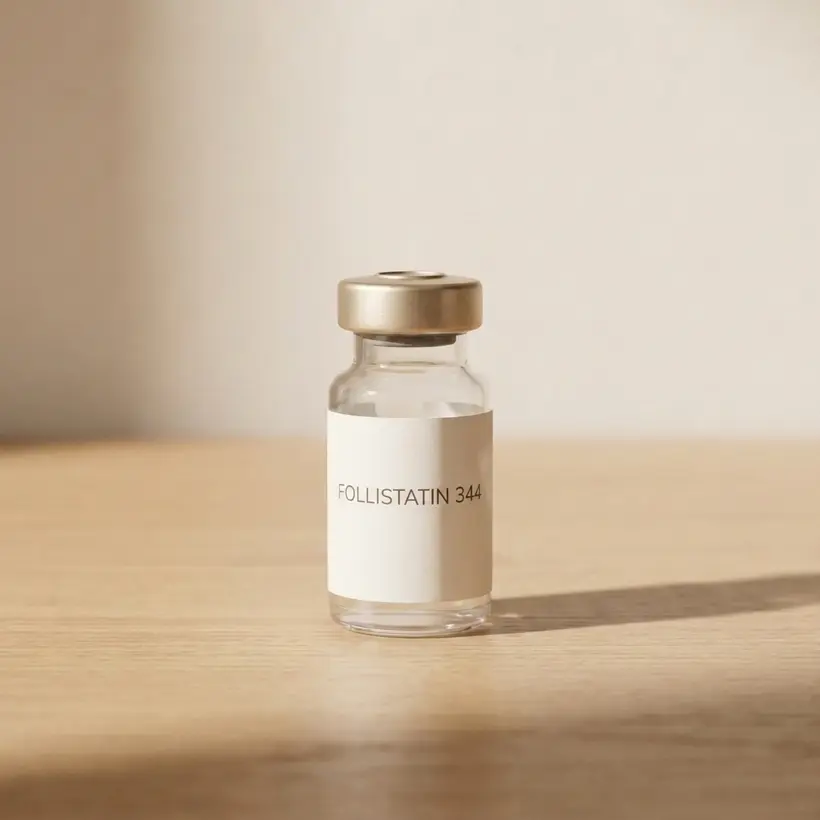
From the FormBlends catalog
Follistatin 344
Myostatin inhibitor studied for enhanced muscle growth · From $149/mo · compounded by a licensed 503A pharmacy, dispensed only after provider review.
Learn about Follistatin 344 →Table of Contents
- Evidence ledger: all major muscle peptides graded
- How these peptides actually stimulate muscle growth (with numbers)
- Ranked list: 5 best peptides for building muscle
- What most peptide pages get wrong
- Honest head-to-head: peptides vs. real alternatives
- Does combining peptides improve results?
- How to read a peptide COA and spot bad product
- Dosing reference table
- FAQ
- Sources
Evidence Ledger: All Major Muscle Peptides Graded
Read the confidence column first. "High" means human RCT data with meaningful sample sizes. "Very low" means mechanism theory or rodent data only.
| Peptide | Best Evidence Type | Outcome Measured | Effect Direction | Confidence |
|---|---|---|---|---|
| CJC-1295 with DAC | Human RCT (Teichman et al. 2006, n=64) | IGF-1, GH pulse amplitude | Positive, dose-dependent | Moderate |
| Ipamorelin | Human phase II data, animal studies | GH release, selectivity vs. cortisol/prolactin | Positive for GH, neutral for cortisol | Moderate (selectivity), Low (lean mass) |
| GHRP-6 | Multiple human studies | GH release | Positive for GH, raises cortisol and prolactin | Moderate (GH), Low (lean mass) |
| GHRP-2 | Human studies, including elderly populations | GH release, body composition | Positive for GH, some cortisol rise | Moderate (GH), Low (lean mass) |
| IGF-1 LR3 | Animal and in vitro; limited human safety data | Muscle protein synthesis, satellite cell activation | Positive in animal models | Low (human muscle), Very low (safety) |
| BPC-157 | Rodent models only for muscle | Tendon/muscle tear repair, angiogenesis | Positive in animals | Very low (human hypertrophy) |
| TB-500 (Thymosin Beta-4 fragment) | Animal and in vitro | Actin polymerization, tissue repair | Positive in animal injury models | Very low (human hypertrophy) |
| MK-677 (Ibutamoren) | Multiple human RCTs (Nass et al. 2008, elderly, n=65) | IGF-1, lean mass in elderly or GH-deficient | Positive (elderly/deficient), uncertain (healthy trained) | Moderate (deficient populations), Low (healthy athletes) |
How These Peptides Actually Stimulate Muscle Growth (With Numbers)
The GH-IGF-1 axis is the core pathway. GHRH analogues (CJC-1295, Mod GRF 1-29) bind the GHRH receptor on pituitary somatotrophs, increasing cyclic AMP and triggering GH secretion. GHRPs and ghrelin mimetics (ipamorelin, GHRP-6) bind the GHS-R1a receptor, a separate but convergent pathway that amplifies GH pulse height when combined with a GHRH analogue. This is the mechanistic rationale for stacking them.
Downstream, GH travels to the liver and stimulates IGF-1 synthesis. IGF-1 then binds the IGF-1 receptor (IGF1R) on skeletal muscle cells, activating the PI3K-Akt-mTOR pathway, which promotes muscle protein synthesis, inhibits protein degradation via FoxO transcription factors, and activates satellite cells. These are well-established molecular steps in mammalian physiology.
What the numbers actually show in humans: In the Teichman et al. 2006 RCT (64 healthy adults, ages 21 to 61), a single 2 mg dose of CJC-1295 with DAC produced a mean IGF-1 increase of roughly 2-fold over baseline, sustained for 6 to 7 days. GH pulse amplitude increased proportionally. The trial was not powered to assess body composition outcomes, and the paper does not report lean mass changes. IGF-1 going up is the intermediate step, not the endpoint.
What the mechanism does NOT prove: That physiologic-range IGF-1 elevation in a healthy person with normal baseline GH will produce measurable additional hypertrophy on top of resistance training. Most of the muscle-building evidence for GH and IGF-1 comes from supraphysiologic doses or deficient populations. The effect size in healthy trained individuals is genuinely uncertain.
IGF-1 LR3 specifics: The arginine-3 substitution (replacing glutamate) and a 13-amino-acid N-terminal extension reduce binding to IGF binding proteins (IGFBPs) 1 through 6. Because IGFBPs normally sequester the majority of circulating IGF-1, reduced IGFBP affinity means more free, biologically active peptide per unit dose. Estimated half-life extends from roughly 12 to 15 hours for native IGF-1 to approximately 20 to 30 hours for LR3. This increases both anabolic signaling duration and hypoglycemia risk window.
Ranked List: The 5 Best Peptides for Building Muscle
1. CJC-1295 (with or without DAC) + Ipamorelin (Stack)
The most human-studied combination for GH axis stimulation. CJC-1295 provides GHRH-pathway activation; ipamorelin adds GHS-R1a stimulation without significant cortisol or prolactin elevation. The synergy is mechanistically sound and supported by the convergent-pathway model. The with-DAC form allows once or twice weekly dosing due to its extended half-life (approximately 6 to 8 days). Without DAC (Mod GRF 1-29) requires injection timing around sleep for pulsatility. Evidence grade: Moderate for GH/IGF-1 elevation, Low for lean mass in healthy trained adults.
2. MK-677 (Ibutamoren)
Technically a non-peptide ghrelin mimetic, but almost always listed in peptide protocols. It is orally active, which is a genuine practical advantage. Multiple human RCTs demonstrate IGF-1 elevation and lean mass improvement in elderly and GH-deficient populations. The Nass et al. 2008 trial (n=65, elderly) showed lean mass gains alongside increases in fasting glucose. In healthy trained athletes, lean mass data are limited. Side effects include water retention, increased appetite, and insulin resistance at higher doses. Evidence grade: Moderate (deficient/elderly), Low (healthy trained athletes).
3. GHRP-2
Potent GH releaser with human study data. Raises GH substantially but also elevates cortisol and prolactin to a moderate degree, which is a real drawback for muscle-building contexts since cortisol is catabolic. Better studied than ipamorelin in terms of volume of human data. Used in some clinical diagnostic protocols. Evidence grade: Moderate (GH release), Low (net lean mass benefit when cortisol is factored).
4. IGF-1 LR3
Acts further downstream than GHRH/GHRP peptides, directly at the muscle cell receptor. Bypasses GH entirely. In animal models, local injection promotes satellite cell proliferation and muscle fiber hypertrophy. The direct mechanism and longer half-life make it mechanistically appealing. However, human safety data are sparse, systemic hypoglycemia risk is real, and no human RCT for muscle hypertrophy exists. Ranked fourth because the risk-to-speculative-benefit ratio is less favorable than the GH secretagogues. Evidence grade: Low (human muscle), Very low (safety profile).
5. BPC-157
Included because it is nearly universal in peptide stacks, but its ranking here reflects honest appraisal: for primary muscle building in healthy people, evidence is very low. Where it belongs is injury recovery and tendon health adjacent to a muscle-building program. Rodent data on accelerated muscle tear healing, tendon-to-bone repair, and angiogenesis are consistent and intriguing. No human RCT for muscle hypertrophy. Oral formulations have unknown bioavailability in humans. Evidence grade: Very low (human hypertrophy), Low (human injury recovery).
What Most Peptide Pages Get Wrong
This is the section competitors skip. Here is where the real gaps are.
1. Treating IGF-1 elevation as a lean mass outcome. Almost every listicle cites a GH secretagogue study showing IGF-1 increases and implies this equals muscle growth. The studies are often not powered for body composition. IGF-1 is an intermediate biomarker. The mTOR pathway needs to be activated in the context of mechanical load and adequate protein substrate to produce measurable hypertrophy. A rise in circulating IGF-1 in a sedentary person who does not resistance train will not build muscle.
2. Ignoring the peptide purity problem. Research-grade peptides sold online vary enormously in actual content. HPLC analysis of commercially available research peptides by independent labs has repeatedly found purity below stated values, incorrect peptide sequences, or contamination. A product labeled "CJC-1295" may contain predominantly CJC-1295 degradation products or filler peptides. This is not theoretical. Without a legitimate COA with mass spectrometry confirmation, you have no reliable way to know what you are injecting.
3. Ignoring reconstitution and storage stability. Lyophilized peptides are relatively stable at cold temperatures for months to over a year (compound-dependent). Once reconstituted in bacteriostatic water, peptide stability drops substantially. Most peptides in solution should be stored at 2 to 8 degrees Celsius and used within 2 to 4 weeks. Repeated freeze-thaw cycles degrade peptide bonds. Many users reconstitute a large vial and use it over months at room temperature, likely injecting inactive fragments. Pages never mention this.
4. Failing to account for GH feedback suppression. Chronic, non-pulsatile GH axis stimulation (especially with DAC formulations that flatten pulsatility) can blunt endogenous GH secretion through somatostatin feedback. Short-term studies do not always capture this. Running a GHRH analogue with a long half-life continuously may reduce natural pulsatile GH over time, partially offsetting benefit.
5. Bioavailability of oral/topical peptides. Any peptide above roughly 500 to 1,000 daltons faces significant enzymatic degradation in the GI tract. CJC-1295 has a molecular weight of roughly 3,367 daltons. Oral administration destroys it. "Oral BPC-157" may have some local GI effect but systemic bioavailability is poorly characterized. Sub-Q or IM injection is the only route with established bioavailability for most of these compounds.
Honest Head-to-Head: Peptides vs. Real Alternatives
| Compound | Mechanism | Human RCT for Lean Mass? | Magnitude of Effect (Healthy Adults) | Key Risk | Legal Status (US) |
|---|---|---|---|---|---|
| CJC-1295 + Ipamorelin | GH secretagogue stack | No (IGF-1 data only) | Uncertain; modest at best | Edema, carpal tunnel, GH feedback | Not FDA approved; research use |
| MK-677 | Oral ghrelin mimetic | Yes (elderly/deficient populations) | Moderate in deficient; low in trained | Insulin resistance, edema, appetite | Not FDA approved; research use |
| Exogenous GH (rhGH) | Direct GH replacement | Yes (multiple large RCTs) | Modest in healthy; significant in deficient | Acromegalic effects, cancer risk at high dose, glucose intolerance | Rx only; prohibited in sport |
| Testosterone (TRT dose) | Androgen receptor agonist | Yes (extensive, large RCTs) | Large and reproducible | Erythrocytosis, HPTA suppression, cardiovascular | Schedule III controlled substance; Rx only |
| Creatine monohydrate | PCr resynthesis, cell volumization | Yes (100+ RCTs) | Moderate (2 to 4 kg lean mass over months, multiple meta-analyses) | Negligible at standard doses | Legal OTC supplement |
| Resistance training alone | Mechanical load, satellite cell activation | Yes (gold standard) | Large, highly reproducible | Injury risk with poor technique | Legal |
Where peptides lose: Against testosterone and exogenous GH for raw anabolic effect. Against creatine for evidence density and safety profile. Against progressive resistance training for everything. A peptide protocol layered on top of poor training and protein intake will underperform creatine and consistent progressive overload every time.
Does Combining Peptides Improve Results?
The mechanistic rationale for combining a GHRH analogue with a GHRP is solid: they work on two different receptors on the same pituitary cell, and their co-administration produces a greater GH pulse than either alone. This has been demonstrated in human studies. The combination is standard in clinical and research settings.
Adding BPC-157 to a CJC-1295/ipamorelin stack does not produce additive anabolic effects through any established shared mechanism. BPC-157 works primarily through local tissue repair pathways (angiogenesis, VEGFR-2 upregulation in animal models), not the GH-IGF-1 axis. If the goal is injury prevention adjacent to hard training, the rationale is separate and speculative-to-low evidence. If the goal is more muscle per injection, BPC-157 does not add meaningfully.
Combining IGF-1 LR3 with a GH secretagogue stack stacks downstream and upstream signaling simultaneously. This amplifies both potential effect and potential risk (hypoglycemia, IGF-1-driven proliferative effects). There are no human combination RCTs. This is speculation-level territory dressed in mechanism language.
How to Read a Peptide COA and Spot Bad Product
A certificate of analysis is only as credible as the lab that issued it. Here is what to look for.
| COA Element | What to Look For | Red Flag |
|---|---|---|
| HPLC Purity | Greater than 98% for research grade | Below 95%, or no HPLC data at all |
| Mass Spectrometry | Reported molecular weight matching known MW of peptide (e.g., CJC-1295 with DAC: ~3,367 Da) | No MS data; MW does not match published sequence |
| Endotoxin Testing | LAL test result below 1 EU/mg for injectable use | No endotoxin testing for an injectable product |
| Lot Number | Matches lot number printed on vial label | COA lot number does not match vial, or generic "batch" labeling |
| Issuing Lab | Named third-party analytical lab with verifiable address | In-house supplier testing only; no third-party verification |
| Water content/moisture | Lyophilized powder moisture below ~5% | No Karl Fischer or TGA moisture data |
Visual inspection after reconstitution: Add bacteriostatic water slowly along the vial wall, do not shake. The solution should be clear and colorless. Cloudiness, yellow or brown tint, or particulate matter are signs of degradation or contamination. Discard the vial. Lyophilized powder should be white and fully soluble.
Dosing Reference Table (Published Research and Clinical Compounding Protocols)
| Peptide | Route | Typical Research Dose | Frequency | Timing Note |
|---|---|---|---|---|
| CJC-1295 with DAC | Sub-Q injection | 1 to 2 mg | Once weekly | Consistent day; not time-sensitive |
| Mod GRF 1-29 (CJC-1295 without DAC) | Sub-Q injection | 100 mcg per injection | 1 to 3 times daily | Fasted state; ideally pre-sleep |
| Ipamorelin | Sub-Q injection | 100 to 200 mcg per injection | 1 to 3 times daily | Combined with Mod GRF 1-29; fasted preferred |
| GHRP-6 | Sub-Q injection | 100 mcg per injection | 1 to 3 times daily | Fasted state; hunger side effect is significant |
| IGF-1 LR3 | Sub-Q or IM injection | 20 to 50 mcg (research range) | Daily or on training days | Post-workout; glucose monitoring warranted |
| BPC-157 | Sub-Q injection or oral | 200 to 500 mcg | Daily | Near injury site if local; oral bioavailability uncertain |
| MK-677 | Oral | 10 to 25 mg | Once daily | Pre-sleep; monitor fasting glucose |
FAQ
What is the best peptide for building muscle?
CJC-1295 with DAC has the strongest human evidence among growth hormone secretagogues for increasing IGF-1 and lean mass. IGF-1 LR3 acts more directly but carries higher risk. For most research protocols, CJC-1295 combined with ipamorelin is the most studied combination with a moderate safety signal.
Do peptides actually build muscle in humans?
Some peptides demonstrably raise IGF-1 and GH pulse amplitude in human trials. Whether those hormonal changes translate to meaningful lean mass accrual beyond what resistance training alone produces is less well established in healthy, trained individuals. Evidence quality is moderate at best for most compounds.
How does CJC-1295 differ from CJC-1295 without DAC (Mod GRF 1-29)?
CJC-1295 with DAC is conjugated to a Drug Affinity Complex that binds albumin, extending its half-life from roughly 30 minutes (Mod GRF 1-29) to approximately 6 to 8 days. This changes the dosing schedule from multiple daily injections to once or twice weekly and flattens GH pulsatility.
What does BPC-157 actually do for muscle?
BPC-157 promotes tendon-to-bone healing and angiogenesis in rodent models and has shown accelerated muscle tear repair in animal studies. There are no completed human RCTs for muscle hypertrophy. Its relevance for building muscle in healthy individuals is speculative; its potential relevance for injury recovery is better supported in animals.
Is ipamorelin safer than GHRP-6?
Ipamorelin is considered more selective because it does not significantly raise cortisol or prolactin at standard doses, while GHRP-6 does both and also causes notable hunger through ghrelin receptor activation. For research purposes ipamorelin is preferred when minimizing off-target hormonal effects is a priority.
What is the half-life of IGF-1 LR3?
IGF-1 LR3 has an estimated half-life of approximately 20 to 30 hours in circulation, compared to roughly 12 to 15 hours for native IGF-1. This is because the arginine-3 substitution reduces binding to IGF binding proteins, keeping more free peptide available. The longer activity window increases both effect and hypoglycemia risk.
Can peptides replace anabolic steroids for muscle building?
No. Anabolic steroids bind androgen receptors directly and produce lean mass gains in human RCTs that are substantially larger and more reproducible than anything demonstrated with peptide secretagogues in healthy adults. Peptides have a meaningfully different and generally more modest effect profile, though with a different risk profile as well.
How should CJC-1295 and ipamorelin be dosed for research?
Published research and clinical compounding protocols typically use CJC-1295 without DAC at 100 mcg per injection combined with ipamorelin at 100 to 200 mcg, administered subcutaneously, timed to fasting states before sleep to align with natural GH pulsatility. CJC-1295 with DAC is typically dosed at 1 to 2 mg once weekly.
What does a degraded peptide vial look like?
A degraded peptide solution may appear cloudy, develop visible particulate matter, or produce a yellow or brown discoloration. Lyophilized (freeze-dried) powder should be white to off-white and fully dissolve in bacteriostatic water. Clumping in the dry powder or failure to dissolve cleanly suggests compromised product.
Are muscle-building peptides legal?
Legality varies by country and use. In the United States, GHRP and GHRH analogues are not FDA-approved drugs for healthy adults and are classified as research chemicals or, when compounded, as unapproved compounded medications. WADA prohibits GH secretagogues in competitive sport. Always check current regulations in your jurisdiction.
How do I read a peptide certificate of analysis?
A credible COA should include HPLC purity (look for greater than 98 percent for research grade), mass spectrometry confirmation of molecular weight, and ideally endotoxin testing. The lot number on the COA should match the vial. Third-party testing from an independent lab carries more weight than in-house supplier testing.
Sources
- Teichman SL, Neale A, Lawrence B, Gagnon C, Castaigne JP, Frohman LA. Prolonged stimulation of growth hormone (GH) and insulin-like growth factor I secretion by CJC-1295, a long-acting analog of GH-releasing hormone, in healthy adults. Journal of Clinical Endocrinology and Metabolism. 2006;91(3):799-805. PubMed PMID: 16352683.
- Nass R, Pezzoli SS, Oliveri MC, et al. Effects of an oral ghrelin mimetic on body composition and clinical outcomes in healthy older adults: a randomized trial. Annals of Internal Medicine. 2008;149(9):601-611. PubMed PMID: 18981485.
- Bowers CY, Momany FA, Reynolds GA, Hong A. On the in vitro and in vivo activity of a new synthetic hexapeptide that acts on the pituitary to specifically release growth hormone. Endocrinology. 1984;114(5):1537-1545.
- Raun K, Hansen BS, Johansen NL, et al. Ipamorelin, the first selective growth hormone secretagogue. European Journal of Endocrinology. 1998;139(5):552-561. PubMed PMID: 9849822.
- Sikiric P, Seiwerth S, Rucman R, et al. Stable gastric pentadecapeptide BPC 157: novel therapy in gastrointestinal tract (and central nervous system). Frontiers in Pharmacology. 2012;3:72.
- Clemmons DR. Modifying IGF1 activity: an approach to treat endocrine disorders, atherosclerosis and cancer. Nature Reviews Drug Discovery. 2007;6(10):821-833. PubMed PMID: 17906644.
- Bhasin S, Storer TW, Berman N, et al. The effects of supraphysiologic doses of testosterone on muscle size and strength in normal men. New England Journal of Medicine. 1996;335(1):1-7. PubMed PMID: 8637535.
- Branch JD. Effect of creatine supplementation on body composition and performance: a meta-analysis. International Journal of Sport Nutrition and Exercise Metabolism. 2003;13(2):198-226. PubMed PMID: 12945830.
- World Anti-Doping Agency (WADA). Prohibited List 2024. Available at: https://www.wada-ama.org/en/prohibited-list. Accessed May 2026.
- FDA. Compounded Drug Products That Are Essentially a Copy of a Commercially Available Drug Product Under Section 503B. Guidance for Industry. 2018. Available at: https://www.fda.gov. Accessed May 2026.