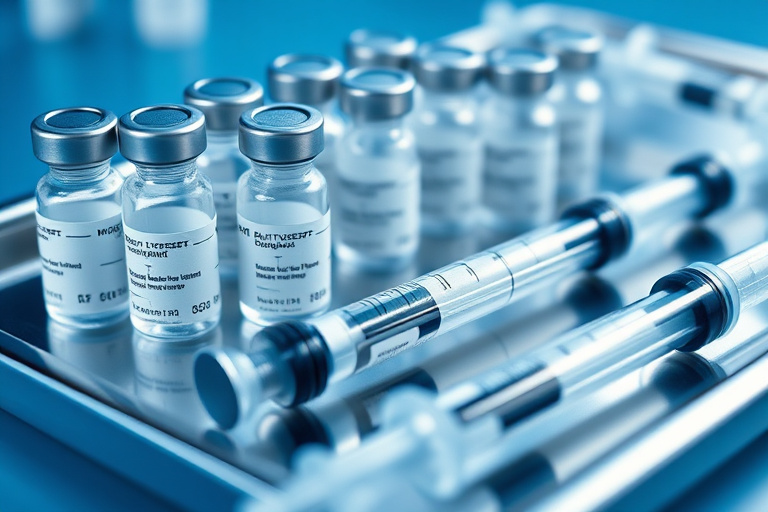
Choosing the right BPC-157 injection sites subcutaneous location can affect how well the peptide works for your specific condition.
Choosing the right BPC-157 injection sites subcutaneous location can affect how well the peptide works for your specific condition. Should you inject near the injury or in a completely different area? Does it matter if you rotate sites? This guide breaks down the science of injection placement and gives you practical technique tips.
Key Takeaways:
- Near-Injury vs. Systemic Injection
- Common Injection Sites by Condition
- Injection Technique Tips
BPC-157 is typically administered as a subcutaneous injection, which means it goes into the fat layer just under the skin. This is the same technique used for insulin and GLP-1 medications. Your provider will guide you on the best injection site for your situation.
Near-Injury vs. Systemic Injection
The debate about injection site proximity is one of the most common questions in the BPC-157 community. Here is what we know.
Near-injury injection means injecting subcutaneously as close to the affected area as possible. The theory is that this provides a higher local concentration of BPC-157 at the site where healing is needed. For a torn rotator cuff, you would inject into the subcutaneous fat around the shoulder. For a knee tendon issue, you would inject near the knee.
"What makes tirzepatide particularly interesting is the dual GIP/GLP-1 mechanism. We're seeing that GIP receptor activation appears to amplify the metabolic effects in ways we didn't fully anticipate from the preclinical data.") Dr. Ania Jastreboff, MD, PhD, Yale School of Medicine, lead author of SURMOUNT-1[1]
Research supports this approach for musculoskeletal injuries. Animal studies consistently show better healing outcomes when BPC-157 is administered locally. The peptide appears to work through local mechanisms including angiogenesis and growth factor modulation that benefit from proximity.
Systemic injection means injecting in a standard subcutaneous site like the abdomen, regardless of where the injury is. The peptide enters systemic circulation and reaches the entire body. Some researchers argue that BPC-157 has systemic anti-inflammatory effects that work regardless of injection site.
The practical answer: Most protocols recommend injecting as close to the affected area as is practical and comfortable. If the injury is in an area that's difficult to reach or has very little subcutaneous fat, the abdomen is a good alternative. For gut issues, abdominal injection is standard.
For the full dosing picture, see our .
Common Injection Sites by Condition
Patient Perspective:"I tried BPC-157 for a chronic rotator cuff issue after 8 months of physical therapy with minimal improvement. Within 3 weeks of a BPC-157 protocol alongside continued PT, I noticed significantly less pain during overhead movements. I can't say for certain what caused the improvement, but the timeline was notable.", Chris D., 38, FormBlends patient (name changed for privacy)
Popular Therapeutic Peptides by Use Case. Based on published peptide research literature.
View data table
Bar chart showing popular therapeutic peptides by use case: BPC-157 (88), TB-500 (82), Sermorelin (78), Ipamorelin (75), GHK-Cu (70)
Category
Clinical Interest Score
Detail
BPC-157
88
Tissue repair and gut healing
TB-500
82
Injury recovery
Sermorelin
78
Growth hormone support
Ipamorelin
75
Anti-aging and recovery
GHK-Cu
70
Skin and tissue repair
Free Download: BPC-157 Reconstitution calculator Cheat Sheet
Includes injection site diagrams with rotation patterns for every common protocol. Get yours free, we'll email it to you instantly.
[Download My Free Cheat Sheet]
Shoulder injuries: Inject into the subcutaneous fat on the front or side of the shoulder, near the deltoid. Pinch the skin and inject at a 45-degree angle. Rotate between 2-3 spots around the shoulder.
Knee injuries: Inject into the subcutaneous fat on either side of the knee, just above or below the kneecap. The area has less fat, so use a shorter needle (31-gauge, 5/16 inch). Avoid injecting directly over the kneecap.
Elbow tendinopathy: Inject into the subcutaneous tissue on the outer or inner elbow, depending on the affected tendon. Tennis elbow (lateral epicondylitis) targets the outer elbow. Golfer's elbow (medial epicondylitis) targets the inner elbow.
Back pain: For lower back issues, inject into the subcutaneous fat along the lower back, a few inches from the spine. For upper back or neck issues, the upper trap area works well. You may need help reaching some back injection sites.
Gut issues: Inject into the lower abdominal subcutaneous fat. This provides both local proximity to the GI tract and systemic absorption. Rotate between left and right sides of the lower abdomen.
General healing or systemic use: The lower abdomen is the default site. It has consistent subcutaneous fat depth and is easy to reach. Alternate between left and right sides, and vary the exact location within each side.
Injection Technique Tips
Proper technique reduces discomfort and ensures consistent dosing.
From the FormBlends catalog
BPC-157
The body protection compound for accelerated healing · From $169/mo · compounded by a licensed 503A pharmacy, dispensed only after provider review.
Clean the site. Use an alcohol swab and let it air dry completely before injecting. Don't blow on it or wipe it dry.
Pinch the skin. Use your non-dominant hand to pinch a fold of skin at the injection site. This lifts the subcutaneous fat away from the muscle, ensuring the injection stays in the right tissue layer.
Insert at 45-90 degrees. For most sites with adequate fat, a 90-degree angle works. For leaner areas (around joints), use a 45-degree angle to stay in the subcutaneous layer.
Inject slowly. Push the plunger steadily over 3-5 seconds. Injecting too fast can cause stinging and bruising.
Rotate your sites. Never inject in the same exact spot twice in a row. Repeated injections in one location can cause tissue irritation or hardening. Create a rotation pattern with at least 4-6 different sites.
Use insulin syringes. A 31-gauge, 1 ml insulin syringe with a 5/16 inch needle is ideal for most BPC-157 injections. The thin needle minimizes discomfort. Use the to verify your draw volume.
Frequently Asked Questions
Does injecting BPC-157 near the injury hurt more?
Not necessarily. Subcutaneous injection discomfort is mostly about needle size and technique, not location. Some areas (like near joints with less fat) may be slightly more sensitive. Using a 31-gauge needle and proper pinching technique minimizes discomfort regardless of location.
How close to the injury should I inject?
Within a few inches is sufficient. You don't need to inject directly into the injured tissue. Subcutaneous injection within the general area provides local concentration while being safer and more comfortable than attempting to inject into a specific tendon or joint space.
Can I inject BPC-157 intramuscularly instead of subcutaneously?
Intramuscular injection is sometimes used but subcutaneous is the standard for most protocols. IM injection may provide slightly different absorption kinetics. Discuss with your provider which route is best for your specific situation.
What if I can't reach the injection site?
For hard-to-reach areas like the back or behind the shoulder, ask a trusted person to help. Alternatively, use the lower abdomen for systemic delivery. BPC-157 has systemic effects regardless of injection site, so the abdomen is always a reasonable alternative.
Your Personalized Plan Is Waiting
No two patients are the same, and your protocol shouldn't be either. FormBlends providers create customized treatment plans based on your health profile, goals, and preferences.
Medical References
Jastreboff AM, Aronne LJ, Ahmad NN, et al. Tirzepatide Once Weekly for the Treatment of Obesity. N Engl J Med. 2022;387(3):205-216. [PubMed | ClinicalTrials.gov | DOI]
Chang CH, Tsai WC, Lin MS, et al. The promoting effect of pentadecapeptide BPC 157 on tendon healing involves tendon outgrowth, cell survival, and cell migration. J Appl Physiol. 2011;110(3):774-780. Doi:10.1152/japplphysiol.00945.2010
Seiwerth S, Brcic L, Vuletic LB, et al. BPC 157 and blood vessels. Curr Pharm Des. 2014;20(7):1121-1125. Doi:10.2174/13816128113199990421
The information in this article is intended for educational use only and shouldn't be considered medical advice. Consult a qualified healthcare provider before making any changes to your medication or supplement regimen. FormBlends helps with connections with licensed providers for personalized medical guidance.
Last updated: 2026-03-24
Ready when you are
BPC-157
The body protection compound for accelerated healing · From $169/mo · compounded by a licensed 503A pharmacy, dispensed only after provider review.
Custom header image for Bpc 157 Injection Sites, Peptide Therapy, and better treatment decision-making.
Peptide decision path
Move from research interest to supervised review
Related treatment context
Bpc 157 Injection Sites should be evaluated through research status, legal access, source quality, safety context, and clinician oversight rather than a shortcut purchase decision.
A printable 2-page reference covering popular peptides, dosing ranges, stacking protocols, and storage.
Free download. We'll also send helpful GLP-1 guides to your inbox. Unsubscribe anytime.
Medical Disclaimer: This content is for informational purposes only and does not constitute medical advice. Always consult a qualified healthcare provider before starting, stopping, or changing any medication or treatment. FormBlends articles are source-checked against medical and regulatory references, but they are not a substitute for a personal medical consultation.
Written by FormBlends Editorial Research
Prepared by FormBlends Editorial Research.
Ready to get started?
Provider-reviewed GLP-1 and peptide therapy, delivered to your door.