Key Takeaway
Knowing where to inject BPC-157 is just as important as getting the dose right. BPC-157 injection sites subcutaneous administration focuses on placing the peptide in the fatty tissue just beneath the skin.
Knowing where to inject BPC-157 is just as important as getting the dose right. BPC-157 injection sites subcutaneous administration focuses on placing the peptide in the fatty tissue just beneath the skin. The location you choose can influence how effectively the peptide reaches the tissue you want to support. This guide covers the best injection sites, when to inject near an injury versus systemically, and the technique basics for a smooth injection.
Key Takeaways: - Subcutaneous vs. Other Injection Methods - Best Injection Sites for BPC-157 - Injection Technique Step by Step
Subcutaneous vs. Other Injection Methods
BPC-157 is administered subcutaneously. This means the needle goes into the layer of fat between your skin and muscle. It isn't an intramuscular injection and it isn't intravenous. Subcutaneous injections are simpler, less painful, and easy to do at home.
Why subcutaneous? The fatty tissue beneath the skin has a good blood supply that absorbs the peptide at a steady rate. This creates a sustained release effect. The peptide enters your bloodstream gradually rather than all at once.
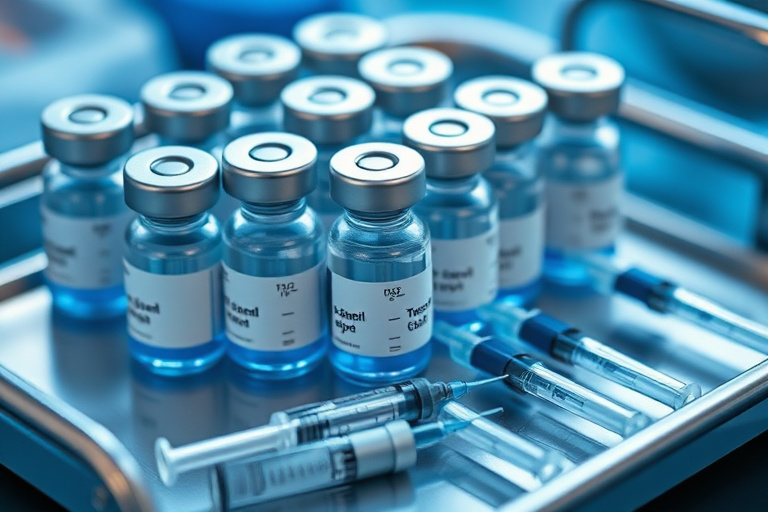
Subcutaneous injections use small insulin syringes with thin needles, typically 29 to 31 gauge. These are the same type of needles people use for insulin. The injection itself takes just a few seconds, and most people describe the sensation as a mild pinch.
You don't need to inject deep. The needle only needs to penetrate about half an inch into the tissue. If you can pinch a fold of skin, you have enough fatty tissue for a subcutaneous injection.
"What makes tirzepatide particularly interesting is the dual GIP/GLP-1 mechanism. We're seeing that GIP receptor activation appears to amplify the metabolic effects in ways we didn't fully anticipate from the preclinical data.") Dr. Ania Jastreboff, MD, PhD, Yale School of Medicine, lead author of SURMOUNT-1[1]
For the full rundown on BPC-157 including dosing and cycle length, read our .
Best Injection Sites for BPC-157
The site you choose depends on what you're using BPC-157 for. Here are the most common options.
Abdomen (most common). The lower abdomen is the most popular injection site. It has plenty of subcutaneous fat, easy access, and is the preferred site for gut-healing protocols. Inject about 2 inches to either side of the belly button. Avoid injecting directly into the navel.
Near the injury site (localized approach). For musculoskeletal issues like tendon injuries, joint pain, or muscle strains, many providers recommend injecting as close to the affected area as possible. This delivers a higher local concentration of BPC-157 directly to the tissue that needs support.
- Knee issues: Inject subcutaneously around the knee, near the patellar tendon or on either side of the joint.
- Shoulder issues: Inject in the fatty tissue near the affected shoulder area.
- Elbow issues: Inject subcutaneously near the lateral or medial epicondyle.
- Achilles tendon: Inject in the subcutaneous tissue near the back of the ankle.
Patient Perspective: "I tried BPC-157 for a chronic rotator cuff issue after 8 months of physical therapy with minimal improvement. Within 3 weeks of a BPC-157 protocol alongside continued PT, I noticed significantly less pain during overhead movements. I can't say for certain what caused the improvement, but the timeline was notable.", Chris D., 38, FormBlends patient (name changed for privacy)
Free Download: BPC-157 Reconstitution calculator Cheat Sheet Includes a body map showing injection site locations plus reconstitution math and syringe diagrams. Get yours free (we'll email it to you instantly. [Email Input] [Download Button]
Thigh (alternative site). The outer thigh has ample subcutaneous tissue and is easy to reach. Some people prefer it when the abdomen or injury area isn't convenient. Inject into the outer middle third of the thigh.
Upper arm (alternative site). The back of the upper arm, in the tricep area, can be used as well. It may be harder to reach without help, but it's a viable option for rotation.
Injection Technique Step by Step
Here is how to perform a subcutaneous BPC-157 injection properly.

From the FormBlends catalog
BPC-157
The body protection compound for accelerated healing · From $169/mo · compounded by a licensed 503A pharmacy, dispensed only after provider review.
View BPC-157 →Before you start: - Wash your hands thoroughly with soap and water. - Gather your supplies: reconstituted BPC-157 vial, insulin syringe, alcohol swabs. - Choose a clean, well-lit area.
Step 1[2]: Prepare the injection site. Clean the skin with an alcohol swab using a circular motion from the center outward. Let the area air dry for a few seconds. Don't blow on it.
Step 2: Draw your dose. Follow the reconstitution math from your protocol. If you need help with calculations, use our . For a detailed guide on drawing your dose, see our .
Step 3: Pinch the skin. Use your non-dominant hand to pinch a fold of skin and fat at your injection site. Hold it throughout the injection.
Step 4: Insert the needle. Hold the syringe at a 45-degree angle to the skin. Insert the needle smoothly in one motion. Don't push it in slowly or hesitate halfway through.
Step 5: Inject. Push the plunger down slowly and steadily. There's no need to rush.
Step 6: Withdraw. Pull the needle out at the same angle you inserted it. Release the skin fold. Apply gentle pressure with a cotton ball or clean finger if you see a small drop of blood.
Step 7: Dispose of the syringe. Place used syringes in a sharps container. Never reuse needles.
Rotation is important. Don't inject in the same exact spot every time. Rotate between different sites and different areas within each site. This prevents localized irritation, bruising, and tissue hardening.
Frequently Asked Questions
Does it matter if I inject near the injury or in the abdomen?
Both approaches can be effective. Injecting near the injury delivers a higher local concentration. Abdominal injections provide systemic delivery. Some providers recommend alternating between both approaches. For gut-related issues, abdominal injection or oral BPC-157 is the standard approach.
How deep should the needle go for a subcutaneous injection?
About half an inch, or roughly the length of a standard insulin needle. You want to be in the fatty tissue beneath the skin, not in the muscle underneath. If you're very lean, you may need to pinch a larger fold of skin to ensure you stay in the subcutaneous layer.
Is it normal to see a small bump after injecting?
Yes. A small, temporary bump or wheal at the injection site is normal. This is just the fluid sitting in the subcutaneous tissue. It will absorb within a few minutes to an hour. If the bump persists, is painful, or becomes red and warm, contact your provider.
Can I ice the injection site to reduce discomfort?
Icing before the injection can numb the area and reduce the pinch sensation. But icing after the injection may slow absorption. If you choose to ice, do it before you inject and give the skin a moment to return to normal temperature before proceeding.
Ready to Take the Next Step?
Your wellness plan is personal, and you deserve a plan that fits. FormBlends connects you with licensed providers who can evaluate your needs and create a personalized protocol.
Medical References
- Jastreboff AM, Aronne LJ, Ahmad NN, et al. Tirzepatide Once Weekly for the Treatment of Obesity. N Engl J Med. 2022;387(3):205-216. [PubMed | ClinicalTrials.gov | DOI]
- Wilding JPH, Batterham RL, Calanna S, et al. Once-Weekly Semaglutide in Adults with Overweight or Obesity. N Engl J Med. 2021;384(11):989-1002. [PubMed | ClinicalTrials.gov | DOI]
- Davies M, Færch L, Jeppesen OK, et al. Semaglutide 2.4 mg once a week in adults with overweight or obesity, and type 2 diabetes (STEP 2). Lancet. 2021;397(10278):971-984. [PubMed | ClinicalTrials.gov | DOI]
- Wadden TA, Bailey TS, Billings LK, et al. Effect of Subcutaneous Semaglutide vs Placebo as an Adjunct to Intensive Behavioral Therapy on Body Weight in Adults With Overweight or Obesity (STEP 3). JAMA. 2021;325(14):1403-1413. [PubMed | ClinicalTrials.gov | DOI]
- Rubino D, Abrahamsson N, Davies M, et al. Effect of Continued Weekly Subcutaneous Semaglutide vs Placebo on Weight Loss Maintenance in Adults With Overweight or Obesity (STEP 4). JAMA. 2021;325(14):1414-1425. [PubMed | ClinicalTrials.gov | DOI]
- Garvey WT, Batterham RL, Bhatt DL, et al. Two-year effects of semaglutide in adults with overweight or obesity (STEP 5). Nat Med. 2022;28(10):2083-2091. [PubMed | ClinicalTrials.gov | DOI]
Sources &. References
- Sikiric P, Hahm KB, Blagaic AB, et al. Stable Gastric Pentadecapeptide BPC 157, Robert's Cytoprotection, Adaptive Cytoprotection, and Therapeutic Effects. Curr Pharm Des. 2018;24(18):1990-2001. Doi:10.2174/1381612824666180515125918
- Chang CH, Tsai WC, Lin MS, et al. The promoting effect of pentadecapeptide BPC 157 on tendon healing involves tendon outgrowth, cell survival, and cell migration. J Appl Physiol. 2011;110(3):774-780. Doi:10.1152/japplphysiol.00945.2010
- Seiwerth S, Brcic L, Vuletic LB, et al. BPC 157 and blood vessels. Curr Pharm Des. 2014;20(7):1121-1125. Doi:10.2174/13816128113199990421
This article is for educational purposes only and doesn't constitute medical advice. Always consult with a licensed healthcare provider before starting, changing, or stopping any medication or supplement. FormBlends connects you with licensed providers who can evaluate your individual health needs.
Last updated: 2026-03-24
Ready when you are
BPC-157
The body protection compound for accelerated healing · From $169/mo · compounded by a licensed 503A pharmacy, dispensed only after provider review.
View BPC-157 →