Key Takeaway
How CJC-1295/Ipamorelin supports tendon repair through GH-mediated collagen synthesis, tenocyte proliferation, and IGF-1 driven tissue remodeling.
Quick Answer: CJC-1295/Ipamorelin for tendon repair works through GH and IGF-1's established roles in connective tissue healing. Tendons are collagen-dense structures that depend on GH signaling for repair. IGF-1 stimulates tenocyte proliferation, collagen type I synthesis, and extracellular matrix remodeling. GH-deficient individuals show impaired tendon healing that improves with GH restoration. For acute tendon injuries, dedicated peptides like BPC-157 offer faster, more localized support .
How GH and IGF-1 Support Tendon Healing
Tendons heal slowly compared to other tissues because of limited blood supply and low metabolic activity. GH and IGF-1 address several bottlenecks in tendon repair:
- Collagen synthesis: IGF-1 directly stimulates tenocytes (tendon cells) to produce type I collagen, the primary structural protein in tendons. Studies show IGF-1 increases collagen synthesis rates by 50-80% in tendon fibroblast cultures
- Tenocyte proliferation: GH and IGF-1 stimulate tenocyte division, increasing the number of cells available to produce new tendon matrix
- Blood flow: IGF-1 supports angiogenesis (new blood vessel formation) in healing tissues, improving nutrient delivery to the repair site
- Matrix metalloproteinase regulation: GH helps regulate the enzymes that break down and remodel damaged tendon tissue during repair
- Mechanical strength: GH-supported collagen crosslinking improves the tensile strength of repaired tendon tissue
Clinical Evidence for GH in Tendon Repair
A landmark study published in the Journal of Physiology (2007) demonstrated that local IGF-1 administration accelerated Achilles tendon healing in animal models, with treated tendons showing 30% greater tensile strength at 8 weeks compared to controls .
Human studies of GH-deficient patients show reduced tendon collagen turnover that normalizes with GH replacement . research on peritendinous collagen synthesis in healthy adults showed that GH administration increased collagen synthesis markers around the Achilles tendon by approximately 150% .
While these studies used recombinant GH rather than CJC-1295/Ipamorelin specifically, the mechanism is the same: improved GH and IGF-1 levels drive tendon collagen production.
CJC-1295/Ipamorelin vs Targeted Tendon Peptides
| Peptide | Tendon Mechanism | Speed of Action | Best For |
|---|---|---|---|
| BPC-157 | Direct tendon cell migration, VEGF, growth factor upregulation | Fast (days-weeks) | Acute tendon injuries |
| TB-500 | Cell migration, actin regulation, tissue remodeling | Moderate | Chronic tendinopathy |
| CJC-1295/Ipamorelin | Systemic GH/IGF-1 collagen support | Slower (weeks-months) | Background repair support |
For acute tendon injuries or chronic tendinopathy, BPC-157 for tendon repair provides faster, more targeted healing. CJC-1295/Ipamorelin is best used as systemic support, creating an optimal hormonal environment for tendon recovery over time.
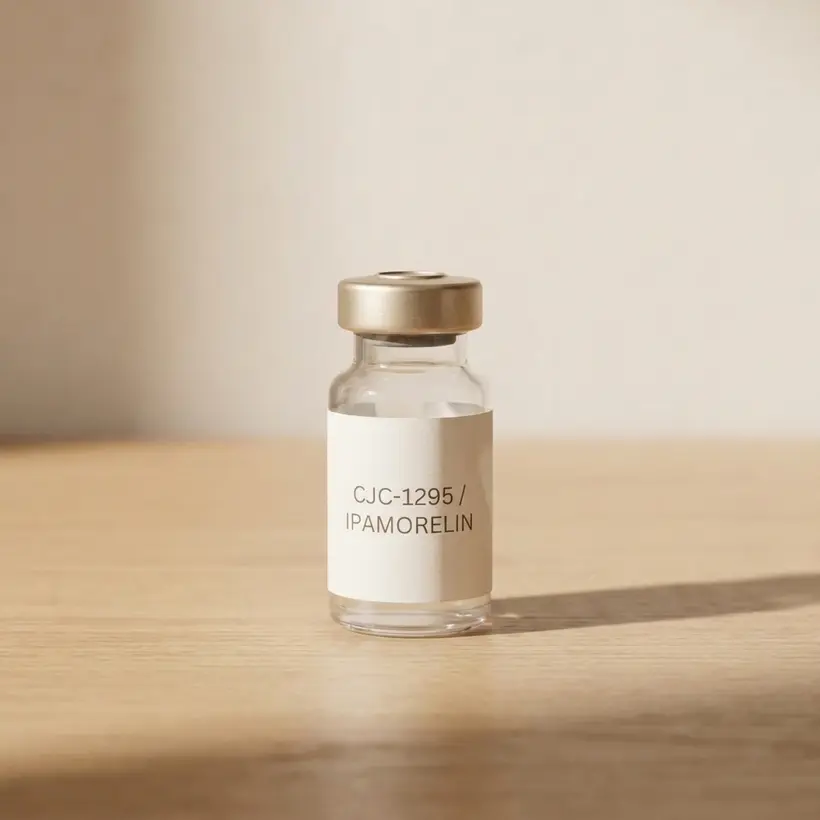
From the FormBlends catalog
CJC-1295 / Ipamorelin Blend
The gold standard growth hormone secretagogue stack · From $69/mo · compounded by a licensed 503A pharmacy, dispensed only after provider review.
Learn about CJC-1295 / Ipamorelin Blend →Improving Tendon Repair with CJC-1295/Ipamorelin
To maximize tendon healing benefit from CJC-1295/Ipamorelin:
- Vitamin C: important cofactor for collagen synthesis. Without adequate vitamin C, collagen production stalls regardless of GH levels
- Gelatin or collagen peptides: Providing amino acid building blocks (proline, glycine, hydroxyproline) supports the collagen production that GH stimulates
- Progressive loading: Tendons require mechanical stimulus to organize collagen fibers properly. Work with a physical therapist on appropriate loading protocols
- Sleep improvement: CJC-1295/Ipamorelin's sleep enhancement supports nighttime tissue repair, which is when the majority of tendon healing occurs
Frequently Asked Questions
How long does CJC-1295/Ipamorelin take to help tendon healing?
Tendon collagen synthesis increases within 2 to 4 weeks of consistent use, but meaningful structural repair takes 2 to 3 months. Tendons are inherently slow-healing tissues. Starting CJC-1295/Ipamorelin early in the recovery process provides the greatest benefit.
Can I combine CJC-1295/Ipamorelin with BPC-157 for tendon repair?
Yes. This is one of the most common peptide combinations for tendon healing. BPC-157 provides direct, localized tendon repair while CJC-1295/Ipamorelin creates a systemic anabolic environment. No known interactions exist between these peptides.
Will CJC-1295/Ipamorelin prevent tendon injuries?
By supporting collagen turnover and tendon maintenance, improved GH levels may help maintain tendon resilience. But injury prevention also depends on proper training load, flexibility, and biomechanics.
Support Your Tendon Recovery
At FormBlends, our physicians design peptide protocols tailored to your specific injury and recovery goals.
Disclaimer: This article is for informational purposes only and doesn't constitute medical advice. CJC-1295/Ipamorelin isn't FDA-approved for any medical condition. Always consult with a licensed healthcare provider. Individual results may vary.
Ready when you are
CJC-1295 / Ipamorelin Blend
The gold standard growth hormone secretagogue stack · From $69/mo · compounded by a licensed 503A pharmacy, dispensed only after provider review.
Learn about CJC-1295 / Ipamorelin Blend →