Key Takeaway
Good sleep isn't a luxury. It's a biological necessity. When you can't get deep, restorative rest despite trying everything, the DSIP delta sleep peptide may be worth exploring. DSIP stands for delta sleep-inducing peptide.
Good sleep isn't a luxury. It's a biological necessity. When you can't get deep, restorative rest despite trying everything, the DSIP delta sleep peptide may be worth exploring. DSIP stands for delta sleep-inducing peptide. It was discovered in 1977 when researchers isolated it from the brains of rabbits during induced sleep.
Key Takeaways: - Learn how dsip works in the sleep cycle - Dosing and What to Expect - Research Findings: Promising but Mixed - Safety and Side Effects
DSIP is a neuropeptide that appears to promote slow-wave sleep, the deepest and most restorative stage of your sleep cycle. While research results have been mixed, many in the peptide community report meaningful improvements in sleep quality. Let us look at what the science says.
How DSIP Works in the Sleep Cycle
DSIP is a nine-amino-acid peptide that crosses the blood-brain barrier. Once in the brain, it influences multiple systems related to sleep regulation. Its name comes from its ability to promote delta wave activity, the slow brainwaves characteristic of deep sleep.
"The key to successful GLP-1 therapy is setting realistic expectations and supporting patients through the titration phase. The side effects are manageable for most people, but they need to know what to expect.") Dr. Caroline Apovian, MD, Harvard Medical School
The exact mechanism isn't fully understood. Research suggests DSIP may modulate the hypothalamic-pituitary-adrenal (HPA) axis, reducing cortisol levels that interfere with sleep onset. It may also influence serotonin and GABA pathways, both important for sleep regulation.
Unlike sleeping pills that force sedation, DSIP appears to support your body's natural sleep architecture. It may help you fall asleep naturally and spend more time in the deep sleep stages where physical recovery and memory consolidation occur.
DSIP also shows stress-reducing properties in some studies. Since stress and improved cortisol are common causes of poor sleep, this dual mechanism could be particularly helpful for people whose insomnia is stress-related.
Dosing and What to Expect
The typical DSIP dose is 100 mcg administered via subcutaneous injection about 30 to 60 minutes before bedtime. Some protocols use doses up to 250 mcg, but starting low is advisable.

Free Download: Protocol Planner Track your sleep quality and DSIP protocol with our free planner. Includes sleep logs, dosing records, and quality ratings. Get yours free (we'll email it to you instantly. [Email Input] [Download Button]
Most protocols recommend using DSIP for 5 to 10 consecutive nights, followed by a break. This cycling approach is common with sleep-related peptides. Your will recommend a specific schedule based on your sleep patterns.
DSIP requires proper with bacteriostatic water. Store the reconstituted peptide in the refrigerator and use it within the timeframe your pharmacy specifies.
Community experiences with DSIP are variable. Some users report dramatically improved sleep quality, including vivid dreams and feeling more rested upon waking. Others notice minimal effects. This variability is consistent with the mixed findings in clinical research.
If DSIP doesn't produce noticeable results after a full protocol cycle, your provider may suggest alternative approaches or combinations. Some people respond better to other sleep-support peptides or combinations with .
Research Findings: Promising but Mixed
Clinical research on DSIP shows interesting but inconsistent results. Some studies demonstrated clear improvements in sleep onset time and sleep quality. Other studies found no significant difference from placebo.
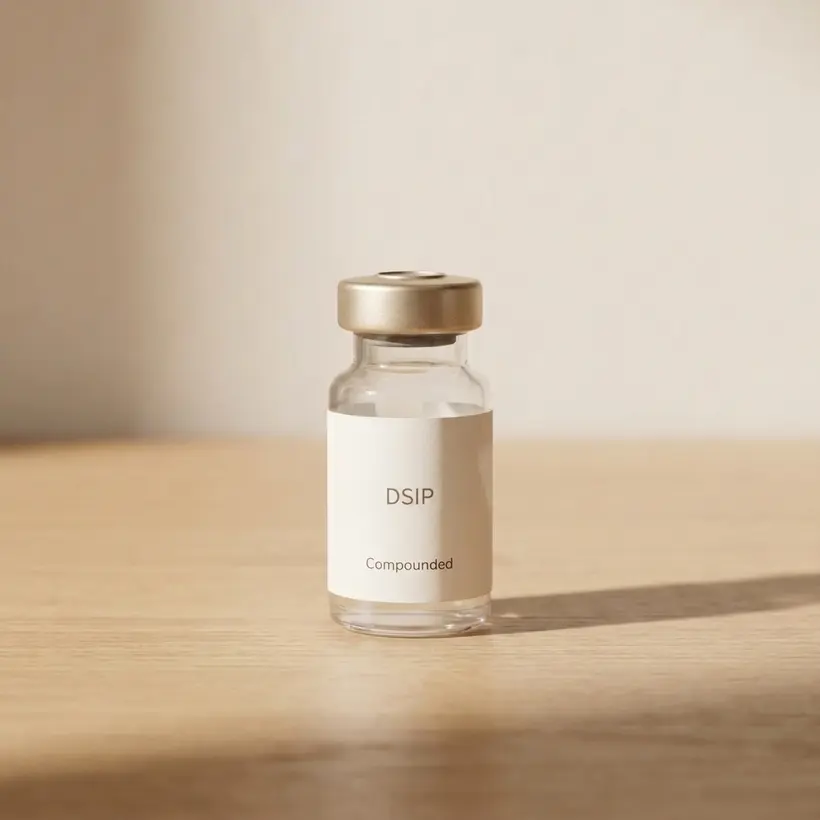
From the FormBlends catalog
DSIP (Delta Sleep-Inducing Peptide)
Restore deep, restorative delta wave sleep · From $179/mo · compounded by a licensed 503A pharmacy, dispensed only after provider review.
View DSIP (Delta Sleep-Inducing Peptide) →One potential explanation for mixed results is that DSIP may work best for specific types of sleep disturbance. Research suggests it may be most effective for stress-related insomnia and disrupted sleep architecture rather than primary insomnia.
Studies have also explored DSIP for pain management, alcohol withdrawal, and depression with some positive preliminary findings. These applications remain investigational and aren't primary indications for DSIP use.
The market for DSIP is limited by small study sizes and older methodology. Most significant studies were conducted in the 1980s and 1990s. Modern large-scale trials aren't available. This means we have interesting data but not definitive conclusions.
Safety and Side Effects
DSIP has a good safety profile in available research. No significant adverse effects have been reported at standard doses. It doesn't appear to cause dependence or morning grogginess like some sleep medications.
Minor side effects may include mild headache or injection site soreness. These are typically mild and transient. DSIP doesn't suppress breathing like some sleep medications, which is an important safety distinction.
Because DSIP is a neuropeptide, it should be used with caution if you're taking other medications that affect brain chemistry. Share your complete medication list with your before starting DSIP.
If you have epilepsy or other seizure disorders, discuss DSIP thoroughly with your neurologist. The peptide's effects on brain wave patterns warrant extra caution in these populations.
Frequently Asked Questions
How quickly does DSIP improve sleep?
Some people notice improved sleep quality on the first night. For others, it takes 3 to 5 consecutive nights of use before benefits become apparent. Consistency within a protocol cycle is important.
Is DSIP addictive?
No. DSIP doesn't appear to cause physical dependence or withdrawal symptoms. This distinguishes it from benzodiazepines and Z-drugs commonly prescribed for insomnia.
Can I use DSIP with melatonin?
Discuss any sleep supplement combinations with your provider. Since both DSIP and melatonin affect sleep regulation, your provider can advise on whether combining them is appropriate and safe for you.
Why do some people not respond to DSIP?
Individual response to DSIP varies significantly. Your sleep architecture, stress levels, and underlying causes of poor sleep all influence how well DSIP works. If it doesn't help, your provider can explore alternative approaches.
Start your goals Today
Every transformation starts with a single step. Talk to a licensed FormBlends provider about whether this approach is right for you) consultations are free and confidential.
Sources &. References
- Pickart L, Vasquez-Soltero JM, Margolina A. GHK Peptide as a Natural Modulator of Multiple Cellular Pathways in Skin Regeneration. BioMed Res Int. 2015;2015:648108. Doi:10.1155/2015/648108
- Pickart L, Vasquez-Soltero JM, Margolina A. GHK and DNA: Resetting the Human Genome to Health. BioMed Res Int. 2014;2014:151479. Doi:10.1155/2014/151479
- Sikiric P, Hahm KB, Blagaic AB, et al. Stable Gastric Pentadecapeptide BPC 157, Robert's Cytoprotection, Adaptive Cytoprotection, and Therapeutic Effects. Curr Pharm Des. 2018;24(18):1990-2001. Doi:10.2174/1381612824666180515125918
- Chang CH, Tsai WC, Lin MS, et al. The promoting effect of pentadecapeptide BPC 157 on tendon healing involves tendon outgrowth, cell survival, and cell migration. J Appl Physiol. 2011;110(3):774-780. Doi:10.1152/japplphysiol.00945.2010
- Seiwerth S, Brcic L, Vuletic LB, et al. BPC 157 and blood vessels. Curr Pharm Des. 2014;20(7):1121-1125. Doi:10.2174/13816128113199990421
- Bock-Marquette I, Saxena A, White MD, et al. Thymosin beta4 activates integrin-linked kinase and promotes cardiac cell migration, survival and cardiac repair. Nature. 2004;432(7016):466-472. Doi:10.1038/nature03000
- Malinda KM, Sidhu GS, Mani H, et al. Thymosin beta4 accelerates wound healing. J Invest Dermatol. 1999;113(3):364-368. Doi:10.1046/j.1523-1747.1999.00708.x
Nothing in this article should be construed as medical advice. The information provided is educational only. Always consult with your healthcare provider before beginning, modifying, or discontinuing any medication or treatment. FormBlends connects patients with licensed providers for individualized care.
Last updated: 2026-03-24
Ready when you are
DSIP (Delta Sleep-Inducing Peptide)
Restore deep, restorative delta wave sleep · From $179/mo · compounded by a licensed 503A pharmacy, dispensed only after provider review.
View DSIP (Delta Sleep-Inducing Peptide) →