Key Takeaway
Aging is inevitable. But the rate at which you age may not be entirely fixed. Epitalon telomere anti-aging research has captured the attention of the longevity community for one remarkable reason: this peptide may activate telomerase, the enzyme responsible for maintaining telomere length.
Aging is inevitable. But the rate at which you age may not be entirely fixed. Epitalon telomere anti-aging research has captured the attention of the longevity community for one remarkable reason: this peptide may activate telomerase, the enzyme responsible for maintaining telomere length. Shorter telomeres are linked to accelerated aging. Longer telomeres are associated with healthier, longer lives.
Key Takeaways: - Learn how epitalon works: telomerase activation - The Khavinson Protocol: Cycling and Dosing - Understand what the research shows - Safety and Practical Considerations
Epitalon (also spelled Epithalon) is a synthetic version of epithalamin, a peptide naturally produced by the pineal gland. Decades of research by Russian scientist Dr. Vladimir Khavinson have explored its potential to slow biological aging. Here is what we know.
How Epitalon Works: Telomerase Activation
Every time your cells divide, your telomeres get a little shorter. Telomeres are the protective caps at the ends of your chromosomes, like the plastic tips on shoelaces. When they get too short, cells can no longer divide properly. They become senescent or die. This process is a fundamental driver of aging.
Telomerase is an enzyme that can rebuild telomere length. Most adult cells have very low telomerase activity. Research suggests Epitalon may reactivate telomerase in somatic cells, potentially slowing or partially reversing telomere shortening.
Dr. Khavinson's research, spanning over 35 years, showed that epithalamin and its synthetic version Epitalon could increase telomerase activity in human cell cultures. In animal studies, treated subjects showed increased lifespan compared to controls.
"What makes tirzepatide particularly interesting is the dual GIP/GLP-1 mechanism. We're seeing that GIP receptor activation appears to amplify the metabolic effects in ways we didn't fully anticipate from the preclinical data.") Dr. Ania Jastreboff, MD, PhD, Yale School of Medicine, lead author of SURMOUNT-1[1]
Epitalon also appears to regulate melatonin production by the pineal gland. The pineal gland tends to calcify and produce less melatonin with age. By supporting pineal function, Epitalon may improve sleep quality and circadian rhythm regulation, both important for healthy aging.
The peptide also shows antioxidant properties. It may help protect cells from oxidative damage, which contributes to aging at the cellular level. This multi-pathway approach to aging is what makes Epitalon particularly interesting.
The Khavinson Protocol: Cycling and Dosing
The most common Epitalon protocol follows Dr. Khavinson's research guidelines. The standard approach uses 10-day cycles performed 2 to 3 times per year.

Free Download: Protocol Planner Track your Epitalon cycles with our free planner. Includes 10-day cycle calendars, dosing logs, and biomarker tracking sheets. Get yours free (we'll email it to you instantly. [Email Input] [Download Button]
A typical cycle involves 5 mg to 10 mg of Epitalon per day, administered via subcutaneous injection. Some protocols split the daily dose into two injections, morning and evening. Each cycle lasts 10 consecutive days.
The spacing between cycles is important. Most providers recommend waiting 4 to 6 months between 10-day cycles. This cycling approach is based on Khavinson's research methodology and is believed to provide sustained benefits without continuous administration.
Proper is important. Epitalon is typically supplied as a lyophilized powder and reconstituted with bacteriostatic water before injection. Follow your pharmacy's specific instructions for mixing ratios and storage.
Some people combine Epitalon cycles with other longevity interventions like and detailed bloodwork. Your can help design an age-management protocol that includes appropriate monitoring.
What the Research Shows
The body of Epitalon research is substantial, though concentrated primarily in Russian scientific literature. Key findings include increased lifespan in animal models, improved immune function in elderly subjects, and reactivated telomerase in human cell cultures.
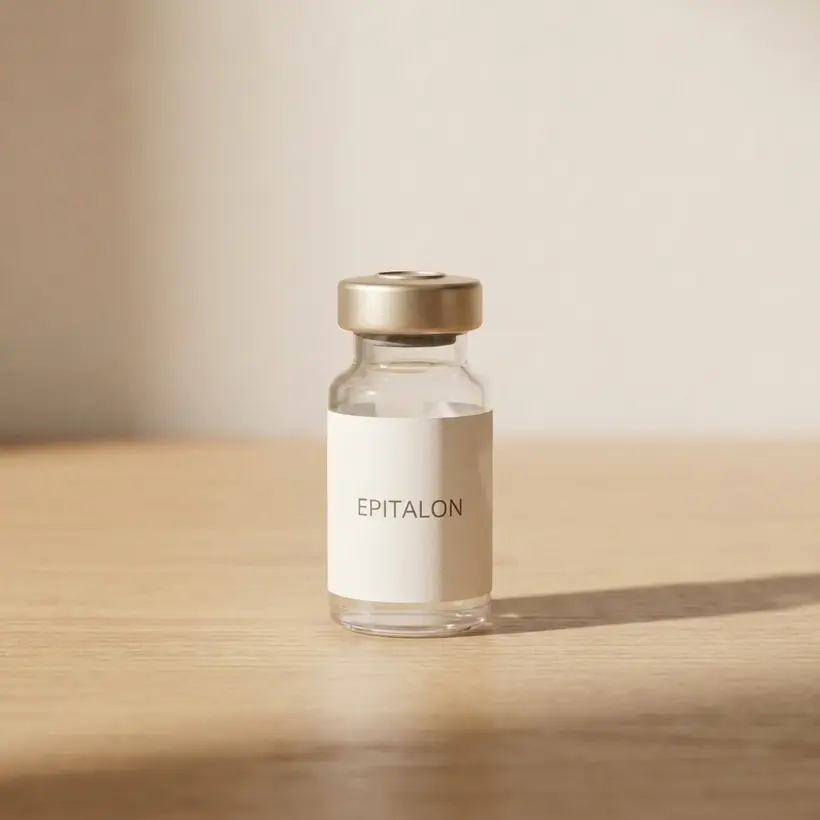
From the FormBlends catalog
Epitalon (Epithalon Injectable)
Pineal peptide that restores melatonin production and circadian rhythm · From $44/mo · compounded by a licensed 503A pharmacy, dispensed only after provider review.
Learn about Epitalon (Epithalon Injectable) →In one notable study, elderly patients who received epithalamin showed improved immune markers and reduced mortality over a 6-year follow-up period compared to controls. The researchers attributed this to restored pineal function and improved melatonin production.
Cell culture studies showed that Epitalon could increase the number of cell divisions beyond the normal Hayflick limit. This is the maximum number of times a cell can divide before becoming senescent. Extending this limit at the cellular level is a key goal of anti-aging research.
But it's important to maintain perspective. Most human data comes from observational studies and small clinical trials. Large-scale randomized controlled trials following Western standards aren't yet available. The research is promising but not conclusive.
Epitalon isn't proven to extend human lifespan. It may support cellular health and healthy aging based on available evidence. As always, discuss the evidence honestly with your provider before starting any longevity protocol.
Safety and Practical Considerations
Epitalon has a favorable safety profile in available research. Studies spanning decades haven't identified significant adverse effects at standard doses. The peptide is well-tolerated in most people.
Common side effects are limited to injection site reactions like mild redness or soreness. Some people report improved sleep during their 10-day cycle, which is likely related to enhanced melatonin production.
Because Epitalon may influence cell division, people with active cancers or a history of cancer should discuss this thoroughly with their oncologist before use. While there's no evidence that Epitalon promotes cancer growth, the theoretical concern about telomerase activation in cancer cells warrants caution.
Monitoring your results can add value to your Epitalon protocol. Some providers recommend telomere length testing before and after cycles, though the clinical utility of these tests is still debated. Complete bloodwork including inflammatory markers, hormone panels, and metabolic markers can help track your overall trajectory.
Store Epitalon properly. Keep the lyophilized powder at room temperature before reconstitution calculator. After mixing with bacteriostatic water, store in the refrigerator and use within your pharmacy's recommended timeframe.
Frequently Asked Questions
How often should I do an Epitalon cycle?
Most protocols recommend 10-day cycles performed 2 to 3 times per year. The spacing allows time for biological effects to develop between cycles. Your can customize the frequency based on your health goals.
Can Epitalon reverse aging?
Epitalon may support cellular health and slow certain aspects of biological aging based on research findings. It isn't proven to reverse aging. Results vary between individuals, and long-term human outcome data is limited.
Is Epitalon safe for long-term use?
Decades of research haven't identified significant safety concerns with cycled Epitalon use. But Western-standard long-term safety studies aren't available. Work with your provider to monitor your health during and between cycles.
When will I notice effects from Epitalon?
Some people report improved sleep quality during or shortly after their 10-day cycle. Other effects, such as improved energy and cellular health markers, may develop gradually over weeks to months. Epitalon is a long-term investment in cellular health rather than an immediate-results peptide.
Do I need blood work before starting Epitalon?
Yes. Baseline bloodwork helps your provider assess your health status and creates a reference point for tracking changes. Your provider may recommend specific markers related to aging, inflammation, and hormonal health.
Ready to Take the Next Step?
Your health goals is personal) and you deserve a plan that fits. FormBlends connects you with licensed providers who can evaluate your needs and create a personalized protocol.
Medical References
- Jastreboff AM, Aronne LJ, Ahmad NN, et al. Tirzepatide Once Weekly for the Treatment of Obesity. N Engl J Med. 2022;387(3):205-216. [PubMed | ClinicalTrials.gov | DOI]
Sources &. References
- Pickart L, Vasquez-Soltero JM, Margolina A. GHK Peptide as a Natural Modulator of Multiple Cellular Pathways in Skin Regeneration. BioMed Res Int. 2015;2015:648108. Doi:10.1155/2015/648108
- Pickart L, Vasquez-Soltero JM, Margolina A. GHK and DNA: Resetting the Human Genome to Health. BioMed Res Int. 2014;2014:151479. Doi:10.1155/2014/151479
- Sikiric P, Hahm KB, Blagaic AB, et al. Stable Gastric Pentadecapeptide BPC 157, Robert's Cytoprotection, Adaptive Cytoprotection, and Therapeutic Effects. Curr Pharm Des. 2018;24(18):1990-2001. Doi:10.2174/1381612824666180515125918
- Chang CH, Tsai WC, Lin MS, et al. The promoting effect of pentadecapeptide BPC 157 on tendon healing involves tendon outgrowth, cell survival, and cell migration. J Appl Physiol. 2011;110(3):774-780. Doi:10.1152/japplphysiol.00945.2010
- Seiwerth S, Brcic L, Vuletic LB, et al. BPC 157 and blood vessels. Curr Pharm Des. 2014;20(7):1121-1125. Doi:10.2174/13816128113199990421
- Bock-Marquette I, Saxena A, White MD, et al. Thymosin beta4 activates integrin-linked kinase and promotes cardiac cell migration, survival and cardiac repair. Nature. 2004;432(7016):466-472. Doi:10.1038/nature03000
- Malinda KM, Sidhu GS, Mani H, et al. Thymosin beta4 accelerates wound healing. J Invest Dermatol. 1999;113(3):364-368. Doi:10.1046/j.1523-1747.1999.00708.x
The information in this article is intended for educational use only and shouldn't be considered medical advice. Consult a qualified healthcare provider before making any changes to your medication or supplement regimen. FormBlends helps with connections with licensed providers for personalized medical guidance.
Last updated: 2026-03-24
Ready when you are
Epitalon (Epithalon Injectable)
Pineal peptide that restores melatonin production and circadian rhythm · From $44/mo · compounded by a licensed 503A pharmacy, dispensed only after provider review.
Learn about Epitalon (Epithalon Injectable) →