Key Takeaways
- The most-cited epitalon dosage in human-adjacent research is 5 to 10 mg/day subcutaneously for 10 consecutive days, derived from Khavinson et al. studies, not from a blinded RCT.
- Epitalon's molecular weight is approximately 390.35 g/mol; it is a synthetic tetrapeptide (Ala-Glu-Asp-Gly) with no FDA-approved indication and no established maximum tolerated dose in humans.
- A 10 mg vial reconstituted to 2 mL yields 5 mg/mL; each 0.1 mL drawn on a U-100 insulin syringe delivers 0.5 mg, making dose precision straightforward if math is done correctly.
- All telomere-lengthening, melatonin-stimulating, and longevity claims are supported at best by small observational or animal data; no phase III RCT exists.
- Purity of research-grade epitalon varies widely; a legitimate COA must include an HPLC chromatogram, mass spec confirmation, and endotoxin result below 1 EU/mg.
Direct Answer: What Is the Standard Epitalon Dosage?
Table of Contents
- Evidence Ledger: Grading Every Major Dosage Claim
- Mechanism With Numbers: Why Dose Might Matter for Telomerase
- Dosage Ranges and Protocol Structures
- Reconstitution Math and Label Literacy (10 mg and 50 mg Vials)
- Epitalon Dosage for Bodybuilding: What the Evidence Actually Supports
- What Most Pages Get Wrong About Epitalon Dosage
- Route of Administration: Why It Changes Effective Dose
- Honest Head-to-Head: Epitalon vs. Real Alternatives
- Storage, Stability, and Degradation Signs
- FAQ
- Sources
- Footer Disclaimers
Evidence Ledger: Grading Every Major Dosage Claim
| Claim | Best Evidence Type | Effect Direction | Confidence |
|---|---|---|---|
| 5 to 10 mg/day for 10 days extends telomere length in humans | Small observational/uncontrolled human studies (Khavinson group) | Positive signal, no control arm | Very Low |
| Epitalon stimulates pineal melatonin synthesis | Animal (rat) studies; one small human study without placebo control | Positive in animals | Low |
| Epitalon activates telomerase (hTERT) in somatic cells | In vitro cell culture | Positive in cell lines | Low (mechanism only; does not prove clinical outcome) |
| 10-day cycle is sufficient for effect | Protocol convention from Khavinson papers, not dose-finding RCT | Unknown optimal | Very Low |
| No significant toxicity at standard doses | Rodent toxicology; absence of serious adverse event reports in small human series | Reassuring but incomplete | Low |
| Improves sleep quality in elderly | Small uncontrolled human studies in Russian literature | Positive trend reported | Very Low |
| Muscle gain or performance enhancement | No human data; extrapolated from IGF-1 axis speculation | Unknown; no supporting evidence | Very Low / No evidence |
Mechanism With Numbers: Why Dose Might Matter for Telomerase
Epitalon (Ala-Glu-Asp-Gly) is a synthetic analogue of epithalamin, a polypeptide fraction extracted from bovine pineal gland. Its proposed primary mechanism is upregulation of telomerase reverse transcriptase (hTERT), the catalytic subunit responsible for adding TTAGGG repeats to chromosome ends.
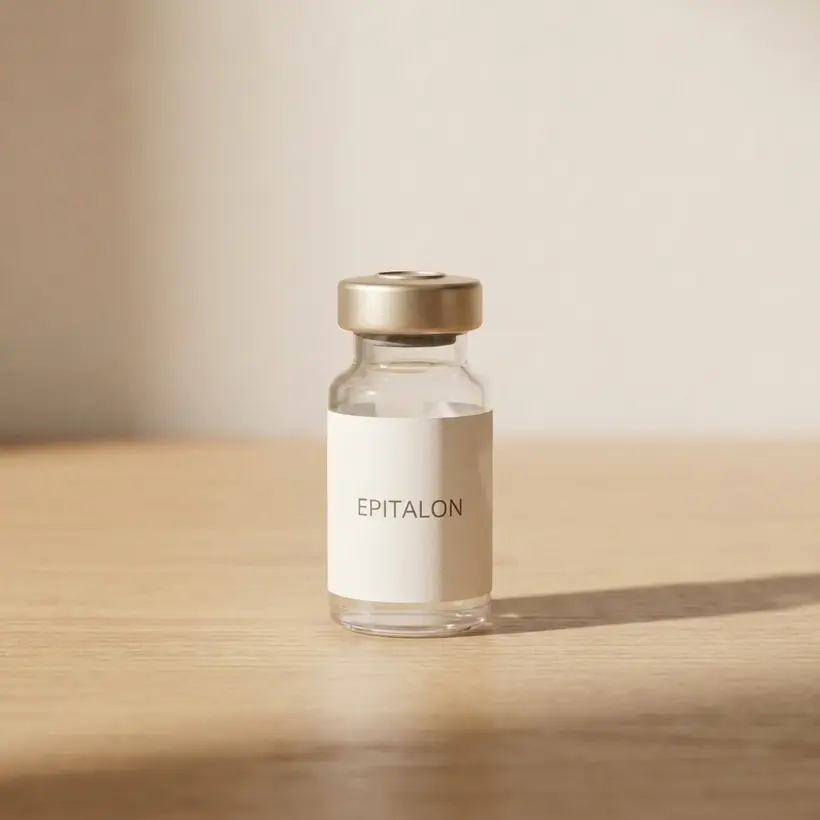
From the FormBlends catalog
Epitalon (Epithalon Injectable)
Pineal peptide that restores melatonin production and circadian rhythm · From $44/mo · compounded by a licensed 503A pharmacy, dispensed only after provider review.
Learn about Epitalon (Epithalon Injectable) →In vitro work (Khavinson et al., published in the Bulletin of Experimental Biology and Medicine) showed that epitalon applied to human fetal fibroblast cultures extended the Hayflick limit -- cells underwent more population doublings compared to untreated controls. The concentrations used in cell culture work are typically in the nanomolar-to-micromolar range, which does not translate directly to a systemic human dose because tissue distribution, plasma protein binding, and renal clearance all intervene.
What this mechanism does NOT prove: demonstrating telomerase activation in a cell culture dish does not confirm that a subcutaneous injection in a human reaches target tissues (pineal gland, immune cells, gut epithelium) at sufficient concentration to replicate that effect. No published human pharmacokinetic study has measured peak plasma concentration (Cmax) or area under the curve (AUC) for epitalon at 5 mg or 10 mg doses. The peptide's small size and lack of protecting groups suggest rapid renal clearance, but precise half-life data in humans have not been published in indexed literature.
The melatonin pathway: animal studies suggest epitalon increases pineal melatonin output, possibly via modulation of hydroxyindole-O-methyltransferase activity. Melatonin itself has documented effects on circadian rhythm and antioxidant signaling. Whether the epitalon dose needed to achieve this in rodents scales to the 5 to 10 mg human range is an assumption, not a measured fact.
Dosage Ranges and Protocol Structures
| Protocol Type | Daily Dose | Duration | Frequency | Evidence Basis |
|---|---|---|---|---|
| Khavinson research protocol | 5 to 10 mg/day | 10 days | Once or twice per year | Observational human studies |
| Conservative community protocol | 5 mg/day | 10 days | Once per year | Convention; no RCT basis |
| Extended community protocol | 5 to 10 mg/day | 20 days | Twice per year | Anecdotal; no controlled data |
| Bodybuilding protocol | 5 to 10 mg/day | 10 to 20 days | Variable | No human performance data |
Timing: Most protocols specify morning administration, loosely tied to the proposed interaction with circadian/pineal biology. Evening administration has also been reported without documented comparative data on whether timing changes efficacy.
Reconstitution Math and Label Literacy: 10 mg and 50 mg Vials
Vial size is not a dose. It is the total peptide mass lyophilized in the vial. Here is the practical math:
| Vial Size | Bacteriostatic Water Added | Resulting Concentration | Volume per 5 mg Dose | U-100 Syringe Marking |
|---|---|---|---|---|
| Epitalon 10mg | 1 mL | 10 mg/mL | 0.5 mL | 50 units |
| Epitalon 10mg | 2 mL | 5 mg/mL | 1.0 mL | 100 units (full syringe) |
| Epithalon 50mg | 5 mL | 10 mg/mL | 0.5 mL | 50 units |
| Epithalon 50mg | 10 mL | 5 mg/mL | 1.0 mL | 100 units (full syringe) |
How to read a COA for epitalon:
- HPLC purity: Demand greater than 98%. A single-peak HPLC chromatogram should be included, not just a percentage number.
- Molecular weight confirmation: Mass spectrometry should show the [M+H]+ ion near 391.35 m/z (consistent with MW ~390.35 g/mol for Ala-Glu-Asp-Gly).
- Endotoxin (LAL test): Must be below 1 EU/mg for injectable use. A COA without an endotoxin result is not injectable-grade regardless of purity claim.
- Sterility: If the supplier claims sterile filtration, a sterility test result should be present. Most research-grade suppliers do not provide sterile product; the user is expected to filter through a 0.22-micron membrane.
- Sequence confirmation: Amino acid analysis or sequencing data confirming the correct Ala-Glu-Asp-Gly sequence distinguishes epitalon from a generic tetrapeptide contaminant.
Epitalon Dosage for Bodybuilding: What the Evidence Actually Supports
Bodybuilding communities cite epitalon for sleep quality improvement, faster recovery between training sessions, and vague longevity or "anti-aging" benefits. The dose range used (5 to 10 mg/day, 10 to 20 day cycle) mirrors research protocols by coincidence of convention, not because a sports science study determined this was optimal for the stated goals.
What the evidence allows you to say: melatonin stimulation, if real in humans at these doses, could plausibly improve slow-wave sleep architecture, which has downstream effects on GH pulsatility and muscle repair. This is a plausible, multi-step logical chain, not a demonstrated outcome for epitalon specifically. The IGF-1 axis connection sometimes cited in bodybuilding forums has no direct epitalon data behind it.
What the evidence does not support: any direct anabolic effect, fat loss mechanism, or training performance improvement from epitalon has no human data. Buyers citing these outcomes are extrapolating well beyond the available science.
What Most Pages Get Wrong About Epitalon Dosage
This is the section commodity pages omit.
1. Oral bioavailability is not established. Many sites sell "oral epitalon" capsules or drops. Epitalon is a tetrapeptide. Without chemical modification (lipidation, cyclization, or a nanoparticle carrier) it is subject to gastric acid and brush-border peptidase degradation before reaching systemic circulation. No human pharmacokinetic study has demonstrated that oral epitalon achieves plasma concentrations comparable to subcutaneous injection. Oral dosing at the same milligram number as injectable dosing could be substantially underdosing or, if absorption is unpredictably variable, inconsistently dosing.
2. The "10-day cycle" is not a scientifically derived minimum. It reflects how Khavinson structured his research observations. There is no published dose-duration response curve in humans. Some community users run 20-day cycles assuming more is better; there is no controlled evidence this is superior or equivalent.
3. Purity variation between suppliers is clinically relevant. Research-grade peptide suppliers operate outside pharmaceutical GMP. An 80% pure vial labeled as 10 mg contains roughly 8 mg of active peptide and 2 mg of unknown impurities or truncated sequences. Endotoxin contamination from bacterial synthesis hosts is the primary safety risk, not the peptide itself. A febrile reaction within hours of injection strongly suggests endotoxin, not a peptide side effect.
4. The 50 mg vial is not a larger dose format. It is a multi-cycle or multi-user research vial. Treating it as a single cycle dose and injecting 50 mg over 10 days (5 mg/day) is correct; treating it as one dose is a potentially serious error sometimes seen in misread forum posts.
Route of Administration: Why It Changes Effective Dose
The chemistry behind the rule: subcutaneous injection deposits epitalon into the hypodermis, from which it enters capillary beds and the lymphatic system. Absorption is slower than IV but avoids first-pass degradation entirely. Intravenous administration delivers 100% of the dose to systemic circulation immediately, meaning that a 5 mg IV dose is not pharmacokinetically equivalent to a 5 mg subcutaneous dose -- the peak concentration will be higher IV and the duration of exposure shorter.
Nasal sprays and sublingual drops exploit mucosal absorption to partially bypass GI proteolysis. Whether the nasal mucosa absorbs a 390-dalton tetrapeptide efficiently enough to matter has not been studied for epitalon specifically. The general rule that smaller, more lipophilic peptides absorb better intranasally works in epitalon's favor on molecular weight but not on lipophilicity (the Asp and Glu residues are charged at physiologic pH).
Honest Head-to-Head: Epitalon vs. Real Alternatives for Its Stated Goals
| Intervention | Telomere/Longevity Evidence | Sleep Evidence | Regulatory Status | Where Epitalon Loses |
|---|---|---|---|---|
| Epitalon 5 to 10 mg/day | Very Low (small, uncontrolled) | Very Low (small human series) | Not approved; research compound | Evidence quality, legal status, purity uncertainty |
| Melatonin 0.5 to 5 mg oral | No direct evidence | High (multiple RCTs, Cochrane review) | OTC supplement (US); approved drug (EU) | Epitalon loses on sleep: melatonin has far stronger evidence |
| Lifestyle (sleep hygiene, exercise, caloric restriction) | Moderate (observational, large cohorts) | Moderate to High | N/A | Epitalon loses entirely: no injectable compound matches the effect size of consistent exercise on telomere attrition rate |
| TA-65 (cycloastragenol) | Low (small RCT, Harley et al. 2011) | No evidence | Supplement; not approved drug | TA-65 has one small blinded RCT; epitalon has none |
| Rapamycin (mTOR inhibitor) | Moderate in animal models; human longevity trial ongoing | No benefit | FDA-approved (transplant), off-label longevity | Epitalon loses on mechanistic depth and evidence quality |
Storage, Stability, and Degradation Signs
Why peptides degrade (the chemistry, not just the rule): Lyophilized peptides are stable because dehydration halts the hydrolysis of peptide bonds and oxidation of susceptible residues. Epitalon contains a glutamic acid (Glu) and aspartic acid (Asp) residue; both are susceptible to deamidation and beta-elimination under heat and aqueous conditions. This produces truncated or modified sequences that are inactive and potentially immunogenic.
The alanine N-terminus is less reactive than, say, a methionine-containing peptide, which means epitalon has moderate inherent stability. However, once reconstituted in aqueous bacteriostatic water:
- Refrigerated (2 to 8 degrees C): use within 28 days is the standard conservative guidance for most research peptides; no published stability kinetics specific to epitalon exist in indexed literature.
- Frozen aliquots (minus 20 degrees C): extended to several months based on general peptide chemistry; repeated freeze-thaw cycles accelerate aggregation and should be avoided.
- Room temperature: avoid; degradation accelerates significantly above 25 degrees C.
Rejection criteria for reconstituted epitalon:
- Yellow or amber discoloration (indicates oxidation or impurity)
- Cloudiness or visible particulates (aggregation or contamination)
- Unusual or strong odor from the lyophilized powder
- Failure to dissolve fully within 2 to 3 minutes of gentle swirling
FAQ
What is the standard epitalon dosage?
Most published human-adjacent protocols use 5 to 10 mg per day administered subcutaneously or intravenously for 10 to 20 consecutive days. No regulatory body has established an approved dosage. The 5 to 10 mg range comes from Russian clinical research by Khavinson et al., not from a phase III RCT.
What is the difference between epithalon 10mg and epithalon 50mg vials?
Vial size reflects the lyophilized powder mass, not a single dose. A 10 mg vial reconstituted to 2 mL yields 5 mg/mL; a 50 mg vial is used for longer cycles or split across multiple people in a research setting. Stability after reconstitution is the main concern: use within 28 days refrigerated or freeze aliquots.
How long should an epitalon cycle last?
Khavinson's protocols typically ran 10 consecutive days. Community protocols extend this to 10 to 20 days, repeated once or twice per year. There is no controlled human data comparing cycle lengths for efficacy or safety, so shorter conservative cycles are the rational default.
What is epitalon dosage for bodybuilding?
Bodybuilding communities report using 5 to 10 mg/day during a 10 to 20 day cycle, citing sleep quality, recovery, and putative telomere support as goals. There are no human RCTs supporting muscle gain or performance enhancement from epitalon. Any such use is entirely off-label and experimental.
Can epitalon be taken orally?
Oral bioavailability of epitalon (Ala-Glu-Asp-Gly) is theoretically low because it is a tetrapeptide subject to gastrointestinal proteolysis. Some nasal or sublingual formulations are marketed, but no pharmacokinetic studies in humans confirm comparable bioavailability to injection. Oral use is not supported by available evidence.
How do you reconstitute an epitalon 10mg vial?
Add 1 to 2 mL of bacteriostatic water to a 10 mg vial. 1 mL gives 10 mg/mL (100 mcg per 0.01 mL tick on a U-100 insulin syringe); 2 mL gives 5 mg/mL (50 mcg per tick). Swirl gently, never shake. Refrigerate and use within 28 days, or freeze single-use aliquots for longer storage.
What injection site is used for epitalon?
Subcutaneous injection into abdominal fat is the most commonly reported route. Intravenous administration was used in some early Russian studies but is not practical for self-administration and carries higher risk. Intramuscular use is reported anecdotally but not documented in controlled studies.
Is there a maximum safe epitalon dose?
No formal maximum tolerated dose has been established in published human trials. Animal toxicology data from Russian studies reported no significant toxicity at tested doses, but the absence of a published phase I dose-escalation trial means no evidence-based upper limit exists for humans.
Does epitalon interact with other peptides or medications?
No controlled drug-interaction studies exist for epitalon. Theoretical concerns include additive effects with other melatonin-modulating or immunomodulatory compounds. Combining with cytotoxic agents or immunosuppressants is contraindicated by logic, not documented clinical data. Disclose use to a physician before any combination.
How do you read an epitalon certificate of analysis?
Look for: HPLC purity above 98%, molecular weight confirmation near 390.35 g/mol, endotoxin below 1 EU/mg (LAL test), and sterility confirmation if injectable grade is claimed. Reject any COA without an HPLC chromatogram, a mass spec result, or that lists only "peptide content" without method details.
What does degraded epitalon look like?
Lyophilized epitalon should be a white to off-white powder. After reconstitution the solution should be clear and colorless. Yellowing, cloudiness, or visible particulates indicate degradation or contamination. A foul or unusually strong odor in the lyophilized powder is also a rejection criterion.
Is epitalon FDA approved?
No. Epitalon has no FDA-approved indication. It is not an approved drug in the United States or the European Union. It is sold as a research compound. In 2023 and 2024 the FDA increased enforcement actions against peptide compounders, affecting availability from compounding pharmacies.
Sources
- Khavinson VKh, Bondarev IE, Butyugov AA. "Epithalon peptide induces telomerase activity and telomere elongation in human somatic cells." Bulletin of Experimental Biology and Medicine. 2003;135(6):590-592.
- Khavinson V, Diomede F, Mironova E, et al. "AEDG Peptide (Epitalon) Stimulates Gene Expression and Protein Synthesis during Neurogenesis: Possible Epigenetic Mechanism." Molecules. 2020;25(3):609. PMC7037057.
- Khavinson VKh, Bondarev IE, Butyugov AA, Smirnova TD. "Peptide promotes overcoming of the division limit in human somatic cells." Bulletin of Experimental Biology and Medicine. 2004;137(5):503-506.
- Anisimov VN, Khavinson VKh. "Peptide bioregulation of aging: results and prospects." Biogerontology. 2010;11(2):139-149.
- Harley CB, Liu W, Blasco M, et al. "A natural product telomerase activator as part of a health maintenance program." Rejuvenation Research. 2011;14(1):45-56. (TA-65 reference for head-to-head context.)
- FDA. "Certain Bulk Drug Substances That May Be Used in Compounding Under Section 503A of the Federal Food, Drug, and Cosmetic Act." Federal Register, multiple notices 2023-2024.
- Khavinson VKh, Morozov VG. "Peptides of pineal gland and thymus prolong human life." Neuro Endocrinology Letters. 2003;24(3-4):233-240.
- Brzezinski A. "Melatonin in humans." New England Journal of Medicine. 1997;336(3):186-195. (Melatonin comparator reference.)
Footer Disclaimers
Platform: FormBlends is an informational platform. Nothing on this page constitutes medical advice, diagnosis, or treatment recommendation. Consult a licensed physician before using any research compound.
Research Compound: Epitalon is not an FDA-approved drug. It is sold legally in the United States only as a research compound not intended for human consumption. Regulatory status varies by country; confirm local law before purchase or use.
Results: Individual outcomes cannot be predicted. All efficacy statements reflect the state of published research, which is limited in quality and quantity for epitalon. Benefit claims made by suppliers are not independently verified by FormBlends.
Trademark: "Epitalon" and "Epithalon" are common names for the synthetic tetrapeptide Ala-Glu-Asp-Gly. FormBlends has no affiliation with any manufacturer or supplier of this compound. Product names used are for identification and search clarity only.
Related peptide guides
Ready when you are
Epitalon (Epithalon Injectable)
Pineal peptide that restores melatonin production and circadian rhythm · From $44/mo · compounded by a licensed 503A pharmacy, dispensed only after provider review.
Learn about Epitalon (Epithalon Injectable) →