Last October, a 54-year-old software architect named Derek in Austin told his prescriber he'd been "eyeballing" Epithalon doses from a Reddit thread and injecting 10 mg daily for six straight weeks. No cycling. No breaks. His provider, a functional medicine NP, pulled up Khavinson's original protocols and walked him through the math: the published clinical work uses discrete 10-day windows, not continuous administration. "I'd spent $400 on peptide and was dosing it like a multivitamin," Derek said. "Nobody told me this stuff is supposed to run in short bursts."
That confusion is common. Epithalon is one of the few peptides almost universally dosed in cycles rather than continuously, but the cycle logic isn't intuitive if your only reference point is daily-dose peptides like Sermorelin or Tesamorelin. This piece lays out the commonly referenced cycle structures, dose ranges, timing patterns, and practical handling details specific to Epithalon.
One thing up front: actual dosing for any individual patient is a prescriber decision. What follows is a summary of published and compounding-practice reference ranges, not a protocol you should self-administer.
Why Cycles Instead of Daily Use
Epithalon sits in a category Russian researchers call "bioregulator peptides," meaning the idea is that a defined exposure window triggers effects that persist well after you stop injecting. Think of it less like a daily medication and more like a vaccine booster: a concentrated input that sets off a longer cascade. Whether that framing holds up to rigorous Western trial scrutiny is still an open question, but the cycle-based dosing pattern has been consistent across Khavinson's published work since the 1990s and remains standard in current compounding practice.
The biological rationale goes roughly like this: Epithalon (also known as Epitalon or Epithalone) is a synthetic tetrapeptide (Ala-Glu-Asp-Gly) designed to mimic a fraction of the naturally occurring polypeptide epithalamin, which is derived from the pineal gland. Khavinson's group at the St. Petersburg Institute of Bioregulation and Gerontology proposed that short, concentrated exposure to the peptide is sufficient to initiate telomerase activation in somatic cells and to modulate pineal melatonin production. The idea is that once triggered, these processes continue for months without further exogenous input. In a 2003 study published in Bulletin of Experimental Biology and Medicine, Khavinson and colleagues reported that a 10-day course of epithalamin administration in elderly patients resulted in measurable changes in melatonin secretion patterns that persisted well beyond the dosing window. A separate in vitro study by Khavinson and colleagues, published in the same journal in 2004, demonstrated telomerase activation in human somatic cells exposed to Epithalon, with the effect observed at concentrations consistent with the clinical dose ranges described in this article.
Continuous daily use simply isn't the norm. If someone is telling you to run Epithalon 365 days a year, that's a departure from virtually everything in the literature. The cycle structure also serves a practical purpose: it limits total peptide exposure per year, which matters from a safety standpoint when long-term human data remains limited. Running a peptide continuously without solid Phase III safety data is a risk that most prescribers aren't willing to take, and shouldn't be.
The Main Cycle Structures
Khavinson's clinical pattern. Vladimir Khavinson's published work describes 10-day cycles at 5 mg subcutaneous daily as the workhorse protocol. Some of his studies extended to 20-day cycles. Frequency: one or two cycles per year. This pattern appears across multiple publications from his group over roughly two decades, making it the closest thing Epithalon has to a canonical dosing scheme. It's worth noting that Khavinson's earlier work used epithalamin (the crude pineal extract) rather than synthetic Epithalon, and the transition to the synthetic tetrapeptide preserved the same cycle structure.
Research peptide community variations. Online protocols tend to cluster around two approaches: 5 mg/day for 20 days (100 mg total per cycle) or 10 mg/day for 10 days (also 100 mg total). Same total exposure, different pacing. Both are widely described. The 10-day/10 mg variant appeals to people who want to get the cycle over with quickly and find three weeks of daily injections difficult to maintain. The 20-day/5 mg approach hews closer to the published dose-per-day figures and spreads the exposure across a wider window, which some prescribers prefer on general pharmacological principle.
Extended and compressed cycles. Some protocols stretch to 30 days at lower daily amounts (2 to 3 mg/day). Others compress to as few as 5 days at higher doses (15 to 20 mg/day). The interesting thing is that total per-cycle exposure tends to converge around 50 to 200 mg regardless of how the daily arithmetic works out. The body of practice seems to care more about cumulative exposure per cycle than peak daily dose. A patient running 3 mg/day for 30 days (90 mg total) and one running 10 mg/day for 10 days (100 mg total) are landing in essentially the same cumulative neighborhood.
Annual frequency. One or two cycles per year is standard. Quarterly cycling (every three months) shows up occasionally but isn't strongly supported by available data as better than less frequent approaches. My honest read: unless a prescriber has a specific clinical rationale for more frequent cycles, twice a year is probably the ceiling for most people. More than that starts feeling like optimization theater rather than evidence-based practice.
Dose Ranges Within a Cycle
The common range is 5 to 10 mg subcutaneous daily during the active cycle window. That's where the vast majority of protocols land.
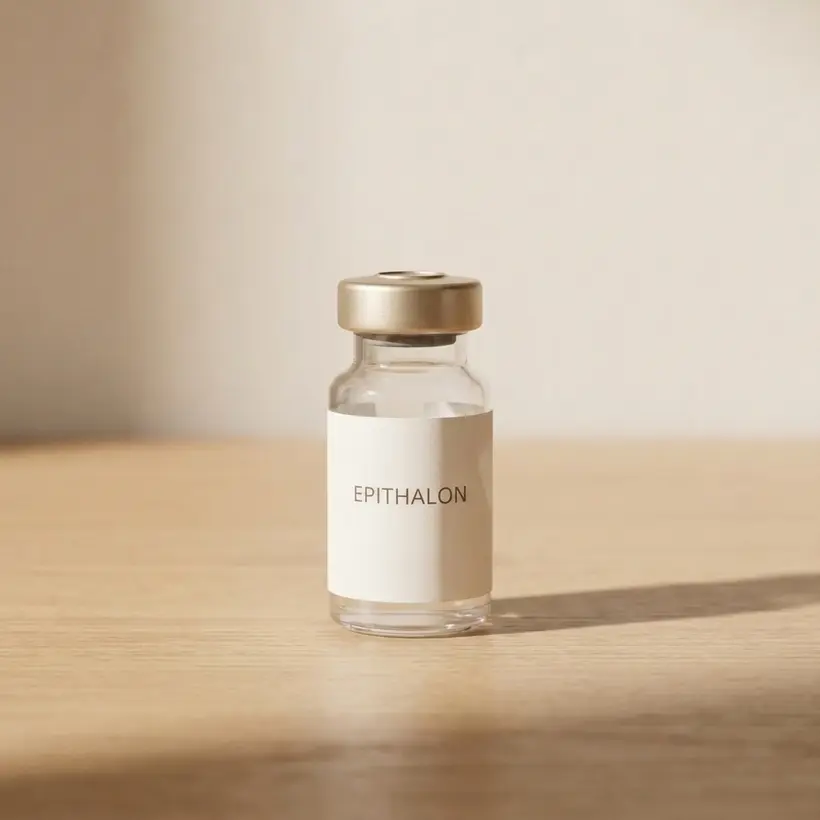
From the FormBlends catalog
Epithalon (Epitalon)
The telomerase activator for cellular youth · From $199/mo · compounded by a licensed 503A pharmacy, dispensed only after provider review.
View Epithalon (Epitalon) →Lower-range protocols (2.5 to 5 mg/day) compensate with longer cycle durations. Higher-range protocols (15 to 20 mg/day) compress the cycle. Here's the thing: available data doesn't convincingly show that cranking the daily dose higher produces proportionally better results. You're not getting twice the effect at twice the dose. The boring truth is that 5 mg/day for a standard cycle length is where most of the published clinical experience lives.
For context, a typical Epithalon cycle costs between $150 and $500 depending on source, compounding pharmacy pricing, and total milligrams ordered. Doubling the daily dose doubles the cost per cycle without a clear doubling of benefit. Prescribers who have managed dozens of Epithalon patients tend to start at the lower end of the range and adjust upward only if there's a specific reason. That's standard pharmacological conservatism, and it applies here like it applies everywhere else.
Body weight-based dosing has been proposed in some online forums (e.g., 0.05 to 0.1 mg per kg body weight per day), but this approach doesn't appear in Khavinson's published work. The clinical studies used fixed doses, not weight-adjusted ones. That doesn't necessarily mean weight-based dosing is wrong, just that it lacks published support.
Reconstitution, Injection, and the Intranasal Question
Epithalon ships as lyophilized powder. Your dispensing pharmacy provides reconstitution instructions, typically using bacteriostatic water. A common reconstitution volume is 1 to 2 mL of bacteriostatic water per vial, yielding a concentration that allows easy measurement of the daily dose with an insulin syringe. The exact volume depends on the vial size (commonly 10 mg or 50 mg vials). Standard administration is subcutaneous injection, rotating between abdominal tissue, thigh, and upper outer arm.
For subcutaneous injection, use a 29- or 31-gauge insulin syringe. Pinch a fold of skin at the injection site, insert the needle at roughly a 45-degree angle, inject slowly, and release the skin fold. Rotate injection sites within each cycle to avoid localized irritation or lipoatrophy. Some patients report mild redness or a small welt at the injection site that resolves within an hour. If injection site reactions become persistent or worsening, that's worth flagging to your prescriber.
Intranasal preparations exist. The peptide is small enough (molecular weight around 390 Da) for some mucosal absorption, but subcutaneous remains the more reliable route. Bioavailability via intranasal delivery for small peptides is generally estimated at 10 to 30 percent of the subcutaneous route, meaning you'd need significantly more peptide to achieve similar systemic levels. If someone is pushing intranasal as equivalent, ask for the absorption data. (You'll be waiting a while.)
When to Inject: Morning vs. Evening
No consensus. Two camps, both with reasonable logic.
The evening camp points to Epithalon's proposed effects on pineal function and melatonin synthesis, which peaks at night. If you buy the circadian mechanism, evening dosing has theoretical appeal. Specifically, melatonin synthesis is regulated by the enzyme arylalkylamine N-acetyltransferase, and pineal peptide activity would theoretically dovetail with the natural nocturnal surge in enzyme activity. Evening injection could, in principle, time the peptide's peak plasma availability with the window when pineal function is most active.
The morning camp prioritizes practicality: you're already awake, you have your supplies out, you don't forget. There's no strong evidence that time of day substantially changes outcomes. Some prescribers also note that injecting in the morning makes it easier to monitor for any acute reactions during waking hours.
Pick one, stay consistent within your cycle, and don't lose sleep (pun intended) over the choice.
Storage, Stability, and Travel
Lyophilized powder is reasonably forgiving. Room temperature for short periods is fine; refrigeration extends shelf life. Epithalon in powder form is more stable than many peptides, which is a small mercy. Store unreconstituted vials in a cool, dry place away from direct light. Most compounding pharmacies assign a beyond-use date of 6 to 12 months for the lyophilized form under proper storage.
Once reconstituted, refrigerate at 2 to 8 degrees Celsius (standard refrigerator temperature) and follow the beyond-use date from your pharmacy, which is typically 28 to 30 days for reconstituted peptides in bacteriostatic water. Short excursions out of the fridge (travel, daily use) are generally tolerated, but don't leave a reconstituted vial on your bathroom counter for a week. If you're traveling during a cycle, use a small insulated pouch with a cold pack. TSA allows injectable medications with proper labeling; keeping a copy of your prescription or a pharmacy label on the vial simplifies security checkpoint conversations.
Timing Cycles Across the Year
Single annual cycle. The most minimal approach. Some patients pick spring or fall by personal preference. There's no published evidence favoring one season. Functionally, some patients choose to align their Epithalon cycle with an annual physical or bloodwork panel so they can establish a baseline and follow up with their prescriber in a structured way.
Twice annual. A six-month gap between cycles is common, often described as spring and fall. This is probably the sweet spot for most users. The spacing gives enough time to observe any subjective effects from the first cycle before committing to a second.
Quarterly. Described in some protocols but not clearly superior to twice-yearly cycling. More injections, more cost, unclear incremental benefit. Some prescribers specifically advise against quarterly cycling in patients without prior Epithalon experience, preferring to see how a patient responds to one or two cycles before increasing frequency.
Stacking With Other Peptides
Epithalon sometimes appears alongside other peptides in longevity-oriented protocols. Stacking decisions should involve your prescriber, because peptide-peptide interactions are poorly characterized in the literature. What follows is a description of common combinations, not an endorsement of any specific stack.
Epithalon with GHK-Cu. GHK-Cu targets skin and connective tissue aging; Epithalon addresses proposed telomere and circadian mechanisms. Different axes of the same broad goal. The combination shows up frequently in anti-aging stacks. GHK-Cu is typically used topically or subcutaneously on a daily basis, so timing is straightforward: run your GHK-Cu protocol continuously and layer in Epithalon cycles as scheduled.
Epithalon with DSIP. DSIP's sleep architecture effects overlap with Epithalon's pineal and circadian framing. Some protocols add DSIP in the evening during the Epithalon cycle window. This combination is particularly popular among patients who report sleep quality as a primary concern. The rationale is that if both peptides are acting on overlapping neuroendocrine pathways, co-administration during the cycle window might produce complementary effects. That said, this remains a hypothesis without controlled trial data.
Epithalon with Thymalin. This pairing (pineal-derived plus thymus-derived bioregulators) is more a feature of Russian gerontology practice than Western peptide use. Khavinson's group has published on the combination, including a long-term observational study suggesting reduced mortality in elderly patients receiving both peptides compared to controls. The study, published in Bulletin of Experimental Biology and Medicine in 2006, followed patients over several years. It's a notable data point, though the study design (observational, not randomized controlled) limits the strength of conclusions. Finding a U.S. prescriber who runs this combo is uncommon.
When Cycle Adjustments Make Sense
This is a prescriber conversation, not a self-optimization exercise. That said, common reasons for adjusting include:
Injection site irritation during longer cycles, sometimes addressed by switching to shorter, higher-dose cycles. Persistent redness, nodules, or discomfort at injection sites after rotation suggests that reducing the total number of injection days may be preferable to continuing a longer cycle.
Compliance problems. Three weeks of daily injections is a lot for some people, especially those who travel frequently or who find the daily ritual burdensome. Compressing to 10 days at a higher dose solves the adherence issue. A patient who completes 100 percent of a 10-day cycle is getting a better outcome than one who skips four days of a 20-day cycle.
Post-first-cycle recalibration. Most patients and prescribers fine-tune after the initial cycle based on tolerability and subjective response. That's normal. First cycles are diagnostic in a sense: they tell you how this specific patient handles the peptide, what side effects (if any) emerge, and whether the logistics of daily injection are sustainable for that individual.
Frequently Asked Questions
How long is a typical Epithalon cycle?
10 to 20 days is the most commonly referenced range. Khavinson's clinical work primarily used 10-day cycles. Research community protocols often extend to 20 days. Extended 30-day cycles at lower daily doses exist but are less common.
How often should I cycle Epithalon?
One or two cycles per year is standard. More frequent cycling appears in some protocols but lacks strong supporting data. Most prescribers recommend starting with a single annual cycle and adding a second only if there's a clear rationale.
Should I take Epithalon in the morning or evening?
No consensus exists. Evening dosing has theoretical circadian rationale tied to nocturnal pineal melatonin synthesis. Morning dosing is simpler logistically and allows for monitoring of any acute reactions during waking hours. Neither is clearly superior.
Can I take Epithalon continuously every day?
Continuous daily use is not the standard approach. The cycle structure dominates in both published research and compounding practice. Continuous use also increases cumulative annual exposure well beyond what has been studied, introducing unknown risk.
How long do effects last after a cycle?
This hasn't been formally characterized in Western clinical trials. The cycle-based framework implies durable post-cycle effects, but specific timelines remain unestablished by rigorous trial evidence. Khavinson's group has reported persistent melatonin secretion changes for months following a cycle, but these observations come from small, non-randomized studies.
What's the most common total dose per cycle?
Most protocols converge around 50 to 200 mg total per cycle, with 100 mg (either 5 mg x 20 days or 10 mg x 10 days) being the most frequently described. This range has been remarkably consistent across published protocols and compounding pharmacy practice for over a decade.
Is intranasal Epithalon as effective as subcutaneous?
Subcutaneous injection is the standard and more reliable route. Intranasal preparations exist but lack equivalent absorption data. General estimates for intranasal peptide bioavailability suggest significantly lower systemic delivery compared to subcutaneous injection, meaning higher doses would be needed to approximate the same exposure, at greater cost and with less pharmacokinetic predictability.
Related Reading
- Epithalon Hub
- Epithalon Benefits and Telomere Research
- GHK-Cu and Epithalon Anti-Aging Stack
- DSIP Hub
Compliance Footer
Epithalon is not approved by the FDA for the prevention, mitigation, treatment, or cure of any disease. Compounded Epithalon is prepared by licensed compounding pharmacies for individual patients under a valid prescription from a licensed prescriber. Information on this page is educational and is not medical advice. Individual results vary.
Ready when you are
Epithalon (Epitalon)
The telomerase activator for cellular youth · From $199/mo · compounded by a licensed 503A pharmacy, dispensed only after provider review.
View Epithalon (Epitalon) →